
Family and Community
Being Na’ima B. Robert: An Interview with Award Winning Muslim Woman Author

Na’ima B. Robert is “Muslim, Black, mixed-race, South African, Western, revert and woman all in one”. Descended from Scottish Highlanders on her father’s side and the Zulu people on her mother’s side, she was born in Leeds and grew up in Zimbabwe. She went on to gain a first-class degree from the University of London. Having worked in marketing, the performing arts, and teaching, she is now an award-winning author and Editor-in-Chief of SISTERS, a magazine for Muslim women.
Na’ima is author of the best-selling book From My Sister’s Lips and has been published in The Observer, The Times and is a regular contributor to The Times Online Faith section.
Keep supporting MuslimMatters for the sake of Allah
Alhamdulillah, we're at over 850 supporters. Help us get to 900 supporters this month. All it takes is a small gift from a reader like you to keep us going, for just $2 / month.
The Prophet (SAW) has taught us the best of deeds are those that done consistently, even if they are small. Click here to support MuslimMatters with a monthly donation of $2 per month. Set it and collect blessings from Allah (swt) for the khayr you're supporting without thinking about it.
Her second book for teens, Boy vs. Girl, is out now. Grab a copy now from Amazon (UK) or download the Kindle e-book (US)
The trailer for her new book can be viewed here.
You’re an author AND editor of SISTERS. What made you want to write?
I became Muslim in my second year of university, and then married in third year. I moved to South London in 2000 and began teaching in Brixton. After my son was born, I started a home school. As my son started growing, I wanted to spend more time with him but it was difficult with the home school that I was running. I then got the inspiration to write children’s stories and poems and sent them to several publishers, both Islamic and multicultural. The multicultural publishers loved it and I began my publishing career with one of the multicultural publishers. I eventually branched out with Tango Books and that was how I met my agent, an American from New York. I invited her to dinner in my home, because I cover and couldn’t uncover and enjoy dinner with her properly in a restaurant. When I met her, I told her about Islam, modesty and hijab. My agent then told me that she could get my first book published, From My Sisters’ Lips. I did a book tour in South Africa, where a lot of women were inspired by the book and then the idea for the magazine flowered.
I decided to move to Egypt about three and a half years ago, around the same time SISTERS began. I came to the UK in the summer to spend some time with a Somalian youth group and that’s where the idea for ‘From Somalia with Love’ came from.
I write books to deal with the issues affecting children and the youth. I want to reach out to young people. ‘From My Sisters’ Lips’ was a book that I could write at the time because of the state and position I was in at the time.
What inspired you to start SISTERS magazine?
The ethos of the magazine is: be beautiful, be gorgeous, be glam, but when you go out…just cover it up. There was no other alternative [magazine] for Muslim women out there.
Prior to writing your new teen novel, Boy vs. Girl, you wrote another book aimed at teens – From Somalia, with Love. What made you want to write teen novels?
Young children are emphasised in the West to read. I know what kind of novels they read, Harry Potter, Twilight, all the vampire romance stories. There were no alternatives to represent Muslim teens. Girls are more emotionally susceptible to reading, especially romance. Girls’ books are constantly about boys and romance and it’s around the age of 13-16 years where girls have self-esteem issues and therefore want to be able to identify with emotional feelings, to feel wanted. It’s not easy being a teen, because these books feed the nafs and their desires, and their need to feel beautiful about themselves. Stylish hijabs and being a ‘hijabista’ show that one should be beautiful to the outside world, despite covering – somewhat of a paradox.
We need to be careful of the messages being portrayed to young girls, and being a ‘fashionable hijabi’ says that one can be covered and still have ‘it’, which is the opposite of being a humble, modest Muslim woman.
What inspired you to write this book? Is it based on a true story?
After writing ‘From Somalia, with Love’, the Pakistani culture felt suitable to write about. However, it was MUCH harder, much more challenging than writing about Somalian culture. I was interested in seeing the double standards between how boys are raised and how girls are raised, for example, boys going out at night and no one questioning them as to where they’re going and with whom, whereas with girls, they need to have a chaperone.
In reality, it should be the other way around. I find the carefree attitude towards boys to be a crime. They’re totally left to their own devices and to their own peril. They end up going towards gang culture, pornography, etc. When I was writing ‘Boy vs. Girl’, I realised the original story was set 10 years back. I really wanted to focus on parents who were brought up in the UK, aged around the mid-40s. I wanted to make Faraz (the male protagonist) a dynamic character. I also wanted to bring Malik (one of the characters in the story) to the fore and show that the heroine, Farhana, could do the right thing. However, being very cautious of appearing to glamourise the wrong, I needed to do my bit to enjoin the good.
Boy vs. Girl touches on some very sensitive issues, such as gang culture and drugs. Do you think that Muslims who are involved in gangs themselves would want to pick up a copy of this book?
I’m not quite sure. It depends on how much they read.
This book is a way of flagging up to the older generations that their sons are not safe out there. Faraz is vulnerable and his parents don’t know about his passion for art and his unsuitable friends. Teenagers lead a double life and parents are completely clueless about it.
The book also touches on a deeply religious character, Najma, having a very extrovert personality amongst her own family and friends. Do you think many readers will find this to be a realistic portrayal of a woman in niqab? Or do you think it will dispel some of the theories and stereotypes that people generally hold about ‘strict’ Muslims?
The whole point of Najma was not to be a boring person, but to be like every other niqabi out there. She was brought in to show that being a niqabi or even just deeply religious doesn’t mean that one loses their personality. I wanted to subvert the stereotype and show that she wasn’t the type to constantly give lectures. It was important to make her appealing, understanding and fun. It’s probably not what people are expecting. Najma reflects the ideal scenario.
The female protagonist, Farhana, faces some family criticism when she chooses to wear hijab. What advice would you give to women who are currently going through the process of covering themselves and having difficulty with parents/family/friends accepting this change?
Farhana became pensive and quiet when she first started wearing hijab, but I didn’t want her to lose her personality, particularly since she is an outspoken, A-grade student at school.
For sisters who are going through the same process, keep reminding yourself of your intention. Covering must be for the sake of Allah. When it comes to the crunch, your friends won’t be there. You have to be patient with your parents, but stay strong. Make lots of du’a, because Allah is in charge of everything and everyone. We must turn to Him. It’s a real Tawheed and ihsaan thing. It’s important to realise that we will face problems and trials when following the Straight Path and that it’s part of the deen to be tested. Bottom line: stay strong and humble.
Some may criticise your choice on writing fiction with the opinion that fiction is haraam and the fact that the front cover has a picture of a girl with her awrah uncovered. What would you have to say to that?
With regards to fiction, I’m not going to get into the religious discussion. In an ideal world, there would be no need for fiction. But I took the decision for writing fiction because children are reading it already and I felt I had to provide alternative fiction. I wanted to get into the children genre and subvert everything by bringing in reminders and reflect what kids are going through. When it comes to fiction, there are different grades of it, from trash to learning from the books. We learn about history and facts from non-fiction books, but I find that stories tell a lot about the culture of a particular era.
These books [Na’ima’s novels] humanise Islam and Muslims. We are under so much scrutiny and pressure [in the media], but Muslims who are out there writing don’t always write about Muslims in the true light. Everyone has a haraam element in their life; it’s what you do about them that make the difference. Therefore, it would be unrealistic to write a book about a perfect Muslimah as the majority of readers can’t relate to that. The Muslim narrative shows what’s really happening with the deen, it tells people that they can write their own narrative. Additionally, you can tell a lot about an author from what they write.
As for the front cover, it wasn’t my choice and I’m not in a position to veto. I tried to avoid it as much as possible, but the publishers went ahead with it. It’s a regret of mine and if I had my way, I wouldn’t have it there at all.
Some of my favourite parts of the book were when some of the daily issues that every Muslim child goes through were brought up…such as the generation and cultural gap between parent and child, the moon sighting debate, the gluttonous attitude towards Ramadan, treating segregation of sexes as a minor issue, culture coming before Islam, etc. I felt this book raised several important issues. But the main one that struck a chord with me was the differences in thinking between the parents and the children. What advice would you give to children who are going through that? And any advice to parents who want to understand their children better?
This book is a way to tell parents that they must allow children to be real with them. Even if they don’t talk to you, they shouldn’t feel that their children aren’t up to anything bad.
I’m not sure if book would bridge the parent-child gap. It wouldn’t, because those issues aren’t resolved in the book and it was not my original intention. Najma gets married, but the racism factor in the book remains unresolved. It [the book] may not solve the problems, but it’s good to discuss them with family and raise these issues to bring the answer forward.
I find that with traditional women, the mother is the role of a care-taker. They may not be up-to-date with their kids’ lives, such as school, friends, Internet, and the cultural divide is there. It appears that getting to know them doesn’t seem to be part of a mother’s role.
Is there a happy ending for Malik and Farhana?
I liked Malik. He’s a good guy all around and not a player. He loves Farhana for real. When he sees her in hijab, he’s genuine and he respects what she stands for and why she’s doing what she’s doing. The ending was ambiguous to give some hope for Farhana. But she’s still young, only 16-17 years old, so who knows what could happen?
I have a couple of other questions…if there was one turning point that led you to convert to Islam, what was it?
The woman in Egypt wearing hijab. She was beautiful but she covered and it led me to question the superficiality behind beauty and I delved further into learning about Islam as a result of it.
What are your favourite books? Fiction/non-fiction?
I have a weakness for world literature. I read very few novels and only read them for research. If I want to read about a people or a time or place, then that’s the only time I read fiction. For example, if one wanted to learn about Regency society, they would read Jane Austen.
I also enjoy reading non-fiction, biographies, social commentary. A recommendation would be ‘Toxic Childhood’ by Sue Palmer.
I am a strong believer in reading widely. My father did his PhD from Oxford University and would encourage reading widely and well. I love reading Islamic history, too, especially Road to Mecca.
I’d like to add that if you’re already a reader of fiction, then I challenge you to read non-fiction. Non-fiction challenges certain faculties of the brain in a way that fiction doesn’t.
I also have a library at home, where I’ve built up my collection of books over the years. It keeps growing.
What are your favourite chocolates?
I do not like bid’ah (innovatory) chocolates!! Any chocolates that have nuts, raisins, caramel, biscuit or any other crazy combination are not nice. Plain chocolates such as Dairy Milk and Belgian chocolates are suitable.
You must be a very busy person…how do you relax in your own time?
I don’t believe in being superwoman. Something’s got to give. People make their own choices. The hardest thing for me to do is to find time to write. I do my SISTERS work when the children are at school and I have a helper for washing, etc. I love cooking but I try to maintain a balance with 4 children.
I believe that Allah (subhaanahu wa ta’ala) blesses your time. Allah (subhaanahu wa ta’ala) makes it easy. I’m not organised or super-disciplined at all, but I am very driven. I do, however, sleep very little.
Right now, I want to work on my own private study. I’m going to take a writing hiatus for a little while to perfect my Arabic, insha’Allah.
I do have 3 more books in the pipeline. ‘My Halal Love Story’ is a trilogy and it shows that getting married is not the end of it.
Finally, what advice would you give to budding writers?
Read a lot. Read widely and well. Also read critically. If a story is blatantly about an adulterous relationship, don’t read it, because you’ll be drawn into it and it’s better to stay away from stuff that compromises your beliefs and principles.
Write, write and write some more. Write whatever you want. Keep reading. If you don’t read, your vocabulary will become limited. Part of good writing is the ability to express oneself. Being able to express yourself well can never be in vain. It’s important to arm children with that skill.
Writing requires more work than reading will. Also, keep a happy, inspirational journal – one with happy thoughts or eureka moments.
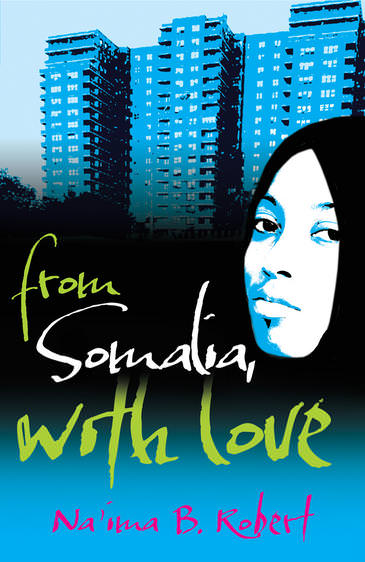 A letter written by sister Na’ima to her readers:
Bismillah
The first time I wrote about an encounter between a Muslim girl and boy in my book ‘From Somalia, with Love’, I flinched. It was too real, the emotions too disturbing, too difficult to deal with. I considered re-writing. I considered leaving it out. I considered glossing it over. But then I decided, no, this is reality. Yes, it is fictionalised, but its roots are firmly fixed in the reality of the human experience. This is what it feels like to be young and impressionable, shy and slightly lacking in confidence – and have a boy tell you that you’re special.
I flinched when writing it and I flinched when reading it once the book was done. But I read on. I could not afford to flinch. We cannot afford to flinch.
Indeed, tackling the issues that face our youth, as any youth worker will tell you, requires us to be unflinching. It requires unflinching honesty and an acknowledgement that things will not always be as they should be. It requires an acknowledgement of our flaws, of our weaknesses, of our humanity.
This can be difficult for Muslims. We are, after all, striving towards an ideal – to be the ‘ideal Muslim/Muslimah’ who does the fara’id, stays away from haraam and, generally, upholds the ideals of Islam.
We do not want to acknowledge the aspects of our existence that do not fit with where we should be. And we certainly don’t want to acknowledge them in our children, in young Muslims. These young people, we reason, have been raised with Islam in the home, they have been taught tawheed from birth, they have always covered, never mixed with the opposite gender, never seen alcohol, cigarettes, drugs being consumed, been taught to love the Sunnah and to love Islam. This is what we say.
So, when these kids start to explore their own identities and use their own filters, we start to see them making different choices from the ones we trained them to make. We see them wanting to cut their hair into mohicans, get piercings in unusual places, download Beyonce onto their iPods and quote Lady Gaga in their Facebook updates.
These are kids who, in spite of everything we’ve taught them, insist on getting themselves into trouble: they miss their salah when out with their friends, they cuss, they come home past curfew, they wear tight clothes, they flirt, they have crushes and, today, they are engaging in premarital sex.
The article on anger among young Muslims in America on MuslimMatters got me thinking. According to the statistics quoted, 99% of Muslim children are in public school. Can you imagine what that must be like for them? The total disconnection between what (some of them) are taught at home and the rest of the society that they live in? How do they negotiate this dichotomy? How do they strike a balance between these conflicting influences?
And what do we as adults do to help them through this difficult growth period?
We do our best to ignore it: we stick our heads in the sand about the unsavoury friends, the girls on the IM, Fifty Cent. Why? Because admitting that these things are a fitnah for our children, in spite of everything we’ve taught them, is tantamount to admitting that we have failed as parents, as elders, as examples.
But denial only serves to exacerbate the problem. The youth don’t need our judgement, much of which only serves to push them further away from Islam; they need our support and understanding. They need our honesty. They need us to keep it real.
There are those who manage to keep it real. Those who choose to actively engage with the youth, on their level, addressing their issues. These are the unflinching ones, the ones with the courage to admit that there is a problem and that it’s going to take more than a couple of khutbahs to address it. These are the youth workers, the speakers, the teachers, the brother/sister that the kids know they can go to for advice without judgement.
These are the people to whom I dedicated ‘Boy vs. Girl’.
I like to think that, in some small way, I am one of these people, bi’idhnillah.
Because when I write for young people, I write with an agenda, with a particular niyyah. Many Young Adult (YA) authors claim not to be trying to ‘say’ anything in their work, but I doubt that is true. Some of who you are, what you believe, what you hold dear, will filter through into your work. This is certainly the case with me. My Islam and my views about life and youth and adversity are laid bare in every book I write. I cannot write otherwise.
So, where am I going with all this? I guess I am trying to illustrate the context of my writing ‘From Somalia, with Love’ and my new book, ‘Boy vs. Girl’. In ways that (I hope) are subtle and nuanced, I wanted to address some of the issues faced by our youth and suggest an alternative way of dealing with them, a way that is nourished by imaan. The truth is, almost every YA title out there addresses issues that teens face to varying degrees. However, Muslim teens face the usual ‘growing pains’ issues as well as other issues that arise from their religious and cultural identities. It is these issues that I tried to address.
In ‘Boy vs. Girl’, the challenges faced by the second-generation Pakistani protagonists are many. From low self esteem, and inter-generational misunderstandings to the lure of the gang and forbidden love, Faraz and Farhana have a lot to contend with as they embark on their first ‘true’ Ramadan. Will they manage to withstand the pressure from their peers and stick to their new Islamic identities? At what cost? These are the book’s central dilemmas.
I hope that the struggles faced by both Faraz and Farhana will resonate with anyone reading ‘Boy vs. Girl’ – and that they will be strengthened and uplifted by their journey and its telling.
As I begin work on the next book in this genre, I only hope that I am managing to capture just a little of what it is to be young and Muslim today – and that I am able to offer just a quantum of solace, a little comfort, a bit of compassion to make the journey that little bit easier. Allahumma ameen.
All good is from Allah and any mistakes are from myself and the Shaitaan.
A book review of ‘Boy vs. Girl’ is coming soon, insha’Allah.
Keep supporting MuslimMatters for the sake of Allah
Alhamdulillah, we're at over 850 supporters. Help us get to 900 supporters this month. All it takes is a small gift from a reader like you to keep us going, for just $2 / month.
The Prophet (SAW) has taught us the best of deeds are those that done consistently, even if they are small. Click here to support MuslimMatters with a monthly donation of $2 per month. Set it and collect blessings from Allah (swt) for the khayr you're supporting without thinking about it.



How to Build a (Muslamic) Library

Far Away [Part 16] – Five Star Trading Company
Far Away [Part 15] – Caravan Guard

Eid al-Adh’ha 1447 AH

Arafah: The Door That Opens Once a Year

The APA Gave Him A Human Rights Award. Then They Cut His Microphone For Talking About Gaza.

The Muslim Soldier From Ellis Boulevard Who Never Came Home

Not Everyone Goes To Hajj…But Everyone Is Called: Gaza, Gratitude, And Dhul Hijjah

From The MuslimMatters Bookshelf: Puberty Books For Girls

Stoning The Jamarat: Naming The True Enemy

The Best Actions for Eid al-Adha [Imam Dawud Walid]

Coming Full Circle: Who Are You Now? | Night 30 with the Qur’an

Running Away From Who We Are | Night 29 with the Qur’an

Building From the Ground Up: Week 4 Recap | Night 28 with the Qur’an

The Muslim You Are Becoming | Night 27 with the Qur’an
-

 #Current Affairs1 month ago
Op-Ed: Javed Ghamidi And The Theology Of Managed Defeat
-
#Current Affairs3 weeks ago
The APA Gave Him A Human Rights Award. Then They Cut His Microphone For Talking About Gaza.
-
#Islam1 month ago
From The Chaplain’s Desk: From Madinah To Our Campuses, Reviving A Quran-Centered Culture
-
#Culture2 weeks ago
The Muslim Soldier From Ellis Boulevard Who Never Came Home


Sayf
July 19, 2010 at 12:47 AM
Hit the nail on the head. Stick tv/music/hollywood/bollywood up on that list of “things that make life easy for predatory males” too.
Amatullah
July 19, 2010 at 3:46 AM
mashaAllah, terrific interview. That was a very beneficial read, jazaaki Allahu khayran Bushra for doing the interview and jazaaki Allahu khayran sister Na’ima for your work and benefiting the Muslim community. May Allah accept it from you, grant you tawfeeq in your affairs and place immense barakah in your time and work.
Bushra
July 19, 2010 at 6:20 AM
Wa iyyakum.
Thank you for your lovely comments :)
muslimah
July 19, 2010 at 4:06 AM
what’s wrong in reading harry potter or twilight? i havent read the latter yet but i love HP, except not as much as i used to when i was a teenager… i would love to go see the hogwarts castle park thingy in orlando..
Bushra
July 19, 2010 at 6:13 AM
Because they’re both haraam.
LOL. That’s what you wanted to hear. Ashamed as I am to admit it, I have read both books and was gutted that I visited Universal Studios a year too early for the HP park to open.
Having said that, I don’t think I would be too happy if my children were to read these books and feel all dreamy about a bespectacled boy wizard or a vampire. And to add to that…they’re not real! They don’t represent any sort of reality!! However, if we look at Muslim narratives that actually represent Muslim teenagers relatively accurately, you might find that you’re able to relate to them and will find it to be more realistic.
I think the ruling on these fantasy books is that they’re not exactly recommended reading, especially since our time is so precious anyway. But reading something that shows that it IS possible to be a Muslim teenager and have all these haraam things around you, but to reject as much as is possible at that age is far more realistic reading in my opinion.
Question: would you want your daughter to swoon over Edward Cullen or Harry Potter?
A.
July 19, 2010 at 12:43 PM
May I add that one reason young girls should be discouraged from reading these books (typical ‘young adult’ fiction) is that they create a world different from yours where love (a basic human need for a girl 13-onwards) flourishes and where you don’t really have to abstain, where nothing is haram, where you can frolic on grass with your hair all over the place *sighs* And eventually you start wanting that world and fantasizing about that next to perfect world, and those who have strong will power are only left with confidence and self-esteem below sea level and those who don’t well they partake in Haram activities. May Allah not make us from them.
Another reason is that they create love or deep admiration for things that will get you NO WHERE in the Akhira. Have you ever come across a person who is ready to whack you on the head if you dare insult Harry Potter? I know I have, because I used to be one of them :P (Yes, uhuh, I dragged my dad and my brother to stand in line for the last HP book release, RIGHT after fajer, Oh the irony)
Also for Magic is Haram, HARAM, (: so why indulge in it even if it is only reading about it.
Once you start studying the Deen, you will realise that you BARELY know anything and SubhanAllah there is so much to learn, how can one waste one second on things that are discouraged by this Deen.
I speak from experience when I say that these books contradict your religion, Your religion tells you to not act like Kuffar, to not resemble them in any manner (AND AND you’ll start liking beardless guys EEWW). One will start relating to the characters in these books (it happens, it’s that subconscious part of your brain picking up on things and starts acting all fancy), so where do you stand?
One last thing, I did not intend to displease or offend anyone (: People have a tendency to disagree on issues.
May Allah guide each and everyone in this Ummah. Ameen!
Gohar
July 20, 2010 at 3:11 PM
excellent explanation
muslimah
July 20, 2010 at 6:12 PM
i guess you were obsessive lol i love HP but i’m not obsessive. I read the last book one year after it came out. Go figure.
p.s- you are right that sometimes you start fantasizing abt the next to perfect world. In high school me and my friend would talk abt how we would rather attend hogwarts and fly on broomsticks and have mails delivered by owls lol
muslimah
July 19, 2010 at 7:55 AM
why would it be haram? then all fictional stories should be haram. i dont spend much time reading anyway and sometimes you need to go off in the fantasy land..i have read all HP books and seen some of the movies (they’re just not as good as the books) and im gonna watch the final and the last movie. i havent read twilight but i will just to see what all the buzz is about.
as for your question, i never crushed on HP/daniel radcliffe or robert/edward so im guessing my ‘theoretical daughter wont either. but then by time she comes into the world and starts reading, twilight and HP will be history lol
I so want to go that park, i dont care how old i am hehe. i want to go at least once in my life. they have the king cross (was that the name of the station? not sure. see i havent read HP in a long, long time) and the train and the butterbeershop thing. the pics are so beautiful esp the castle. my aunt borrowed the 3rd book from me to just to see why im so into it, and later she asks ‘do you have the sequel? give them all to me if you do. im lovin it’ lol comon admit it, it is by far one of the best books you have read if not the best. (yes, i know Quran is the best thank you very much to the haram police who are judging me right now)
Haram police
July 19, 2010 at 10:30 AM
Narrated Abu Huraira: “I heard Allah’s Apostle saying. “All the sins of my followers will be forgiven except those of the Mujahirin (those who commit a sin openly or disclose their sins to the people).
An example of such disclosure is that a person watches a haram movie and though Allah screens it from the public, then he/she comes and says, ‘O so-and-so, I did such-and-such (evil) deed yesterday and I will also do it in the future,’ though he/she was screened by his Lord (none knowing about the sin) and as a consequence he/she removes Allah’s screen from himself.
muslimah
July 19, 2010 at 10:55 AM
wow where did you get that hadith from? i wasnt aware of it ! *sarcasm*
maybe i dont look at it as a sin?
Bushra
July 19, 2010 at 11:20 AM
If you noticed, I said that they were haraam out of sarcasm. Muslimah, you use sarcasm, but you clearly don’t understand it yourself.
Anyway, I didn’t say that YOU in particular crushed on HP/EC, and even if you had, I don’t think it would really matter. The point is that most teenage girls, not all, but most of them love reading something with an element of fantasy and romance to it. And that’s not surprising considering we all go through the stage of having self-esteem issues and constantly questioning our looks and our identity. It’s part of the growing up process.
However, one thing you stated is that you wouldn’t expect your daughter to have a crush on characters in books…and this is already an example of how much of a gap parents have with their own children. muslimah, you don’t even have children yet and you’ve already displayed a certain expectation from your future daughter. Are you and your mother the same? Do you have similar likes and dislikes? And even if you do, surely you can’t think about everything in the same way.
I’ve never seen anything particularly amazing about these books or the male protagonists in them, but then I wouldn’t expect my daughter to think in the same way I do. She will have a different personality to me, because she is different (even though she doesn’t exist yet) and will have had a different upbringing to the one that I had. I would prefer for her to read books that are beneficial to her wellbeing and to one of her greatest assets…her mind, as opposed to reading books that can never benefit her in the dunya or the akhirah. Boy vs. Girl, whilst it may still be fiction, is much better for young Muslim teens than vampire books that are predominantly marketed as romance and fantasy.
Speaking of fantasy land…you’re a medical student. All the Muslim medics I know spend a lot of time looking at their patients and being grateful for not being in the same position as them. Your own life should be viewed as a fantasy in itself. I’m not judging you…but perhaps it would be a good idea to see the bigger picture when you’re doing ward rounds and be grateful for what you have.
muslimah
July 19, 2010 at 12:26 PM
I dont know you in real life. how am i supposed to know you intend sarcasm?
Regarding kids, i have actually thought about it. Im not going to expect my kids to be like me, but i can expect them to inherit something, right? Im just gonna raise them the best i can, teach them right from wrong, then its their choice. I’ll always be there when they need me but in the end it’s their life. I wont force them to do anything they dont want to b/c it only results in rebellion. now if i walk in on my kid watching baywatch, it’s another story..
by the way, isnt it funny how people write ‘im not judging you’ after doing just that? how do you know Im not grateful? in fact this afternoon i was reflecting on my life and thanking Allah for making me a muslim and blessing me with so many things in life. funny how you make assumptions based on a couple of commnents.
p.s- i havent started clinical rotations yet. maybe next semester or next week inshaAllah where Im applying for a part time summer job. i did peel off cadavers (aka dead bodies) though and at first i freaked out but now im used to it. when you see something on a daily basis you become desensitized to it. that, however doesn;t mean im ungrateful i suggest you go back read sister hebah’s post ‘ the deep pit of my inner hand’ if you haven’t already.
muslimah
July 19, 2010 at 12:31 PM
and fyi my life isnt a fantasy. it all seems glamarous from the outside, but trust me it’s not. i cant tell you the number of times i had a nervous breakdown and seriously thought about giving up. you wouldn’t want to be me.
Bushra
July 19, 2010 at 12:49 PM
muslimah…several points I want to make to you:
1. Why would you doubt my intentions after I have just said that I wasn’t judging you? We are all Muslim here and part of Islam is not to lie. It’s true. I wasn’t judging you. I’m not saying you’re being ungrateful. I was advising you that most of the time we are better off than the next person at least in one way. You might be struggling in some way right now, but if you think back to the past 10 years of your life and associate something that happened in each of those 10 years, I’m sure you’d find more positives than negatives and isn’t that something to be grateful for? I’m sure many people would rather be doing medicine than doing what they are doing right now…
And if you were to compare your life next to somebody else’s…you can truly appreciate the blessings…for example, something as simple as having a mother is definitely a blessing.
2.
Funny. I could say the same about you. Everything you said above has been blown out of proportion from my comments and from sister Na’ima’s points about HP and Twilight. It’s a very common occurrence on other posts. Perhaps such analyses could be used on more useful things than refutations againsts articles on MuslimMatters.
muslimah
July 19, 2010 at 1:37 PM
ok, maybe i did blew things out of proportion on this one, but not on other posts. If an author is giving biased,one sided views, im going to comment against it.
Abu Ibrahim
July 20, 2010 at 6:00 AM
Asalamualaykum.
This article has been so insightful, it is a shame that this discussion about Harry Potter has taken up a significant chunk of the post article banter….
First things first, there are people over here who have said that reading such books is haraam. The author of the article has said that its highly undesirable to read such books, but doesn’t pass a ‘fatwa’ saying they are haraam, a stance which I personally agree with. The reasons for why I feel reading such books to be undesirable have been dealt with above (romance, magic etc), but it is not the role of a muslimmatters blogger to be passing a fatawa saying it is haraam. At the end of the day, declaring something to be impermissble when reality is permissible is a great sin too, and thus why it is better to leave such matters to those who have more knowledge. If someone says ‘reading Harry Puttar is Haraam cos Sheikh X says so’ then fair enough…..
Secondly, an advice to all those who are defending Harry Potter and Twilight. First, it is paramount that we as Muslims maintain our sincerity at all times. As we know, there are two types of actions in Islam. The first type are acts of worship such as salaah, fasting, seeking Islamic knowledge etc. The second type are natural acts, such as eating, drinking and sleeping. The beauty about Islam is that natural acts can be turned into acts of worship, by having the right intention. So If one goes to sleep with an intention to be fresh for tahajjud, then inshAllah they will be rewarded for their sleep. SubhanAllah.
So, in light of this, where does reading ‘Harry Potter or ‘Twilight’ fit in? It certainly cant be classified as an act of worship, so lets call it a natural act. Now I ask you, can you turn your reading of such novels into an act of worship, given the themes that it touches upon? Personally speaking, I’d feel ashamed to be expecting any sort of reward from Allah for reading about fantasy magic, people having crushes upon one another and so forth….
muslimah
July 19, 2010 at 8:00 AM
i also think it depends on YOU as a person. i dont drool over any of the male leads. i never did even when i was a teen. i was more interested in the story. i guess it’s better than watching my best friend’s wedding or serendipity or other romance movies.
p.s- the author forgot to mention LOTR, lol
Sarah
July 19, 2010 at 8:21 AM
Awesome mashaAllah… a Muslimah stepping up and addressing reality through a means that is totally accessible and understandable to the youth… mashaAllah.
Definitely have to read her books inshaAllah.
JazakiAllahu khayrn for the interview!
Awil
July 19, 2010 at 11:34 AM
Sallam first excellent interview great details and questions bring addressed. We need more people like sister Na’ima who are real with reality and the struggles of the Muslim ummah. We need to start addressing the issues of the Muslim youth more in order to start finding way to help and support them through their live difficulities. I think if we become silent on the issue facing Muslims in America we might as well destroy ourself right now. The only way to fixing the issues we have is to start realizing we are not doing some great as Muslims nowadays as we wanted years ago and that we have problems but fixable problems. Start developing solutions to our problems by giving Islamic antidote not Americanized antidotes. We need to start working amongs ourselves to fix the problems that plague our growth and success. So I encourage every Muslim to start worrying about how we can fix our ummah before we start picking up Harry Porter or any fictions books that only feeds to our destruction as Muslims. We need to stop hitting the snoozes hit and start waking up to our reality that is in our face. Before Allah(swt) replaces us. Thank you
amad
July 19, 2010 at 12:51 PM
Excellent!
amad
July 19, 2010 at 1:15 PM
Can’t we buy this in America? the book?
Bushra
July 19, 2010 at 1:28 PM
Not yet. You can buy the eBook, but the printed version hasn’t been released as yet.
Pingback: Being Na’ima B. Robert: An Interview with Award Winning Muslim Woman Author – MuslimMatters
muslimah
July 19, 2010 at 1:41 PM
i would really like to know what kind of books can a 20 something read? I skimmed thru sisters, i like jumuah, what else? Maybe its lack of alternatives that lead us into reading hp, twilight etc etc
Na'ima B. Robert
July 19, 2010 at 6:56 PM
Asalaamu alaikum, all,
JazakumAllahu khairan for the kind words. Fyi, many adults have read both my novels and get a lot out of them, masha Allah :) Including Sister Bushra!
Boy vs. Girl should be out in the US at the end of the year or early 2011 insha Allah – or you can get it shipped from Amazon.co.uk.
JazakumAllahu khairan once again
Wasalaam
Na’ima B.
Naureen
July 19, 2010 at 2:31 PM
harry potter is filled with concepts like magic and peple possessing powers…i mean if u think about it technically..it promotes stuff that is shirk in Islam. so from what i understand, thats what a muslim’s issue with it would mainly be(relatively speaking..)
Bin Muhsin
July 19, 2010 at 3:47 PM
Awesome story! Very inspirational – inshallah this is something I’m going to share with my sisters!
AnonyMouse
July 20, 2010 at 1:55 AM
Can’t wait to get my hands on it, no matter how long it takes! Sounds great, masha’Allah :)
Ify Okoye
July 20, 2010 at 7:23 AM
Masha’Allah tabarak’Allah, excellent interview and advice from Na’ima B. Robert. I’ve never read her books but will make a mental note to put them on my reading list, insha’Allah. I love the advice and also advocate to read widely, both nonfiction and fiction, and to think critically not only as a means to improve our vocabulary and grammar, which is so necessary to be able to write well but also as a means to learn about our world and to have conversations about important issues. Everyone has unique talents, which can be utilized for good and it seems our sister Na’ima was blessed with the ability to write and communicate beautifully and effectively.
And yes, even though we strive for the ideal, it is so important to keep it real and to be pragmatic. While one may find it useful in their journey of submission to question whether reading fiction is halal or haram or if it is the most beneficial use of time, the benefits of reading can be immense. I’m reminded of babysitting a neighbor’s daughter many years ago, this girl was 7 or 8 years old and she struggled and hated to read and would end up crying when forced to read anything. But that all changed when she was introduced to the Harry Potter series, she found the story so engaging, she didn’t mind struggling to read, she actually enjoyed it and would read for hours by herself. Seeing how much she enjoyed it, I tried to read one of the books but found it simply unreadable, not my taste at all. But for her, reading book after book in the series helped increase her literacy and the skills she developed in reading such as sounding out words, comprehension, and focus will serve her well throughout her life, insha’Allah.
muslimah
July 20, 2010 at 9:34 AM
my sister used to read ‘sweet valley’ series in her teens and she says it helped her with vocabulary. Im not saying you should read romance books to imporove your language skills. Harry potter at least is not a romance novel..at least it’s not the main theme. People can have their own opinion but i think we can all agree that reading is beneficial and like everything else you should not go to the extreme end.
Arif
July 20, 2010 at 12:12 PM
MashaAllah !! Keep up the good work Sister. Its important to provide good alternatives to our teens.
As far as HP and other similar books are concerned, Lets not get into judging others based on their likings of books… We take such trivial things too far …
Not of offend anyone, but personally, i think such books only add diversity to the available genre of books and such fantasy books boost creative and imaginative skills in children.Trying to regard such books as haraam just because they contain tales of magic simply doesn’t appeal to me..
muslimah
July 20, 2010 at 6:01 PM
at last someone understands my point. It’s better for teens to read HP than some cheesy romance novel.
Abu Ibrahim
July 20, 2010 at 6:22 PM
Muslimah.
please read my response above.
Wasalaam
sbak
July 21, 2010 at 11:56 AM
@ Br Abu Ibrahim, I can see where you’re coming from (my own father has this view as well). but my father also agrees that it is what one makes of it. One can label books deemed popular by today’s culture (lord of the rings, harry potter, twilight) as invariably haraam, and that’s a very legitimate concern. It’s very easy for teens today to get emotionally attached to the characters, and get wound up in the plot. And when the movie comes out, so does the hysteria.
But this isn’t true for everyone. I personally benefited from HP and LOTR–their rich language and beautiful writing enriched my own skills, and my love for reading–no one could tear me away from books after that! Sh Muhammad AlShareef even said in one of his lectures that he’d read suspense novels to improve his english.
Creativity is another thing that came out of reading HP and LOTR–as a young child, the weaving of profound thoughts and themes really caused me to reflect. I built a website on HP, learned some HTML, skills I carry with me today.
True, one could attain these benefits in other ways, but reading books on the shelf is more accessible to a 12 yr old kid than doing an in depth study of the Qur’an, but it doesn’t make one less likely to do so. It’s very subjective; one can’t see things in black and white…
But yea, I can’t see how anyone could benefit from Twilight. lol.
PakistaniMD
July 20, 2010 at 8:52 PM
I agree w/ Muslimah. Harry Potter is much better than reading romance/chick novels, esp. for girls. I loved reading the HP books when I was a kid and yet I felt no overlying emotional attachment to its’ universe. The idea that one can get warped into an book’s narrative is subjective and depends on many circumstances.
saira m
July 20, 2010 at 4:42 PM
Hm is “Najma” the extrovert niqabi based on na’ima herself?! I know someone else wil say this at some point and since you are reading and commenting on these messages perhaps you can tell us if the Najma character is based on you or what your inspiration for her was?
Because -im sorry -but it seems a bit arrogant to call her Najma, make her a niqabi, extrovert (all things that you are) and basically make people draw paralells to yourself and the best character?
Im not calling you arrogant but i think someone will say this and as you’re reading you can tell us the truth yourself!
Also you say “there were no alternatives to represent Muslim teens”. hm. you say there are no alternatives but i think there are a lot of muslim writers writing about teen ficiton and i know you were asked to promote them and you didnt. can you tell us why that was?
Also what do you think people will say about a non pakistani writing about pakistani culture? have you had any negative feedback so far? what was the feedback for with somali with love? thanks for taking the time to answer in advance!
Bushra
July 20, 2010 at 5:23 PM
Hmmm…I don’t think she mentioned that it was the best character. She said it was the ideal scenario of a niqabi or of a religious character in a book. Many religious characters in books are misrepresented and so it’s nice to have a more realistic portrayal (and believe me, it is a realistic portrayal, because I’ve read the book and I know many niqabis who are exactly the same way as Najma. I don’t want to give too much away as I will be doing the review soon, insha’Allah and will be touching on the character portrayal).
Na'ima B. Robert
July 23, 2010 at 9:09 PM
Bismillah
Asalaamu alaikum, Saira,
Thank you for your comments! In answer to your first question, I wrote this post last week: http://withasaudiaccent.blogspot.com/2010/07/guest-post-naima-b-roberts-boy-vs-girl.html
Hope it clarifies that I did not ‘do a diva’ and keep all the best parts to myself :)
On to your next question.
When I say that there are no alternatives, I am referring to my own industry which is the mainstream book publishing industry. Now, I don’t know what things are like where you live, but in the UK, libraries and major bookshops do not stock much more than bestselling books with white protagonists. Black characters and Asian characters have been creeping in in recent years. Muslim protagonists are even rarer and practising Muslims or Muslims wrestling with religious issues are practically non-existent.
The fact that there are Muslims writing for teens is indisputable, masha Allah, as anyone who follows Linda Delgado’s blog will know, but in the mainstream, where, let’s face it, most Muslim teens are, there is hardly anything. I am not the first, I am not the most prolific, but then I never said I was. My mission is to bring Islam and Muslims into public/state schools, mainstream bookshops and onto library shelves bi’idhnillah for EVERYONE to read!
JazakAllahu khairan and I hope that clears up some of the issues you raised.
Wasalaam
Na’ima B.
Umm Zakariyya
July 24, 2010 at 9:35 AM
Ah, thats part of Na’ima’s magic – she writes convincingly from inside any culture! Somehow, she manages to immerse herself into the lingo, the slang, the lovely smells that whiff out of the kitchen’s, the cultural traps etc of any culture that she writes about. Her research is rock solid. The same with the issues that she writes about, rock solid and very real.
SA
July 20, 2010 at 8:00 PM
I read Ms.Roberts book “From My Sister’s Lips” a couple of years ago and from what I remember of the experience it was quite humbling and eye opening at the same time.I decided to look up Boy vs Girl. The trailer was interesting as for the excerpt on Amazon is it just me or was the word for Mom — Ummerji (in Urdu) spelled wrong. Isn’t it Ammiji?
Na'ima B. Robert
July 23, 2010 at 8:53 PM
Yes! You are right – how terrible is that? I am afraid that it wasn’t picked up in the editing stage, something that will definitely be rectified in the next edition insha Allah.
JazakAllahu khairah!
Sadaf Farooqi
July 20, 2010 at 11:55 PM
Excellent interview!
May Allah bless Na’ima and make it easy for her to continue her work for the betterment of the Muslim ummah. Masha’Allah, she has 4 children and still manages to do so much, baarak Allahu feeha. Anyone who has seen or read SISTERS Magazine would testify to its quality! Also, it was after reading the engaging book From My Sisters’ Lips that I became motivated to be a part of SISTERS Magazine. Alhamdulillah!
The empty vessel makes the most noise, whereas the full vessel stands firm and dignified in its silence.
Pingback: Fiction for Muslim teens « Traveler in this World
Hira
July 21, 2010 at 6:25 AM
Salaam
Can teenage boys read it too or is it more of a girl’s book? I wanted to get it for my nephews.
The idea of fiction books is excellent masha Allah- much needed. May Allah bless Na’ima Roberts and give her the ability to write more beneficial books- ameen!
Jazak Allah Khair
Na'ima B. Robert
July 23, 2010 at 8:55 PM
This is definitely more of a boys’ book than my previous novel, ‘From Somalia, with love’. I recommend it for 14+
Ameen to your du’a and I hope your nephews get loads out of it!
Wasalaam
Na’ima
Umm Zakariyya
July 24, 2010 at 9:19 AM
Yes, it is definitely a boy’s book as well as a girl’s. My son and two of his friends have read it, and all of them had great reviews, and were surprised that the editor of SISTERS could write so convincingly about boys. Great character development and a great plot. Good stuff. Fiction is a much easier and less didactic way to address the issues that teens are facing and reading the book together formed a wonderful platform for my son and I begin discussing issues that kids his age may encounter.
Na'ima B. Robert
August 1, 2010 at 3:27 PM
Asalaamu alaikum, ukhti,
Oooh! (claps hands excitedly) Did your son and his friends really read it? I would love to know what they thought of it – are they the review-writing type? If they are, I would be so grateful if they would write a few comments and send them to me, or post them on the Boy vs. Girl FB page. An Amazon review would be the cherry on the cake but I know I’m asking a lot so I guess I’ll stop now!
Love and salaams
N.
hal
July 21, 2010 at 11:09 AM
i’m sure everybody would agree no matter how sad that is ,that some of us muslim clearly lack adab of conversation. i mean if you cant be polite to a muslim who would you choose to be polite with?
the last time i checked, this was suppose to be a review on naimas work & not any others.
to the author, may Allah increase the good in you and make all of us who read/or yet to read your book gain something form it.
yes, the book is for everyone (there’s loads to gain irrespective of who you are: a parent,teenager or young adult)
naima you are truly an inspiration to the ummah…..
you are out there doing something ,so many of us arent
barakallahu feehi.
muslimah
July 21, 2010 at 12:38 PM
i guess i was rude to *haram police* up there and im sorry for that. i dont like it when ppl copy/paste hadiths and declare the other person as a sinner w/o even knowing anything abt them.
Sayf
July 21, 2010 at 2:06 PM
I think we can come to ijma that twilight is trash?
muslimah
July 21, 2010 at 2:36 PM
i havent read the book yet to answer that one.
Bushra
July 21, 2010 at 4:14 PM
I agree. Twilight is quite trashy. Harry Potter has some level of substance in it, with respect to its vocab, at least even though I don’t advocate it. Twilight, on the other hand, is not good for improving vocab or increasing the imagination. It’s just pure rubbish…trash for the mind.
muslimah
July 21, 2010 at 5:40 PM
there’s a page on facebook titled ‘who cares about human guys anymore’? Lol i cant believe how obsessive ppl can get. I prefer humans thank you very much hehe
Sayf
July 21, 2010 at 6:28 PM
twilight needs wesley snipes..
elham
July 21, 2010 at 8:37 PM
hear,hear!
Al Haqq
July 22, 2010 at 10:17 PM
As salaamou ‘alaykoum
with regards to harry potters it’s haraam due to the fact it is shirk.
there are words or so call “spells” that is in that book, as well i don’t know which book it is as i don’t read those types of books, that when harry went into the bathroom and he was speaking to someone in the bathroom, and sought things from that individual/thing.
As we know in al islaam jinns live int he bathroom, and that the bathroom is a filthy place to be in if ur not there to just go and do your business and out.
So inshaa’Allaah we must fear Allaah in reading these books and not take it so lightly as that Day will come when we have to stand infront of Allaah’azza wa jal and respond to everything that we have done in the dounya.
was salaamou ‘alaykoum
Bushra
July 23, 2010 at 6:09 AM
Walaikum Assalaam,
Whilst what you’re saying has some truth in it, I would advise that you don’t call anything haraam without having any evidence from a scholar. It’s not upto us laypeople who have little knowledge of Islam to determine what is halal and what is haraam.
What could be said about such books, however, is that they are undesirable reading due to the nature of the content and time could be better spent on other, more beneficial things.
And Allah(subhaanahu wa ta’ala) knows best.
Pingback: Friday Links — July 23, 2010 » Muslimah Media Watch
Muslim
July 23, 2010 at 9:44 AM
I think HP and its author must thank Muslimah, since because of her they are getting free publicity and praises even when the topic is not about them! How some people can deviate even a non-controversial topic is amazing. Please post only if you know something about the books written by Naima as the topic is about her. Personally I have not read any of her books, but my sister and my elder brother have read the book From My Sisters’ Lips and were very impressed by her writing.
Muslim
July 23, 2010 at 11:58 AM
Its not like i’m promoting their book?
i love HP
i have read all HP books and seen some of the movies (they’re just not as good as the books) and im gonna watch the final and the last movie.
im lovin it’ lol comon admit it, it is by far one of the best books you have read if not the best.
It’s better for teens to read HP than some cheesy romance novel.
Fruitful Fusion
July 24, 2010 at 2:50 PM
Assalaamu Alaykum,
I just wanted to say that I LOVED this interview ma sha Allah! I am a such a fan of sister Na’ima, the books, the magazine, the website, the blog. Has anyone read the beautiful poetry? Ma sha Allah tabaarak Allah. I was so honoured to have her do the guest post on my blog but each new piece I read, enlightens me further and I haven’t even read the book yet. It’s making it’s way over to me in sha Allah. The issues raised are so real for me, the kind of thing I and those around me experienced as a teen and now, those that are dear to me are experiencing. I can’t wait to read the book in sha Allah!!!
Saif
August 2, 2010 at 1:59 PM
Salam alaikum.
Since when is reading/writing fiction haram? Declaring something halal or haram is serious business. It is best left to qualified experts.
Sara
August 15, 2010 at 5:41 PM
Assalaam Alaikum,
Excellent interview! I haven’t read the books by Na’ima B. but will definitely try looking for them the next time I’m at the bookstore, Insha’Allah!
And I too belive they’re better alternatives to the kind of fiction novels that are being promoted nowadays (teen/young adult ‘romance’ novels). May Allah (SWT) protect us (young and old) from being susceptible to society’s immoral influences, Ameen.
UmmAshraf
August 31, 2010 at 8:17 AM
Assalaamu alaikum,
Wonderful interview. I have yet to read any of Na’ima’s books but I have heard nothing but good things from my friends in the UK. Here in the U.S. finding anything positively written to address the issues and concerns of muslim teens/pre-teens is practically non-exsistent. Having a young daughter myself, this is a major concern to me. My daughter is an avid reader and I’d love to find something that focuses on her reality. Inshallah I’ll have to check out Amazon for the books.
Pingback: C L O S E R » Blog Archive » Closing the Week 29 – Featuring Khaled Said
sis
October 27, 2010 at 9:36 PM
I am puzzled and a little confused over the author’s remarks about chocolate with nuts or raisins being “BId’ah”.
I have never heard of innovation as being described with regard to food we eat, is this correct? Surely whatever preferences a person has for what he feeds him/herself with halal food is ok?
What is the basis for such a pronoucment, I never heard that mixing one type of food with another is Bid’ah, so that means we cannot mix any types of foods together becasue its Bid’ah in Islam?
Bushra
October 28, 2010 at 3:54 AM
Na’ima was joking when she said that. Even I was a little confused at the time but I quickly picked up on what she meant.
What she means is that she prefers the original chocolates and does not like the new, funky combinations that are coming out today.
For example, Cadbury’s Dairy Milk is an original favourite alongside Cadbury’s Whole Nut and Cadbury’s Fruit and Nut chocolates.
But recently, they decided to create a new combination of fruit, nuts and biscuit. Or a Cadbury’s Dairy Milk Bubbles. These are not the original favourites and by making these new combinations, they are being innovative or ‘bidah’ in their practices, hence the term bid’ah chocolates.
This is a term Na’ima uses and something not to be worried or confused about because she is just joking.
sis
October 28, 2010 at 5:01 AM
Bushra you missed my point, I totally get that Naima is refering to new varieties of chocolate as opposed to traditional choc, but that’s not the issue, the problem is that she called these things Bidd’ah.
I do not think the term ‘Bid’ah’ should be bandied around jokingly. It is a serious matter to pronouce something as ‘Bid’ah’ without explaining what category of ‘Bid’ah’ is meant by the comment. There are two categories of Bid’ah one which is for things that are benefit to us such as science and medicine, and the other type of Bid’ah which relates to any invention in the religion.
So for Naima to make such a statement re chocolate without qualifying it could be very misleading to many.
It is generally taken by most people when the term Bid’ah is used it refers to matters which would lead people astray in religion. I think its inappropriate of the author to joke about the term in connection with chocolate or any food.
Misleading people is something to avoid at all costs as Allah has warned us-.
16:25 ” That they may bear their burdens undiminished on the Day of Resurrection, with somewhat of the burdens of those whom they mislead without knowledge. Ah! evil is that which they bear!
Bushra
October 28, 2010 at 5:05 AM
I think it would be better for you to address that to her personally. If you feel that it is misleading, then it’s better to keep these sentiments to yourself until you can speak to the appropriate person about it.
Umm Z
October 28, 2010 at 6:01 AM
Misleading? Come on people, let’s get real here. Can Muslims not be lighthearted without it being misinterpreted?
Amad
October 28, 2010 at 6:24 AM
Exactly!
“Bidah” is an arabic word and there’s no prohibition in using it light-heartedly! I think it’s a bidah to actually argue about one off-hand, light-hearted comment!
sis
October 28, 2010 at 7:38 AM
Since Bid’ah is a sin considered to rank after shirk I would not have thought it something to take in jest even if it is an Arabic word. It may be an Arabic word, but it happens to be more importantly a term that donates a major sin in Islam. Do you joke about Kufr and Shirk?
I have never seen Bid’ah joked about in the Qur’an or Sunnah.
Bushra
October 28, 2010 at 8:43 AM
As I said earlier, please direct these comments to the person who made them.
sis
October 28, 2010 at 9:06 AM
I am attempting to reason a viewpoint in response to the published article above in a public forum.
How do you presume to know I have not already expressed the same to the author?
If this forum does not accept feedback on what it publishes why is there a comment box?
If you do not have the patience to reason a matter with patience and manners then it would be better for you not to involve yourself.
Bushra
October 28, 2010 at 9:18 AM
Sister, I never claimed to know that you had expressed your concern to Sr. Na’ima.
I am purely trying to minimise any conflict or confrontation on here.
And if you are speaking of presumptions, then assuming that I do not have the patience to reason a matter is something that has been spoken against me, because I am trying to exercise patience and diplomacy here without this turning into something bigger.
As far as Islamic manners go, once you have got your point across to the person in question, then it’s best to let it go and not make it into something bigger than it already is. And as for me getting involved…how can I not defend my sister in Islam??? As far as I (and many others are concerned), she is not committing any shirk or kufr, but a lot of good. She simply made a remark in passing, whilst I interviewed her about something that she is doing for the sake of Allah(swt) and to then bring up something that may well be a fault or shortcoming of hers on a PUBLIC forum is bad enough, but to then tell me not to get involved is much worse, because it is my right…in fact, it is my obligation as a Muslim to defend another Muslim if I feel that he or she is being talked against, whether it is in the context of backbiting or slander. Allah (swt) knows what her intentions were when she used this term and it’s upto Him Alone to judge her as to whether she is right or not for doing so. Neither you nor I am in a position to undertake such a task that we are not worthy of.
From where I stand, her intentions were pure and sincere and they still are pure and sincere, insha’Allah. And Allah(swt) knows best.
I apologise if I offended you. But I don’t apologise for getting involved or for defending Sr. Na’ima.
sis
October 28, 2010 at 9:37 AM
Now you are twisting my comments, I do not appreciate that. Where did I say she committed shirk or kufr ???
She made her comments publicly and this is a public forum where her comments are published therefore it is justifiable to discuss them publicly particularly where I see there is need to enlighten others aas to the possiblilty of a misunderstaniding.
My comment towards her was that I do not see it a joking matter to use the word chocolate in reference to the term Bid’ah.: That is not a personal attack. It is still my held opinion and I am not going to apologise for my opinion.
There was nothing I said that needed you to get defensive about.
Bushra
October 28, 2010 at 9:41 AM
Correction – I am quick on the defence.
I believe you attacked me when you insinuated a lack of patience on my part when you said the following:
sis
October 28, 2010 at 9:49 AM
Read the sentence carefully, and note that it is qualified. It is a suggestion not than a personal attack.
Take it or leave it.
Bushra
October 28, 2010 at 10:07 AM
I will leave it, because it sounds like an insinuation and because I am well within my right and reason to be involved, therefore your ‘suggestion’ is redundant.
sis
October 28, 2010 at 10:20 AM
Peace be upon those who follow righteous guidance,
UmmNadia
October 28, 2010 at 10:32 AM
Assalaamu alaikum,
I have been folloing the comments of this article after reading it some time ago. Much of it mashallah had great benefit. However I have to say that I’m really quite bothered by this recent back and forth “arguing” from two fellow sisters in deen.
It is one thing to disagree and feel strongly about something and another to make insinuations and seemingly “bash” others in a public forum. Let’s please remember to give each other our due as brothers and sisters in Islam even when we may disagree on points.
I love you both feesabillah.
fee amanAllah
UmmNadia
Bushra
October 28, 2010 at 10:37 AM
Jazakallahu khair sister for your comments. I will be, insha’Allah, taking those comments on board. May Allah(swt) forgive me if I have done anything wrong and especially if I have had incorrect intentions.
I thoroughly enjoyed doing this interview and talking to Sr. Na’ima. She’s a very insightful Muslimah, and I hope to insha’Allah learn more from her.
I love you for the sake of Allah (swt) too. I am truly touched by your comment and your concern.
sis
October 29, 2010 at 4:49 AM
A better intervention would have been to remain impartial and non judgmental. There was no insinuation meant- that assumption was totally the misthinking of those who take it that way. I am dissapointed that even after I had explained that there was NO intent to insinuate the intervener jumped in with a critiscism against me as well, as if they know what is in my heart?
To recap on my comments I merely just raised my opinion that I don’t think bid’ah is a joking matter, I did not bash anyone and I reject the insinuation that I have done any such thing.. I think I am entited to feel that it could be misleading to call chocolate inventions bid’ah, I explained why and how in a reasoned manner. If members here disagree with that fine, they are entitled to joke about anything they like if they feel that way inclined, but that does not justify attacking me and accusing me of things I have not said or done.
The attempt by members to twist my words about shirk and kufr into something other than what I had said is troubling to say the least.
It is dissapointing that my comments on a published interview have been returned with such unkindness by members who are unable “give others due”
If this blog is a private place then close it from public comment and you will not have to listen to the viewpoints of anyone but yourselves.
This was my first experience online communicating with fellow muslim sisters since becoming Muslim, I never imagined I would be treated with such venom by my sisters – I am really scarred and disturbed.
.
Na'ima B. Robert
April 16, 2011 at 3:58 AM
Bismillah
Asalaamu alaikum warahmatullah, dear sister,
Please accept my apologies for not getting back to you earlier and for the confusion caused by my use of the term ‘bid’ah’ in reference to chocolates (!). i was, of course, using the term light-heartedly with its linguistic meaning in Arabic (something new, invented) rather than its Shari’ah meaning (an act of worship with no basis in the Qur’an and the SUnnah).
The nature of the interview and the website had me thinking that the term would be understood in the spirit in which it was intended. I apologise for misjudging that and will be more careful about the terms I use in future.
JazakAllahu khairan wasalaam
chocolatechip
November 11, 2010 at 3:45 PM
Assalamualikum Wa Rahmatullahi Wa barakatuh,
You don’t know how grateful I am to you for writing this book. Although I attend an Islamic School, it seems like everybody in my grade had read HP and Twilight because there’s no real alternative for a good book at our age. Does anybody know when these books will be available in Canada? I’m really hoping it comes out soon because a lot of the teachers at our school have a hard time finding a HALAL book to use for a novel study. And while we are on the topic of halal books has anybody here read Does My Head Look Big in This? or Ten Things I hate About Me by Randa Abdel Fattah because these are also really good, HALAL, funny books and instead of doing some Haram book like every other year our teacher did a novel study about this book with us and it was Awesome! Anyways, Jazakallah again for writing this book and I really hope to read it soon!
Pingback: Being Na’ima B. Robert: An Interview with Award Winning Muslim Woman Author | KhutbahBank
umm bilal
December 24, 2014 at 12:45 PM
Whoa. I really read blogs but I have read a lot of sis Naima’s books from from my sis lips through boy vs girl and the most recent she wore read trainers. Awesome totally awesome and yeah if I had this books in my teens I would never have picked up a mills and boon or silhouette or even 50 shades of grey. This is four years later and MashaAllah. I do believe that you are what you read. Jazakumullahu khayr to you and all the muslims and muslimahs trying to make islamic fiction a big deal.