
#Culture
Far Away [Part 16] – Five Star Trading Company
A promising new life with Five Star brings friendship and the beginnings of prosperity, but the job exacts a bloody price.

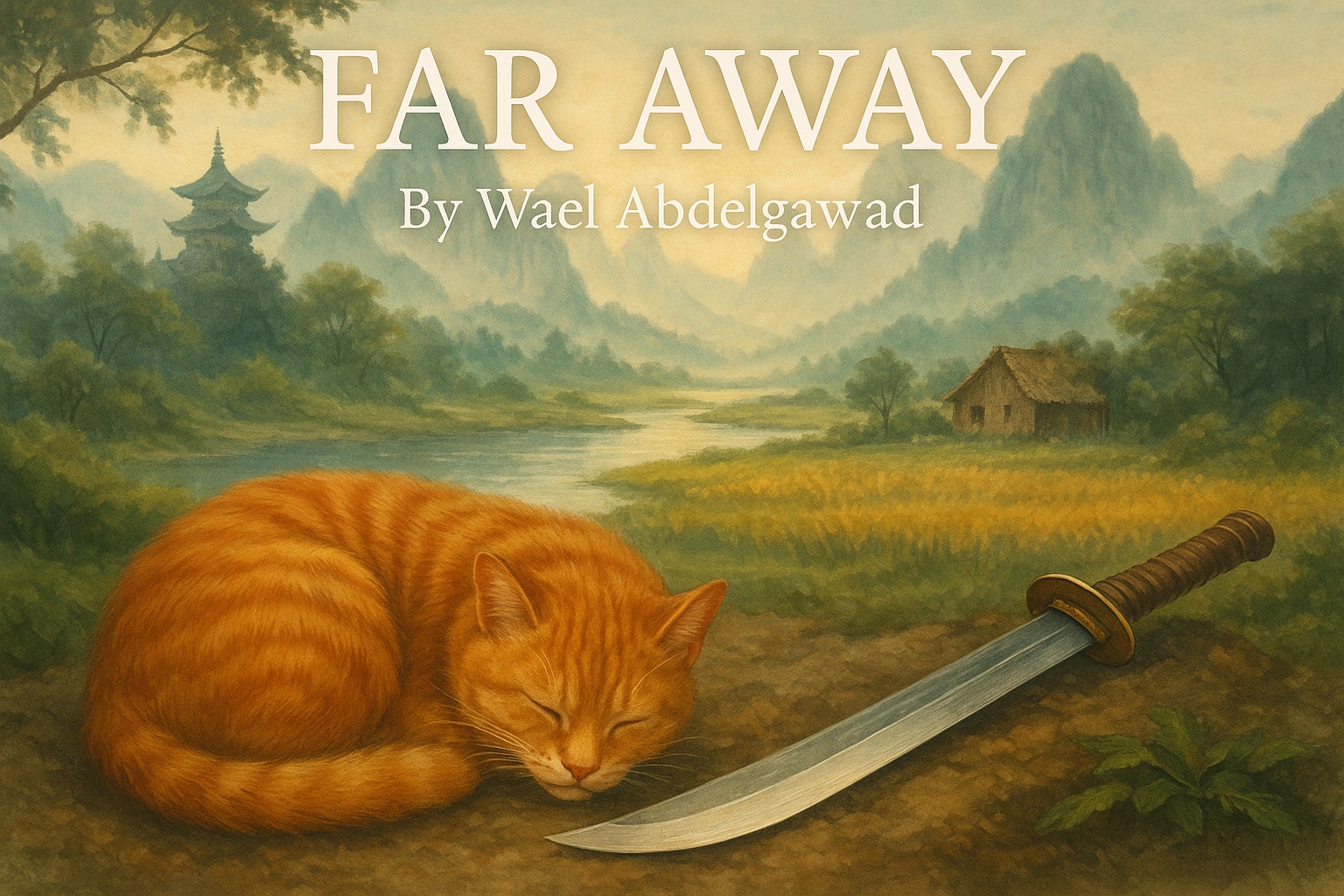
A promising new life with Five Star brings friendship and the beginnings of prosperity, but the job exacts a bloody price.
Read Part 1 | Part 2 | Part 3 | Part 4 | Part 5 | Part 6 | Part 7 | Part 8 | Part 9 | Part 10 | Part 11 | Part 12 | Part 13 | Part 14 | Part 15
* * *
Books and Lessons
Keep supporting MuslimMatters for the sake of Allah
Alhamdulillah, we're at over 850 supporters. Help us get to 900 supporters this month. All it takes is a small gift from a reader like you to keep us going, for just $2 / month.
The Prophet (SAW) has taught us the best of deeds are those that done consistently, even if they are small. Click here to support MuslimMatters with a monthly donation of $2 per month. Set it and collect blessings from Allah (swt) for the khayr you're supporting without thinking about it.
Seeing Zihan Ma shook me and almost made me question the path I was now on – but not quite. Still, it reminded me of all he had taught me: medicine, calligraphy, and deen. I knew in my heart that these things were treasures I should not lose. So I bought an old acupuncture text. The diagrams fascinated me. Sometimes I copied the meridian charts repeatedly onto scrap paper while trying to remember Zihan Ma’s lessons.
Other nights I practiced calligraphy by lantern light. My handwriting remained clumsy, but slowly improved.
In a secondhand Islamic bookstore near the grand masjid, run by an ancient scholar with a bent back and a beard that hung to his waist, I spent a considerable amount of money to buy two books I had seen on Zihan Ma’s bookshelf: the Forty Hadith by Imam Nawawi, and Tianfang Dianli (Laws and Rituals of Islam) by Liu Zhi. Some nights I would sit in the masjid from Maghreb to Ishaa, reading one of these books.
Three days after Zihan Ma visited me, a courier arrived at my room shortly before noon.
He wore the dark blue sash of Five Stars and carried himself with the stiff posture of a minor functionary who enjoyed the importance of his duties a bit too much.
“Darius Lee?” he asked.
I nodded.
“You are invited to lunch with Shah Suliman at the Golden Lotus Pavilion. Immediately.” He handed me a folded note bearing Suliman’s seal and departed without another word.
I stared at the note for some time after he left, wondering what Suliman might want with me. Had I done something wrong? Was I to be reprimanded? Was I in danger?
Respectable
The Golden Lotus Pavilion was one of the most expensive restaurants in Deep Harbor. I had never set foot inside it, though I had passed it many times, and seen the nobles and merchants entering and dining on the upper balcony, which overlooked the river.
I washed quickly, combed my hair and put on my best clothing, which consisted of dark trousers, a wool tunic, and my least worn cloak. I strapped my dao to my back – I never went anywhere without it. For footwear I had only the kung fu shoes and my regular traveling boots. Moving quickly, I cleaned the road dust from the boots with a damp cloth, rubbed a mixture of tallow and beeswax into the leather, then hurriedly buffed them with an old rag until they gleamed. I still looked like a caravan guard, but a respectable one.
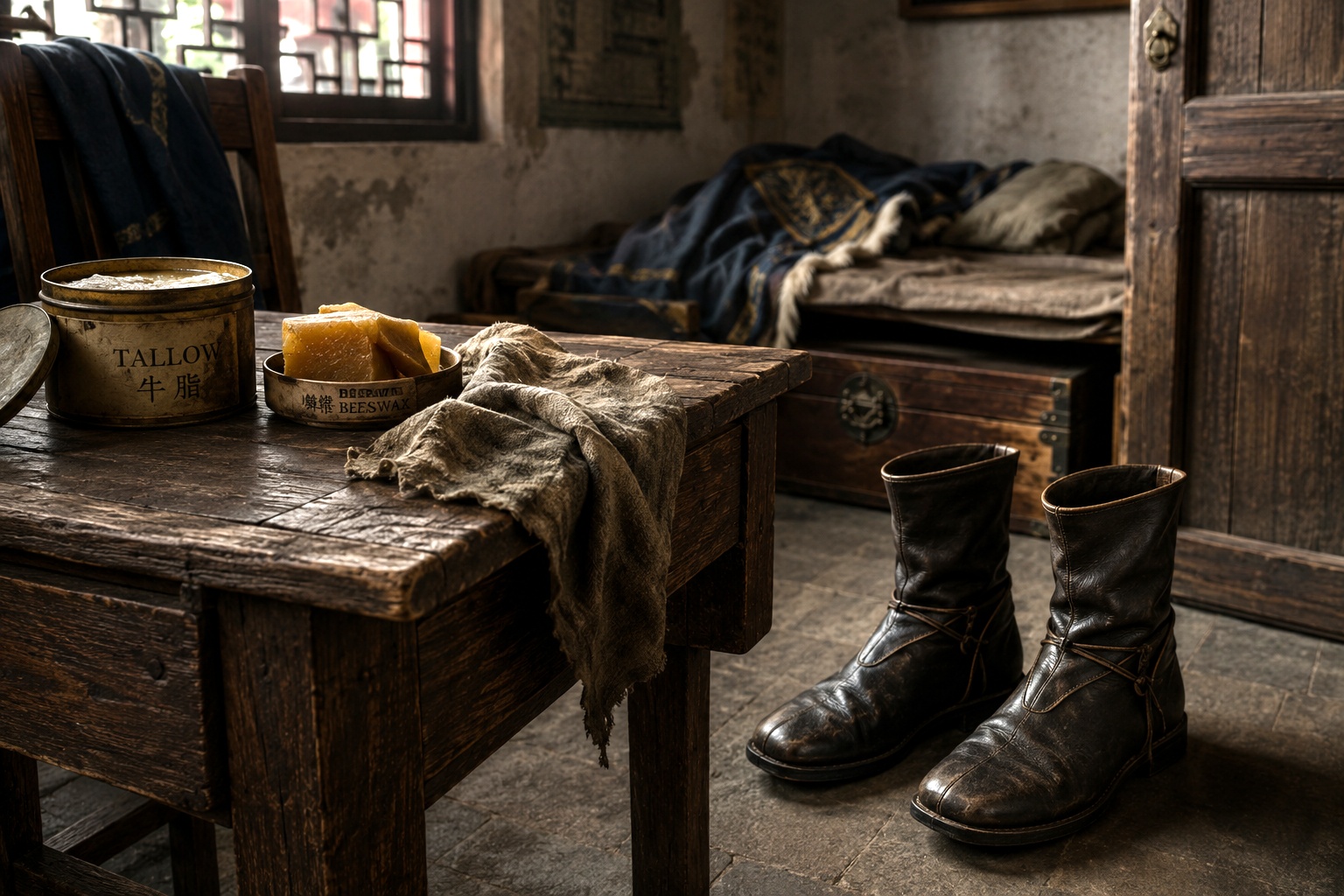
Of course, “respectable” might mean something very different to the people who ate at the Golden Lotus. But my father had taught me never to think of myself as beneath anyone else. In their hearts and souls, not to mention when squatting on the chamber pot, the rich were no different than the poor, and were often worse in character.
Two men in embroidered jackets stepped forward the instant I reached the entrance stairs. One was as tall and wide as a door, while the other was fairly ordinary looking.
“This establishment is private,” the big one said.
“I’m meeting Shah Suliman.”
He looked me up and down openly. “And I’m having an affair with the Emperor’s daughter.”
“You’d better keep that to yourself.”
He clucked his tongue. “Get lost.”
“I’m serious,” I insisted. “Suliman sent for me.”
“Then he should have come to collect you personally. Enough.” He put a huge hand on my shoulder.
Anger rose inside me. I worked for Five Stars, I bled for them. Not to mention, I was a member of the Shah family, though no one but Suliman seemed to know that. For the first time I felt a sense of resentment that Suliman was honored, while I was treated like streetside trash because I wore travel boots and a worn cloak. Why should that be?
“Get your hand off of me,” I said flatly. “Unless you want to lose it. It won’t be the first arm I’ve taken.” I touched a hand to the hilt of my dao. “You might have heard of me. They call me Bridge Boy.”
Internally I cringed. I never thought I would use that stupid nickname to my advantage. But I could not leave Suliman thinking I had failed to show up for this meeting.
The big man flinched and yanked his hand back as if he’d touched fire. He reached for the baton he carried at his hip. But the other one stayed his hand. “I’ll go check it out,” he said.
Routine Questions
A few minutes later, during which time me and door-wide stared each other down, Suliman came down personally,
“I’m so sorry, Darius,” he said. “These men -” he snarled the world – “had instructions to let you through.”
“This kid is your lunch companion?” the big man said incredulously.
Suliman’s face went hard. “Know your place,” he said flatly. He turned to me. “Let’s go upstairs.”
My eyes moved from one person to the next. “I lost my appetite.”
Suliman nodded. “I understand. How about if we walk and talk?”
We walked back toward the canal district, and when Suliman gestured toward a cramped working-class noodle shop, I nodded. Inside, steam clouded the windows. Laborers crowded shoulder to shoulder at rough wooden tables while harried but nimble servers carried bowls back and forth with astonishing speed.
Suliman seemed comfortable. We ordered beef noodles, pickled vegetables and tea.
He asked me a series of fairly ordinary questions:
How were the routes?
Which guards worked well together?
Had Karim trained us well?
Did I prefer horseback escort or wagon duty?
I answered cautiously.
Finally he set down his chopsticks and said, “You’ve done well so far.”
“Thank you.”
“The reports on you are excellent.”
“You get reports on everyone?”
“Reports are written on everyone. I don’t read them all personally.”
“But you read mine.”
“We have investigated you thoroughly.”
Father’s Footsteps
I sat back, digesting this. “What do you mean?”
“My men followed your father’s footsteps. They went to the town where he raised you. They even saw your mother’s grave. We have confirmed that you are Shah Nur’s son.”
I crossed my arms and pursed my lips. “I don’t need anyone to confirm what I already know. And I don’t care what you or anyone else thinks.”
“Are you sure?”
I ignored that, as curiosity had overcome me. “Your men saw her grave? How does it look? And the farm? And Lady Two?”
“Your father’s farm has been incorporated into a larger company farm owned by a wealthy businessman. Your father’s house is gone, but the grave is well tended. I don’t know who Lady Two is.”
I wondered if the “wealthy businessman” was the Mayor. A strange hollow feeling opened inside my chest. I was happy that whoever had bought the farm had enough respect to maintain my mother’s grave. But I hadn’t thought of her much lately, and I felt my heart stutter with guilt. She was the only person in my life who had ever truly loved me, and I was forgetting her. I needed to go back there, to sit by her side and talk to her.
“I hear,” Suliman said, “that Zihan Ma came to see you. What did he want?”
I stiffened. “You know about that?”
“I know many things.”
I took a bite of food. “Not that it’s any of your business, but he wanted me to return to live with him.”
“Are you considering it?”
I frowned. “No. Not really.”
He stirred his tea slowly. “Perhaps you should.”
“Why?”
He met my eyes, and I sensed genuine unease beneath his calm demeanor.
“It may be better for you in the long run.”
“Why?”
“Well.” He stood, leaving a large sum of money on the table – a lot more than was needed in this establishment. “May Allah protect us all.”
“You’re leaving? What did you want to talk to me about?”
“Everything we just talked about. You’re doing well. Consider Zihan Ma’s request.”
With that, he left me sitting there with more questions than answers. I pocketed the wad of money and finished my food.
Scut Work
Five Star began sending me on longer routes, which paid better. Sometimes I was accompanied by one or two of the other rookies I’d trained with, and occasionally by all. Because we were rookies, we were given the scut work.
Veteran guards rode at the front and rear of the caravan where the danger was greatest and the prestige highest. We rookies spent our days doing everything else.
We tended the horses, cleaned tack, inspected hooves for stones and cracks, hauled water, unloaded wagons, set up camp, dug latrines, and stood the least desirable watches. If a merchant wanted help erecting a tent, we were summoned. If a wheel broke, we repaired it. If a horse threw a shoe, we chased it down and held it while the farrier worked.
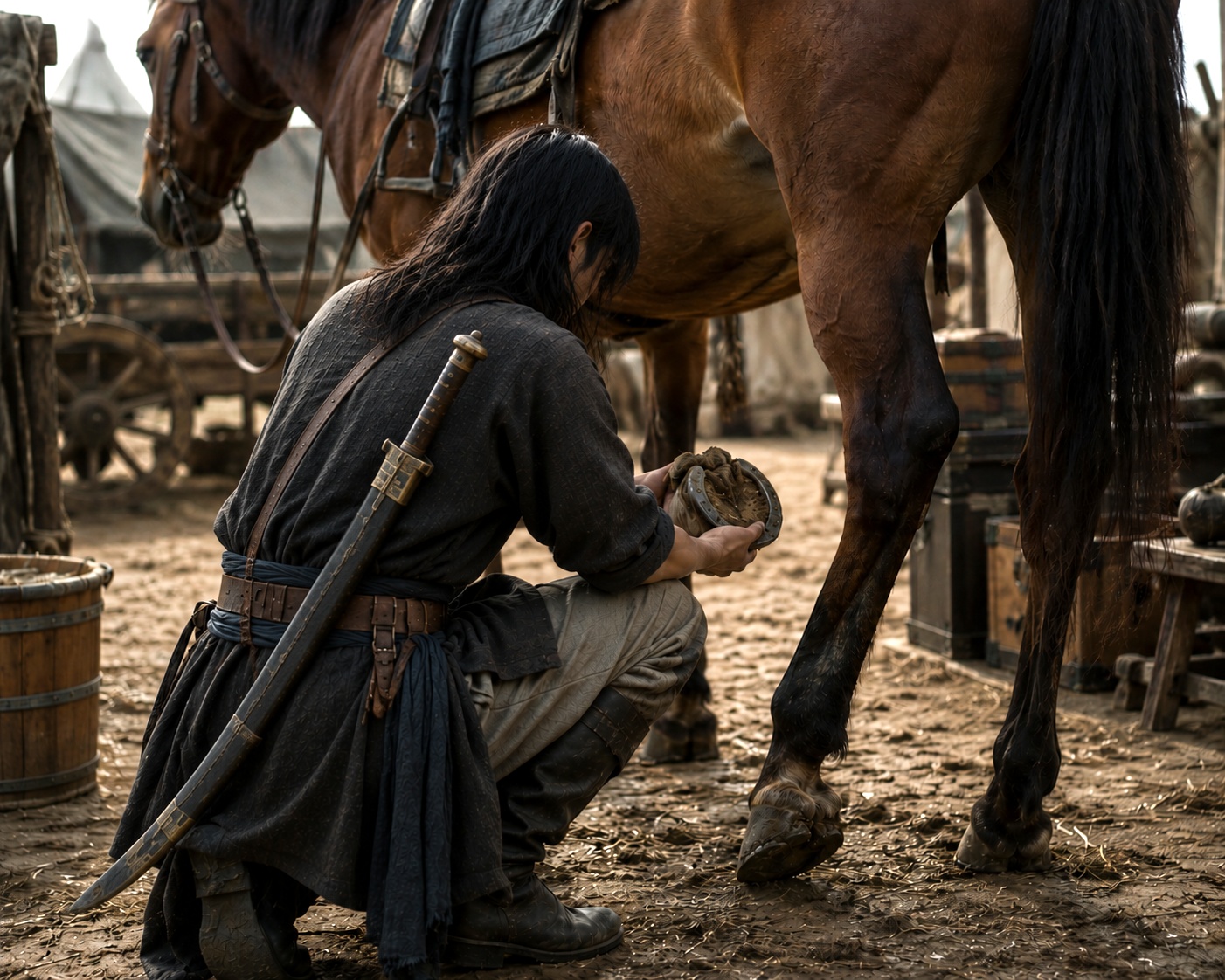
Worst of all, whenever wealthy merchants needed to relieve themselves along the road, a guard was expected to accompany them into the bushes to ensure they were not attacked by bandits, wolves, or overly curious travelers.
I spent many hours standing awkwardly among trees while pretending not to notice what was happening a few paces away.
“It is an honorable profession,” Ahmed informed me solemnly one evening.
I threw a pebble at him.
Even so, I found myself enjoying caravan life.
The roads carried us through mountains, forests, villages, farms and bustling market towns. Every journey revealed something new. Sometimes Longwei pointed out distant kingdoms or trading routes. Sometimes Ahmed told stories from the war. Sometimes Meilin complained so loudly and continuously that everyone else rode faster simply to escape her.
Unexpectedly Cheerful
I found myself unexpectedly cheerful whenever Deng Weili was in my caravan. I told myself it was only because she was such a good shot, so having her around made us all safer.
Once she found me studying the acupuncture text after we’d made camp for the night.
“You study medicine?” she asked skeptically.
“A little.”
“And hurt people professionally?”
“I don’t think of it that way.”
She shook her head slowly. “You are a strange person, Darius Lee.”
There came a time when I started wondering about her. Where was she from? Where were her parents? What else did she like besides archery? What did she think about during the long days on the road?
I didn’t know why I wanted to know these things.
Ambush
The longer routes brought greater danger.
One autumn afternoon we were escorting a shipment of medicines and dyed textiles through a wooded valley north of Deep Harbor. The road wound between steep hills thick with pine trees, and as we entered the narrow pass, a feeling of unease settled over me. The place felt wrong somehow. There were no farmers working nearby fields, no travelers moving in either direction, and not even the sound of birds. The only noises were the creaking of wagon wheels, the clatter of harnesses, and the occasional snort of a horse.
Ahmed seemed to sense it too. He guided his horse alongside mine and scanned the ridgelines.
“Too quiet,” he muttered.
I nodded. I was about to ride forward and speak with one of the veteran guards when the attack came.
Arrows burst from the trees without warning. One struck the side of a wagon with a heavy thump. Another buried itself in the neck of a horse, causing the animal to rear and scream. Merchants shouted in panic as guards scrambled into position. Before the echoes of the first volley had faded, armed men came rushing down the slopes carrying spears, axes and crude swords.
Training took over before conscious thought could catch up.
The veteran guards moved immediately, forming a defensive line around the merchants and wagons. Ahmed was already shouting orders. Kuangren had an arrow nocked and flying before I had even drawn my dao. Somewhere behind us, Meilin charged forward with a double-headed sword she sometimes carried, screaming insults so colorful that several merchants later adopted them into their foul-language repertoires.
I remember glimpses more than a coherent battle: Deng Weili standing atop a wagon, loosing arrows with terrifying speed and accuracy; Longwei dragging a wounded merchant to safety; frightened horses straining against their reins; the smell of dust, sweat and blood mixing in the autumn air.
Then one of the attackers came for me.
He was older than I expected, perhaps forty years old, with a graying beard and the gaunt appearance of a man who had not eaten properly in months. He carried a wood axe and wore patched clothing that hung loosely from his frame. For a brief instant he looked less like a bandit than a desperate farmer.
Then he jabbed at my chest with the axe. It was a halfhearted attack, as if he were testing the strength of a river’s current
Wielding my dao, I knocked the weapon aside and slapped him in the face with the flat of the blade. I don’t know why I did that. Five Star policy was to kill bandits. Yet in the moment I chose to simply stun him. He staggered backward, shaking his head, but instead of retreating he tightened his grip and attacked again.
This time I struck his weapon arm hard with the spine of the blade, and heard his arm break. Remarkably, he did not drop the weapon. He groaned in pain and transferred the axe to his other hand.
“What’s the matter with you?” I shouted. “Don’t make me kill you! Just run away.”
Fear flashed across his features, then shame, only to be replaced with grim desperation.
“No choice,” he said.
He took a step forward and I knew that either he would die or I would.
As he swung the axe at my neck with all his strength, I stepped inside the radius of the swing, seized his weapon arm with my left hand, and drove my dao all the way through his torso. His eyes widened in shock and bewilderment, and his face went white. He stumbled backward and fell, taking my dao with him, pulling it free from my hand. That had never happened to me. I leaped forward, put my foot on the man’s thin chest, and with two hands pulled the dao free from his dead body.
A Little Too Well
I stood there with my dao hanging at my side, dripping blood, as the battle raged around me. What was the matter with this stupid old father? Why was he even here? I bent over him and shouted, “Why did you do that?”
My shout attracted another of the bandits, who came at me.
I went a little crazy then. I fell into River Flow, and moved from one bandit to the next, cutting, slashing and thrusting. I felt no fear. It was an exercise, a training session beneath the stars. When there were no more opponents I moved in a circle, dao ready, my eyes sliding over everything like those of a man who sees either nothing or everything. Men stood in a wide circle around me, but they were Five Star guards.
“Darius!” one of them shouted. “Snap out of it!”
It was Ahmed. I let River Flow go and stood up straight. There was a trail of dead bodies behind me. I looked from one to the next. I had killed six men.
“Darius,” Ahmed said again. “Sheath your weapon.”
I gave the dao a flick to clear the blood, took a rag from my pocket and gave it a quick wipe, and sheathed it.
The circle around me dissolved. The surviving bandits had fled into the hills, leaving their dead and wounded behind. The merchants celebrated their survival. The guards congratulated one another. Someone clapped me on the shoulder and called me a hero.
I did not weep or vomit. I felt empty. I sat beside a wagon, and Ahmed handed me a waterskin. His expression was solemn, not celebratory.
“You did the job,” he said quietly. “Maybe a little too well, but it’s what they pay us for.”
That night, I tossed and turned, and shouted in my sleep.
Cat Toy
The next day the caravan passed through a market town, and we guards were allowed to go shopping in shifts. I went to the market with Weili. She bought bootlaces, a silken cord for her hair, a comb made from buffalo horn, and tea.
I bought warm gloves, a sesame sweet, and a small bag of spiced nuts. When we passed a vendor who sold cat combs and toys, I found it funny. Would people really spend money on such things? I picked up a toy that consisted of a thin stick with a string and a little toy bird on the end. The bird had real feathers, and I dangled it, making it dance. With a smile, I wondered what Far Away would think of it. Would he turn up his nose, or go crazy for it? And Haaris, he would probably laugh his head off.
Suddenly my hands began to shake. I put the toy down and turned away, and before I could take a step, I burst into tears. I walked to a corner where the marketplace wall met the wall of a vendor’s stall, and slid down with my back against the wall. I covered my face with my arms as I shook and moaned. An arm went around my shoulders and Weili said, “It’s okay. Tomorrow’s a new day. Take it one day at a time.”
“What do you know about it?” I finally managed to ask.
She gave my shoulder a squeeze. “Too much.”
My life took a turn then. I found myself praying less. Ahmed would call us for salat and sometimes I’d join, but often I’d make an excuse. I tucked the Islamic books away under my bed back in Deep Harbor and stopped reading them.
I didn’t want to be this way. I looked back at the naive, eager young man who had spent his time reading Islamic books, and wanted to be that man again. Truly I did. But the blood that had flowed from the edge of my sword told the truth about me.
I was promoted from scut work to proper guard duty, up front with the veterans. I was the youngest one there. But no one questioned my age when robbers came screaming from the hills with blades in their hands, and I was in the front lines, fighting like a man who didn’t care if he lived or died. No one told me to choose between healing and violence when my sword saved those around me from murder.
The merchants respected me because I was useful. The guards respected me because I fought well and never boasted. Even Kuangren, who disliked nearly everyone, stopped mocking me after I pulled him off his horse during an ambush moments before a spear would have taken him through the chest.
At Ishaa time I listened to Ahmed reciting the Quran and he led the Muslims in salat. Tomorrow’s a new day, I would think to myself. I repeated the thought like a mantra as I fell into night after night of troubled sleep.
* * *
Reader comments and constructive criticism are important to me, so please comment!
See the Story Index for Wael Abdelgawad’s other stories on this website.

Wael Abdelgawad’s novels – including Pieces of a Dream, The Repeaters and Zaid Karim Private Investigator – are available in ebook and print form on his author page at Amazon.com.
Related:
Keep supporting MuslimMatters for the sake of Allah
Alhamdulillah, we're at over 850 supporters. Help us get to 900 supporters this month. All it takes is a small gift from a reader like you to keep us going, for just $2 / month.
The Prophet (SAW) has taught us the best of deeds are those that done consistently, even if they are small. Click here to support MuslimMatters with a monthly donation of $2 per month. Set it and collect blessings from Allah (swt) for the khayr you're supporting without thinking about it.





[Podcast] Wait, Muslims Have Been Here HOW Long?! | Hassam Munir

Far Away [Part 30] – The Rock Splitter And The Parthian Shot

Maryam: The Story Of The Muslim ‘Virgin’ Mary

Is It Ever Too Early To Prepare For Ramadan? Reflections On Rifq, Forgiveness, And Healing The Heart

Lessons From The Battle Of Badr: A Personal Transformation Perspective

Long War Without End: A Quarter-Century Since The War On Terror

[Podcast] Faith, Motherhood, and the Call to Gaza | Dr. Samaiya Mushtaq

When The Shaykh Never Spoke – Deepfakes, Synthetic Scholars, And The Coming Crisis Of Religious Trust

The Stirring Of A Muslim Population In Japan: The Story Of Yusuke Fujitani

CAGE, Muslim Leadership, And Imran Khan: The Silence Test

The Best Actions for Eid al-Adha [Imam Dawud Walid]

Coming Full Circle: Who Are You Now? | Night 30 with the Qur’an

Running Away From Who We Are | Night 29 with the Qur’an

Building From the Ground Up: Week 4 Recap | Night 28 with the Qur’an

The Muslim You Are Becoming | Night 27 with the Qur’an
MuslimMatters NewsLetter in Your Inbox

Sign up below to get started
-

 #Culture1 month ago
Far Away [Part 26] – Shaytan Is A Liar
-
#Culture1 month ago
Far Away [Part 25] – To Save A Prince
-
#Current Affairs1 month ago
From a Syrian Prison to the UN: The Case of Bilal Abdul Kareem
-
#Life1 month ago
[Podcast] 50k Mahr, Hiding Money, & Who Pays for the Wedding? | AML Finance




Bint A
June 15, 2026 at 10:04 PM
Waaaaaiting patientlllyyy for next instalment… :(
[CAUTION: Too much waiting can cause adverse side effects]
Wael Abdelgawad
June 16, 2026 at 12:48 AM
Sorry. Finishing up now inshaAllah.