
Family and Community
Raising Children in the West- How Do You Define Respect (Part 1)

This is the second of a three-part series on parenting in the West.
Raising Children in the West- How Do You Define Respect by Umm Reem © MuslimMatters.org
Part 1 | Part 2 | Part 3
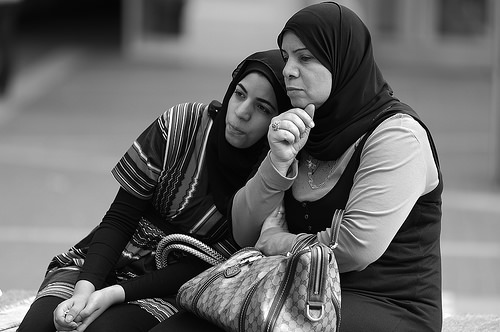 When I find myself getting upset with my children for disrespecting me, my irritation increases more if they ask me how they were disrespectful or why their action or statement was disrespectful when they didn’t mean it in disrespect!
Keep supporting MuslimMatters for the sake of Allah
Alhamdulillah, we're at over 850 supporters. Help us get to 900 supporters this month. All it takes is a small gift from a reader like you to keep us going, for just $2 / month.
The Prophet (SAW) has taught us the best of deeds are those that done consistently, even if they are small. Click here to support MuslimMatters with a monthly donation of $2 per month. Set it and collect blessings from Allah (swt) for the khayr you're supporting without thinking about it.
The genuine confusion on their faces is so apparent that I find myself speechless, but at times I confuse them further by throwing a set of answers, ‘the way you talked’ (tone), ‘what you said’ (words), ‘they way you looked’ (body language). As I confuse them more, I leave myself far more frustrated because I fail to define to them, and to my own-self first, what I mean by “respect!”
This is a dilemma for many of us parents: raising children in the West while attempting to implement the same standards of respect to which our parents held us. Sometimes my children do and say things that I, even now, cannot do or say to my parents. The frustrating part is that they don’t even perceive their behavior as disrespectful while I as a parent do!
Am I over-sensitive? Am I building “too high-standards” for them? Am I ignoring the environment/circumstances/time in which they are growing up? What is respect? Who defines respect?
As I try to understand respect, I find myself caught between East and West. Yet, neither in East nor in West have I found an invariable definition of respect towards parents! I do acknowledge that some aspects are obvious, such as using bad words, yelling, rolling eyes, or slamming doors etc. but there are many that are not.
Before I continue, let me explain that below is a mixture of advice, suggestions, and questions, since I myself am still in the process of raising my own children. My children are aged between 2.5-11 years and I hope to see “positive” results one day, inshaAllah. Nothing is written in stone, I could be wrong and I could be right!
I. Language & Respect:
Let’s start with the language barriers and differences first. I grew up with the semi-traditional values of India’s “Lakhnaoo” style. People from there are very cautious about manners. For example, elders must always be addressed with ‘aap’ (a respectful term for You). However, in certain places of India/Pakistan the only way to address others is “tu,” which also means you. Yet people from Lakhnaoo wouldn’t even address their servants with this term because they use it as a way to insult someone!
When I first heard a child addressing his mother with “tu” in a movie, I was completely shocked. I asked my mother about it, to which she explained that people in certain cities talk in such a manner! I was so accustomed to addressing elders with ‘aap’ that my mother’s explanation was not sufficient and I assured myself that this must be the way of “uneducated” people. But as I grew older, I realized that in some places even educated people speak like this!
So the usage of certain terms may vary from place to place.
A. “Yes”, “Yeah”, “Haa”, “Jee”, “Na’am”, “Haadhir ya mama”:
However, what may become “normal” in a language may not necessarily be a “good” standard of respect. Take, for example, the manner in which a child responds to his/her parents. Which of the above terms is more respectful when replying back to a parent’s call? Even if it is true that in an average American household, children reply back with a “haa,” I don’t think it is considered a “respectful” reply!
I find it very impressive when I hear, at a grocery store, some child reply to his/her parents with a “yes ma’am” or “yes sir.” I immediately turn around and gaze at the family because I consider them to uphold respectful family values. If a western family can implement these rules, so can we, inshaAllah.
But, when it comes to ‘yes’ vs. ‘jee’ (Urdu for yes, ‘na’am’ in Arabic), I find myself confused. I understand that ‘jee’ has an element of respect that ‘yes’ may not have (again that is because I grew up with more Eastern values) and I feel more respect when my children reply back ‘jee mama’ vs. ‘yes mama’, I must also realize there is no equivalence in English for “jee”; “jee” is “yes”.
I, on the other hand, cannot reply back to my parents with, ‘yes ammi’ or ‘yes abbu’ and ‘jee’ is the only respectful way between me and my parents, but my children, who are growing up here, “yes” is respectful in their language. This may be difficult to understand for elderly relatives still living overseas.
B. “Bad” words, “Mean” words, “Silly” words:
Bad words or cuss words are definitely not allowed. I wish more Muslim parents strict about not allowing the use of these words. For the longest time, my children thought the “s” word referred to “stupid” until some kid at the Masjid broke the truth to them!
“Mean” words (in my categorization) include “stupid,” “idiot,” “ugly,” “liar,” “jerk,” “freaking,” etc. (Pretty much everything that sounds mean) These words should not be allowed either. If a child feels that his/her parents are not saying something right, s/he should say, “that’s not right,” or “what you are saying is not right,” but definitely not “you are lying!” as that is very disrespectful.
II. Informality & Respect
This part and “friendship vs. respect” is going to overlap. Let’s discuss this section informally first.
A lot of us grew up with a rather “formal” relationship with our parents. This type of relationship works out overseas, but in the West, this is not be one of the most advisable ways of raising children because of the repercussions such as creating a generation gap, etc.
The question is: If we develop an informal relationship with the children, where and how do we draw the line between informality and disrespect?
Formality reflects respect (at least outwardly); informality appears to reflect lack of respect even if it is not meant that way. Parents deserve the most respect, so how can a parent develop an informal relationship without feeling “disrespected?”
In my humble opinion, “informality” and “disrespect” need to be differentiated in every household. Since we, Muslims in the West, come from different backgrounds, we will always see informality and respect differently based on cultures and time. For instance, I see my husband playing and giving high-fives to our son, but I can’t see my husband doing that to his father when he was our son’s age because of the formality he had with his father. So as my son perceives giving high-fives, for instance, as a “respectful-informality” with his father, it would have been disrespectful some years ago and may still be in some cultures!
I asked my daughter to read the book “Kindness to Parents” by Abdul Malik al-Qasim. She brought quite a few incidents to my attention. The book mentions a story of a shaikh named Haywah bin Shurih, a scholar, who used to teach people. Sometimes his mother would ask him to feed the chicken, so he would promptly leave his audience, obey his mother, then resume giving the lecture. (Al-Birr was-Silah, by Ibn Al-Jauzi, p. 85)
As having an “informal” relationship with my children, I do not mind at all if my children take my permission, politely, to finish their work first and then do the chore I have requested of them, if there is no urgency. For me, it would not be disrespectful for them to delay my task, as long as their tone and words are polite and they take my “permission” instead of “telling” me that they will do it later. Their tone and their words will define their level of respect to me because I myself gave them the room of “informality and discussion.”
For instance, my son had a headache one day and I kept talking to him without realizing that it was bothering him, so he asked me ‘mama can you please be quiet!’ I could never say that to my mother! Was it disrespectful of him to do so?
I absolutely don’t mind him telling me that it was hurting him if I was talking, I just didn’t perceive “be quiet” as a respectful term used for a parent. So I told him, if next time he wanted baba or mama to “be quiet” or speak softly, then to say “mama can you please not talk anymore.” I still have to remind him sometimes!
Some parents may suggest that perhaps because I may have used the term “be quiet” with my children, then that is why they used it with me. Maybe, but we didn’t speak to our parents in the same tone or language as they spoke to us. Were we born with that element of respect within us?
As for me, I lived in Saudi until I was 12, and maybe because I never saw any other child speaking in that way to their parents, it was “understood”. But what about many first generation Muslims who grew up here from the very beginning? (I would love to hear others’ opinions on this)
To Be Continued:
- [Part 2] III. Friendship & Respect
- IV. Hear & Obey
- A. Talking Back or Asking Questions
- B. Confidence or Respectful Silence
- C. Respecting the Authority
- IV. Hear & Obey
- [Part 3] V. Conclusion
- VI. Islam & Respect for Parents
- VII. Juhd, Du’a & Patience
Keep supporting MuslimMatters for the sake of Allah
Alhamdulillah, we're at over 850 supporters. Help us get to 900 supporters this month. All it takes is a small gift from a reader like you to keep us going, for just $2 / month.
The Prophet (SAW) has taught us the best of deeds are those that done consistently, even if they are small. Click here to support MuslimMatters with a monthly donation of $2 per month. Set it and collect blessings from Allah (swt) for the khayr you're supporting without thinking about it.




How to Build a (Muslamic) Library

Far Away [Part 16] – Five Star Trading Company
Far Away [Part 15] – Caravan Guard

Eid al-Adh’ha 1447 AH

Arafah: The Door That Opens Once a Year

The APA Gave Him A Human Rights Award. Then They Cut His Microphone For Talking About Gaza.

The Muslim Soldier From Ellis Boulevard Who Never Came Home

Not Everyone Goes To Hajj…But Everyone Is Called: Gaza, Gratitude, And Dhul Hijjah

From The MuslimMatters Bookshelf: Puberty Books For Girls

Stoning The Jamarat: Naming The True Enemy

The Best Actions for Eid al-Adha [Imam Dawud Walid]

Coming Full Circle: Who Are You Now? | Night 30 with the Qur’an

Running Away From Who We Are | Night 29 with the Qur’an

Building From the Ground Up: Week 4 Recap | Night 28 with the Qur’an

The Muslim You Are Becoming | Night 27 with the Qur’an
MuslimMatters NewsLetter in Your Inbox

Sign up below to get started
-

 #Current Affairs1 month ago
Op-Ed: Javed Ghamidi And The Theology Of Managed Defeat
-
#Current Affairs3 weeks ago
The APA Gave Him A Human Rights Award. Then They Cut His Microphone For Talking About Gaza.
-
#Islam1 month ago
From The Chaplain’s Desk: From Madinah To Our Campuses, Reviving A Quran-Centered Culture
-
#Culture2 weeks ago
The Muslim Soldier From Ellis Boulevard Who Never Came Home


Gohar
November 12, 2008 at 8:30 AM
I guess it’s probably important that everyone acknowledges some external marker of respect rather than just define it completely for themselves.
Joyhamza
November 12, 2008 at 8:33 AM
salaam ‘alaikum sister thats a nice article. I believe besides the inborn fitra, a child’s cognitive understanding is developing in countless ways he/she observing everything happening around. Every subtle gestures that the parents are making are being a source of education for the child. Thus when we suddenly find the child approaching things in a traditional way without being taught much in an academic manner, we might miss the point that the teaching was always there, we were always teaching and the child was always learning. Thus incredible it may seem, but little kids very quickly do not only learn words, but also their connotations and how to act accordingly. Allahu A’alam.
Hassan
November 12, 2008 at 10:03 AM
Masha’Allah good article, just what I was looking for.
Sister Umm Reem, even in punjabi culture (at least among educated people), every elder or a person with somewhat formality is referred as “aap”. And with young and same age informal people, word “tum” is used. I never heard “tu” till high school or college. Some guys use it to be very informal perhaps.
Similarly, we never said “haan” to elders, we say “jee” to them.
Despite using these terms, there was always some level of informality that I had with my mother (not father), like when she used to say do not sit like this or that, or do not do certain things, I would ask back, why? (when I was growing up). And she used to say, we never asked our parents like this. Those things were not unislamic, they were just cultural way of doing things properly, and now I realize (after somewhat studying islam) that culture is very important in Islam, and is in fact may be “the law” if not exclusively mentioned in Quran or Sunnah etc. Hence, we need to emphasize to youth and children, that do not despise culture and say “oh I want to follow true Islam, not culture”. Thats just nonsense statement from their part.
abu abdAllah, the Houstonian
November 12, 2008 at 12:42 PM
innalhamdolillah. bismillah. may Allah subhanahu wata ala accept from you, and may He increase your children, you, and all of us, in birr to our parents, and may He cause our parents to be pleased with us, and increase us in our appreciation of them.
there is no doubt that parents have to start early when it comes to instilling respect in their children. children soak up the example of parents behavior towards grandparents, and of one parent to the other, so poisoning the atmosphere at home is sure to encourage bad fruit later. in that respect, too, parents should be wary: TV may be to some a way to relax or vegetate or stay informed, but every bad example on TV will be soaked up by children just as much any live example they witness in their home.
jazak Allah khayr, for this series.
as a son who grew up to realize how much my adab to my parents needed improvement, i’d like to share with all of you one of the means by which Allah subhanahu wata ala softened my heart. He caused one of my friends to drag me to a lecture by Shaykh Waleed Basyouni entitled “Parents: the Middle Gate to Jannah.” (the link goes directly to the mp3, so you can right-click to save or left-click to play.)
i heard this lecture live, and alhamdolillah it moved me to tears. as soon as possible, i got the recording from my friend, and uploaded it because i believe so many Muslims, especially those who are trying to improve themselves in knowledge and ibadat, would benefit from reminders of the significance of disrespect to parents.
needless to say, after that lecture i have gone gladly to hear Shaykh Basyouni’s other lectures. and if i do achieve birr al waladain, inshaAllah, and for every step i take towards it, i am glad that Allah will reward him for it. so may Allah reward you, too, sister for what your writings do to encourage parents who better instill respect in their children, and for every child who thus better respects his parents.
(link edited: sorry about that! i should have checked the code after it was pasted.)
iMuslim
November 12, 2008 at 12:52 PM
Jazakillah khair Umm Reem for an interesting read, masha’Allah.
Abu abdAllah… the link to the mp3 requires authentication, as it is an ftp link. Please provide an alternative d/l link if poss. Jazakallah khair bro.
(from abu abdAllah: wa eeyak, and i fixed the link. good catch!)
UmmAbdirrahman
November 12, 2008 at 1:36 PM
Assalaamu ‘alaikum,
What kids call their parents-Remember even the kids that say “jee ha” had to have gotten it from somewhere. Either they had extended family so they saw their own parents calling their parents that, so they knew to do the same. Or, their parents must have told them when they were little to say it when talking to them (ie told them their expectations when they were very little…you can’t tell a12 year old start telling me jee haa if you accepted “yes” for several years)
As far as the cultural divide, I don’t see any thing wrong with telling little kids to say “yes” to me but make sure you say “jee haa” to your grandparents. Kdis are smart, masha-Allah.
So, I don’t see the language part a big problem. Just tell them early on.
The other words though, stupid, etc. Yes, that’s where the outside inflluences can play a big role. And it also depends on your child’s personality. I went to school here since preschool and knew never to use those offensive words at home. My mother would not have allowed it, obvious. So for this one, parents should put their foot down early on to keep a one-time occurrence from turning into a habit. Just don’t jump on them too hard the first time they say it…they’re just experimenting with what they’ve heard around them…instead, engage in a discussion…ask them what the word means, where they heard it, explain the rationale…and if they don’t let up, keep them away from the source of the language.
Umm Reem
November 12, 2008 at 1:50 PM
true, but for some odd reason it seems like it happens more with our children then it happened with us when we were growing up…
I think they pick a lot more form TV then the live example/s at home…and especially they are quick in picking bad attidute and behavior from tv…i don’t know why but this is what i have observed in my kids and what other parents have told me…
i don’t have a tv at home alhamdullialh. but i do let them watch something once in a while on the dvd (the ones that i approve of). I honestly wouldn’t know how to instill the level of respect i want to see in them have i had a tv at home.
Some parents ask me to talk to their teenage daughters for not “respecting” the parents and i see those girls talk/act in similar way as some of the teenage shows on the tv, and they become so used to act in such a way that they even end up talking to their parents with that same attitude.
Siraaj
November 12, 2008 at 1:58 PM
Heh, makes me think of my mom – we have a pretty informal relationship and gab (sometimes for hours) about anything and everything in the way that we’re accustomed to (my mom’s pretty americanized). However, there is one thing which always meets with anger and irritation when speaking with her, and that’s if she calls me on the phone and I say, “Salaam alaykum mum, what’s up?” She doesn’t like “what’s up” for some reason, so both my brother and I have stopped greeting her that way :D
As for my own kids, 3 and 1, I don’t believe they’re at a stage where they quite understand respect vs disrespect. I think this is a stage where they’re assimilating behaviors from their parents and peers, so when I see behavior that is disrespectful, I do try to remember where I was at that age (oblivious) and instead seek to correct the behavior without taking personal offense to it (so my voice may become more neutral or firm, but generally speaking, I don’t yell or get angry).
In my own mind, at least for now (and I’ve only been a father 3 and a half years), my goals for my children don’t really revolve around respecting me per se as they do correcting behaviors I perceive as Islamically undesirable. So if my daughter yells at me or tries to take a wack at me when she’s angry, my pitch and tone will increase in severity in proportion to the crime I think it is (disrespecting one’s parents) not because I’m personally put off by it, but because if that behavior continues to the time of accountability for her, that could be severely damaging for her, and I don’t want her to be harmed, so I raise the degree of my “anger” (though I’m usually not, actually, my first reaction is to want to catch her hand and tickle her and laugh at her tantrum) so that she realizes the behavior is unacceptable. I never take “disrespect” personally.
Siraaj
Umm Reem
November 12, 2008 at 2:03 PM
UmmAbdirrahman: true but kids also pick up from other relatives, close friends etc and not just parents. I have to remind the kids to keep saying ‘jee’ to elder family member, who would mind yes or haan for an answer. They are smart but they always don’t “think” before they speak…and that’s why they are kids! :)
As for picking up on the bad/mean words, kids learn from other kids. When they are young (less then 4 probably) the more we tell them not to do something the more they would do it. My son learned to say stupid when he was less then 3 (i think, can’t remember exactly). I tried to tell him no, nicely strictly meanly angrily..in every possible way but he didn’t stop. A friend told me to just ignore him and he would stop. That was the difficult part. It was easier to ignore him at home, but outside it was very difficult. As parents we become VERY conscious of how our children act when there are others/outsiders around, and especially when other people start looking at us if our child would do/say something wrong…
I discussed some of it in “friendship vs. respect” in Part 2.
Olivia (the wife)
November 12, 2008 at 7:24 PM
Masha’Allah, this is a very beneficial article and I look foward to the rest of the series! =)
It’s hard for me to really understand where you’re coming from, not that Americans don’t respect their parents. I didn’t hear the word “respect” as much as I heard the word “manners” growing up. We were taught to have good “manners” (which really was speaking respectfully). Being ill-mannered was not appropriate. My father’s mother especially made sure we always minded our “Ps” and “Qs.” “Yes, please”, “May I, please?” “No, thank you,” etc. What’s drastically different though for me was that English doesn’t have so many varying terms for how to address other people. the word “you” is used for everyone and the only way to offensively address an elder was to call them by their first name rather then “grandma” or “mom” or “Mrs. so and so.”
Sometimes I do chide our almost 4 year old for being disrespectful but other times she is only repeating something I said to my husband in jest without realizing it is disrespectful, so I let those things go. When I hit my teens (before I was Muslim) I was atrociously disrespectful to my mother. In my mind respect for elders only seemed to be reserved for senior citizens and I challenged my mother a lot because it was the acceptable “teen” thing to do. Islam has taught me to see more value in being respectful to parents and I also try my best now too with my mom (who by the way accepted Islam a few weeks ago :) ).
But I also enjoy being able to “chat” with my mom the way I would a friend. I think masha’Allah it’s good to have a balance between having a friendship with your kids so that they feel comfortable confiding in you and don’t have to walk on egg shells, whilst still knowing boundaries.
And dude, being a native English speaker, I think saying “ma’am” and “sir” to a parent is awkward for most people. :)
Nihal Khan
November 12, 2008 at 7:34 PM
awesome! this was something ive been waiting for!
abu abdAllah, the Houstonian
November 12, 2008 at 8:17 PM
MashaAllah, laa quwata illa billah! that is fantastic news for you, for her, and for your whole family. may Allah guard her faith, and your family’s, may He increase her and your family in beneficial knowledge, wealth free from taint, and accepted deeds.
anon
November 12, 2008 at 8:22 PM
“And dude, being a native English speaker, I think saying “ma’am” and “sir” to a parent is awkward for most people. ”
I shall assume you are not from the southern states than :)
The first time I ever heard a child saying yes sir/yes maam was when I moved down south and I actually thought the kid was intentionally acting like a smart ass. It turns out that that’s how the majority of children who have been raised down here speak.
abu abdAllah, the Houstonian
November 12, 2008 at 8:28 PM
bismillah. that’s right, anon. even now, when i use ma’am and sir with northerners, especially elderly northerners, they can’t figure it out.
it’s like we were all raised inside some massive cult. we’re just lucky some northern anti-ma’am/sir governor doesn’t swoop down and put all our kids on buses heading north…
UmmHasan
November 12, 2008 at 10:39 PM
Assalaamu Alaikum
Masha’Allah very nice article. I really liked the part you mentioned about the kids seeking your permission rather than telling you. My son seems to have started telling us and I didn’t realize it till I read it that that is inappropriate (he’s 8, masha’Allah). Like you said it’s really had to draw the line b/w being their friend and respect. When he starts mimicking me, I have to remind him I’m his mother and not his friend. Alhumdulillah we don’t have “channels” at home but they are allowed to watch some DVDs occasionally.
As far as growing up here. I tell my kids all the time (8,4,and 2) we didn’t speak to our parents like that. I think we were more annoying as in fighting with each other than disrespectful. However I can still recall my mom saying that they were more afraid of their parents than us. In that sense I guess fear and respect are also two different aspect.
I think teaching our kids about different aspects of birr ul walidain is very important. Reading to them stories about this topic and there are many islamic stories out for little children too. Also my kids love the song “My mother, My mother, My mother”, when my daughter (4) says “no” to me I have to always sing her that verse ” Who should I never say no too?” and she gets a big smile and changes her answer. I think Islamic schools are great because they actually bring up this topic and teach it, rather than making the once in a year mother’s day craft that we did at public schools and never hear anyone teach us about respecting our parents. Lastly children should see us being good role models by being good to our parents and elders.
Jazak’Allah khair for your article and I can’t wait to read the others, insha’Allah.
Masha’Allah la quwatt illah Billah, to sister Olivia. May Allah stregthen your mom in her emaan and guide the rest of your family and our own, ameen! Very happy for you!!!
anonysis
November 12, 2008 at 11:28 PM
” I also try my best now too with my mom (who by the way accepted Islam a few weeks ago :) ). ”
MASHALLAH tabarakALlah!! Ameen to all the Du’as, this is beautiful news!!!!!!!! :) :) :)
Umm Reem
November 13, 2008 at 12:11 AM
MashaAllah, sr. Olivia may Allah azzawajal have Mercy on your mother and may Allah guide her to Jannatul Firdous!
And right here we have an example of having different ways of answering within the same culture simply being form northern or southern sides of the country.
Sr. Olivia since i spend most of my life in TX, I have heard yes ma’am/sir quite often ;)
Br Siraaj, Sr. Olivia, I think your daughter is still small…problems with manners/respect don’t really start until they are a bit older 7-8is i believe. I maybe losing track of it now that my children are older…
And yes what they do at this age is what continues later too, so u will have to start monitoring the respect issue form now on…
Umm Hasan my son is 8 too and yes he needs a LOT of reminders!
Umm Reem
November 13, 2008 at 12:11 AM
And just to clarify one thing is that I am specifically talking about the issue of Respect here not obedience. Obedience is given to the parents and there are no “cultural” differences on that. It is respect that differs from culture to culture, place to place and time to time.
Arshia
November 13, 2008 at 12:14 AM
salaam
my family is from bombay, which is infamous for thier tapori slang. thats what we talk in at home, and my parents are fine with that. i believe its because its part of our culture that we’re allowed to use terms like ‘apun’ on a very regular basis and not get in trouble for it. i did notice, however, that part of my dads family, who are also from bombay, find it very disrespectful, and have tried to stop us from talking like that infront of my younger cousins. its really difficult for my sister and I because thats all we know; its who we are.
another thing i noticed about our ‘slang’ type language, its hard to talk to other aunties and uncles in hindi/urdu. saying ‘would you like to eat?’ in tapori is ‘khane ka hai?’ and in urdu i think its ‘aapko khana hai?’ im not even sure. tapori is so informal, i dont know how to communicate with anyone who doesnt understand my culture, but alhamdulillah. inshallah our body language shows that we mean what we say with all due respect. :)
Abeedah
November 13, 2008 at 12:31 AM
Alhamdulillah. I’m so happy for you sis.
Pingback: Raising Children in the West- How Do You Define Respect (Part II) | MuslimMatters.org
AnonyMouse
November 13, 2008 at 1:54 AM
I had a ton of stuff to say on this subject, but my mind just went blank :)
Let me see what I can dig out of the frozen crevasses of my brain…
1) Start paying extra attention to your kids and their mannerisms from about 4 years old +. The youngest kids at the Madrasah are around age 5, with a couple exceptions, and you can REALLY see how they’re already getting ‘set’ in their ways wrt respect and manners towards others, esp. elders. Only children tend to be better behaved if only because they’re the sole focus of their parents’ attention; those with siblings are more likely to mimic their older bro/sis and friends and hence pick up an “attitude” if it’s not nipped in the bud.
2) Instilling respect in your kids continues for a looooooooong time… even now, even though I’m better at keeping my mouth shut instead of arguing :) there are times when my parents were chastise me for being too free with them or raising my voice in frustration, etc.
Umm Ibrahim Santos
November 13, 2008 at 3:55 AM
Mashallah! Thanks for the great article. I look forward to reading more.
I have been dealing with the word “hate” a lot lately. Don’t know exactly how to explain it to my son that it is not a nice word especially when he hears it so often. And my youngest actually called me “stup-eh” once! I washed her mouth with soap…was that too extreme? She is 4 1/2.
BTW-they picked this up at Islamic school.
It is very different how I deal with my kids now as opposed to how my mom dealt with me when I was a kid. She would pop me on the mouth with the back of her hand quickly if I talked back…I hold back with my own simply because of Islam.
Like the sister mentioned before, it all falls on us as parents to teach our children the best manners possible and that begins with reflecting on our own mishaps. David Bly said it best, “Your children will become what you are; so be what you want them to be.”
**Just thought I’d mention my other favorite quote…fits right in with Islam and the South!
“A mother is a person who seeing there are only four pieces of pie for five people, promptly announces she never did care for pie.” -Tenneva Jordan
Farhan
November 13, 2008 at 12:18 PM
There’s a clash of culture sometimes…all the time. My Urdu is a bit broken, so I have a hard time speaking to my parents properly. For me, its more about action and obedience than about the nuances of speech. For example, when my father wants me to massage his head, I do it. Who cares if I say ‘gee’ or ‘okay’? I take it offensively when random people try to tell me how to speak.
Farhan
November 13, 2008 at 12:21 PM
I should say, when I say “random people” I mean people who I am not related to or know. My ammi (mother) corrects me all the time.
Umm Reem
November 13, 2008 at 12:23 PM
Br. Farhan, may Allah reward you for serving your parents and being kind to them.
But don’t you think ‘sweet speeck’ makes a big difference in our dealings with our parents…and speech being one of the means of showing respect to someone. Allahu ‘alam but maybe that’s why you will see that Allah azzawajal said to address them with “qawlan kareema”…and i talked about this more in the final part of this series…
Ibnkhalil
November 13, 2008 at 1:29 PM
Assalam o alaykum mashAllah a really nice read. The cultural divide has caused too much of a crisis with regards to manners. The proper manners when addressing elders, parents and even your children are to be learnt and taught.
This article opened my eyes to the importance of manners in Islam. I teach at an Islamic school part-time. On numerous occasions, while explaining the children the concept of polytheism I have often used the word “stupid”. They say this is a bad word and immediately start covering their mouths and make me feel as if I did something terrible. I did not understand why that is the case. Where I come from this word is not considered offensive and I tell them that this is not a bad word so its ok. But reading your article sends a message to me that we need to be very careful in our speech. Silence is the best cure but when teaching children it may not be.
umtalhah
November 13, 2008 at 5:01 PM
as salam alaikum,
a very beneficial piece indeed. may Allah azzawajall reward umm reem & everyone involved.
congrats to olivia. may Allah make her and her mom (and all of us ) enter Jannah.
farhan: perhaps it may not matter to ur parents wether u say ‘gee’ or ‘yes’, but it is always good to know and to teach our kids to choose words that are more appealing to our addressee.
just like a smile, words that show respect can work magic. they make our speech very effective, and the benefits of such a speech cannot be over emphasized, especially in the field of dawah. and obviously the criterion for respect is set by our addressee.
it may be considered slightly off topic, but i think my story show the effects of respectful words:
withing my circle of desi friends, many times i was asked to give a short lecture/speech. everytime, during my talk, whenver i would quote a hadith from the Prophet sallallahu alaihi wassalam, i would notice one anti in particular with a big frown on her face. yet she would be the one to have asked/forced me to give the talk!!! i tried many things – staying far away from controversial topics, from sensitive topics for desis, i made sure to give the reference of the hadith to no avail. every single time i would begin quoting a hadith ‘abu huraira radiAllahu anhu narrated from the P….’ or ‘aisha radiAllahu anha narrated…..’ she would get that BIG frown. she would sit throughout the lecture as if she was still stuck at that very first point. it would bother and distract me and i was pretty sure she was not getting much out of the talk either.
alhamdulillah, Allah azzawajalla guided me and after listening to some other desis speak i realized my mistake. so the next time i had to give a talk and quote a hadith, i said, ‘hazrat bibi aisha (and then for my own sanity) radiAllahu anha narrated from the P…..’ and a huge smile broke over her face!!!!!!! i could sense her attention and zeal in listenting to the lecture.
many times people especially older, cultural people end up with a complete mindblock by the absence of some words that mean respect to them and since it is our job as parents to teach our kids everything, we have to teach them this too.
now, perhaps because i like a very relaxed relationship with my kids or perhaps because some of their relatives are very picky about respect, i always tell my kids, ‘this is fine with mama, but don’t use such words in front of such & such relative or people from such & such culture’. not only do they have to know what is acceptable and what is not, they also have to be taught that what might be acceptable by some many not be acceptable by others and they’ll have to choose their words according to their audience.
and Allah knows best.
Umm Reem
November 13, 2008 at 6:09 PM
Umm Ibrahim: sometimes i ask my kids, “which one would you like better, ‘i hate it when you do this’, or, ‘i dont like it when you do this'” and the message hits home.
In my teaching methodology class, I learned that for elementry age students, not only the classroom rules have to be written on the wall, but they must be practiced everyday for 10 minutes for at least the first 6-8 weeks of the school year, and then later too on a constant basis…so if this is the case with a few rules in a classroom how much more so do we have to remind them for their everyday manners in their daily lives…
Amna
November 13, 2008 at 6:25 PM
Assalamu alaikum. Mashallah! This is a very nice article!
Being a Pakistani-born, Urdu-speaking, American-raised child (out of 6 kids) myself, I can see where you are coming from with this article. I speak Urdu at home with my parents and all my elders. It feels quite odd calling them “you” because “aap” seems more respectful. So, I tend to stick to talking with them in Urdu because I feel “you” just doesn’t do justice.
When teaching Sunday School, I switch to English when talking to Indo-Pak adults, but only because it seems more professional. Even then, I feel slightly rude.
My parents have always disliked us replying by saying “haan”, although that is still what my siblings use. I have recently started using “haan-jee” because it seems more polite. With professors and other non-desi adults, I always feel more comfortable saying “sir/ maam”.
May Allah make your kids muhsinoon and increase their respect and love towards you and your husband. Ameen.
mulsimah
November 13, 2008 at 7:30 PM
JazakAllahu Kair for the discussion!!!!!! very important. . as hamza yusuf likes to point out we have t be very careful on how we raise our kids, look at all the crazy people out there.
I beleive that we should try to keep it simple as possible. If one word is not that diff from the other then its ok if the kid sais both. it will increase their vocabulary and allow them not to always worry what to say.
plus we do not want to be nagging all the time and the kids always have to worry about what he or she sais
so yes I do beleive we have to teach our kids respect but we should keep it simple.. just the basics on the words because different cultures have different meanings on respect.
At the same time I think its extremely important that we remember we are here to ‘teach ‘ our kids and not ‘punish’ them. so if we bcome angry its better not to deal with the issue until we calm down
Pingback: Raising Children in the West– How Do You Define Respect (Part 3) | MuslimMatters.org
OsmanK
November 14, 2008 at 4:01 AM
I remember my parents never allowing any curse words in our house and till today I dont say any of them. However, terms like stupid, dumb, etc. were fair game for us (not to our parents of course!).
I’ve always found using the term “jee” to be very street urdu!! I have no idea why and I doubt its true but I guess its because we never used it in our house but I would always here people on the streets use it lol!
Umm Reem
November 14, 2008 at 11:41 AM
the blessings of having sweet speech can never be emphasized enough. A person who knows how to sugar coat his/her words is truly blessed because with his/her sweet speech he/she can even melt an enemy’s heart…sweet knife!!
And the magic of words…i can understand why speech is a type of magic…
As shaikh waleed once said, ‘words are cheap’ and he meant to tell me that say as much sweet stuff as you can to the elders, it wont take anything from you but it will make them love you…and he was sooooo right, i can say that from my personal experience, may Allah azzawajal reward him for his valuable advice…
So we should at least make an effort to instill the habit of using kind words and sweet tone in their everyday speech…
ummA
November 14, 2008 at 12:17 PM
masallah very nice read sister ummreem…
and i agree how you address a person makes a big difference and especially how we address our parents…
just another
November 14, 2008 at 1:05 PM
askm,
very nice article, nice follow up posts. look forward to reading the next two section.
good example on the high-5 to dad and the example of getting permission versus tellilng.
indian born in america with 3 kids of my own.
saw a very tight muslim family with their kids (2) in college and asked the dad, a friend of mine, how he managed to have such love in his family. Alhumdulillah as a kid we had it in ours growing up in America, but it was an eastern culture upbringing w/o the ‘high-5s’ and open communication; but MUCH LOVE and respect to this day.
he told me they have family meetings every 3-4 wks where the parents grade the kids 1-10 and vice-versa kids rate the parents; and the scores are backed up with reasons, observations, why. i really liked the idea, though it’s something i didnt grow up with nor would feel comfortable doing with my parents. i mean, my sis and i would, respectfully, give feedback or voice our opinions to our mom, but never to our dad with fear of disrespecting him. mom was our open channel.
anyway, my wife and i started doing this with our kids and found it to be a big hit. they love telling us, respectfully, when they think we’re not fair, when they like something, when they wish we would do this or that differently. [ i layed out a ground rule for the family meeting that their is complete immunity for everyone against everyone in order to make sure nothing was left out of fear of repercussions ]. my wife and i also found it amazing on what our kids observe, what they feel, their thinking (ages of the 3 are from 10, 11, 12). i think it’s a great conduit for communication, especially leading to their teenage years which we pray and hope will be fine.
the kids love to have the meeting as do my wife and i. it was interesting when my parents came to visit from india and they sat in one. they debated to themselves if they would like to be graded as grandparents (my wife and i would never rate them even if they asked as we would consider it disrespectful even though we dont when our kids do it — odd isnt it). they decided for it; and even though my kids gave their reasons with utmost respect, my mom was hurt when one child cited examples of why they thought grandma loved grandchild A more than grandchild B. after the meeting my dad said it’s a very good idea as it’s very effective in building bridges with kids as they grow up where they can communicate with you openly and respectfully, but added, that’s something we (my sis and I) would never agree to with our parents.. out of too much respect.
anyway, the reason i posted the family meeting story was to provide that as a possible tool for all of you brothers and sisters if you like. we all need to work hard and pray to Allah subhana watala for our kids upbringing.
take care all
khuda-hafiz
Musafira
November 14, 2008 at 11:47 PM
Br just another
I like this idea of meetings between parents and children for grading though I must say that I think it will only work if the people involved are not set in their ways and are willing to change. Remember to make your intention for the sake of Allah, though -for both the grading and the change in behaviour on part of both the parents and the children.
Umm Reem
November 14, 2008 at 11:56 PM
Just another: mashaAllah an excellent idea! JazakAllah khair for sharing with us…
OsmanK
November 15, 2008 at 1:36 AM
lol, I very much doubt that grading would work in any Muslim family from Pak/India/Bangla, in fact I was raised in NA in a Pakistani family and just reading that idea felt weird to me. In Pak, orders/chores start and end with spankings, and it seems to work I must say!
Umm Reem
November 15, 2008 at 3:22 PM
i agree and that’s why we tell our children to be careful around their grandparents. It will be difficult for smaller children to understand but as they grow older, isnahAllah, they will begin to realize…
in any case, i might ask my inlaws/parents to grade my kids to get another opinion on my kids’ “respect” level because there is always room for improvement especially if it is a positive trait that my kids can adapt to…
but i will tell my children not to grade the grandparents rather let me know if they have any complains…and there are ways to approach elders. Like, my mother in law is very understanding, mashaAllah ‘alaiha, that my kids can just tell her if they have any complains against her, and the easiest way to approach my father in law is through my mother in law! ;)
just another
November 15, 2008 at 10:29 PM
OsmanK
You’re right in that this method won’t work with every family, especially the desi ones because it depends on the parents (me, my wife, you, etc). Also it depends on the kids. Dont’ get me wrong, I probably would not have done this with younger kids (if mine were 8 or younger) but mine were 11, 10, 9 at the time. It requires some level of maturity in them for this to be useful.
Another great benefit is the siblings calling each other out. My son would tell my daughter that sometimes she stomps out of a room when dealing with her sibling and even with their mom sometime. My wife was like ‘cool, i dont have to bring it up, the kids are policing themselves’.
Another ground rule (besides immunity) is be respectful and not hurtful (no mean words like the sis says in the article).
kheir, there are tons of ways and this article addressed the issues and this blog/forum allows us all to share and implement some methods. let’s all make dua for the youth… and us.
Fariba
November 25, 2008 at 7:32 PM
Well written article…..I’m sorry your children know what the real S word is now =( lol
Umm Luqman
January 3, 2010 at 10:45 PM
as salaamu alaykum wa rahmatullah…
jazakAllahu khayr for this post. First..apologies for the long post.
I find this post well-written, but there are a couple of assumptions in the post and the following comments that I wanted to address:
A few times in your article you referenced “eastern values” as opposed to western values with regard to raising respectful children. I am an African-American Muslim born and raised in a Muslim family, alhamdulillah. I was one of those children raised to say “yes, ma’am” and “yes, sir” and formality was expected of us to the extent that I was not allowed to refer to my mother with the third person pronoun (e.g., when telling a sibling that they’re wanted, I had to say “Mommy wants you” as opposed to “she wants you”). I also am absolutely scandalized at the thought of telling my mother to “be quiet.” In one line of your post, you speak about families such as mine saying:
“I find it very impressive when I hear, at a grocery store, some child reply to his/her parents with a “yes ma’am†or “yes sir.†I immediately turn around and gaze at the family because I consider them to uphold respectful family values. If a western family can implement these rules, so can we, inshaAllah.”
I find this comparison awkward, as culturally my family and I are western. In fact, those family values are the direct result of my parents’ western (and non-Muslim) upbringing. So, who is the “we” that must surely be able to do what a mere western family can? I was hoping to connect to your post as a Muslim parent, but find myself strangely alienated by some of your implicit cultural assumptions. I’m sure that this was not your intent, but I just wanted to bring this to your attention for your benefit, inshaAllah.
I make this point, not just to nitpick, but to point out that our children do not develop poor character by osmosis, accidents of birth, culture or geography. You say in your third post (which I loved, by the way :)) that your parents didnt have to worry about raising you with respect, but immigrants who are non-religious struggle…I would remind you that these immigrants were also raised in predominantly Muslim countries, as you were…no parent anywhere has the luxury of not worrying about and working meticulously to build the character of their child. In fact, I have often seen the American children of immigrants embrace the deen HERE with vigor upon reaching adulthood and then bring it back as something new to their non-practicing or uninvested parents who were raised in Muslim countries.
The consciousness with which our children will have to choose and cling to the deen in order to even be recognized as a Muslim in this country has the potential to create believers who are not only practically rigorous, but spiritually rigorous as well. But if you perceive some overwhelming, amorphous cultural divide between yourself and your child that has the agency to change the rules of parent-child engagement, it will be so. Yes, a lot of other kids in their environment will not say “jee” to their parents, but that should have no bearing on what your children know to be right in their own family and their own home. I grew up in upstate new york, and while other kids showed respect toward certain adults, not many others were saying “ma’am” and “sir.” And for me and my siblings it did not matter. When our friends would ask about the formality of it, my response even as a young person was “Why would I show more respect and reverence to a stranger than to my own parents??” In fact, when our friends came around THEY said ma’am and sir to my parents, because it’s what we, as their peers, taught them to do. As Muslims in this country…we should know more than anyone else that we set our own standards and when we embrace those standards with confidence, others are more than happy to come along. Alhamdulillah it is this attitude that has made later choices, like wearing hijab, or requesting prayer space in public school, etc. un-embarassing and non-frightening for us.
Perhaps the point, really, is that, in this particular environment, along with teaching our Muslim children Islamic mores and values, we will need to teach them about things like the acceptability of uniqueness (this was HUGE for me as a Muslim child in public schools), leadership, critical thinking skills and social independence. Those are the additional life-skills that will help our children implement our standards in the world and to be proactive, rather than defensive, Muslims. There are some aspects of this “Western” environment that can be a boon rather than a challenge to our deen. While many Muslims go astray (as in other places), among the practicing, there are no automatic Muslims in this country. It HAS to be a conscious covenant with Allah, rather than culture or custom. So, yes, I acknowledge that raising Muslim children in the west requires serious deliberation in our childrearing…but I also think this is the deliberation we should be showing everywhere.
And I would ask you, as my sister in islam, not to forget that Islam has been here for quite awhile (we, including many descendants of Muslim immigrants, are way past the “first generation”), and to remember that you don’t need to “reinvent the wheel” when it comes to raising pious (inshaAllah) Muslim children in a western country. I pray that Allah blesses and protects your family and grants you success in your parenting endeavors; May your children be a blessing to you and to all of us. Ameen.
Pingback: Parenting Series | Part III: Practical Steps Continued | MuslimMatters.org
Pingback: Parenting Series | Part III: Change in Parents Continues | ISLAMIC SPOTLIGHT: ISLAMIC NEWS, STORIES, HADITH, DOCUMENTARIES, LECTURES, NASHEED AND MORE DEEN RELATED ARTICLES