
Career and Money
The Financial Meltdown and its Underpinnings of Debt

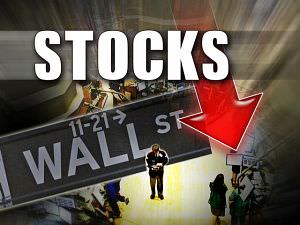 Alternative title (as suggested by Siraaj):
“Here’s What I think of your shari’ah compliant loan sold to Freddie Mac and Fannie Mae”
Many people all over the world, especially America, are looking at the financial meltdown and wondering what is going on.
The entire “setup” and all of the associated drama is quite complex, and even the smartest financial wizards are struggling to completely understand the underpinnings, or to see the light at the end of the tunnel.
Keep supporting MuslimMatters for the sake of Allah
Alhamdulillah, we're at over 850 supporters. Help us get to 900 supporters this month. All it takes is a small gift from a reader like you to keep us going, for just $2 / month.
The Prophet (SAW) has taught us the best of deeds are those that done consistently, even if they are small. Click here to support MuslimMatters with a monthly donation of $2 per month. Set it and collect blessings from Allah (swt) for the khayr you're supporting without thinking about it.
I claim no financial expertise. The few finance courses that I have taken at school only provide a glimpse into the house of cards that started unraveling this year. In order to gain a bit more insight, I turn to a book by Kevin Phillips “American Theocracy: The Perils and Politics of Radical Religion, Oil, and Borrowed money” [by radical religion, the author is referring to Christian fundamentalism, and not the Islamic bogeyman for once]. See NY Times book review here.
The book’s section on “borrowed money” is almost prophetic in nature. Keep in mind that this book was published in early 2006, still in the days of a booming economy. The first line in this section of the book says it all:
“It’s finally happened: Moving money around has surpassed making things as a share of the U.S. gross domestic product”.
In other words, making money on money, mostly through the instruments of riba (interest/usury), became a bigger part of the American economy than actually making tangible goods! The sectors of finance, insurance and real estate sector (FIRE–> what an appropriate acronymn!) swelled to 20% of GDP, ahead of manufacturing at 14%. Deregulation encouraged the three sectors of FIRE to be so interwoven that the combined sector became to be considered a single economic entity with assets of $60.4 trillion in 2007, up from $45.3 trillion in 2004 [Source].
Profits of the financial sector soared, from single digits in the 50s to nearly 40% of all US profits in 2004, and manufacturing followed the opposite trend, dropping from nearly 60% to single digits. What was the engine behind this growth? One word: debt! American financial companies conduct much of their business in “managing, packaging, or trading debt and credit instruments, as well as handling debt-related corporate restructurings”. Significant profits flowed from providing American households with artificial purchasing power, charging upwards of 25% interest rates on the credit card binging. Phillips argues that this “financialization- a sign of late-stage debilitation, marked by excessive debt, great disparity between rich and poor, and unfolding economic decline, constituting the third major peril hanging over the future of the US” [in addition to oil and Christian fundamentalism]
The section of the book dealing with debt spans nearly 150 pages, definitely worth the read. I have scanned just 2 ½ pages of some what I find to be most apt in the current situation (click here for pdf download). Phillips talks about collateralized debt obligations (CDOs), credit-default swaps (CDSs) and hedge funds, all woven together with housing and mortgage markets. If you have been following the news, you would be hearing these words repeated quite often. On pg. 378, Phillips predicted what we are seeing today:
“Between 2000 and the market bottom in 2002, when US stocks lost $7 trillion of their $15.5 trillion value, home values held up and then spurted ahead. To critics, the rescue was essentially a rebubbling. Should a credit and financial collapse follow that second stage in the manner than Volcker and others feared, stock and home prices would presumably sink together, making the second downturn the more destructive of the two”
What’s Kevin thinking now? “I told you so”
And for Muslims who kept off the mortgage binge, from taking sub-prime mortgage loans, or interest-only loans, depending on rising property prices to bring payments under control (betting on the future essentially), or for Muslims who kept their stocks clean of financial institutes that live and die off riba, and for Muslims who weaned off or never had credit card debt, the good news is that you have done much better financially, than those who said we were fools not to take the joy-ride. Yes, we all will suffer from depressing stock and home prices (if you owned either or both), but our religion saved us from far worse.
As I write this article, the government is planning another grand-scale bailout for all the financial institutes. The FIRE sector will be able to dump all their bad and “toxic” debt into a government entity. Everyday Americans (you and me) will have to shoulder the burden one way or the other. Our government continues failing in recognizing the dangers of “moral hazard“. Everything’s “just too big to fail”, which begs two questions: (1) How do you know? and (2) How did we let any entity become so big to fail? What happened to capitalism and pure market forces? One good thing in this new plan, I should mention, is the banning of short-selling for financial stocks. Short-selling involves the practice of selling a financial instrument the seller does not own, in the hope of repurchasing them later at a lower price. Islamically, selling what you do not own is forbidden, but I should caution that scholarly advice should be sought on this issue. If there are scholarly articles dealing with short-selling’s prohibition or permissibility, please feel free to link in comments.
Through this new government plan still in the making, those who profited over Ponzi-type schemes will obtain a “get out of jail free”. New regulations will surely sweep in (hopefully), but the “free” market and the financial wizards will find other ways to rebubble another debt-based boom to rise from the dead. How long before the bubbles all fizzle out? Only Allah knows. What Kevin Phillips predicts is that the soaring debt (personal, corporate, government combined) will eventually take its toll on the nation. And if there is one thing that history teaches us is that no one nation dominates forever.
I know I haven’t laid out the entire story here…I think enough smart people have said enough smart things. We just need to find those smart articles, read them, and understand them. So, I’ll leave readers with one link for now, and I hope the smartest readers in the blogosphere (i.e. YOU) can point to other simple, lucid articles that explain the meltdown for the benefit of others, and I’ll keep updating the list.
More Articles/Info:
Also See:
- The Destructive Rise of Big Finance by Kevin Phillips at Huffington Post
- BAD MONEY: Reckless Finance, Failed Politics, and the Global Crisis of American Capitalism. Book Review of Kevin Phillips’s new book at NYT.
- Buy Kevin Phillips’s books on Amazon: American Theocracy | Bad Money
Related Posts on MM:
- Some Thoughts on Islamic Finance and the Mortgage Crisis
- Muslim’s Guide to Debt and Money Management: Intro | Part 1 | Part 2 | Part 3 | Part 4 | Part 5 | Part 6
- The Problem with the Economic System – The Oil Price Crisis (Part 1)
- Pay Off Your Debt – Khutbah by Muhammad Faqih
Keep supporting MuslimMatters for the sake of Allah
Alhamdulillah, we're at over 850 supporters. Help us get to 900 supporters this month. All it takes is a small gift from a reader like you to keep us going, for just $2 / month.
The Prophet (SAW) has taught us the best of deeds are those that done consistently, even if they are small. Click here to support MuslimMatters with a monthly donation of $2 per month. Set it and collect blessings from Allah (swt) for the khayr you're supporting without thinking about it.




How to Build a (Muslamic) Library

Far Away [Part 16] – Five Star Trading Company
Far Away [Part 15] – Caravan Guard

Eid al-Adh’ha 1447 AH

Arafah: The Door That Opens Once a Year

The APA Gave Him A Human Rights Award. Then They Cut His Microphone For Talking About Gaza.

The Muslim Soldier From Ellis Boulevard Who Never Came Home

Not Everyone Goes To Hajj…But Everyone Is Called: Gaza, Gratitude, And Dhul Hijjah

Stoning The Jamarat: Naming The True Enemy

An ICSD Community Member Pays Tribute To The Three Martyrs

The Best Actions for Eid al-Adha [Imam Dawud Walid]

Coming Full Circle: Who Are You Now? | Night 30 with the Qur’an

Running Away From Who We Are | Night 29 with the Qur’an

Building From the Ground Up: Week 4 Recap | Night 28 with the Qur’an

The Muslim You Are Becoming | Night 27 with the Qur’an
-

 #Current Affairs3 weeks ago
The APA Gave Him A Human Rights Award. Then They Cut His Microphone For Talking About Gaza.
-
#Islam1 month ago
From The Chaplain’s Desk: From Madinah To Our Campuses, Reviving A Quran-Centered Culture
-
#Culture2 weeks ago
The Muslim Soldier From Ellis Boulevard Who Never Came Home
-
#Islam4 weeks ago
Not Everyone Goes To Hajj…But Everyone Is Called: Gaza, Gratitude, And Dhul Hijjah


Abu Hossan
September 19, 2008 at 4:37 PM
Watch these couple videos of Peter Schiff to understand whats going on:
Nov 2006 Mortgage Bankers Speech: http://www.youtube.com/watch?v=6G3Qefbt0n4
February 2006 U.S. Bubble Economy: http://www.youtube.com/watch?v=sDh3FNuwrTc
Read his book ‘Crash Proof’ : http://www.amazon.com/Crash-Proof-Economic-Collapse-Sonberg/dp/0470043601/ref=pd_bbs_sr_1?ie=UTF8&s=books&qid=1221856575&sr=8-1
For more information on Peter Schiff, go to his companies website http://www.europac.net
The guy is a genius.
In conclusion, get out of dollars… buy gold or invest abroad.
Assalaamu ‘alaykum.
Mustafa
September 19, 2008 at 5:14 PM
I was wishing MuslimMatters would write a piece on this! Yes, in the matter of a mere week, the world has gone from laughing at us for not aping their stupidity to wailing and wringing their hands. I guess the moment warrants sympathy, but I sometimes I can’t resist gloating in the failure of the cheaters, even if I hurt a little bit too.
MR
September 19, 2008 at 5:16 PM
You know what really sucks. The Muslims who stayed away from any possible riba (that wasn’t mandatory) will suffer almost EQUALLY to the majority of the American citizen.
How?
TAXES!
ibnabeeomar
September 19, 2008 at 6:08 PM
that was a good read jazakallahu khayr. any other books you recommend?
abdulla
September 20, 2008 at 4:52 AM
Assalamu alaykum,
I guess this is one more reason not to marry in the US or a girl from the US because I definitely wont be able to afford her! Perhaps I should just become a doctor, but I’m taking the easy way out and goin overseas.
“I claim no financial expertise.” Then you write this article? I take this as an insult as an economics major. But i’ll be honest with you Amad. Alot of economics analysts or at least economic professors are frauds. They make so many ridiculous conclusions and statements. I personally think its all modern academics; they’re not what they used to be, its quite sad. Old school academics were actually knowledgeable people with insight and depth. Today colleges are producing fools and sweet talkers who know how to beat the system, I should know, I am one of them or at least used to be.
Also I don’t think you mentioned that the US is already in debt of over 9 trillion dollars. Alot of the debt is being bought by who? The chinese. Now the US is throwing itself into destruction by printing out more dollars to bail out nearly-bankrupt corporations, causing the dollar to weaken, inflation to grow. So while these corporations may be ‘saved,’ the US will probably add another 1 trillion to their debt. Also there are some analysts who worry that the chinese may eventually stop buying our debt and when that happens…Allah Alam.
I personally like to look at the pessimistic (for americans) and optimistic sides. The pessimistic side is that the US is going to crash because it is the Sunnah of Allah to destroy societies based on some evil (e.g. riba, as Allah will wage war on it), even if their is some good amongst it. You dont believe me? Look into the Quran and see for yourself. But alot of muslims (specifically ‘liberal’ muslims) claim that we’re in modern times and that doesn’t happen anymore. They will claim that the Roman and greek empires were ancient. But what about the french empire, german empire and british empire. They all collapsed! The optimisitc side is that the US will rebound, but I would say this is denial. Americans are usually in denial especially the rich; Its hard to believe its all gone. The dot com and technology bubble exploeded and recently the real estate market has been on its downfall since 2006 and now the financial markets take their place.
Mimo
September 21, 2008 at 10:57 AM
At the end it all goes back to RIBA. RIBA is not Usury but Usury is RIBA.
RIBA means to excess or increase. So when I give you 100 of X and you give me 100,0000001 of X it is RIBA. In X you could put, gold, silver, dates, rice,…
Mimo
September 21, 2008 at 11:01 AM
In Shariah meaning “Riba” is a term that is used when two parties exchange item of same kind, and in return one party received extra (or in excess) of what he gave. A simple example is when gives 100 units of Gold and received 120 units of Gold in return. The extra or excess 20 units are considered “Riba”.
Mimo
September 21, 2008 at 11:02 AM
Got this here:
i. Islamic Shariah prohibit Riba in all its form.
ii. Riba is a tool of oppression that allows elites and rich to suck the block of poor and needy.
iii. Riba consumer are at war with Allah (swt) and his Messenger Prophet Mohammad (pbuh)
iv. Linguistically the word Riba ( ) means to increase, to grow, to exceed, to be more.
v. The basic example of Riba is in monetary credit transaction, where borrower has to pay “interest” on
loaned amount.
vi. In Shariah meaning “Riba” is a term that is used when two parties exchange item of same kind, and in
return one party received extra (or in excess) of what he gave. A simple example is when gives 100 units
of Gold and received 120 units of Gold in return. The extra or excess 20 units are considered “Riba”.
vii. Riba is opposite of Charity (Zakat). While it seems to riba-consumer that their money increase with Riba,
but in reality money decrease with Riba, and money increase with Charity (Zakat). This is testified by
Allah (swt) in Quran. However, a riba-eating brain can not comprehend such noble thought.
2:276 Allah destroys interest and gives increase for charities. And Allah does not like every sinning
disbeliever.
viii. Islamic Shariah promotes Charity and forgiveness. If a needy person can‟t repay loan, it is considered
Kamal ( ) to forgive his loan.
2:280 And if someone is in hardship, then [let there be] postponement until [a time of] ease. But if you
give [from your right as] charity, then it is better for you, if you only knew.
ix. Riba cannot be justified by any reason. It is neither like “trade”, nor like “rent”, nor like “profit”. In fact,
it‟s a reward of laziness where lender wants to make money without working.
x. Prophet (pbuh) prohibited giving Riba, taking Riba, consuming Riba, recording of Riba, and witnessing
Riba, and considers them all alike.
xi. Whoever live in Riba will have his eternal abode in hellfire.
2:275 But whoever returns to [dealing in interest or usury] – those are the companions of the Fire; they
will abide eternally therein
Siraaj
September 21, 2008 at 12:42 PM
Ha, I saw the note on my proposed article title at top of the article was added. Yes, I do have an “I TOLD YOU SO” stick I want to beat certain Muslims with, particularly some of our scholarship who looked at this problem with too little knowledge on the ground about the situation and as well, did not take into account the big picture, making an exceptional case the general rule and now, the payoff, the impact of that thought process smashing upon society. Muslims are only a small part of that in America, but collectively, all our fake compliant loans with their loands add up to this.
Take the following advice seriously – we don’t need to buy houses. We can rent them. In fact, now is the best time to rent – no one can sell and owners are desperate for anything that prevents foreclosure. The REAL reason so many people have been duping well-meaning scholars into providing fatwas on this matter – all the money “experts” for years have been selling us this hogwash that owning a home and being in debt are proftable endeavors – but guess what – NOT IF YOU LIVE IN THEM! But no one sits down and does the math, and so the pursuit of the Dunya Dream, I mean the American Dream, begins.
Muslims have, in a nutshell, gotten so giddy about how “bad” it is to lose money through renting, they’re not willing to pay rent to live in a home or apartment. It had NOTHING, and I mean NOTHING to do with necessity, and EVERYTHING to do with GREED. Shaykh Yasir’s comments that scholars from overseas should not pass fatwas on local issues proves very salient here. There is a reason riba is a major sin, and it ought to be avoided at all costs.
NOW, one can see what happens when this practice is taken to its logical conclusion, when greedy loan operators are looking for their commission from dishing out ARM after ARM (adjustable rate mortgages) without regard for whether a person is “qualified” (should never be done anyway, actually).
One concluding thought for those who think I’m just a fundo on a rant – last year, I turned on the Michael Sewage (I mean Savage) program, and MS had some executive level VP banker on. Now, MS is a bit smarter than the rest of his Radio Talk peers in that he reads about our laws and practices, and our history (he’s the only person I know who understood how amazing a victory the battle of yarmook was, for example).
He asks this guy, “Muslims can’t take out and deal with interest, but they want homes, and they come to you, so what do you do?”
Executive Level Banker: “Well Michael, Muslims don’t want to deal in interest, so what we do is, we re-word things so that it looks and appears shari’ah compliant.”
MS: “So the Muslims are just playing with words so that they can essentially deal in interest? Isn’t that immoral? Isn’t that dishonest?”
Executive Level Banker: “From my perspective Michael, that’s capitalism. They have a need, and we try to fulfill it. In the end, it is the same thing, we just re-word things so it’s easier for them to get in on.”
(that whole convo was paraphrased, but pretty much, that was what said and how it was said).
And of course, Freddie Mac and Fannie Mae are still holding your loan, in the end.
Siraaj
Al Iskandarani
September 21, 2008 at 4:29 PM
MR-
I was thinking more or less the same thing. I’ve been dabbling in stocks for about a year now. I’ve looked over the relevant fatawa and guidelines and scrutinized each purchase – making sure, of course, to steer clear of financial institutions.
Now, against my will, I’m made part owner of three or four (I lost count) failing houses of riba. Good grief.
On another note, I’ve been reading MM’s posts on financial matters and, although I think they’ve covered a wide swath of the economic landscape, one critical matter hasn’t been touched on at all. Namely, what does a Muslim in the West do about insurance? Ibnabeeomar wrote about Islamic ways to purchase a house, but neglected to mention how one could possibly afford to repair his home should a catastrophe strike. Moreover, health costs can easily bankrupt an individual – especially one just starting out on his own.
I have come across the many scathing scholarly opinions on the practice of insurance, but short of suggesting takaful (which, to my knowledge is not available in the U.S. – at least on a wide scale basis), they offer no alternatives.
Al Iskandarani
September 22, 2008 at 5:56 AM
Also, @ Siraaj –
I came across this article about the resurgence of Islamic finance in the States. It mentions your critique (per the interview you paraphrased) and quotes a rep from one of the Islamic mortgage firms as follows: “To the bait-and-switch critique, the industry’s proponents respond that the difference is there because Islamic law sees one, even if functionally it’s hard to find it. “It’s like the difference between a wife and a live-in girlfriend,” says David Loundy, vice president of the Chicago-based Devon Bank, a national leader in Islamic finance. “They may serve some of the same functions, but there’s a legal difference between the two, in terms of inheritance and taxes.”
Notably, that rep is associated with Devon bank, which the AMJA (and Ibnabeeomar) endorsed. Does this put a whole in your reasoning?
Article
ZK
September 22, 2008 at 9:09 AM
there is a good article on the freakonomics blog explaining the mess:
http://freakonomics.blogs.nytimes.com/2008/09/18/diamond-and-kashyap-on-the-recent-financial-upheavals/
Suhail
September 22, 2008 at 11:16 AM
Now they are going to use the money we pay them as taxes to bail out these super rich fat kids on wall street. Why do we have to pay for there problems? Give me my taxes back! This should be the line to Bush. I earn money by hard working each day and then these guys who are sitting on the top make mistake and i have to pay to bail them out. This is totally ridiculous. This is pure theft in broad day light.
Hassan
September 22, 2008 at 4:01 PM
http://www.time.com/time/nation/article/0,8599,1843168,00.html?cnn=yes
Anonymous
September 22, 2008 at 4:06 PM
Man, and I just go out of the 50,000 worth of debt overnight (alhamdulillah!) I never made any attempts to get a house or any of that despite the fact that I have children just like everyone else so “needs” a house. I put my trust in Allah that He would get me out of my bad college debt that I got in before I knew riba was even haraam. Now alhamdulillah in the face of a collapsing market and all the people who were “smart” about money going down, my sincere dua’ to Allah was all it took to get out of 50,000 of debt overnight (no i did not win the lottery–thats haraam too =) ).
Siraaj
September 22, 2008 at 6:12 PM
@Al Iskandarani
Absolutely not, and I’ll give you one big reason why other experts and professors of economics who were cited in that article as well take my side and consider it window dressing, and further, why Devon Bank’s word cannot be taken on this, though they offer shari’ah compliant loans:
1. The contract which your quote supports in the context of the article is one in which the owner is selling something to the buyer before he even owns it. Scroll just a little higher, and the contract in which the bank buys and owns the commodity, then sells it for a fixed price with installments is crucial to understand – that is legitimate, and that is what Devon Bank does in their shari’ah compliant model as well. The other contract is illegitimate – you cannot sell what you don’t own, but the terms are specified as such in the contracts and people take this as shari’ah compliant.
2. As for Devon Bank, they also have a non-shari’ah compliant model for loaning out money to Muslims alongside the correct one – if you’ll view their website for the different models they offer, one of them is incorrect model, and so they have a vested interest in saying what they’ve said.
Its like putting a ring on the live-in girlfriend and saying, “This is my wife.”
Siraaj
ibnabeeomar
September 23, 2008 at 6:43 PM
ron paul’s take:
http://www.cnn.com/2008/POLITICS/09/23/paul.bailout/index.html
Al Iskandarani
September 23, 2008 at 8:06 PM
Siraaj-
Perhaps I misunderstood. Your first comment seemed to be a general denunciation of Islamic mortgage products based on your perception that there is little difference (essentially, only the name) between them and their outright riba-based counterparts. The quote I inserted from the article (which, in re-reading it, appears to be a general allusion that doesn’t refer to any particular Islamic mortgage instrument) seems to counter your notion by stating that although, superficially, the options that Islamic banks offer appear to be the functional equivalents of traditional loans/mortgages, the actual structure (and, perhaps, niyya) of these agreements make them Islamically sound.
Now, truth be told, I’m actually a bit skeptical myself – the ‘lipstick on a pig’ analogy comes to mind; or, as you put it, a “ring on a live-in girlfriend” (nice line, btw :) ). My intention was to try and see where you were coming from. Contrary to what I gathered from your original comment, your recent remarks indicate that you believe at least one form of Islamic loan is acceptable (presumably the murabaha version). I’m not sure I follow your reasoning though. You state that only one of the products the article mentions is sound because the bank sells a physical asset, but it appears that both the murabaha & musharika agreements meet that criterion. What makes the latter contract invalid?
-AI
j
September 26, 2008 at 12:17 AM
Shortselling is permissible under islamic law, as the usufruct of the asset is owned and the original owner is indemnified for the price and/or replacement of the actual object.
In short (no pun intended), you are shorting something you own because you indemnify it wholly.
Only is the person loaning the asset restricts your transactions with regards to shorting, re-loaning, etc then will it be unacceptable.
God knows best.
abuadam
November 8, 2008 at 10:29 PM
LIVE WEBMINAR
with Sheikh Tawfique Chowdhury
Monday 10 Nov 2008
9.00pm – 10pm Online (GMT)
10 Things that you never knew
that you never knew about Business Transactions in Islam!
Join Alkauthar Online to hear some of the most amazing facts
that you have ever heard about Business Transactions in Islam.
You wont believe your ears!
Your place awaits you. Enrol now and join us!
To enrol for this free webinar please click
HERE
Pingback: Islamic Finance: An Introductory Course. Part-1 (Miller-Modigliani Theorem) | MuslimMatters.org
Pingback: Debt creates no value - The system makes no economic sense
Umm Bilqis
February 19, 2010 at 5:27 PM
Russia Today> Kaiser Report #18, Markets! Finance! Scandal:
http://www.youtube.com/user/RussiaToday#p/u/31/hV8iYcUnQ14