
#Life
The Sandwich Carers: Navigating The Islamic Obligation Of Eldercare

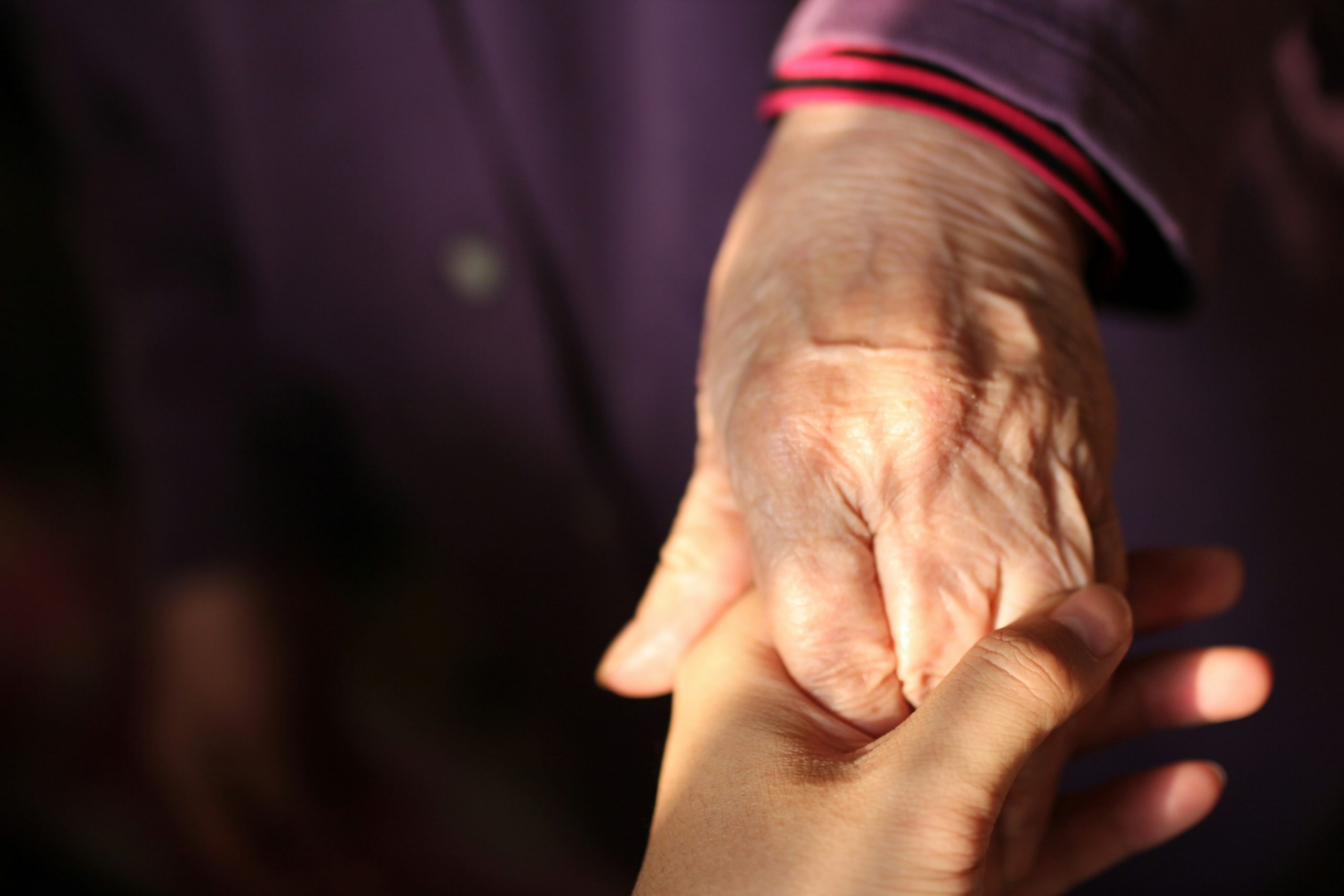
The sandwich generation, or ‘sandwich carers’, refers to adult individuals who provide unpaid care to ageing parents or older relatives while simultaneously raising their dependent children. In the UK, around 2% of the population1https://www.sciencedirect.com/science/article/pii/S0033350624004979 provides “sandwich care,” balancing responsibilities for both children under 16 and older adults in need of support. Whereas in the US, the percentage is much higher, with 23% of adults “sandwiched between their children and an ageing parent.”2https://www.pewresearch.org/short-reads/2022/04/08/more-than-half-of-americans-in-their-40s-are-sandwiched-between-an-aging-parent-and-their-own-children/
This study proved that – unsurprisingly – sandwich generation carers are at a greater risk of mental health struggles and need support.
Equity In Eldercare
In my youthful naivete, I strongly believed that when it came to looking after one’s ageing parents, it had to be distributed equally according to the number of children. By my logic, if an elderly couple had four children, then all four of them had to take turns to look after their parents. Only children have the responsibility of caring for both ageing parents with no siblings to lean on, except for a loving and supportive spouse, if they have one.
Keep supporting MuslimMatters for the sake of Allah
Alhamdulillah, we're at over 850 supporters. Help us get to 900 supporters this month. All it takes is a small gift from a reader like you to keep us going, for just $2 / month.
The Prophet (SAW) has taught us the best of deeds are those that done consistently, even if they are small. Click here to support MuslimMatters with a monthly donation of $2 per month. Set it and collect blessings from Allah (swt) for the khayr you're supporting without thinking about it.
Many decades later, I have come to realize that no matter how many children there are in a family, except in rare circumstances, the bulk of eldercare usually falls on one adult child and his/her spouse and children. One of my friends, a Malaysian cardiologist who encounters many ageing elders, echoes seeing the same thing in her clinical practice across both Muslim and non-Muslim families.
The rise of individualism in today’s world is probably a driving force in elder neglect. When families lived closer together, the norm was for all children to help in the care of their elders. With the rise in economic migration and diaspora Muslim communities, the elders who did not move with their children are often left behind in their old age.
Cultural Expectations vs Islamic Obligations
There seem to be many cultural “myths” when it comes to caring for elders. In Malaysia, where I live, the responsibility for eldercare often lies with adult daughters, even if families have sons. This may be due to the strongly matriarchal society and women often being the main income earners. In other parts of the world, the emphasis is on adult sons looking after their parents, even if they also have daughters. Desis have an expectation of the eldest son caring for his parents, when the actual work gets shifted onto his wife.
The reality is this: Islamically, eldercare responsibility lies on all adult children, regardless of gender. Caring for one’s parents is a fardul ‘ain (individual responsibility), and not a fardul kifayah (communal responsibility). One child caring for an ageing parent does not lift the responsibility from other children.
An Unfortunate Bias

“The reality is this: Islamically, eldercare responsibility lies on all adult children, regardless of gender.” [PC: Raymond Yeung (unsplash)]
Caring for her in-laws is not her Islamic obligation – her obligation is to care for her husband, children, and her parents! Undoubtedly, she will be rewarded for caring for her in-laws, but once again, that is not her obligation. A daughter-in-law caring for her husband’s parents is a recommended act which is not lost on Allah  .
.
However, it’s important to realize a burnt-out daughter-in-law will be less likely to fulfil her actual obligations: her husband and children. May Allah guide and have mercy on all of our families, and help us all do better.
No Easy Answers, But Everything Is From Allah 
When it comes to equitable eldercare, there is no one-size-fits-all solution for families who are spread throughout the globe. Even with all adult children in the same city, eldercare is probably not distributed equitably either. Someone will have to sacrifice something for an unknown period of time.
In the best case scenario, all adult siblings step up in their best ways possible, put their differences aside, and work as a team to care for their ageing parents. Sadly, this is not always the case. When eldercare is left to only one adult child and his/her household, it can be so frustrating to ask for help, only to have minimal response from other siblings.
What helps is always turning to Allah and making choices that align with His Pleasure. If you are bearing the load of eldercare, please know that this is a sign of Allah’s Love and honouring of you, through service to your elderly parents. Their dua’s for you will bring about tremendous goodness to you – even if it may not be immediately apparent.
Tips For Making Eldercare Easier
If you are the main carer for both elders and young children, here are some tips that may help:
1) Build a strong support network: Nobody can look after elders or children on their own without burning out, let alone when looking after both age groups! Please don’t wait until you are on the brink of a mental breakdown, but rather proactively have a conversation with family and/or loved ones, and discuss how everyone can help support you in caring for the elders under your care.
2) Build in breaks: Try your best to build in regular daily, weekly, monthly and yearly ‘pressure release valves’ – for lack of a better term. When family comes to visit and spends quality time with your ageing elder, use that opportunity to rest and recharge.
3) Elder vacations: Before elders struggle with more severe health issues, arrange for them to go for a holiday in another adult child’s household. Even if they might be reluctant to leave their comfort zone, this break will give a much-needed respite for the main household of carers.
4) Acceptance: Sadly, as health issues often worsen in old age, there will come a time when ageing parents will no longer be able to travel. This is the time for them to be visited and cared for, especially by adult children who live far away or are absent for other reasons.
Imam Ahmad narrated that Usamah bin Sharik (may Allah be pleased with him) said, “I was with the Prophet Muhammad (Alla when the Bedouins came to him and said, ‘O Messenger of Allah, should we seek medicine?’ He said, ‘Yes, O slaves of Allah, seek medicine, for Allah has not created a disease except that He has created its cure, except for one illness.’ They said, ‘And what is that?’ He said, ‘old age.’” [Ahmad, Tirmidhi, Abu Dawud]
Conclusion
Marriage is a lifelong commitment that not only includes the care and raising of children, but also the care and burying of elders. When families were closer together and Islamic values were more prevalent, discussions around eldercare weren’t even necessary among siblings. Elders were cherished and cared for by their adult children and grandchildren until the end of their long and blessed lives.
Now, there needs to be a revival of more intentional conversations around eldercare, especially with the rise of individualism and the cultural bias that expects only eldest/youngest sons to do the heavy lifting. Every single adult child has a role to play, even if it’s inconvenient. The door of service to our elders is a golden opportunity that only lasts for as long as they are with us in this dunya. Once they pass away, that door closes, never to be opened again.
Related:
Keep supporting MuslimMatters for the sake of Allah
Alhamdulillah, we're at over 850 supporters. Help us get to 900 supporters this month. All it takes is a small gift from a reader like you to keep us going, for just $2 / month.
The Prophet (SAW) has taught us the best of deeds are those that done consistently, even if they are small. Click here to support MuslimMatters with a monthly donation of $2 per month. Set it and collect blessings from Allah (swt) for the khayr you're supporting without thinking about it.




When a Place Teaches you what Softness is Not

[Podcast] Wait, Muslims Have Been Here HOW Long?! | Hassam Munir

Far Away [Part 30] – The Rock Splitter And The Parthian Shot

Maryam: The Story Of The Muslim ‘Virgin’ Mary

Is It Ever Too Early To Prepare For Ramadan? Reflections On Rifq, Forgiveness, And Healing The Heart

Long War Without End: A Quarter-Century Since The War On Terror

When The Shaykh Never Spoke – Deepfakes, Synthetic Scholars, And The Coming Crisis Of Religious Trust

[Podcast] Faith, Motherhood, and the Call to Gaza | Dr. Samaiya Mushtaq

The Stirring Of A Muslim Population In Japan: The Story Of Yusuke Fujitani

CAGE, Muslim Leadership, And Imran Khan: The Silence Test

The Best Actions for Eid al-Adha [Imam Dawud Walid]

Coming Full Circle: Who Are You Now? | Night 30 with the Qur’an

Running Away From Who We Are | Night 29 with the Qur’an

Building From the Ground Up: Week 4 Recap | Night 28 with the Qur’an

The Muslim You Are Becoming | Night 27 with the Qur’an
MuslimMatters NewsLetter in Your Inbox

Sign up below to get started
-

 #Culture1 month ago
Far Away [Part 26] – Shaytan Is A Liar
-
#Culture1 month ago
Far Away [Part 25] – To Save A Prince
-
#Current Affairs1 month ago
From a Syrian Prison to the UN: The Case of Bilal Abdul Kareem
-
#Life1 month ago
[Podcast] 50k Mahr, Hiding Money, & Who Pays for the Wedding? | AML Finance




Umm Zaynab
January 14, 2026 at 6:26 PM
This is an important topic and good start to the conversation, jazakallah Khair. I would love to hear how adult children are managing elderly care and what more can be done to support them.