#Islam
Ashura: A Stick in the Oppressor’s Wheel

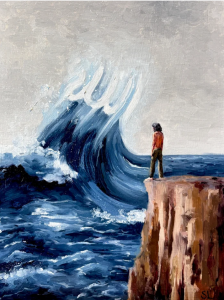
Painting by Safia Latif
Our Prophet ﷺ never gave up on fasting on Ashura, which is the 10th day of Muharram (Sunan al-Nasa’i, 2416). The Quraysh used to fast on this day in times of Jahiliyyah, and so did he ﷺ when still in Makkah. Once he ﷺ arrived in Madinah, he ﷺ noticed that the Jews were fasting on this day too, commemorating that sayyidina Musa had triumphed over Pharaoh. He ﷺ turned to the Muslims and said “You (Muslims) have more right to celebrate Musa’s victory than they have, so observe the fast on this day” (Sahih al-Bukhari, 4680). In order for us to distinguish ourselves as Muslims from the Jews and the Christians and their practices, our Prophet ﷺ decided to fast on the ninth day of Muharram too if he ﷺ would get the chance to the next year (Sahih Muslim, 1134).
Once fasting became obligatory in Ramadan, fasting on Ashura was made voluntary (Sahih al-Bukhari, 4504). In this sense, fasting on the 10th of Muharram was part of the process to introduce fasting as an integral part of our religion. The fast’s reward on this blessed day is clearly known. When asked about it, our Messenger ﷺ said that it expiates the sins of the previous year (Sahih Muslim, 1162).
Earmarks of Truth
Keep supporting MuslimMatters for the sake of Allah
Alhamdulillah, we're at over 850 supporters. Help us get to 900 supporters this month. All it takes is a small gift from a reader like you to keep us going, for just $2 / month.
The Prophet (SAW) has taught us the best of deeds are those that done consistently, even if they are small. Click here to support MuslimMatters with a monthly donation of $2 per month. Set it and collect blessings from Allah (swt) for the khayr you're supporting without thinking about it.
Let us go back in time. On the exact day of Ashura, sayyidina Musa found himself trapped as he and his Bani Isra’il, an oppressed nation of enslaved people who had been exiled in the desert for 40 years, were hot on heels by the corrupted army of Pharaoh, the epitome of despotism. The only thing they had left was their faith. At that terrifying moment, Allah guided him to lead his people to the edge of the rumbling sea. His people cried out in pure desperation that they would be overtaken by the tyrant’s army or swallowed by the waves, yet he encouraged them, full of faith, “Absolutely not! My Lord is certainly with me—He will guide me” (Surat ash-Shu’ara, verse 62). His words were barely out of his mouth when Allah ordered him to strike the sea with his staff. Allah then split the entire mass of salty water in halves as high as mountains so they could get to the other side safely, creating a path of freedom. The army of Pharaoh? They all drowned. It is a timeless reminder that, by the grace of Allah, steadfast righteousness nurtured by absolute faith always triumphs over tyranny.
On the 10th of Muharram precisely 1387 lunar years ago, in the year 61 AH, another pivotal moment in our shared past as Muslims took place. It was a particularly tense time, as the Umayyad caliph Muʿawiya had appointed his son Yazid as his successor. Hereditary succession was unprecedented in Islamic history. The decision had stirred growing controversy and grunting discontent. Sayyidina al-Husayn ibn Ali, one of the most beloved grandsons of our Prophet Muhammad ﷺ, took it upon himself to stand up against Yazid’s unjust governance and the moral crisis in which his fractured community had found themselves. What followed was a staggeringly unfair battle between al-Husayn’s troops, painfully limited in number, and the thousands of merciless Umayyad soldiers.
Tragically, al-Husayn ibn Ali was decapitated and mocked, and about seventy of his close family members and companions were martyred. Many others were captured. This battle, the Battle of Karbala, and the betrayal of al-Husayn, may Allah approve him, by the people of Kufa it stood for, would mark the start of the Second Fitna. However, it teaches us not to measure victory according to dunyawi standards. You have probably caught yourself doing this too. We often attach more worth to the means and forget the goal. Al-Husayn’s true success, however, comes in the Hereafter. His martyrdom is a symbol of his deeply-rooted faith and endless sense of justice. It is an ultimate testimony of honoring the notion of tawhid, of striving for the Truth and standing up for it.
Ashura Questions
Ashura reminds us that every Pharaoh will drown eventually. Every oppressor, big or small, will go down. Allah can do this easily. For every Pharaoh there should be a Musa who does his best to drown the oppressor, even if he only has a stick. Our iman should be that stick. Sayyidina Musa did not know that the sea would split, but he relied on Allah regardless. Allah did the rest. His assistance is always there for those who do not give up on His wisdom and mercy, those who strive in righteousness.
Over and over, we turn to the guidance of our Prophet ﷺ, especially in times of darkness. Muharram, one of the four sacred months of the Islamic calendar, stands for new beginnings. It is the chance to revive our commitment to his sunnah, to his path. Not to the path of those in power, nor of the financial elite of this world. Through fasting on its tenth day, we express our gratitude to Allah for the victory He granted sayyidina Musa over Pharaoh, and we commemorate sayyidina al-Husayn’s bravery when standing up for what is right.
As Muslims, we do not act as mouthpieces for injustice. Submitting to our Creator means renewing our covenant to tawhid, which inherently means standing for His truth, for justice, over and over again, unshakingly. Ashura asks us a crucial question. Do we really express our love for our Creator by speaking kalimat al-haqq in the face of tyrants, small and big? Or do we merely give lip service to Allah’s path? Do we really face the Pharaohs of this world, within ourselves and within others? Or do we betray the oppressed and sell them out like the people of Kufa did to sayyidina al-Husayn? Do we really have the level of tawakkul and courage it takes to take a clear stance when we face what feels like insurmountable adversities in this earthly realm? Do we truly grasp that this is what leads to ultimate victory? In essence, undoubtingly knowing that Allah is with us is what it takes.
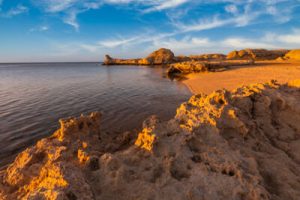
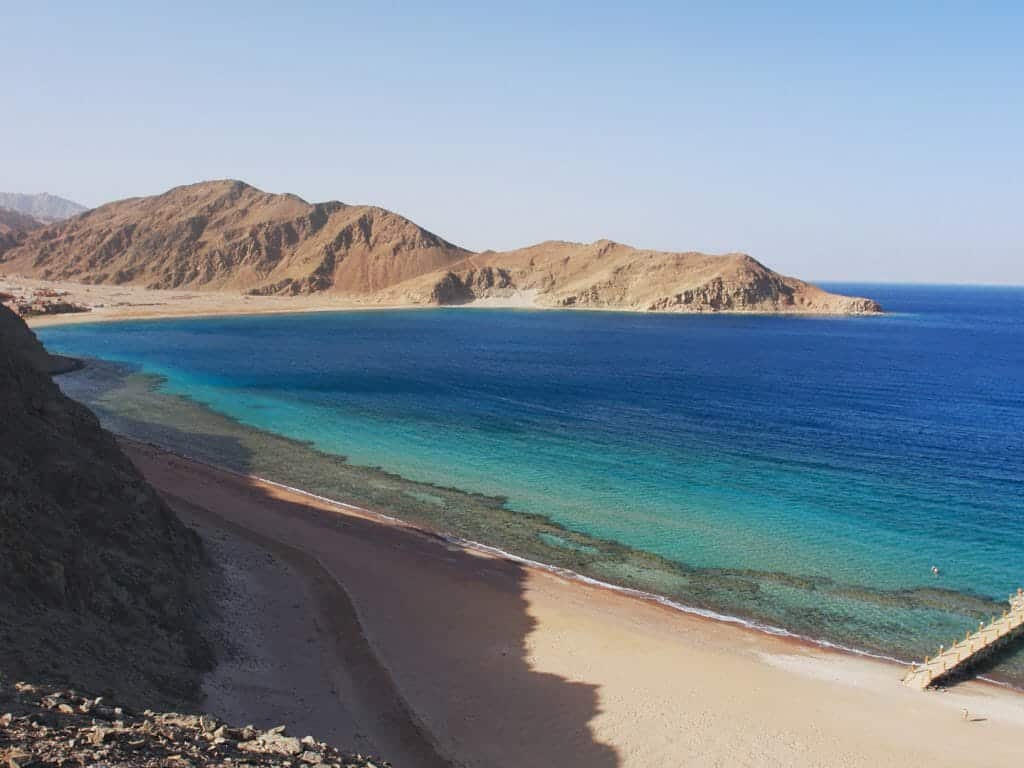
The Red Sea, which Allah split for Prophet Musa on the day of Ashura. Getty Images.
How You Can Strike the Sea
This year, the 10th of Muharram falls on a Thursday so we can combine the intentions of fasting both sunnahs. In this day and age we need to stand with the oppressed and try to be the stick in the wheel of the tyrants. Merely fasting without reminding ourselves of this would be like praying without khushuʿ or reciting the Qur’an merely for the reward of reading its letters without trying to understand its meanings. Here are some steps you can take.
- Fasting with intentions that reflect the above. Fasting in Muharram is the best fast after the fast in the month of Ramadan (Sahih Muslim, 1163). Fast at least on Ashura, and if possible also the day before and/or after. Shortly after Ashura come the White Days, so you can fast those too.
- Do what it takes to nourish your belief that victory will come, even in unlikely circumstances.
- Reflect on what injustice entails, close to you and further away. We cannot allow ourselves to be oppressors to our own soul, to our family, friends, colleagues, spouse, children, our ecological environment… Which injustice in your life do you need to take care of before you stand in front of Allah?
- As Ashura is a day of forgiveness, who will you forgive this year?
- Follow up on news of our oppressed brothers and sisters worldwide, in your own circles and communities, in Sudan, Palestine, Lebanon, Kashmir, China, and elsewhere, and let it sink in. Feel it in your heart and pray for them.
- Reflect on how you can strike the sea, with the right intention. Which stick will you use to fight tyrants and their injustice? Put this into action against oppression according to your context and capacities, without seeking fame nor praise: post on social media, help out someone who is oppressed (for instance, overwhelmed by debt), organize, stand up against bullies, get involved in your own community, select a cause for which you want to use your talents for and strive, and get connected to those who have experience therein.
Related:
From The Prophets To Karbala: The Timeless Lessons Of Ashura For Muslims Today
Keep supporting MuslimMatters for the sake of Allah
Alhamdulillah, we're at over 850 supporters. Help us get to 900 supporters this month. All it takes is a small gift from a reader like you to keep us going, for just $2 / month.
The Prophet (SAW) has taught us the best of deeds are those that done consistently, even if they are small. Click here to support MuslimMatters with a monthly donation of $2 per month. Set it and collect blessings from Allah (swt) for the khayr you're supporting without thinking about it.



[Podcast] Wait, Muslims Have Been Here HOW Long?! | Hassam Munir

Far Away [Part 30] – The Rock Splitter And The Parthian Shot

Maryam: The Story Of The Muslim ‘Virgin’ Mary

Is It Ever Too Early To Prepare For Ramadan? Reflections On Rifq, Forgiveness, And Healing The Heart

Lessons From The Battle Of Badr: A Personal Transformation Perspective

[Podcast] 50k Mahr, Hiding Money, & Who Pays for the Wedding? | AML Finance

Long War Without End: A Quarter-Century Since The War On Terror

[Podcast] Faith, Motherhood, and the Call to Gaza | Dr. Samaiya Mushtaq

When The Shaykh Never Spoke – Deepfakes, Synthetic Scholars, And The Coming Crisis Of Religious Trust

The Stirring Of A Muslim Population In Japan: The Story Of Yusuke Fujitani

The Best Actions for Eid al-Adha [Imam Dawud Walid]

Coming Full Circle: Who Are You Now? | Night 30 with the Qur’an

Running Away From Who We Are | Night 29 with the Qur’an

Building From the Ground Up: Week 4 Recap | Night 28 with the Qur’an