
#Life
The Arithmetic Of Longing: On Loneliness, Desire, And Learning To Want Well

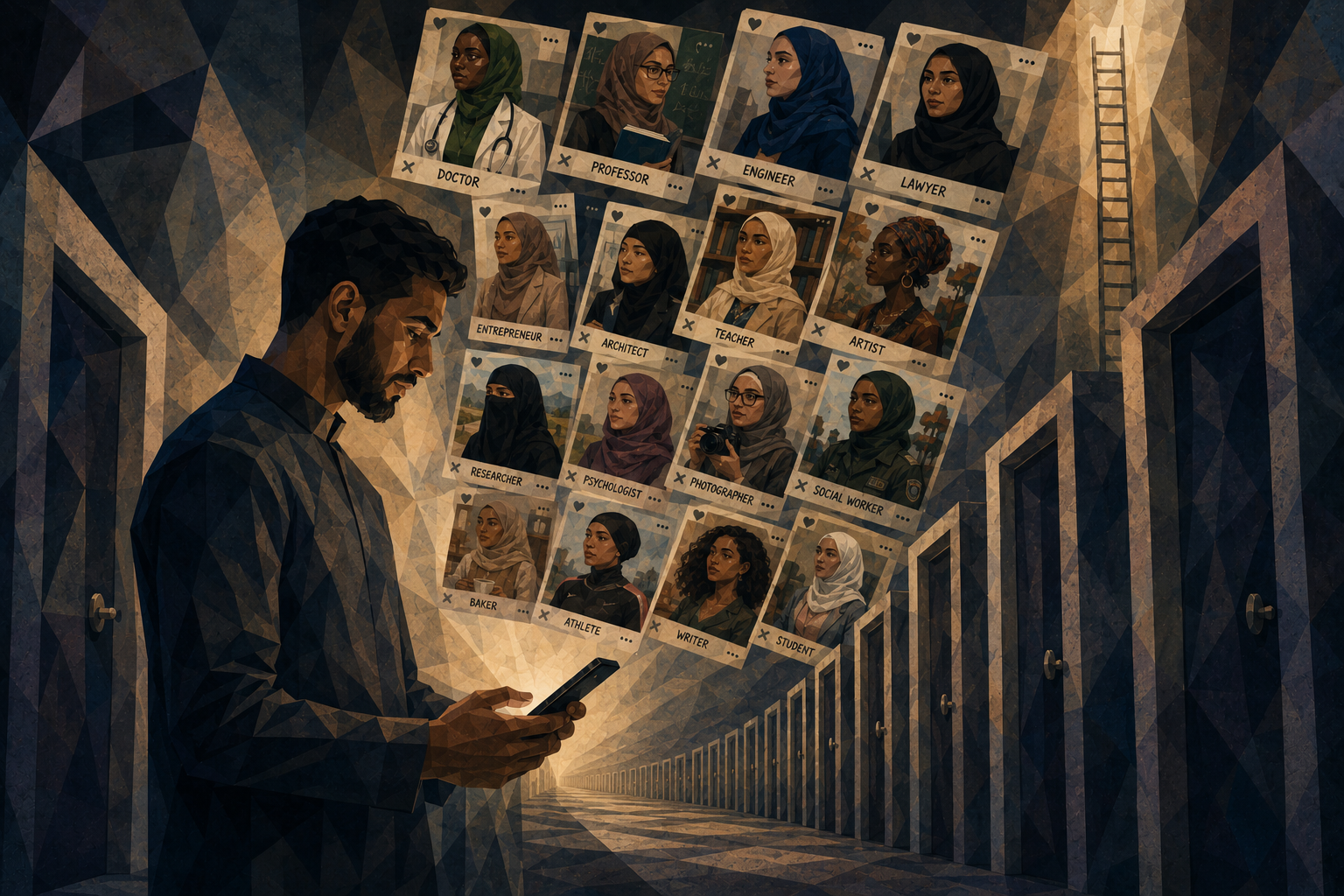
Loneliness wears its finest clothes on Saturday afternoons, and it gathers by the hundred in hotel ballrooms, drawing the accomplished and the ordinary, the celebrated and the overlooked, each one quietly hoping to be chosen, each one just as quietly appraising everyone who might do the choosing. They have spent their twenties doing everything they were promised would lead here. They will go home tonight exactly as they arrived, alone, and bewildered to still be so.
This is not, in the end, a story about a checklist, though the checklist is real and the arithmetic beneath it is merciless. It is a story about the people holding it, about what they are running from, what they secretly long for, and the strange way that wanting something too precisely can place it forever out of reach.
Where the Wanting Goes Wrong
I know my worth; I’m not lowering my standards. You hear it everywhere now, in group chats and matrimonial profiles alike, the anthem of a generation that refuses to settle. The first half is a hard-won victory. For generations, some women were handed to men like furniture, appraised by families and expected to absorb whatever flaws their husbands arrived with. To stand up and name your own worth was a correction, and a necessary one.
Keep supporting MuslimMatters for the sake of Allah
Alhamdulillah, we're at over 850 supporters. Help us get to 900 supporters this month. All it takes is a small gift from a reader like you to keep us going, for just $2 / month.
The Prophet (SAW) has taught us the best of deeds are those that done consistently, even if they are small. Click here to support MuslimMatters with a monthly donation of $2 per month. Set it and collect blessings from Allah (swt) for the khayr you're supporting without thinking about it.
The second half is where the trouble begins. A healthy instinct, run through the machinery of a consumer culture, can curdle. Worth was meant to be a foundation, a quiet certainty that you deserve dignity. Instead it hardens into a ranking, measured against the curated lives scrolling endlessly across a screen. And the moment worth becomes comparative, it becomes “insatiable”. She wants him taller, richer, more visibly devout. He wants glow without effort, grace without heft, a spark that can’t be taught. The bar does not rise once. It rises every time you open the app.
And the expectation no longer tracks anything in particular. This is not the private affliction of the successful, earned by a wall of degrees; it has become the cultural default, the air everyone breathes, felt just as keenly by those the world overlooked as by those it celebrated. The asking price went up across the board, all at once, for everyone.

“The moment worth becomes comparative, it becomes insatiable.”
The apps did to marriage what the buffet did to appetite. They convinced a generation that the next plate is always available, so why finish this one? “Hope is a fickle, dangerous thing,” and it does its damage by aiming the eye at the possibilities instead of the probabilities. The man with a flooded inbox keeps every door open and therefore walks through none, mistaking the open doors for freedom, never noticing that a man who keeps all of them open never actually enters a room. And keeping your options open is not only greed. It is fear in the costume of abundance, because to choose one person is to become vulnerable to one person, and so to risk being seen, disappointed, left.
Worse, the market rewires desire itself. Scarcity passes for value; the heart confuses difficulty with worth. So the kind, available, devoted person reads as desperation, while the one who barely answers reads as a prize. It is the logic of a slot machine, where unpredictable reward grips harder than reliable reward. People chase the feeling of being wanted, mistake it for love, and go home, again, to an empty room.
We Already Have Too Much
Step back from the ballroom and the same pattern is everywhere. No generation in history has had more than we do. More food than we can eat, more clothes than we can wear, more schooling, more attention, more of everything than survival ever required. And we feel less for all of it. Abundance raises the baseline so high that nothing moves the needle. The body’s reward system, built for scarcity, goes quiet in a world that never lets it go hungry. We are full and unmoved.
The mistake we keep making is to treat that numbness as a shortage. If a full closet does not satisfy, buy more clothes. If a hundred matches do not move you, line up a hundred more. But more is the disease, not the cure. The person drowning in options is not starving for options. They are starving for the ability to be moved by what is already in front of them.
That ability is not fixed. It can be trained. The same plate, eaten with attention and real hunger instead of distraction, gives back its pleasure. The same ordinary day, met with gratitude instead of comparison, returns more than a better day met with contempt. Dopamine is not only a function of what arrives; it is a function of how you meet it. With practice, you can pull far more out of what you already have. That is the quiet skill an abundant age forgot to teach, and it is most of the game. Islam had a name for it, and prized it above every fortune.
Richness, the Prophet ﷺ said, is not an abundance of possessions but the richness of the soul. [Bukhari 6446] That is the one thing a culture of plenty cannot buy and has forgotten how to grow: the capacity to be filled by what is already in front of you.
The Same Is True of Love
A relationship obeys the identical law. You will not squeeze joy out of a partner by upgrading to a better one, any more than you squeezed joy out of your closet by adding to it. Depth comes from attention, not acquisition. The couples who go the distance are not the ones who found flawless people. They are the ones who learned to draw the good out of an ordinary, decent human being, day after day, the way you learn to draw flavor out of a simple meal.
So here is the practical shape of it.
Be strong. A husband or a wife is not a luxury product delivered finished to your door. It is a person you build with, which means you have to be solid enough to build. Compromise, since no one worth having arrives without edges. But do not compromise so far that you disappear, because a person who vanishes into a marriage has nothing left to give it. The line between bending and breaking is the entire art.
Choose someone you can work with, and become someone worth working with. Bring the best out of them, and let them bring the best out of you. Push against each other, sharpen each other, stand and fight side by side through the parts that are hard, because that friction is not the failure of the thing. It is the thing.
Courtship is hard, and often you enter it only half-convinced, pushing yourself toward something you are not yet sure of, perhaps only filling a void, but hopefully trying in earnest. When what you find does not match what you pictured, work with what is there and set your intention to make it work. And if the interest dies altogether, look for an honest way out, and take it whether or not the other person grants you the grace of understanding. That is your part, and it is why you cannot be speaking to several people at once. To divide your attention is to withhold the respect the person before you is owed, and no absence of a “formal tie” excuses it. The heart was never built to be spread thin across many at once, and comparison will quietly drain the joy out of every one of them. This is a serious journey. If you choose to walk it, walk it with the utmost respect.
You Are Also the Room
But the room is full of other people, and they are trying, too. This is the part the lonely rarely consider. You are not only a seeker moving through the crowd; you are also the crowd that others must move through. The same eye that ranks a partner turns easily on everyone else’s chances, and a whole culture has quietly agreed to let it. We have become a people who appraise each other’s pursuits the way the ballroom appraises its guests, coolly and comparatively, always to someone’s diminishment.
Refuse it. When you see two people who might be good for one another, and one of them is hesitating, nervous, half-convinced they are not enough, be the one who gives them courage. Stand at their side. Speak the good you know of each to the other, honestly and generously, and let the best of one meet the best of the other. It is quiet work, and unglamorous, and it is holy. You are amplifying a goodness that is real but too shy to announce itself. The world is not short of decent people. It is short of anyone willing to help them be seen.
And resist, with everything you have, the sweeter temptation to do the reverse. It is so easy, and it wears the face of care so well. A whisper about someone’s past, a rumor you never witnessed but are glad to carry, an afternoon spent excavating a stranger’s history as though you were guarding someone from harm, when what you were really doing was entertaining yourself. Do not carry what you did not see with your own eyes. And the digging itself, the compulsion to know exactly who a person used to be, will not move one letter of what is already written, for them or for you. What is decreed does not wait on your findings. You cannot audit a soul into being safe to love.
Many will disagree, and I will not pretend I can prove it. But I have watched people make a pastime of meddling in one another’s affairs, dressed up as concern, certain it costs nothing, and then sit in their own quiet rooms, bewildered, wondering why the harvest will not come. And least trustworthy of all is the counsel of anyone with something to gain from keeping two people apart, who warns you off the one they quietly want for themselves, or who would sooner see a match fail than watch a person they resent flourish. No one should stand between two people while their own heart has something to win or lose. You cannot spend your days salting other people’s fields and expect your own to bloom.
And if you are the one who helped, if you gave them courage, spoke the good word, turned two lives gently toward each other, then keep it to yourself. Do not return to collect the debt. The instant you announce it, the instant you say, “I did this, I made this,” you convert a gift into a transaction and drain the barakah clean out of it. Good done in secret keeps its blessing; good done for an audience has already been paid, in full, in the cheap coin of your own credit. Let them believe they found each other. Do the thing for its own sake, and disappear.
Keep Going
And if you love someone, do not let hesitation cast the deciding vote. Fear will always argue for the safety of waiting, and waiting has buried more love than rejection ever did. But let the courage be the “lawful kind”. And aim for the pleasure of Allah  , and keep it before the pleasure of the heart. The Prophet ﷺ taught us that nothing was ever seen to equal marriage for two who love one another. So gather your courage and say the words that can be said in the light. Love does not reward the cautious. It rewards the brave who stay.
An honorable approach may falter the first time, and the second, for reasons that have nothing to do with your worth. The geography of two lives is rarely simple; two clocks may strike different hours, a heart may be mid-repair from a storm you cannot see, or their path may already be crowded with another pursuit. Sometimes, you may step forward only to look within and realize your own foundation is still settling. A threshold that closes because the seasons did not align is not a verdict; it is the cost of trying at all. Keep going until you get it right. And if the right person has not arrived yet, stop scanning the room for them and turn the work inward. Become the kind of person the right one would be lucky to find. Be the good one, quietly and patiently, knowing that what is written for you will never lose its way.
You were right to know your worth. You were only wrong about where it lives. Worth was never something to be ranked, presented, or proven; it was something to be built, slowly, on ordinary mornings, out of attention and effort and the refusal to quit. The loneliest people in those ballrooms are not the ones who wanted too little. They are the ones still waiting to be handed a feeling they could have learned, all along, to make.
Related:
– Getting to Know A Potential Husband/Wife? 3 Questions To Ask Yourself First
– You Found “The One” In Your MSA [Part 1]: First Steps
Keep supporting MuslimMatters for the sake of Allah
Alhamdulillah, we're at over 850 supporters. Help us get to 900 supporters this month. All it takes is a small gift from a reader like you to keep us going, for just $2 / month.
The Prophet (SAW) has taught us the best of deeds are those that done consistently, even if they are small. Click here to support MuslimMatters with a monthly donation of $2 per month. Set it and collect blessings from Allah (swt) for the khayr you're supporting without thinking about it.




School Counseling Grounded In The Qur’an And Sunnah: A Framework Of 10 Prophetic Traits

A Case For Critical Reading As Muslims: Reading ‘The Power of Your Subconscious Mind’ Through An Islamic Lens

Far Away [Part 31] – Following Your Lead

When A Place Teaches You What Softness Is Not

[Podcast] Wait, Muslims Have Been Here HOW Long?! | Hassam Munir

When The Shaykh Never Spoke – Deepfakes, Synthetic Scholars, And The Coming Crisis Of Religious Trust

The Stirring Of A Muslim Population In Japan: The Story Of Yusuke Fujitani

CAGE, Muslim Leadership, And Imran Khan: The Silence Test

Is It Ever Too Early To Prepare For Ramadan? Reflections On Rifq, Forgiveness, And Healing The Heart

Maryam: The Story Of The Muslim ‘Virgin’ Mary

The Best Actions for Eid al-Adha [Imam Dawud Walid]

Coming Full Circle: Who Are You Now? | Night 30 with the Qur’an

Running Away From Who We Are | Night 29 with the Qur’an

Building From the Ground Up: Week 4 Recap | Night 28 with the Qur’an

The Muslim You Are Becoming | Night 27 with the Qur’an
-

 #Life3 weeks ago
When The Shaykh Never Spoke – Deepfakes, Synthetic Scholars, And The Coming Crisis Of Religious Trust
-
#Culture4 weeks ago
The Stirring Of A Muslim Population In Japan: The Story Of Yusuke Fujitani
-
#Current Affairs1 month ago
Long War Without End: A Quarter-Century Since The War On Terror
-
#Culture1 month ago
[Podcast] Faith, Motherhood, and the Call to Gaza | Dr. Samaiya Mushtaq





BFG
July 24, 2026 at 9:08 PM
Hi there – may I ask how much of this article (if any) was written by AI? And/or how was AI used in the writing process for this piece. Kind regards,
Wael Abdelgawad
July 26, 2026 at 5:09 PM
BFG, you clearly have no understanding of what AI writing looks like, or you would not have asked this question. This is about as far from AI writing as you can get.
Abdalla Elzedy, Guest Contributor
July 25, 2026 at 2:10 PM
I was hoping the first comment on a piece about loneliness might be about loneliness. Whether the ballroom is really that bleak. Whether the arithmetic holds. Whether any of it might help one person want a little better. Five days, and this is the comment.
I am not going to give you a straight answer. However, I would rather explain why than leave you to guess at it.
Begin with the shape of the question. “How much of this article (if any)” opens generously and puts zero on the table as a real possibility. Then the second clause quietly retires the “if any” and asks how it was used. The sentence starts neutral and ends having already decided. I do not think that was calculated. I think it is simply what a mind sounds like when it arrives with a hypothesis rather than a curiosity.
The courtesy is doing real work as well. “Hi there,” “may I ask,” “kind regards.” I take all of it as sincere, and it also insures you. If I answer badly, you remain the reasonable person who merely asked politely, and I become the writer who could not take a question. Politeness of that grade usually means the asker knows exactly how the question lands.
There is the greeting, too. In a space like this one, a message tends to open with salaam, or some worn-down version of it, because that is the currency here. It costs nothing and it does a great deal. It says that whatever follows, peace comes first and you are counted as one of mine. Yours opens with “Hi there.” Perhaps you are not Muslim, in which case you are welcome and nothing was owed. Perhaps you are, and it simply did not occur to you. But the first three words of a message usually record how a person has positioned themselves, and “Hi there” is what one writes to an entity one is about to make an enquiry of. It held a certain distance open. I draw no conclusion from it. I only noticed.
Then the asymmetry. You asked from behind a handle, on a Friday evening, in a thread that stays up. If I am telling the truth, you close a tab and lose nothing. I am the one asked in public whether my byline means anything, on an article carrying my name and my photograph. Every ounce of risk in this exchange sits on one side of it, and it is not yours.
And underneath all of that, the question cannot be answered. A denial is exactly what a person using AI would offer. You have asked me to prove a negative, which means any reply I give simply becomes the next thing to be weighed. That is why I will not perform one.
Still, I have thought about why a person asks this at all, and I can find four reasons. I cannot know which is yours, and I will not pretend otherwise.
• The first is the honorable one, and I suspect it is the true one. Readers have lost a heuristic they trusted. Effort used to stand in for sincerity. If a man spent three weeks on something, he meant it. When effort might be nothing at all, you no longer know how to calibrate, including how to feel about having been moved. This is not irrational. A forged painting is physically identical to the original and worth a fraction of it, because we care about where a thing came from and not only about what it is. You want to know whether someone meant this. That is a decent thing to want.
• The second is smaller and human. Something in the prose tripped a detector in you, a rhythm or a habit of punctuation, and you wanted the hit confirmed. There is a mild pleasure in being right about these things, and it has become a sport.
• The third is less flattering, and I raise it only because I have felt it myself about other people’s work. If a piece is good and it stirs something uncomfortable, attributing it to a machine dissolves the discomfort at once. Suspicion, in that mode, is not an inquiry. It is a repair.
• The fourth is that a community in a moral panic tends to produce volunteer auditors, and catching someone carries status. If that is what this is, the handle fits, because auditors rarely want the exposure they ask of others.
I would be glad if it were the first. It probably is.
But here is what I would ask you to sit with, because it is more interesting than my answer would have been.
The piece argues that we have become people who audit instead of receive. That abundance has raised the baseline until nothing moves us, and that the failure now lies not in what arrives but in our capacity to be met by it. It says we should not carry what we did not see with our own eyes. It says you cannot audit a soul into being safe to love. It ends by saying that worth was never a thing to be ranked, presented or proven, but a thing to be built, slowly, out of attention and effort and the refusal to quit.
You read all of that, and the first thing you wanted was its provenance.
I do not say that to shame you. I say it because it is the most articulate response the essay has received. You demonstrated the argument more efficiently than the essay managed to. The instinct you brought here is precisely the instinct the essay is about. The suspicion that arrives before the reception, the verifying that displaces the being moved, the quiet requirement that a thing establish its papers before it is permitted to matter.
And notice the cost, since you and I both have to live in the world this makes. If provenance must be settled before anything is allowed to land, then nothing lands, for anyone, ever. That habit will not stay politely confined to articles. We are already becoming people who research one another before consenting to be moved by one another, and eight paragraphs were written against exactly that.
So, no straight answer. What I will offer instead is better, and it is yours for the asking. The argument itself. Tell me where it is wrong. Tell me the ballroom is not like that. Tell me the apps have not rewired desire, that scarcity is not passing for value, that I was too hard on the checklist, or nowhere near hard enough. I will answer any of it at any length, gladly, under my own name, which is where it has been the whole time.
And whether or not that interests you, take the one line in it that costs nothing and belongs to no one: what is written for you will never lose its way.
Assalamu alaikum, BFG. It is a better thing to say first. It is not a worse thing to say second.
Wael Abdelgawad
July 26, 2026 at 5:06 PM
As-salamu alaykum brother Abdalla. The problem with writing this well is that I am like an appraiser who has been asked to appraise the value of a jewelry business, but I am so caught up in the shine of the individual gems that I have forgotten my job. Heh heh. Truly, the writing is sparkling and original, mashaAllah. That anyone could think this is written by AI is laughable. But I think that’s another byproduct – people who don’t read literary fiction or poetry are so unused to luminous, original writing that they don’t know what to make of it.
Furthermore, a generation that has been raised on text messages, short-form video, Tweets and, yes, AI writing – which is balanced, non-controversial and bland – has lost the ability to focus long enough to understand anything complex.
In any case. Yes,, alhamdulillah that women have learned to value themselves, but you’re quite right, far from a scarcity of potential partners, there are too many, and when that happens people either become frozen in confusion, or swipe compulsively to the next one, convinced there is always one better.
There have been studies that show that people are happiest when they have a choice, but not too many choices. I saw a video once of a woman who escaped North Korea and ended up in Texas. She entered a grocery store for the first time. She wanted a bottle of water, but faced with a dizzying array of choices, she did not know what to do, and left without it.
The Prophet (s) once saw Mus’ab bin Umayr (RA) approaching him wearing clothing that was little more than rags. Mus’ab came from a tremendously wealthy family, but gave it all up for Islam. The Prophet (s) wept to see him. He then spoke to the sahabah around him, and said,
“How will you be when a plate of food is placed before you in the morning, and another is brought to you in the evening? And how will you be when you change your clothes in the morning and wear another set of clothes at night, and you cover your houses just as the Ka’bah is covered?”
This was his prophecy of the future, that people would eat more than one meal a day, and wear more than one suit of clothing per day. Which tells you everything about the poverty of those times.
Astonished by this depiction of abundance, the companions asked:”O Messenger of Allah! Will we be better off on that day, or are we better off today?”
He replied: “Rather, you are better off today. Today you love one another, but on that day, you will hate one another and strike the necks of one another.”
SubhanAllah.
As you say, gratitude for the wealth already sitting in front of us is the key. I have a wife who is kind, beautiful, and intelligent. Why would I ever want anything more? Bring me Cleopatra, I will look away. It is said that Rabi’ah Al-Adawiyya was walking one day, when she saw a man staring at her. She asked him, “What is it?!”
He replied, “I have never seen anyone more beautiful than you, are you married?”
Rabia replied, “If you think I’m beautiful, you should see my sister, who’s walking behind me.”
The man looked Behind her but saw nobody. “Where? I don’t see anyone,” he replied.
Rabia replied, “If you were worth marrying, you wouldn’t have looked behind me, you would have said, ‘there can be nobody more beautiful than you.’ Now get away from me!”
Parvez Khan
July 27, 2026 at 2:05 PM
Assallamu alaikum, great article which gives us some sort of direction and clarity of trying to make sense of this difficult phase of life.
What would your take be about digital or online platforms such as zawwaj for those who live in small Muslim communities or somewhat of isolation?
Would it be considered khlawa with the opposite gender if involved in messages or online sort of communications? How long and at what stage does it require her wali?
or such online / digital sort of communication should have her wali or someone similar status for her to be involved immediately from the start?
Jazakallahu khair
Abdalla Elzedy, Guest Contributor
July 28, 2026 at 12:39 PM
Wa alaykum as-salam wa rahmatullah, brother Wael.
JazakAllahu khayran. A Praise from a man who has spent years telling this community its stories is a different currency, and I won’t pretend it doesn’t matter to me. It does.
But before the praise, you did something else. The essay asks its readers to be the one who stands at a person’s side and speaks the good they know of him, and you did that here, publicly, under your own name, before I had finished asking anyone to. I noticed. Thank you.
I’m keeping the water bottle. I wrote a whole ballroom trying to show what too much choice does to a person, and you did it with one woman standing in a grocery store aisle. Consider it stolen. My only quarrel is with your worry about the young. This was written for them, and they are here in these comments, reading every long paragraph of it. I think they can be moved by real things. I wrote it because I’ve seen them try.
And the hadith fits this subject well. The Prophet ﷺ looked at a companion in rags and called that the better day. Abundance was never going to be the mercy we assumed, and we were told what it would cost us. Each other.
But the line I’d put above everything else in this thread is yours about your wife. A younger man writing about gratitude is theory. A man saying “why would I ever want anything more,” after the years behind it, earn the right to say it, is evidence. It’s proof the sum works.
May Allah preserve you both, keep Cleopatra unemployed, and make the rest of us the kind who never look behind.
Wael Abdelgawad
July 28, 2026 at 9:07 PM
You’re quite right, we have to be careful what we feed the youth. If we feed them negativity and doubt, they’ll never grow in faith and confidence. We must have faith in them as we have faith in the One who made them.
Abdalla Elzedy, Guest Contributor
July 29, 2026 at 3:55 PM
Wa alaykum as-salam wa rahmatullahi wa barakatuh, brother Parvez,
Jazak Allahu khayran for reading so closely, and for asking the harder question the piece deliberately left open.
Three parts here, so let me take them in order, with two caveats. First, I write as a layman who has watched this play out, not as a mufti. Your local imam or a scholar you trust should have the final word, since the ruling turns on details of circumstance.
Second, I write as an observer rather than a participant: I have not used these apps myself, nor sat in a matrimonial event as an “attendee”. What I know of how they play out, I know from watching others at close range, which is worth something, but you should weigh it as that and nothing more.
On the platforms themselves: I have no adversity with them, and I’d be sorry to have the article read as one. For someone in a town with three Muslim families, or a convert with no community network at all, a platform like Zawwaj is not a compromise; it’s the door. The means is neutral. What the piece was warning about isn’t the technology but a particular manner of using it: the infinite queue, the parallel conversations, the open doors nobody walks through. A man in a large city with a masjid full of uncles and aunties manages that behaviour perfectly well without an app. And conversely, someone in real isolation can use a platform with complete seriousness, one person at a time, a clear intention, a defined timeline, and it is a mercy to them. Same tool, opposite outcomes.
On whether it constitutes khalwa: in the strict legal sense, the position of most contemporary scholars is no. Khalwa is physical seclusion, a closed space a third party cannot enter, and a message thread is not that. But I’d take little comfort in the technicality. The prohibition exists because of what seclusion produces: privacy, a lowered guard, the slow drift of speech from purposeful to intimate. A phone in the dark at 1am reproduces every one of those conditions, sometimes more efficiently than a locked room. Some scholars now use the term “virtual khalwa” for precisely this reason. So: likely not khalwa as the fuqaha defined it, and to be treated with the same caution regardless. The more directly relevant guidance is the Qur’anic instruction against softening the speech (33:32), which never required a physical room to apply.
On the wali, and when: two things get conflated here and are worth separating. His role as a condition attaches to the contract itself. The jumhur (Maliki, Shafi’i, Hanbali) hold the nikah is invalid without him; the Hanafis permit an adult woman to contract her own, though even they consider bypassing him improper. That’s a question about the aqd, and it isn’t really what you’re asking.
You’re asking about the getting-to-know stage, and there no school requires the wali to sit in on every exchange. But early involvement, before attachment forms rather than after, is the counsel of everyone I’d trust on this, and the details of how are best worked out with him and with the scholar guiding the family.
A final word, so the trust is clear. I write none of this from above it; I am working on myself like everyone else. What is sound in this is from Allah; what is mistaken is from me, and I ask His pardon for it. Beyond that, no bearer of burdens carries the burden of another. I answer for my words; each person answers for their choice.
May Allah make it easy for whoever prompted the question, and grant them someone good, and soon.
Jazana wa eyakoum