
Civil Rights
Canadian Judge Orders Witness to Remove Niqaab

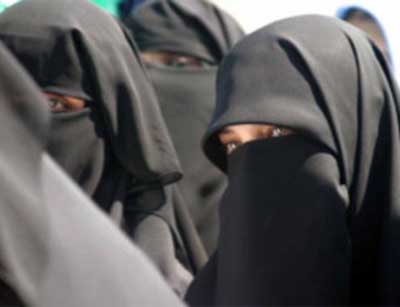 Toronto Star: Order to take off niqaab pits law against religion
A judge has ordered a Toronto woman to testify without her niqab at a sexual assault trial – raising the thorny issue of whether Muslim women should be allowed to appear as witnesses wearing a veil that covers everything but the eyes.
The issue is a collision of two rights, pitting religious freedom against the right of a defendant to face an accuser in open court.
The case could be precedent setting because it doesn’t appear there is any Canadian case law addressing the question of Muslim women in the courtroom. In Canada, home to about 580,000 Muslims, the case will be closely watched, amid fears about Muslim women coming forward in criminal cases.
The National Post: Muslim Woman Must Testify Without A Veil
TORONTO – A decision by a Toronto judge to compel a Muslim woman to testify in court without wearing her veil has raised the tricky issue of how freedom of religion fits into the legal system and how it stacks up against other charter rights.
The ruling, stemming from a preliminary hearing into a sexual assault trial in October, could be the first time that the contentious issue has been ruled on in Canadian court.
CTV: Judge Says Woman Must Remove Veil When Testifying
Keep supporting MuslimMatters for the sake of Allah
Alhamdulillah, we're at over 850 supporters. Help us get to 900 supporters this month. All it takes is a small gift from a reader like you to keep us going, for just $2 / month.
The Prophet (SAW) has taught us the best of deeds are those that done consistently, even if they are small. Click here to support MuslimMatters with a monthly donation of $2 per month. Set it and collect blessings from Allah (swt) for the khayr you're supporting without thinking about it.
I’m no legal expert, nor is analysis my strong point, but the following things come to mind:
How can the judge determine the sister’s level of emaan?! Since when are judges given the jurisdiction to evaluate the sincerity and strength of anyone’s religious beliefs or faith?!
The judge has grossly and blatantly twisted the sister’s words to suit himself. Although the sister is quoted as saying that she wears niqaab due to her belief in it, the judge seized upon her statement that she’s “more comfortable” if she didn’t have to show her face to other men as meaning that it’s ONLY an issue of comfort rather than religious conviction. This is a shocking and disgusting overstepping of bounds, and a misuse of legal authority and power.
Is this really an issue of the law vs. religious beliefs? If the sister did not wear niqaab but was rather a woman of any other faith group, and still did not want to reveal her face to male members of the court, what would the court say? In the comments section of the news article (admittedly not the most accurate source of information), it’s mentioned that in some cases shields are erected between the testifying witness and the suspect. Can an analogy be made between the legal permissibility of the shield and this particular witness’s wearing of niqaab?
Also, the judge pointed out that the sister has a driver’s license in which her face is revealed; is it legally sound to use that as the basis of forcing her to remove her niqaab in court?
On the other hand, from a Shari’ah perspective, is the sister allowed to remove her niqaab if the courts determine that it is absolutely neccessary? Sheikh Yasir Qadhi shared the following:
The Shariah does allow for a woman who veils her face to unveil it in specific circumstances; one of them being in a court of law if required by the Muslim judge. Whether this ruling can be extrapolated to her specific case or not requires some more research, but at the same time if it can be arranged that only female jurors see , out of respect to her beliefs, that would be an ideal solution.
I would not be very inclined to put up a fight for this specific issue, though, as it is a court of law and she is only being asked to do so for a particular reason. But she should consult with her religious authority and also her legal counsel before she decides what course of action to take.
Sheikh Younus Kathrada continues:
There is firstly the matter of the hukm (ruling of niqaab); is it waajib or sunnah? In her case, if what the article states is correct, then she sees it as being sunnah and, therefore, she should not have a problem removing it. On the other hand, if she sees it as being waajib, then she can fight it and do as suggested (in the comments); basically that she be identified by a female bayliff (forexample) and continue the trial. That is why the British ruling seems to make sense. In the end, if she has a good case against her assailant and the only way to get justice is to remove the niqaab for a period of time during the trial, then she may do so. However, many factors need to be considered.
To me, the current state of the case is a continuation of a troubling trend in the Canadian media and courts:
Challenging Muslims specifically regarding their religious beliefs, under the guise of legal processes, procedures, and concerns, while maintaining a condescending air of “we know better” rather than a sincere and understanding attitude.
It also reveals, once again, the disturbing amount of ignorance and misunderstanding regarding Islam, and Muslim citizens taking part in important activities in the public sphere, both social and legal. Unfortunately, this ignorance has often translated from mere public opinion to political actions – as in the case of voting with veils, after which Bill C-6 (An Act to amend the Canada Elections Act – visual identification of voters) was introduced.
It increases the difficulties for Muslim citizens to confidently take part in vital proceedings without having to fear that their religious beliefs and practices will be disregarded, mocked, or attacked by fellow Canadians. The debate of religion’s place in the public sphere is a heated one, but it is dismaying nonetheless that so many people continue to be intolerant and aggressive when this issue is brought up.
In the end, this is not a black-and-white case.
There are many questions that need to be answered before we can say right out that it is illegal for the judge to order the sister to unveil, or that it violates the sister’s Charter right of freedom of religion.
Nonetheless, the fact remains that from what is apparent, the judge has gone about this in an extremely tactless and provocative manner rather than handling it maturely as would be expected from a representative of the law. He has certainly stepped out of bounds by taking it upon himself to determine the level of religious conviction of the witness, which is both ethically unacceptable and legally shaky.
As well, this is once again simply blowing the situation out of proportion: Islamically, this can be handled very easily because as the shuyookh have stated above, there are flexibilities in Islamic Law that permit certain exceptions out of necessity.
Let us remember that before jumping to choose sides or conclusions, we need to keep in mind the various factors at play and the potential ramifications of this case’s conclusion. The defence of Charter rights, civil liberties, public perception of Muslims, and the continued debate about exceptions for religion in legal cases will all be deeply affected by the outcome of this case.
Please make du’a for the sister as she is a witness in a sexual assault trial, which is a difficult and emotional ordeal for her. May Allah grant her strength of emaan and patience, and make it easy for her to overcome this tribulation, ameen.
We await a response from the CIC (Canadian Islamic Congress), CAIR-CAN, and the CCMW (Canadian Council of Muslim Women) regarding this case.
Keep supporting MuslimMatters for the sake of Allah
Alhamdulillah, we're at over 850 supporters. Help us get to 900 supporters this month. All it takes is a small gift from a reader like you to keep us going, for just $2 / month.
The Prophet (SAW) has taught us the best of deeds are those that done consistently, even if they are small. Click here to support MuslimMatters with a monthly donation of $2 per month. Set it and collect blessings from Allah (swt) for the khayr you're supporting without thinking about it.




Far Away [Part 26] – Shaytan Is A Liar

From a Syrian Prison to the UN: The Case of Bilal Abdul Kareem

The Muslim Book Awards 2026
Far Away [Part 25] – To Save A Prince

Putting Lipstick On The RSS Pig
Far Away [Part 26] – Shaytan Is A Liar
Far Away [Part 25] – To Save A Prince
Far Away [Part 24] – The Whipping

When The Bed Walked Away [Part 2] – Primordial Muck
When The Bed Walked Away [Part 1]

The Best Actions for Eid al-Adha [Imam Dawud Walid]

Coming Full Circle: Who Are You Now? | Night 30 with the Qur’an

Running Away From Who We Are | Night 29 with the Qur’an

Building From the Ground Up: Week 4 Recap | Night 28 with the Qur’an



AnonyMouse
February 3, 2009 at 2:38 PM
The Take: On Niqaab and the Law
I am rather dismayed at the statements of both Saira Zubeiri and Alia Hogben – they seem to be expressing the idea, which I’ve heard and read elsewhere, that the niqaab shouldn’t even be considered seriously because it’s either “not an Islamic requirement” (in their view) or only a minority of Muslim women wear it anyway.
In fact, there are some (such as Raheel Raza and Farzana Hassan) who blatantly claim that niqaab has nothing to do with Islam, and that it’s all about misogynistic and extreme interpretations of Islam. Obviously, this just goes to show their own lack of any concrete knowledge and understanding of the Deen!
Abdullah
February 3, 2009 at 2:42 PM
Good thing that niqab isn’t required, only hijab is.
AnonyMouse
February 3, 2009 at 2:47 PM
@ Abdullah
Ah, but that’s where the difference of opinion is… many people (such as myself) DO believe that niqaab is waajib. To totally disregard this, as so many people are doing, is what I strongly disagree with.
Aside from the fact that there is flexibility in Islamic Law when it comes to unveiling for certain necessary business transactions and legal procedures, I find it extremely unfortunate that so many people show a lot less respect towards munaqqabaat because in their opinion, “You don’t even have to wear it!” When things like this come up, we find out just how intolerant and unreasonable many people are. Regardless of what someone’s personal view regarding niqaab is, I think that there needs to be respect for those who choose to wear it, just as we respect the choice of those who don’t wear it.
Omar
February 3, 2009 at 2:53 PM
sallamu alakum
I am not sure i agree with this ruling. It definitely shows a lack of tolerance. Aside from this, i also disagree with AnonyMouse above comment. I am not sure it is wise of you brother to dismiss others opinions as a “lack of understanding”. The niqab has always been highly debated among the scholars. If you do not agree with me, I would be more then willing to learn what you may see as a lack of understanding. Just provide me literature showing that the niqab holds ijma status (as a fareed) among the ulema as does the hijab…
With all due respect,
Omar (rawealth.blogspot.com)
Mezba
February 3, 2009 at 3:12 PM
With all due respect the niqaab is not seen as wajib by majority of scholars, only a small minority. I personally see the niqab as a cultural baggage. I think the judge here has made a right decision, IF THE LAW IS SAME FOR EVERY ONE. Hopefully, the woman also gets justice.
Yusuf Smith
February 3, 2009 at 3:24 PM
As-Salaamu ‘alaikum,
Even if niqaab is waajib, classical fiqh books (see Reliance of the Traveller, for example) state that it is permissible to remove it when identification is required, and it is nowhere required more than when a woman is giving testimony.
It’s not the same as courts requiring women to remove headscarves, because headscarves do not conceal a woman’s identity.
MM Associates
February 3, 2009 at 3:37 PM
As a niqaabi, I have to agree with br Yusuf, and Allah knows best.
I’ve had to remove my niqaab before, like for getting passport pictures and so the agent at the office could identify me and just so happened that there were no women there..qadr Allah wa ma sha fa’al. Gotta do what you gotta do!
At the same time, I am truly annoyed at the response of some people when it comes to sisters in niqaab….like we are burdening ourselves? It’s “baggage”? It’s not waajib so who cares? She’s makin it hard on herself, her fault!
Please.. grow up. Least you could do is RESPECT the opinion.
Amatullah
AnonyMouse
February 3, 2009 at 3:56 PM
The main thing grating on my nerves regarding this case is not the judge telling the witness to remove her niqaab, but his basis for doing so. Rather than saying simply that it’s for legal reasons that she must do so, he’s saying “Well you don’t even really believe in it as a religious requirement, you just want to wear it for comfort, so take it off (for the case).” So, as I said in the article, it’s the fact that he’s trying to evaluate her level of religious conviction which I find appalling.
Mezba
February 3, 2009 at 3:59 PM
Anonymouse: I think the judge actually did a service to the Muslim community. He established by this ruling that it was not a “religious right vs legal obligation” ruling. By stating that the woman wears it for comfort he removed the “religious right” from the equation.
We have to stop treating everything as if it is an affront to Islam.
I am more worried about this, because I think it’s true.
Harper government anti-Muslim, letter charges
AnonyMouse
February 3, 2009 at 4:19 PM
@ Mezba
I don’t know what you’re missing here, but as I stated originally in the article:
It goes back to the judge taking it upon himself to decide whether she’s wearing it out of sincere religious belief or out of comfort, by deliberately twisting her own words. Clearly she was explaining why she would prefer to keep her niqaab on, not simply saying that she wears it only because it’s more comfortable for her.
In any event, I’m trying to focus on the bigger picture:
Not whether or not religious rights trump legal obligations (because we’re not even 100% sure yet if showing her face is a legal obligation; and even if it is then it’s Islamically permissible for her to do so), BUT the judge taking it upon himself to evaluate the level of the witness’s religious conviction.
So I am not treating this is an affront to Islam, but as pointing out how worrying it is when someone of authority can step in and tell you how much you believe in something.
Again, I think that the focus on the niqaab itself is misplaced and being blown out of proportion. The real concern here should be whether representatives of the law have the right to determine the level of someone else’s faith and conviction.
Leila
February 3, 2009 at 5:22 PM
I disagree with the author. This woman is happy to show her face for a driver’s license and passport (her needs) but refuses to do so as witness to a sexual assault case. She is selfish and is trying to be difficult for no reason. Everyone should be treated the same. The niqab is not considered a religious right and i am glad the judge questioned her on this point. We need to balance our rights and duties.
Umm Layth
February 3, 2009 at 5:33 PM
Bismillah
as salamu ‘alaykum
I’m not going to get involved in the case itself as we must leave that to the muftis there but I will say that as a woman who has worn niqab for years and believes 100% in its obligation, that I would never step into a court in america with my niqab on.
Mezba you said,
It’s obvious you have no idea what the ikhtilaaf is over and that you haven’t read the fiqh issue from the fiqh books themselves. If you did you would firstly, have more respect towards any topic that involves our deen and secondly, you would recognize that it isn’t a “small minority” but the main opinion in the hanbali school of thought, the shafi’i’s mu’tamid opinion, and an opinion that is differed on greatly by the hanafis and malikis (some pushing towards the face being awrah in times of fitan and so on).
For more info: http://seekingilm.com/seekingilms-research/niqab
However, this IS NOT the issue here. I just had to respond to this comment as I see these types of comments too much online.
Mezba
February 3, 2009 at 5:38 PM
Again, to Anonymouse, the judge did not judge the “level of the witness’s religious conviction”. He merely judged whether she considered the niqab as a religious obligation or not. When it was clear she did not, then he did not have to rule on a “religious right vs legal obligation” issue. It just became a straight “uphold the law” issue. Please understand the important legal difference between the two.
Second, I stick by my sentance that most Muslim scholars do not consider the niqab as obligatory. Despite how many people think otherwise, which sect has it as a main article of faith, this is a fact.
iMuslim
February 3, 2009 at 5:41 PM
This article is not about whether niqaab is a religious obligation.
The point is: the non-Muslim judge should not have assumed the religiosity of the niqaabi witness, nor based his decision on his own limited understanding of Islam. He should have simply stated what was required from a CANADIAN legal perspective.
For example: Canadian law may state that the witness must show her face in court.
In this case, the niqaabi sister needs to make a choice – based on her own beliefs and Islamic counsel – whether to remove the niqaab for this purpose, or not.
If the Islamic opinion that she follows says that she cannot remove the niqaab, she may request a concession from the judge. In this case, the judge should consult CANADIAN law (not Islamic law, which he has no training in), to see if this is possible, out of respect of Freedom of Religion.
If there is a precedent for such a concession (e.g., where a shield has been used), then he may rule that she can keep the niqaab on.
If there is no precedent, he must make a ruling dependent on his knowledge of Canadian law. In the end, his verdict may be that she has to remove the niqaab in order for her testimony to be valid. In this case, the sister will have to make a final decision, again, based on the opinion THAT SHE FOLLOWS.
The judge should not issue his verdict based on what he assumes of her religiosity, nor what he understands to be obligatory in Islam. He has no ability nor training to rule in this regard.
I believe that is the point of this article. And Allah knows best.
Ibn Abu Aisha
February 3, 2009 at 7:26 PM
Assalamu Alaikum,
Exactly – iMuslim’s Comments precisely summarize the points raised in the article.
May Allah keep the sister firm and grant justice to the victim.
Abd- Allah
February 3, 2009 at 8:44 PM
“With all due respect the niqaab is not seen as wajib by majority of scholars, only a small minority. I personally see the niqab as a cultural baggage.”
Mezba, niqab is NOT “cultural baggage”, NO scholar says that niqab is cultural, even the ones that say it is sunnah consider it to be, like all other sunnahs, a highly recommended and praiseworthy act, and no scholar looks down on it or say that it is not from Islam. If you want to get closer to Allah, first you do the obligatory acts of worship, and if you want to get even closer, then you start performing the sunnahs that are not obligatory so you become closer to Allah.
Also the number of scholars that hold an opinion has nothing to do with the opinion being right or wrong.
Amad
February 3, 2009 at 9:20 PM
Mezba, the cultural baggage comment, I dare say, is in fact driven by cultural baggage itself :)
But Mezba, what you say here is perfectly fine and I would agree with you. However, that is not what you said in your previous comment. Big difference between differing on obligation vs. saying that there is no basis for it.
Anyways, I am kind of torn on this issue. Whether niqaab is fard or not is a secondary matter. That is not and should not be a court’s mandate to decide. I think legal scholars might argue that facial expressions are important in the court of law, but then that has to be weighed against individual rights that are protected by the strictest of standards (including freedom of religion). wallahualam.
abu abdAllah, the Houstonian
February 3, 2009 at 11:59 PM
bismillah. i’m writing as an observer who is not familiar with Canadian constitutional law, but has studied US constitutional law.
after reading this statement in the National Post:
i know that if the case were here in the US, this judge’s ruling would almost certainly be struck down for impermissibly inquiring into the degree of her belief in her religious practices. could the ruling be revived independently? perhaps, but the ruling as such — based as it is on a determination that her “beliefs were not that strong” — that process of making his ruling would not stand, wAllaho’Alim. sad to think Canada may be less just than America.
on a tangential matter, i suppose it was inevitable that the thread would be overwhelmed with the same type of comments that clouded the issue of the French woman who was denied citizenship because of her niqaab. too may French people asserting their own views about Islam criticized her, too. personally, i applaud any husband who would be willing to relocate his family to a country where his wife could wear niqaab without government harassment or stigma.
may Allah Guide any Muslim who finds satisfaction in the denial of liberty to another Muslim who wronged no one, especially when such denial was apparently little more than the exercise of caprice or bias.
[edited to avoid any inadvertent error in ascribed comments]
mulsimah
February 4, 2009 at 2:32 AM
i thought niqab was orrdered fard by majoriy of scholars and hijab minority? and also all scholars reccomend niqab altho we usually tend to ignore that fact bc most speakers tend to ignore it also
SarahG
February 4, 2009 at 4:00 AM
I will agree that the judge was wrong and should have decided the case on a uniform standard which applies regardless of faith: that the accused should be allowed to “face” their accuser.
But I want to implore Muslims here to consider human nature when deciding how to dress. All humans, not just white males, respond better to people who dress, act, speak like them. It’s not racism or “Islamophobia” it’s the way humans are wired. We can have endless sessions where we try to “understand” the out group, but no matter what you do you’ll have people who don’t respond well to the one who looks or acts “different”. I’m not saying Muslimahs need to walk around in bikinis or tight jeans, but there are conservative clothes which they can where (and adhere to hijab) that would not identify them as an out group.
Consider this analogy. If I want to succeed in business , any business, I wouldn’t show up in jeans and a t-shirt if the norm was to where suits and ties (or pantsuits and heels). Of course, if I wanted to succeed in a business (like computer science) I probably would need to dress more casually.
Amatullah
February 4, 2009 at 7:21 AM
Assalamu Alykum
I am a niqabi myself Alhamdulilah…did the issue really require the coverage…its a mustahab act. I wish we could utilise our time and resources for more fruitful activites.
JazakAllahu Khair,
Kalimat
February 4, 2009 at 9:22 AM
@ Abu abdAllah, the Houstonian
The french husband is not going anywhere if he is honest with himself, he has the comfort to put his family on the welfare system and chose to be unemployed. Saudi Arabia or any other Muslim country is not going to afford him that luxury.
Ibn Masood
February 4, 2009 at 9:50 AM
Assalamualaikum
The discussion of this article, as iMuslim pointed out, is not about a fiqh issue that would require personal study on its own and an understanding of the shariah.
Let’s not allow our assumptions or differences about a certain ruling divide us and cause argument :) inshAllah. Both the opinions deserve their due credit and both have their evidences. To even go about challenging each other views without due authority (i.e. extensive shar’i knowlege) is only going to create fitnah.
I think this judge is getting his attitude from certain canadian ‘muslim’ individuals who express their views openly from time to time. I.e individuals who preach the whole modernist/secularist viewpoint. I’m sure many Canadians know who I’m talking about ;).
I am tempted to write a letter to the Star. Will do, inshAllah it can get posted.
Mezba
February 4, 2009 at 10:47 AM
An editorial from the Toronto Star, today.
To allow niqab a small concession
The judge was attempting a delicate balancing act between competing rights. His reasoning deftly averted the core issue by assessing piety.
I suggest you all read the article fully.
Umm Layth
February 4, 2009 at 1:00 PM
My responding to the comment was only because in times where women are being attacked for veiling and looked down upon we have Muslims who go around throwing this nonsense of “its just cultural baggage”. It’s not about whether or not the face is awrah anymore but about having that default respect that we are supposed to have for everything that is a part of Islam. It’s true that non Muslims don’t feel comfortable around Muslim women who veil many times in the west and this should be understood but when Muslims themselves show intolerance it is too much and should be responded to. The covering of the entire body is something that is a part of the deen, period. Thus every Muslim should either speak good or remain silent.
Abu Bakr
February 5, 2009 at 7:08 AM
Thank you Mawlana Mezba for sharing your valuable research!
abu abdAllah, the Houstonian
February 5, 2009 at 7:34 PM
subhanAllah
subhanAllah. your comment suggests so many sad things about you that you should consider asking that it be removed on your behalf.
if you only write from ignorance about the situation faced by the woman and her family, and some five million Muslims, in France, read this article. it does not appear to have been written by a Muslim, so perhaps you’ll be less inclined to attack it.
among that writer’s observations:
i admire that husband’s desire to protect his family and his way of life, one that he believes is in accord with Islam. i do not think the comment offered about his means or his possible dependence on the state is one that will benefit the writer on the Day of Judgment. wAllaho’Alim.
MM Associates
February 5, 2009 at 8:15 PM
bismillah. [posted by abu abdAllah]
jazak Allah khayr, Mezba for the Star article. definitely was a good read, and people should send let the writer, Rosie DiManno know of their approval.
the overriding concern of the Canadian courts in permitting some witness not to be seen by others appears to be be in insuring a full and candid account from the witness. since the covering is a shield for modesty, and the substance of the case is sexual assault — a direct attack on virtue, of course she would be more distressed during testimony without the cover, and that would negatively affect her account. so it appears she has a strong case, inshaAllah.
as a jurist i can tell you that permitting the screen may not help the witness make her case to the trier of fact. it might, eg, if the jury were told that the witness feared reprisal from the defendant. that would make the defendant look more dangerous. this situation is different: here the witness’s covering would attest (1) that she is woman who takes modesty seriously, (2) and that she does not want any of the men in the room to look upon her features — regardless of who they are.
you or i may take her claims more seriously. but a juror or a judge who fails to empathize with her may let that emotional response bias them when they weigh the facts.
ie, she’s taking a risk by testifying in niqaab. but subhanAllah, it should be her choice whether the benefits of that risk outweigh the possible harm.
Pingback: Friday Links — February 6, 2009 « Muslimah Media Watch
Kalimat
February 7, 2009 at 10:52 AM
@ abu abdAllah, the Houstonian
It is the French tax payers that are protecting his family, making sure his children are fed and housed while he contemplates about his predicament. Him and his wife are unemployed, who do you think is looking after them? Unemployment and poverty is high among French muslims, making them dependent on goverment handouts. Let us be honest with ourselves, if it was not for the money issue he would have made hijrah because clearly their way of life is contradicts French values.
Tuwaylib
February 11, 2009 at 12:24 AM
The du’at in the west must clarify to the people the issue of niqab. You have some who unfortunately or pathetically deny it even being a sunnah and those that will never see fit for a woman to lift her niqab. Sh. Haytham Haddad of Britain has a pretty good talk on this issue and how he advises more and more sisters to where it and how judges have made arrangements for sisters in niqab.
Bint
February 23, 2009 at 7:08 PM
It becomes an issue of common sense sometimes. I wear niqaab following the opinion that it is sunnah. That being said, there are couple of things I personally feel about this case If this is a sexual assault victim, she indeed wouldnt wanna show her face if she is traumatized. Secondly if she is only a witness, then she may consider removing the niqaab if she is not scared on anything for giving a witness in a court of law. I dunno, I would do that if I was not scared but if I was scared for my safety then I would have provided that as an additional reason for wearing the niqaab.
Props to those sisters that wear the niqaab 24/7 outside. I think we should continue to do it in our daily interactions so that muslims will get used to it. Alot of the arab muslims cultural from middle east are kinda averse to the niqaab for reasons of backhome nostalgia(I am talking about minus the gulf offcourse). So they like to say it is not necessary or the way people use to tell me was like “DONT DO IT” etc. which was rather annoying and delayed my wearing niqaab for a while.
Mustafa
April 10, 2009 at 5:08 PM
isn’t there a legal opinion on this matter??
Also – for someone to call Niqab “cultural baggage” just shows that they might have an inferiority complex infront of western society and western culture. Since when do we call anything from anyone’s culture “baggage”. And where are we exactly traveling too that we call it “baggage”. If by cultural “baggage” you mean the cultural and religious practices that we bring to this country where Islam and Islamic cultural practices are a minority, then where do we draw the line to what we consider “bad baggage” or what we consider “good baggage”? The fact of the matter is that we live in a “free” country – if I can walk around the street dressed up as a witch without having to present any justification for it, then what is the problem with our women walking around the street in Niqab?
Our societies are changing however – population increase, massive travelling and an increase in corrupt goverments’ need to control their populations has created this market and need for video cameras, photo IDs and this idea that we need to be able to identify everyone on the street at all times. We can discuss the issue with these concerns, but cultural “baggage” has never or I hope will never be something that Muslims or anyone for that matter, feel about things about their culture.
In terms of it being wajib or not – those are legal limits – Niqab is ALLOWED by the Sacred Law and many of our scholars have emphasized it because of the conditions of society. Anyone with a 30 IQ can understand how women are not only judged but also exploited because of their bodies and looks and b/c of the fact that they are women. They are being sold as products on the market. Niqab is a very effective technique to avoid this. Whether you wear the Niqab every second you are outside, or you cover your face when you see men around or have conversations with men when you need – whatever the case, it is a wise thing to do and is a REALITY in the Muslim world.
Anyway, we need to find a qualified legal opinion on the matter of if a woman is allowed to remove her Niqab for the sake of testifying in courts, photos for passport, etc etc etc.
J
April 11, 2009 at 3:01 AM
Brother, the scholars have already made the allowance for removing the niqab when testifying in court.
S.K
April 11, 2009 at 9:58 PM
Bismilah,
Has anyone here for a moment tried to take a independent look at this? Has anyone tried to look at this trough the eyes of a non muslim? The growing discontent is very visible among the non muslims due to these double standards…… AND i think they have a point!
As a practising Muslim born and raised in Australia i am the first to speak out about injustice that Muslims face in Australia or abroad. BUT i am also a realist and this brothers/sisters is rediculous. For example, the sister has chosen to go to a Non Islamic court to ‘testify against an assailant’ but not want to remove her niqab?…why do we act suprise when it was refused? Why do we make it such an issue? If you had’nt noticed western countries are not governed by Sharia and we cannot expect them to be. How about we have a little courtesy and try not to over complicate/inconvenience the non Muslim community where it does not involve a fundemental facet of our deen.
And ofcourse if we are still not happy or feel oppressed then i refer you to Quran 4:97 ;
When angels take the souls of those who die in sin against their souls, they say: “In what (plight) Were ye?” They reply: “Weak and oppressed Were we in the earth.” They say: “Was not the earth of Allah spacious enough for you to move yourselves away (From evil)?” Such men will find their abode in Hell,- What an evil refuge!
Hypocrisy!!! A most undesirable quality for anyone to have especially for a Muslim as it is mentioned in over 30 ayats in the noble Quran (assuming Muslims regularly read Quran that is…).
We ( i.e Muslims living in the west) always seem to be whinging and complaining about some thing that may not have gone our way. My advice as a Muslim Australian “HARDEN UP MATE!”. Was the sahaba so soft? Were they so easily offended? They MOST certainly were not! Are these people not our role models? Next time you find your self complaining about something please spare a thought for the mothers of Gaza who often find them selves picking shrapnel out of their childs chest!
Is it a wonder why many non Muslims don’t respect us?
tahir
April 16, 2009 at 6:46 AM
S.K has quoted a ayat but iam not sure how that fits in with his comments. in light of the ayat it is imp that muslims must then live in muslim countries unless there is a very very valid reason, economics does not count as a valid reason. people who migrate for better jobs to uk and usa are clearly in the wrong.
so S.K brother we hope that you will move out of aussie now and settle in a muslim country where you can practice your religion without compromise.
recently we went for umrah and at the immigration my mother who does full sharia’ purdah (alhamdulliah) was asked to step into a room for a woman to check her i.d … so these are the blessings of living in a muslim country.
as for all the comments about niqaab and hijab, the purdah of a women is of the face and full body in front of non mehrams. in essence that is purdah. if you u just wear hijab that is not serving any purpose at all… because the identity of a women and her beauty is in the face, so if ppl can see your face recognize who you are then what purpose is your head / body covering serving.
the covering of the head and body is when is the woman is inside the house.. that is why it says that a woman can uncover her face, hands and feet only in front of mehrams … so if you think about it what is the opposite of that, covering of the face and the entire body infront of non mehrams.
now in todays culture this is a tough call but that does not mean that we start saying islam is ok on hijab and no niqaab. infact women should acknowledge their weakness in following the law and strive and pray to Allah that he gives them guidance to observe proper shariah purdah in the future.
they say that to commit a sin and not think its a sin is far worse then committing a sin and knowing its a sin.
Pingback: Friday Links — April 24, 2009 « Muslimah Media Watch
ibn habib
April 27, 2009 at 12:03 PM
We discussed this case in our law class. I am not sure how to feel about this. I am still waiting to see what the Supreme Court will say regarding this case. However, I think a lot of Muslims do not understand why the judge made this ruling. This is because in our justice system, the accused has the right to confront the victim and to raise every conceivable argument in an attempt to prove his innocence. So what this case really is about is freedom of religion rights vs. the rights of the accused in court. With cases like this (and others like proposition 8), I think Muslims need to understand the implication of them, especially given that we are living in a liberal democratic system.
concerned
May 6, 2009 at 5:05 PM
Women during one of the holiest times at the holiest place are required to remove their niqab. Yes, women who perform the Hajj cannot wear the niqab.
Rasulullah (Sallallaahu Alayhi Wasallam) said, ‘The Ihraam of a female is
her face (keep the face uncovered) and the Ihraam of a male is her head
(keep the head uncovered).’
Just as it is prohibited for a male to cover his head during Ihraam, so too
it is prohibited for a female to cover her face in the state of Ihraam.
The argument that it should just not touch her face so she should wear a mask is absolutely ridiculous and goes against the Prophet’s commandments. It’s exactly like the Jews who put out nets on the Sabbath and pulled them out on Sunday to avoid “fishing on Saturday”.
So if the face is a woman’s Ihraam during the Hajj, how is it that it becomes wajib during other times when women are not walking side by side strange men and praying in front as well as next to them in front of the House of Allah? The Quran mentioned that only the Prophet’s wives should speak behind a screen, and this was because of their special status as mother’s of the believers and because they could not remarry. When the Quran specifically says that this injunction is for the Prophet’s wives only, why do we insist it be wajib for all women? Are we more Muslim than Allah and His Prophet now? How do we ignore Allah’s own words?
As a Muslim “hijabi” women, who has studied this issue in depth, I feel secure in saying that the niqab is oppressive, it makes women faceless and nonexistent, and it promotes the mistreatment and “objectification” of women as though we are some evil object to be kept hidden from view. Women are human beings and not the source of fitnah. The hijab protects the women’s honor, the niqab defaces her as someone unworthy to be seen or heard. It makes it hard for regular Muslim women to tell others that Islam is not oppressive towards women, when they see that women can’t even show their face in public.
And whenever this issue of hijab or niqab comes up, no one ever talks about the men’s responsibility of lowering their gaze (which is first mentioned). Why would men need to lower their gaze if all women were required to wear niqab? What would they lower their gaze from? The Quran and the Prophet specifically say that women should cover everything except what is apparant (the hands and the face). The Prophet knew and recognized all of his female companions, as did all the other male Sahaba. How could that be unless they could see the women’s faces. So I really don’t understand where the minority opinion even comes from as the niqab wasn’t even Sunnah, let alone wajib?!
These kinds of religious edicts are exactly the kind that push so many Muslim women away from Islam and into accepting secularism or western feminism. It makes strong believing women who love Islam ask, why does Allah hate women so much that He wants to shove us away from being active part of society? Are we not valuable enough to show our face? Do we not have any talents or dreams worthy enough that we get imprisoned into our homes or trapped under a veil? If niqab makes one so religious, why don’t men start putting them on? There are many more beautiful men out there then women. We need to prevent homosexuality, so let’s make all men wear the niqab to prevent fitnah. Now how does that make you feel?!
Our beloved Prophet was the first ever Women’s Right’s advocate. He did for women in his lifetime what others have since failed, which is make Muslim women feel valued. He warned not only in his last sermon in Arafah to treat women with respect and honor, but also as he breathed his last breath on earth. He said he feared how his ummah was going to mistreat women and slaves and warned “guard your prayers and be careful how you treat those under your authority “; meaning that mistreating those weaker than you is a sin equal to that of missing your prayers. And yet we have slavery still in the Arabian peninsula, and women all over the Muslim world suffer economically, physically, mentally and socially. Rather then discussing how to end this non-Islamic practices, help alleviate the pain and suffering of the Muslim Ummah, and help all the widows and single mothers out there who are mistreated, we continue to argue back and forth on whether it is wajib for women should cover their face. It is for this reason that the Ummah suffers and will not get better, unless we get out priorities right!
Also concerned.
September 2, 2009 at 6:05 AM
Concerned, I fell upon this entry & the comments on it after searching for a few pictures of niqaabi sisters.
You’re right, it’s NOT allowed to wear niqaab in ihraam. HOWEVER, there is a hadeeth of them lowering their khimaar to cover their faces when they saw non-mahrams riding. Proving that covering is a stronger waajib than not covering (which is also waajib when in ihraam).
And even if you don’t agree with the obligation of it, then at least agree that most, if not all of the scholars have said it is mustahab at the VERY LEAST. Many of them have said it is waajib/fardh.
The end, Assalam Alaikum
concerned
September 2, 2009 at 6:24 PM
Calling something Mustahab is very different from claiming something wajib/ fard. Those minority scholars…almost all of them MEN..who say it’s fard (if you don’t do it, you are sinning) need to show clear evidence. In Islam, halal and haram are very clear and have very strong evidence based on Quran and Hadith. There is no commandment in the Quran about niqab except those directed only to the Prophet’s wives, when they are told to speak behind a veil as they are not like other women and cannot remarry. If all women should be like the Prophet’s wives in all aspects of their lives, then every woman whose husband dies should never remarry. We know that is not true and widows and divorced women can remarry. So when Allah says this is for the Prophet’s wives alone, how does one make it wajib or fard on other women?
Additionally, there is no hadith to support Niqab as fard or wajib. It is a minority scholarly opinion, the majority of scholars say niqab is permissible and perhaps as you mentioned mustahab. However, remember that the Prophet mentioned 4 PERFECT women in the world. Maryam, Khadijah, Fatima, and Asya. None of them were niqabis. Hajara, the founder of the holy city of Mecca and the well of zam zam was not mentioned to wear niqab.
So is it even mustahab? It is more mustahab to be an active part of your community, to help the poor, to feed the needy rather than to seclude yourself behind veils and walls. No one, including Muslims take Niqabis serious. When you don’t see one’s face, it’s hard to trust the person or even listen to them. Why insist on becoming faceless when Allah has permitted you to show your face?
And I have heard time and time again, men think evil thoughts even about niqabis….even more so since they become exotic. they undress women in their minds….so it really doesn’t protect a woman from someone with an evil heart.
concerned
May 6, 2009 at 7:42 PM
Here is a good website that goes over all the presented “dalils” of niqab and how not one of them supports the opinion that the niqab is fard or wajib on all Muslim women. There is many other hadiths that show that Muslim women during the Prophet’s time did not wear the niqab, including Fatimah (ra). The Prophet (pbuh) mentioned that there were four perfect women, including Maryam, Khadijah, Fatima and Asya. It is not known that any one of them wore the niqab since everyone in society knew what they looked like and who they were. If these are the perfect role models for women to emulate, then how can one say the niqab makes one “more righteous” when the most righteous women did not wear the niqab?
http://www.muhajabah.com/niqabdalils.htm
Brother in Islam
May 8, 2009 at 6:45 PM
As-salaamu alaykum all
This is a comment to the brothers in general and those that have been posting. There was a shaykh that once said that the Muslim Brothers nowadays talk like lions but behave like mice. For us brothers to have such strong opinions about niqaab being fard and what our sisters should be doing, while we go out in regular outfits with no scrutiny, is kind of sad. Let the scholars (both men and women) decide and then let the sisters follow the qualified opnions that they are comfortable with and that they believe in. Let the brothers be men and support them.
Maybe we should start listing all of the obligations (that are across the madhhabs) on brothers that we are not following. The fact that the Muslims are dying across the world, it as an obligation on the brothers first and foremost to try and do something about this and there is consensus on this. Yet how many brothers talk about this or feel that they’re not doing something required of them. The men of this Ummah have been given a monumental task, yet the most worked up we get is when we’re trying to quote islamic authority on whether niqaab is fard or sunnah. It is fard on the Muslim men to not let another child die in the arms of his or her grieving mother, and it kills me inside that I’m so pathetic (i speak of myself only) that I sit doing nothing and engage in religious polemics (which I have done many times).
So I say to myself and to my brothers, let us look inward about how many obligations we’re fulfilling and let our sisters who are following qualified scholarship do what they need to.
Forgive me if I have said anything wrong.
Nothing
May 16, 2009 at 12:10 PM
Abu Bakr
February 5, 2009 • 7:08 am
Thank you Mawlana Mezba for sharing your valuable research!
————————————————————————————————-
You guys are so rigid to maintain sunnah ! and here you are , trying to ridicule a person for his/her opinion. You can’t even respect other’s opinion which is different from yours.Does it mean , Islam is all about rituals ? and it ensure you heaven ?