
#Current Affairs
The Legacy Of Professor John Esposito: The Scholar Who Refused To Turn Islam Into An Enemy

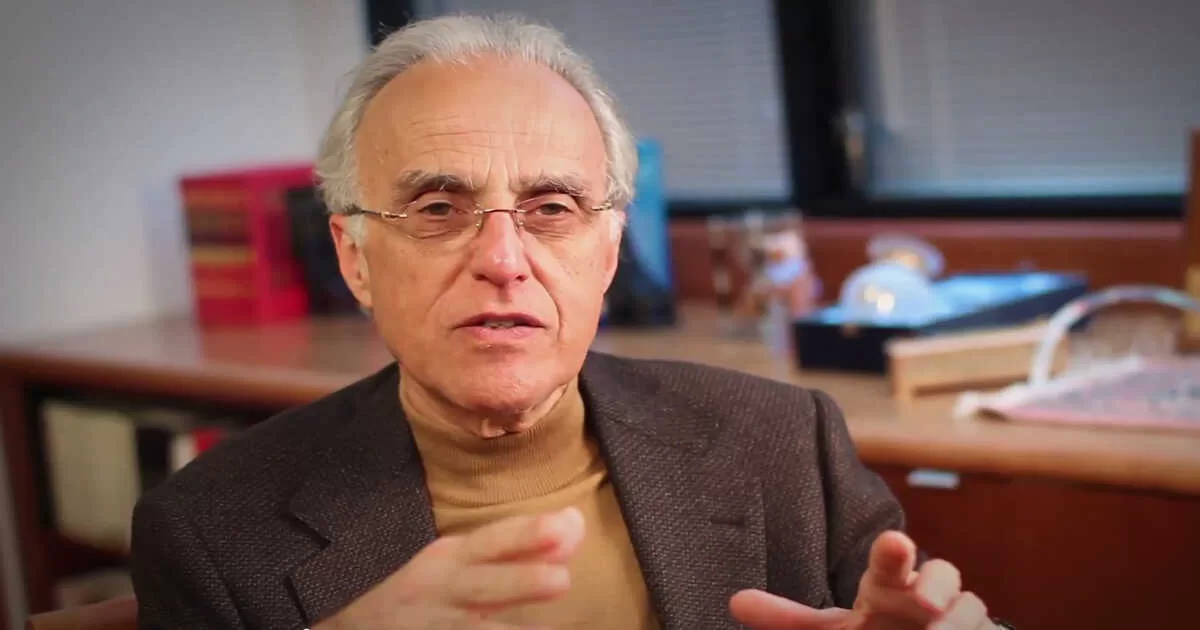
There are scholars who interpret the world, scholars who flatter it, and scholars who quietly make it less cruel. John L. Esposito belonged emphatically to the third category. His passing deprives us not merely of a distinguished academic, but of something now far rarer: a genuine public intellectual — one who understood that scholarship is not an ornamental profession but a moral vocation.
Esposito may well have been the last great public intellectual in the field now called Islamophobia studies, although he used the term less frequently than many who later made an industry of it. Long before Islamophobia became a conference theme, a specialized vocabulary, or an academic career track, he was confronting its most consequential forms: the intellectual caricatures that shaped journalism, diplomacy, public opinion, and American foreign policy.
He did not simply describe prejudice against Muslims. He disrupted the machinery that produced it.
Keep supporting MuslimMatters for the sake of Allah
Alhamdulillah, we're at over 850 supporters. Help us get to 900 supporters this month. All it takes is a small gift from a reader like you to keep us going, for just $2 / month.
The Prophet (SAW) has taught us the best of deeds are those that done consistently, even if they are small. Click here to support MuslimMatters with a monthly donation of $2 per month. Set it and collect blessings from Allah (swt) for the khayr you're supporting without thinking about it.
His method was deceptively radical: he studied Muslims in order to understand them.
That proposition sounds almost embarrassingly obvious. Yet Esposito entered a field in which influential Western scholars routinely approached Islamic movements as pathologies to be diagnosed, security threats to be contained, or civilizational irritants to be explained away. He refused this intellectual laziness. He treated Islamic revivalism not as a fever passing through irrational societies, but as a complex response to colonialism, authoritarianism, secularization, social dislocation, and the enduring human search for moral order.
An Italian-American Catholic Embraced By Muslims
He engaged figures such as Hasan al-Turabi, Rachid Ghannouchi, Hasan Hanafi, and Khurshid Ahmad when much of the West preferred to demonize them. He did not agree uncritically with everything they believed; serious scholars do not confuse understanding with endorsement. But he recognized that scholar-activists could not be comprehended through intelligence briefings, hostile newspaper profiles, or inherited Orientalist categories. They had to be read, questioned, challenged, and encountered as thinking human beings.
Through books such as Voices of Resurgent Islam and Makers of Contemporary Islam, Esposito introduced Western audiences to a vast intellectual world they had scarcely been told existed. He developed friendships across the Muslim world because he went there not as an anthropologist examining exotic specimens, but as an interlocutor. In societies accustomed to Western experts arriving with prefabricated conclusions, his seriousness felt revolutionary.
His mentor, Ismail al-Faruqi, helped shape this disposition, but Esposito made it unmistakably his own. He became perhaps the first Western scholar of contemporary Islam to be welcomed across Muslim societies with something approaching popular affection. He was not merely respected. In Pakistan, Malaysia, Turkey, and elsewhere, he was embraced.
When he visited Pakistan in 2017 to deliver the inaugural memorial lectures for my father, Dr. Mumtaz Ahmad, the reception was extraordinary. The lectures, co-organized by the US-Pakistan Intercultural Coalition, took him to the Lahore University of Management Sciences, the University of Management and Technology, the National Defence University, and the Institute of Policy Studies. The halls were packed. Audiences stood wherever they could find space. John Esposito, an Italian-American Catholic scholar from Brooklyn, arrived in Pakistan and was received like a rock star.
But the enthusiasm was not celebrity worship. Pakistanis understood what he had done. Here was a Western scholar who had spent decades explaining Islam without condescension, Islamic politics without hysteria, and Muslim grievances without treating Muslims themselves as guilty until proven moderate. They regarded him, quite simply, as the greatest living Western scholar of Islam.
“Uncle John”
For our family, however, he was also Uncle John — or at least the sort of figure who occupies that emotional territory.
Before my father and one of his closest friends, Dr. Mumtaz Ahmad, passed away in 2016, I knew Prof. Esposito primarily through telephone calls. He was hilarious. He would announce, with theatrical exasperation, that he was still waiting for my father’s hopelessly overdue essay for yet another edited volume. This happened repeatedly over the years. My father’s deadlines were elastic; John’s irritation was affectionate; and both men seemed to understand that the ritual would recur indefinitely.
His humor extended to his own career. He liked to say that before 1979 he barely had one and could hardly imagine writing a book. Then came Ayatollah Khomeini and the Iranian Revolution, producing what John jokingly called his first Lexus. Osama bin Laden and September 11, he would add, were responsible for the Mercedes. Behind the joke was a devastating observation: Western interest in Islam expanded most dramatically when Muslims could be represented as a crisis.
Esposito understood this danger earlier than almost anyone. In The Islamic Threat: Myth or Reality?, he anticipated the geopolitical temptation that followed the collapse of communism. Great powers, deprived of a grand enemy, rarely accept the inconvenience of peace. Islam was soon drafted into the vacant role. After September 11, Unholy War: Terror in the Name of Islam challenged both the appropriation of religion by terrorists and the exploitation of terrorism by those eager to indict an entire civilization.
Courageous Scholarship
His scholarship was courageous because it was published when misunderstanding Muslims was professionally safer than understanding them. The American media frequently preferred experts whose authority seemed proportional to their hostility. Esposito, arguably the leading Western authority on Islam, was often less visible in mainstream American discourse than ideologues who possessed neither his fieldwork nor his intellectual range. Apparently, the qualification for explaining Muslims on television was not knowing them too well.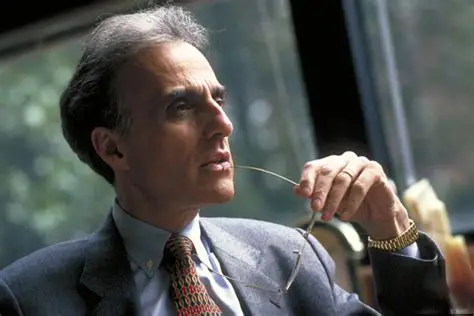
Internationally, matters were different. He advised governments, addressed universities, consulted policymakers, edited encyclopedias, and wrote more than fifty books translated into dozens of languages. Yet the scale of his bibliography can obscure his larger achievement. He built an intellectual infrastructure for seeing Muslims as historical actors rather than permanent suspects.
After my father’s death, my own relationship with Prof. Esposito deepened. His emails were an improbable combination of erudition, outrage, gossip, warmth, and comedy. He was generous with his time and prodigal with his friendship. Together with Professor Tamara Sonn and Imam Abdul Malik Mujahid, he formed part of the intimate circle of intellectual powerhouses I had heard about since childhood — my father’s confidantes, critics, collaborators, and beloved interlocutors.
It was therefore only fitting that Esposito delivered the first Dr. Mumtaz Ahmad Memorial Lectures, and that Tamara Sonn delivered the following year’s lectures. They were not ceremonial selections. They were family.
Activism Beyond Academia
One of my final and most revealing exchanges with Prof. Esposito concerned an international appeal demanding medical transparency and humane treatment for former Pakistani prime minister Imran Khan. He was deeply disturbed by the situation. Still, I told him I would understand if he preferred not to sign. Pakistan had awarded him one of its highest civil honors, and he was habitually received there as a state guest. Public dissent could jeopardize relationships cultivated over decades.
He did not deliberate for two seconds.
“Add my name,” he said.
Soon afterward, representatives connected to the Pakistani Embassy approached him with exquisite politeness. They praised him, honored him, and then delicately suggested that he had misunderstood Pakistan and been misinformed. Esposito replied that he understood the situation perfectly well. When he recounted the conversation to me, we laughed.
Tamara Sonn signed as well. Both knew that their standing with Pakistan’s establishment might never be quite the same. They chose principle over prestige — an elementary moral decision that remarkably few intellectuals, Muslim or otherwise, seem capable of making when honorary treatment, official access, and personal convenience are at stake.
This was not an isolated act. Esposito stood by Dr. Sami Al-Arian through years of persecution and confinement, visiting him under house arrest when many respectable people found distance more comfortable. He advocated for him when solidarity carried consequences. Esposito’s bridge-building was never the bloodless dialogue of hotel conferences and polished communiqués. He built bridges toward people whom power had isolated.
That distinction matters. Plenty of people celebrate pluralism when pluralism is fashionable. Esposito defended human dignity when doing so was awkward.
He spoke of dialogue between “Islam and the West” before the phrase became institutional furniture. But he also knew that civilizations do not converse; people do. His genius was to create relationships where abstractions had produced antagonisms. The founding of Georgetown’s Center for Muslim-Christian Understanding was therefore not merely an academic accomplishment. It embodied his central conviction: that knowledge must become encounter, and encounter must become ethical responsibility.
John Esposito perhaps did more to combat Islamophobia than much of the contemporary Islamophobia studies industry because he worked upstream. He challenged the categories, assumptions, and foreign-policy fantasies from which anti-Muslim prejudice drew its authority. He did not merely denounce the fire; he examined the intellectual wiring that kept setting the building ablaze.
His critics occasionally accused him of being too sympathetic to Muslims. It was an inadvertently revealing charge. Sympathy, in their vocabulary, meant refusing to begin with contempt.
Esposito began with curiosity. He proceeded with rigor. He ended, more often than not, with friendship.
That is why the Muslim world mourns him not as a foreign specialist who wrote about Islam, but as a friend who stood with Muslims without romanticizing them, spoke for justice without seeking applause, and crossed boundaries that lesser minds treated as walls.
My father was blessed to call him a beloved friend. I was blessed, after my father’s passing, to discover that friendship for myself. His last lesson to me was also the lesson of his life: honors are pleasant, access is useful, and prestige can open doors — but none of them is worth the price of silence.
John Esposito built bridges in an age that rewarded walls. The finest tribute we can offer him is not simply to praise those bridges, but to possess the courage to cross them.
Related:
– Thinking Long-Term: The Legacy of Yahiya Emerick
– Khurshid Ahmad, Pakistani Jamaat Leader And Scholar, Dies Aged 93
Keep supporting MuslimMatters for the sake of Allah
Alhamdulillah, we're at over 850 supporters. Help us get to 900 supporters this month. All it takes is a small gift from a reader like you to keep us going, for just $2 / month.
The Prophet (SAW) has taught us the best of deeds are those that done consistently, even if they are small. Click here to support MuslimMatters with a monthly donation of $2 per month. Set it and collect blessings from Allah (swt) for the khayr you're supporting without thinking about it.




The Muslim Book Awards 2026

Far Away [Part 25] – To Save A Prince

Putting Lipstick on the RSS Pig

[Podcast] Muslim Money Matters: Do You Know How to Halal Hustle? | Adam Taufique

“Pre-Baked Frame-up Operation”: allegations of antisemitism politicization in campus crackdown

Muslims and the F-Word: Feminism, Dhulm, and Jahiliyyah
Far Away [Part 24] – The Whipping
Far Away [Part 25] – To Save A Prince

When The Bed Walked Away [Part 2] – Primordial Muck
When The Bed Walked Away [Part 1]

The Best Actions for Eid al-Adha [Imam Dawud Walid]

Coming Full Circle: Who Are You Now? | Night 30 with the Qur’an

Running Away From Who We Are | Night 29 with the Qur’an

Building From the Ground Up: Week 4 Recap | Night 28 with the Qur’an

The Muslim You Are Becoming | Night 27 with the Qur’an
MuslimMatters NewsLetter in Your Inbox

Sign up below to get started


MSAKL
July 16, 2026 at 8:41 AM
Inna lillahi wa inna ilayhi raji’oon.
He took his shahadah in Sh. Hamza Yusuf’s house.
https://x.com/BinhamidAli/status/2077613372456251631