
Opinion
When Hijab becomes Cultural

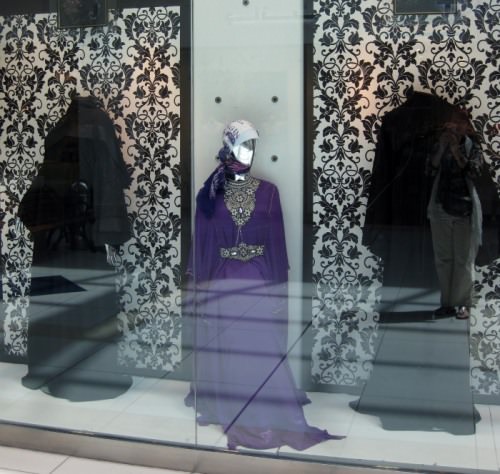
Wearing ḥijāb was never easy. I started covering in high school; it was a challenge, but it slowly became my identity. I learned lessons through wearing ḥijāb that I might not have learned otherwise. It gave me confidence, self-respect and taught me to stand up for my beliefs even if I had to swim against the tide. I lost friends but I also found friends, Muslim and non-Muslim, who didn’t care how I looked or how I dressed; rather, they respected me for myself and valued my friendship despite of my “strange” clothes.
A piece of cloth that made me look different, caused many to stare and laugh at me, slowly became my pride. It was not just ḥijāb anymore; it made me realize what it meant to do something for no other purpose than to please Allāh alone; to be tested and along the way to become stronger (inshā’Allāh).
Ḥijāb became a responsibility. It was a symbol or worship and servitude to Allah azzawajal. I was representing my dīn every time I stepped out of my house. I started enjoying being an ambassador. I used my ḥijāb to avail every opportunity to make da‘wah.
Keep supporting MuslimMatters for the sake of Allah
Alhamdulillah, we're at over 850 supporters. Help us get to 900 supporters this month. All it takes is a small gift from a reader like you to keep us going, for just $2 / month.
The Prophet (SAW) has taught us the best of deeds are those that done consistently, even if they are small. Click here to support MuslimMatters with a monthly donation of $2 per month. Set it and collect blessings from Allah (swt) for the khayr you're supporting without thinking about it.
There were tough times too, especially when my children started growing older and noticed their mother was different from others. There were times when they stood out just because their mother looked different. Or when the kids around the corner laughed at my young daughter asking “Hey what’s on your head?”. It was then that I felt uneasy exposing my children to an unnecessary challenge. I felt the need to escape away to a place where wearing ḥijāb was not difficult, rather part of the norm. Little did I realize that it was those difficulties and challenges that had transformed ḥijāb into my pride.
We moved to a place where ḥijāb was everywhere. It was not difficult to cover anymore, no one laughed at ḥijāb. Stares? That is another discussion!
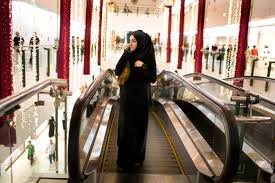 In the West, ḥijāb is frequently misunderstood as “cultural”. I was often appalled at this misrepresentation. It was not until I moved to the Middle East that I understood the grounds of Western arguments. I realized accusing ḥijāb as a cultural practice forced on women by their men folk, holds water.
Ḥijāb and jilbabs are very common here, but the oppression is reflected through the way ḥijāb is worn. Sometimes, it feels like women are in a prison waiting to break out. A sheer piece of black cloth carelessly resting midway across their head, the layers of hair slipping attractively out from the front makes these women look no less stunning than Princess Jasmine. Layers and layers of make up makes me wonder if they get ready at salons every day. Many women use artificial hair-buns under their hijabs, making it look like a perfect “camel-hump”.
Many women wear front-open abayas that split open up at every step they take; a glance of their tight skinny jeans and high heeled sandals only make them seem far more alluring.
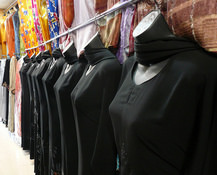 That’s not all. Jilbabs are tight. Some women cover their faces (which is mostly forced by their families) but their skin-tight jilbabs, designed especially to enhance body curves, are enough to catch anyone’s attention; forget the faces.
Many women here do not want to wear ḥijāb but are forced to by their families. One of my local teachers at Qatar University informed me that her brothers can never find out she doesn’t cover her face at the university or she will be forced to quit. I don’t know how ḥijāb evolved into culture, but unfortunately it did. Even the welcoming package and little leaflets designed for expatriates introduce ḥijāb as a cultural dress code.
I wonder what impression all those non-Muslim expatriates take back to their respective countries. Can they be blamed for accusing Muslims of imposing ḥijāb on women?
The other day, during the PTA meeting, two of the European moms asked me if I was wearing “all this” to adapt to the local culture!
I have never been asked about my ḥijāb from this perspective before. At first I was confused, but as their question sank in, I was ashamed. It took me a few minutes to answer their question, but, alhamdulillah, that day they left with a better understanding of ḥijāb.
There is always khayr in whatever happens in our lives; I learned a lot from my move that I might have never learned otherwise. Firstly, difficulties and challenges are not unnecessary, rather, they reform us.
Secondly, not all Western accusations are unfounded.
We should realize that it is partially our own fault that ḥijāb is misunderstood. Had our Muslim brethren not sent out the wrong message, much against ḥijāb would have been easier to clarify. Some progressive females, who label ḥijāb as a forced cultural practice, are as ignorant of ḥijāb as many Muslim women in “Muslim” countries. We have a lot of work to do from within. At times, it seems easier to make da‘wah to non-Muslims than Muslims themselves. May Allāh make the real knowledge of Islam sink into our hearts and return us our glory and ‘izzah that we have lost at our own hands.
Keep supporting MuslimMatters for the sake of Allah
Alhamdulillah, we're at over 850 supporters. Help us get to 900 supporters this month. All it takes is a small gift from a reader like you to keep us going, for just $2 / month.
The Prophet (SAW) has taught us the best of deeds are those that done consistently, even if they are small. Click here to support MuslimMatters with a monthly donation of $2 per month. Set it and collect blessings from Allah (swt) for the khayr you're supporting without thinking about it.





[Podcast] Muslim Money Matters: Do You Know How to Halal Hustle? | Adam Taufique

When The Bed Walked Away [Part 2] – Primordial Muck

Mustache Film Review: A Heartfelt Treat
When The Bed Walked Away [Part 1]

The Woman Who Was Heard Above the Seven Heavens

Muslims and the F-Word: Feminism, Dhulm, and Jahiliyyah

Far Away [Part 24] – The Whipping
When The Bed Walked Away [Part 2] – Primordial Muck
Far Away [Part 23] – Delirium
When The Bed Walked Away [Part 1]

The Best Actions for Eid al-Adha [Imam Dawud Walid]

Coming Full Circle: Who Are You Now? | Night 30 with the Qur’an

Running Away From Who We Are | Night 29 with the Qur’an

Building From the Ground Up: Week 4 Recap | Night 28 with the Qur’an




Bint Nuh
January 29, 2012 at 5:47 AM
MashaAllah, you make a very valid point there.
I always wondered myself where some people get the view that hijab/niqab is forced upon a woman. I mean, sure you have the handful of odd people propagating this belief but it definitely doesn’t reflect on the mainstream muslimah living in the West.
anon
January 29, 2012 at 12:58 PM
So this is where this misunderstanding comes from and consequently so many westerners stubbornly believe this, even when you tell them otherwise.
Aarifah
January 29, 2012 at 5:17 PM
I am a Muslimah living in USA and the first thing people say when i ask them who told you that Muslim women are forced to dress the way we do? They claim the media or someone told them and when i explain to them that we dress the way we do because it is a commandment from Allah SWT not man i get a blank stare fir them and oh i didnt know that, well you didnt ask i said.
Umm Ayat
January 30, 2012 at 5:11 PM
Many muslim women are forced to wear the hijab and abaya there is no denying that. I was forced as a kid and I know many girls that were. Of course I took it off when I was in school and wore it when I got close to our house, got caught several times and each time we got the beating of our lifetime but that never stopped us from taking it off in school.. As a mother now I don’t plan to force my daughters to wear it but I do plan to teach them the importance of hijab iA.
Britestarr07
March 9, 2012 at 5:39 PM
Thank you sister for your honesty…
In the beginning, during my teens & twenties, I too, wore hijab or a big dupattah due to cultural reasons and because my father liked it that way; However, when I came to America, my husband did not like my hijab much, and within few years of relocating here, I was not wearing any hijab or dupattah when I was wearing american outfits such as pant-shirts or long-skirts & blouse…
Around May 2000, on my way to work, I was listening to a Quranic tape in my car, and when an Ayah about hijab was recited, its translation was something llike this “…Allaah wants the Muslim women to cover their heads when they leave their homes..” and that was a Life-changing/transforming moment in my life; by HIS special Mercy on me, I decided right there and then, that iA, from now on, I will not leave my home without getting some sort of head-covering (hijaab or dupattah/cap, etc)…
My resolve to wear the hijab outside of home was greatly tested when within a short period/few months of making that self-promise to cover my head, the traumatic events of 9-11 happened, and it became very tough and risky to go outside the home with a head-covering to places such as publix, Winn-dixie etc. for grocery shopping, or to the bank, mall etc without inviting the hostile glares of fellow Americans, who perhaps thought that I was linked /responsible in some way with the events of that fateful day, that drastically changed the lives of every Muslim living on this planet…
Around that time many Muslims (friends & family members) advised me that now, in the wake of 9-11, it was only wise to shed our outward differences and should do everything to blend in the melting pot/culture of this nation we call our new home-land…
Long story short, in my effort to please my Lord and not listen to any of the wrong advise and stick to my guns/beliefs… I lost many friends and made many new ones, just like sister Umm Ayat did…
ALHAMDO-LILLAAH, to-date, my journey to please my Lord and to fight with my nafs and other elements of the society is an on-going journey and I have decided to tick to the Straight-Path to the best of my ability, till my last breath, no matter what, iA !!!!
Mahmoud Adly Ezzat
January 29, 2012 at 5:56 AM
A million likes to this Post.
Ahmad
January 29, 2012 at 7:09 AM
Masha Allah you brought this up. I have lived in the middle east in the past, before going there you always have high expectations. But the question here is how do we teach and ensure our families are dressed properly according to Sharia?.
Bis salama
Nayma
January 29, 2012 at 7:12 AM
assalamu aliakum Umm Reem. Yes difficulties make us stronger. But surely there is a big blessing in being the ‘norm’ in a society. Coupled with the right teaching, it gives the children a lot more confidence. May Allah teach us and our children the true beautiful meaning of hijab. Miss your eldest. She would have done DE tons of good.
Umm Reem
January 30, 2012 at 7:39 AM
wa alaikum assalam Nayma,
Habibti, we are gonna have to agree to disagree on this :)
I used to think the exact same until I moved here. I brought my kids here at the peak of their “fitnah” age while you are raising yours there. All I can say that the way you are raising them (mashaAllah, Allhumma brik fikum), you will not get those opportunities here. I know it is hard but at least you have a goal and a community to work on. You wake up everyday knowing you have a challenge ahead of you.
To say the least, the fitnah there is obvious and you know what you are up against. Unlike here, fitnah is more like a black ant, on a black stone in a dark black night.
Nayma
January 30, 2012 at 10:28 AM
Like your descr. “black ant, on a black stone in a dark black night”. I grew up in Kuwait and I know what you mean. I loved growing up there though. The air is a little cleaner. :-) Both places have their challenges and there must be a reason why you are there. May Allah help you find those black ants and enlighten others about their presence. :-)
sister B
January 29, 2012 at 7:53 AM
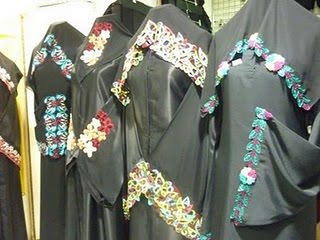
its so true sister. their jilbabs need another jilbab over it. and theres no simplicity in the dress. (one abaya shop i entered offered to design abayas with studded artificial gemstones of my choice! )
but these cultural-abayas are still way better than no-abayas (am talking about the middle east). had there been no covering , i personally feel the dressing would have been outrageous and equal to/worse than that of the westerners..
sister B
January 29, 2012 at 8:01 AM
i started wearing abaya at the age of 11 or 12 . i wore it though i disliked wearing it,because i had to be obedient to my parents and it was also the culture. but now when i look back in time, am so glad i was made to wear it :) alhamdulillah. maybe the culture thing is not so bad after all.
Umabdullah
January 29, 2012 at 10:18 AM
I was told a similar story by a sister who is hafiz of quran. She said she didnt wana learn it as a child but so glad her parents made her do it.
Umm Reem
January 29, 2012 at 1:49 PM
I am sure if hijab is forced for religious purposes there must be khair in it, but I am not sure when hijab is forced for family honor and cultural purposes while basic and far more important obligations are ignored like 5 daily prayers!
muslimah
January 29, 2012 at 12:22 PM
It’s just like those classical musicians whos parents forced them to practice when they were 3. but by the time they were 18 they couldn’t imagine life w/o their music.
Umm Reem
January 29, 2012 at 1:43 PM
the abays that are skin tight really do not serve any purpose of hijab. It is very easy to notice how men stare at those women who are wearing such type of abays.
shahnaz kabir
January 29, 2012 at 7:54 AM
JazakAllahu sister very inspiring …i love whn my son bring my hijab at home give to me wear that his friends are coming at home”‘mom this is your hijab wear it”‘make me proud that he knows the importance of Hijab.My Identity my proud HIJAB
Amman A.A.
January 29, 2012 at 9:46 AM
Even though the hijab has a become a cultural practice, we as Muslims can not deny the fact that Muslim women are forced to wear it. And I don’t want to offend any woman, but a Muslim really doesn’t have a choice in the matter. If her father, brother, or husband tells her to wear it then she has to comply. So I think we need to be honest with ourselves and stop spreading this idea that hijab is a choice, when clearly its not.
I’m sorry for causing any doubt. Please forgive me if I did.
Allah knows best…
Thomas Nelson
January 29, 2012 at 12:44 PM
My wife and I live in Oregon. She wears a hijab because she wants to; I do not compel her to wear it or, for that matter, have not suggested that she not wear it. It was, is, and will remain completely her decision, and I will support strongly whatever decision she makes.
Umm Reem
January 29, 2012 at 2:40 PM
Brother Amman, wa alaikum assalam
Religiously Muslim women are obliged to wear Hijab, but culturally they are forced to wear hijab :)
You are right, Hijab is not a choice. It is an act of obedience to Allah. Father, brothers and husbands should tell their female relatives to wear hijab but it must be for religious reasons. And if so, then hijab is not the only issue men need to worry about but they also need to make sure that women are praying, fasting, learning the religion, learning why hijab needs to be worn and how it must be worn.
Problem starts when only hijab is forced on women, for purely cultural and family reasons. Other basic and more important religious obligations are neglected. And to be quite honest what is forced in the name of “hijab” is not even hijab. It really is making mockery out of hijab!
Besides, men are not only responsible for the women of the family, they are also responsible for other men. While hijab is forced on daughters/sisters, sons and other male relatives are left totally free to do whatever they wish. Do men have “choice” to be free from their religious obligations?
Nsiddeeque
April 16, 2012 at 10:15 PM
Assalamu alaikum,
Totally agree on the fact that the hijab is forced for cultural and family reasons, but sometimes it is also forced for religious reasons where parents may force the hijab on their daughters as though that doing so will naturally make them religious. It is as though wearing hijab is even more important than praying. Worse still, some girls decide to wear abaya as it gives them freedom, but in a wrong way – I have a cousin who wore abaya and everyone thought she was a good girl, but she ended up using it as a disguise to have a boyfriend and meet with him in secret.
I’m from Sri Lanka, and here, you get muslims ranging from the type who think its alright to wear tight jeans and tops to the type that cover everything, eyes included. At university, I have seen girls with hijab playing the fool with guys and not even coming close to the prayer room, while on the other hand, I have also seen girls who still do not wear hijab but guard their modesty, and actually make an effort to pray.
Furthermore, as a guy, I can tell you that it’s way easier and more relaxed for us. Guys are allowed to buy fast bikes and cars, smoke, and go out with friends at night and wear the most attractive clothes.They even wear shorts – for sports only…. lol – and THEN they expect to get good girls who chose to wear hijab and are modest. I feel that this is hypocritical, and guys should understand what their hijab is as well. InshaAllah, I hope to never become like this.
What I feel is that the most important thing in Islam is teaching those we are responsible for the concepts of Islam first. Why is Islam right? Why should we pray, fast etc?. Things like hijab will follow naturally afterwards.
Anyways, congratulations sister, I think you have followed that path. I hope you will get Jannatul Firdous for it.
Um Yahya
January 29, 2012 at 2:44 PM
I think that you are missing the importance of the article. It is very important how we teach our children, Muslims in general, and non-Muslims that hijab is a religious requirement, not a cultural imposition. If a woman wears hijab because she is forced for cultural reasons there is no reward in it, for her or the person who is forcing her to wear it. And she finds ways to rebel, i.e. wearing it way to tight ( I have seen that too in Jordan, and was shocked). If she wears it, or is forced to wear it, for Allah and to comply with Islam that is completely different and is the only reason that it might be ok.
But there is a problem at the root of our Islamic society or the lack of it, even in “Muslim” countries. Women are not educated from a young age about Islam and how to properly follow it. I was born and raised in the U.S. I lived in Saudi Arabia for 3 years as a teenager and attended 3 different high schools there. The first was a Saudi school with an English speaking section. We had Islamic studies, and to my dismay, in 10th grade we were being taught the 5 pillars of Islam. The girls complained to the teacher that she had already taught that to them the previous year, same ayat and ahadith. The teachers response was I cannot teach you anything else, that is the curriculum. If that is all the girls are being taught, when will they REALLY learn Islam, and follow it, and teach it to their own children? How will they love it, and love following it to seek Allah’s pleasure, if they are not allowed to ask questions and learn it to live it? I have seen how difficult it is in the west, and I have lived in different Muslim countries and seen the challenges there, and I have chosen to raise my children in the U.S.. Good or bad, Allah is the one that guides us, but I don’t want my children to take their Islam for granted.
RCHOUDH
January 29, 2012 at 3:17 PM
This method of teaching Islam in the schools here in KSA sadly has not improved yet. One of the reasons I pulled my daughter out of elementary school here was because the books they used for Islamic studies were all dry and boring; they also used words too difficult for elementary-schoolers to understand. What’s more the school environment wasn’t conducive towards being Islamic, I mean you had students learn about various Islamic principles but none of it was put into practice. So for example you would have them taught about how it’s important for Muslims to respect all human beings, all the while the kids went about disrespecting each other, the teachers, maids, etc.
RCHOUDH
January 29, 2012 at 3:21 PM
Just wanted to add that based on our research, my daughter’s school is considered to be one of the better ones in terms of teaching Islam/having an Islamic environment!
Umabdullah
January 29, 2012 at 10:23 AM
I live in egypt and here its the same thing..most ppl dont cover properly even if their head is covered.
But i find that somehow it seems that its known among them what the real proper covering is supposed to be like. Which means that ppl still have a standard somewhere in their mind.
Also i love that my kids see that the right thing is not odd..their mom is not weird..also cuz alot of ppl alhamdulillah do cover properly.
And also even when my kids have to interact with non practicing muslims they are coming from a place of confidence and from feeling like they are mainstream. In the west, the kids at some point pick up the fact that they are the odd ones out. So yes many ppl struggle and brcome strong and others succumb.
Greg Abdul
January 29, 2012 at 11:44 AM
as salaam alaikum,
al hamdulillah and may Allah bless this writer. The major point, I think, is that we men have NO business making women wear hijab. We should all strive and encourage each other to be loyal and strive for Allah. That goes for men and women. My personal pet peeve is the wahabbi thing where we go around telling people that anything not in the Quran and Sunnah is haram. Is the beard fard? My wife says, Islam is from the inside out. Islam is for the Good and against the bad. A Muslim man’s first duty in the dunya is to take care of his wife, not to be hijab police or beard police. A Muslim is his or her salah and only Allah knows our salah and insha Allah we all work on the internal things first and we quit making these faulty external judgments based on skin color and clothes.
Faheem
October 31, 2013 at 2:51 AM
Assalamalaikum Brother. It takes away from the harmony of the Ummah to attach labels to one another. With regard to the two issues of fiqh, they are not mutually exclusive but complementary to one another, and both required. Personal opinion is valid when additional guidance is needed, such as the topic of this article which discusses how, where and when to give guidance on the hijab to one’s family. Otherwise we have authoritative sources that we must rely on for general fiqh and matters of faith.
RCHOUDH
January 29, 2012 at 11:50 AM
Good post and Ameen to your du’a at the end of it. I currently live in Saudi Arabia and based on my observations here are the reasons why Muslims don’t practice their Deen completely, in this case with regard to hijab. Many Muslim families are, like every other average family around the world, just concerned with living as comfortable a life as possible, both for themselves and their families. Deen is just something you perform out of habit and cultural expectations, not because your parents (and the greater society) expounded upon its greatness for this life and the Hereafter. Most schools here also don’t take it upon themselves to really engender a love for Deen within students. You’re just required to treat the class on Islamic studies, memorizing Quran (if the school even offers this because not all of them do), and for learning Arabic like you do all your other classes. Finally some families unfortunately become too harsh when it comes to expecting their kids to abide by Deen; all of this combined leads to either sisters not covering up properly or if they ever travel, taking off their hijab once the plane touches down anywhere else around the world. Also I think the whole new sexy hijab fashion trend has also lent itself to making sisters believe that you can be covered and still look fashionably appealing. It doesn’t help that here people here have enough money to spend 300 SR on the latest abaya created by some world-renowned designer.
muslimah
January 29, 2012 at 12:17 PM
I feel a lot of the girls in UAE are not forced to wear abaya/hijab/sheyla by thir families. It’s just what everyone does, like wearing jeans in the States. The way they wear it is also just what everyone does, like any other clothing treand. Their not doing it for thier fmailies anymore than their doing it for Allah, their doing it to “fit in”. Teens will be teens no matter where you live.
Daughter of Adam (AS)
January 29, 2012 at 12:35 PM
I don’t know if the perspective is focusing just on “Muslim countries”, because I mean if you look at the hijab in America it’s pretty much like that in a different way too. Attractive, almost accessory-type hijabs that just go with the mainstream clothing. I even regularly see nonMuslims wear tops that are more baggy and less attractive that what we sometimes wear!
RCHOUDH
January 29, 2012 at 3:11 PM
You’re right this type of “hijab” is not restricted to Muslim countries, it’s actually a global phenomenon right now. I believe it’s in reaction to Muslims everywhere wanting to have the “best of both worlds” so to speak (both elements of Western fashion combined with Islamic modesty) and also in reaction to the West’s negative onslaught upon the purpose of hijab, especially post-9/11.
Ahmad
January 29, 2012 at 1:13 PM
At certain time in our lives be it west or east we must be forced to do the right thing. I don’t think any reasonable parent will sit back and allow their children to stray due to negative societal influence all in the name of freedom of choice.
If the Governments and societies in the west will force women to expose their bodies,isn’t that another reason for concerned parents and guardians wherever they may be to enforce the modest Sharia dress code on their families?
Regarding the moral decadence in the middle east,we should understand that no community is immune from the negative societal influence of our time.But insha Allah those that remain patient and steadfast in their Deen shall never regret.
Umm Sulaim
January 29, 2012 at 1:40 PM
Very well.
Part of the problem of ‘cultural hijab’ is that it becomes a fashion code, worn/ not at leisure and not an Islamic dress.
This is often the case in some Muslim communities, however in other Muslim communities where the hijab is not the norm, women WILLINGLY adopt the hijab.
Umm Sulaim
June
January 29, 2012 at 3:18 PM
Assalamu alaykum,
I see what the author means about hijab being a cultural thing. I think those who are wearing it culturally need a refresher on WHY they are wearing it. I try to remember why I wear it and not just put it on and forget about it. When I reverted I started wearing hijab right away but it took me a while to learn that it’s not just a piece of cloth on my head; it’s not just covering my hair. It’s covering one’s whole self in modesty. It’s not just dressing modestly but it’s acting modestly. Wearing hijab reminds me that I am Muslim just as much as it reminds others. It reminds me that I am being judged by others as a Muslim so I am very aware of my actions and try to act always in a good way as a means of dawah.
As far as fashion is concerned, I think it’s still okay to have some designs and patterns on abaya and jilbab, just nothing flashy or too tight. I wear regular “Western” clothes with my hijab since I can’t afford to overhaul my wardrobe into nothing but abaya. I keep the shirts loose and I wear skirts that go to my ankle and I don’t think there’s anything wrong with making sure my hijab, blouse, and skirt “match.” It doesn’t have to be all black to be “proper.”
Amanda
December 4, 2012 at 9:04 PM
Wa alaikum salaam
I completely agree with you, and can relate to your situation as well. (:
Yasmin
January 29, 2012 at 3:19 PM
Jazakallah khair for reminding us of the true purpose of hijab and inspiring us to keep it on despite the difficulties we may face!
Umme Haroon
January 29, 2012 at 5:15 PM
Jazak Allah sister for sharing such wonderful details : )
Mrs. Pendi M. Ibrahim
January 29, 2012 at 5:32 PM
MashaAllah! Rabbigperli watawafana maal abrar. There are female Muslim professional who travel a lot but missed not their prayers at any appointed time. They left home with ablution with light prayer carpet and pray in
clean place anywhere : in the airport, in malls, in training centers, in hospital, in the parks, etc.
Mrs. Pendi M. Ibrahim
January 29, 2012 at 5:37 PM
Traveling with abaya is readiness to pray during prayer time.
Adibah Daud
January 29, 2012 at 11:13 PM
I live in Singapore, a small red dot on the map of the world. I’m born a Muslim and was never forced by my parents to wear a Hijab. I was never questioned about what I wore when I was younger or with who I mingled with.
I was sent to religious school to learn about the fundamentals of Islam and continued to go to weekend religious classes. I felt that Allah SWT was always in my heart regardless of what I wore or didn’t, in this case the Hijab.
I didn’t fully embrace the Hijab until I finished Secondary school (equivalant to Highschool). I felt that I was a hypocrite if I were to wear a Hijab out of school but then return to school wearing the uniform which consists of a short skirt and short sleeved blouse. And as always Allah SWT was always in my heart.
When I fully transformed and made Hijab my identity, my mother asked if this is what I really wanted. I was shocked at first but I realised that she asked this because we knew of some families whom daughters were raised wearing the Hijabs and in the end turned and denounce Hijab totally for the sake of fashion and belonging.
I told her that I’m wearing this now because I am ready to fully embrace who I am born to be. A Muslim. No one forced the idea of Hijab upon me and no one can ever force anything upon me without Allah’s SWT will. I am truly blessed because all the decisions I made in life, I had one thought in mind, pleasing Allah SWT, and I have been rewarded. My friends didn’t leave me, my colleagues respected me and my husband loves me even more.
Hijab is now a fashion culture in Singapore. Whether or not the girls and women wear them purely for pleasing Allah SWT or just to follow a trend, HE knows best and may HE guide them to what is true, Insya-Allah.
Thank you for posting this article. It serves as a reminder to us that the Hijab should be what it should always be, a Hijab to protect our modesty and our pride.
A.
January 30, 2012 at 3:42 AM
Salam alaikum,
I completely agree with this article, I’ve grown up and still reside in the Gulf.
But I just have to point out one thing: Through such articles (I have written one myself on a similar topic) what we are doing is we are developing (or perhaps reinforcing) another, very constricted stereotype for Muslim women to be judged by.
So I want add this: Though many of the sisters in the gulf believe and acknowledge that their Abaya and hijab are cultural rather than Islamic. There are MANY who also adhere to it because Islam asks them too.
And so I pray that such a stereotype of Middle-eastern women and their “hijab” does not develop.
And just because someone is an Arab does not mean they have Islam in the genes, so judging Islam based on the actions of some nations is a sign of a limited mindset.
And our duty to pass the correct message of Islam onto others is clearly not limited to non-Muslims.
Barak Allahu feekum.
RCHOUDH
January 30, 2012 at 5:06 AM
Wa alaikum salaam A,
Definitely true that we should not seek to stereotype Arab Muslims from the Gulf. I’ve also met wonderful practicing sisters here too. But I also think it’s important to address this “cultural hijab” phenomenon by addressing its wearers with the real purpose of hijab. And it’s important to always create an interesting discussion around this and other topics related to Islam and to always remind these sisters (like we would our young daughters) about the beauty of the Deen and the beauty of their actions in conforming to Deen, for which they’ll be richly rewarded. I think that sometimes for us living in Muslim countries, we may sometimes forget to always remind each other about Deen because we think that since we’re surrounded by it, the reminder will always be evident, which is not always the case unfortunately! May Allah guide us all and keep us steadfast upon His Straight Path Amin.
RCHOUDH
January 30, 2012 at 5:08 AM
Just wanted to add that the reason for addressing the cultural hijab phenomenon is because it’s unfortunately widely spread enough to be noticed, which is why we should address it especially through posts like this.
A.
February 1, 2012 at 6:13 AM
:) I hope I wasn’t misunderstood by my comment. It is important to address this issue, I merely commented so that people who are not familiar with the middle east (gulf specifically) don’t walk away with a distorted idea.
Umm Salih
January 30, 2012 at 4:35 AM
salamaaikum,
I live in the middle east.As said in the article many women here were hijab/naqab as a cutural practice.but there are ones who do it out of concern for deen.As grownups it is easier for us to wear a hijab over here.but my children though they do wear hijab find it difficult as there are many questions shot out by school mates and teachers.the point is where ever we are in the world we will have to keep teaching our chidren what our religion teaches us and why we are told to do so.
the best thing to be in the middle east is that you are always close to a masjid and you have all the facility to do your prayers.
may allah subhanuwataalah help us all to be in the straight path what ever the circumstances.aameen.
Najib
January 30, 2012 at 5:38 AM
I live in Indonesia and it is not much different than what you describe in the Middle East, as far as Muslim women’s clothing is concerned. In my university, most of the students who wear hijab do so while donning some really tight jeans.
I personally think that wearing loose-fitting clothes is more important (for both men and women) than hijab. As a single guy, I really do not want to judge a potential marriage partner primarily by her figure, but it can get rather difficult to shut out those thoughts in this environment.
Also want to mention that one of the purposes of the hijab is for getting women to stop worrying about how they look in public. When your hair’s covered, there’s no need to worry about how it looks. Same thing goes for wearing loose clothes; no need to worry about the figure. Besides, it would definitely save tons of time and money that would have been spent on cosmetics, clothing, and accessories.
Umm ibraheem
January 30, 2012 at 6:03 AM
I am having the same experiences as you Umm Reem as I moved from the Uk to Jeddah almost 2 years ago. I have to be very careful myself here not to fall into trap of beautifying myself with hijab. Even wearing niqab one can look stunning when worn for that purpose…….. You learn the art of the fashion of hijab here.
One thing I also notice is that most of these women look far more beautiful in their hijab. The abaya cut in such a way it flatters them whereas in their actual clothes they are not so attractive. The khimar draped in such a way that it makes the best out of their features. And the make up………..well let’s not even start that topic.
halima
January 30, 2012 at 7:28 AM
Salam alaykum brethren.
Hijab is an obligation ordained by Allah just like other obligations. There’s nothing wrong if people around us help us in fulfiling this obligation. What is wrong is enforcing but sometimes its needed when persuasion fails our society today is full of immorality that if care is not taken or if taken with laxity, worst things can happen.
But in all, knowledge and understandin is very key in all we do. That is what will make us firm in trial times. I started using hijab when I was 19, even though I had little knowledge about it. When I began to be questioned and challenged esp when I was admitted to the faculty of pharmacy in Nigeria and the Deen of the faculty bluntly informed me that I can’t come to pharmacy sch like ds. I was confused and that was when I start to seek for more knowlege abt the hijab. I was faced with a lot of challenge but alhamdulilah I scaled through.
Many will ask if I’m from saudi or I’m Hausa, some will have if my father is a religious cleric, diff qstns. These are path of what built me,add to my confidence and conviction. Perhaps, if I wasn’t challenged, I wouldn’t have appreciate what I ve got!
ummMaryam
January 30, 2012 at 11:38 AM
salamu ‘alaikum,
subhanAllah. it makes me so sad to hear of these things. i’d like to agree with the others who have posted though, that this is not just a middle eastern problem. the VAST majority of American hijab wearers also wear it with jeans (tight or not, jeans are jeans and DO show the general shape of legs), or with flattering skirts and shirts, the beautiful wrap hijab will be elegantly lain to drape down their backsides, perfectly revealing their rounded chest figures. if a person wanted to wear the long wrap in the right way, the extra length should be draped over the front to cover what the shirt reveals, sort of like a cape,
but no, alas one must look in the full lenght mirror and see that your profile figure looks oh just so (wink). with the curves showing so nicely rounded, right?
sad, sad, sad… may Allah guide us women.
Ammat Allaah
January 30, 2012 at 1:13 PM
So true!
I have been wearing niqab since school days..and never knew what it meant…until..
When I started going to the University, I was so naive that I used to remove it infront of everyone and join the class. But after a semester, I realized that it was a big mistake, people were saying so many different things. Then when I started wear it properly, everyone commented,” Oh yeah,,, your father told you, right?” as my father is a cleric, and I used to tell everyone proudly that never did my father ever ask me to wear theHijab.
I came to know very late about why Hijab is important.
I live in an Arab state as an expat. Here, its just a norm, if someone is fully covered, 2 out of 50 appreciate it, whereas others Oh my God you look so old,or doesn’t suit on you,,still these type of mindology exists.
May Allaah protect our Muslim Ummah from all kinds of evils and increase our knowledge and practice in Deen.
Aameen
Iram M.
January 31, 2012 at 9:58 AM
Thank you, Umm Reem. You couldn’t have said it better. I have been thinking through this concept for quite a while, but you’ve been exposed to both worlds and can understand it from an inside perspective. I love the way you describe the purpose of hijab, and it, being like any other thing we do to please our Creator, can be a struggle. We have to find the longing within ourselves to please Him alone, and that is when these acts become genuine and sincere. Having people impose practices that are supposed to create a sense of heightened spirituality in one’s heart, whether it be the prayer, or fasting, or hijab, or anything, won’t make the act “right.” This is a message for people everywhere – a connection to Allah/God comes from within each and every individual. We can set a good example, we can spread the right message and we can practice those things that bring us closer to Him. We should do all of these in hopes to please Him alone, but not in the hopes that we will be changing other people’s hearts – that will happen only when they have decided to make the journey on their own. I honestly feel that if a lot of the men or families in countries like Saudi gave their women a choice, the women there would probably dress modestly even if not in hijab/jilbab. Thanks again for the great article. :)
muhammad
January 31, 2012 at 5:38 PM
I believe the same problem exists here in North America, attend most mosques, Islamic events or conferences and you will see so called “hijabis” who are simply wearing a piece of cloth in their heads (whether by choice or not), paired along with make up, perfume, tight shirts, skirts, jeans or the form fitting abayas mentioned in the article etc. all of which makes the little piece of colored cloth carefully chosen to match their outfit irrelevant. The same girl wearing her fancy tight abaya or long form fitting skirt with scarf on her head is praised her in the US by Muslims as “choosing to do the right thing” and “modest” while the same girl in an Arab country like Qatar would be seen as reveling or unmodest. Which I believe demonstrates that even in the Muslim community here in the US hijab is very much cultural. Rarely will you see a young girl here in the US wearing a proper hijab, rather they try to just get by with a little scarf on their hair in order to meet the minimum cultural requirements of their community.
Nancy
January 31, 2012 at 9:50 PM
good article, but everything said is overly redundant and nothing new…too bad no one can seem to get pass these issues.
Hassan
February 1, 2012 at 10:29 AM
Here in west I have seen women with hijab/headscarf that covers their hair, but they are wearing tight jeans and tight shirt, Frankly showing hair would be least of an issue.
Wael Abdelgawad
February 9, 2012 at 9:35 PM
When a thing is everywhere, people don’t appreciate it or understand its meaning, especially if they are not taught to do so. I remember visiting Egypt once and when I asked my cousin where the local masjid was she said, “Why would you want to go to that dusty old place?”
I wonder, if the cultural requirement to wear hijab were removed, how many woman would strip off their hijab in an instant?
We need proper Islamic education to appreciate what we have.
OQ
February 10, 2012 at 1:12 PM
As a Muslim that moved from the US to the Middle East, you tend to realise that struggling for your religion gives more meaning and strength to your actions as a Muslim. I find that there is a certain strength in being a minority in the US rather than being a majority in another country.
Reminds me of a saying (paraphrased) about how true steadfastness isn’t shown by hiding in a cave but rather by holding onto your values amidst all the fitnas. (If anyone has any idea of the original saying please provide it cause I’m drawing a blank)
Nilyas
February 18, 2012 at 6:51 AM
It is not easy to make explain about the hijaab to both muslims and non- muslims. I am a convert and I wanted to wear the hijaab right away. Because I grew up with Muslims and I understood the need for it. But as u point out muslims in the Arab countries have really changed the meaning of it. Living in Riyadh I have found this out. If I had lived here all my life I would be dying to take the hijaab off not put it. I dont know why men have made this into a punishment for the ladies. Why they can’t trust their way of life and their teachings to make an effect so that the women want to wear the hijaab by themselves and not be forced. Here the oppression of women is a reality and it just starts with the hijaab. I wish the men would learn that they have a hijaab too. They have to wear clothes that cover themselves too and look down upon seeing a woman. Here even a hijaabed and niqaabed woman is not safe. They look at you as if they can see through the cloth. And this is the reason that many non muslims believe that women are being suppressed for the sake of men. That they want to do wrong so make the women cover up. May Allah give them hidaya as to what is right and wrong and why.
najma
February 20, 2012 at 8:36 AM
assalamoualaikoum
to all sisters and mothers out there
I really appreciate all your efforts to encourage your daughters to wear the hijaab,and most importantly teach them to be cautious of Allah’s law, as it is a command for women to wear the hijaab,
Jnsitou2000
March 3, 2012 at 4:20 PM
nice article, i am amazed when i see some of my sisters in Africa this confirms that there is more da’wah to be made on muslims. further what can be the advice for husbands or fathers to encourage wives and daugthers to wear it? However may Allah increase our islamic knowledge and Deen. Razaak…
NSID
April 16, 2012 at 10:41 PM
Assalamu alaikum bro,
I agree about first educating our own muslims. I rather first give dawah to my own muslim brothers and sisters rather than only focusing on non-muslims . The reason for this is that some muslims have basic faith but don’t practice, so all they need is just a little motivation, and Allah has given us the power to give that motivation.
On encouraging your family members to wear it, I can say that it is always better to tell them the concepts of Islam and why Allah has ordered us to to certain things. Most importantly, why it makes sense to listen to Allah in the first place. Make them think about it and ask questions freely, and do NOT say things like “not wearing is haraam!!! and you will go to hell for that!!!.” The actual initiative to wear hijab should be from their own decision and logic, as that is what Allah will judge them by. But it is up to us to keep reminding them as well as ourselves constantly.
Saarah Ahmed
April 12, 2012 at 4:28 PM
Muslims need to be proud to be hijabi’s, this I feel will solve most of the problems and false thoughts about the Hijab and reasons for wearing it. It is up to us teach people rather than just blame the media.
Mother
February 28, 2013 at 1:18 PM
As a non arab muslim who belongs to the same ethnic group as some of the earliest non-arab muslims, I ask myself:: Hasn´t the hijab always been cultural? It is an arab thing, it´s an arab definition of modesty and female chastity, it´s an expression of arab culture. People who are priviliged enough to not belong to and live under arab culture may try to romanticise the hijab and take it out of it´s original supressive context within the arab culture, and many of them may also use arab culture as a proxy for Islamic culture, which is quite sad.
I guess the hijab is OK if you are arab and familiar with that culture, but if you come from a culture that is not as hostile to women as the arab culture, I would advise to not arabize yourself. Arabization is the fastest way to become disillusioned with Islam.
Golnar Atash
September 21, 2013 at 2:46 AM
What are parents supposed to do? To what extent are parents allowed to raise their kids with religion and to what extent should parents let their kids do what they want? Aren’t many, many things “imposed” or “forced” on kids by their parents – which school they go to, whether they can buy and wear miniskirts, which friends they can go out with and how often, waking up for fajr, praying 5 times a day, fasting Ramadan, attending religious services, whether they can date, etc.. All of these are “imposed” on kids by their parents – i.e. parents are forming and shaping their kids’ practice and morals and social structure by the way they raise them. So why is hijab any different? Why do we need to constantly try to prove that hijab is different and it’s supposed to be totally individualistic and totally free of instruction? How are parents supposed to react if their kids stop praying or they decide they don’t want to fast Ramadan anymore? What if their 15-year-old decides he/she wants to date around, maybe even with Hindus or Christians or Jews, and eventually marry them, etc.? Should we say to the parents, “Hey, Stop forcing your kid into conformity! They don’t want to follow your religious restrictions!” Why should they react any differently about men and women following codes of modesty? What’s so special about hijab vs. other religious codes that it gets relegated to a basket where it gets picked up whenever desired and dropped off whenever desired? Aren’t many other things taught to us by our parents, sometimes feeling like we’re made to do them, also religious “impositions”, so shouldn’t we all just stop raising our kids to be believers at all? We make them believe, we make them pray, we make them fast, we make them go to jummah, we make them learn Qur’an, we make them not go to the average party, we make them not eat pork sandwiches, we make them not date, etc. Isn’t that infringing on their freedom? Should we stop that too?
Also, about the interesting hijab styles we see these days: I was once strolling through a mall and saw some hijabis across on the other side of the store – very tight pants, short but long sleeved shirts, large high heels, very noticeable and bold amounts of makeup, headscarves tied high up with a huge bun, sleeves rolled up half length… And I couldn’t help but notice that all the non-hijabis in the store looked so much more modest than those hijabis did. With some makeup on and a much greater amount of skin showing, all the non-hijabis nonetheless looked way more modest. And actually, if those very hijabis simply took off their scarf, they’d look more normalized and modest, even with all the rest of their outfit on. Somehow putting a hijab, especially the “camel-bun” type, on top of such a look just makes it even more noticeably bold and eye-catching. BUT dare I not speak these observations in front of others lest I be cast off as someone who is insulting women and “shaming” them. Gotta stay quiet to keep the accusatory barks away – all non-popular, traditional, non-super-liberal opinions are wholly unwelcome.
CG
January 16, 2014 at 1:28 PM
what we’ve noticed is when hijab becomes cultural is that is becomes that dupatta, where when it slips off its like, oh its alright, theres no conviction in wearing it, or real belief, also in indonesia, some non muslims wear it now to fit in, and to appear to be higher class.
Aly Balagamwala | DiscoMaulvi
January 17, 2014 at 8:27 AM
Dear CG
Our Comments Policy requires a valid name or Kunyah to be used when commenting. You may also use a blog handle provided your blog is linked, the email address is a valid one, and it is not advertising a product.
Best Regards
Comments Team
Hijab
February 10, 2016 at 4:56 AM
masya allah :) saya sangat suka dengan wanita muslimah yang berhijab :)