
Dawah and Interfaith
Saying “I Don’t Know” is Half of Knowledge


A few days back I attended a friend’s walima ceremony. There I met one of my old school friends who is, Masha’Allah, an active Da’ee and also conducts various Halaqas.
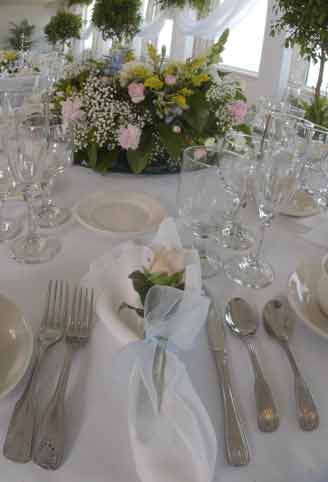 We sat on the same table with his other friends and relatives. Soon, as is often the case at Pakistani weddings, the discussion turned towards dinner timings. My friend exclaimed “This is not the sunnah time for dinner!” It was around 11:00 pm, which is a fairly customary time for a walima dinner in Karachi.
Keep supporting MuslimMatters for the sake of Allah
Alhamdulillah, we're at over 850 supporters. Help us get to 900 supporters this month. All it takes is a small gift from a reader like you to keep us going, for just $2 / month.
The Prophet (SAW) has taught us the best of deeds are those that done consistently, even if they are small. Click here to support MuslimMatters with a monthly donation of $2 per month. Set it and collect blessings from Allah (swt) for the khayr you're supporting without thinking about it.
I was astounded to hear this statement, as just recently, I had been conducting some research about the eating habits of Prophet Muhammad (SAW) for one of my Friday sermons. Curious, I asked him “Did Prophet Muhammad prevent people from eating at this time?”
He was clueless! So I further asked him “Do you have any proof to verify your statement?”
“No!” he responded.
Then I explained to him what I myself had learned from my teachers that we should be very careful in making such statements because we will be held accountable for them.
Imam Malik ibn Anas was one of the most respected scholars of fiqh who ever lived. Once a man came to Imam Malik from a very far distance and he asked him 40 questions. Imam Malik only answered four of them and for the rest of the 36 questions he replied, “I don’t know.”
The man was surprised and asked Imam Malik “what should I tell people about these 36 questions for which you said (I don’t know)?” Imam Malik replied that the man should tell the people that Malik says: “I don’t know,” “I don’t know,” “I don’t know.”
Imam Malik said this 3 times.
I am a student of knowledge and as I move forward in my journey of acquiring knowledge, my lips are getting tighter and tighter. The reason for this is the depth of knowledge required for correctly interpreting a ruling and the implications for misinterpreting one. The degree of precaution our salaf used to take before arriving at a fatwa or ruling was tremendous. Furthermore, I am always amazed when I learn how much regard and honor our Salaf had for each other in spite of the many differences of opinions among them. Even though they may have differed with one another, one of them never said that the other’s opinion is not based on Qur’an or sunnah, rather they said that this is a difference in the interpretation of the evidence from the Qur’an and sunnah.
Contrary to this, we, the laymen Muslims, are often very casual and careless in passing judgments and fatawa. We never pause and think for a moment before issuing fatwas and declaring this is a part of Islam and this is contrary to Islam. Allah (SWT) has warned us against this on numerous occasions within the Quran.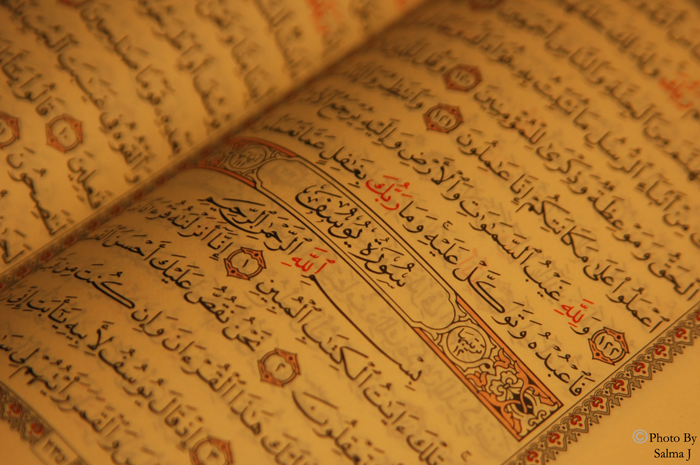
I really feel apprehensive when people issue such fatawa without having adequate knowledge about Arabic grammar, the principles of fiqh, usool ul hadeeth, etc. Before issuing any fatwa, or any judgment for that matter, one must know the related principles and modalities. Issues that appear very simple are often times surprisingly grave, especially when we consider the implications of changing them. Let me give an example with the following ayah of the Quran in which Allah (SWT) says:
“ ٱلصَّلَوٰةَ وَءَاتُواْ ٱلزَّكَوٰةَ وَٱرۡكَعُواْ مَعَ ٱلرَّٲكِعِينَ وَأَقِيمُواْ ”
“And establish prayer, and give the zakaah, and bow down with those who bow down”
Surah Al-Baqarah: vs. 43
Anyone who has even a basic understanding of Arabic grammar would know that the verb أَقِيمُواْ in the above verse is a fi’l amr, which is used for a command, and whenever such a verb is used it is an obligation to act upon it. From this ayah, the scholars interpret that salaah is obligatory, as the ayah clearly says:
وَأَقِيمُواْ ٱلصَّلَوٰةَ
And establish the prayer…
And according to the same ayah, zakaat is also obligatory as the ayah says:
تُواْ ٱلزَّكَوٰةَوَءَا
And give the zakaah…
Furthermore, we learn that salaah with jama’ah is also obligatory as the ayah says:
وَٱرۡكَعُواْ مَعَ ٱلرَّٲكِعِينَ
And bow down with those who bow down
Now a question arises here. Do we interpret from this ayah that it is obligatory to offer sunnah, nawaafil and witr in jama’ah also? Since the ayah itself does not seem to indicate any exception. I doubt that any of us would think that it is mandatory to offer sunnah in jama’ah. So why is there a difference?
 It is because when one studies the Qur’an, ahadeeth, and other areas of knowledge deeply, only then is he/she able to understand the implications of a particular ruling. In fact, our scholars have exerted many years of effort and diligence in studying the Qur’an and ahadeeth in order to establish principles for understanding the shari’ah.
The same is the situation when it comes to the ahadeeth. Often times many of us read a hadeeth somewhere without checking the source and start issuing fatawa based on that hadeeth without having any knowledge about the science of ahadeeth. The scholars have explained that there are numerous factors involved in understanding a single hadeeth including: time, occasion, purpose, objective, wisdom, etc.
So what are those of us who are not scholars meant to do? Alhumdulillah, Allah (SWT) is merciful and does not place a burden upon us greater than we can bear. He has provided us with the solution in the Qur’an:
فَسۡـَٔلُوٓاْ أَهۡلَ ٱلذِّڪۡرِ إِن كُنتُمۡ لَا تَعۡلَمُونَ
“So ask the people of the knowledge if you do not know”
Surah Al-Anbiya: vs. 7
Of course, we do need to do a little bit of homework in order to ensure that the one we are consulting is a reputable scholar.
There is a proverb in Arabic: “Saying I don’t know is half of the knowledge.”
So, the next time someone asks us a difficult question related to Islam, first of all we should do our best to divert the question to a scholar; however if we do not know of any scholars, then we should never feel shy in simply responding: “I don’t know.”
Or, if we do happen to know the answer for sure, than we should always mention the name of the scholar whose fatwa we are quoting when answering the question. This is what Ibn AlQayyim mentions in his book “I’laam ul Muwaqqi’een ‘an Rabb il ‘Aalameen.”
May Allah (SWT) increase us in knowledge and accept us in the service of His Deen.
And Allah knows the best!
Keep supporting MuslimMatters for the sake of Allah
Alhamdulillah, we're at over 850 supporters. Help us get to 900 supporters this month. All it takes is a small gift from a reader like you to keep us going, for just $2 / month.
The Prophet (SAW) has taught us the best of deeds are those that done consistently, even if they are small. Click here to support MuslimMatters with a monthly donation of $2 per month. Set it and collect blessings from Allah (swt) for the khayr you're supporting without thinking about it.





The Arithmetic Of Longing: On Loneliness, Desire, And Learning To Want Well

Far Away [Part 20] – Among the Afghans

The Legacy Of Professor John Esposito: The Scholar Who Refused To Turn Islam Into An Enemy

Tahajjud: A Call to All Pajama Heroes

Thinking Long-Term: The Legacy of Yahiya Emerick

On Infertility And Not Having A Child: A Letter To Couples Going Through The Silent Struggle

So You Want To Become A Lawyer? [Part I] – On Faith, Duty, And The Legal Profession

When Tawakkul Isn’t Enough: Why Financial Silence Hurts Marriages
Thinking Long-Term: The Legacy of Yahiya Emerick

So You Want To Become A Lawyer? [Part II] – How To Ready Yourself For A Career In Law

The Best Actions for Eid al-Adha [Imam Dawud Walid]

Coming Full Circle: Who Are You Now? | Night 30 with the Qur’an

Running Away From Who We Are | Night 29 with the Qur’an

Building From the Ground Up: Week 4 Recap | Night 28 with the Qur’an

The Muslim You Are Becoming | Night 27 with the Qur’an
-

 #Life4 weeks ago
On Infertility And Not Having A Child: A Letter To Couples Going Through The Silent Struggle
-
#Islam1 month ago
The Woman Who Corrected Umar: Mahr, Tafseer, and Advocacy
-
#Life4 weeks ago
So You Want To Become A Lawyer? [Part I] – On Faith, Duty, And The Legal Profession
-
#Culture1 month ago
Far Away [Part 17] – The Caravan



HenaZuberi
June 28, 2011 at 12:51 AM
JazakAllah khayr for this reminder- I am so fortunate to have a great scholar on my speed dial, who I consult with before publishing my articles and being a part of MM has been amazing Alhamdulillah. Sometimes people think you are being facetious when you say I don’t know but after you say it you feel so relieved, because you don’t have to carry the burden.
I really enjoy your posts Brother.
Kashif Dilkusha
June 29, 2011 at 2:14 AM
Jazak Allah Khairan sister.
Fizal
June 28, 2011 at 9:30 AM
Wonderful Article. Mashallah
The Arabic need to be fixed.
Jazakallah
Aly Balagamwala
June 28, 2011 at 11:59 AM
One drawback to being eloquent, keeping a beard and appearing to be a practicing Muslim in a society where this combination of qualities is slowly disappearing is that you are considered knowledgeable and hence asked about everything under the sky. Most often they are things which you don’t know or are not really sure about. That is when the above comes into play. And unfortunately often I (and many like me) fail. We do not say “I don’t know”.
Thank you Kashif for the much needed reminder.
Halima
June 30, 2011 at 1:09 AM
You’re right about the first part. Having the appearance of a Shakhy person makes everyone believe you are a huge religious person.
The Shardul of Allah
June 28, 2011 at 2:12 PM
Good reminder.
BTW, didn’t the Messenger of Allah prefer reticence after the Isha salah? Also it was his practice that he would go to sleep right after the Isha salah in order to get up in the midnight to pray tahajjud.
Kashif Dilkusha
June 29, 2011 at 2:23 AM
Yes, infact our beloved Prophet (SAW) guide the believers to not to waste time in useless activities after the Isha but Scholars of Islam never declare that doing Halal activities after Isha is Haram or against the Sunnah.
Pingback: Saying “I Don’t Know” is Half of Knowledge « For the Pleasure of Allah s.w.t.
Ibn Masood
June 29, 2011 at 7:08 AM
I hope the excellent point you made in this article is not derided from what I’m about to say, and I myself am not knowledgeable enough to know the issue in detail. Even if his reasoning behind it was incorrect, the brother who said ‘this is not the sunnah time for dinner’ is not far off from what is preferred, even if it does not take the ruling of Sunnah (of which I don’t know), I’m sure many of us can derive from the seerah that such a practice was not characteristic of our beloved Messenger (salla Allahu alayhi wa sallam), due to many different reasons, such as being able to wake up for Qiyaam and Fajr. wAllahu A’lam.
Instead of shutting him down, it may have been wiser and more beneficial to extrapolate on his statement, teach him adab ul ilm and correct his usul all at the same time, benefiting yourself, him and the gathering together.
Next article: Why we should not be so quick to judge the statements of others, regardless of how much knowledge we have. And with Allah swt alone we seek protection.
Abdur Rahman
June 29, 2011 at 9:57 AM
niceeee :)
The Shardul of Allah
June 29, 2011 at 2:31 PM
Great point.
The brother who pointed out that 11:00 PM is not the sunnah time for the dinner probably did not want to say that there is something wrong or unislamic with taking dinner at 11:00 PM. He probably rather wanted to point out that if we truly adhered to the sunnah of the Messenger of Allah, we would have finished dinner soon after the Isha salah.
Like if I use tooth brush for example, I cannot say that I am dong something unislamic. Islam does not prohibit me from using paste and toothbrush. At the same time, I will have to admit that the practice of using paste and brush itself is not the act of sunnah; rather the sunnah act would be using a small wooden stick to do siwaak.
Kashif Dilkusha
June 30, 2011 at 2:36 AM
Jazak Allah Khairan for your advices. Insha Allah i will really work on them.
In fact i did not ask the questions to my friend in front of the people rather I asked him later when we were alone. Plus since you were not there, you don’t know how he responded verbally and non verbally.
As you will acknowledge the fact that a layman muslim cannot interpret the difference between Sunnah which commands prohibition and Sunnah which does not command prohibition. Plus my friend is a long bearded guy and a very practicing muslim and also holds Quranic Halaqas so for lot of people he is like an authority as this is also mentioned by some of the above mentioned comments.
By the way insha Allah, my next article would be titled: Meaning Making Machines.
Always looking forward for your suggestion.
Zahid
June 30, 2011 at 10:43 PM
Salaam alaikum,
“ٱلصَّلَوٰةَ وَءَاتÙواْ ٱلزَّكَوٰةَ وَٱرۡكَعÙواْ مَعَ ٱلرَّٲكÙعÙينَ ÙˆÙŽØ£ÙŽÙ‚ÙيمÙواْ â€
The ayah seems to have been rendered wrong in the article. Jazakallahu khair for the reminder!
M.M.
July 1, 2011 at 11:00 AM
Assalamu Alaikom,
In the ayaah, the words ‘wa aqeemo assalaat’ (arabic) is mistakenly at the end of the ayaah. I’m sure it’s a computer error. Please correct it, Jazakum Allah khair.
Y
July 1, 2011 at 6:33 PM
Great article. But why the comb picture ? :-)
Salam!
ummah
July 2, 2011 at 1:37 PM
ASSALAMUALAIKUM
MASHA ALLAH a very reminding article.brother can you give us any trusted Islamic queries website??
jazaakallah!!
Kashif Dilkusha
July 6, 2011 at 4:28 AM
Walaikumassalam
One of the best site I have come across is http://www.islamqa.com
shiney
July 3, 2011 at 4:57 AM
JZK brother for the reminder! it is hard when people think you know more than you do and ask you all the questions in the world…i think it gets worse when they pressure you and then ur forced to think up an answer based on the little knowledge you have. May Allah Protect us all from this and make us truly knowledgeable in the Deen. Ameen.
Anonymous
July 11, 2011 at 5:26 PM
I find people are even worse online.
“Verily, I have a keyboard and am ever read to prove my ignorance. Now who needs a fatwa”?
O H
December 31, 2013 at 3:29 PM
Jazak Allaahu Khair. It’s a big temptation for youth these days,especially on the internet on forums and blogs! Ikhlaas is needed to admit to one’s lack of knowledge or qualification to say I don’t know. We can learn that from what Imam Maalik said (as mentioned in the article) which is ‘tell the people Maalik said I don’t know! Subhan Allaah
Sunny Salman Jamil
June 18, 2014 at 2:46 PM
Great article.
Please re-read your Qur’an quotes. The typed Arabic words are jumbled in the beginning and the end.
DR.Fiaz Fazili
December 9, 2015 at 2:40 PM
Limitations of knowledge … This is like what we accept as truths in forming our concept.learning to accept yourself with all your shortcomings and imperfections will save you from lot of sins….” ..He grants wisdom to whom He pleases; and whoever is granted wisdom is indeed given a great wealth (Surah Al-Baqarah 2:269)
dr. fiaz fazili
October 7, 2016 at 6:48 AM
SEEKING KNOWLEDGE especially true knowledge is obligatory on the followers of faith islam -?i ask a Q .. Is ignorance..true knowledge of your faith a bliss ?
Allah the Almighty has prescribed ordinances, which should not be neglected. He has outlined some limits which should not be contravened and has forbidden some things which he deemed inviolable. If a believer doesn’t have a correct religious knowledge,_lack of true knowledge of your faith creates more confusion ,and displeasure ..-half knowledge is dangerous. If a believer doesn’t have a correct religious knowledge, the probability that his steps may wander aside is high, and he easily can be deviated by Satan towards the unlawful things. But if we are blessed with the light of knowledge we will not stray from the righteous path. We shall also be able to identify and avoid the dangerous paths of Kufr, Shirk and immorality, which may cross our lives. And, whenever a deceptive guide meets us, a few moments of small interaction with him will quickly establish that he is not a guide to be followed.
Beelzebub
March 18, 2017 at 8:32 AM
Regardless of how the words were uttered or what the scenario was, how the writer approach…the best approach is always to not lecture that person right away. Listen to his point of view then shower him with yours knowledge with the intention to not act more knowledgeable. People generally find it offensive or an attack on sovereignty ; they shall be guided later.
May Allaah guide us all.
And, yes, the best answer is always to ‘I don’t know’ if you had barely being informed by self or by third party.