
Politics
The “Official Narrative” Has Been Laid Down for us- On the Assassination of Benazir Bhutto

Since the original post on Benazir’s assassination is already quite cluttered, I would like to leave that for updates and ground-situation, this article from Robert Fisk deserved its own post.
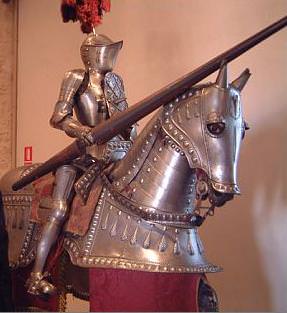 I am not particularly enthused at discussing Benazir’s checkered past, considering that she is dead and that Islamically, we avoid talking about someone’s shortcomings after their passing. But, in weighing the benefit vs. harm, I find it important that between the eulogies, the unending praises and the references to Benazir’s “martyr” status, that we take a moment to step away and be JUST to history. Revisionist history, especially in matters that may frame the future of Pakistan, can be especially harmful. We have to understand what took us to this juncture and also recognize that Benazir’s leadership wasn’t in Pakistan’s best interest, considering FACTS and HISTORY, not emotions and “official, whitewashed narratives”. Let’s turn to the well-regarded journalist, Robert Fisk:
We are told by George Bush that her murderers were “extremists” and “terrorists” [implication? “Islamists”]. Well, you can’t dispute that.
Even before the dust settled, Bush and everyone else found the ultimate and oft-used/abused bogeyman- of course, none other than Al-Qaeda; after all, didn’t the attack have all the hallmarks of Al-Qaeda? Though one wonders when Al-Qaeda officially filed for patents on nearly every sort of terrorist attack:
It was the Taliban madmen again, the al-Qa’ida spider who struck at this lone and brave woman who had dared to call for democracy in her country.
Keep supporting MuslimMatters for the sake of Allah
Alhamdulillah, we're at over 850 supporters. Help us get to 900 supporters this month. All it takes is a small gift from a reader like you to keep us going, for just $2 / month.
The Prophet (SAW) has taught us the best of deeds are those that done consistently, even if they are small. Click here to support MuslimMatters with a monthly donation of $2 per month. Set it and collect blessings from Allah (swt) for the khayr you're supporting without thinking about it.
Of course, when you have pin up our favorite villain (Al-Qaeda) as the guilty party, then you need a hero on the other side, so let’s make Benazir a martyr:
let us be under no illusions that this brave lady is indeed a true martyr – it’s not surprising that the “good-versus-evil” donkey can be trotted out to explain the carnage
Well, Fisk wants to provide us a refresher in the Bhutto family’s “illustrious” history:
Murtaza and Shahnawaz [Benazir’s brothers], hijacked a Pakistani airliner in 1981 and flew it to Kabul where Murtaza demanded the release of political prisoners in Pakistan. Here, a military officer on the plane was murdered.
Then Fisk moves on to a brilliant narrative that examines Bhutto’s corruption, published only about 2 weeks ago in the London Review of Books, headlined “Daughter of the WEST” by Tariq Ali. I will take the opportunity to touch on Mr. Ali’s account as well.
In this article, Tariq talks about the “arranged marriage” that the West was trying to broker between Benazir and Musharraf, two parties that loathed each other:
Arranged marriages can be a messy business… Where both parties are known to loathe each other, only a rash parent, desensitised by the thought of short-term gain, will continue with the process knowing full well that it will end in misery and possibly violence. That this is equally true in political life became clear in the recent attempt by Washington to tie Benazir Bhutto to Pervez Musharraf.
The single, strong parent in this case was a desperate State Department… Brokers from both sides engaged in lengthy negotiations on the size of the dowry… She may have been in a hurry but she did not wish to be seen taking the arm of a uniformed president. He was not prepared to forgive her past…Neither party could say ‘no’, though Musharraf hoped the union could be effected inconspicuously
But even though the masses can be like sheep like masses in all nations, there is still a sizeable chunk of the educated and self-thinking class in Pakistan, who could not believe the drama that was transpiring. It was like a reality TV program, except that the script was being written, and then played out, in front of their eyes. Yet, people were expected to believe it wasn’t what they were seeing and thinking. No, we were to believe that we had been fools to distrust Musharraf, and fools to believe that Benazir was anything but the knight in shining armor, galloping into Pakistan, to rescue it from its own people.
But no one asked and no one is still asking… why did the militancy suddenly increase in Pakistan, at least as the “official narrative” goes? Why did Pakistan suddenly become so dangerous? Why did so many frontiers in the “war on terrorism” suddenly open? Why did Musharraf’s popularity dive into numbers even below Bush’s in America? Of course, no link to the bloodbath and possible chemical weaponry used at the Red Mosque… of course no link to the repression of people from a wide spectrum of ideologies and political inclinations, of course no link to the hundreds of “missing people“… of course no link to the removal of all “unfriendly” judges and replacement by a kangaroo court. No links at all to any of this. If you were thinking, “it must have been all the madrassas”. Oh yes, the madrassa myth. No myth? Well then, congratulations, you indeed bought the OFFICIAL NARRATIVE. So, back to the Pakistani audience, watching the wedding drama unfold:
Many Pakistanis – not just the mutinous and mischievous types who have to be locked up at regular intervals – were repelled, and coverage of ‘the deal’ in the Pakistan media was universally hostile, except on state television. The ‘breakthrough’ was loudly trumpeted in the West, however, and a whitewashed Benazir Bhutto was presented on US networks and BBC TV news as the champion of Pakistani democracy – reporters loyally referred to her as ‘the former prime minister’ rather than the fugitive politician facing corruption charges in several countries.
What corruption? Never heard of it. Ahem:
- A Treatise on Benazir’s Stolen Opulence
- Swiss Magistrate has enough evidence to indict Bhutto & here
- Benazir’s £4m Surrey mansion
- Bribes to Benazir’s husband
- Benazir Bhutto and tales of Corruption
How did Benazir return the favor for her new official image being presented to the world on a silver platter (while many self-thinking Pakistanis saw RIGHT through it):
by expressing sympathy for the US wars in Iraq and Afghanistan, lunching with the Israeli ambassador to the UN (a litmus test) and pledging to ‘wipe out terrorism’ in her own country. In 1979 a previous military dictator had bumped off her father with Washington’s approval, and perhaps she thought it would be safer to seek permanent shelter underneath the imperial umbrella. HarperCollins had paid her half a million dollars to write a new book. The working title she chose was ‘Reconciliation’.
And what did the bridegroom of the arranged marriage promise?
Like his predecessors, he promised [in 1999] he would stay in power only for a limited period, pledging in 2003 to resign as army chief of staff in 2004. Like his predecessors, he ignored his pledge. Martial law always begins with the promise of a new order that will sweep away the filth and corruption that marked the old one: in this case it toppled the civilian administrations of Benazir Bhutto and Nawaz Sharif. But ‘new orders’ are not forward movements, more military detours that further weaken the shaky foundations of a country and its institutions. Within a decade the uniformed ruler will be overtaken by a new upheaval.
So, what happened when Benazir returned to Pakistan? Was the wedding party really that spectacular? Was the party even necessary, considering the risks to her life and the lives of the innocent people who could perish in an attack that was almost waiting to happen?
The intelligence agencies (as well as her own security advisers) warned her of the dangers. She had declared war on the terrorists and they had threatened to kill her. But she was adamant. She wanted to demonstrate her popularity to the world and to her political rivals, including those inside her own fiefdom, the Pakistan People’s Party (PPP). For a whole month before she boarded the Dubai-Karachi flight, the PPP were busy recruiting volunteers from all over the country to welcome her. Up to 200,000 people lined the streets, but it was a far cry from the million who turned up in Lahore in 1986 … As darkness fell, the bombers struck. Who they were and who sent them remains a mystery. She was unhurt, but 130 people died, including some of the policemen guarding her. The wedding reception had led to mayhem.
We all know that Musharraf eventually called the State of Emergency and removed the judiciary. What did Benazir do?
Her first response was to say she was shocked, which was slightly disingenuous… Yet for more than 24 hours she was unable to give a clear response. At one point she even criticised the chief justice for being too provocative.
And then Musharraf too decided to quit the forced marriage. So, now a desperate Benazir does what?
she couldn’t take the risk of losing key figures in her party. She denounced the emergency and its perpetrator, established contact with the beleaguered opposition, and, as if putting on a new lipstick, declared that she would lead the struggle to get rid of the dictator. She now tried to call on the chief justice to express her sympathy but wasn’t allowed near his residence.
What would a principled leader have done instead, and what did she do with her party colleague who was one of the leading voices in the defense of the judiciary?
She could have followed the example of her imprisoned colleague Aitzaz Ahsan, but she was envious of him: he had become far too popular in Pakistan… Not a single message had flowed from her Blackberry to congratulate him on his victories in the struggle to reinstate the chief justice. Ahsan had advised her against any deal with Musharraf. When generals are against the wall, he is reported to have told her, they resort to desperate and irrational measures…The fact that Ahsan was proved right irritated her even more. Any notion of political morality had long ago been dumped. The very idea of a party with a consistent set of beliefs was regarded as ridiculous and outdated. Ahsan was now safe in prison, far from the madding hordes of Western journalists whom she received in style during the few days she spent under house arrest and afterwards. She made a few polite noises about his imprisonment, but nothing more.
Where was marriage broker?
Negroponte spent some time with Musharraf and spoke to Benazir, still insisting that they make up and go through with the deal. She immediately toned down her criticisms, but the general was scathing. Had she remained loyal to him she might have lost public support, but he would have made sure she had a substantial presence in the new parliament.
And we all know now of course, that Nawaz Sharif came back not much later, and polls showed him with a lead over Benazir. When Nawaz tried to call her (and I am hard-pressed to accept his sincere intentions) to convince her to boycott elections, Benazir in essence refused. In effect, the boycott was left to Imran Khan and other minor players, the few politicians taking principled stands and instep with the deposed judges. Here was yet another opportunity to choose principles over politics and power. But it wasn’t for Benazir. She was going to fight the elections, principles (and Pakistan’s independent judiciary) might as well go to hell.
Here we return back to Fisk’s article, where he highlights the latter parts of Tariq Ali’s excellent account:
Tariq Ali dwelt at length on the subsequent murder of Murtaza Bhutto by police close to his home at a time when Benazir was prime minister – and at a time when Benazir was enraged at Murtaza for demanding a return to PPP values and for condemning Benazir’s appointment of her own husband as minister for industry, a highly lucrative post…
When Murtaza’s 14-year-old daughter, Fatima, rang her aunt Benazir to ask why witnesses were being arrested – rather than her father’s killers – she says Benazir told her: “Look, you’re very young. You don’t understand things.”
So, Benazir is dead. So are her brothers. One murdered when she herself was PM, amid mysterious circumstances. Where do we go from here? Fisk continues…
George Bush announced on Thursday he was “looking forward” to talking to his old friend Musharraf.
So, of course, we were asked to concentrate once more on all those ” extremists” and “terrorists”, not on the logic of questioning which many Pakistanis were feeling their way through in the aftermath of Benazir’s assassination.
With Benazir’s killing, would the hated elections that no one wants still go on? Probably not, especially considering that one of the main candidates is gone, Fisk argues. And then Fisk boils out down to simple logic, in the way that Inspector Ian Blair might have done in his policeman’s notebook before he became the top cop in London. So, I’ll let Fisk take us to the finish-line:
Question: Who forced Benazir Bhutto to stay in London and tried to prevent her return to Pakistan?
Answer: General Musharraf.Question: Who ordered the arrest of thousands of Benazir’s supporters this month?
Answer: General Musharraf.Question: Who placed Benazir under temporary house arrest this month?
Answer: General Musharraf.Question: Who declared martial law this month?
Answer General Musharraf.Question: who killed Benazir Bhutto?
Er. Yes. Well quite.
You see the problem? Yesterday, our television warriors informed us the PPP members shouting that Musharraf was a “murderer” were complaining he had not provided sufficient security for Benazir. Wrong. They were shouting this because they believe he killed her.
Related Posts on MM:
- Benazir Bhutto Killed in Terrorist Attack (several updates and links)
- Pakistan’s Puppet Dictator Declares State of Emergency (Musharraf Won’t Let Go)
- Why the Masses are Like Sheep… Benazir, Musharraf and Pakistan’s Corrupt Politics
- US to Invade Pakistan?
- Lal Masjid (Red Mosque) Revisited — The Aftermath
Keep supporting MuslimMatters for the sake of Allah
Alhamdulillah, we're at over 850 supporters. Help us get to 900 supporters this month. All it takes is a small gift from a reader like you to keep us going, for just $2 / month.
The Prophet (SAW) has taught us the best of deeds are those that done consistently, even if they are small. Click here to support MuslimMatters with a monthly donation of $2 per month. Set it and collect blessings from Allah (swt) for the khayr you're supporting without thinking about it.


Far Away [Part 23] – Delirium

Muslims and the F-Word: Feminism, Dhulm, and Jahiliyyah
Far Away [Part 22] – The Raid

Du’as for Happiness: Finding Joy Through Daily Adhkar

Female Scholarship In Islam: A Living Legacy [Part 1]

The Arithmetic Of Longing: On Loneliness, Desire, And Learning To Want Well
Muslims and the F-Word: Feminism, Dhulm, and Jahiliyyah

The Legacy Of Professor John Esposito: The Scholar Who Refused To Turn Islam Into An Enemy

Thinking Long-Term: The Legacy of Yahiya Emerick
Far Away [Part 23] – Delirium

The Best Actions for Eid al-Adha [Imam Dawud Walid]

Coming Full Circle: Who Are You Now? | Night 30 with the Qur’an

Running Away From Who We Are | Night 29 with the Qur’an

Building From the Ground Up: Week 4 Recap | Night 28 with the Qur’an

The Muslim You Are Becoming | Night 27 with the Qur’an
-

 #Life3 weeks ago
The Arithmetic Of Longing: On Loneliness, Desire, And Learning To Want Well
-
#Current Affairs6 days ago
Muslims and the F-Word: Feminism, Dhulm, and Jahiliyyah
-
#Current Affairs4 weeks ago
The Legacy Of Professor John Esposito: The Scholar Who Refused To Turn Islam Into An Enemy
-
 #Culture4 weeks ago
Thinking Long-Term: The Legacy of Yahiya Emerick



Amad
December 28, 2007 at 11:07 PM
I think Fisk always does a fantastic job of stepping back and discriminating between truth and the “official narrative”
Irum Sarfaraz
December 29, 2007 at 12:13 AM
Excellent piece. All this ‘martyr’ and ‘shaheed’ business had really started to irk me. Glad to see someone separate the myth from the reality. Who doesn’t love a hero? Lets just make sure we love the right ones.
altaf
December 29, 2007 at 1:23 AM
Thank you for the article, while it may not be good to talk bad about regular common run of the mill people after they have passed —accurate and clear analyses of political and public figures are different – because we have to learn from history, and not allow it to be corrupted…. actually, we are required to learn from history. Furthermore, we are talking about someone who was oppressive towards the people of Pakistan, perhaps towards her own brother – such individuals’ historical roles have to be examined.
Moiez
December 29, 2007 at 2:56 AM
Subhanallah! WoW What is the Ummah gonna do, May Allah have mercy on the Ummah and protect the believers and those on the right path from the oppression and the torture both physical, and mental.
So depressing(not the so much the killing but the aftermath of it)
Jawad
December 29, 2007 at 8:47 AM
“I am not particularly enthused at discussing Benazir’s checkered past, considering that she is dead and that Islamically, we avoid talking about someone’s shortcomings after their passing.”
How about just stopping there for now? At least let the mud on her grave dry and then you can weigh in with the excellent research and analysis to show just how checkered her checkered past is.
Sitting in Pakistan all I can see is that regardless of political affiliation, from the common man to the sharpest critics, people have been magnanimous enough to not speak ill of the woman at this time. And that is not the “official” narrative – this is the word from the street.
Pingback: Indigo Jo Blogs
Amad
December 29, 2007 at 3:34 PM
Folks, Jawad is my “real” elder brother so I have to be reserved in my reply :) esp. since this was his first comment… So welcome to our little domain.
I would have loved to stay away from the factual historical discussion of BB’s past, until as you mentioned, the mud dried… But you see, just like the time it takes to dry mud, often such momentous stories and the hype around them are short-lived in the memories of most world people, esp. outside Pakistan. And cult personalities and dogma tend to stick almost like mud, excuse the analogy.
If we let the “knight-savior” narrative remain unchallenged and allow it to dominate (which it still is), then it will be very difficult to “unstick” it. To separate fact from fiction. History is being made right now, and I want to make sure I do my minute bit to rectify the “official” narrative.
Solomon2
December 29, 2007 at 10:50 PM
Question: Who placed Benazir under temporary house arrest this month?
Answer: General Musharraf.
Question: Who declared martial law this month?
Answer General Musharraf.
Question: who killed Benazir Bhutto?
Er. Yes. Well quite.
Conflating unconnected facts to impute blame is a logical fallacy. This is what people like me refer to as a “Fiskie”, a form of yellow journalism Mr. Fisk has resurrected. It’s too bad, because Mr. Fisk has his good moments, too.
In his better moments Mr. Fisk might have written something to the effect that Mushy will never get over what happened to Bhutto on his watch, that he is making a mistake by expecting all Pakistanis to be fair to him, so he should resign forthwith, the only question being can Pakistan endure his absence without all the letters of its acronym falling apart.
suhail
December 29, 2007 at 11:42 PM
And the icing on the cake is the denial of Betullah Mashud for the assasination. Now who killed Benazir will be a topic for all the conspiracy theroists in the world. Another assasination without the name of murderer. Amazing huh!
Lubna
December 30, 2007 at 5:09 AM
We need to learn from History. That’s what the History is for. But any analysis any conclusion we make, needs to be done with all integrity and honesty. Leading/misleading others with our comments can be as destructive as the original act. So please make careful assessment.
CTheory?
December 30, 2007 at 8:38 AM
To correct the statement that “bhutto was killed in a terrorist attack” this appears not to be the case. In fact, it seems she was not hit with a single bullet or shrapnel!
smells fishy. hmmm
http://edition.cnn.com/2007/WORLD/asiapcf/12/28/pakistan.friday/index.html#cnnSTCVideo
Irum Sarfaraz
December 30, 2007 at 11:41 AM
You are absolutely right Lubna and in my opinion narratives such as these serve exactly this purpose; they lay out all the facts for people to make distinction between the ‘hero’ and the ‘non-hero’. I know the proverbial mud hasn’t dried on her grave but those millions of dollars in Swiss bank accounts and the beyond-lavish life style are thorns in my side.
oldschool
December 30, 2007 at 12:04 PM
It is quite interesting. I was speaking to a non-desi friend abt BB’s assassination and its aftermath so she asked me, “was she really a good leader?!” I had a good laugh. The western media coverage is way too gradiloquent.
abu abdurrahman
December 30, 2007 at 12:30 PM
I live in Pakistan
There were three main stories about her death published in Pakistan since the news got out of her death.
1. The first was that a suicide bomb killed her “amid firing”. This was Musharraf’s version when he first appeared on TV following her death. It was a written speech which he had to look at the paper every other second. He mentioned that it was the work of suicide bombers and terrorists who killed her. CNN also tried to show this version by saying that she died by a suicide bomb even though its reporters told otherwise. This story was also endorsed by secularists and the anti-militants.CNN also tried to say it was the work of ‘religious parties’ clearly indicating Jamaat Islami and Jamaat Ulema-i-Islam. JI is boycotting the elections and JUI has more to lose than win since the PPP are not very strong in NWFP where JUI holds its only significant strength.
2. The second more seemingly-accurate report which appeared a little later but was soon all over the local news was that she popped her head out of the sunroof to wave to supporters and then seeing the chance the assassin killed her by three bullets. One in the head, two in the neck. At one point, Aaj TV even mentioned that the assassin shot five bullets and then, another person used a report control bomb to kill the assassin. Though most channels were saying this, they kept on switching back and forth between the two stories in apparent pressure from the government.Later on, this was endorsed by an eye-witness(in Dawn on Friday) and by Amin Fahim, the PPP vice chairman who sat next to her in the car.
3. Apparently, the first government-imposed story was too inaccurate and vague. And you the rest of the world had gotten the video with the gunshots. So the government created a new story. The bullets missed her, the force of the explosion hit her and while she was coming back down in the car, the LEVER of the sunroof hit her and was the cause of her death. PROOF: They had an x-ray of her head and the video you all got hours before the people of Pakistan did. Oh yeah, the GEO logo was missing. After this, they had a transcript from Baitullah Mehsud (the Taliban commander in Pakistan) congratulating some “Maulana” for the assassination. Interestingly, it also included Mehsud’s location. Last was a NEW report from the doctor saying she was not killed by bullets(as he previously said) but by a concussion from the LEVER.
Why hide the truth in the first place? Is it because of a hidden agenda?
Amad
December 31, 2007 at 5:14 AM
Fisk is one of the finest journalists and courageous truth-speaker the world has seen. Obviously solomon you’d like to take a digg at him where possible, because he has been consistently uncovering the truth on Israel’s state-terrorism and brutalism in the occupied territories.
Abu Abdurrahman
December 31, 2007 at 9:41 AM
..Err..there’s more than one Abu Abdurrahman at MM? (Im sure the brother used to spell it abdur rahman)
Anyway – from London – it seems most coniving of politicians of BRown’s ilk to be suddenly making such a big noise about Benazir’s death calling it an staggering blow to democracy in Pakistan.
It was governments such as their’s that in reality are to blame for such upheaval!
Solomon2
December 31, 2007 at 11:20 AM
You aren’t disagreeing with what I wrote, Amad, merely imputing my motives. So I take it you agree with me 100%!
Pingback: Regarding Muslims — Geography, Telecast