#Current Affairs
An Inconvenient American in Syria: The Curious Case of Bilal Abdul-Kareem

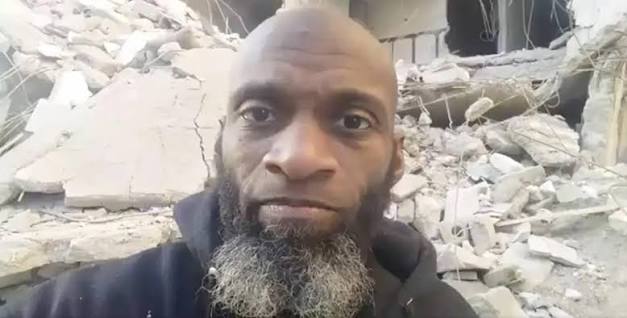
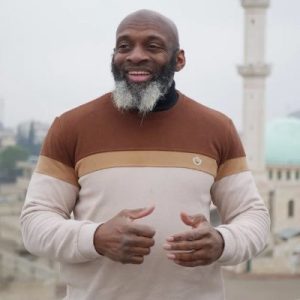
Bilal Abdul Kareem has spent over a decade reporting in Syria.
That Syria would be shed of fifty years of grasping control by a dictator’s family was unthinkable ten years ago, when the war that would eventually see the ouster of the Assad dynasty was at its peak. In 2016 Syria was fought over by a bewildering kaleidoscope of actors: a crippled regime had invited in militias backed by Iran, mercenaries backed by Russia, and the militaries of both countries; a violent Daesh emirate had sprawled over the Iraqi border to take over much of the east; an American invasion had backed a largely Kurdish front against Daesh; and pitted against all these camps were a largely Islamist collection of rebels backed by either Qaeda or by a Turkish military that, in opposition to its American-backed Kurdish insurgents, had also surged into Syria.
Keep supporting MuslimMatters for the sake of Allah
Alhamdulillah, we're at over 850 supporters. Help us get to 900 supporters this month. All it takes is a small gift from a reader like you to keep us going, for just $2 / month.
The Prophet (SAW) has taught us the best of deeds are those that done consistently, even if they are small. Click here to support MuslimMatters with a monthly donation of $2 per month. Set it and collect blessings from Allah (swt) for the khayr you're supporting without thinking about it.
Today the situation is transformed. Tens of thousands of Syrians have returned home under a government more benign than any predecessor in over a half-century. Daesh, always more an Iraqi than Syrian phenomenon, seems out for the count. Most foreign militaries have left, though Israel, that most bloodthirsty of regional spoilers, has continued brazen incursions beyond its occupation of the Golan Heights, hoping to break off the Druze minority in the south. Russia, preoccupied in Ukraine and Mali, has accepted its defeat; Iran, reluctant to admit a betrayal by the Assad family that would expose the wastage of its Syrian incursion, is now preoccupied in a war against the relentless aggression of both Israel and the United States.
The latest foreign military to leave Syria is that of the United States, who discarded years of support for Kurdish militants in northeast Syria to the satisfaction of Turkiye, given that many of these American-backed “Syrian Kurds” were in fact Turkish rebels. There has been a remarkable rapport between Ankara and the new Syrian regime led by Ahmad Sharaa, who was, ten years ago at the war’s peak, still part of Qaeda. Having discarded that link in summer 2016, Sharaa has worked closely with Turkiye to the discontent, ironically, of otherwise bitter enemies Iran and Israel, but to the evident satisfaction of Washington. Against more belligerent colleagues who follow the party line of former Israeli prime minister Naftali Bennett that Turkiye and Syria are now Israel’s major threats, American envoy Tom Barrack has worked out an arrangement where the United States cooperates in “counterterrorism” with Syria, purportedly against Daesh. The Americans who, ten years ago, were bombing and arming militants through northern Syria to fight against Sharaa have now embraced him as a counterterrorism partner.
An American Outlier
Yet one American who has not fared so well is Bilal Abdul-Kareem, an African-American journalist whose presence in Syria has largely conveniently been forgotten but who was, at the peak of the war, the boldest and most recognizable foreign reporter in the country and chose to live, marry, and settle there. Abdul-Kareem’s name brings to mind the Syrian war’s crescendo in 2016, when the battle for the major city of Aleppo was winding to a bloody conclusion in a campaign where tens of thousands were killed. In those days, English-speaking foreigners such as this writer could access Abdul-Kareem’s reports from the heart of eastern Aleppo, amid shattered buildings and choking rubble.
Journalists are often divided on to what extent they can become advocates for their subject. In Abdul-Kareem’s mind, certainly, there appears to have been no doubt on the matter; his reportage went hand in hand with advocacy, and his sympathy was squarely with the Syrian revolt against the Assad dynasty, and especially with the Islamic element that he believed was its conscience and underlying ethos.
Today some supporters of the new Syrian state, particularly those keen to dispel ideas of its being an extremist group, are uncomfortable with this Islam-centred viewpoint, believing that it would play into the hands of the 2010s revolt’s many enemies who frequently lumped in Daesh, which actually did very little fighting against Bashar Assad, with the revolt at large. Many critics of this type hail from the more socially liberal advocacy of the 2010s revolt, often based in Washington and sensitive to any charges of the “religious radicalism” that has been such a convenient enemy of the American elite, and much of the Western elite for that matter, in the twenty-first century. Added to this is the fear, often shared by some Syrian Muslims over the past century, that the emphasis on Islam might play into the hands of foreign powers who want to wedge off minorities against a long-suppressed Sunni Muslim majority.
The fact, however, is that it was precisely Sunni Islamist groups that held out in the Syrian battlefields and eventually managed to unseat Assad. There is no more glaring example than Sharaa himself, who had a bounty on his head for years by the same Washington that now welcomes him.
During the 2010s, many “liberal” advocates of the Syrian revolt in Washington would point out Sharaa as an example of a “bad actor” that might benefit if the United States did not support the revolt. As it happened, when the United States invaded Syria in September 2014 Sharaa and his group were second only to Daesh in their list of targets.
As it also happened, the United States has ended up reconciling with Sharaa, who is now cheerled by the same circles that once vilified him. If nothing else, Abdul-Kareem is more consistent in his views than his critics: today it is easy to dismiss him as a foreigner out of touch with Syrians, yet during the war he had far closer links and more interaction with the 2010s Syrian militant groups, and indeed much of civil society, that defeated Assad than do most of his critics today.
Aleppan Alamo
Once more 2016 Aleppo is instructive: at this peak of the war, when not only the United States was pointedly distancing itself from the actual revolt in favour of misleadingly misnamed Kurdish “rebels” that only ever fought the rebels’ Turkish backer, Abdul-Kareem was reporting from the beleaguered city. During that battle, Sharaa’s field commander leading a daring counterattack against the Russian army, Usama Nammoura (known variously as Abu Hajar and Abu Omar), was killed not by the Russians but by an American airstrike. In the heat of the multifaceted Syrian war, a Washington establishment that publicly criticized Russian brutality was quite happy to pick off commanders who actually led the fight against Russia. Although Sharaa had severed his ties with Qaeda shortly before Nammoura’s assassination, at that stage the United States was clearly not satisfied.
During this final desperate stage of the Aleppo campaign, Abdul-Kareem interviewed a prominent field commander, Abdul-Muin Ashidda (also known as Abul-Abed), who had recently left the Ahrarul-Sham group that was then the largest among Syria’s militant groups. As bluntly outspoken as his interviewer, Ashidda railed out at the rebels’ lack of coordination and especially at Turkiye, whose army had recently entered Syria but had, to his annoyance, failed to relieve Aleppo.
This was, it should be noted in fairness, a shortsighted view: it was then far beyond an extremely preoccupied Turkiye’s capacity to save Aleppo, and in fact later Ankara’s diplomacy and military would crucially and repeatedly shield the rebels against Russia. In short, contrary to Ashidda’s critique, the Turks helped when and where they could. Nonetheless these complaints, which Abdul-Kareem faithfully recorded and might have shared, spoke to frustrations among rebels then under severe fire in their biggest stronghold, which collapsed after a climactic months-long campaign in December 2016. Moreover, Ashidda’s call for independence from foreign reliance struck a chord.
Days later, in the early weeks of 2017, Sharaa announced a new group called Tahrirul-Sham, pointedly claiming to be independent of any foreign tutelage. It was built around his existing Nusra Front, and very quickly other rebels, including those from larger groups like Ahrarul-Sham, flocked to join what initially appeared to be a broad coalition: Ashidda himself was an early recruit. In fact, Sharaa and his inner circle maintained the key levers of power within the group, and used their newfound popularity to strike out at their former cohort-turned-competitor, Ahrarul-Sham, from whom they took much of Idlib in summer 2017. Ahrarul-Sham largely refused to fight their brethren, and Sharaa’s unilateralism shocked recent confederates, many of whom broke away.It should be noted that Abdul-Kareem’s early coverage of Tahrirul-Sham was largely positive; he optimistically hailed the provincial government Sharaa subsequently set up in Idlib as Syria’s first elected government in years.
Sharaa proved a wily operator, first establishing his supremacy among rebels, including Ahrarul-Sham, then mending his fences with a Turkiye that sturdily shielded Idlib against Russian takeover, while sidelining and eliminating Qaeda loyalists who resented his defection from the group. As the years passed, both Abdul-Kareem and Ashidda soured on Sharaa: their problem was less ideology than the nature of governance and more specifically security, which was often secretive and arbitrary. Though Islamic courts and mediators aplenty existed, Sharaa had brazenly disregarded them in seizing Idlib from his former comrades in 2017; with the same cavalier attitude, his administration in Idlib occasionally seized and imprisoned people well beyond any rationale of emergency measures. At various stages both Abdul-Kareem and Ashidda, whose 2016 tirade had helped trigger the momentum behind Sharaa’s supremacy, were jailed and mistreated in ways that could not conceivably be justified under any implementation of Islamic law.
It is unclear how much of this can be attributed to Sharaa: what is clear is that his security forces behaved with wide latitude and little censure. The stirring changes in Syria since Sharaa’s takeover have yet to include security transparency. Though there is no remote comparison with the decades-long, industrial-scale abuses of the preceding regime under the Assad family, which included the summary torture and executions of tens of thousands of Syrians in a practical police state, it is clear that the “revolutionary” Syrian government has a long way to go to match rhetoric with reality in this specific and very important regard.
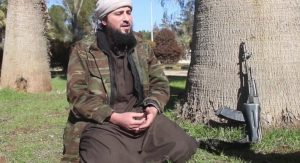
Abdul-Muin Ashidda, like Bilal Abdul-Kareem, initially supported but then criticized and fell afoul of Ahmad Sharaa.
None of this is an automatic endorsement of the personal views of Abdul-Kareem. It should be noted, however, that despite policy criticisms he has consistently expressed goodwill toward the new Syrian state and, especially, the largely Islamist fighters who led it to power. Abdul-Kareem’s criticisms were largely focused at overreach by the security forces and what he views as unedifying diplomacy with Donald Trump’s United States. In a social media video last winter, he publicly stated: “We simply cannot legitimise the presence of the enemy, and I said America is the enemy of the Syrian people.” As a disenfranchised American citizen himself, who has survived airstrikes by his own country’s government, Abdul-Kareem perhaps has more reason for hostility than most, but this suspicion toward the United States is by no means unique in Syria.
One episode that might have landed Abdul-Kareem in particular trouble was his interview with Hani Sibai, a London-based ideologue who has never forgiven Sharaa for having abandoned Qaeda. Though there is no indication that Abdul-Kareem shares Sibai’s affinity for Qaeda, he certainly did oppose Syrian contact with the United States. To the Syrian regime, the danger of such an interview lay in the influence that such a figure might have over the Islamists, both Syrian and otherwise, that make up a large proportion of its army. It was perhaps this that precipitated Abdul-Kareem’s arrest: he had prefaced his public criticism of Sharaa with the words, “I’m not going to sugarcoat this, and it probably is going to get me in trouble”, and certainly that much was true.
The irony is that weeks after Abdul-Kareem’s arrest, Syria and the United States struck a deal wherby the American army did withdraw from the Syrian northeast and abandon its local vassals, who soon gave way. This might have satisfied Abdul-Kareem had he been at liberty to witness it, but there was a price to pay: American airstrikes have continued in Syria as before, principally focused on alleged Daesh holdouts though in at least one notable case a victim was found to not have been involved with Daesh at all.
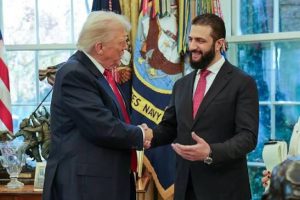
Ahmad Sharaa’s diplomacy with Donald Trump has so far blunted Israeli aggression but raises longer-term risks for Syrian security with regards to the United States.
Good Cops, Bad Cops, Arrests and America
For a Pakistani citizen such as myself, the American role in Syria raises similarities with the Pakistan of my own youth, during the military regime of Pervez Musharraf. The comparison between military dictator Musharraf and Islamist commander Sharaa might not be obvious, particularly given that Islamists at large widely detest the former and have embraced the latter. But there are eerie parallels: it is often forgotten that, much as Sharaa earned credentials fighting a “jihad”, Musharraf benefited from the reputation he had garnered from having fought India and supporting Kashmiri “mujahideen” earlier in his career. When Musharraf took over Pakistan in 1999, he was originally welcomed by many Islamist circles and frozen out by the United States.
The tables turned in 2001, when Musharraf supported the American invasion of Afghanistan and provided counterterrorism coordination with the United States. Much like Sharaa’s vaunted diplomacy today, the Pakistani dictator fell in line with a regional pattern where other countries, from Kyrgyzstan to Uzbekistan to even Iran, backed the American war in Afghanistan: Pakistan simply hopped on the bandwagon, with certain crucial limits, in the ignobly opportunistic spirit of “If you can’t beat them, join them”. Similarly today Syrian diplomacy with the United States is simply joining a regional bandwagon where other governments, from Lebanon to Jordan and Egypt, have already acquiesced, indeed to a much greater extent, to American militarism in the Middle East. As Pakistan’s history with Islamist militants was seen as a valuable asset for intelligence in Washington in 2001, so too is Sharaa’s history with various militants today.
Another similarity lies in the fact that diplomacy with the United States was seen, in 2000s Pakistan and 2020s Syria, as preferable to pressure by a nastier neighbour: in Pakistan’s case this was India and in Syria’s case it is Israel. India had not only lobbied for the American war on Afghanistan but also for its expansion into Pakistan, and the winter of 2001-02 exploited a murky militant attack on its parliament to amass half a million soldiers on the Pakistani border. It was this threat, and the fear of an Indian-American coalition, that pushed Pakistanis to accept acquiescence with Washington as a supposed alternative: the logic ran that if Musharraf embraced American leader George Bush, it would prevent Bush from embracing India. In retrospect, however, this apparent compromise only enabled a Washington that only drew closer to India to infringe on Pakistan in other, more indirect ways: the United States proved simply the “good cop” to India’s “bad cop”, and the airstrikes it began in northern Pakistan with increasing unilateralism set off a civil war in Waziristan that has since spread and has yet to abate to the current day.
Switch India for Israel a quarter-century later and Syria is in an analogous position. Proponents of Syrian rapprochement with Trump often cite a very real Israeli threat: Tel Aviv has made no secret of its hostility toward Damascus and, much like New Delhi with Pakistan a quarter-century ago, is lobbying the United States to let it expand its war into Syria. In flattering Trump, Syria hopes to stave off this immediate threat. Yet this bonhomie comes at a real price of facilitating American airstrikes in Syria, and as Musharraf found out to Pakistan’s detriment this is a slippery slope that could lead to longer-term repercussions. In short, there is no guarantee that the United States will not return to its “good cop-bad cop” routine, particularly given the Washington establishment’s long, stubbornly symbiotic relationship with Syria.
Of course, the parallels are not exact. Pakistan was a nuclear-armed state; Syria today is a weak, recovering country still under partial occupation. Conversely, the international climate in 2001 was almost uniformly conducive to unilateral American aggression; today, there is far more dissent against a declining United States. Pakistan was more or less regionally isolated in 2001; Syria is today supported by a major regional power in Ankara. Perhaps this is why Damascus feels it has more to gain and less to lose from diplomacy with a pointedly unreliable Trump: that remains to be seen.
The question of Syria’s relations with the United States, their context and dangers, pose a very real debate. Unfortunately, there is scant debate to be had on one hand with the likes of Sibai, whom Abdul-Kareem was perhaps unwise to give airtime, but also when Syrian security can so quickly abandon its promises of justice and jail a longstanding sympathizer without pretext. Again writing as a Pakistani who witnessed the impact of American-backed autocracy during Musharraf’s regime, this is an unhealthy sign and Sharaa’s government would be well-advised to at least provide some clarity as to the rationale of Abdul-Kareem’s arrest, if not release him outright. Given that even members of the former regime, with its numerous well-documented crimes, are set to receive a public day in court, there is no conceivable reason to imprison a well-wisher of the Syrian people and state without explanation.
Conclusion
Syria has some impressive achievements in the year and a half that Bashar Assad fell. Sharaa has done a fair job of building a governing coalition, and withstood severe pressure by an Israel that lost no time in vilifying and attacking southern Syria. The new regime has also faced genuine, serious emergencies: its first year alone saw Israeli bombardment and support for Druze separatists, the American-backed Kurdish militia in the east, and remnants of the former regime in the west.
Despite this, most of Syria is at least for the moment more secure, and by all accounts most of its population better-placed than under the tyranny that fell in 2024. A rebuilding Syrian state has reached out to numerous actors across geopolitical camps, staved off numerous challenges that were supported by hostile neighbours, and negotiated conditional withdrawals, including by the American military without joining the pro-Israel camp that so many other Arab states have under far less duress.
But injustices can multiple quickly if left to fester, and that can have a deteriorating effect on other aspects of governance and life. A Syria that cannot afford such deterioration can redress the issue by extending the justice and transparency it has long promised to its inconveniently outspoken prisoner Bilal Abdul-Kareem.
[Disclaimer: this article reflects the views of the author, and not necessarily those of MuslimMatters; a non-profit organization that welcomes editorials with diverse political perspectives.]
Keep supporting MuslimMatters for the sake of Allah
Alhamdulillah, we're at over 850 supporters. Help us get to 900 supporters this month. All it takes is a small gift from a reader like you to keep us going, for just $2 / month.
The Prophet (SAW) has taught us the best of deeds are those that done consistently, even if they are small. Click here to support MuslimMatters with a monthly donation of $2 per month. Set it and collect blessings from Allah (swt) for the khayr you're supporting without thinking about it.


Putting Lipstick on the RSS Pig

[Podcast] Muslim Money Matters: Do You Know How to Halal Hustle? | Adam Taufique

When The Bed Walked Away [Part 2] – Primordial Muck

Mustache Film Review: A Heartfelt Treat
When The Bed Walked Away [Part 1]

Muslims and the F-Word: Feminism, Dhulm, and Jahiliyyah

Far Away [Part 24] – The Whipping
When The Bed Walked Away [Part 2] – Primordial Muck
When The Bed Walked Away [Part 1]
Far Away [Part 23] – Delirium

The Best Actions for Eid al-Adha [Imam Dawud Walid]

Coming Full Circle: Who Are You Now? | Night 30 with the Qur’an

Running Away From Who We Are | Night 29 with the Qur’an

Building From the Ground Up: Week 4 Recap | Night 28 with the Qur’an