
#Current Affairs
Widening Wars Leave the Middle East in Shambles
A widening Middle East war is toppling leaders, devastating economies, and leaving millions caught in a humanitarian catastrophe.

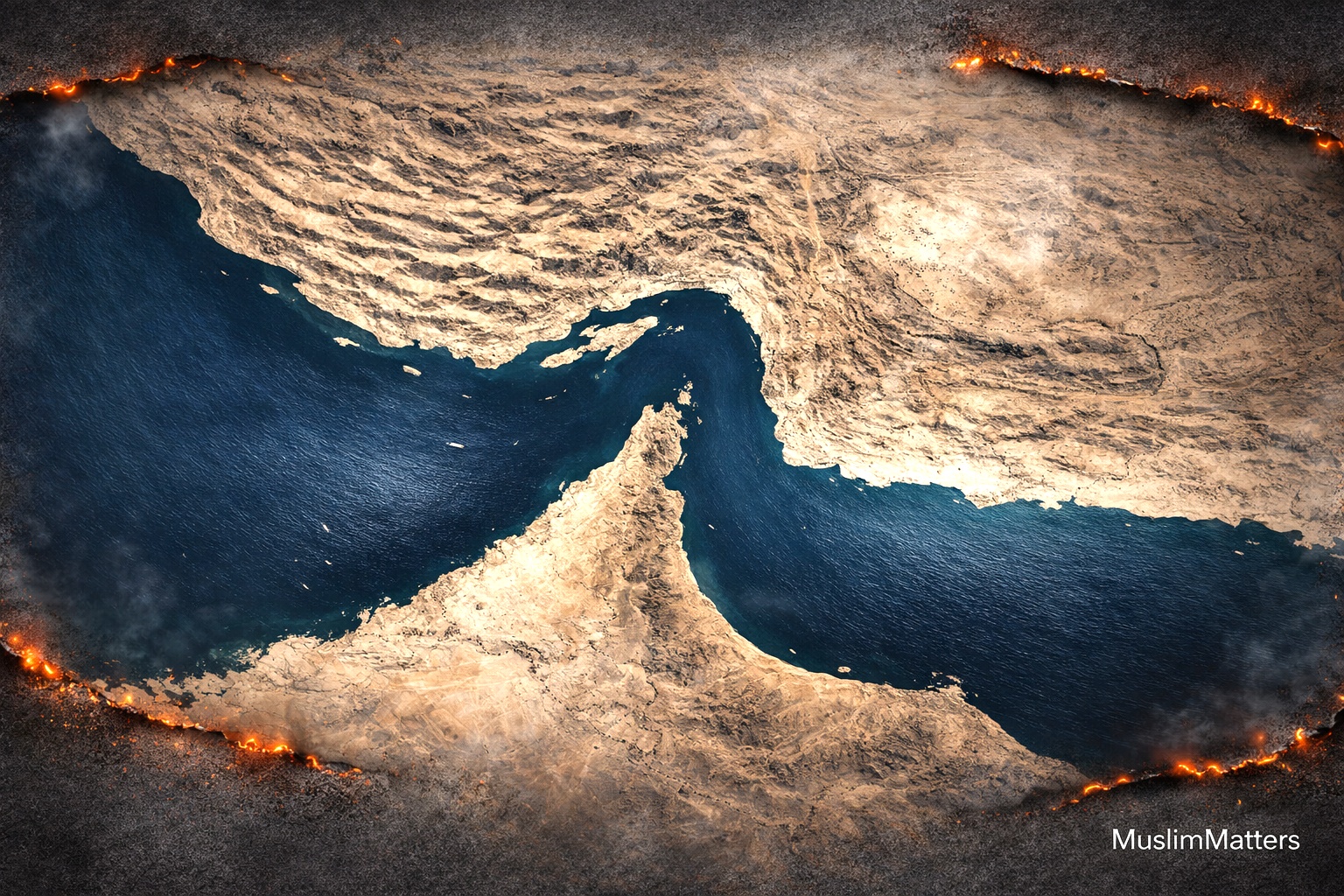
A widening Middle East war is toppling leaders, devastating economies, and leaving millions caught in a humanitarian catastrophe.
By Ibrahim Moiz for MuslimMatters
Israel Broadens Its Murderous Assaults
Twenty days into the American-Israeli war on Iran, the conflict has widened to engulf much of the Gulf region as well as the Levant. The Iranian backlash, firing both at Israel and at American targets in the Gulf region and blocking off the crucial straits that lead out of the eponymous Gulf, has crippled international trade and put the Gulf regimes in serious jeopardy.
Keep supporting MuslimMatters for the sake of Allah
Alhamdulillah, we're at over 850 supporters. Help us get to 900 supporters this month. All it takes is a small gift from a reader like you to keep us going, for just $2 / month.
The Prophet (SAW) has taught us the best of deeds are those that done consistently, even if they are small. Click here to support MuslimMatters with a monthly donation of $2 per month. Set it and collect blessings from Allah (swt) for the khayr you're supporting without thinking about it.
Israel has added to its genocide of Gaza a murderous assault on Palestinians in the West Bank and yet another brutal invasion of Lebanon. Iraqi militias, which have historically had strong links with both the United States and Iran since the 2003 invasion, have clearly opted for the latter. And finally, the leaderships of both Iran and Israel seem to have taken a hit; longstanding Iranian potentate Ali Ardeshir-Larijani, whose conspicuous defiance of Israel put a target on his back, was killed, while Israel’s prime minister Benjamin Netanyahu-Mileikowsky vanished amid an Iranian missile salvo, with rumors of his possible elimination.
Deadly Deja Vu in Lebanon
As MuslimMatters noted two years ago, Israel has long sought to widen the war to include its regional rival Iran, which it has wrongly blamed for masterminding Palestinian militancy; in fact, Palestinian resistance has continued over the past twenty or so years despite fluctuating links with Iran.
By contrast, the largely Shia militias in Iraq and Lebanon do have close links with Tehran and responded to the provocative American-Israeli attack on Iran by attacking, respectively, American and Israeli targets. In the case of Iraq, this was especially ironic because the militias had historically been involved with both the United States and Iran.
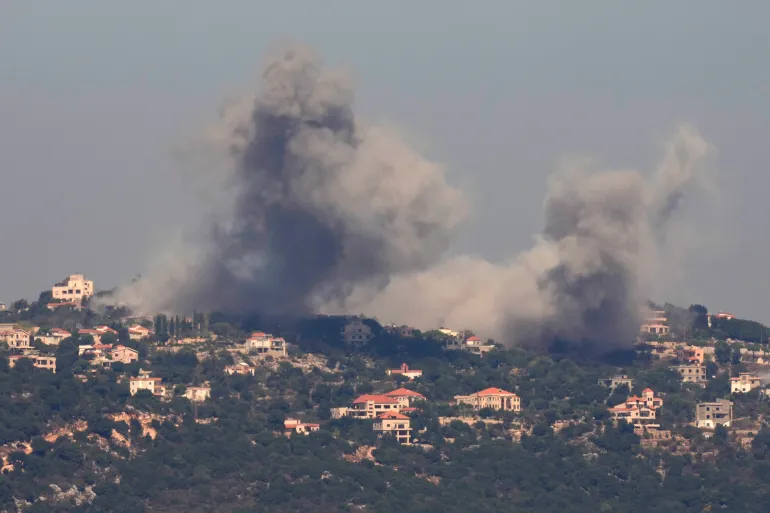
n the case of Lebanon, Hezbollah’s attacks gave the lie to Israeli triumphalism from autumn 2024, which declared the militia essentially knocked out after its founding leaders were killed off along with large numbers of civilians in the Israeli assault of the period. Gloating coverage, not only from Israel but from much of the European and North American press, about Israel’s technological prowess and checkmate seems to have been woefully premature.
Lebanon’s Fragile Political Balance
The 2024 Israeli attack ushered in what was widely seen as a pro-American government in Lebanon, with former army commander Joseph Aoun in the presidency and Nawaf Salam as prime minister; in accordance with American wishes, the Lebanese government had distanced itself from Hezbollah even as Israel’s repeated provocations in the south made such a stance increasingly tenuous. Always close to Tehran, Hezbollah responded to Israel’s attacks on Iran with its own salvo, prompting the Israeli army to wade north into Lebanon yet again.
Echoes of the 2006 War
In one respect, the 2025–26 shift in Lebanon resembles events twenty years earlier, when a pro-American cabinet voted in during 2005 was subsequently left high and dry when Israel invaded the south in 2006. It was during that war that Israel coined the so-called “Dahiye doctrine,” named for the suburb that it attacked, as a euphemism for an unabashedly brutal assault of the sort that so often typifies Israeli warfare; the same suburb is under attack today.
In 2006, Hezbollah enormously bolstered its prestige by withstanding a pointedly vicious Israeli assault; while 2026 finds Hezbollah generally weaker, it may be expected that it will recover its reputation as defender of Lebanese integrity against a murderous neighbor that has already displaced a fifth of the Lebanese population and used internationally banned weapons such as white phosphorus.
The Gulf between Rhetoric and Reality: America’s Persian Quagmire
If Israel is enjoying another bloody caper in Lebanon, straits are more dire elsewhere. The Gulf states were exposed to their own vulnerability, and the drawbacks of significant American bases, when Iran fired on them. More worrying for the United States, and certainly for Donald Trump’s scrambling regime, is the Iranian chokehold on shipping that exits the Gulf through a strait whence a fifth of the world’s oil supply is shipped.
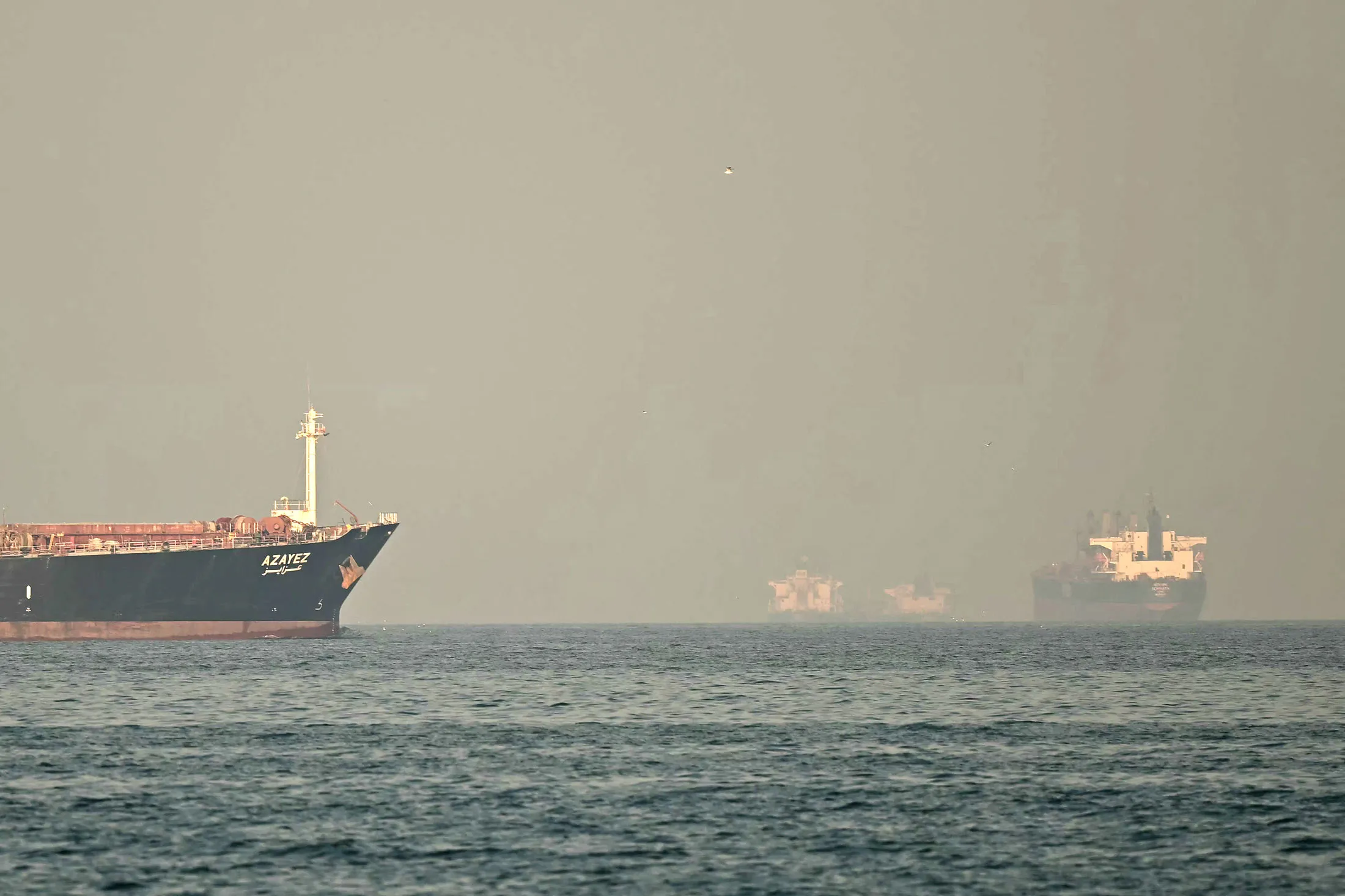
Ships in the Strait of Hormuz
The ease with which Iran could block the strait was one factor why previous American governments, even the most rabidly pro-Israel among them, had balked at entering the full-scale war with Iran that Israel had constantly advocated. In Trump, a triumphalist dangerously emboldened by his bullying treatment of Venezuela this winter, the Israeli regime seems to have found its man: a braggadocious oaf glad to blunder into a war whose risks he cared not to comprehend, and drag the region down with his fortunes.
Washington’s Scramble
Barely a fortnight after gloating over the ease with which he eliminated Iran’s leadership, Trump and his similarly incompetent military supremo Peter Hegseth, a bloodthirsty buffoon who has constantly branded his wars as crusades against Muslims but balked whenever he receives reminders of the planning and risks such wars actually entail, are scrambling for excuses. Most recently, Trump has lashed out at more cautious Western states for what he sees as insufficient help; this while many European governments, together with Canada and Australia, dutifully condemned Iran’s retaliations, with some even having been involved in the war’s logistics.
Shattered Illusions in the Gulf
While Iran’s strikes toward the Gulf have caused controversy—even Hamas, which has good relations with several Gulf regimes and has been at the frontline of the defense against Israel, advised Tehran to save its ammunition for the enemy—Iranian officials like longstanding regime eminence Ali Ardeshir-Larijani and foreign minister Abbas Araghchi insisted that these exclusively targeted American sites. Whatever the case, the comfortable illusion of Gulf immunity from regional strife, protected under an American military canopy, has been well and truly shattered.
An Iranian Stalwart
Larijani was one of many Iranian leaders to defiantly march in public after the American-Israeli bombardment killed hundreds and draped Tehran in an inferno. He has frequently been described, if with some exaggeration, as Iran’s most powerful leader. This is an exaggeration; Mojtaba Khamenei replaced his slain father Ali as Iran’s supremo this month, while Masoud Pezeshkian leads a triumvirate with at least symbolic importance—but it does accurately reflect Larijani’s longstanding centrality in the Iranian system.
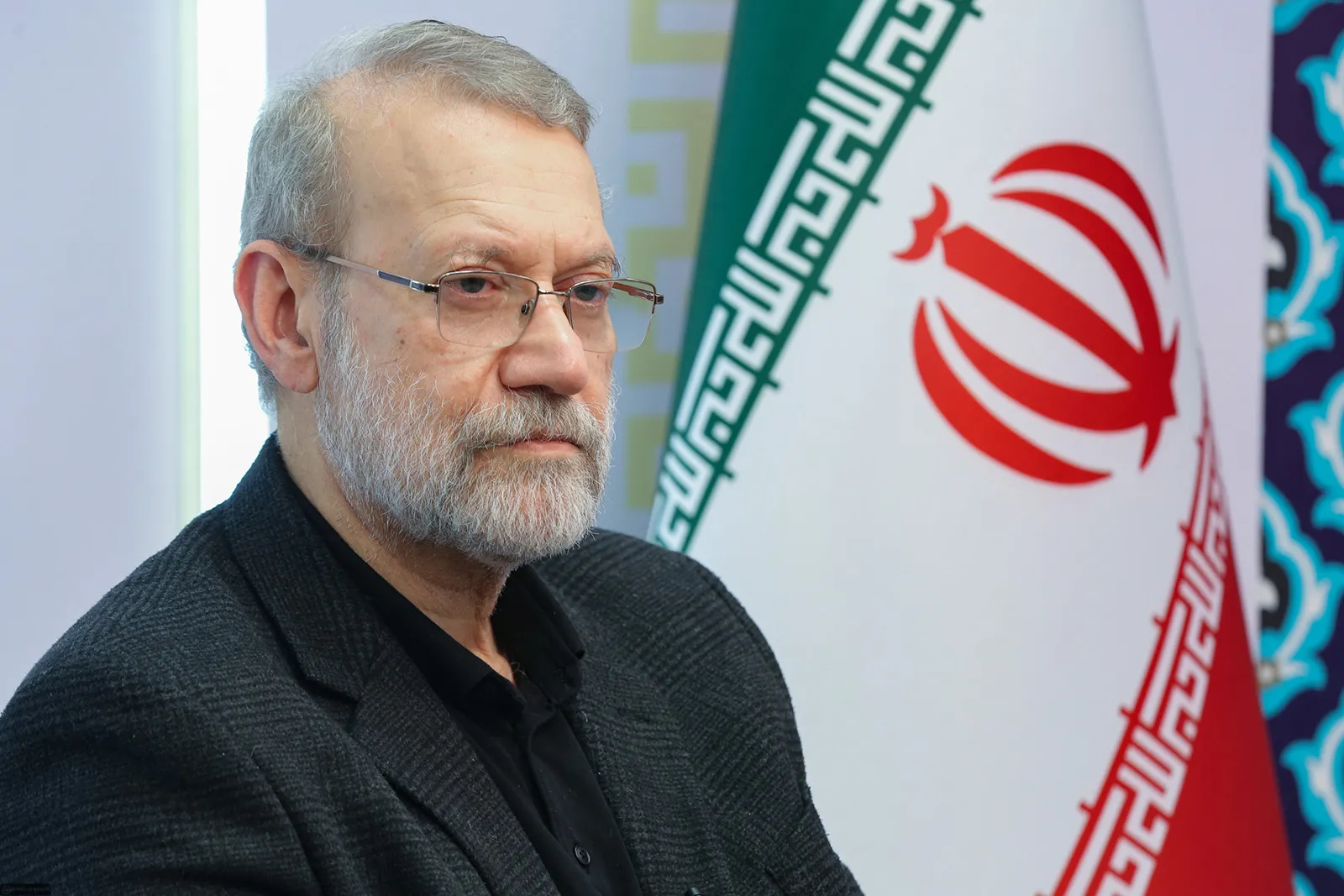
Ali Ardeshir-Larijani
The son of cleric Hashim Ardeshir, Ali Ardeshir-Larijani had one brother, Sadegh, who was a chief justice throughout the 2010s, and another, Javad, who deputized for the judiciary. His father-in-law was Morteza Motahhari, who had co-founded the clerical republic in the 1979 revolution, and his maternal cousin Ahmed Tavakkoli, a conservative former minister and presidential runner-up. Like many Iranian leaders, Ali had both an activist and an intellectual background, having studied and written on European philosophy before becoming a generally conservative statist in Iranian politics. His many roles in the Iranian regime since the 1980s included, most prominently, serving as parliamentary speaker through the 2010s.
Defiance and Death
A stalwart of the Iranian state, Ali had immediately responded to the American-Israeli aggression with pointed, acerbic defiance and chided other Muslim countries for insufficient solidarity. Remarkably, given the blaze that Hegseth had unleashed upon Tehran, he also took to the streets in an enormous protest, featuring many Iranian citizens and leaders alike, remarkable for its lack of fear. It was perhaps no surprise when he was killed. Also slain was Gholam-Reza Soleimani, who led Iran’s paramilitary security and had been a soldier since his teen years in the 1980s Gulf war against Iraq.
Dead or Alive?
Many Iranian leaders, then, have been killed in the last year, but given the notoriously leery nature of their Israeli counterparts, it came as more of a shock when Benjamin Netanyahu-Mileikowsky, the genocidal arsonist who had lit the region ablaze and for decades incited American wars throughout the Muslim world to complement his own, disappeared amid a hail of Iranian missiles. Eventually, videos resurfaced that purported to show him alive at a café, but these videos had an eerily uncanny appearance that raised wide-ranging suspicions that they had been generated by artificial intelligence technology. These suspicions were so widespread that they even made their way into American newspapers that have become notorious for their partiality toward Israel. Whatever the truth of the matter, it is perhaps fitting that a murderous dissembler whose career has been based on lies and mass murder now has doubts raised about his purported proof of life.
Ground Zero in Palestine
What will doubtless cheer up the Israeli regime is that their wars with Iran, Lebanon, and other countries have diverted attention from Palestine. This month, the Israeli military and settlers set about attacking the West Bank, an area where Hamas is almost absent but which has long been a target of ethnic cleansing efforts. They descended in an orgy of violence, burning dwellings while lynching and expelling Palestinians. The Aqsa Mosque, Islam’s third holiest site, which Israel’s ruling party has often threatened to excavate, has been shut off entirely by Hisham Ibrahim, its ironically named Israeli prefect.
Collapse of the Ceasefire
Meanwhile, any pretense of a ceasefire in Gaza, about which Trump made such a boastful song and dance, has long since reached the point of sick parody. Hundreds of Palestinians have been killed since, and the blockade has tightened to the point that the vast majority of basic goods have been shut off. In characteristic dissimulation, the Israeli regime claims that Gaza has a surplus; in fact, according to independent reports, less than a third of the strip’s basic needs were met before the blockade again tightened.
Dr. Alaa Talks About Life Under Siege
MuslimMatters managed to get in touch with Doctor Alaa, a Palestinian radiologist who has been raising his toddler son alone since his wife was killed in the genocide and has personally taken on the burden of eight orphans whom he has helped shelter and fund since.
Alaa and his wife had originally taken in three families, but she and the other parents were killed in an Israeli attack, leaving him to raise their children. Though straitened circumstances mean that he directly supports three orphans as well as his son, he continues to fund the other orphans, who are living with other Palestinians, with the assistance of donations.
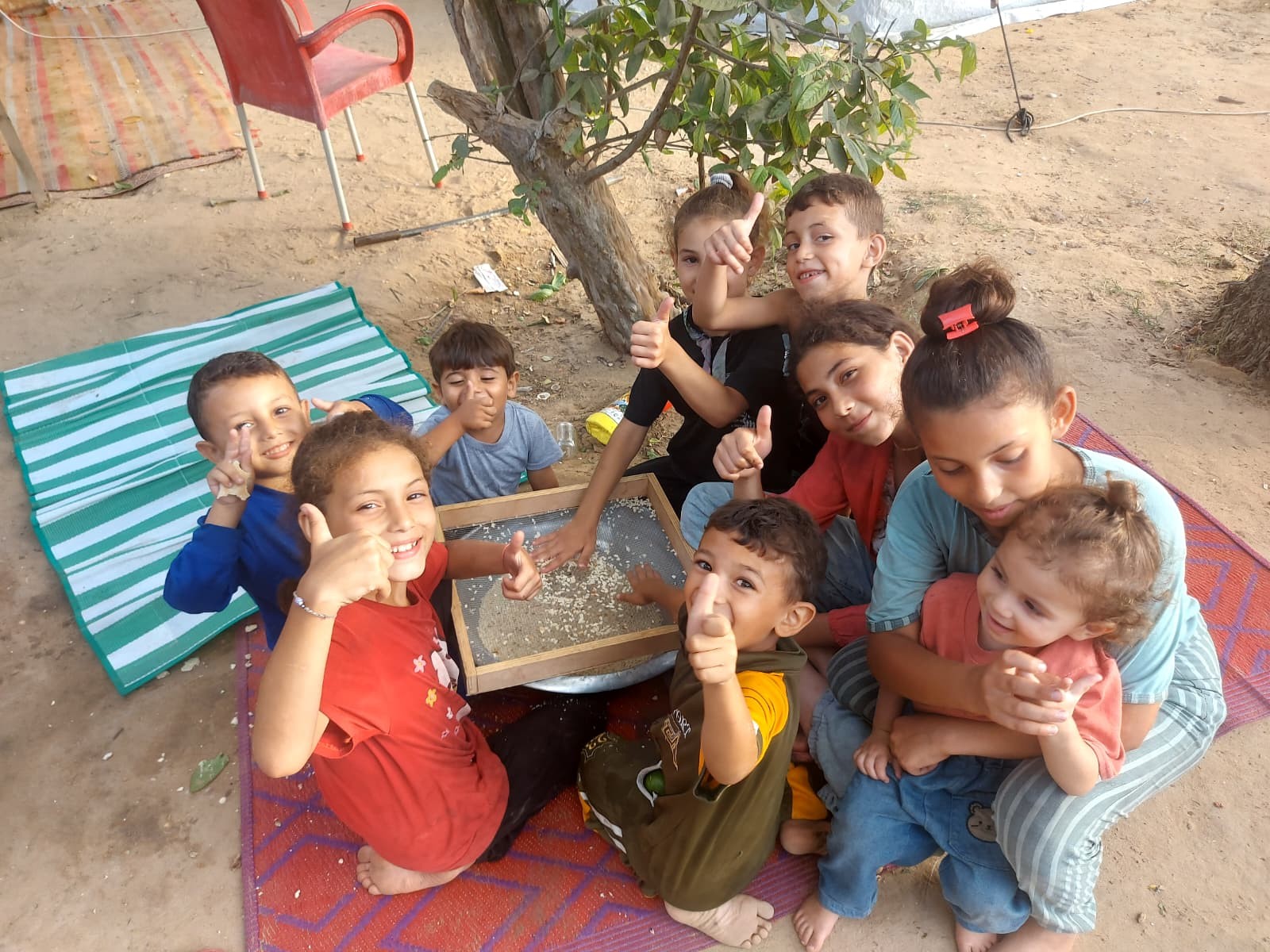
Dr. Alaa’s orphans
The doctor’s tone in general was despondent, but he gave a succinct, if dispiriting, summary of life under siege: “staying together in a tent without any income and without any dreams that we can leave this place as soon as possible.”
The ceasefire, he noted, had only slightly abated the rate of Israeli bombardment: “The situation since ceasefire is same, maybe it’s worse for the daily living…every day they strike somewhere…the siege around Gaza, they’re still surrounding Gaza, and most of the goods are not allowed to come in.”
“The People in Gaza Feel More Suffering Now”
Food and shelter are terribly low. “They stopped providing the food for people,” Dr. Alaa said, , and long time ago they stopped providing the tents for people. From my experience, I couldn’t get a tent easily, and lastly, when the storm starts, all the tents are destroyed.”
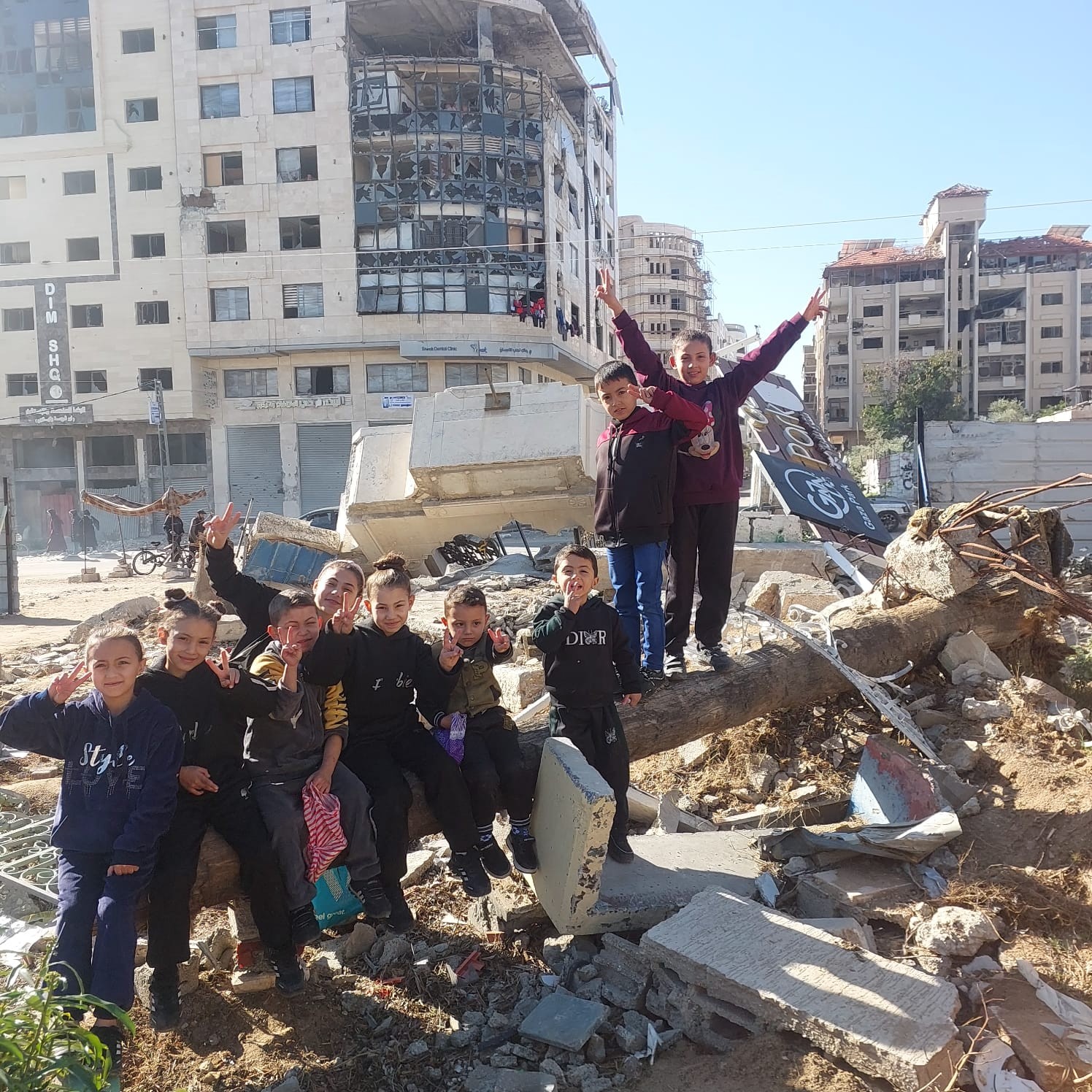
Some of the Gaza orphans that Dr. Alaa helps.
Israel’s unprovoked attack on other countries has not eased the situation. “The situation since Iran war is really very bad, because the fuel, the prices, the goods, all jump,” Dr. Alaa explained. “The people in Gaza feel more suffering now, because they don’t have any income and the siege is still very strong around Gaza.” One side effect of the Iran war was to help Israel divert attention from the genocide in Gaza. “So the people here feel that they are all alone and everybody abandoned Gaza.”
If you want to help Dr. Alaa in his mission to care for the Gaza orphans, you can donate here.
Related:
Op-Ed: From Pakistan To Gaza – Why Senator Mushtaq Ahmad Khan Terrifies Power And Zionism
Keep supporting MuslimMatters for the sake of Allah
Alhamdulillah, we're at over 850 supporters. Help us get to 900 supporters this month. All it takes is a small gift from a reader like you to keep us going, for just $2 / month.
The Prophet (SAW) has taught us the best of deeds are those that done consistently, even if they are small. Click here to support MuslimMatters with a monthly donation of $2 per month. Set it and collect blessings from Allah (swt) for the khayr you're supporting without thinking about it.




Far Away [Part 26] – Shaytan Is A Liar

From a Syrian Prison to the UN: The Case of Bilal Abdul Kareem

The Muslim Book Awards 2026
Far Away [Part 25] – To Save A Prince

Putting Lipstick On The RSS Pig
Far Away [Part 26] – Shaytan Is A Liar
Far Away [Part 25] – To Save A Prince
Far Away [Part 24] – The Whipping

When The Bed Walked Away [Part 2] – Primordial Muck
When The Bed Walked Away [Part 1]

The Best Actions for Eid al-Adha [Imam Dawud Walid]

Coming Full Circle: Who Are You Now? | Night 30 with the Qur’an

Running Away From Who We Are | Night 29 with the Qur’an

Building From the Ground Up: Week 4 Recap | Night 28 with the Qur’an


Amer Rizvi
March 27, 2026 at 5:43 AM
One of the things you may notice when you go to some mosques are the duas imams not make! You may be hard pressed to find imams making duas for the people of Iran who are suffering so much under the bombing.
It is sad because the people of Iran are also Muslim and some of the greatest Muslim scholars in history were Irani, like Imam Muslim, Imam Nisharpuri (who compiled Mustadrak al-Hakim), and Imam Baihaqi.