#Islam
From The Prophets To Karbala: The Timeless Lessons Of Ashura For Muslims Today
The 10th of Muharram, known as ‘Ashura, holds deep spiritual and historical significance for Muslims of the past and present.


Muharram: A Time of Reflection and Reaffirmation
The month of Muharram is the first month of the Islamic calendar, it is one of the four sacred months mentioned in the Qur’an [Surah At-Tawbah, 9:36]. This month holds deep historical and spiritual significance for Muslims. It is a time when warfare is prohibited; a time of reflection, and a time of reaffirmation of some of the core Islamic values and principles that Islam has been founded upon, such as faith, perseverance, sacrifice, and moral courage.
The 10th of Muharram, known as ‘Ashura or Yawm ‘Ashura, holds deep spiritual and historical significance for Muslims today. Among the many events associated with this day, two stand out as monumental signs of Allah’s  Mercy and Power: the deliverance of Prophet Musa
 and his followers from Pharaoh, and the safe landing of Prophet Nuh’s Ark on Mount Judi.
Another deeply saddening event that occurred on ‘Ashura was indeed the horrendous massacre of Hussein, the beloved grandson of the Prophet Muhammad  , who was martyred in Karbala while standing for justice and truth. These narratives are not mere historical occurrences, but are intricately woven with profound lessons that resonate with Muslims today.
Let’s look at four of the most important lessons of ‘Ashura:
1. Trust in Allah 
Keep supporting MuslimMatters for the sake of Allah
Alhamdulillah, we're at over 850 supporters. Help us get to 900 supporters this month. All it takes is a small gift from a reader like you to keep us going, for just $2 / month.
The Prophet (SAW) has taught us the best of deeds are those that done consistently, even if they are small. Click here to support MuslimMatters with a monthly donation of $2 per month. Set it and collect blessings from Allah (swt) for the khayr you're supporting without thinking about it.
Trust in Allah during times of trials and tribulations is demonstrated when, on the day of ‘Ashura Allah saved Prophet Musa and his followers from the oppression and tyranny of Pharaoh. It was an extremely daunting moment for the followers of Prophet Musa , as they stood at the Red Sea, with the menacing army of Pharaoh relentless in pursuing them. However, Prophet Musa had his complete and unwavering trust in his Lord. He affirmed:
“Indeed, with me is my Lord; He will guide me.” [Surah Ash-Shu’ara; 26:62]
At that moment, a miraculous event unfolded as the sea was divided, allowing Prophet Musa and his followers to cross over, while Pharaoh and his army were drowned in the depths of the waters. Muslims today face many forms of oppression—be it political, social, or personal. The story of Prophet Musa teaches us that even in the darkest moments, faith and patience can lead to relief and victory.
When injustice seems insurmountable, as Muslims, we are reminded that Allah
2. Perseverance in the Face of Rejection
Persevering in the face of rejection is the key lesson derived from the life of Prophet Nuh . On the same blessed day of ‘Ashura, it is believed that Prophet Nuh’s Ark came to rest upon Mount Judi, marking the conclusion of the Great Flood. After enduring centuries of ardent preaching and relentless rejection from his people, Prophet Nuh was commanded by His Lord to construct an Ark; which would be a sanctuary for the righteous. As he embarked on the monumental task of building this vessel in the heart of the desert, his people mocked him; however, he remained resolute and firm.
The Qur’an describes the event as follows:
“And it was said, ‘O earth! Swallow up your water. And O sky! Withhold [your rain].’ The floodwater receded and the decree was carried out. The Ark rested on Mount Judi, and it was said, ‘Away with the wrongdoing people!’” [Surah Hud; 11:44]
Prophet Nuh’s
3. The Martyrdom of Hussein
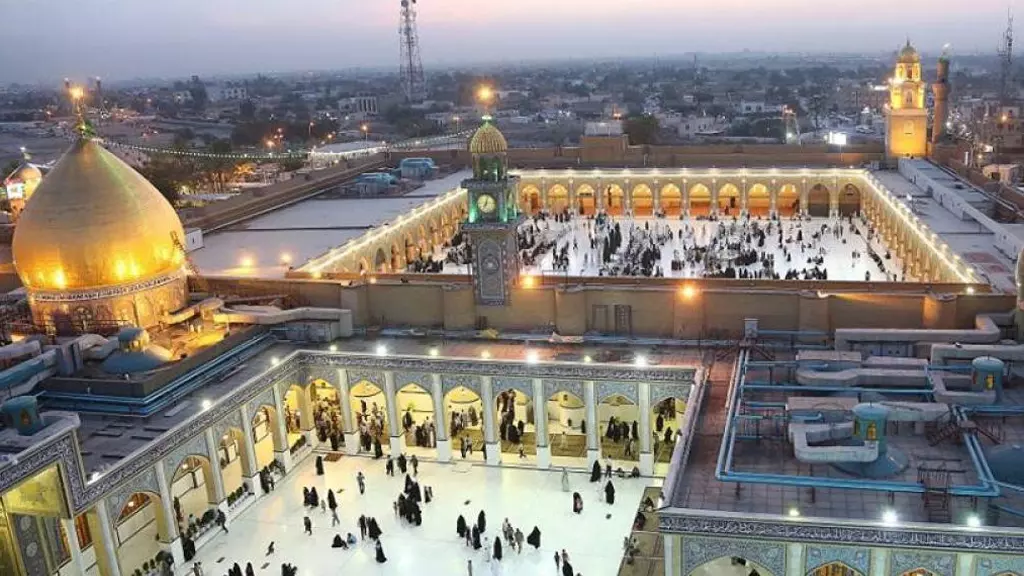
The city of Kufa, Iraq, today.
Hasan and Hussein were the grandsons of Prophet Muhammad . He loved them immensely. Ibn ‘Umar said: ‘I heard the Prophet say, ‘They are my two sweet-basils in the world.’” [Sahih Bukhari].
‘Ashura is also the day when the poignant martyrdom of Hussein took place, a day characterised by profound brutality. During the reign of Yazid, the son of Mu’awiya, the Muslim community was deeply fragmented, and the people of Kufa wanted Hussein to be their leader. They inundated him with letters while he was in Makkah, pledging their unwavering allegiance should he accept to be their leader. Hussein decided to accept the pleas of the people of Kufa and embarked upon his journey towards the city.
Sadly, by the time he reached Kufa, the people had betrayed him. A myriad of circumstances culminated in a harrowing and unjust battle, in which the martyrdom of Hussein , the beloved grandson of Prophet Muhammad , took place.
To make matters worse, he was beheaded and his head was desecrated with a stick in a vile and mocking manner by Ubayd Allah ibn Ziyad, a general and governor of the Umayyad Caliphate, who was also the mastermind of the wicked campaign of Karbala. This was a barbaric and heart-rending act of profound disrespect towards Hussein , who hailed from the noble lineage of the Prophet and who was deeply cherished by him and whom he affectionately referred to as one of his “two sweet basils in the world.”
Defiance of Tyranny
The triumph of Hussein in this instance was not a worldly victory, but rather a resounding affirmation in the Hereafter. His success is manifested in the form of martyrdom, serving as a testament to the invincible, steadfast faith amidst the onslaught of tyranny. It illustrates the exquisite beauty of perceiving life as a dual existence – impermanent material world and the eternal world of Paradise. This is elucidated in the Qur’an:
“Never say that those martyred in the cause of Allah are dead—in fact, they are alive! But you do not perceive it.” [Surah Al-Baqarah; 2:154]
As well as in the Prophetic hadith:
“Verily, the souls of martyrs are in green birds, hanging from the fruits of Paradise, or the trees of Paradise.” [al-Tirmidhi]
Hussein is respected as one of the most esteemed members of the Prophet’s lineage. His unshakeable patience and steadfastness in the face of oppression serve as exemplary models for all Muslims. The tragedy of Karbala is deeply rooted in moral and spiritual significance, teaching Muslims the paramount importance of upholding justice in all circumstances.
Today, truthfulness is frequently sacrificed for the sake of power or fear; however, the lessons derived from Karbala serve as a reminder that faith devoid of action and principles devoid of sacrifice, are meaningless. Above all, principles and integrity will always champion righteousness over power.
4. Commemorate ‘Ashura by Fasting
 The best way to commemorate ‘Ashura is by following the example of the Prophet , and this is through fasting on the 10th of Muharram. The Prophet urged us to fast on this day to commemorate and celebrate the victory of Prophet Musa over Pharaoh. To differ from earlier practices, we may observe a fast either on the day preceding or following ‘Ashura.
Fasting on ‘Ashura is a means of expiation of the sins of the previous year. Prophet Muhammad said:
“Fasting on the day of Ashura, I hope, will expiate for the sins of the previous year.” [Muslim]
Faith and Patience
In conclusion, ‘Ashura is not just about reminiscing or mourning the past events – it is about embracing and living by the key moral principles extrapolated from these events. Whether reflecting on the salvation of Prophet Nuh , the victory of Prophet Musa , or the sacrifice of Imam Hussein , Muharram unites Muslims around a common theme: faith and patience in times of adversity.
“O you who have believed, seek help through patience and prayer. Indeed, Allah is with those who are patient.” [Surah Al-Baqarah; 2:153]
The Muslim Ummah today is plagued by disunity and a lack of leadership rooted in values. ‘Ashura serves as a powerful reminder for every Muslim to reaffirm our dedication to the tenets of truth, justice, patience, and gratitude. From Prophet Musa , we learn about the importance of placing our trust in Allah during adversity. Prophet Nuh’s life teaches us the virtue of perseverance in the face of challenges. From Hussein , we are inspired to embody resilience, uphold the truth, and make sacrifices in the pursuit of justice.
Related Posts:
From The Chaplain’s Desk: The Sanctity of Muharram And Ashura
Keep supporting MuslimMatters for the sake of Allah
Alhamdulillah, we're at over 850 supporters. Help us get to 900 supporters this month. All it takes is a small gift from a reader like you to keep us going, for just $2 / month.
The Prophet (SAW) has taught us the best of deeds are those that done consistently, even if they are small. Click here to support MuslimMatters with a monthly donation of $2 per month. Set it and collect blessings from Allah (swt) for the khayr you're supporting without thinking about it.






Storm Brewing: Tim Hortons Data Leak to Israeli Spy Vets’ Firm Exposed

Far Away, Book 2: [Part3] – Something Wrong in Besh-Badam

Not So Easy At Suez: The Luster And Limitations Of An Anticolonial Watershed

Parenting: A Work In Progress – A Muslim Mum’s Journey To Overcoming Self-Sabotage And Guilt

Welcome To Islam, Now Shut Up
Far Away, Book 2: [Part3] – Something Wrong in Besh-Badam
Far Away, Book 2: [Part2] – The Domain of the Dzungars

Marriage & Money [Part II] – Me Before We: Understanding Our “Financial Personalities” To Improve Our Marriages

Chris Van Hollen: The Pakistan-Born Senator Too Principled For Pakistan’s Powerful

Treating Community WhatsApp Groups As Institutions [Including Free Workbook On How To Build Purposeful, Safe, And Beneficial Groups]

The Best Actions for Eid al-Adha [Imam Dawud Walid]

Coming Full Circle: Who Are You Now? | Night 30 with the Qur’an

Running Away From Who We Are | Night 29 with the Qur’an

Building From the Ground Up: Week 4 Recap | Night 28 with the Qur’an

The Muslim You Are Becoming | Night 27 with the Qur’an
-

 #Culture2 days ago
Far Away, Book 2: [Part3] – Something Wrong in Besh-Badam
-
#Culture2 weeks ago
Far Away, Book 2: [Part2] – The Domain of the Dzungars
-
#Culture1 month ago
Far Away, Book 2: [Part 1] – Meilin’s Tale
-
#Culture1 month ago
[Film Review] Your Mother, Your Mother, Your Mother: A Complex Story Of Faith And Fatherhood