
#Culture
Selamat Hari Raya! – Celebrating Eid In Malaysia

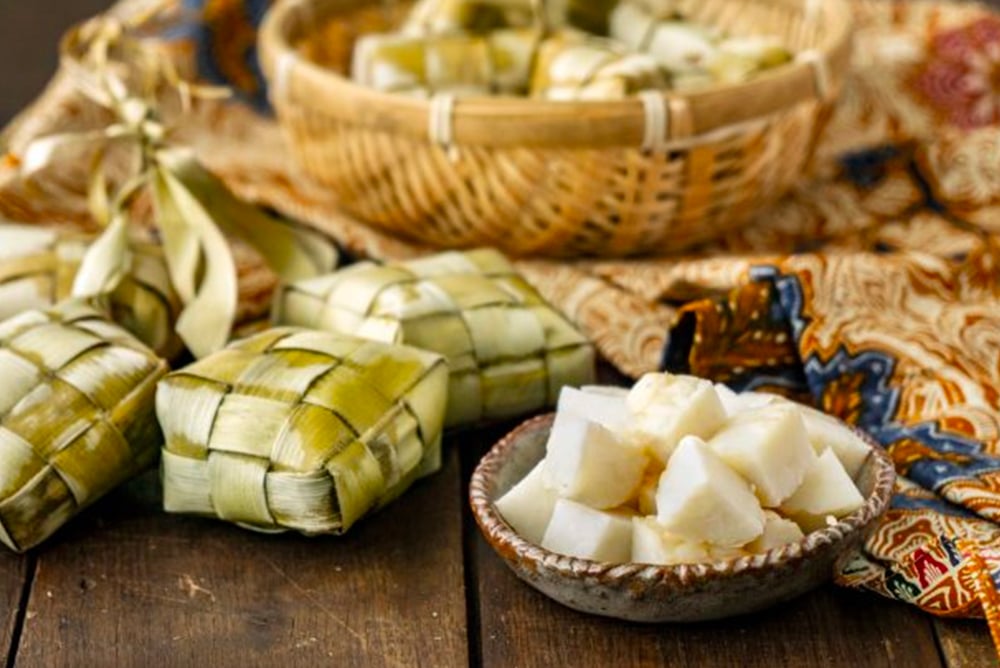
In both Singapore and Malaysia, Eid is called Hari Raya, or the Day of Celebration – it’s either Hari Raya Puasa (Eidul Fitr) or Hari Raya Haji (Eidul Adha). I have fond Raya memories from my childhood in Singapore. On the morning of Eid, my siblings and I would kiss our parents’ hands, and they would give us a packet of money – a dollar for every day we fasted. My mother would prepare delicious traditional Malay dishes like kuah lodeh (vegetable stew cooked with turmeric and coconut milk) and rendang ayam (slow-cooked chicken with lemongrass and coconut milk). We would visit our relatives, eat more tasty food, and they would give us even more precious Raya packets. We all envied my oldest cousin, who was the only child, and who raked in the most cash compared to all six of us.
Multigenerational Celebration
Now that I’m a mother of three primary-school-aged children, it’s up to me and my husband to build positive childhood memories around Ramadan and Eid. The combination of corralling small children to the masjid can be a stress-inducing one. The secret sauce lies in planning for success the night before. We try our best to ensure our kids have an early bedtime, help them set aside their Eid clothes, and wake them up early to get to the masjid.
On top of that is ensuring elderly care is sorted, which means medications are lined up, factoring extra time to help them get in and out of cars, and checking ahead of time that the masjid is accessible. We pack small notes so that our children can give sadaqah at the masjid too. To help them last through the Eid khutbah, I pack snacks and fidget toys. It’s common for generous elders seated near us to give my delighted children Raya packets too. Once we’re back home, then we can give our children their long-awaited Raya packets. This Ramadan, we’ve jumped from one fasting child to three fasting children, alhamdulilah.
A Month-long celebration
Keep supporting MuslimMatters for the sake of Allah
Alhamdulillah, we're at over 850 supporters. Help us get to 900 supporters this month. All it takes is a small gift from a reader like you to keep us going, for just $2 / month.
The Prophet (SAW) has taught us the best of deeds are those that done consistently, even if they are small. Click here to support MuslimMatters with a monthly donation of $2 per month. Set it and collect blessings from Allah (swt) for the khayr you're supporting without thinking about it.
In Malaysia, Eid is celebrated for the entire month, and the lead-up to this is baked into the very fabric of daily life. As we get closer to Eid, the banks here have specific hours every morning allocated to breaking down large notes into smaller notes – perfect for adults to give little children Raya packets.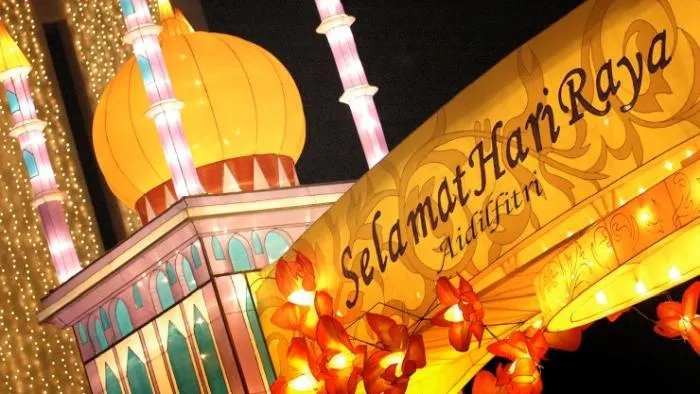
There are also Raya buffets at restaurants and hotels, and massive sales across any item imaginable – from clothes, to mobile phones and even cars. The danger of this is the risk of falling into the ever-waiting trap of excessive consumerism – even if it’s in the form of a Muslim celebration. Instead of succumbing to every appealing Raya sale, it helps to make mindful purchases, and to remember to give to the less fortunate as well.
Open houses
During the month-long celebration, there is the ubiquitous ‘open house’ where there are invitations to visit each other’s homes for tasty treats and, of course, Raya packets for children. The bulk of the family visits happen during the first week of the Raya break, where priority visits start with the elders in the family. After that, Raya visits are often mostly on the weekend, to cater for working hours. Visits mostly don’t last for very long – usually no longer than one sit-down meal – because there are often many houses to visit! If a family’s current elder is not feeling up for hosting, then younger relatives are always welcome to take turns hosting.
This not only strengthens family ties, but can also double as a wonderful dawah opportunity for non-Muslim friends, neighbours, colleagues and classmates. I have heard so many wonderful stories about non-Muslims embracing Islam after many years of visiting and eating delicious halal food.
Orphanages
There are many opportunities here to give new Eid clothes, other gifts and/or Raya packets to orphaned children and children from marginalized communities. It’s important to build this awareness around the less fortunate from a young age. One way to do that is by bringing children along to these initiatives, and giving them age-appropriate tasks to get them involved. Even more important than that is scheduling in regular charitable acts so children know that sadaqah and compassion are not only isolated to Ramadan – even if the reward is multiplied then.
School holidays
Even non-Muslim students in public schools come to school dressed in traditional clothing to celebrate Eid before the official start of Eid school holidays. School holidays are specifically designed to give children at least a whole week off to celebrate Eid. Many families use this long break to ‘balik kampung’ or to drive back to their respective hometowns to spend time with their elderly relatives. The only downside is how Malaysian Eid school holidays don’t match up with school holidays in the West, making it challenging to sync visiting times with family members who live abroad.
After growing up in the Western diaspora, where there were no school holidays for Eid and no acknowledgement of Eid in public spaces, it’s thrilling for me to experience the entire country immersed in Eid celebrations. It’s so much fun seeing many Malaysian families wearing the same colours, from parents to children, like matchy-matchy family flags. What I do miss about Eid in Australia is the steady presence of my family and close friends, and the traditions that we shared together: going to our local masjid for Eid prayers, going to a favourite cafe together for breakfast, and hosting Raya open house on the weekends. These traditions were so anchoring, especially while living as a Muslim minority.
Conclusion
There is something so special and joyous about celebrating Eid in a Muslim-majority country. I hope to always be grateful for this blessing, especially for my children, who are experiencing this as their baseline. It’s such a gift for my children to form a strong Muslim identity, where they know that they can take up space, exactly as they are. For Muslim families living in the West, there is still so much you can do to bring Eid traditions to the forefront; these happy memories will help to fortify Muslim children too.
Related:
Keep supporting MuslimMatters for the sake of Allah
Alhamdulillah, we're at over 850 supporters. Help us get to 900 supporters this month. All it takes is a small gift from a reader like you to keep us going, for just $2 / month.
The Prophet (SAW) has taught us the best of deeds are those that done consistently, even if they are small. Click here to support MuslimMatters with a monthly donation of $2 per month. Set it and collect blessings from Allah (swt) for the khayr you're supporting without thinking about it.




Long War without End: A Quarter-Century since the War on Terror

[Podcast] 50k Mahr, Hiding Money, & Who Pays for the Wedding? | AML Finance

What The Makkah Agreement Is Missing

Far Away [Part 26] – Shaytan Is A Liar

From a Syrian Prison to the UN: The Case of Bilal Abdul Kareem
Far Away [Part 26] – Shaytan Is A Liar
Far Away [Part 25] – To Save A Prince
Far Away [Part 24] – The Whipping

When The Bed Walked Away [Part 2] – Primordial Muck
When The Bed Walked Away [Part 1]

The Best Actions for Eid al-Adha [Imam Dawud Walid]

Coming Full Circle: Who Are You Now? | Night 30 with the Qur’an

Running Away From Who We Are | Night 29 with the Qur’an

Building From the Ground Up: Week 4 Recap | Night 28 with the Qur’an


Musafir
August 3, 2026 at 10:44 PM
I’m a Malaysian living in the UK, and I try to make Ramadgan and Eid as special as possible. Fasting together is beautiful and merry now the children fast too. We have a homemade Ramadhan/ Raya countdown calendar, and the kids will either write down a good deed they did that day, or something they are grateful for, for the pockets of the calendar. Then we have an Eid cookies production line closer to Eid where we make Malaysian classics like pineapple tarts or sarang semut. We wear traditional clothes to the mosque in the morning, and then we get friends and family over for food after. Making our own traditions and keeping the joy and excitement of Ramadhan and Eod alive in a non Muslim country takes effort but is definitely worth it!