
#Islam
The Three Levels Of Fasting: What The Last Ten Nights Are Really Asking Of You


Most of us grow up understanding Ramadan as the month you stop eating and drinking from Fajr to Maghrib. And that’s true. But if we’re truly honest with ourselves, that framing barely scratches the surface of what fasting is actually asking of us.
I’ve come to realize that fasting, in the fullest sense, isn’t just about the stomach. It never was. The scholars of our tradition described fasting as having three distinct levels, each one deeper than the last, each one asking more of us than we might be comfortable giving.1References: 1.Al-Ghazali — Ihya’ ’Ulum al-Din (The Revival of the Religious Sciences), specifically Kitab Asrar al-Sawm (The Book of the Secrets of Fasting), vol. 1, published by Dar al-Ma’rifa, Beirut. 2. Ibn Qudama al-Maqdisi — Mukhtasar Minhaj al-Qasidin (An Abridgment of the Path of the Seekers), specifically Kitab Asrar al-Sawm (The Book of the Secrets of Fasting), published by Maktabat Dar al-Bayan, Damascus, 1398 AH / 1978 CE. And understanding all three isn’t just an academic exercise. It’s what separates a Ramadan that changes you from a Ramadan you simply get through. The honest question we should all be sitting with is: which level am I actually at?
Now, as we enter the last ten nights, that question becomes even more urgent. These are not ordinary nights. These are the nights the entire month has been building toward. Don’t let them pass as just more days of hunger and thirst. Let them be the nights where all three levels of fasting come fully alive.
Level One: The Fast of the Body
Keep supporting MuslimMatters for the sake of Allah
Alhamdulillah, we're at over 850 supporters. Help us get to 900 supporters this month. All it takes is a small gift from a reader like you to keep us going, for just $2 / month.
The Prophet (SAW) has taught us the best of deeds are those that done consistently, even if they are small. Click here to support MuslimMatters with a monthly donation of $2 per month. Set it and collect blessings from Allah (swt) for the khayr you're supporting without thinking about it.
This is where most of us live, and there’s nothing wrong with starting here. The fast of the body is the foundation: no food, no drink, no intimate relations from the time of Fajr until the sun sets. Allah  makes the purpose of this crystal clear:
“O you who believe, fasting has been prescribed for you as it was prescribed for those before you, so that you may attain taqwa.” [Al-Baqarah 2:183]
Notice that Allah didn’t say fasting was prescribed so we could lose weight or detox. He said that it has been prescribed for taqwa. God-consciousness. That heightened awareness that there is a Creator watching, that our choices matter, that we are more than our appetites.
What I find profound about this level is what it’s really training for. The purpose of abstaining from lawful sustenance, food that is halal, water that is clean, isn’t punishment. It’s re-ordering. It’s teaching the self, deliberately and repeatedly, to prioritize the spiritual over the physical. Every time your stomach growls and you choose not to eat, you are proving something to yourself: I am in control of my body, not the other way around. That is genuinely powerful, and we shouldn’t take it lightly.
The Prophet  said:
said:
“ الصِّيَامُ جُنَّةٌ “
“Fasting is a shield.” [Bukhari & Muslim]
A shield protects you. It keeps harm away. But a shield only works if you actually hold it up. And a lot of us put the shield down at Iftar. We go from restraint all day to a table overflowing with food, and somewhere in that transition, the discipline we built quietly dissolves. The physical fast is meant to carry through to how we eat when we break it, too, with moderation, with gratitude, with intention.
In these last ten nights, especially, be mindful of how much you eat at Iftar and Suhoor. Heavy meals make heavy hearts. If you want to stand in Tarawih and Tahajjud with focus and presence, treat your body as a tool for worship, not a reward to indulge after a long day. The body’s fast, when honored all the way through, is what gives you the energy and clarity to make the most of these blessed nights.
Level Two: The Fast of the Limbs
This is where Ramadan starts to get uncomfortable, in the best possible way. The Prophet said something that should stop us in our tracks:
“Whoever does not give up false speech and acting upon it, Allah has no need of him giving up his food and drink.” [Bukhari]
Read that again. Allah has no need of it. Not that it’s less rewarded, not that it’s incomplete. He has no need of it. That’s the full weight of this hadith. It means that fasting without controlling what comes out of our mouths, what we look at, what we listen to, and how we treat people, is missing the entire point.
The fast of the limbs is a full-body commitment. It means guarding the tongue from gossip, slander, and pointless argument. It means lowering the gaze from what Allah has made forbidden. It means not letting your ears become a dumping ground for things that don’t please Him. Your hands, your feet, your eyes, your whole self is fasting, not just your digestive system.
In the last ten nights, this level takes on even greater weight. These are the nights where Laylatul Qadr may fall, and we want every part of us to be in a state worthy of meeting it. Guard your tongue in these nights. Step away from arguments, from gossip, from anything that would weigh your record down on a night that is better than a thousand months. Let your limbs fast so your heart can soar.
What this level produces, beyond the individual, is integrity and social responsibility. By training these moral faculties during Ramadan, we align our outward actions with whatever we’re trying to build inwardly. And the beautiful thing is that these habits don’t have to stay in Ramadan. Integrity, empathy, and patience with people; these are Ramadan gifts that are meant to be taken with you into Shawwal and beyond.
Level Three: The Fast of the Heart
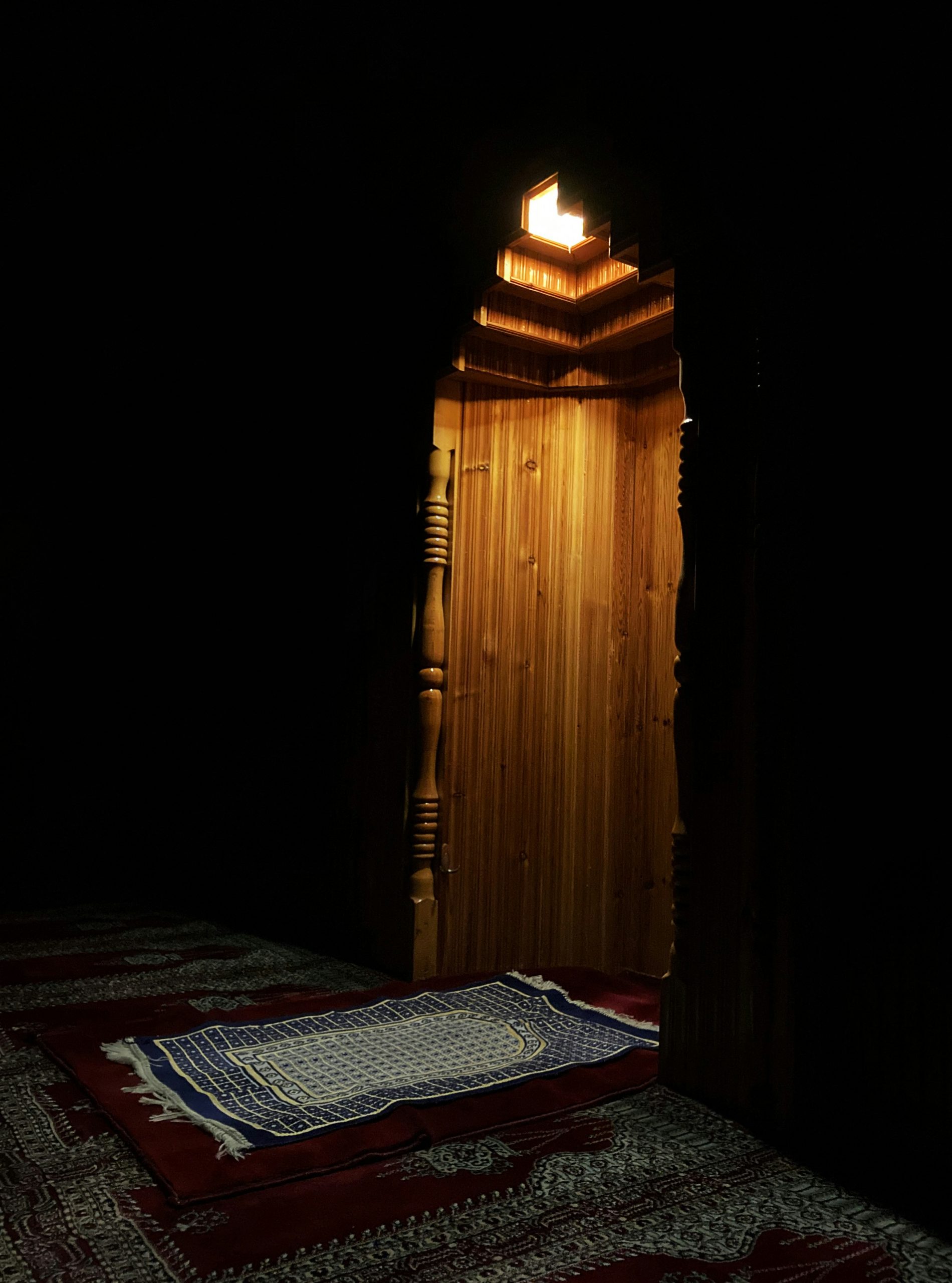
This is the level that Imam al-Ghazali wrote about at length, what he called tazkiyah al-nafs, the purification of the soul. And it is the rarest of the three, because it requires something the other two levels don’t: complete sincerity, with no audience.
The fast of the heart means that your inner world, your intentions, your thoughts, your desires, are also turned toward Allah . Not just your visible actions. It means you’re not fasting to be seen fasting. It means you’re guarding against the subtle sins that nobody else sees: the envy that rises when you see someone else blessed, the arrogance that quietly settles in when you feel your worship is going well, the pride that makes you slow to apologize, the grudges you’ve been carrying so long you’ve forgotten they’re even there.
Allah says:
“Call upon Me; I will respond to you….” [Ghafir 40:60]
That ayah is an open door. The fast of the heart is about walking through it, consistently, privately, sincerely. It’s the du’a you make when nobody’s watching. It’s the Qur’an you read not because it looks good on your story, but because something in you genuinely thirsts for it. It’s the moment you feel envy rising and you choose to make du’a for that person instead of letting bitterness take root.
Allah also describes the people of taqwa in Surah Adh-Dhariyat: 
“And in the hours before dawn, they would seek forgiveness.” [Adh-Dhariyat 51:18)
Not once a year. Not only in Ramadan. In the pre-dawn hours, consistently, as a way of life. That is the fast of the heart. It doesn’t clock out when the month ends.
And in these last ten nights, the fast of the heart is what determines whether Laylatul Qadr truly lands in your life. You can stay awake all ten nights, but if the heart isn’t present, if it’s distracted, hardened, or performing for an audience, the night passes without its full gift. But a heart that has been fasting, purifying, and turning toward Allah
all month? That heart is ready. These nights are made for it.
The Last Ten Nights: Don’t Let Them Pass You By
Aisha  was reported to have said:
“When the last ten nights began, the Prophet would tighten his belt, bring his nights to life, and wake his family.” [Bukhari & Muslim]
Three things. He exerted himself. He prayed through the night. And he woke his family. Not just himself. His family. There is something deeply powerful in that last detail. The Prophet did not keep Laylatul Qadr to himself. He called his household to it. He wanted them to share in it.
Wake your family. Gently shake your spouse. Tap your child on the shoulder. Call your parents if they live nearby. Tell them to get up. Tell them these nights are unlike any other. You may be the reason someone in your home catches Laylatul Qadr. What a gift that would be, both for them and for you.
Pray at night. Even if it’s just two rakʿahs after everyone has gone to sleep, stand before Allah alone, in the quiet, and give Him those moments. The night prayer in these ten nights is one of the greatest acts of worship you can offer. The Prophet said:
“Whoever stands in prayer on Laylatul Qadr out of faith and seeking reward, his previous sins will be forgiven.” [Bukhari & Muslim]
Previous sins. Forgiven. That is what is on offer on these nights. Don’t sleep through it.
Give sadaqah. Give generously. Give consistently. Every single night of the last ten. Because if Laylatul Qadr falls on the night you gave, your sadaqah carries the reward of having been given for over a thousand months. The Prophet also said:
“Sadaqah extinguishes sin as water extinguishes fire.” [Tirmidhi]
You don’t have to give a large amount every night. But give something. Give with intention. Give thinking about the person on the other end who needs it. Let your wealth fast too, by releasing it for the sake of Allah . And if you can, give to causes that serve the ummah in lasting ways; orphans, the poor, communities without access to clean water or Islamic education. Let your sadaqah in these ten nights be a reflection of the heart that has been fasting all month.
Small Habits That Hold It All Together
This is where a lot of us fall short, not because we lack intention, but because we don’t have a practical plan. So let’s be specific, because the transformation Ramadan offers doesn’t happen through grand gestures. It happens through small, consistent habits repeated across thirty days and carried beyond them.

Read Qur’an daily.
Not a full juz if that’s not where you are right now, but something. Even five to ten minutes after Fajr, sitting with a few verses and actually thinking about what they mean. The Prophet said:
“The most beloved deeds to Allah are those that are consistent, even if small.” [Bukhari & Muslim]
Start small, but start, and don’t stop when Ramadan ends.
Make sincere du’a. Not du’a as a checkbox, not a rushed list before you sleep. Actual conversation with Allah . Tell Him what’s worrying you. Tell Him what you want for your children, your marriage, your work, your akhirah. Tell Him where you’re struggling. And in these last ten nights, make this du’a often:
اللَّهُمَّ إِنَّكَ عَفُوٌّ كَرِيمٌ تُحِبُّ الْعَفْوَ فَاعْفُ عَنِّي
“O Allah, You are the Pardoner, You love to pardon, so pardon me.” [Tirmidhi]
The Prophet taught this du’a specifically for Laylatul Qadr. Say it in your sujood. Say it between rakʿahs. Say it in the stillness of the night when the house is quiet, and it’s just you and your Lord. Mean every word.
Show kindness consistently. Smile at someone when you don’t feel like it. Help without being asked or thanked. Give sadaqah that actually costs you something, not just the spare change in your pocket. These acts aren’t just nice things to do. They are the outward expression of an inward purification. When the fast of the heart is working, it shows in how you treat people.
They Were Never Meant to Be Separate
Here is what I find beautiful about these three levels: they’re not a ladder you climb rung by rung, leaving the lower ones behind. They build on each other and reinforce each other simultaneously. The physical fast trains self-discipline. The moral fast nurtures ethical conduct and social responsibility. The spiritual fast strengthens the heart and cultivates a lifelong connection with Allah . All three, working together at once, is what Ramadan was always designed to produce.
The Prophet brought all three together in one hadith:
“When one of you fasts, let him avoid obscene speech and foolishness. If someone argues with him or insults him, let him say: I am fasting, I am fasting.” [Bukhari & Muslim]
Notice how the response to provocation isn’t a theological argument. It’s a reminder to oneself. I am fasting. That reminder carries all three levels at once. The body hasn’t eaten. The tongue won’t lash back. The heart remembers why it’s here. It’s the whole person speaking.
The Question Worth Asking
As the last ten nights move through their days, sit with a genuinely honest question: Am I just not eating, or am I actually fasting?
These nights are a mercy from Allah

“The Night of Decree is better than a thousand months.” [Al-Qadr 97:3]
A thousand months. Over eighty years of worship, in a single night. It is one of the greatest gifts Allah has ever given this ummah. Don’t let it pass while you’re asleep.
May Allah allow us to reach Laylatul Qadr with a body, tongue, and heart that all testify for us. May He accept our fasting in all its levels, forgive us where we fall short, and grant us a portion of these blessed nights that transforms whatever comes after them.
الَّلَّهَُّم تَقََّبَّ ْل مَِّنَّا، وَا ْرزُقْنَا قُلُوبًا َصاِئمَةً عَ ْن كُ ِّل مَا لَا يُرْ ِضي َك
O Allah, accept from us, and grant us hearts that fast from all that does not please You. Ameen.
Related:
– Quranic Contemplations: The Prophet’s Understanding of the Verses of Fasting
– What Fasting Demands From Us | Mufti Taqi Uthmani
Keep supporting MuslimMatters for the sake of Allah
Alhamdulillah, we're at over 850 supporters. Help us get to 900 supporters this month. All it takes is a small gift from a reader like you to keep us going, for just $2 / month.
The Prophet (SAW) has taught us the best of deeds are those that done consistently, even if they are small. Click here to support MuslimMatters with a monthly donation of $2 per month. Set it and collect blessings from Allah (swt) for the khayr you're supporting without thinking about it.




[Podcast] 50k Mahr, Hiding Money, & Who Pays for the Wedding? | AML Finance

What the Makkah Agreement is Missing

Far Away [Part 26] – Shaytan Is A Liar

From a Syrian Prison to the UN: The Case of Bilal Abdul Kareem

The Muslim Book Awards 2026
Far Away [Part 26] – Shaytan Is A Liar
Far Away [Part 25] – To Save A Prince
Far Away [Part 24] – The Whipping

When The Bed Walked Away [Part 2] – Primordial Muck
When The Bed Walked Away [Part 1]

The Best Actions for Eid al-Adha [Imam Dawud Walid]

Coming Full Circle: Who Are You Now? | Night 30 with the Qur’an

Running Away From Who We Are | Night 29 with the Qur’an

Building From the Ground Up: Week 4 Recap | Night 28 with the Qur’an


