
Media
My Reflections on the New York Times Article

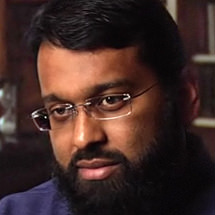 By now, most of our readers have already read and dissected the New York Times Magazine cover story about myself. I’ve been deluged with emails and questions regarding it – here are my thoughts.
Firstly, the story of how this happened. Around a year and a half ago, someone referred my name to Andrea Elliot as a source on conservative movements and Islamic issues in America. She called me up wanting some background information on another story she was doing. Over the course of the next few months, she became more and more intrigued with my own work and with AlMaghrib Institute, and felt that there was a need to write a story on this aspect of American Islam as well. After thinking things through, asking those whom I trust, and praying istikhara, I agreed. My primary motivation was to show the real and human side of our dawah, to emphasize the maturation and acclimatization of Orthodox Muslims into America over the last decade, and to break common stereotypes that existed of conservative Muslims. It was never my intent that I be portrayed as any type of leader (and I truly seek Allah’s refuge from arrogance and conceit).
As Andrea continued to interview me, and attended several AlMaghrib classes (and even IlmSummit), the story continued to grow in size, and her editors decided to make it a cover story for the NYT magazine. Over the course of a year, I believe that she must have interviewed over a hundred hours with me, over the phone and in person. Additionally, she interviewed dozens of our students and many other people in miscellaneous fields. Essentially, the way journalism works is that the reporter then writes a story based on all of those interviews and research. The basic ‘plot’, the set-up, the words and the chronology all come from the reporter – the interviewee has no say or input in any of that. As a side point, this is why every time someone is interviewed, he or she is taking a calculated risk because they must trust the journalist to convey their intent, while realizing that no journalist is obligated to do as the person requests.
Keep supporting MuslimMatters for the sake of Allah
Alhamdulillah, we're at over 850 supporters. Help us get to 900 supporters this month. All it takes is a small gift from a reader like you to keep us going, for just $2 / month.
The Prophet (SAW) has taught us the best of deeds are those that done consistently, even if they are small. Click here to support MuslimMatters with a monthly donation of $2 per month. Set it and collect blessings from Allah (swt) for the khayr you're supporting without thinking about it.
By describing this process, I do not mean to imply that the reporter misrepresented me – every single quote was indeed mine. My point is that had I written the story, I would have emphasized other aspects, taken a different angle, and brought in a lot of nuances and disclaimers that are absent from the story. She was writing for her audience and with her perspective; had I written such a story, I would have written it for my audience and from my perspective.
Overall, I feel that she tried to portray me in a sympathetic light (and from the hundreds of comments and emails that I’ve been getting, I would say that she has successfully done that). Many of you have said that she succeeded in humanizing her subject, and managed to convey many issues and nuances that others would not have been able to. Personally I have to commend Andrea for her extensive research, her grasp of so many different concepts in such a short time-frame, and her trying to make the readers sympathize with the difficulties of being a scholar in America. Another positive point was that she illustrated that conservative Islam is not one monolithic movement, but rather a spectrum of movements.
Yet another positive aspect of the story was that she clearly demonstrated that the root cause of militancy is not theological in nature, but rather political. In other words, the militants are not militants because Islam is an evil religion, but rather because they have strong political grievances with America, and are then using their (mis)understanding of Islam to justify their violence. I believe that this point is immensely important for us to appreciate – we as Muslims overlook the fact that the average American does not understand why militants resort to terrorism, and blames our religion rather than socio-political factors.
And lastly, the story succeeded in showing a very down-to-earth side of me (the ice cream, the Popeye’s, and yes, even my romantic side – but then again, all of you should have known that by now!)
From these angles, I feel the article in the New York Times magazine was a positive one, alhamdulillah.
Of course, any such story will also have its negatives, and there were some serious concerns raised.
Perhaps the biggest disappointment for me was the over-usage of the term ‘Salafi’, which, as everyone around us knows, is a term that I personally, and AlMaghrib Institute officially, does not use. And this is not because we are somehow ‘closet Salafis’ and wish to hide this, but because of the way that the Salafi movement around the world manifests itself. While I might agree with the Salafis on most theological points, the fact of the matter (as the article mentions) is that I have departed from that movement in many issues, most importantly in how it has traditionally viewed and dealt with opposing groups. I do not view myself as being a part of that movement as it exists in the Eastern world, even if I view many of its senior scholars in a positive and respectful light and continue to benefit from them in specific areas. I believe that we in America need to acclimatize the religious aspects of Ahl al-Sunnah within the cultural climate that we find ourselves in, and I go so far as to say that this is what Islam itself intended. All of my classes that I teach reflect this basic sentiment, and I hope that my students can attest to this.
My comment to the Homeland Security representative (viz., ‘I’m a pacifist Salafist’) was intended as a ‘shock-and-awe’ factor to get his attention (and it succeeded in that). I needed to speak with him at his level, and hence employed terminology that he would understand. I would never (and do not) use such terminology otherwise.
Frankly, I don’t like labels – they tend to cause more harm than good. Labels tend to be ‘groupish’ and create monoliths out of vast spectrums. Yet, labels do have some usage, and one does have to explain one’s beliefs and theologies to others, hence the term ‘Orthodox’. The whole point of labeling ourselves ‘Orthodox’ is to show that we maintain the views of the first three generations of Islam on theological issues of tawhid, iman, qadr, and so forth, but are not necessarily affiliated with the methodology and attitudes (and some fiqh) of any other modern groups who share that theology as well. I have argued, and continue to argue, that much of those attitudes are shaped by culture and social context rather than Islam, and that we here in America need to take that orthodox ‘theory’ from the Sacred Texts and apply it to the American reality. I understand that this raises a lot of questions – what to take and what not to take from those whom we call ‘Senior Scholars’. I have written about this subject and continue to do so (expect another article in a few months insha Allah about this topic). My official stance on this remains the same: I do not use this label and disagree with many of its implications. Unfortunately, the article relied too heavily on this label and sometimes used ‘AlMaghrib’ and ‘Salafis’ and ‘ultra-conservatives’ as if they were all the same thing, which is not the case.
Another issue that I felt uncomfortable with was the underlying tone of portraying me as the flip-opposite of (or the antidote to) Anwar al-Awlaki. I don’t view myself as being his polar opposite. I have my message, he has his. I also don’t view myself as being the best solution to militancy – I view that all scholars and du`aat have a major role to play, and I am one amongst all of them. Had I written the story, I can assure you that this angle would not have been present at all.
Of course, I would much rather that such an article concentrate on topics other than jihad. Most of my own work does not deal with jihad, as my online articles and YouTube speeches demonstrate. Nonetheless, this topic is what is of interest to the readers of the NYT and hence became the primary focus. There are more pressing issues facing the Muslims of America as a whole than jihad, and these need greater discussion in the public and private spheres.
One of the major concerns of some readers has been a perception that conservative Muslims are all somehow flirting with terrorism. Islamophobes and some pundits and commentators on the NYT website have pounced on this perception. This perception is simply not true – as conservative Muslims, we are primarily concerned about the same issues that everyone else of faith is concerned about: how to best juggle between our jobs, family, and religious obligations. Terrorism and militancy are definitely important issues, but it is not those issues that cause us to stay awake at night (in my case, its usually being late on an academic assignment that does that!) Yet, the take-away that many pundits and Islamophobes extracted from this article is that ultra-conservative Muslims are all rushing towards the doors of jihad unless someone stops them from getting there. This, despite the fact that Andrea herself mentions that the dozens of AlMaghrib students that she interviewed all condemned the tactics of the militants. There is no doubt that this is a very wrong perception, and I wish that the article did more to combat it. As it stands, many readers unfortunately perceive the article in this manner. (As a side, studies have in fact showed that religiosity is the best antidote to extremism).
It is true that a few of those who have interacted with me have been imprisoned and/or indicted for terrorist-related activities (AbdulMuttalib being the most infamous case). I have taught close to sixteen thousand students over the last six years (and AlMaghrib Institute has taught over twice that number) – if four of them (none of whom was ever close to me) have been imprisoned for illegal activities, that is around 0.02 %. I am sure that all universities around the world have higher percentages of students who have run-ins with the law; we would not hold those universities or its professors responsible for the illegal activities of its students, so how can anyone make such a connection with myself or AlMaghrib?
There are, of course, many other points that can be mentioned (some of which I will continue to write about in the future). Overall, I believe that the article did a good job of showing some of the concerns and tensions that we face as American Muslims. There are some concerns that we will have to deal with, and, as always, we ask Allah to forgive us for any mistakes, to make our affairs easy for us, and to protect us wherever we are. Ameen!
P.S. After I finished writing this article, I got this email from Andrea:
Yasir,
Please let the students know that I would be more than happy to answer questions and hear their commentary, as I do with all readers. They can email me at andrea@nytimes.com
Thanks,
Andrea Elliott
Keep supporting MuslimMatters for the sake of Allah
Alhamdulillah, we're at over 850 supporters. Help us get to 900 supporters this month. All it takes is a small gift from a reader like you to keep us going, for just $2 / month.
The Prophet (SAW) has taught us the best of deeds are those that done consistently, even if they are small. Click here to support MuslimMatters with a monthly donation of $2 per month. Set it and collect blessings from Allah (swt) for the khayr you're supporting without thinking about it.









From The Prophets To Karbala: The Timeless Lessons Of Ashura For Muslims Today

Moonshot [Part 11] – The Fig Factory

Nationalism And Its Kurdish Discontents [Part II of II]: Kurds And Turkiye After Ottoman Rule

Nationalism And Its Kurdish Discontents [Part I of II]: Kurds In An Ottoman Dusk
Moonshot [Part 10] – The Marco Polo
Moonshot [Part 11] – The Fig Factory
Moonshot [Part 10] – The Marco Polo
Moonshot [Part 9] – A Religion For Real Life
Moonshot [Part 8] – The Namer’s House

[Podcast] A Riba-Free Future With A Continuous Charity | Faizan Syed

[Dhul Hijjah Series] Calling Upon the Divine: The Art of Du’a (Part 1)

IOK Ramadan 2025: Four Steps | Sh Zaid Khan
IOK Ramadan 2025: Do Your Best | Sh Zaid Khan
IOK Ramadan 2025: Giving Preference to Others | Sh Zaid Khan

Algebera
March 21, 2011 at 9:03 PM
Aslamu-alaikum:
First name basis, well at least you got somewhere with her. I wil be sure to write her at her e-mail address in sha Allah.
salam
Olivia
March 22, 2011 at 7:38 PM
Algebra, I don’t think your forte, in this case, is Chemistry =)
Algebera
March 22, 2011 at 9:50 PM
Olivia
Aslamu-alaikum:
no pun intended, but i didn’t understand what you meant, no seriously, i did’nt get what you meant?
salam
Olivia
March 22, 2011 at 10:56 PM
I was just making a joke (not at you, but with you (i hoped)). because your name is algebra, and you seem to eluding to some possible chemistry regarding Ms. Elliott (not literal chemistry, but chemistry in the slang =) ). get it? =)
Mehdi Sheikh
March 21, 2011 at 9:47 PM
-removed comment. It’s one thing to provide constructive criticism, quite another to continuously mock. -Amad
sis
March 21, 2011 at 10:05 PM
Assalamu alaikum Shaykh.
I really resented the overuse of the word Salafi and disgusting connection that the author made with your “movement” and the 3-4 students who were terrorists. Like you said, there may be hundreds of criminals attending university…never will the media connect the student actions with the university. Sad that the agenda seems to be that in our “Salafi group” has parts in it that are terrorist. They have successfully made another grouping…part of divide and conquer. Soon people will hold banners saying “Get Out, Go Home, Salafis ETC”.
Thank you for your effrts to try and present a true image of Islam.
MalaiKulfi
March 21, 2011 at 10:06 PM
JazakAllahu khayran for your reflections! This clears up some of the minor issues that I was grappling with in my head thinking why you had asked Andrea to focus on some issues and ignore other pertinent issues. Thanks for clarifying that you had no power on how the article was framed!
But like you mentioned the aritcle in NYC had many many positive points. I shared it with a lot of my muslims friends but I was unsure if I should share it with my close non muslim co-workers at work or not for the points you mentioned above. It would support their false theory that every pracitising muslim is considering and debating taking the “militancy exit” on their highway of life, which is soo not true. Also I too was upset by the over usage of the word “salafis” because now that word will become the next buzz word / bogeyman and joins the ranks of the other taboo buzz words. I’m going to write to Andrea telling her that I’ve been involved in the al maghrib scene for quite a number of years now and it’s been like 4 years since I heard anyone use the “s” word :) MashAllah Al Maghrib to me represents mainstream Islam!
Me
March 21, 2011 at 10:07 PM
Alhumdulilah.
Dawud Israel
March 21, 2011 at 10:15 PM
I think people will use labels to navigate territory they are unfamiliar with…thats just kinda expected. Kudos to Andrea for portraying Muslims in such a detailed, humane manner.
BUT WHAT I WANT TO KNOW MORE ABOUT IS HOW YOU AND YOUR WIFE MET! That was the big surprise for me in the essay- and so sweet to read, “I can’t live without you.”
Can we hear a love story? :D
Shahin Munshi
March 22, 2011 at 1:36 AM
Where is the like button on this comment!!??!! hahahh…. or I will just ask her myself!
Cartoon M
March 22, 2011 at 3:35 PM
make it into a bollywood movie haha
Ilmsummitter
March 21, 2011 at 10:32 PM
JazakAllah Khair for these reflections, so it wasn’t just me who had those concerns about the article. It’s good to see your perspective amidst the disappointment. There’s not much that can be done now so might as well analyze and see what were the positives and negatives to learn for next time, inshaAllah.
Umar
March 21, 2011 at 10:34 PM
Assalamu alaykum,
There were positives which can be taken out of the article and you have mentioned them.
However, the comments on the online nytimes feature were unanimously negative. Not specifically against you but general animosity towards Islam. The article was interesting and insightful from a Muslim perspective, but the comments prove the masses of Americans are much less interested in the internal discussions of the religion and simply want to: a. Bash Islam anonymously. and B. Bash Islam in public.
I may have 20 questions about your usage and understanding of the term salaf/i, but the public are ignorant of the basic tenants and beliefs of Islam (which the article didn’t enlighten us on).
Overall, yes the article is a step in the right direction towards clearing some of the hate and misunderstanding out there, but until the televised media start giving you airtime instead of clowns like Anjum Chowdry and Terry Jones and the public begin to demand more intellectual balanced viewpoints, while it may be a world leader/superpower in some political and economic affairs, America will remain in passive ignorance about the religion of Islam.
Dawud Israel
March 21, 2011 at 10:45 PM
This is an excellent point. Though it was very in-depth in mentioning the confusion of Muslims on politics, it should have been clear in terms of beliefs and tenets of Islam.
So perhaps to the students: when in a journalistic situation, remember to express your iman clearly and vividly.
Umar
March 21, 2011 at 10:48 PM
To summarise: next step television… Not just for you but for Muslims in general who can speak intelligently about Islam.
Btw, for those who don’t know who Anjum Choudry is, well he is to Muslims what Terry Jones is to Christianity. A buffoon chasing a few cheap headlines.
Hello Kitty
March 22, 2011 at 2:29 AM
I am reluctant to put so much emphasis on the NYT online comments section as being representative of America in general. That particular comment board, in addition to many, many others online is often a big meeting place for monkey see monkey do types who feed off each others’ ignorance and bigotry. Frankly, I don’t think the majority of middle America has the time or patience to wade through those kinds of garbage heaps. They represent a microcosm of big losers who live in their parents’ basement because they’re too intellectually stunted to rise higher than the ranks of a McDonald’s janitor. As far as why there are few dissenting voices on those kinds of boards, I don’t believe it’s because a lot of dissenting voices don’t exist, but rather that most people just don’t like wading around in cesspools. There’s no real discussion there, and it’s simply not a place that fosters serious, intelligent conversations among Muslims and non Muslims. Yes, creepy, awful disgusting people abound in this country, but I don’t think they represent a majority. They are just the ones who happen to have nothing better going on than to troll online comment sections.
Yasir Qadhi
March 22, 2011 at 8:55 AM
Salam
Yes, a lot of people don’t understand that comments on any article typically don’t reflect mainstream sentiment. Those who comment always represent a skewed sample of the majority (typically on one of the two extremes, and on websites such as NYT you know which of the two extremes has made it a campaign to comment).
Even here on MM, the ‘silent majority’ simply read the articles and benefit from them. Those who are critical feel more compelled to comment. Hence in the comments section, the critics always have a higher percentage than they actually are in the readership. (BTW this issue of comments not reflecting actual opinion was told to me by a researcher on this issue).
Yasir
Amad
March 22, 2011 at 12:05 PM
I think this is generally factual and well-known that people are more likely to complain than praise… you can go to yahoo articles or really any articles and haterade exceed praise.
ivoryTower
March 22, 2011 at 10:57 PM
Is ‘hatred’ the opposite of ‘praise’?
Is criticism the same as hatred?
Abu Hamzah
March 23, 2011 at 4:28 AM
Why did you shake the hands of the two women?
moeed
March 21, 2011 at 10:35 PM
Sherman Jackson’s Argument instead?
salam
Sh. Yasir, do you think a better and perhaps more cautious (but perhaps not as accurate) argument could have been used in lieu of your contention that offensive jihad is inconceivable today because of the lack of a Muslim state and/or khalifa.
I am reminded of Sherman Jackson’s argument vis a vis the Syed Qutb idea of jahiliyya; as you probably know, Jackson argues that the assumptions undergirding inter-state relations in the modern world have shifted from assumed hostility between mutually antagonistic tribes (the premodern) to one of assumed, contractual peace between nation-states (the modern). For Jackson the notion of offensive military action is out of place in the modern world because the factors influencing that particular decision, as well as the material and intellectual conditions that make offensives explicable, were based on what are now outdated assumptions (inter-tribal hostility). And once those assumptions change, the doctrine must be reformulated. That is his argument in a nutshell.
Now I wonder if that argument might have come off better than to point to the lack of a khalifa to declare an offensive. However, I understand you may not have used this argument because, perhaps, it is not as legally sound as the khalifa argument (which is why I hedged and mentioned above that I am not sure about the accuracy of Jackson’s argument).
I only say this because I think the lack of a khalifa argument begs a very obvious question. And from a PR standpoint, which is I think part of the intention of the article (and I do think PR is a noble cause, but of course not the only cause for American Muslims) the open-endedness of the khalifa argument seems to raise too many questions and, unfortunately, provides more fodder for right-wing lunatics.
Yasir Qadhi
March 22, 2011 at 8:58 AM
I had actually mentioned this in one of my conversations with Andrea.
I am very sympathetic to this argument (and although Dr. Jackson is propagating it, it does not originate from him). We would require a group of international scholars to discuss and debate this issue. I am confident that a majority of scholars would find such an argument compelling.
Yasir
irazisrar
March 22, 2011 at 4:26 PM
It originated from orientalists as mentioned by Said Ramadhan al-Buti in his Fiqh as-Sirah, as a student of international relations, I think it is one of the weakest argument.. The essence of the international system is no different now from the pre-modern, international anarchy (this term must be understood in the discipline of IR theory), is a constant in the international system, and national interests are still the primary guide for states, I love Dr. Jackson’s material, but his piece on Jihad makes him look like an amateur in the field of IR Theory and Security Studies. The terms “offensive” vs. “defensive” are really misnomers and oversimplifications, it doesn’t account for all the creative ways a state may pursue its interests. In fact, we should learn from recent history where preemptive wars can be launched and yet be construed as “defensive.†This fact alone should render this oversimplified understanding null and void.
Moreover, Dr. J places more confidence in the UN than both Annan, Butros Ghali, and other leadership have (how damning is that). Both Annan and Boutros Ghali have remarked on several occasions that the UN is impotent unless the most powerful nation states have an interest in taking a course of action, and that is obviously guided by their own national interest and not a fictional “contractual peace.†All the while Muslims are divorcing the classical concept of jihad not realizing that it’s articulation is not much different from how nation states really function today, only one word characterizes this confounding state of affairs – obsequiousness.
Also, just some advice Sh. Yasir, let not the ends justify the means, I know Muslim scholars are under considerable pressure (which btw should trigger a huge moral-theological dilemma), including pressure to sterilize the notion of jihad, but let us not run to any idea as vacuous as it may be satisfying this demand to talk a certain talk. There is a reason why that idea originated with orientalists.
Olivia
March 21, 2011 at 10:59 PM
siraaj, nice choice of picture there to capture the term “reflecting” LOL
my one major beef with the article was in fact the use (and overuse) of the term Salafi (and then connecting it with Imam Adul Wahab was the icing on the cake). its not that the two aren’t connected, but many of us don’t call ourselves Salafi and for NYT readers, when that was put out there it probably automatically put their guard up. overall though i still thought the impact from the article was a positive one (siraaj and i have our disagreements!). =)
Algebera
March 22, 2011 at 12:12 AM
Aslamu-alaikum:
You GO GIRL,
There is always a Disney Movie that i can label a couple with and when i think of both of you i think Beauty and the Beast…………..for sure Olivia you are the Beauty :) I am only giving you a complement :).
salam
Al-Azhar University Student
March 21, 2011 at 11:06 PM
As Salamu Alaikum wa Rahmatullah,
Dear Shaikh Yasir Qadhi, May Allah protect you and bless you!! You probably do not remember me, I am one of the group of American Students at Al-Azhar you met when you visited Cairo. I just wanted to express to you how much I love you for Allah’s sake! May Allah give you and all of us students the strength and sincerity to serve our cause!
take care,
A brother full of love for you, although you may never know
Yasir Qadhi
March 22, 2011 at 9:00 AM
Jazak Allah khayr akhi, and Ameen to your duaas!
Yasir
Hassan
March 21, 2011 at 11:37 PM
Alhamdulillah, we are now clear that Shaykh Yasir Qadhi (may Allah protect him, increase him in emaan and guide him and all of us to correct path) is not salafi . End of story, I would not defend him in salafi circles that he is one of us.
Now question to Shaykh, I know you do not like labels, but you still ended up with using one, “Orthodox”. Did you not find an existing term that would closely match your ideology? Or you just wanted to disassociate with an existing term?
In this lecture below, you mention basis of unity, do you still believe same?
http://www.youtube.com/watch?v=5ZQOpmtCuPA
Yasir Qadhi
March 22, 2011 at 9:00 AM
Salam
Hassan bhai, sarcasm aside, what specific point in that lecture are you asking me about?
Yasir
Hassan
March 22, 2011 at 10:10 AM
Shaykh, with all due respect, I did not do any sarcasm. I am quite straight forward (if I am addressing you, yes I do sarcasm if not addressing you).
In the lecture repeatedly you mention that there is no unity unless we go back to understanding of salaf. Although you did not use word “salafi”, but you did use salaf a lot, and saying “we who follow path of salaf” (implying salafi?). So I mean do you still believe unity can not be achieved without referring matter back to Quran and Sunnah and salaf? Or you think unity can be achieved with pledge of mutual respect etc?
Yasir Qadhi
March 22, 2011 at 10:35 AM
Salam
This lecture is typical of the younger me – very simplistic in nature, ‘black and white’.
In theory, yes of course we should all return to the first three generations (and I believe that I do return to them in issues of theology). But in many areas this just becomes an empty slogan devoid of any real meaning.
How do you expect me to ‘return to the first three generations’ when it comes to issues that the first three generations never faced? Here, we need ijtihad, and ijtihad means people will differ.
Also, what is ‘unity’? Has the Ummah ever been united since the times of the Four Caliphs (and even in their times, issues happened). If during the first three generations so much political, ethnic and religious strife happened, do we really believe that we have the power and iman to do that which they didn’t?
Therefore, what if we were to try to form different types of alliances (call it ‘unity’ if you wish) for different purposes. When teaching aqidah, I will ‘unite’ with those who can help me teach aqidah, people such as Sh. Waleed Basyouni and Sh. Yaser Birjas (and AlMaghrib Instituted). When lobbying to allow my daughter to wear hijab at school, I will ‘unite’ with anyone who agrees that the school has no right to dictate religious clothing, even if I have to ‘unite’ with atheists and civil libertarians and even right-wingers who would agree with me in this issue. And when it comes to defending many Islamic issues in the public arena and in front of government, I will ‘unite’ with many other Muslim groups, some of whom I wouldn’t unite with if I were teaching aqidah.
Again, let’s start looking in color rather than black-and-white. Let’s start thinking critically rather than lobbying each other with slogans that really carry very little practical meaning.
Yasir
Hassan
March 22, 2011 at 10:56 AM
Well said, jazak-Allah khyran. I hope to implement the same approach as personal level. I hope you do not get offended if I say that I may not agree with you 100% on many issues. But I would continue to attend al-maghrib classes to benefit in areas where I can, I would even go to sufi shaykh if I find him expert in something (like for example hanafi fiqh). We all go to universities here and get benefited from atheist or christian teaching us sciences, so why not muslims if they are expert at some thing.
Wassalam.
Student Of Knowledge
March 22, 2011 at 8:39 PM
Sh Qadhi, what was it that you was hoping to achieve with that ‘unity pact’ with the people of innovation such as the sufis and ash’aris? Was it to allow your daughter to wear the hijab at school?
Why was there a need to have this “unity pact” with these innovators and state in it that you accept their deviations to be from Ahlussunnah and that you will not criticize them? I don’t mean criticize their ideas but criticize them as deviant individuals.
What about the hadith (لعن الله من آوى Ù…Øدثا) ?
Muslim
March 21, 2011 at 11:38 PM
Asalamu Alaykum Shaykh Yasir,
JazakAllah Khair for addressing my questions and the many other questions posted on MM.
Ahmed
March 22, 2011 at 1:18 AM
Salam,
I don’t see any problem with the labels, such as ‘salafi’, ‘sufi’, ‘ashari’, etc. the real problem is that some of us identify themselves with these labels, and therefore, stand apart from other muslims beacuse of this label which makes them seperate. All of these labels are labels and they point to something. Their conetnts are the same – Islam. So instead of getting lost in arguing about who is who let us benefit and learn from them all in order to get closer to Allah swt. Some of us seem to woprship the labels and forget that all of these labels point to Allah swt. As the Americans are fond of saying, we should keep our eyes on th ball – I am almost sure that some are saying ‘look he is equating Allah swt with a ball’. In my opinion, the diferences between the groups is like this.
And Allah knows best.
Ahmed
abu Rumay-s.a.
March 22, 2011 at 2:13 AM
Warmest Salaams/Greetings:
After having read the article, I think almost all people of conscience acknowledge/appreciate your dedication and sincerity in educating people about Islam and Orthodoxy which I believe naturally secures the youth from extremism/radicalism. In these times of mass ignorance and confusion, I consider you to be one leaders in expressing the intended message of Islaam, and Allah ta`ala alone truly knows the hearts, may Allah ta`ala continue to bless your sincere efforts in educating the people about Islaam. Ameen.
I would also like to thank Andrea (& NYT) for undertaking that difficult task of trying to publish a representative story. At the same time, I’m a bit surprised that even though some experts from Princeton were used as references, it kinda of missed the point about the various elements of “salafism” and easily associated orthodox Muslims to such groups.
On a more personal note, although I am just a layman, I was smiling throughout many parts of the article because I’ve had similar life experiences and have gone through some of those transformations/difficulties myself, especially the issues about the “wife” and “the dad”. For a good laugh, pls chk out a similiar type of article from our local newspaper in Florida that was conducted almost 10 years ago regarding Muslim’s choice. Please excuse some the “enthusiasm” in some of my comments as a “newborn” Muslim back in thd dayzzz.. :)
It starts at “A Spirtual Thirst”
http://articles.sun-sentinel.com/2001-11-17/lifestyle/0111160542_1_american-islamic-relations-islamic-teachings-auto-insurance/3
Tamim
Amad
March 22, 2011 at 12:08 PM
Interesting link… thx for sharing bro
abu Rumay-s.a.
March 22, 2011 at 3:07 PM
one further point i’d like to relate which I think was somewhat drawn from the article is the personal development a “wise”person should go through and adaption and redefining perspectives in light of one’s circumstances without comprising core tenants. I think this general principle of development applies for all “thinking” people, whether they are layman, scholars, students, politicians, leaders, etc..
i was really dismayed to see some of the people’s comments lacking basic adab with an elder, a brother, a teacher, and a leader (irrespective of whether they agree with him or not) and at the same time claiming to offer “sincere advice”.
I wonder what would these same people say to the likes of Imam Shafi, Imam Malik, Imam Abu Hanifa (may Allah have mercy on them all) if they had seen the developments that they went through due to experience, living in different lands and circumstances…would they also be considered “sellouts” due to their revision of some fiqhi issues?
Student Of Knowledge
March 22, 2011 at 8:27 PM
Brother abu Rumay-s.a.
The scholars you mentioned did not go through “developments” due ot living in different lands or circumstances. Imam Shafi’i did not change some of his opinions because he moved from one place to another but rather because of proof.
Additionally, some of the things that Sh Qadhi has changed his opinion about are not all fiqhi issues. Go back 10 years and Sh Qadhi used to say that voting/democracy is kufr. To compare such dramatic changes in the Sheikh’s views to those of the 4 imams is not doing the issue justice.
abu Rumay-s.a.
March 23, 2011 at 1:57 AM
I was not specifically referring to Imam Shafi, I said the “likes” and developments it includes knowledge. And there is most likely validity to what you mention about Imam Shafi’s opinions changing because of proofs.
Imam Ahmad bin Hanbal, was asked, “What’s your opinion about the books of al-Shafi’i, are the books with the Iraqis more beloved to you or the books with the Egyptians?†He replied, “Read the books that he composed in Egypt, for he composed his books in Iraq without precision then he went to Egypt and wrote his books with precision†(al-Bayhaqi, Manaqib al-Imam al-Shafi’i, 1/263)
Dear brother, I believe you are not doing justice to your brother (Shk. Yasir) who deserves your respect, sincerity, love, and attention, even if you do not agree with him in certain issues. Let not Shaytan deceive us in these issues losing the bigger picture of brotherhood and helping one another in truth and in patience..
And Allah knows best..
Zamzam Bayan
March 22, 2011 at 2:19 AM
Regardless of how others will interpret our opinions, we must keep on presenting and propagating the invitation to Islam and being sincere in doing so. However, we should be open-minded about others reaction to our invitation and keep on emphasizing the fact that Islam is the religion of peace, and tolerance.
Absatou
March 22, 2011 at 3:30 AM
Asalamu Aleikoum Wa Rahmatolah wa Barakatoho Sheikh, rothers and Sisters,
I am just now reading the article.
Although I would not like to sound patronizing, because I am a mere student, I leave a piece of advice I hope will be received as it should be.
Yes Islam is a religion of peace, yes we want to give da’wah. But we must be careful not to unintentionally give opportunities to others to pit us against each other.
The use of labels bothers me and I think, since the journalist was so meticulous in her research, you should have insisted more not to use them.
What matters most in the end is how others will see us. Muslims don’t need the NYT or any secular media to know who we are or unite us, Al Maghrib is doing a good job doing that. the portait is for them to reassure themselves that some Muslims are against against others even if it is not the case.
Jihad is a reality of Islam we must stop running away from. Rather than demonizing those who talk about it, assimilating them to extremists, we should better ourself in political science so that we can defend all legitimate faces of Islam.
Once again, let’s be careful, please.
Osman
March 22, 2011 at 7:01 AM
Spot on, alhamdulillah.
Mrs Seeme Hasan
March 22, 2011 at 6:25 AM
I am so glad about the Salafi comment from you thanks.You are trying and that is obvious.You are very bold and since I do similar things I understand.
In the end I think the article makes the point,muslims need to freely debate between themselves and settle their issues.Here in USA thanks to the New Cons,Frank Gafney and all his people we Muslims cant say a word,cause they will hang us.
Our son ran for a Statewide election and was going to win hands down at the Republican Convention.Then the new cons made a huge fuss with words like Taqiya and Sharia.No one understood but promised delegates backed off.
Good news is that 20% people still stood by our son.
Bad news he did not win a place on the ballot.
Anyway thanks for your hard work,all of us are making a difference in our own way.
I work hard in DC and you are working hard with the young people.
No explanations needed cause we know the press and media have to make things juicy.
Good Luck.Inshallah we will win,believe me some of the work we are doing in DC,we are already there.You will see changes at the government level.
Thanks.
Mrs Seeme Hasan
Co founder and Chairman Muslims for America and Hasan Family Foundation.
Amad
March 22, 2011 at 3:35 PM
I heard about the situation. The RepubliCONs are one tough party for Muslims to really integrate in. Their platform has been hijacked by Islamophobes and they are basically going to keep using this fear-mongering technique all through future elections.
Democrats are more inclusive even though they have their own problem.
Good luck to your son in the future.
Zeemar
March 22, 2011 at 7:22 AM
I don’t really read NYT magazine. So, does anyone know where I can get one in VA?
Usama
March 22, 2011 at 7:47 AM
As Salamu Alaikum,
It’s on their website brother: http://www.nytimes.com/2011/03/20/magazine/mag-20Salafis-t.html?_r=1&scp=1&sq=yasir%20qadhi&st=cse
Usama
Zeemar
March 22, 2011 at 9:27 AM
JZK.
Pingback: Libya and Jihad - Religion & Public Life With Mark Silk
asra
March 22, 2011 at 8:11 AM
jazakallahu khairan may ALLAH swt bestow hiz blessings on ua pious effortz.ameen
asra
March 22, 2011 at 9:35 AM
asalamualykum yasir sir kindly sugest me some god fearing tenets
Nick McConnell
March 22, 2011 at 9:39 AM
Yasir: Of course I’m not a Muslim, and although I, too, don’t like labels, yet when pushed, I usually say I’m a Humanist or a scientific humanist. I found the referenced NYT article interesting and followed its links to your website, where I’ve been reading for the past many hours.
What I find stunning is this: you are obviously an intelligent person and very competent at conveying your ideas, but what astounding errors you have made! Yet, what you are displaying (and living!) certainly isn’t unique. I have given several examples at my website in a chapter entitled “Reason vs. Reality”, here I’ll just mention two examples.
1. It can be argued that Aristotle was the most brilliant person who ever lived, but surely we can at least agree that he was brilliant. Yet, if you’ll read his (logical) argument “justifying” slavery, surely you’ll also agree that his conclusion was totally wrong.
2. Many people argue that Augustine was brilliant; I would at least agree (and expect that you, too, would agree) that he had an enormous influence on a huge number of people. But again, if you’ll read his (logical) argument “justifying” slavery, surely you’ll also agree that his conclusion was totally wrong.
For both, their arguments were logically sound (although Aristotle’s argument by analogy weakened his argument); their errors were in their premises. I find your arguments to be similarly logically sound (as are most arguments I’ve read by various Muslims “scholars”), but your (and their) conclusions are astoundingly weak, again because of premises.
In particular, your basic premise (similar to Aristotle’s and Augustine’s) is that a creator god exists. Do you know nothing about the past few hundred years of scientific advances? The idea that some god created the universe and people has been totally debunked: the universe almost certainly was initiated by a symmetry-breaking quantum-like fluctuation in a total void, and after the Big Bang, the formation of elementary particles, stars, etc., auto-catalytic chemical reactions led to life, which eventually evolved to humans. If you will study science, you’ll realize that your premises should be abandoned, and with your brilliant mind, I hope you’ll then join us Humanists in trying to reduce violence and bring more peace and prosperity to all humans.
Shukri
March 22, 2011 at 11:46 AM
Everything that moves has to have a cause. What caused the movement that created the universe? God is the only rational answer.
I come to that conclusion not because of the above facts about movement. But rather because we have human messengers who have informed us of the reality of creation and this reality does not contradict science or reason. I would argue that this is the reason why the majority of the world’s human beings are believers in God. You can see why if you study the biography of the Prophet Muhammad. I would encourage you to start here:
http://www.kalamullah.com/muhammad-audio-book.html
Nick McConnell
March 22, 2011 at 1:58 PM
Good heavens, Shukri, do you know nothing about modern science? If “everything that moves has to have a cause”, then why, as a single example, does radioactivity occur? Thus, why does gamma radiation, for example, come shooting out of the radioactivity released by the Japanese reactors?
As for your “what caused the movement that created the universe”, the only thing that’s required is conservation of momentum, as when a bubble bursts: so long as the total momentum is always the same as at the beginning (i.e., zero), then no other “cause” is needed. And as for your “God is the only rational answer”, not only is God no answer, it’s a non-answer, since then you’re left with the question: what caused God?
You say that you came to your conclusion because of “human messengers”. Well, you now have new human messengers: they’re called scientists. I strongly recommend that you start listening to them. Meanwhile, the “majority of the world’s human beings are believers in God” simply because they’ve been ill informed and are uneducated.
And thanks anyway, but I’ve already spent substantial time studying your literature, e.g., see here. I find it to be unreliable hearsay.
Anum
March 22, 2011 at 2:05 PM
Nothing? That’s why He is God…if something caused God, then He too is limited? The essence of beginning and end is limited to those who are created, it is not a concept that has to be applied to each and everything. God has no beginning or end…
As for your link, that isn’t the Qur’an? Read the Qur’an and let me know if you find any contradictions.
Nick McConnell
March 23, 2011 at 4:56 AM
Well, Anum, as you can see below, the moderator (Amad?) finally permitted me to respond to your comment. I’ll repeat it here:
No, Anum, it wasn’t “nothing” that caused God. Instead, science suggests that “nothing” is what caused the universe (e.g., see the reference I already provided, especially here and see the video by physicist Lawrence Krauss entitled “A Universe from Nothing”). What obviously “caused God” was unconstrained imaginations of primitive people.
As for the link that I provided, if you’ll spend more than 30 seconds exploring the link (e.g. see the Contents in Part 3x and Part 5), then you’ll find seven chapters devoted to the Qur’an, i.e., my responses to having carefully read the Qur’an (and additional Islamic literature).
Siraaj
March 22, 2011 at 5:31 PM
Nick, you’re right, scientists are at the end preaching religion a religion based on observed phenomena.
Could you tell me which scientist’s version of the truth I should be on? I’m having difficulty understanding why the ones you believe in are different from the ones others believe. I’m also having trouble dealing with scientists who contradictorily believe in a God as Deists, and then those who are full-blown Muslims, Christians, Jews, etc.
Thanks again.
Siraaj
Nick McConnell
March 22, 2011 at 6:31 PM
Well, Siraaj, obviously there’s no point in my responding to you until I see that the site’s heavy-handed “moderator” permits the posting of my responses to Anum and Amad (who seems to be that “heavy-handed moderator”). I rather object to Yasir’s invitation for “dialogue” without being allotted an opportunity to respond!
Nick McConnell
March 23, 2011 at 6:26 AM
Siraaj, now that the moderator has permitted me to respond to Anum, I’ll try to respond to your comment.
I would generally agree with your first sentence that, “scientists are at the end preaching religion, a religion based on observations”, provided that by ‘preach’ you mean something similar to “attempt to instruct” and by ‘religion’ you mean something similar to “concepts deemed to be worth careful consideration”.
Your next sentence, however, in which you refer to a “scientist’s view of the truth”, possibly contains an inappropriate concept. Realize that scientists deal only with open systems (e.g., reality) and therefore never claim knowledge of “the truth”; only with the probability that some hypothesis is true. They realize that determining “truth” is possible only in closed systems (such as games, pure mathematics, and all religions).
As examples, by referring to appropriate “rule books”, you can confirm that it’s “true” that, in the closed system called ‘baseball’, “three strikes and you’re out”, in pure (or propositional) mathematics that 1 + 1 = 2, and in Islam, for example, that Gabriel exists, but in reality, we can estimate only the probability of the truth that, as examples, momentum is conserved in isolated systems, Maxwell’s and Shroedinger’s equations are valid, mass-energy is always conserved, etc. I provide a more complete description of the point that I’m trying to make in a chapter entitled “Truth and Knowledge”.
Therefore, when you ask “Could you tell me which scientist’s version of the truth I should be on?”, my response is to recommend that you give greatest attention to the hypotheses for which experimental tests (and application of Bayes’ method of estimating probabilities based on evidence) have provided the highest values for the probabilities that they are true.
As examples (although I’ll use the following numbers only for illustrative purposes, without checking the literature to make accurate estimates), the probability that the hypothesis that momentum is conserved in isolated systems in correct is (probably) at least within 1 part in 10^10, the probability that Maxwell’s equations are true is (probably) similar, I wouldn’t be surprised if the probability that Shroedinger’s equation is true were only about a part in 10^6 (but don’t quote me on that!), and so on. In contrast, the probability that the hypothesis (or, better, the speculation) that the universe was created by a symmetry-breaking quantum-like fluctuation in a total void is not very large at all: my rough guess is that it’s between about 10% to 90%. Meanwhile, though, as I estimate elsewhere, the probability that the universe was created by some “creator god” is surely less than 1 part in 10^1,000.
You then state (seemingly sarcastically) that, “I’m having difficulty understanding why the ones you believe in are different from the ones others believe.” Unfortunately, though, your statement reveals another misunderstanding. In science, we don’t “believe” in “the truth” of anything; instead, we estimate probabilities that some claim is true. So, again, to resolve your identified “difficulty”, examine the experimental evidence and the associated mathematics that have led to the estimate of the probability that some specific claim is true.
Finally, you state (with seemingly more obvious sarcasm): “I’m also having trouble dealing with scientists who contradictorily believe in a God as Deists and then those who are full-blown Muslims, Christians, Jews, etc.” In response, I’d say that your “trouble” will almost certainly be reduced if you realize that people are “complicated critters”.
In particular, individual scientists can be rigorously scientific in their scientific disciplines (e.g., studying astrophysics, deciphering the human genome, investigating evolutionary biology, whatever) but then be completely unscientific (e.g., basing “beliefs” on wishful thinking, rather than on evidence) in other aspects of their lives. So, just as you should pay no attention to the health claims about a particular breakfast cereal made by some sports “hero”, you should pay no attention to a scientist when he or she is discussing matters without providing estimates of relevant probabilities.
Thus, as examples, if an astrophysicist such as Lawrence Krauss provides you with an estimate for the mass of the universe, I’d recommend that you listen carefully to how he infers his estimate based on available data. On the other hand, if a solid-state physicist provides you with his estimate for how many angels can dance on the head of a pin, I’d recommend that you be extremely skeptical of both his claims and his premises. In general, any scientist who claims knowledge of anything “supernatural” is being horribly unscientific (since no evidence support any such claim) and his or her associated comments should be completely ignored — save to provide some pity and understanding to him or her for being another flawed human.
Saad
March 26, 2011 at 3:15 AM
Peace Nick,
As a physicist myself at Cornell (yes, we produced both Hans Bethe and Feynman), I find that your arguments lack merit.
Before the development of QM, most physicists were atleast deists. That is because pre-QM physics was heavily built on two main paradigms namely those of determinism and causality. After QM, only causality has remained. Incidentally, these physicists believed that God did not interfere with the universe because everything was pre-determined. Nowadays, they don’t know how to account for a non-determinist, causal universe.
The funny thing abt having a causal universe is that it necessarily implies some element of noncausality. Either there is some noncausal interference, read the universe pops out of nothing, or the universe has to exist forever. It really is that simple. Btw, noncausal means outside of the boundary of time and space.
Either way, you run into a problem of infinites. Either the universe exists for inifinite or you have a creator who is infinite, etc. Your choice.
Asiah
March 22, 2011 at 12:27 PM
I feel you should spend more time investigating Islam’s idea of creation. Please don’t assume we subscribe to the same theory of Christian creation. Islam has a long tradition of recognizing “science” starting with the Qur’an. However science explains the “how” and not the “why.”
Nick McConnell
March 22, 2011 at 2:20 PM
Asiah, I suggest that you would do better to rely less on what you “feel” and more on what you investigate yourself. For example, if you had investigated the matter through the links I provided, you’d have found that I have investigated “Islam’s idea of creation” — and found it to be as silly as the Christian and Jewish versions, all of which rely on wild speculations by Zoroastrian priests about 2500 years ago, when scientific knowledge was essentially zero.
As for Islam “having a long tradition of recognizing “science” starting with the Qur’an”, that seems to have been correct for the first 400-or-so years of Islam (although, of course the science, then, was extremely crude). Currently, though, Muslims obviously don’t “recognize science”, since they’re still Muslims.
As for your (familiar) claim that “science explains the ‘how’ and not the why’,” I recommend that you, too, study some science. There is no evidence that nature evolves subject to any other “why” than simply, “that’s how it operates.” Of course it obviously makes people such as yourself “feel” good to think that some friendly fellow is in charge, but all evidence points to the conclusion that such is just wishful thinking, i.e., ‘belief’, which (consistently) means “wish to be.”
Amad
March 22, 2011 at 3:29 PM
Excuse me Nick, but what does this have to do with the topic of “Yasir’s reflections on the NYT article”.
I am sure there will be an article some time where you can discuss reasons why your creator doesn’t exist. Until then, pls desist.
Whatup
March 22, 2011 at 3:48 PM
well…he was replying to Asiah.
Nick’s initial comment was directed to Br. Yasir, so let br. yasir respond if he feels the need to.
I don’t get why you always have to show your authority, just because you are a moderator on this site.
Maybe you should take a break from continuously hitting F5 and replying to every single comment.
[/rant]
Amad
March 22, 2011 at 4:05 PM
[f5] Nick’s first comment was also not appropriate for this post as it doesn’t relate to the topic [/f5]
Nick McConnell
March 22, 2011 at 4:13 PM
Amad, I’d be glad to “desist”. My original comment was directed to Yasir (look at the top of this “thread”). These other people (Asiah, Anum, Shukri) apparently decided to respond for him. Subsequently, I’ve just responded to them. Apparently, however, some “moderator” has not allowed my response to Anum, which I’ll repost here:
“No, Anum, it wasn’t “nothing” that caused God. Instead, science suggests that “nothing” is what caused the universe (e.g., see the reference I already provided, especially here and see the video by physicist Lawrence Krauss entitled “A Universe from Nothing”). What obviously “caused God” was unconstrained imaginations of primitive people.
“As for the link that I provided, if you’ll spend more than 30 seconds exploring the link (e.g. see the Contents in Part 3x and Part 5), then you’ll find seven chapters devoted to the Qur’an, i.e., my responses to having carefully read the Qur’an (and additional Islamic literature).”
But again, Amad, I’d be glad to desist, but as is no doubt also obvious, I’ll attempt to respond to comments directed against me.
Brother
March 22, 2011 at 7:28 PM
If you fill the universe with a bunch of monkeys randomly typing on a computer, what is the chance that at least one of them will write a Shakespeare book given they all had a billion years to do it.
Nick McConnell
March 23, 2011 at 4:43 AM
In response, Brother, since I have other things to do and since the accuracy of the answer isn’t significant, let me introduce simplifying assumptions and approximations as I go along.
To start, I’ll assume that time isn’t significant and I’ll suppose that you’d be satisfied if I addressed the question: Given enough time, what’s the chance that a monkey could type one of Shakespeare’s plays? Also, since I don’t want to bother to count the actual number of words and letters in one of Shakespeare’s plays, suppose the question were: Given enough time, what’s the chance that a monkey could reproduce a given string of a million letters (including spaces and punctuation marks)?
For simplicity, I’ll assume that, at each hit on the keyboard, the monkey could choose from 30 letters (and spaces, punctuation marks, etc.). Then the probability that the first hit would be correct is 1/30. Then, continuing the process one million times, with each hit assumed to be independent from the previous hit, it would seem that the probability that all million hits would be correct is (1/30)x(1/30)x…(1/30), a total of a million times, i.e., the probability would be (1/30)^1,000,000 or 1 chance in 30^1,000,000.
By the way, that answer is roughly the same as the crude answer for the probability that a creator god could have popped into existence, as I outline here.
Siraaj
March 23, 2011 at 4:56 AM
Nick, agreed that a god popping into existence is nonsensical, we believe He always existed and as probability tends infinitely to zero, Shakespearean monkeys are a statistical impossibility, thanks.
Siraaj
Omar
March 23, 2011 at 8:29 AM
Nick, what is a stranger belief actually, is the idea that the universe with all its wonder and intricately connected systems, most of which are upon a delicate balance, that life itself, that your own mind, your life, your body, and all the wonder around you, are nothing but the product of mindless, blind, unconscious, purposeless forces with no real goal.
Really, it is clear. The evidence is all around you, and within your own self. Don’t be among those who take it for granted and look straight past it.
Hijacking the scientific method and claiming that one must become an atheist to be in line with science is, ironically, quite an unscientific claim. Most of the greatest scientists in history, and many today, were/are believers, many of whom especially religious. And among those who are not believers in God, only a minority make your claim that belief is unscientific.
peace
Nick McConnell
March 23, 2011 at 9:22 AM
With respect to your first paragraph, Omar, I wouldn’t use the word ‘belief’, but I certainly would agree that evolution of the universe and life is amazing, even awe inspiring. Further, I neither “take it for granted” nor “look straight past it”; I try to understand it.
But I certainly disagree with your final paragraph. For one, I don’t “hijack” the scientific method. Also, I don’t claim that one must become an atheist to be “in line with science”. My point in my response to Siraaj (see above) was that people are “complicated critters”: a person can do responsible science and yet, in some other activity, can behave (and believe) very unscientifically.
By the way, an atheist is one who estimates the probability that any particular god exists is less than 50%; a theist is one who estimates the probability to be greater than 50%; an agnostic says its 50% (i.e., an agnostic assumes no knowledge and, as in flipping a fair coin, therefore assumes the probability is exactly 50%). Therefore, both an atheist and an theist can consider their estimates to be scientific (I don’t think the same can be said of the agnostic), but then, what’s needed to be examined is the evidence that allegedly supports a particular claim.
Your claim that “most of the greatest scientists in history, and many today, were/are believers” needs further scrutiny. That such was so in the past (e.g., Newton, Maxwell, Plank) is understandable, in large part because of childhood indoctrination and because understanding how the universe came into existence was so crude. Yet, even then, many great scientists weren’t “believers” (e.g., Democritus, Darwin, Einstein…).
As for now, if I recall the data correctly, only 7% of current members of the U.S. National Academy of Sciences are “believers” — and I admit that I find it extremely regrettable that those remaining 7% are permitted to continue as members, since the Academy was created to advise the U.S. government on scientific issues of importance to the public, and by admitting to belief in god, those 7% are demonstrating that they form opinions without basing their opinions on evidence.
As for your final sentence, “among those who are not believers in God, only a minority make your claim that belief is unscientific”, not only do I know of no data that support your claim, but also, I find that your claim is in direct conflict with data I’ve collected.
Muddassir
March 23, 2011 at 3:40 AM
Lol May Allah(swt) guide you from the nonsense which is difficult for most human beings to understand to the sense of Islam which even an illiterate can understand.
Nick McConnell
March 23, 2011 at 6:54 AM
Muddassir, if you don’t understand something, it’s defensible for you to say that it makes “no sense”, but it’s not defensible to say that it’s “nonsense”: the first statement may be more a reflection of your own sense. In particular, I’d caution you against underestimating the intelligence of anyone who is illiterate: just because people haven’t been taught how to read doesn’t mean that they don’t display amazing “common sense”.
For example (and in response to Siraaj’s latest comment, which doesn’t provide a “Reply” button), someone with common sense would probably say, “Well, if you’re going to assume that your creator god always existed, then why not, instead, assume that the universe always existed. Then, you have no need of your assumption that some god created the universe.”
Omar
March 23, 2011 at 8:31 AM
Quite simply Nick, God is One who designs with a purpose and great power, the universe (as you define it) is unconscious with no purpose. Yet everything around us clearly has a purpose. God and the universe are very different, unless of course you are pantheist or monist of some sort.
Nick McConnell
March 23, 2011 at 9:32 AM
Omar, think! For example, what’s the purpose of a rock? You make claims (God designs, has a purpose, has great power…) but provide nothing to support your claims (except the unsubstantiated claims of others). You say that “God and the universe are very different”; why should anyone accept what you say and not accept the opposite, stated by such brilliant people as Heraclitus, Pindar, Spinoza, Santayana, Einstein… — or figure it out for themselves!
Muddassir
March 23, 2011 at 8:50 AM
You said “Do you know nothing about the past few hundred years of scientific advances? “. Islam is a religion which can be understood even by the first man and also by the last man, and not by a select few who are witness to what is happening in the past few hundred years.
Nick McConnell
March 23, 2011 at 9:37 AM
Muddassir: Your statement is made with the bravado of a zealot. I don’t enjoy interacting with such people, especially when they demonstrate that they don’t understand what ‘understanding’ means.
Umar
March 23, 2011 at 10:19 AM
Nick said: “Well, if you’re going to assume that your creator god always existed, then why not, instead, assume that the universe always existed. Then, you have no need of your assumption that some god created the universe.â€
If the universe was eternal (always existed), then it would take an infinite amount of time to get to where we are now, and so we would never actually get here. If you keep going back in time forever, you would never reach the end, according to that viewpoint. Therefore, if you go back forever and then try to come forward in time forever, you would never actually reach the point in time we are now. But we are at this point!
Therefore the universe had a beginning. According to you, some quantum events may have taken place and bubble theory etc, but if nothing was there to begin with. I mean nothing, no matter, or no antimatter whatever, then nothing would come out of it. If something was there to begin with, that something would have been there for an “infinite” amount of time, and if it this is the case:
a. it would never get to where we are now, because an infinite amount of time exists between then and now like I explained above
b. how would that something get there in the first place
c. what would cause that state to spontaneously change with absolutely no intervention. You cite the nuclear reactors in Japan, exploding despite no overall momentum to begin with, but if you look at it more deeply, this change in state is caused by uncontrolled nuclear fission, due to the non functioning of the control rod. i.e. sub atomic particles interacting in a certain way. And even these were heated under extremely high temperatures, in the presence of certain elements: cause and effect!
I ask you, why do you assume the universe always existed, just as you assume that God didn’t create the universe? Did it create itself? Then what gave it the ability to create something from nothing?
In conclusion, it seems to me that you have placed yourself in a self-defeating position, because to claim something comes from nothing and that causality is not true at the quantum level would be tantamount to saying that your post was not written by you, rather it spontaneously appeared into existence without any cause, and came into being from nothing!
But we all know out of nothing, nothing comes. This is why you seem to have contradicted yourself by saying it was all possible because of “symmetry-breaking quantum-like fluctuation.” Then I would like to kindly ask you, where did a “symmetry-breaking quantum-like fluctuation” come from? If you respond “from nothingâ€, well, I would kindly like to reply, “so did your post. It came from nothing. Perhaps there is no Nick on the other side .that is the logic you are trying to preach!! Please re-evaluate your stance.
Sorry guys for responding going off topic by responding to Nick. I was actually much more interested in Sh. Yasir Qadhi’s posts, and responses to questions (getting emails for each post), and reading them with silent interest. Lol ha, exactly like he said above: “from the silent majority.”….but the illogical statement of Nick provoked me to answer back.
Salam
Bilal
March 22, 2011 at 10:43 AM
Yasir,
As far as I know, no one threatened to kill you in London for shaking hands with Mona. Dont you think that is misrepresentation? The question goes to Andrea as well.
And could you please also explain how is questioning the holocaust, “anti-semitism”?
Amad
March 22, 2011 at 12:03 PM
Mashallah Bilal, you must be either all-knowing or have access to all of YQ’s correspondence/ communication. Are you like his qareen? Really logically speaking, can you please tell us how your not knowing means that YQ must be lying? Honestly, sometimes comments like yours boggles my mind.
As a friend of Yasir, I know exactly who gave the threat and around what time. But to be honest, that’s really none of your business. Believe what you want to believe.
Yasir Qadhi
March 22, 2011 at 12:11 PM
Amad,
There goes your sarcasm again!
The guy’s just asking a question….maybe a bit too harsh but it can be responded to nice and easy.
Bilal,
Yes I did get a death threat, and a number of brothers know this for a fact because I consulted them on what to do about it and showed them the email. The guy who did it also set up a blog that he later took down on which he threatened to hurt me because I was a munafiq for having shook her hand. Quite a few people read that blog.
Yasir
Asker
March 22, 2011 at 8:09 PM
Bismillah, As Salaamu aleykum sh Yasir
Please forgive me if this question annoys you- what was the story behind the hand shake? What was the reason?
I am definitely not attacking you – rather I’m from the (majority) who wants the best for you & the ummah inshallah :)
Barakallahu feekum
Osman
March 23, 2011 at 6:41 AM
Amad
brother Bilal was not right to say the above for he doesnt know what happened. But let YQ reply, stop being his chamca.
Amad
March 23, 2011 at 7:32 AM
Bilal didn’t ask a question, he went straight into attack mode… “Dont you think its a misrepresentation”. This implied an assumption of a lie, it’s clear. Had he asked a question, that would be no problem. Many others have asked questions here, even uncomfortable ones, and they haven’t received a response, from me or others.
As a student and friend of Yasir, and his brother in Islam, I am fully comfortable in defending his honor or character. You should too.
Muddassir
March 23, 2011 at 8:43 AM
“Anyone who criticizes you, cares about your friendship. Anyone who makes light of your faults cares nothing about you.” – Ibn Hazm
Humble Muslim
March 22, 2011 at 12:22 PM
Salam
Looks like instead of ‘make 70 excuses for your brother’, you are trying to make at least one lie for him.
Secondly, there would be NO holocaust denial it it was not for anti semitism.
asra
March 22, 2011 at 10:49 AM
salamunalykum ESTEEMED SHEIKH YASIR SIR,dont u feel need to suggest me any tenets regarding fear ov ALMIGHTY ALLAH swt me being a gud muslima wana b a mumina so do favour n sugest.
Anum
March 22, 2011 at 10:58 AM
AsSalaamu ‘Alaykum
JazakAllahu khayr for writing this article and many others to clarify and give insight on many points and a dose of wisdom. I do respect you tremendously, and you knowing me are well aware of this, and I mean no disrespect at all, but there are some concerns and points that come to mind.
Over the past years, and you have said this in this article as well as the NYT article, you have become less orthodox in your ways and methodology. Although you hold on to the orthodox theology and aqeedah issues, you stated you have departed from the ‘salafiyyah’ ways and concepts, and its perhaps obvious also. But letting go of the orthodox mindset allows you to connect with the general masses, allows them to be willing to listen to you, and you to be able to effectively communicate the message to them at their level, and this audience is usually the audience that appears at the conventions you visit and speak at. But the reality is in my opinion, this crowd doesn’t need an intellectual, academic speaker, who can talk to them at an advance level, a speaker with a lot of insight and wisdom, but a crowd that needs an eloquent speaker with a powerful message — characteristics I think some if not most of your students possess. To be eloquent and have a powerful message on simple and straightforward topics is quite easy.
The crowd your students can’t reach or even have an answer is the crowd that is ultra-conservative slipping into the mindset which you addressed at IlmFest in NJ. That is a crowd, which you also stated, is slipping from your grasp because of becoming lenient on orthodox issues. That is the crowd that needs an intellectual and academic speaker who can deliver a powerful message like that at IlmFest. This is the crowd who only looks up to a ultra-conservative man, hence them flocking to Anwar Awlaki. You yourself stated this in the lecture, Dr. Fadl when he wrote the book about “Reclaiming Jihad” ‘sent panic waves’ because of who he was, his mindset and the fact that he was someone they looked up too.
Again, what I said is out of sincere respect. What I said wrong is from me, what I said right is from Allah. wAllahu ‘alam
Maya
March 22, 2011 at 11:12 AM
With all due respect br Yasir, you should take responsibility for your actions. Yes, an environment can change a person to some extent but no one can force one to have a certain belief. So for you to blame others for certain beliefs you had is not only wrong but it’s un Islamic. So I ask of you to please take responsibility for your actions and stop blaming Madina University for beliefs you may have held in the past.
I am sick and tired of seeing people like you constantly blaming what they learned in Madina and their teachers. It’s SAD bro. Be greatful for without Madina you wouldn’t be where you are today. Man up.
Yasir Qadhi
March 22, 2011 at 11:34 AM
Salam
Yes, I have always taken responsibility and do not blame anyone else for my past faults. All I said is that its easier to ‘group think’ when you’re in a group. That doesn’t exonerate me for my mistakes.
Also, one of the biggest blessings that Allah has given me was the opportunity to study in Madinah. I shall always cherish those years of my life, and I hold ALL of my teachers in the highest of esteem (even those few who have publicly criticized me). You will never, insha Allah, hear me speak bad of their character, even if I disagree with some of them.
And please do realize that not all professors in Madinah are the same. When I last visited, those professors who I was closest to and benefitted from the most asked me about the ‘pledge’, and when I explained my viewpoint to them, they fully agreed. I didn’t care to publicize such information at the time because I am not seeking their support (or criticism) for what we are doing here. What we do here for our local community must stand on its own merit, and not be connected to others abroad.
Yasir
Justice
March 22, 2011 at 5:28 PM
As-salamu alaykum
Dear Br. Yasir
You said: “What we do here for our local community must stand on its own merit, and not be connected to others.”
There seems to be a notion that we in the West do not need the Ulama from the East, not do we need to consult them on our affairs under the premise that they do not understand the West or us who live here. And whilst I agree with this premise to a certain extent, do you not think it is best to consult the Ulama in our affairs, explaining our situation to them so that they understand us and our context? I say this because although we may know our affairs here better then they do, we do not know Islam better then the Ulama; and surely whatever we encounter here in the West, the major issues in particular, should be returned to our elders such that we get the correct Islamic advice for our context from those grand wise scholars who will be examining such issues through a holistic lens.
Was-salamu alaykum
Jazak’Allahu khayr!
Khaled
March 22, 2011 at 7:50 PM
as-salaamu alykum,
Who are these professors that you were “close to”? Why wont you tell us who agreed with you?
Student Of Knowledge
March 22, 2011 at 8:34 PM
Sh Qadhi, how do we know that your most recent views and changes are also not due to ‘group think’ from the time when you were at Yale or uniting with the people of innovation?
Amad
March 22, 2011 at 12:18 PM
jazakallahkhair Shaykh Yasir for the article
I have very mixed feelings about it. Having had knowledge of its “production” and also some interaction with Andrea, I had huge expectations for a blow-away positive portrayal. That’s why when I first read it, it was pure cognitive dissonance that kept me high on it. After re-reading it, I am just concerned about the after-taste or the “take-away” for an average non-Muslim:
salafis: confused, unstable, generally safe, trying hard, but highly susceptible to spontaneous combustion :)
I believe Andrea is a sincere journalist whose intention was to cast a positive (accurate) light on you and AlMaghrib. The amount of effort and hard-work she put into this article is in another league and I won’t be surprised if she gets another Pulitzer for this piece. But I also believe that she tried to hard to “balance” the article due to past grief she got on her Brooklyn Imam article. I am not saying that this article was made in counter-balance to the previous article. Because that would question her sincerity, which I already stated I don’t doubt. Rather, I think there is always a subconscious part that does digest negativity from previous experiences and subconsciously makes you “more balanced” than need be. No one wants to face the wrath of the right-wing and its Israel lobby ally. In the process, it became too much of Yasir, salafis and jihad instead of Yasir, orthodox, Almaghrib and Americanism.
I am happy to see that there is enough sentiment that my own takeaway may be biased (blown over-expectations can lead to such) and that there may be positive repercussions inshallah. That’s what we all had hoped for and that’s what we pray for inshallah.
abu Rumay-s.a.
March 22, 2011 at 2:34 PM
Reciprocally had the article emanated from a “smearcaster/islamophobe” org, the repercussions for average folks running across that type of article would obviously be very negative.
NYT still has a fairly decent public reputation as well as a wide audience, I think that even an average article will insha`Allah suit “relatively” well to portray the human side of Muslim leaders and youth. And God knows Best.
The main point is to get the proper message across, leave the rest to Allah ta`ala..
Usama
March 22, 2011 at 12:23 PM
As Salamu Alaikum Shaikh Yasir,
Jazak Allahu khairan for all of this.
I recall listening in your tafseer of Kitab Tawheed that belief in democracy was impermissible, and in some cases (with a specific intention) constituted shirk. Do you still hold this view?
May Allah preserve and protect you.
Usama
Whatup
March 22, 2011 at 3:25 PM
Does it matter?
Usama
March 22, 2011 at 5:40 PM
Because I still do not have a strong opinion, and I respect Shaikh Yasir’s, and would like to hear it from him to understand better.
Danish S.
March 22, 2011 at 4:39 PM
Obviously he does not hold that view anymore as evidenced by his recent writings and public speeches over the past few years.
Please search YouTube for such recent lectures titled “What is YOUR role in the Ummah?”, The Doha Debates and “Life, Liberty, and the Pursuit of Happiness in the Maqasid Al-Shari’ah” just to name a few.
Yasir Qadhi
March 22, 2011 at 9:31 PM
Salaam Alaikum
For a more nuanced discussion, please read:
http://muslimmatters.org/2010/03/01/gods-law-and-man-made-laws-muslims-living-in-secular-democracies/
There are two separate factors to look at:
1) Muslims living in secular lands and their status with its laws (which I deal with in this article)
2) How a (theoretical) Islamic State would look. It is possible to incorporate elements of Western Democracy into such a system and form a middle path where people could vote over permissible issues that the Shariah has left open, and issues that the Shariah dictates would be a part of the Constitution of that land.
This second issue is one that would require a lot more discussion, from a lot more people than just myself.
Yasir
Usama
March 22, 2011 at 10:22 PM
May Allah reward you and your loved ones. Thank you :)
Amjad Qureshi
March 22, 2011 at 12:31 PM
Salaam.
Is there a possibility of having information about the above writer? a Mr. Yasir Qadhi, he seems well known in the U.S but not much here in the UK, is there a biography or a link to the New York Times article?
Amad
March 22, 2011 at 3:27 PM
http://en.wikipedia.org/wiki/Abu_Ammaar_Yasir_Qadhi
He has visited and lectured in UK quite a few times, including speaking at the Peace & Unity Conference.
wasalam
'Uthmaan
March 22, 2011 at 4:41 PM
On the contrary, Br. Amjad, I think Sh. Yasir Qadhi is well-known even in the UK. He used to appear quite regularly on Islam Channel and Peace TV.
Uma
March 22, 2011 at 10:29 PM
It’s relative.
tuwaylib
March 22, 2011 at 12:38 PM
salam aleykum
kind of confused, how do you define the difference between the “salafi movement” ahl al-sunnah and orthodox islam. These terms are all synonymous.
abu Rumay-s.a.
March 22, 2011 at 3:31 PM
perhaps only by theoretical definition they could be considered synonymous in general terms.
However, practically speaking, certain elements of these modern day “movements” under the banner of “salafi”, “sufi”, “khilafa”, “modern”, etc. have taken a different path from their definitions…they’ve been tainted and subject to infiltration, misrepresentation, deceit, monopoly… things that the average “blind follower” is not informed about as he has not seen outside his “box”..
May Allah ta`ala keep our hearts guided to the path that pleases Him….ameen..
Khaled
March 22, 2011 at 3:33 PM
wa alykum as-salaam,
I never attended an al-Magrhib Institute conference, but someone who did once showed me their notes from an aqeedah course, and apparently, they used to define these terms interchangeably, along with other terms like Hanbali. I’d like a clarification on this as well
Abdul-Qadir
March 22, 2011 at 1:08 PM
@ Yasir Qadhi
Assalamualaikum,
“(As a side, studies have in fact showed that religiosity is the best antidote to extremism).”
If it is not too much trouble, could you kindly provide a source on this topic?
Cartoon M
March 22, 2011 at 8:14 PM
http://sanford.duke.edu/centers/tcths/documents/Anti-TerrorLessonsfinal.pdf
Page 3 under number 6
I justed searched for this quickly, so there is probably a more detailed study somewhere else. Hope it helps.
Muddassir
March 22, 2011 at 2:50 PM
Dear shaykh you need to clarify about the handshake issue as well as about Isbaal, or else Satan is going to put thoughts in our minds about you. The Prophet (saws) always clarified so that a satanic thought or doubt did not arise in the minds of the Sahaba. If you did a mistake and continue to do so, please accept that this was and is a mistake, because people like me look up to you. Or you need to give an explanation as to how this has become permissible in the west. May Allah(swt) bless you for striving to clarify the misconceptions.
Cartoon M
March 22, 2011 at 3:34 PM
I just finished reading the article and it has made me appreciate Yasir Qadhi a lot more. I think its important to understand that the role he has chosen is a difficult one. Imagine if every word you spoke could potentially have an effect on someone else. Think about how many times have we misspoken?
Hala
March 22, 2011 at 4:15 PM
^ That.
MashaAllah, sh Yasir, I have to commend your ability to stay calm, professional, and polite amidst some of the downright immature and disgusting comments left by some posters. May Allah increase you in goodness, ameen.
UmmSarah
March 23, 2011 at 8:05 AM
This comment section is appearing to be a ground for meaningless and foolish debates by these self-proclaimed scholars.
Sh Yasir’s ability to stay calm and collected shows that he is a true Aalim.
Our ummah’s level of intellect is clearly exposed here. We are certianly not setting the bar high for our next generation.
Muhammad Tahir
March 22, 2011 at 4:32 PM
Salam all,
I have to assert that although I disagree with Yasir Qadhi on many points, I admire and respect his courage and determination. I would caution him to be very careful though. Being bold and assertive needs to be balanced by temperance and wisdom.
Indeed, it is the critics that will disagree and comment. But I am sure Yasir would appreciate sincere, if critical feedback, more than adulatory praise. And I hope that Amad will be tolerant. So here goes:
Why do al-Maghrib and al-Huda always insist that they are not Salafi? I can understand that you have political differences with people who call themselves Salafis. But given that both organizations are ilm and dawa institutes, your approach to ilm and dawa is almost entirely salafi (excepting of course the token disagreement every self-respecting Salafi must retain in order to stave off the accusation of being just another follower). In terms of aqida, fiqh, madhhab, tasawwuf/baya/silsila, in all of these issues you are entirely Salafi. So please refer to yourself this way. Feel free to add a disclaimer like nonviolent/nonmilitary/pacifist/American etc. Please do not hijack the term Orthodox. Many of us view ourselves as completely Orthodox on sharia, indeed have stricter positions than you in terms of length of beard, shaking women’s hand, what constitutes dhabiha meat, etc.
So please call yourself Salafi for that is what you and all of the alMaghrib teachers and many of their students are. Don’t be closet salafis or stealth salafis. And please don’t try to hijack/claim orthodoxy. The term “Salafi” itself was sad enough, trying to emotionally hijack your particular interpretation as the only one that the golden three generations held. Hijacking “Orthodox” is even worse.
Salam
Yasir Hilal
March 26, 2011 at 8:48 AM
Brother Tahir, I guess you need to read the article again. Any person of understanding will not accept himself being called Salafi as there is nothing in Islam to base that. As Sheikh Yasir said, we simply need to follow the Quran, Sunnah and the “SALAF” – meaning the sahabah and their students (three generations), in sequence. IF there is a certain group that claims to do that and name themselves as Salafis, then that is there name not the rest. They might have several additions or misconceptions that would be contrary to the truth. Let us be pure mulsims only and like only that aspects of “SALAFI” that complies with the truth and that is period!
Sheikh Yasir, keep up the good work and may Allah make this determination and steadfastness the cause of Jannathul Firdaus for you… Ameen. Do not forget to me take me along if my dua is accepted :)
sakina
March 22, 2011 at 4:47 PM
Salaam shaykhuna
I needed to ask you a question about this article; would I be able to contact you by email? Jazakallah khayr
maddhater
March 22, 2011 at 4:52 PM
JazakAllahu Khairun for keeping it under 11 pages :)
Zulander
March 22, 2011 at 5:36 PM
lol right? alhamdulilah.
Zulander
March 22, 2011 at 5:45 PM
asalamu alaikum,
JazakAllahu khair for the post Shaikh Yasir. One of the issues I had with the article was that it made extremists out of the students who came to America and didn’t end up changing their stances on shaking hands, pant length, etc… Did anyone else pick up on that vibe?
Student Of Knowledge
March 22, 2011 at 8:50 PM
Although overall I am disappointed with what we have come to recently learn about Sh Qadhi in what seems to be a short period of time, but at least he was honest in his views and we can clearly see where he stands now. For years people have debated whether he was salafi or not and some of his followers didn’t know where he stood, but now that things are clear those who agree can follow him in those changes that he has come with, and those who don’t agree can go their ways and find other scholars whom they deem credible.
Sh Qadhi, my only question to you is that you used the words orthodox and conservative many times in referring to yourself, but my question is how do you consider yourself to be conservative when clearly most of your conservative views have changed and are closer to being liberal now than being conservative? From voting, to how to deal with the people of innovation, to shaking hands with women. It seems to me that you are not really conservative anymore. Why do you call yourself conservative? I really don’t see anything conservative about you so if you can please answer that for me it would be great.
On an additional note, it would be interesting to see the Sh Qadhi of today refute the positions of Sh Qadhi of yesterday whom you describe to be young and what not. It would be interesting to see what proof you would use against your own arguments. It is just interesting to see how you changed your views and based on what proof, like one example would be voting how you used to say democracy is kufr but now you have changed your view 180 degrees.
“I believe that she must have interviewed over a hundred hours with me”
May Allah protect you from fitnah akhi.
Yasir Qadhi
March 22, 2011 at 9:35 PM
Salam
A correction to what you said: I never said that voting is haram, and in fact never held this opinion.
As to ‘refuting’ myself, I find this choice of wording rather simple. I have matured over time, and all of the articles that I am writing on this topics show this maturation. A lot of what I used to say is too simplistic – it might have truth in it, but there are also scenarios where a more detailed discussion is necessary. I have already given an example to Hassan above about ‘unity’.
Take it or leave it (and I really like your first paragraph), that is a choice each individual will have to make.
Yasir
Student Of Knowledge
March 22, 2011 at 10:33 PM
Wa Alikum Alsalam,
Sh Qadhi, you didn’t answer my main question in bold! If you have an answer I would love to hear it as I really don’t see you to be that conservative anymore with all these liberal views.
Yasir Qadhi
March 22, 2011 at 11:02 PM
These terms are all relative.
To you, I look like a progressive, and I fully understand that. From your world view, I am. I allow a man to shake a woman’s hand, and that one opinion is so out of synch with your world view that I have already left it.
To the real progressives (listen to my “Making Progress with the Progressives” lecture), I am an ultra-conservative fundamentalist. From their world view, I am. The very fact that so many of the people on my blog are attacking me and questioning me because I shook a woman’s hand is proof enough that I am an ultra-conservative, as otherwise the question would not be raised.
For me, these labels carry little weight (and that is why I myself never defended the ‘salafi’ label when it was denied to me – just ask the hard-core Salafis who still exist, they could write as many PDFs against me denying me this label, and it is of no concern to me what they think or say). Truth is higher than labels.
But, *IF* you wish to use such labels, a fundamentalist would be one who believes that the fundamentals of his texts cannot be questioned, whereas a progressive would be one who believes that reason trumps revelation and there’s always ways to interpret the text based on what one thinks ought to be true. If you watch the Doha Debates, you’ll find two people on each side who represent these two groups.
I also believe that:
– Islam is the only way that is acceptable to Allah and anyone who knowingly rejects it has denied himself the chance of Allah’s mercy in the next life
– extra-marital, pre-marital and same-sex relationships are immoral
– men and women are fundamentally different and have different roles in society
– men and women should cover what Allah has told them to cover, and for woman that includes the entire body except for the face and hands
– in our own Islamic gatherings we should have some type of separation of genders
…and the list goes on and on and on.
Had I truly wished to achieve some brownie points with ‘mainstream’ and allowed myself to sell my religion for a measly sum, believe me these are the opinions that I would change, not my opinion on shaking hands with women, or lowering the garment, or trying to formulate a methodology that allows us to live within secular democracies while fulfilling as much of the Shariah as possible.
Yasir
Student Of Knowledge
March 22, 2011 at 11:46 PM
I never said that because you shook the hand of a woman that you are no longer a conservative, but rather because a lot of your views have changed to be more liberal. As you might have read in one of my comments on the other thread, I do not decide whether a person is from Ahlussunnah or not just by looking at one minor issue and judging him by it. It is the Usool of a person and his basic principles that should be examined, but as I have learned from our scholars that if a person has a lot of discrepancies then this might be indicative of a deeper issue in his basic principles.
I know things are relative, but comparing your views a decade back to your views now, you do seem like a liberal. Sure you have maintained some of your views which you mentioned, which is good for you, but what guarantees that in another ten years you won’t “mature” again and shed some more of these beliefs for more liberal ones?
I am not saying that you sold your religion nor am I here to put you down with insults. I realize the trials that any muslim would face living here in the West and during these times, and even more so for the Shaykhs, may Allah make it easy for us all. However I do think that you have cracked down under the pressure and perhaps took the easy way out.. that is why I was disappointed. May Allah guide you and us.
You could have easily defeated the extremist message by simply offering a balanced message of understanding Islam. You could have easily spread Salafiyyah and connected the muslims to the Quran, Sunnah, the Salaf, and the contemporary Salafi scholars of our times. You could have helped the muslims understand the true teachings of Islam. You should have offered the same message which the Salafi scholars in the east and in the west are offering the people rather than disassociate yourself with Salafis and Salafiyyah and start your own thing. That message would have easily crushed whatever the extremists were preaching. But instead you took another route. Now I am note sure those who were on the fence debating which group to follow what they are going to do, because to them, you are a sell out just for shaking a woman’s hand, and the death threat you got is a proof that such people act irrationally based on their emotions and have no basic knowledge of Islam.
Anyhow, my point is that yes I know you said that you don’t see yourself as competing with the extremists, but in reality your message is in fact competing, and the more you leave the conservative spectrum over to the liberal one, the more you water down Islam as viewed by many (whether true or not is debatable), then the more people will be pushed away from your message.
Yes, you are not the scholar that I might have hoped you would be for the muslim community in the west, but I hope you don’t keep changing further and further. We seek refuge in Allah from the fitan. You are still better than many of the extreme liberals or some of the other deviant sects out there such as the sufis, denying that would not be doing justice which Allah has commanded us to do, but at the same time you should have stuck 100% to the Sunnah, something I would have loved for my brother just as I love it for myself.
دخل أبو مسعود على ØذيÙØ© Ùقال له أعهد إلي Ùقال له ألم يأتك اليقين قال بلى وعزة ربي قال Ùاعلم أن الضلالة ØÙ‚ الضلالة أن تعر٠ما كنت تنكره وأن تنكر ما كنت تعرÙÙ‡ وإياك والتلون Ùإن دين الله واØد
One last question, consciously speaking you say that you did not change for the people, but how do you know that unconsciously, all this pressure on you during your years at Yale or from the rest of society, law officials, etc. wasn’t really a main factor in influencing you to change the way you did?
maddhater
March 23, 2011 at 1:25 AM
@studentofknowledge you may have gotten that last question answered if you had ‘adab’ while addressing the Sheikh. Your overall tone in the several posts is condescendingand betray the title ‘studentofknowledge’. May Allah guide us all.
Concerned
March 23, 2011 at 3:10 AM
Shaykh Yasir, do I understand than, that you consider yourself a conservative only when compared with non-Muslims and their values. Obviously any believing Muslim is therefore conservative (forbidding zina, alcohol, etc) and also extreme (praying a full five times a day, fasting a whole month, etc) in the minds of generally liberal non-Muslims. Likewise when compared with ultra-liberal, borderline disbeliever “Muslims” who doubt and disbelieve in some of the basic tenets of Islam, you are unable to be seen as liberal.
However, all in all Shaykh Yasir, I believe you have indeed become liberal when it comes to the religion (compared with other practicing, believing Muslims including your younger self, let alone scholars of the sunnah).
How do you hope to compete with the likes of Anwar, bin Laden, etc, when they gain a following of naive, yet practicing and serious youth if it is seen that you are becoming more laxed in terms of basic islamic practices and sunan. Now when you refute their ideas and false ideologies, they can point back and say that you have become lenient in other issues and are thus no longer the conservative voice ideal, to guide them. I’m a bit tired, but I hope you understand what I’m trying to convey.
Verily, as you know, the ‘ulama divide into three categories; scholars of the ummah, scholars of the state, and scholars of the deen, only Allah, then you, know your true intentions. I believe you wish to be the latter (i.e. I believe your intention is pure). This is why it truly saddens me to see that a once prominent and conservative da’ee is falling closer to resembling the qaradawi of the west.
Sooner or later will you also leave the salafi aqeedah and opt for a more universally accepted aqeedah in america? I fear that Allah will make you a sign for people that mixing with those of innovation and misguidance too often will harm one’s heart and actions, I still cannot believe that you would so turn away from the conservative/orthodox positions that many ‘ulama past and present hold for a more liberal, lenient outlook in not one but several issues. We cannot simply keep claiming difference of opinion, you are at a level where you truly know the extent to which the ‘ulama divided, and where the more correct opinions lie. Furthermore, you are an example for the people, do not lead them to weaken and water-down their religion for you will be questioned regarding them.
May Allah guide us, grant us leaders who are examples and noble in action and speech upon the guidance of the messenger (sallallahu ‘alayhi wa salam) and may He (subhana) make you, Shaykh Yasir, from amongst them.
Abdullah
March 22, 2011 at 10:20 PM
@YQ
If you are saying that you have matured as a person and subsequently become more measured in your understanding, however is this not personal perception?
On the other hand a person could make the claim that you have digressed and the maturity you are claiming is a sign of weak emaan…
Obviously Allah(subhana wa ta’ala) tells us that we should judge by Qur’an and Sunnah if there is a disagreement between different parties.
May Allah(subhana wa ta’ala) help you in your life to be the best muslim, and not do actions solely to please human beings just because they have influence
Arif Kabir
March 22, 2011 at 11:29 PM
May Allah protect our Du’aat and give us all guidance to the Straight Path.
Ustadh Yasir, I hope to learn more about your stance on Jihad as it has always been the elephant in the room but so conveniently slipped under the rug by others.
By the way, I have never come across any official statements from you regarding the incident of your shaking hands with the opposite gender. Could you please let us know what was your reason for doing so, and any relevant proofs?
Also, I know that you tell us to take from the American scholars when it comes to our issues. Can you please explain what you believe that we can take from them and what you believe to be preferable to only take from our national scholars? I’m sure you do not mean for us to totally stay away from the beneficial knowledge of the Shuyookh that reside overseas, especially since we have such a scarcity here.
JazÄkumAllahu Khayra
Arif
maddhater
March 23, 2011 at 10:41 AM
Salaam Br. Arif,
There’s a rather lengthy article by Sheikh Yusuf Al-Qaradawi explaining the different opinions regarding shaking hands with a non-mahram. I am unaware if this is similar to the Shiekh’s stance on the matter but feel it may help explain the justification of the act.
http://www.suhaibwebb.com/islam-studies/shaking-hands-with-a-non-mahram-dr-yusuf-al-qaradawi/
–hater
Omar
March 23, 2011 at 12:09 AM
Assalamu Alaikum
If a scholar makes ijtihad in new issues, he will come up with many innovative ideas for the benefit of the Ummah, and along the way will make mistakes, even serious ones. Brothers and sisters, not everything is clear cut, even in the deen. Even our greatest scholars had major slip-ups and strange opinions. But you judge by the whole, and inshaAllah with sincerity, and humility, Allah will forgive our mistakes. We are very limited creatures, and only our creator knows the whole truth.
Further,iIf you agree on 95%, don’t discount someone because of the other 5%, don’t fall into a myopic worldview where disagreements are all you see.
I benefited greatly when the Sheikh said he is not a Salafi. More accurate would be he is “Salafi Inspired”, or a graduate of the Salafi school.
Amid this ideological confusion, that is when you:
– Pray to Allah swt for guidance اهدنا الصراط المستقيم, repeatedly, and sincerely, with all your heart
– Gather all the facts, texts, thoughts, opinions, debates, and think hard about everything
– Have tawakkul on Allah and make a decision
– Understand that there is a chance you are wrong, and be accepting of others
If all truth were clear to discern, easy to understand, life would be boring indeed.
Ahmed
March 23, 2011 at 1:14 AM
Salam,
I am really amazed at what some people are writing here. They want to appropriate a basic right of Sh. YQ. Like everyone else, Sh. YQ has the right to change or not to change and believe whatever he wants to believe. Why are some people so mad? I think, part of the answer is that some of us get solace from labels and forget that labels are just that – labels. Many people here who are saying that Sufis, for example, are deviants or even Kuffar have never sat with traditional Sufi Sheikhs and listened to them carefully. I say this because I sat and listened to both Salafi Sheikhs in Saudi Arabia and Sufis in a number of places. I can ‘report’ that both are muslims. After the basics, they tend to emphasize different aspects of the Religion.
In every halaqa in Saudi Arabia I attended the ‘Book’ was ‘Kitaab al Tawhiid’ of Sh. Mohamad Ibn Abdul wahab, and in every Sufi halaqa I attended the ‘basic book’ was ‘Ihya Ulum al Din’ of Imam Abu Hamid al Ghazali. It is taught in Dar al Mustafa in Yemen and Sh Nuh keller taught it to his students. I listened to a tape in which sh. Nuh was teaching the Ihya and in that lesson Dr. Mujamal Siddiqi (MS) was visiting and listened to the lesson. At the end of the lesson Sh. Nuh askd Dr. MS if he wanted to say something. Dr. MS thanked Sh. Nuh and commended the students present for having come from so far places to seek knowledge and encouraged them to continue studying the classical books. Now, Dr. MS graduated from Madina University and then did his PhD in Harvard, but I haven’t heard anyone say that Dr. MS has abandoned Salafism.
My point is that we are really shutting ourselves to much good if we confine ourselves to books of some scholars only.
What we need today is to refute people like Nick who worship science. To do this, we need what all the Muslim scholars of the past bequeathed to us. We need to know how the muslim scholars of the past dealt with issues like this and build upon it. We need both Ibn Taymiya and Fakhr al Din al Razi.
Salam.
'UthmÄn
March 23, 2011 at 6:38 AM
As-salaamu ‘alaykum,
Although these questions may appear to miss the wider points of the article, I would like to ask Shaykh Yasir the following:
– Is your view that men and women are allowed to shake hands based on the same reasoning as Shaykh Yusuf Qaradawi?
– Something that I’ve been wondering for a long time: To what extent does the Shari’a inform the policies of an ideal Islamic state? I understand that there is a penal code and a certain financial/economic system that have to be implemented. But is there much more than that? In terms of percentages, would the laws of an Islamic state be governed mostly by the Shari’a or would most of the laws be essentially man-made? In this context, what does it mean to say that the Shari’a is “complete”?
I understand that this question might ideally be the subject of an entire article by itself, but I would appreciate a brief answer if that’s possible.
Oh and another thing – any plans to finish the series of articles on salvific exclusivity? What about the article you planned to write about the obligation (or otherwise) of making hijrah from western lands etc? Dar’l Islam, Dar’l Harb, Dar’l Kufr, Dar’l Imaanah? It’s all so confusing! I don’t mean to be demanding – I do realise you’re a human being with other responsibilities as well. :)
abu Rumay-s.a.
March 23, 2011 at 9:15 AM
Masha`Allah, Imam Suhaib Webb.
Islam is all-American for one U.S. Muslim leader
http://news.yahoo.com/s/nm/20110320/us_nm/us_usa_islam_moderate;_ylt=AkUwv2kRTcP.qVjEFOHaH_k7Xs8F;_ylu=X3oDMTJzMnZuZ3QxBGFzc2V0A25tLzIwMTEwMzIwL3VzX3VzYV9pc2xhbV9tb2RlcmF0ZQRwb3MDMjMEc2VjA3luX3BhZ2luYXRlX3N1bW1hcnlfbGlzdARzbGsDaXNsYW1pc2FsbC1h
Umm Ibraheem
March 23, 2011 at 11:37 AM
Loved reading the original NYT article just for the free biography of Yasir Qadhi, we can all draw inspiration from it at different levels whether we agree with his views or not.
Pingback: What Interfaith did to Community « Usra 3.0
QasYm
March 23, 2011 at 12:19 PM
This thread is becoming a joke and many are abusing it to question YQ on things not even mentioned in the article. The other problem is whenever the Shaykh replies to one comment, it will lead to many other questions and I doubt his time will allow him to answer all of them, so this is becoming pretty useless.
It’s sad that some of you are talking about “respecting the Ulema” but have no manners in talking to the Student of those very same Ulema.
UmmZayn
March 23, 2011 at 12:37 PM
JazakAllahu Khayrane Shaykh Yasir for taking the time to write this despite your busy schedule and all the responsibilities you balance on a daily basis. May Allah az-Zawjal reward you tremendously and put barakah in your time and efforts and always keep you in His Protection, Ameen. I wish we had the likes of you in every Muslim community, what a difference that would make! InshaAllah one day!
I have only taken one AlMaghrib course with you and pray that you will come back to my city soon so we can continue to benefit from your knowledge and understanding
Skimming over some of the comments here, I do find it so sad to see how some people feel justified to speak with such a lack of respect with our teachers and scholars. You do not have to agree with everyone, but at least have the decency to speak with honour, dignity and respect. We would not tolerate for anyone to speak to our parents in such a manner, yet we think it is ok to treat our scholars and the heirs of the prophets with such rudeness and lack of respect?
(One day I would be interested to read an article on whether some the perspectives you mention in your book Sciences of Quran also have changed [as you mention, matured] over the years)
Abu Fatimah
March 23, 2011 at 12:51 PM
Hi, Yasser I was wanting a full explanation of teh differences between yourself and the salafi movement and how exactly you feel they have any “culture” that you have abandoned. I have never met a salafi that would take anything cultural as part of the deen, and Im saddened to hear your abandonment of the salafi movement as a convert I find myself leaning more and more towards this. I was thinking you were someone to benefit from but I need to see exactly what differences you have with the salafi movement now before I can consider you someone who Id like to learn from as I find this strange that you have an issue with the salafi movement
Sakina
March 23, 2011 at 1:59 PM
I think this thread has just become a fitna for everybody. May Allah forgive us all.
Siraaj
March 23, 2011 at 2:12 PM
Salaam alaykum all,
Jazakallah khayr to all of you for adding your input into the discussion, and jazakallah khayr to Shaykh Yasir to making himself available to answer as many comments as time would allow.
Having talked with Shaykh Yasir myself about it, I know he considers the input of all of you valuable, even those who disagree with him. Please continue to offer your agreement or disagreement, either with him or one another, with the good manners found and practiced in the Sunnah.
I’m locking discussion on this thread, but Shaykh Yasir will post one last comment to end discussion. May Allah guide us all to what is most pleasing to him.
Siraaj
PS – discussion not directly relevant to the discussion at hand will likely be removed soon, so don’t be surprised posts on handshaking, humanism, and other unrelated tangents are removed ;) Feel free to contact Sh Yasir directly if you’d like to talk to him about the issues mentioned.
Pingback: Sh. Yasir Qadhi responds to New York Times article : Memphis Islamic Center
Yasir Qadhi
March 25, 2011 at 9:33 AM
Salaam Alaikum
First off, allow me to quote an email that Andrea Elliot sent to us, explaining her stance on one of these issues:
Secondly, MuslimMatters has received numerous complains from our readers regarding the quality and tone of the comments posted on our site. Our readers are telling us that our moderation policy is too lax, and that we are allowing comments that reflect poorly on the Muslim community as a whole, and upon our readership and niche in particular. I must confess that this ‘lax’ policy was mine – most of the other MM staff had wanted to delete comments that were crude or sarcastic, and I overruled that because I believe that we need to allow people to express their opinions. However, based on the feedback that we have received (and I have even had non-Muslim readers tell me this personally), MuslimMatters has decided to change its moderation policy for all future articles. We will be releasing a more detailed statement soon, but in essence only comments related to the topic and reflecting Islamic adab will be allowed. Disagreements are more than welcome (and any fair observer will admit that we at MM allow harsh disagreements), but they must be relevant to the article and not be sarcastic or demeaning.
Thirdly, some of the questions raised by our readers regarding my stances are very relevant. I plan to write about these issues in upcoming articles insha Allah. There is no doubt that what we are doing will cause many eyebrows to be raised, especially in the classical Salafi circles. I understand why this confusion would arise; I understand the hostility that I wil have to face from many sectors. In the end of the day, each individual will have to make up his or her own mind as to what and who to follow, and then all of us are accountable for our own actions in front of Allah. For those who would prefer to follow a higher authority without question, I undertand the appeal of going to a world-revered scholar and taking his opinions. Alhamdulillah, I have absolutely no problem in any Muslim who chooses this course of action. My only point would be that this person should realize that he is a muqallid, and therefore be content in what he is doing. He should not, then, rise to the level of a debater and debate regarding matters of usool and fiqh and methodology when he has testified that he wishes to do taqlid. Let the scholars debate and argue finer points amongst themselves. And there is absolutely nothing wrong with taqlid – it is a fact of life.
However, for those who do wish to research, even at a minimal level, and do wish to see why I am saying what I am saying, it is only fair to ask them to listen to my lectures, read my articles and (if possible) attend my seminars to get an understanding of what I am preaching.
One of the most frustrating things for me is to see critics from within my community criticizing me without even having read my articles or listened to my speeches. They pounce on one or two issues that they feel are certain, and then make a judgment based upon that issue.
I would also like to point out that I am not alone, alhamdulillah, in my efforts. I am surrounded by many other students of knowledge and scholars who, even if they might disagree with me in one or two issues, do not view me as somehow being deviant or opposing the truth. There are many scholars in America, Canada and England whom I interact with on a regular basis and whom I consult in many matters. But because I do not believe in supporting arguments with names of modern scholars (as Ali said, ‘Learn the truth, and you will know its people, and don’t base the truth on people’) I never quote names as a proof for my ijtihadi opinions.
It is awkward for me to have to defend my credentials when my religion encourages modesty and humility. It is difficult to respond to charges of ‘Who do you think you are?’ I am a well-grounded student of knowledge, and a specialist in some fields of Islam, with many sins and faults to my name, and I ask Allah to forgive my faults and to guide me and guide others through me. I have been in graduate schools in Madinah and in America, and the purpose of graduate school is to make you an independent researcher and a professor. At Madinah, in my Master’s level, alhamdulillah I scored the highest grades in the entrance exam in the entire University, and I also ranked highest amongst my graduate peers in all exams and in my thesis. Yet, I was not a Saudi, and at that time only Saudis were allowed to teach. So, in the second year of my graduate studies, the Saudis who scored much less than me became assistant professors at Madinah (where they still teach) whereas, because of my nationality, I could not teach. My only point in saying this is that people need to overcome the mystical status they give to professors and scholars whom they’ve never studied with. It is BECAUSE I have studied with so many scholars, and sat at Sh. Ibn Uthaymin’s feet for a summer, and met Sh. Ibn Baaz, that I can humanize them and respect with with academic respect – which means I see their strengths, and yes, I also see their human weaknesses. Many others give them what I call a mystical respect – whatever they say must be correct, no questions asked.
As I said, I understand the frustration and the anger that some of my stances have caused (and there will be more to come!) I am not asking anyone to blindly follow me, but I will continue speaking what I believe is the truth, and will continue my best to defend it using Islamic arguments. Those are are convinced by these arguments are free to follow them, and those who disagree are also free to disagree.
In the end, Allah will be our judge, and upon Him I put my trust.
Wa salaam
Yasir
Abu Ibrahim
March 25, 2011 at 10:30 AM
JazakAllahu khayran, Asalamu Aleikoum Wa Rahmatolah wa Barakatoho
An excellence response, Sheikh, which ties the NYT article and the responses. May Allah Bless You!
Abu Ibrahim
Tariq Ahmed
March 25, 2011 at 7:31 PM
alhamdolillah I just finished reading the followup article containing Ms. Elliott and Shaykh Yasir’s (hafidhahu Allahu) responses both to the comments on this article and the comments to her NYT piece.
alhamdolillah for Shaykh Yasir’s tone. I really appreciated, as is so often the case, how much care he takes to show respect and courtesy to everyone, including his critics and detractors. I am glad to say that if Allah is pleased with my deeds, then Shaykh Yasir will surely get the like of them from Allah, because Allah made Shaykh Yasir’s lectures on aqeedah a defining part of my understanding of Islam.
yes, I am grateful to Allah for all the lectures and naseeha I have ever received since one pivotal lecture in Houston by Shaykh Yaser almost 5 years ago. but that lecture made me thirsty for more academic studies of Islam. it clarified issues of aqeedah for me the way that clean water washes away dirt and cloudiness from the walls of a vessel.
may Allah preserve shaykh Yasir and all of our teachers.