
Anti-Muslim Bigotry
Islamophobia is Stupid: Part I

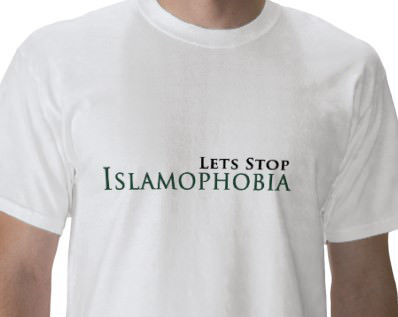
Islamophobia is stupid: Part 1 | Part 2 | Part 3
“Surely, you will follow the ways of those nations who were before you, in everything as one arrow resembles another, (i.e. just like them), so much so that even if they entered a hole of a sand-lizard, you would enter it.” – (Recorded in Sahih al-Bukhari and Muslim)

Keep supporting MuslimMatters for the sake of Allah
Alhamdulillah, we're at over 850 supporters. Help us get to 900 supporters this month. All it takes is a small gift from a reader like you to keep us going, for just $2 / month.
The Prophet (SAW) has taught us the best of deeds are those that done consistently, even if they are small. Click here to support MuslimMatters with a monthly donation of $2 per month. Set it and collect blessings from Allah (swt) for the khayr you're supporting without thinking about it.
My initiation into community activism was in late 2001. I got my feet wet at the helm of the fourth largest city in America’s leading Muslim civil-rights organization. As a convert, it was a ‘baptism by fire’ as I was relatively new to Islam and Houston, a city at that time with well over 90 Islamic centers and an estimated 300,000 Muslims. I was the organization’s first executive director and my work included dealing with arson, gunshots and bombs aimed at mosques. We responded to purposeful disrespect of the Quran, attempts to prevent our sisters from wearing the hijab or Muslims in general from having other religious accommodations. Our two person staff was responsible for community outreach, networking, empowerment programs and media relations.
Since that time I have been serving the community on the city, state and national scenes as a messaging and public relations consultant. I can assure you that our community has been contemplating Islamophobia for quite some time. It is indeed a stupid phenomenon, but perhaps not in the way one might think. My analysis of the term has dramatically changed since the immediate aftermath of 9/11. I believe there is a better way forward.
In this series, I intend to explore the term Islamophobia, how it is used and its effectiveness. My goals are to find better ways to counteract ignorance, fear and bigotry. I ask that you read this series with an open mind and as an active participant. Consider yourself a member of a virtual focus group, because the problem of Islamophobia affects us all.
THINGS ARE NOT IMPROVING:
If the latest news-cycles’ focus on the growing distrust and fear of American Muslims has taught us anything, it has clearly shown that as a society we are still struggling to deal with the trauma of 9/11. We are balancing the threat of terrorism and the resulting cataclysmic cycles of violence, war and new security policies eroding the civil liberties of all.
The intensity of today’s anti-Muslim hysteria is noticeably different. It is more widespread and most alarmingly, it seems more palatable to the public at large. The vocal extremists who are spreading fear and hostility are not just making the news; they are in fact creating an environment that nurtures their hate. I won’t rehash the headlines as you are all aware of them, but we must ask, what has changed and what is behind the increased spread of anti-Muslim fear? Are we contributing to the problem?
A partial understanding to this rise in anti-Muslim sentiment can be found in lessons learned from the disaster response world. While dealing with long term recovery efforts, emergency managers have documented trends surrounding “significant anniversaries” of tragic events. People tend to relive the event. It should be noted that next year will mark a full decade since 9/11. So don’t be fooled when we see a brief cooling off period after Election Day, November 2. The industry of “harbor fear and contempt for Muslims” has not yet begun to peak.
Poll after poll has shown that anti-Muslim sentiment continues to rise, and as a community we seem to be stuck doing what we have always done, and expecting different results. A key part of this insanity is what I like to call “comfortable activism.” Comfortable because it is what we’ve always done, it is what other communities have done and it gives us a sense of self-gratification that we acted against our foe and that we had the moral high-ground.
Isn’t it past time that we evaluate the term Islamophobia? Are there implicit activist approaches that its use requires? If so, are these approaches beneficial? Is our community stuck in modus operandi? What about other communities that we interact with or belong to; does our current trajectory affect them in a beneficial way? These are the questions this series seeks to answer. The solutions exist, but the path forward is up to us.
First, we must start at the beginning, what does the term Islamophobia mean?
THE ETYMOLOGICAL ARGUMENT:
Etymology: Islam+phobia = Islamophobia
A common use of the term is to call out anti-Muslim bigotry.
However, the term literally means a fear of Islam.
The false equation:
Islam (religion of 1.5 billion people (1 person of every 5) on the planet) + Phobia (an irrational fear) = anti-Muslim bigotry?
Because, linguistically Islamophobia focuses on Islam, it exacerbates the confusion of the words Islam and Muslim. This point is tremendously important, not merely because it annoys us to be called “Islamics,” but also because when any derivative or English language adaptation of the word Islam is created, the resulting phrase sends the message that ALL Muslims and our faith itself are implicated in the term’s new meaning.
The key example of this was on Aug 10, 2006 when President George W. Bush used the phrase Islamic-fascists.
It would, at this point, be a chicken and egg conversation to explore what came first between terms like “radical Islam” and “Islamic terrorism” or the labeling of people as Islamophobes. What should be crystal clear is that one feeds the other.
ACCURACY OF THE TERM:
Based on etymology of the term it can be considered very accurate in an academic or theoretical sense by describing some peoples’ fears and/or ignorance about Islamic doctrines and theology. The groups that support this view can be subdivided into three groups each with progressively less support for the idea of fear of Islam itself as they move toward the idea of fear of Muslims as well.
The first group contends that due to Islam’s rapid expansion, being so vast and so successful, so quickly that its eclipsing of the early expansion of Christianity caused a deeply rooted bias against Islam. They suggest that this was seen as countering a “proof” or manifestation of the Christian faith. Some of the very early Christian communities’ took the “miraculous” spread of Christianity as a demonstrated victory over the pagan and Jewish communities and as a evidence of the validity of their faith.
The second group contends that Islam is not defined or rooted by its source texts and traditions, but rather it is what Muslims do that actually defines Islam. While on scholarly level, I can appreciate this where the rubber meets the roadapproach; I also believe it is very dangerous. This view lends public credibility to any agenda driven group that wishes to redefine, reinterpret or change the established orthodox, textual and traditionally held views of the vast majority of Muslims.
Defining Islam by the actions of some Muslims rejects time honored traditions of Islamic scholarship. It allows any Muslim — qualified or not — to define Islam. This applies equally to all fringe groups; from those that promote or justify indiscriminate violence to those that want to change the religion in other ways. This also ignores the broad and overwhelming consensus of Muslims who embrace Islam as a living tradition that is rooted in the traditional sciences and orthodox understandings of Islamic sources. This is important because it can serve to stifle positive and effective refutation of extremist groups by equating unequal voices by making them appear equally authoritative.
The third group sees the term Islamophobia in light of another term (xenophobia) and therefore not entirely accurate. They argue that the fear of Muslims is really a part of the larger trend of xenophobia of all “others,” and in this case of Muslims. This is why many definitions of the Islamophobia describe Muslims as a monolith.
DEFINITIONS OF ISLAMOPHOBIA:
1. From http://www.thefreedictionary.com/islamophobia
Islamophobia [ˌɪzlɑːməˈfəʊbɪə] n
(Psychology) (Government, Politics & Diplomacy) hatred or fear of Muslims or of their politics or culture
Islamophobic adj
2. In 1996, the Runnymede Trust a UK based organization report titled, “Islamophobia: A Challenge for Us All” defined by the term as “an outlook or world-view involving an unfounded dread and dislike of Muslims, which results in practices of exclusion and discrimination.”
3. In 2007, the Journal of Sociology defined Islamophobia as anti-Muslim racism and a continuation of anti-Asian and anti-Arab racism.
Point 1:
Islam is not a race.
Point 2:
Muslims are not members of a race.
In my analysis, the accuracy angle misses the boat altogether. The inherent problems of an unclear definition are only one piece of our conundrum. Not having clear goals for our communities’ progress is another major concern.
A NEW WAY FORWARD?
Our task is to earn the respect of larger society and to integrate while maintaining our faith, our identity and our Godly way of life.
Along the way we will have to stand against injustice, but those stances only require partnership and cooperation; not that we adopt other community’s models of generational struggle as our own. So why are we as members of a religious community copying models of non-similar communities’ activism in our struggles to counteract bigotry and fear?
Surely as a community we must stand on our own terms. The key is charting our direction ourselves. The great African American leader Frederick Douglass while addressing the Louisville Convention in Kentucky, Sept. 24, 1883 said: “Depend on it, men will not care much for a people who do not care for themselves.” The first step in caring for ourselves is to know who we are and what binds us as a community.
To truly discuss these issues we will need to examine some related concepts like race, ethnicity and culture. In Part Two, we will look at these concepts along with how Islamophobia is used tactically. We will then explore how these tactics combined with the complexity of our communities’ demographics impact the perception of Islam and Muslims. Please sound off in the comments section and stay tuned!
Keep supporting MuslimMatters for the sake of Allah
Alhamdulillah, we're at over 850 supporters. Help us get to 900 supporters this month. All it takes is a small gift from a reader like you to keep us going, for just $2 / month.
The Prophet (SAW) has taught us the best of deeds are those that done consistently, even if they are small. Click here to support MuslimMatters with a monthly donation of $2 per month. Set it and collect blessings from Allah (swt) for the khayr you're supporting without thinking about it.


Arafah: The Door That Opens Once a Year

The Muslim Soldier From Ellis Boulevard Who Never Came Home

The Best Actions for Eid al-Adha [Imam Dawud Walid]

Far Away [Part 14] – The Tournament

Know Where Your Charity Goes: A Guidebook by Tauqir Sharif for Muslim Givers this Dhul Hijjah

Op-Ed: Javed Ghamidi And The Theology Of Managed Defeat

The APA Gave Him A Human Rights Award. Then They Cut His Microphone For Talking About Gaza.

Why Liberation Is Sexual(ized) – The Forces Driving The Unquenchable Thirst To Emancipate Muslim Women

Daughter Of Which Nation? The Persecution Of Asiya Andrabi And India’s Crackdown On Muslims

Beyond Representation: Reclaiming Spiritual Storytelling For Muslim Children
The Best Actions for Eid al-Adha [Imam Dawud Walid]

Coming Full Circle: Who Are You Now? | Night 30 with the Qur’an

Running Away From Who We Are | Night 29 with the Qur’an

Building From the Ground Up: Week 4 Recap | Night 28 with the Qur’an

The Muslim You Are Becoming | Night 27 with the Qur’an
-

 #Current Affairs3 weeks ago
Op-Ed: Javed Ghamidi And The Theology Of Managed Defeat
-
#Current Affairs5 days ago
The APA Gave Him A Human Rights Award. Then They Cut His Microphone For Talking About Gaza.
-
#Current Affairs4 weeks ago
Why Liberation Is Sexual(ized) – The Forces Driving The Unquenchable Thirst To Emancipate Muslim Women
-
#Islam1 month ago
If The Four Great Imams Sat At The Same Table Today


Gina Roberts
October 11, 2010 at 7:57 AM
It doesn’t sound like your focus has changed much since the early days. It is still intensely narcissistic. I am not speaking in personal terms, but rather of the collective opinion that the self-interests of the Muslim community are supremely important to others.
Since 9/11, there have been several shootings and attempted bombings on American soil by those who cite the Quran’s expressed antipathy for non-believers as motivation. Yet, not one ounce of sympathy for these victims is detected in this article, which seems to imply that infidels are obligated to believe the best about a religion that speaks so poorly of them.
Perhaps you should consider that the “growing distrust” of others has been earned – not by the terrorism so much as the apathy of the broader community of Muslims.
Iesa Galloway
October 11, 2010 at 10:14 AM
Hey Gina,
Thanks for stopping by.
About apathy, I hope you read my entire piece, because I call on American Muslim communities to re-evaluate how we should respond to our challenges and even how we view ourselves.
About narcissism: I believe seeking a better understanding of one’s situation and goals is self-reflection and a very positive activity.
Minority communities have always had to bring the issues that effect them to the attention of their fellow citizens. Often this process is uncomfortable and that feeling itself may be a manifestation of competing self-interests.
If by apathy the implication is that Muslim leaders have not spoken out or taken a stand against ills committed by Muslims, then I would question if your posting here is truly to engage and to listen?
More importantly I invite you to continue to engage with us, staying focused on the topics at hand, your perspectives may have valuable insight that could otherwise be missed.
Keep in mind that this is only the first part of a series. The series is for people, who had nothing to do with the attacks that were alluded to in anyway whatsoever, so our readers shouldn’t expect any association or collective guilt made in these articles at all. Sympathy is human and and natural, I hope and pray that we all feel for those that are victimized.
We do have a lot of ground to cover and many issues will be explored.
I look forward to more positive engagement because American Muslims really need to get a better sense of how we are seen by our neighbors.
Iesa
Gina Roberts
October 11, 2010 at 3:57 PM
I don’t know that you are doing anything to dispel my assertions, however, I do look forward to reading the other parts of your series.
I also appreciate your pointing out that Muslims are not a race. Lazy critics often slur anyone who speaks out against Islam as a “racist” when it makes little sense.
Sabour Al-Kandari (Sayf)
October 11, 2010 at 11:40 AM
You’re recycling the same statement that Muslims don’t denounce for terrorism or feel sympathy for its victims. Google is your friend.
http://lmgtfy.com/?q=muslims+denounce+terrorism+muslimmatters
Gina Roberts
October 11, 2010 at 3:22 PM
Instead of dealing with imagination, let’s just count bodies.
How many Muslim-Americans have been killed by Islamophobes screaming praises to another god since 9/11? Now compare that to the Arkansas, LAX, Texas and DC snipers shootings, as well as the the attempted bombings in Dallas, Illinois, Detroit and Times Square.
Iesa Galloway
October 11, 2010 at 3:40 PM
Dear Gina and everyone else,
This notion of “who is a threat” is clearly is a related factor to that adds to one’s fear of a ‘other.’
However, it would be truly foolish to allow the dismissive tone to prevent us from having a real dialogue or the very least learning from what seems to be an impasse.
Gina – your tone and attacking style are revealing you to be a troll.
Let’s call this comment strike 1.
Iesa
Sabour Al-Kandari
October 11, 2010 at 5:02 PM
Completely missed my point lol!
Omar
October 12, 2010 at 12:14 AM
Hi Gina,
Thank you for taking the time to discuss things, but there is no need for a hostile tone.
Your comments imply that somehow Muslims who kill Americans do so b ecause the Quran tells them to. That is quite a strange assertion, and at odds with facts. Virtually all of them will tell you flat out why they are doing it, American foreign policy, invasions of Muslim lands, military bases on Muslim soil, unjust support of Israel, and supporting corrupt oppressive regimes in Muslim lands because they support US interests.
As any political scientist who studied that issue will tell you, Bin Laden and similar groups have all issued demands, and they are all about the above issues, not “Infidelophobia”.
This does not justify their terror attacks, but convincing yourself that you have nothing to do with it will not get us anywhere, and will not get to the root of the problem. The US army has killed, or supported the killing of far far more civilians.
And since you brought scripture into it, the Bible is full of repeated commands, uttered by God himself (whom most Christians believe to be Jesus) to slaughter unbelievers, including explicit instructions to exterminate entire cities, and kill men women and children, even animals – something you will never find in Islamic texts. But you don’t see Muslims jumping on this.
At the end of the day, this is all petty politics, and squables over earthly affairs. What is far more important is why you are here? I invite you to read the Quran yourself, cover to cover, and the Bible cover to cover, think and ask God for guidance.
may peace be with you
Gina Roberts
October 12, 2010 at 9:23 AM
Regardless of the immediate excuse, the root cause of Muslim terror is Islam – more specifically the Quran’s distinction between believers and unbelievers, and the enormous moral dichotomy posited between the two.
Osama bin Laden has stated, “Our primary mission is nothing but the furthering of this religion.” I assure you that he has read the Quran cover to cover, as have I. He knows that it has horrible things to say about Christians, Jews and other unbelievers, and that it says that Islam is intended to be in a position of political superiority.
Anne
October 11, 2010 at 2:50 PM
Dear Gina,
Muslims did comdemn the shootings of Fort Hood – ISNA, CAIR, multiple religious leaders so what you say isn’t true. We, especially our leaders, work hard to educate the public about what our faith espouses while being forthright in condemning these egregious acts done in Islams name.
Yet, when you have such fabulous tv programs like HOLY WAR; should we fear Islam? which highlights such people as the crazy wide eyed bearded radical (Chaudry) who wish to raise the flag of Islam over the west (which while it is suggested he is not a rarity, he did have to be linked in from Britiain) while not bothering with countless Muslim figures in the states. I never see Hamza Yusuf, Zaid Shakif, Ingrid Mattson (very rarely), Ibrahim Hooper (rarely) being invited to speak on behalf of Muslims. If they will put them on the TV, I know they would happily do it. It is not a lack of willingness to speak out against extremism, it is more that fear based reporting brings in more money, so highlight the crazies and imply that is all of us.
You know what I think when something like Fort Hood happens? Aside from how crazy that guy was? I think of how I have to be extra viligant I don’t have someone harrass me, try to run me down in their car while out walking my small children, etc. I hate what he did, I also hate how the fabric of my country is such that I am now supposedly responsible for every nut job who happens to be Muslim.
I was just listening to NPR and they were discussing Israel’s policy of bulldozing not one but up to 5 houses of people related to suicide bombers as deterrents. Collective punishment is something Muslims are becoming unfortunately very used to.
I don’t fault Christians their Jones and Phelps, nor do I fault Jews, as a poluation, for the bulldozing leaders in Israel.
So don’t presume you know me, or my attitudes on these subjects. No media outlet wants someone like me, average American in jeans and a shirt – I am neither exoctic nor do I demonstrate “the other” – thus I am not scary and can’t boost ratings.
Gina Roberts
October 12, 2010 at 10:18 AM
I have seen Ibrahim Hooper on television several times. When he is asked to condemn Hamas, he refuses, despite the many targeted bombings against civilians in restaurants and on buses perpetrated explicitly in the name of Allah.
Sabour Al-Kandari
October 11, 2010 at 5:02 PM
Like Iesa said, you should ask us what we believe instead of telling us.
http://lmgtfy.com/?q=commonly+misquoted+verses&l=1
Gina Roberts
October 11, 2010 at 6:42 PM
Iesa, I could just as easily ask Anwar al-Awlaki or Anjem Choudhary what they believe about Islam, but it would be as immaterial as your own opinion (or mine). The only thing that matters is what Islam says about itself.
Surly the Muslims who kill each other on a daily basis, completely confident that they are the true believer, and the other is the munafiqin or “hijacker of Islam” should be enough to dissuade anyone from leaning too heavily on any Muslim’s opinion of Islam.
Fortunately, we don’t have to. Islam speaks for itself in the Quran, Hadith and Sira. If what is said there threatens the vision of the religion that you would prefer to propagate (as I suspect it does) then I would expect you to follow through on your threat to censor an educated perspective.
The answer, by the way, is that Muhammad spoke those words, and my reply was no more off-topic than the original comment – to which you issued no warning.
It’s certainly within your power to have a monologue with the like-minded, but the Muslim community has long robbed itself of the opportunity for growth and maturity by restricting what others can and can’t say about Islam. Isn’t it time to stop “winning” like a child and start thinking like an adult? How else can you expect to earn respect?
Iesa Galloway
October 11, 2010 at 8:21 PM
Dear Gina, you are correct about the notion of mere opinion and at the same time you apply it incorrectly.
You see just as you choose not to respond to the example I listed of Christians who committed violence you must also see that religious opinion can be from many different types of sources. Among the more common of the problematic sources that are: politically driven (using religion for a agenda), unqualified (in Islam we have a licensing system — similar to practicing medicine — and these “ijaza’s” or licenses are like qualifications normally in very specific subjects of the Islamic sciences). Other non-problematic sources include a variety of legal systems, philosophies and methods of arriving at opinions, distinct spiritual focuses or nuanced understanding of the finer details of creed. There are still other sources that can relate to a specific nation, region, culture and/or period of time. Then there is even scenario specific & focused and the spectrum that spans from more literal to interpretative perspectives.
Islam is a VERY WIDE path. It has to be to be the guidance and way of life for humanity, or at least 1/5th of us :). This ‘do it yourself religion’ you seem to promote without the context, tradition and understanding from trustworthy scholars, the meanings of the original text in their original languages of revelation (ever notice how all the Prophets spoke a Semitic language and that they are all sister tongues?) combined with enough arrogance to assume that one can tell someone else of a different religion what the other’s religion actually means is truly a dangerous mix or at best fool hearted.
Are you familiar with how the American Baptists are structured? If you are, there is a pretty good analogy for the situation that Sunni Muslims in North America are navigating. Muslims however do all agree on the core issues of our faith.
You would do well to apply some humbleness to how you approach others and some scholarship to religion as EVERY tradition has been used for purposes other than its source text and the bulk of its scholars would agree to. It is very easy to see the difference between a closed mind and an educated perspective. The latter continuously seeks knowledge, uses the scientific method (attempting to disprove a held thesis rather than to prove one) and is respectful even in disagreement as they can normally at least see the other view if not reconcile it.
For the record I very nearly deleted your first comment due to its potential to and seemingly designed nature to take the dialogue way from the subject I wrote about, Muslims improving their station and understanding of their neighbors by self-evaluation to a bunch of emotionally driven comments that serve only to divide people. I chose to build bridges.
I have not excluded you from the conversation for many reasons. First Muslims are normally talked about and not spoken with so that alone wins you a lot of points in my view. Second in-spite of your negative assumptions of me and other readers of the our blog I recognize some value in your perspective. Your last paragraph above is a great example. My community does often miss the opportunity for growth and engagement.
I even won’t spend too much time enjoying that you stated in your last line that I am “winning” like a child :). It is so true that children can relate to the other, I pray that we can all capture that pure state again and build on what we have in common.
Muslims earn respect like all others do. We will stand for our rights, give more than we are expected to and rely on God.
We won’t be distracted from our own improvement.
God bless,
Iesa
Aisha C
October 16, 2010 at 8:25 PM
OK, so I was just reading Gina’s assertions that my religion says I am supposed to try and ‘slay’ her – not a good survival tactic by the way, and I thought of a joke:
An ‘islamophobe’ walks into a mosque, and yells, ‘Hey muslims, your religion says you have to kill me!’
He was never seen again…
Iesa Galloway
October 18, 2010 at 12:58 AM
That’s hilarious!
greentea
October 23, 2010 at 3:52 AM
Please explore the kind of “apathy” American nation has shown against civilian casualties taking place around the world (iraq, afghanistan, palestine). You want apathy, then I suggest take a look at your own backyard, and think more constructively about where we are today. First, you must stop encouraging with your silence the filthy disgusting war-mongering ideologues of your nation that hide behind 9/11to attack Muslim countries, and then take up some responsibility for the fire your nation started, and continues to foment. Tens of thousands dead since your nation started a war crafted by criminals who still run around with impunity. You are too blinded by ignorance to see any apathy.
ummousama
October 11, 2010 at 9:15 AM
Assalamu aaikum,
First of all, all phobias are stupid but you don’t treat a phobia by telling it is stupid.
Secondly, why call people stupid, bullies or bigots. Did our role model (salla Allahu alayhi wa sallam) ever use those words (or the equivalent)? He was well above that (salla Allahu alayhi wa sallam). Yet, he lived amongst non-Muslims and you will never experience what he (salla Allahu alayhi wa sallam) experienced in term of rejection and adhaab.
Do you read the Qur’an? Don’t you know that most people do not like Islam but that the nearest to the believers will be the Chritians?
It is by perfecting our character that we will be able to change people’s perception just like the way Malaysians became Muslims in the early days. Still some people will oppose it just like Quraysh opposed e one whom Allah described as having “khuluq adheem”.
Iesa Galloway
October 11, 2010 at 10:32 AM
Walaikum Asalaam,
JazakAllahu Khairan! You are making or alluding to many points that I intend to make in this series!
Just as a note I didn’t call anyone stupid :) I said: “It is indeed a stupid phenomenon, but perhaps not in the way one might think.”
Great comments!
Iesa
someone
October 11, 2010 at 11:00 AM
salamu aleikum,
great article, looking forward to the following ones.
This is in regards to the hadith at the top of the page, I don’t understand its intended meaning. It seems like it opposes any amount of human progress, suggesting that every generation will commit the same atrocities of the previous one. I understand that history does often repeat itself, but it seems like it negates technology, revelation(since it is a progression ie from jahiliya to knowledge), or any type of advancement.
please explain, jazakallah khayran,
Iesa Galloway
October 11, 2010 at 12:56 PM
Walaikum Asalaam,
I can only speak to what my reasoning of quoting the hadith is and it is summed up in this line from the article: “So why are we as members of a religious community copying models of non-similar communities’ activism in our struggles to counteract bigotry and fear?”
I am foreshadowing part 2 a bit here, but essentially what I am saying is that we should not blindly copy the pioneers of the civil rights struggles that came before us. Their challenges offer us valuable lessons, but were unique to their time, situation and communities.
I look at this hadith as having more of a moral implication (having guiding principles from Islam as we navigate and adopt new ideas, technologies & etc…), than a all encompassing and progress stifling idea.
Iesa
Siraaj
October 11, 2010 at 11:26 AM
Salaam alaykum ‘Iesa,
Read the article, enjoyed it a lot (and I must admit I think the term Islamophobia is stupid as well). I agree, it is a sort of lazy way to lump religious and racial discrimination into one term. But beyond that, at that emotive level that describes our detractors accurately, it makes it look as though there is a misunderstanding and we’re victims of their misunderstanding, whereas it’s a rational and thoughtful hatred of Islam. I think we need to move beyond this and properly put all actors in their place with the right terminology.
Siraaj
abu Rumay-s.a.
October 11, 2010 at 3:51 PM
jazakAllahu khairun for your well thought out piece..
you mentioned the following:
– what does it take to earn the respect of larger society and how do you believe that things would have evolved differently had we earned the respect of larger society?
– “to integrate” – do you have feel we have not integrated?
tamim
Iesa Galloway
October 11, 2010 at 5:31 PM
Masha’Allah it is good to see that we are not totally distracted by other comments :)
About earning respect: that is a theme that we cover in later parts of this series, in short though I think respect is tied to being known as a contributing member of society. It is about claiming both our rights as well as our responsibilities as citizens. Being seen working on issues that do not only effect Muslims but that are beneficial for all of us. It is about being active in times of calm as well as crisis. The tradition of “remember Allah in times of ease” comes to mind.
About integration: It really depends on which subset of the larger American Muslim community we are looking at. Some people who have Muslims in their ancestry have gone way beyond integration and have no religion left at all. They assimilated so much that they only have a different sounding last name or ancestry. Others have really isolated themselves from the larger society, believing that will help prevent the loss our faith and still others (the bulk of our community I believe) that are in-between.
The key to both of these issues is that by our very human nature and our changing needs we will always find ourselves on some where on one spectrum or another and that over time we may stand on different places of each spectrum.
The real question is, does our practice and understanding of Islam shape us to be upright, God-fearing, just and loving individuals, family and communities? At the end of the day it also is about self-responsibility and hard work which are cornerstones of our way of life.
abu Rumay-.s.a.
October 14, 2010 at 5:34 AM
i’d probably differentiate between the terms integration and assimilation. I think that integration is probably at different levels, i.e. Social, political, economic integration. Perhaps you are referring to only one dimension of integration. By and large, I think the majority of Muslims in N.A. have integrated already as much as other minority communities, if not more (For example if you go to Miami, you will see what how the Cuban American community has managed, many still do not even speak the English language!!) . Since the indigenous/immigrant Muslim communities are unique in the sense that they are probably still developing focusing on their community needs and their resources and time are limited, it is natural that they will have limited contribution to the larger society from a social integration point of view. Unlike other groups who have national funding, specified full time organizations specifically focussed on outreach and integration programs.
However, Muslim Americans are some of America’s top scientists, doctors, researchers, academics, lawyers, businessmen, teachers, etc….even the average Muslim who works at any place is contributing to the American economy and have fully integrated like any other hard working American. So here, economic integration is probably better than other minority communities as statistical data supports this claim.
I think it is important to highlight the facts and detail exactly how Muslim Americans have integrated in so many different ways before mentioning further ways of integration just to keep the differentiation clear in terms of what type of integration are we talking about. Tariq Ramadhan mentions this important point in talk he gave recently about integration and further argues that we’ve already integrated and anyone telling us that we need to do so should be educated about these facts.
Iesa Galloway
October 14, 2010 at 3:14 PM
Great points.
My comment above was intended to separate the two terms as I feel that assimilation although that is want many people want to see happen is not really what best serves everyone involved.
I have a MM exclusive interview with Dr. Ramadan coming very soon. I was blessed to be able to spend some time with him while he was in Texas. I think there is a lot to be said about the points you bring up and Tariq Ramadan’s approach as well. In the speeches I saw he is asserting that we are past integration. I agree if you go to a lot of the ares you mention above. I also think he is using a technique of communication that is based on shock value. State that something is already done in order to help people get to doing it :)
Dr. Ramadan also goes on to say that we have to do the work of getting to know ‘others’ especially in non-crisis times…
To me that is proof that we are not really “mentally” integrated. Yes, we contribute in so many ways but we all know the uncle who won’t say salaam to a sister at the masjid but will flirt with the bank teller… or more commonly the business men and women who are VERY successful in corporate America but who outside of work are only either at the mosque, cultural events or at home.
We have to get past this as well because to paraphrase a quote of Dr. Ramadan “the TV and outside world is in our homes, even if we are not out there..”
All that said we absolutely need to keep telling the positive stories about American Muslims.
Iesa
abu Rumay-.s.a.
October 18, 2010 at 7:24 AM
jazakAllahu khairun for the clarification…keep up the excellent work and looking forward to your upcoming episodes.. i pray that Allah ta`ala blesses it and gives you Tawfique in your work..ameen..
tamim
CMIYC
October 11, 2010 at 5:23 PM
The real reason anti-Muslim sentiment is on the rise is because websites such as this one REFUSE to tell the American people that American foreign policy is the reason for hatred of the West in the Muslim world.
America is an aggressor not a victim, and when they hurt innocent people they will obviously be fought.
If Muslims would simply tell the truth and admit that there can never be peace until the US stops propping up dictators and starting conflicts in the Muslim world, then this hatred would simply go away.
Brother
October 11, 2010 at 9:28 PM
Wow Gina broke down faster than I thought. You could tell she was trying to hold back, but alas, what was in her heart got spilled out. I guess its quite easy to do on a message board.
Well, Gina’s comments were pretty tame compared to what’s on the yahoo message boards for the news articles. Almost every article about Islam is pretty negative, and then you get to read what all the haters have to say about (or what to do to) ALL Muslims. At least Gina didn’t advocate even a fraction of what those people have to say.
Eternal
October 12, 2010 at 1:18 AM
Gina,
Great comments!
As I started reading this blog, I liked the way it started. I got a feeling that the author is trying to do some introspection and encouraging other muslims to do likewise so as to bridge gap between muslims and non muslims. However I lost interest when the author started getting bothered about terminology rather than delivering the actual message in simpler way.
Unfortunately, when I started reading the comments, it was the same old story…Siraj seemed to claim that christians converted others on edge of sword unlike islam. But from history we know well that islam has worst record in that, even today islamic countries strongly promote one way conversions. If this comment gets published, there will be probably bunch of muslims arguing against this claiming to be victims of biased western historians. It is funny you were asked to be humble while most of the responses to your criticism were not humble.
As a non muslim, with several muslim friends, if it matters at all I just want to let the muslim readers know that if possible try to follow more of spiritual islam than getting into political matters like israel-palestine issue, 911 conspiracy theory, islam is supreme and every one in right mind should convert, US support to regimes in Egypt, Saudi etc. Remember, even if American muslims try to bridge this gap, there are tons of muslim countries where the laws are much more in favor of muslims and these islamic countries will always create a hurdle.
someone
October 12, 2010 at 8:44 AM
Actually, many western historians refute your claim that islam was spread by the sword. People often quote that without any supporting evidence.
You should look up historians such as Hugh Kennedy Albert Hourani, Ira Lapidus ect…
Muslim
October 12, 2010 at 9:47 AM
“As a non muslim, with several muslim friends, if it matters at all I just want to let the muslim readers know that if possible try to follow more of spiritual islam than getting into political matters like israel-palestine issue, 911 conspiracy theory, islam is supreme and every one in right mind should convert, US support to regimes in Egypt, Saudi etc. ”
In other words you want Muslims to pretend to be good citizens and shut up about anything that really matters. Shame on you for suggesting that
“Then do not obey the deniers. They wish that you should compromise (in religion out of courtesy) with them, so they (too) would compromise with you. And obey not everyone who swears much, and is considered worthless”, [Surat al-Qalam 68]
Iesa Galloway
October 12, 2010 at 11:08 AM
Dear Gina,
Thanks for showing your true colors and trying to denigrate a conversation into the mudslinging of “my religion is better than yours.”
The Quran says: “to you be your way and to me be mine.” So enjoy your way. Go and promote it for a change instead of attacking others…
I am not blaming your faith forhuman actions which is the differenced between us.
This post was intended to be a opportunity to discuss the term and ideas around the term “Islamophobia” not a platform for you to display your contempt for Islam and to prevent Muslims from having a proactive discussion about our community. I gave you MANY, MANY opportunities to contribute constructively yet you continually opted for divisive mudslinging.
This post comments section will soon be on auto moderate for all comments, I will spend some time editing out the past comments only keeping those that are relevant to the topic and that have lessons or constructive criticism.
It is crystal clear that talking to a wall is not a conversation.
To Gina and others, hate is like flexing a muscle, when you get tired of the rooster move (a cheap puffing up for the purpose of showing off) and are secure enough in your own belief system that you can listen to others, rather than tell them what their faith is about, we may be able to have a dialogue.
The same is true for many Muslims… conversations are two ways or they are nothing.
I did not start this series with a heavy comment moderation policy, even after seeing the comments in “Muslims Must Learn the Language of Bullies to Respond to Islamophobia” in attempt to welcome other perspectives for all our benefit.
I will try to weed out all off topic comments from here on out. Abusers will auto-moderated.
God bless,
Iesa
Shiraz
October 12, 2010 at 1:24 PM
Assalamu alaikum,
Great article Iesa.
Its really important we not only speak up, but frame the debate. A lot of the times the debate is a no win situation.
Kinda like when people say they are only against “extremists”, when they attack basic tenets and practices of Islam.
Wassalamu alaikum.
Iesa Galloway
October 12, 2010 at 6:12 PM
Walaikum Asalaam Shiraz,
In future parts of this series we will cover the idea of framing. I believe that the term Islamophobia implies a frame and that needs to be explored.
Good insights!
Iesa
Saad
October 12, 2010 at 3:02 PM
Salam all,
It just seems to me that the way islam is portrayed in the west is still highly influenced by neo-Orientalist thinkers like Bernard Lewis and his students. Instead of islamic history being written to suit the goals of imperialist european conquerors, negative perceptions of islam are now propagated to further the goals of the powerful lobby groups and to keep the status quo for the common masses. We are especialy vulnerable to negative public opinion when the ordinary christians feel threatened by the advance of islam in the West and by their own religion’s retreat.
Case in point: I was reading the Christian Science Monitor the other day and the article was talking about population projections of Christians and Muslims in the 21st century. Taking into account the fact that Muslims generally have higher fertility rates, and projecting for its leveling off, it concluded that Muslims would greatly increase their population but by the end of the leveling off process, Christians would still be a larger group in numbers although by only 100-200 million. Of course, they started with a base number of 1.2 billion muslims and a Christian base number of 2.1 billion which is clearly biased because one is taking the lowest possible number for muslims (1.2-1.8 billion) and the highest base number for Christians (1.5-2.1 billion). One may not put much importance on these numbers but they seem to hint at where the real confrontation is – the old-age question: “Which religion is winning?” Numbers may be just a small part of that, but the day that they have to admit that Christianity is no longer the largest religion and that islam is, would be a day of too great a paradigm shift. Add in the realization that the developing world is rapidly developing and approaching equal economic standing and you have a cause for them to worry.
In my opinion, as long as the Christians feel they are losing and that we are winning, which they do, the public opinion will always be against us. In this case, our freedoms will be stripped and it will not matter whether we are caring for ourselves or not.
Interested in feedback.
Salam
Shiraz
October 12, 2010 at 3:33 PM
True Islam is growing fast, at least on paper. But this brings to mind the hadith that says we will be weak but as numerous as the foam of the sea.
The “Western” world is in general losing ground to the rest of the world. China is challenging the US for power. India and Brazil can now be categorized as world powers.
Even the center of Christianity is moving further and further south as Europeans leave Christianity and Africans flock to the Church.
And its not just that Christians feel we they are losing, so they hate against us. Islam will always face challenged like this. And I think a small number of Christians actually think this.
Saad
October 12, 2010 at 6:08 PM
Salam
I agree with you. Numbers show nothing. It’s not about quantity but abt quality. However, from the Christian perspective, they have been able to sell the world a Christian-centric narrative in their media by invoking the numbers game “Christianity is the largest religion”, although one has always argued that most Christians are Christians by name only. Personally, I would rather be a smaller but more religious community than a large and disillusioned one.
Saad
October 12, 2010 at 6:14 PM
My point being this: the rightist movements now sweeping in the west are a reaction to their percieved vulnerability as a religion. Muslims get mixed up in the fold because supposedly they view our values as being antithetical to theirs and thus threaten their cultural homogeneity.
Jennifer
October 12, 2010 at 3:56 PM
As a Christian (Methodist) woman, I fail to understand the irrational & ignorant fear that the “drive-by media” continues to perpetrate against American Muslims. Have we all decided to follow the proverbial “Ann Putman” to the stake. I hope not.
Although, not related to this exact topic, I believe that Charlton Heston’s address to the Denver NRA meeting back in 1999, expresses more eloquently the point that I am trying to make. I hope you take a moment to read the excerpt below.
“It is forgotten that we are first, Americans. I am asking all of us on both sides to take one step back from the edge. Then another step. And another. However many it takes to get back to that place where we are all Americans. Different, imperfect, diverse, but one nation, indivisible. This cycle of tragedy-driven hatred must stop. Because so much more connects us than that which divides us. And because tragedy has been and will always be with us. Somewhere right now evil people are planning evil things. All of us will do everything meaningful, everything we can do to prevent it. But each horrible act can’t become an axe for opportunists to cleave the very bill of rights that binds us. America must stop this predictable pattern of reaction, when an isolated terrible event occurs..”
Amad
October 13, 2010 at 2:39 AM
Thanks Jennifer, that’s an excellent thought.
Olivia
October 12, 2010 at 11:36 PM
Honestly,Gina!! It’s our religion and you think you can use spliced bits of it to attack us and we won’t notice or something?? *sighs in exasperation*
And seriously, if our religion told us to just “kill every unbeliever” and with 1/5 human beings following it, there would be a lot more dead people around. Even on a logical level what you’re saying makes absolutely no sense.
Pingback: Islamophobia is Stupid: Part II | MuslimMatters.org
Ibn Percy
November 29, 2012 at 10:04 PM
I thought MM got hacked or something. Shocked to see this title. Disappointed in the author in writing this. I read the article. Basically the author doesn’t like the term “Islamophobia”. That’s fine. The semantics or the use of it can be argued, but to say “Islamophobia” is stupid is ridiculous and counter productive. People have died because of Islamophobia. This is a not a joke. Call it whatever you want, but don’t call it stupid. We don’t this right now. I wouldn’t be surprise if Robert Spencer or Pamella Geller quotes this and shares this with their network and mock us.
Iesa Galloway
December 2, 2012 at 10:14 PM
Asalaam Alaikum Ibn Percy,
People have been mocking “Islamophobia” as a term, a concept and a tactic for a long time. Go do a simple Google Image search of the word and you will see a whole cottage industry of bumper stickers, t-shirts and much more proudly proclaiming their “Islamophobia” … as a positive thing that they actually WANT to be known for.