
Uncategorized
Book Review: “The Future of Islam” By John Esposito

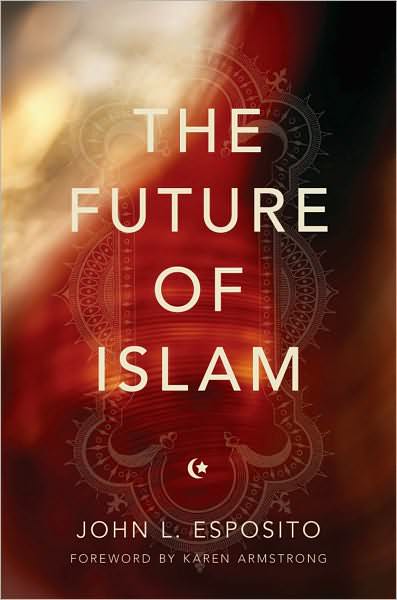
For better or worse, Islam has been at the forefront of domestic and international affairs for at least the past decade. It’s truly a wonder, then, that according to a recent Gallup poll a majority of Americans still have little to no knowledge of the religion’s basic tenets. More disheartening, if not outright frightening, is that even given this avowed lack of knowledge, a sizeable percentage of U.S. citizens nonetheless maintain a negative perception of Muslims.
So, either an informed, nuanced understanding of Islam is being obscured by the voluminous and venomous misinformation that clutters the media, or an accessible and authoritative account of what Muslims truly believe and how they interact with the world around them simply hasn’t been produced.
Keep supporting MuslimMatters for the sake of Allah
Alhamdulillah, we're at over 850 supporters. Help us get to 900 supporters this month. All it takes is a small gift from a reader like you to keep us going, for just $2 / month.
The Prophet (SAW) has taught us the best of deeds are those that done consistently, even if they are small. Click here to support MuslimMatters with a monthly donation of $2 per month. Set it and collect blessings from Allah (swt) for the khayr you're supporting without thinking about it.
John Esposito, given his celebrity and scholarship, is among perhaps only a handful of individuals who have met both these prospective challenges head-on with some success. His latest offering in a line of timely scholarly works, The Future of Islam, provides a refreshingly holistic assessment of the challenges Muslims face from increased pluralism on the one hand, and heightened hostility on the other. The book is, however, not without its biases and consequent missed opportunities. Overall though, the far more genuine appraisal of Muslims in this work is a powerful counterweight to the sensational depictions found in (sadly, more in demand) Islamophobic publications.
DECONSTRUCTING A MONOLITH
Both novice and more advanced readers on the subject will find much of Esposito’s narrative as insightful as it is comprehensive. The first chapter of the book includes a standard primer on the five pillars, the divisions between Sunni and Shia, and some brief remarks on the more “controversial”
Keep supporting MuslimMatters for the sake of Allah
Alhamdulillah, we're at over 850 supporters. Help us get to 900 supporters this month. All it takes is a small gift from a reader like you to keep us going, for just $2 / month.
The Prophet (SAW) has taught us the best of deeds are those that done consistently, even if they are small. Click here to support MuslimMatters with a monthly donation of $2 per month. Set it and collect blessings from Allah (swt) for the khayr you're supporting without thinking about it.





Putting Lipstick on the RSS Pig

[Podcast] Muslim Money Matters: Do You Know How to Halal Hustle? | Adam Taufique

When The Bed Walked Away [Part 2] – Primordial Muck

Mustache Film Review: A Heartfelt Treat
When The Bed Walked Away [Part 1]

Muslims and the F-Word: Feminism, Dhulm, and Jahiliyyah

Far Away [Part 24] – The Whipping
When The Bed Walked Away [Part 2] – Primordial Muck
When The Bed Walked Away [Part 1]
Far Away [Part 23] – Delirium

The Best Actions for Eid al-Adha [Imam Dawud Walid]

Coming Full Circle: Who Are You Now? | Night 30 with the Qur’an

Running Away From Who We Are | Night 29 with the Qur’an

Building From the Ground Up: Week 4 Recap | Night 28 with the Qur’an





Siraaj Muhammad
February 19, 2010 at 7:26 AM
Excellently written review, I thoroughly enjoyed reading it.
Siraaj
Abu Harun
February 19, 2010 at 7:58 AM
Salaam alaikum,
Masha Allah brother Youssef. May Allah increase you.
Amatullah
February 19, 2010 at 11:15 AM
Ameen! very nice, baarak Allahu feek.
Musa Maguire
February 19, 2010 at 9:05 AM
Very nice review, masha’Allah. The subtle biases and omissions that you identity are tragically endemic to academic literature on Islam.
ummMaryam
February 19, 2010 at 9:13 AM
wa ‘alaikum asalaam,
ditto, jazakAllah khair. having attended Gtown, we were always a bit cautious about Esposito who heads the Center for Muslim-Christian Understanding. be careful of these people who claim to promote a noble cause of understanding muslims and have the latent interests in changing our religion. thanks for exposing this in a very fair analysis. we students there felt similarly, there was SOME benefit to having people like him around, compared to those who are outright against anything even remotely to do with Islam; on the other hand, it was annoying how the propaganda would be so subtly couched in their arguments that a person might end up thinking it’s all good because supposedly “he’s a friend of Islam” right?? thinking that because he speaks the truth in one area, that he speaks truth of Islam every time he opens his mouth. wrong: discernment is necessary.
Your critical analysis wins an A+ inshallah. Good you saw through the lines. I haven’t read the book personally but found that a number of his other books have that same issue…a few jabs here and there in an annoyingly eloquent way that the masses of uneducated muslim teenagers entering colleges (having only sunday school teaching them islam their whole lives–nothing wrong with sunday school, but it’s just doesn’t give you ENOUGH knowledge to discern what Esposito and his likes say) would swallow 100%
Amad
February 19, 2010 at 9:56 AM
Probably one of the best book review on MM… evident in that you attracted a comment from the ever elusive Musa ;)
Abdus Sabur
February 21, 2010 at 6:31 AM
I may be way off here but…Is this “elusive” Musa from Kuwait? I seem to remember a brother on #islam some years back on undernet.
amad
February 21, 2010 at 6:59 AM
It’s Musa Maguire, one of our MM team-members
Abdullah
February 19, 2010 at 10:21 AM
Sounds like a great book! I’ll be sure to pick it up, Insha’Allah. Jazkallah for the review.
Muslim Apple
February 19, 2010 at 12:09 PM
Excellent review, we should make you the regular MM book reviewer, in sha Allah.
TheAlexandrian
February 19, 2010 at 3:43 PM
JAK everyone wa barak Allah feekum jamee3an!
@Musa – I know exactly what you mean. The thing that gets me about Esposito is that he actually alludes to this phenomenon in the book – the propping of “professional Muslims” and the association of “moderate” with “secular.” I’m really left scratching my head sometimes after reading his work.
@UmmMaryam – Very good points. I think that we’ve been conditioned in the West to rely on non-Muslims for an informed viewpoint on the Muslim condition. That’s not to say that scholars such as Esposito don’t provide a valuable service. On the contrary, I think that Americans are more apt to take as fact what they hear from “one of their own.” So even if he has some biases, at least they originate from a genuine desire for coexistence and mutual gain.
Still, it’s encouraging to see greater numbers of Muslims entering the social sciences and humanities. May Allah make their path easy and aid them in communicating a genuine understanding of Islam. Ameen!
Umm Bilqis
February 20, 2010 at 12:44 AM
Good review! I was wondering how many people will actually pick up Esposito’s book or any books for that matter. I was reading a stat that the majority of Americans read a book a year after leaving high school therefore they get most of their info from T.V. Perhaps a different form of communicating needs to occur with the use of documentaries and the Public broadcasting system? Stories such as these?
http://www.youtube.com/watch?v=uguiV5zyUxs&feature=PlayList&p=2A95510D6C47B586&playnext=1&playnext_from=PL&index=40
TheAlexandrian
February 20, 2010 at 9:11 AM
Yeah I’m glad you brought up that stat about reading in America. I was thinking about it myself as I wrote up this review – wondering whether it’s a futile effort to communicate these ideas through print. I reasoned that even if books like THE FUTURE OF ISLAM are preaching to the choir, i.e. those that are already learned enough not to buy into the Islamophobic hype, it at least better arms the intellectual resistance.
As for the multimedia approach, there’s actually a new film out on Esposito’s last book co-authored with Sr. Dalia Mogahed. The documentary, “Inside Islam: What a Billion Muslims Really Think,” is still premiering all over the country. Here’s some more information on it.
w/Salam
naeem
February 20, 2010 at 5:15 AM
I’m puzzled by the overall tone of this review.
Am I correct to conclude that the author believes this book to be ” a powerful counterweight to the (sadly, more in demand) Islamophobic publications crowding bookstore shelves” because Esposito promotes certain reformative positions that would be embraced by the American public (such as “a liberal interpretation of women’s rights” and “a more pluralistic approach to salvation”)?
So are we to celebrate such a presentation of the future of Islam, solely because it may provide us with some positive PR?
And the brother’s biggest beef is with Esposito’s view on Salafis?!
To be honest, I’m more offended by Esposito’s attempt to present Islam at the crossroads of some major reformation after which it will come out in the mold of some grand American image than his comparatively minor misrepresentation of Salafis.
And what is meant by ‘Western enlightened perspective’ in the following context: “He clearly cautions against facile labeling of a person or group as “extreme†simply because their understanding of a particular issue doesn’t mesh with a Western enlightened perspective”
Its not clear whose words those are, but undoubtedly such an orientalist tone is, at the very least, objectionable.
TheAlexandrian
February 20, 2010 at 9:51 AM
Br. Naeem,
Overall, I wasn’t really looking to strike a tone. Essentially, I was just going for a fair academic appraisal of the book.
You’re incorrect to conclude that I was “celebrating†Esposito’s trumpeting of a more “liberal†vision of Islam. You’re correct, however, in calling me out on the lack of clarity in that sentence – I’ve adjusted it accordingly.
In truth, I’m skeptical of not only Esposito’s allusions to an “Islamic reformation,†but of the entire intellectual foundation of this theory. Incidentally, that’s why I pointed out the problematic consequences of his proposals. It’s a topic worthy of a post all its own, so I sought merely to summarize his main contentions and leave it at that.
As for Esposito’s handling of Salafis and Salafism, I disagree that it’s a “minor†issue, comparatively or otherwise. Again, looking at from a purely academic perspective, his approach to an Islamic reform at least corresponded to his own take on Catholicism. Moreover, he took care not to dismiss more mainstream, conservative approaches to Islam within this reformative framework, in the same way, he states, that a good Catholic can’t dismiss the Pope for his stern views on female clergy, homosexuality, etc.
Esposito’s treatment of Salafism, however, highlights the last bastion of unequivocal criticism that remains in Western scholarly works on Islam. It is, both ironically and tragically, where Islamophobes and genuine Islamicists find common ground.
Finally, with regard to the notion of a “Western enlightened perspective,†though not specifically Esposito’s words, he does allude to this general conception – however vague it is. His use of it, however, was more tongue-in-cheek than grandiose, so I’ve changed the sentence to reflect that.
w/Salam
noon
February 20, 2010 at 7:23 AM
Good review.
It’s ironic that a Catholic, who spent a decade in a Catholic monastery, would be advocating reformation, and that an academic scholar would be undercutting the role of the ulema .
Green Sufi
February 20, 2010 at 8:33 PM
What a fantastic review! I look forward to reading this book. So many great books, so little time to read them all!
darthvaider
February 20, 2010 at 11:29 PM
Excellent review mashaAllah. Jazak Allah khayr and I’m looking forward to reading more reviews from you in the future.
PakistaniMD
February 21, 2010 at 3:02 PM
Your review is quite good at summarizing the points; however, most book reviews elaborate and take quotes of the respective book(s). It would be nice to see what Mr. Esposito had to say in his own words, not in your summarizing fashion.
Youssef Chouhoud
February 22, 2010 at 1:09 PM
Hmm, I don’t know if I would say “most” reviews include quotations. I think the medium associated with the review plays a large role in that respect. Truth be told, I considered whether or not to include one, but opted instead for a more web-friendly review. Scholarly journals will often include quotes, but I found that the opposite holds for web-only content on blogs, online newspapers, etc.
Still, no harm in trying a different route. I’ll throw in a quote or two next time around iA.
Muhammad
April 28, 2010 at 8:42 AM
Mash’a Allah
Very good analysis with excellent written language, I hope in another analysis of Esposito’s work
” What Everyone Needs to Know About Islam?”
And may Allah reward you for that effort.
saram
April 2, 2013 at 6:43 AM
please send me on my e-mail a comprihensive and breif review of ”The Future of Islam” by Jhon L. Esposito.
so nice of you.
my e-mail address is:
[email protected]