
Uncategorized
Ramadan Fitness Plan

Gateway to all Ramadan related posts on MM
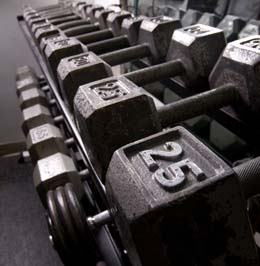 Common questions that come up during Ramadan are, “When should I work out?” and “How should I eat?” For most people, the answer is “never” and “alot”, respectively. For the few who care, the resources to help answer these questions are scarce. On top of being a health issue, there’s also a time management issue – for many, time will be committed to iftars and taraweeh prayers at the masjid. How can one squeeze in a decent workout when taraweeh is later in the evening, and fajr is earlier in the morning (this Ramadan being closer to the middle of summer and all), and maybe an ambitious someone will want to throw some qiyaam ul-layl in there?
The past 13 weeks, I’ve been on a program in which I’ve, alhamdulillaah, been able to develop great eating and weight-training habits, and I’ve lost approximately 22.2 lbs in the process, dropping from 237.8 lbs to 215.6. Life has its ups and downs, and a part of a good workout and nutrition plan is planning for when extraordinary situations arise (like vacation or Ramadan). What follows is my own Ramadan plan, which I put together along with my coach and mentor from Precision Nutrition’s Lean Eating Program (which I’m a part of right now).
Keep supporting MuslimMatters for the sake of Allah
Alhamdulillah, we're at over 850 supporters. Help us get to 900 supporters this month. All it takes is a small gift from a reader like you to keep us going, for just $2 / month.
The Prophet (SAW) has taught us the best of deeds are those that done consistently, even if they are small. Click here to support MuslimMatters with a monthly donation of $2 per month. Set it and collect blessings from Allah (swt) for the khayr you're supporting without thinking about it.
Suhoor Time: 4:40am
10 minutes before suhoor time ends, my meal is the following:
- 3 Scrambled Eggs fried w/Olive Oil Cooking Spray
- 2 servings fruits / veggies
- 3 servings of water
Sometimes, instead of scrambled eggs, I like to go for the previous day’s leftovers of chicken. Since we’re health conscious in our home (most of the time), the cooked meals are not swimming in grease (actually, there’s none), and the curries just have spices and vegetables, so I might go for that in the morning (in moderate quantities, of course).
Workout Time: 6:00pm
This is approximately an hour-and-a-half before iftar time. The reason it’s been chosen is because the body is in a prime state to receive nutrients post-workout, meaning I can eat starchy carbs (I normally avoid them outside of the post-workout 3 hour window in favor of fibrous carbs like veggies and fruits) alongside my proteins.
I don’t do cardio at this time, only weight training. I’ve never done this before, and in the past ten days, it’s during the time I work out that I’m the most energetic (after warming up), and the least hungry. Can’t explain it, and it might just be an individual thing.
Iftar Time: 7:40pm
Since this is right after my workout, I like to gulp down a recovery drink (2 parts carb, 1 part protein) on the way to the masjid to maghrib. Having the drink and heading to prayer works really well because by the time I return home, I’m not full, but I’m not ravenous either, so it’s easy for me to put together a reasonable portion of food and not feel like I have to gorge until stuffed like a butterball turkey. The meal will consist of a moderate amount of starchy carbs, lean proteins, and vegetables. Occasionally, I sneak in a small dessert item with a glass of skim milk (if you go back and re-read that sentence, you may have noticed I underlined moderate and small – that’s to emphasize that working out along with fasting is not a license to overeat, so keep that in mind if you didn’t workout during your fast).
Results so far?
As of this writing, 10 fasts have been completed, and I’ve done weightlifting on 7 of those 10 days. Alhamdulillaah, my goal of fat loss has continued, and thus far, I have not seen any loss in strength. My energy levels are higher, and something I didn’t expect, on non-workout days I don’t feel the need to gorge either. I broke one of my fasts with a date followed by a scoop of protein (30 grams of whey and egg proteins), and felt absolutely content with that for 3 – 4 hours. I ate a small meal afterwards.
I started this Ramadan at 221, and I’m currently weighing in at 215 – 217, alhamdulillaah. Insha’Allah in a future article I’ll write in with final results.
Dude, I’m not Working Out In Ramadan – How Should I Eat?
If that’s the case, this should be your macronutrient breakdown:
- Carbs: Make sure they’re fibrous (veggies and fruits), not starchy (breads, pastas, etc), or sugary (coke, fruit juices, etc). Fill your plate with fruits and veggies as much as you like.
- Proteins: Meat is good. Yes, it is. It’s hard to get gain fat from it due to the thermic effect of digestion. Don’t fill up on bread carbs if you have fattier meats, just eat the meat and veggies and move on.
- Fats: Aim for poly- and monounsaturated fats (peanuts, natural peanut butter, olive oil, almonds, etc) in moderate quantities. If your meals are doused in saturated fat oils, dump out as much of the oil as possible. If the food is fried, avoid it in favor of something else.
As for meal timing, try this out:
- Breaking the fast: Use two dates and two full glasses of water. Now go pray maghrib.
- After Salaah: Did you pray your sunnah? Do your dhikr? Make du’aa? Do all of this, then aim to fill your plate once with a moderate quantity of food. Keep some space in your stomach so you’ll have khushoo’ during…
- Taraweeh: I love a good cup of Dunkin’ Donuts coffee with creamer and lots of Splenda. The caloric cheat is low in impact, and along with the smaller meal, it helps keep me awake during taraweeh.
- Post-taraweeh: You can eat a small meal here again, given the guidelines above, though late in the evening I personally prefer a protein shake.
How Do I Keep Myself from Gorging?
You’ve probably read a lot of pre-Ramadan advice about gorging, and often, the one who gave the advice probably gorged as much as anyone else when it started. I used to do this as well, but I learned through the program I’m doing how to control this.
One of the habits we’re trained in is eating til 80% full. How can you tell if you’re 80% full? It’s really very simple:
- Eat
- Take a moment part way through to stop and ask yourself if you still feel hungry – in other words, if you stopped right at this moment, would you feel compelled to eat again?
- If yes, keep eating and re-evaluate soon afterwards.
- If no, stop eating.
You ever notice how after you break your fast with just a few dates and water, you’re really not ravenously hungry anymore? There’s a reason for that – it’s because you’re not ravenously hungry anymore.
But what is it we all do? We fill our plates anyway, not once, but twice, with enough food to feed an elephant, and then realize during taraweeh, “Gosh, I’m really full, I need to loosen my belt.”
All that plate-filling is not physiological – your body doesn’t need, nor does it ask for all that food. It’s psychological – you’ve been depriving yourself all day, and now it’s time to make up. You’ve been telling yourself that all day everytime you felt hunger pangs that you’ll reward yourself with some tasty food.
Stop doing that – Ramadan doesn’t intermittently start and stop between sunrise and sunset. Take all 24 hours into account, and set it in your mind that at all times, you’ll be in peak condition for extended worship during the day and night, and that going beyond what is needed when breaking the fast will ruin the quality of your ‘ibaadah.
So stop looking forward to eating – start looking forward to praying and Qur’aan reading, and let your post-fasting eating follow what will optimize those two, and run THAT message in your head throughout the day – your take on food by the time you get to iftar will dramatically change, insha’Allah. Once you get to the food, use the 80% full rule to help keep yourself in check.
Keep supporting MuslimMatters for the sake of Allah
Alhamdulillah, we're at over 850 supporters. Help us get to 900 supporters this month. All it takes is a small gift from a reader like you to keep us going, for just $2 / month.
The Prophet (SAW) has taught us the best of deeds are those that done consistently, even if they are small. Click here to support MuslimMatters with a monthly donation of $2 per month. Set it and collect blessings from Allah (swt) for the khayr you're supporting without thinking about it.







Yemeni Islah Leader Abdul-Majeed Zindani Passes Away

Bismillah, The Beast [Part I] – A Short Story

We Are Not Numbers x MuslimMatters – Ramadan While Under Attack In Gaza

Fallujah Aflame: Remembering The Bloodiest Battle Of The Iraq War

Israel Seeks Escalation For Latitude – The Regional “Conflict” Widens

IOK Ramadan: 7 Qualities of Highly Effective Believers | Keys To The Divine Compass [Ep18]
IOK Ramadan: Choose Wisely | Keys To The Divine Compass [Ep15]
IOK Ramadan: Making Time for Allāh at Night | Keys To The Divine Compass [Ep21]
IOK Ramadan: They Were Not Created Without Purpose | Keys To The Divine Compass [Ep23]
IOK Ramadan: Appreciating the Prophet ﷺ | Keys To The Divine Compass [Ep22]

IOK Ramadan: The Importance of Spiritual Purification | Keys To The Divine Compass [Ep30]
IOK Ramadan: The Power of Prayer | Keys To The Divine Compass [Ep29]
IOK Ramadan: The Weight of the Qur’an | Keys To The Divine Compass [Ep28]
IOK Ramadan: Families of Faith | Keys To The Divine Compass [Ep27]
IOK Ramadan: Humility in Front of the Messenger | Keys To The Divine Compass [Ep26]
-

 #Islam4 weeks ago
IOK Ramadan: 7 Qualities of Highly Effective Believers | Keys To The Divine Compass [Ep18]
-
#Islam4 weeks ago
IOK Ramadan: Choose Wisely | Keys To The Divine Compass [Ep15]
-
#Islam4 weeks ago
IOK Ramadan: Making Time for Allāh at Night | Keys To The Divine Compass [Ep21]
-
#Islam3 weeks ago
IOK Ramadan: They Were Not Created Without Purpose | Keys To The Divine Compass [Ep23]

Ikram Kurdi
September 12, 2009 at 5:48 PM
Like you, I work out an hour and a half before iftaar, because once I burn the energy that is already in my muscles, my body starts breaking down fat for energy. I work out without weights for the most part (jump squats, pushups, crunches), but I use free weights for my arms.
This Ramadan I have lost many fat pounds while gaining some muscle, alhamdulillah. Scientific studies have shown that the ‘starvation mode’ propaganda (that your body will break down muscle if you don’t eat all the time) is a myth (See Eat Stop Eat), so when you fast you can go on exercising like normal, keep or gain your muscle mass and lose a lot of fat. A study showed that resistance training three times a week is enough to keep a fasting person’s muscle mass, even when their daily calories were reduced to 800 calories!
I never mix fruit with other foods because this messes up the digestion. I break the fast with 250 grams of black grapes. I don’t drink any water with this, since the grapes provide all the water I like.
I then go on to pray. After 30 minutes I have my main meal.
Siraaj Muhammad
September 13, 2009 at 12:42 AM
Yes, I’ve also read about muscle breakdown after a fast and I simply assumed it was true and pushed on in spite of it simply because my goal is fat loss, and even if I lost a bit of muscle in the process, I could gain it right back after Ramadan, and those who don’t favor this type of training tend to be at a higher level in terms of physical development and are keen to protect muscle since they don’t have as much fat to lose anyway, and that’s great if that’s their priority, but it’s not mine at this point (and some will say, well, keep muscle to burn fat, but I’d say remember, there’s a lot going on during Ramadan that takes higher priority and so this also has to be kept practical).
Siraaj
Sarah
September 12, 2009 at 5:48 PM
great article. many people think fasting and working out are incompatible, but they aren’t!
Siraaj Muhammad
September 13, 2009 at 12:38 AM
Yeah, it’s actually not all that bad – it’s sort of how nonMuslims view fasting when they’ve never tried it – it seems difficult, but after doing it once or twice, it’s really nothing at all, alhamdulillaah.
Siraaj
Abu Yunus
September 13, 2009 at 12:52 AM
It further reinforces how the Sahaabah engaged in jihad while fasting in Ramadan.
Siraaj Muhammad
September 13, 2009 at 1:50 AM
Which battle are you thinking of?
Amatullah
September 13, 2009 at 3:16 AM
Battle of Badr, Tabuk, Conquest of Andalus are a few…
Siraaj Muhammad
September 13, 2009 at 4:03 AM
Did the major Battle of Badr occur before or after fasting was legislated?
Siraaj
Amatullah
September 13, 2009 at 5:12 AM
I checked the book “A Biography of the Prophet of Islam”, here’s what it said:
Also the Sealed Nectar says the same…Ramadan fasts were made obligatory in Ramadan 2AH, and the battle look place on the 17th of Ramadan 2AH.
Allah knows best.
Siraaj Muhammad
September 13, 2009 at 6:17 AM
Jazakallaah khayr, I must have been thinking of the minor battle of badr then.
Siraaj
Pingback: This just in… « Running Muslimah
Nadia
September 12, 2009 at 7:59 PM
Jazakallah khayr for sharing. Is it true though that eating over 2 eggs in a day is bad for you? Someone told me this a long time ago and I wonder if it’s true.
Siraaj Muhammad
September 13, 2009 at 12:19 AM
Salaam alaykum Nadia,
You might like to read this article on cholesterol from my coach:
http://www.precisionnutrition.com/all-about-cholesterol
He says in it:
Nadia
September 14, 2009 at 11:10 PM
Great, jazakallah khayr. I thought there may have been some kind of gray area there. Thanks for clarifying.
amer
September 12, 2009 at 8:08 PM
awesome post, I usually workout right after iftaar, and eat real meal before isha… but time between iftar and isha is too short for a decent workout… I have also tried working out at odd hours of night like midnight (I love 24 hour fitness) but usually not a good idea if you have to go to job next day…
Never thought about working out right before iftaar, I will probably give it a shot tomorrow… Inshallah!
Siraaj Muhammad
September 13, 2009 at 12:19 AM
Awesome, just keep in mind one thing – you might be feeling groggy and tired around this time. A little stretch and warm up will wake you right back up (well, it does for me, anyway).
Siraaj
Farhan
September 12, 2009 at 8:41 PM
I lost 15-lbs this month- and its not even over.
I’d like to gain back it all back +5, in sha Allah.
Siraaj Muhammad
September 13, 2009 at 12:20 AM
The good news is that some of that is, uh, stuff in your system that has nothing to do with fat or lean mass, so expect to gain at least a bit back once you return to a normal eating pattern :D
Siraaj
Farhan
September 13, 2009 at 2:37 PM
btw, you prob don’t remember me, but we met at the MSA E-Zone in NYC YEARS ago. I bought a Muhammad al-Shareef CD off of you. You were sitting next to the Zaytuna bro’s.
Siraaj Muhammad
September 13, 2009 at 3:40 PM
You may be thinking of my evil twin with a longer beard Abdullah ZIkria, who also did the Emanrush circuit, selling Muhammad Alshareef CDs. Although I’ve done the job, I never came to NYC and did it :D
Siraaj
BInt Abdullah
September 12, 2009 at 9:12 PM
Assalamu Alykum, brother, why do you finish 10 minutes before suhoor, its Sunnah to eat until fajr or is it you’re saying that it takes you 10 minutes to eat minus preparation time (super wow in that case mashAllah) … plus, how do you time your food and water intake at suhoor …
JazakAllahu Khair,
Siraaj Muhammad
September 13, 2009 at 12:22 AM
It’s the second choice, I eat within the last 10 minutes. Usually, I just eat one after the other, I’m pretty hungry in the mornings and what I’ve chosen is not all that filling for me – however, keep in mind I’m 215 lbs (these days, anyway) and working out, so my metabolic needs are a bit higher anyway. If you’re not at my size and not as active, you should probably scale it down a bit.
Siraaj
Someone
September 15, 2009 at 9:40 PM
Brother Siraj how do you space your food and water, there should be at least 15 minutes break, or shouldn’t?
Siraaj Muhammad
September 15, 2009 at 10:53 PM
Hmmm, never heard of that one, did some searching online and found the following answer from the Mayo Clinic:
http://www.mayoclinic.com/health/digestion/AN01776
Seems like there’s not only no problem, it’s recommended to drink water both during and after the meal to aid in digestion.
Siraaj
Naima
September 12, 2009 at 9:34 PM
Jazakallah khair br Siraaj for posting this, I really appreciated. I jog 4 miles daily at around 10AM. Alhumdulilah I don’t get thirsty, because the weather is really good. That helps a lot. I also eat lots of salad for iftar and that fills me up, so when it comes time to eat the regular food I don’t eat a lot because my belly is full with the salad and water. I also lift weight in my house for about 10 min which helps, I can’t do more.
Siraaj what about after ramadan, can you please share your secret of eating healthy and staying fit. From the time you wake up to the time you go to bed. How do you make your veggies? I am not a big fan of veggies and I only eat it because I have to. So do share please. Jazakallahu khair again.
I don’t eat after 8PM, alhumdulilah. I lost about 25 pounds since March alhumdulila. I am aiming to be around 110 b4 the year is over inshaAllah. I am very short so that’s not that bad.
In the beginning I use to hate working out, but after seeing the results I couldn’t stop and now I can’t go a day without working out or jogging 4 miles. Alhumdulilah.
Siraaj Muhammad
September 13, 2009 at 12:33 AM
Salaam alaykum Naima,
Your workout is waaaay more hardcore than mine – I don’t think I could handle 2 miles, let alone 4. I did a mile and a half of HIIT a couple of days ago, it wasn’t too bad, but that’s all I really cared to do :D Are you concerned at all about muscle loss here, or are you like me and just focused on fat loss right now?
It’s interesting that you mentioned that you fill up with salad, it’d be better if we all did that – I read an article recently which states that we tend to eat 3 – 5 lbs of food on average, and that the natural foods Allah has provided us with are heavy in weight, but low in caloric density vs the processed, man-made foods, which is why we need more of them to stay full (eg a big mac with fries and coke is equivalent in caloric density to 13 apples, we can down the former easily, but not the latter).
About healthy eating and staying fit, that can really take on an article series of its own, and I was writing one on muslimbestlife but stopped when I realized that I still had a long ways to go, but since I’m about 25 lbs lighter myself, so far what has worked for me is:
1. Identify shift – i’m a healthy person in my own mind and can’t imagine myself any other way.
2. Habit – Instead of relying on internal motivation, I’ve developed one healthy habit a time every two weeks so that eating healthy becomes second nature rather than a force of nature.
3. Accountability – when forming a new habit, the beginning is hard and so the mentors at PN had a means of holding me accountable for my behaviors.
4. Planning for the unexpected – because I’m not the best at food preparation, I’ve already planned out where I can eat out and get the best, healthiest meals (and surprisingly, McDonald’s is one such place with their salads ($1!)).
5. Priority shift – keeping in good health is a HIGH priority for me, right below my religious duties and even above my career – I’d rather be fit and healthy than fat and wealthy.
A lot of that needs expanding on, but that’s the essence of it.
Siraaj
Naima
September 13, 2009 at 1:28 AM
LOL @ “I’d rather be fit and healthy than fat and wealthy”. I agree with you. Some of my friends think I am obsessed but alhumdulilah I don’t think I am.
About the muscle loss, I am really not worried about that because the more I jog the more I want to continue. I also don’t have any problem with muscle lose at the moment, I am not sure in the future. Also I spoke to my doc and he said it was OK. Plus I am only focusing on fat lose at the moment.
Jogging has become easy for me for some reason. I can jog twice a day if I want to, but I can’t be at the more for more than 1 hour. InshaAllah I’ll try to work on this. There is a lake near my house that’s exactly 4 mile long and there are many people jogging so I try and keep up with them daily. Another thing that helps me is I write down everything I eat, even if it’s water. I have a book that I write down all the food I put in my mouth. At the end of the day I go over everything and the next day I make changes if I had something unhealthy the previous day. This really helps.
Also my mother has been jogging for years so she’s my motivation alhumdulilah.
Jazakallahu khair for replying Siraaj it helps to know there are others like me.
Hassan Suboh
September 12, 2009 at 9:46 PM
Great article! Jazak Allah khayr.
Personally, I prefer working out before suhoor because I can keep hydrated and take some supplements before hand. Then I gorge on high protein and high fat shake and suhoor. This has wrecked my sleeping habits. I’m getting about 3 hours of sleep at a time (before fajr, after dhuhr usually). Yet I rarely feel hungry or lethargic while fasting during the day. Alhamdulillah, I’ve made more progress in the past 2 weeks than I have since I first started working out.
To sate late night sweet tooth I make “sludge”:
-1 scoop your favorite protein powder
-2 tbsp REAL peanut butter (this stuff almost always has some oil on the top; ingredients: peanuts, no hydrogenated junk)
Mix these together then add a very small amount of water or milk until the powder is dissolved and it has a thick pudding consistency. The add some frozen fruit. I prefer blueberries because they are small and mix easily into the sludge and have substantial, often overlooked health benefits (who needs acai?? psh).
Siraaj Muhammad
September 13, 2009 at 12:37 AM
I have no idea what the deal is with all the acai berry ads – blueberries are just fine, I totally agree :D You know where I get good mileage out of natural peanut butter? At night as a snack before sleeping. The hydrogenated stuff I used to take would make my sides feel like they got all fattened up, but natural for some reason, like peanuts themselves, really don’t have that effect, so I don’t mind take out a half teaspoon or so at night as a snack.
Kudos to you on getting up early and not having energy lows. My circadian rhythms are kind of goofy right now, so I’d probably fail real fast doing what you’re doing, but if you can handle that, keep it up!
Siraaj
Abu Harooon
September 13, 2009 at 6:33 AM
insha’Allah you are giving yourself at least 30 minutes after you wakeup to workout? I say this because there is a heightened risk of injury if ample time isn’t given to the body after waking up.
ummaasiyah
September 13, 2009 at 11:58 AM
About time! I’ve been waiting for such an article!! I just wish it had been introduced before Ramadan, but alhumdulillah, nonetheless, it’s still there and can be referred back to for next Ramadan, inshallah! :)
Siraaj Muhammad
September 13, 2009 at 3:41 PM
It was written in the beginning, but scheduling had it coming out, um, yesterday. Not sure what happened, but wutevs, insha’Allah it’ll work out next year.
Siraaj
Z
September 13, 2009 at 1:20 PM
Great article, mashallah… for people who want to loose weight :).
Any advise for people who shouldn’t be losing weight in Ramadhan… This year, I made my entire family avoid all sorts of fatty fried food and my mom lost 10 pounds and along with her… I lost all the weight I struggled to gain during the entire year!
Siraaj Muhammad
September 13, 2009 at 3:42 PM
Sure, just make sure you consume more high fiber carbs in your meals along with your protein, but break it up throughout the evening and night, don’t do it all at once.
Siraaj
Olivia
September 13, 2009 at 2:23 PM
Of course you’re not like a butterball turkey, because you claim I don’t like turkey. =)
Very nice article.
Siraaj Muhammad
September 13, 2009 at 3:42 PM
You don’t like turkey!!
Siraaj
Olivia
September 13, 2009 at 5:45 PM
Yes, I do! Didn’t I just buy that kosher turkey from Trader Joe’s?! *sighs*
Siraaj Muhammad
September 13, 2009 at 5:56 PM
I think I ate all of it, which proves my point (but thanks for frying it up for me!)
Siraaj
Olivia
September 13, 2009 at 7:26 PM
I ate some too! =)
MOFW
September 13, 2009 at 4:21 PM
That’s funny, I just happen to have the same thing for suhoor. It’s very filling and keeps me solid for the whole day. Rarely have I even felt hungry this Ramadan.
As for working out, my work schedule is a bit chaotic so while I prefer working out before iftar sometimes I can’t and so I do it after Fajr. My performance is greatly improved after fajr though as opposed to before iftar.
I don’t lift though. Instead I do 3mi run and come back and do hardcore pushups, pulls ups and sit-ups.
Siraaj Muhammad
September 13, 2009 at 5:57 PM
So how long have you been working out for? You doing P90x?
Siraaj
Amatullah
September 13, 2009 at 5:02 PM
I was told that eating eggs everyday is not healthy…Ever heard that? I don’t know if this is true or not, my mom always says it and won’t let us have it three days in a row, lol :)
ummaasiyah
September 13, 2009 at 5:47 PM
That’s EXACTLY what my mum says. And to be honest, I don’t eat eggs more than three times a week. I don’t know why she says that though. I think it might be something to do with cholesterol in the egg yolk, but I’m not 100% sure about that. If anything, eggs are healthy and a good source of protein!
To be honest, I find that a bowl of Fruit and Fibre and 1 glass of water tends to get me through the day, but I would recommend adding a banana or any other fruit. Also, maybe some nuts would be good as a source of slow-releasing energy.
I hate to be blunt here, but it’s important to maintain consumption of high-fibre foods during Ramadan, especially when the fasts are long, mainly because we don’t get to drink as much water as we usually do and sometimes that can result in…well, let’s just say that it will be necessary to eat some prunes after a few days of fasting.
Naima
September 13, 2009 at 5:52 PM
Well, you shouldn’t eat more than 2 eggs a day. Don’t eat it more than 4 times a week. Try and make different things for breakfast. Stay away from white bread and juice. Even orange juice is not good for you because it has lots and lots of sugar.
You can eat as much egg whites as you want because it’s really good for you. You can buy 100% liquid egg whites in a carton at any grocery store. If you workout daily then you can eat 3 eggs/4 time a week and it’ll give you lots of protein. If you don’t exercise then you shouldn’t have more than 1 egg a day. Also don’t eat it with white bread and ketchup, I know many people that do that. Ketchup is bad because it has lots of added sugar. Have it with veggies. If you’re gonna add cheese with your eggs try swiss because it’s a good cheese.
Siraaj Muhammad
September 13, 2009 at 6:01 PM
On the ketchup front, there’s now an all-natural organic Heinz ketchup without the added sugars / high fructose corn syrup, it’s straight up tomatoes – I know because my wife is a ketchup fiend.
Siraaj
Naima
September 13, 2009 at 6:04 PM
Wow I had no idea, I also love ketchup but I stopped eating it with my food about a year ago. Where can I get this kind of ketchup?
Also does it taste like regular ketchup?
ummaasiyah
September 14, 2009 at 5:19 AM
I’m pretty good about eggs. I hate fried eggs, so I eat it either boiled or poached. I even have a toaster that has a poacher attached to it on the side (http://www.amazon.co.uk/Tefal-Toast-TT550015-Toaster-Maker/dp/B0013KEDKY/ref=sr_1_1?ie=UTF8&s=kitchen&qid=1252923433&sr=8-1) and I have half a tomato, seeded wholemeal bread and some milk. It’s such an amazingly delicious combo, but that’s when I have to break it up with cereal instead, because it can get really addictive eating that little meal of mine everyday.
By the way, I hate ketchup. Except with samosas.
Olivia
September 13, 2009 at 5:53 PM
Siraaj already mentioned it, but dietary cholesterol has little to no impact on blood cholesterol. Diets high in saturated fat increase production of LDL cholesterol (bad cholesterol) by the kidneys. So its really too much sat. fat that causes high cholesterol in the bloodstream. The eggs thing is an old-school misconception. I eat eggs everyday for breakfast as do my children. They are an excellent source of protein, unsaturated fat, choline, and omega fatty acids if you buy the right kind.
Siraaj Muhammad
September 13, 2009 at 5:59 PM
Yep, egg thing is a big misconception. Enjoy your eggs, and take advantage of the information resources on the internet for more info, insha’Allah. However, if elder-types are set in their ways, it’s probably more healthy for your akhirah to find something else to eat :D
Siraaj
ummaasiyah
September 14, 2009 at 5:23 AM
Yeh, it’s just that elders (aunts, uncles, grandparents) hear the word ‘cholesterol’ and alarm bells start ringing.
I thought LDL cholesterol was produced by the liver? Or maybe I’m forgetting my Biology?
So which kinda eggs are recommended? I tend to go for free-range. It’s not that they taste better, but it promotes more healthy and cared-for chickens.
Naima
September 13, 2009 at 5:59 PM
I metabolism is messed up because I don’t get to eat as much as I use to. My metabolism is usually very high because I work out but now it’s not because I am fasting all day. I use to eat 4-5 times a day b4 ramadan and I would consume lots and lots of water. In the morning as soon as I wake up b4 fajr I drink cold water with honey. Honey is really good and it cleans out your system. Many people I know skip breakfast, I for the other hand cannot function without breakfast. I have to have a good breakfast right after I pray fajr.
Also I eat any I might want to eat in the morning because your body burns is throughout the whole day. Alhumdulilah I am not a big fan of chocolate or candy. Thank god but ones in while I have cake or mango lassi.
Faraz Omar
September 14, 2009 at 7:51 AM
wow… are people really so health conscious? the only thing we’re conscious about before eating is taste…lol :)
may Allah guide us…
jazaak Allah khair for this post… i need to be more attentive towards health at least after this ramadan insha Allah. is there a good dummy’s guide link for starters?
Siraaj Muhammad
September 14, 2009 at 2:39 PM
Salaam alaykum Faraz,
I no of no dummy’s links for starters – it’s taken me some time and effort to read and review different articles, methodologies, and so forth, and this is just from a layman’s perspective – there’s new research every day contradicting previous best practices.
If you want a simple rule, avoid processed foods and eat in moderate quantities (use the 80%) rule. That alone will go a long way in cleaning out your diet.
Siraaj
Faraz Omar
September 15, 2009 at 11:28 AM
walaikum assalam wa rahmatullah and shukran siraaj
Nabeela
September 14, 2009 at 1:02 PM
I LOVE the fact that muslims are also health-conscious :)
Your workout/eating plan sounds great….but I know it won’t work for me. I eat way more during Ramadan and I don’t exercise as I normally do and yet I’ve lost weight this Ramadan(hopefully fat, and not muscles!). For some people(like me), working out just before iftaar is asking for trouble. My blood sugar level is usually in the low 70s at this point, and workout lowers it by another 15-20……that could potentially lead to a fainting episode. Blood sugar level below 70 is considered very dangerous. I usually open my fast with dates and have some fruit juice to get my blood sugar level back up to normal asap.
Siraaj Muhammad
September 14, 2009 at 2:42 PM
If that’s how it is for you, then most definitely stick with eating in a manner that’s healthiest for you. I saw on your blog that you’re keeping yourself in good health and tracking pics of your food there, great way to keep a food and health journal, btw!
Siraaj
Nabeela
September 14, 2009 at 2:53 PM
It is a great way to track my eating. It also keeps me accountable which helps on days I’m not motivated enough to eat healthy :)
PD
September 14, 2009 at 1:07 PM
I had intended to eat more healthier this Ramadan but my plan went down the drain. I wish this article had come out sooner too, but inshaAllah khair. There are still a few days left to left, not to mention shawwal. JazakAllah khair for the post.
Siraaj Muhammad
September 14, 2009 at 2:41 PM
Wa iyyakum – the great thing is that you can choose any day to begin anew and make changes – it need not be the beginning of Ramadan, or the beginning of the year – if you mess up a resolution today, restart it tomorrow.
Siraaj
Alhamdulillah
September 14, 2009 at 1:15 PM
asalamu alaykum,
jazak’Allah khayr for sharing Siraaj, i really enjoy this topic. one thing the Prophet pbuh noted was the blessing of good health.
i also remember Hakeem Olajuwan during the Playoff runs in Ramadan and his statistics going up – and his play was so amazing they would ask him – who is better, you or Michael Jordan – it was seen as a valid question, masha’Allah. Also Shareef Abdur’Raheem’s stats would go up too in Ramadan.
my needs might be different, here is some food for thought and things i do if i can:
i like to do cardio before iftar and lifting after iftar. running is easier without much food in the system and gets the blood flowing, it feels really good masha’Allah. i do have concerns of muscle mass loss regarding lifting before iftar, and despite the theory’s validity or not, i probably need some carbs/etc in me anyways to make some better gains insha’Allah anyways, Allahu Allam. i do the interval training for running, vaguely remember it being called HIT training, on the treadmill, for more fat burning and metabolism benefit, and avoiding monotiny (is that a word?) insha’Allah.
also, people might find this useful, i don’t weight myself but instead look at body composition – do you see/feel yourself getting leaner/etc/fitter, whatever your goal is. that’s because muscle weighs more than fat, so a person could gain a certain amount of muscle, and lose a certain amount of fat, and their body composition changed and imporived, yet they weigh the same as they did prior to all that, their weight actually didn’t change. another morsel of food for though, those who studied physics know that weight in relation to mass, is based off a planet’s gravitational constant. the gravitational constant can be different on another planet and therefore you could weigh less on another planet. that’s why you can bounce up and down on the moon. so a quick way to lose weight is to go to another planet insha’Allah. so at least in that sense, it ain’t nothing but a number. finally, weighing oneself can eventually be pyschologically tedious – you could have a meal or go to the restroom or workout and it hops up and down masha’Allah – so not weighing oneself removes that. Another note that is even if one reaches their weight target zone, and doesn’t feel the need to weigh onself, one should continue working out and exercising, because it isn’t just weight, but it is the health of your body, cells, bones, muscles, and hearts that also matter as well, Alhamdulillah.
also, if people are looking for some quick/light energy so they can work out soon after maghrib, i recommend, after having dates – and water if necessary – for iftar and praying maghrib, having a PowerBar energy bar, the ones Shaykh Muhammad Alshareef recommends for Hajj, and also some water to help it go down better insha’Allah. they digest easy and quick, and give you protien and carbs. a good 45mins – 1hr afterwards can let you work out insha’Allah – i’m not sure how running feels too much trying that, but lifting is ok for me at least insha’Allah.
another thing about scarfing out at iftaar, some people can be affected by their company they keep. if the people surrounding you tend to scarf out, a person could follow suit. another thing to note is that a person can try to learn from experience, eating too much feels plain bad and unhealthly.
may Allah grant us all good health, ameen.
Nabeela
September 14, 2009 at 1:32 PM
Assalamu-alaikum. You raise a lot of good points. It’s not the weight that matters, but the body composition. Two persons could be of the same height and weigh the same…but one could look more leaner and fit than the other. It all depends on how much fat one carries. I have a Tanita body fat monitor(http://www.amazon.com/Tanita-Ironman-InnerScan-Composition-Monitor/dp/B000AVCNHW/ref=sr_1_2?ie=UTF8&s=hpc&qid=1252952864&sr=8-2) that is very good to track my muscle mass, fat and bone mass. Women, especially, will benefit from the bone mass feature on it as they more likely to have bone diseases like oestoporosis/arthiritis.
As for the power bar you mentioned, a better alternative would be to have Larabars because they contain all natural, whole ingredints while Powerbar has a lot of stuff you can’t pronounce. Ditto with other bars life Clif bars(which I’m guilty of conuming often!). It is always better to put natural, wholesome ingredients in your body than fill it up with crap it doesn’t need.
Alhamdulillah
September 14, 2009 at 2:19 PM
wa alaykum salam wa rahmatullah wa barakatuh,
i totally agree it’s best to have something natural. are the Larabars grainy as oppossed to more paste-like?
i have PowerBars for practical reasons – digestible and also i feel safe from throwing up if i want to workout soon after. it’s pretty much paste in a bar format, and allows me the allow the satisfaction of having something solid in the stomach, while also allowing vigorous exercise about an hour afterwards, at least for me inshallah. this is usually when i have not had food for a long period of time and a drink won’t feel like it’ll do.
Nabeela
September 14, 2009 at 2:50 PM
The larabars are also paste-like and not grainy.
Siraaj Muhammad
September 14, 2009 at 2:55 PM
I wanted to buy a good protein bar so badly, but when I looked at the junk, the hydrogenated oils and the high fructose corn syrup, I simply couldn’t justify buying it. The owner of one fitness store told it to me best – if it’s a toss up between fast food and a protein bar, then go with the protein bar, otherwise avoid it.
Siraaj
Naima
September 14, 2009 at 3:02 PM
I know about the protein bars, but I also heard the protein shakes are the same. I tried whey protein shake and I couldn’t handle it, the taste was sooo bad and I heard they’re not that good.
Siraaj Muhammad
September 14, 2009 at 3:20 PM
Try the Natural Chocolate version of Pro Complex by Optimum Nutrition – natural sweetener (Stevia) and very few, if any, unnatural ingredients.
Siraaj
Siraaj Muhammad
September 14, 2009 at 2:52 PM
Are Larabars safe again? They were recalled for Salmonella poisoning earlier in the year.
Is there a list of the ingredients? I couldn’t find it on their website.
Siraaj
Naima
September 14, 2009 at 3:23 PM
My problem with protein shakes is that most of them taste like medicine and there is nothing more I hate than medicine, so how does this one taste? I like fruity taste.
Siraaj Muhammad
September 14, 2009 at 3:24 PM
Depends on the flavor you want, I like the chocolate over vanilla flavors.
Siraaj
Nabeela
September 14, 2009 at 4:59 PM
I hadn’t heard about the salmonella poisoning. But you can find the ingredients list at their site
http://www.larabar.com/food/larabar/apple-pie
Just click on whichever bar you want to see and the ingd. list will be on the right.
Siraaj Muhammad
September 14, 2009 at 5:32 PM
Hmmm, not enough protein for me, would make a good complementary snack post-workout though.
Siraaj
Siraaj Muhammad
September 14, 2009 at 2:47 PM
I have to admit, I love checking my weight on the scale daily, and I use it to confirm any doubts in the back of my head (are you really looking better, or are you just seeing things?). Yeah, weight does vary throughout the day, for me about 3 -4 lbs depending on when I’m weighing myself, so I’ve taken note of the times I’m heavier, and the times I’m lighter, and I keep track of the day’s range, so when I started in Ramadan I was between 221 – 224, and now the range is 213 – 217, so for me, that’s good progress, alhamdulillaah.
Siraaj
Nabeela
September 14, 2009 at 2:51 PM
I’ve found the best time to check just the weight(as opposed to body fat) is after I get up in the mornings(but definity after using the restroom though!!).
Siraaj Muhammad
September 14, 2009 at 3:21 PM
With Ramadan, it’s kind of reversed – I find the best time to check is in the evening before iftaar.
Siraaj
Nabeela
September 14, 2009 at 5:01 PM
Oh yes, I was just talking about normal days.
Naima
September 14, 2009 at 2:54 PM
I hate going on the scale because I am afraid I might gained weight. I have one in my house and I go on it daily to see where I am at.
Also the food diary helps me big time. I’ve been keeping one since january and it’s almost full now. You’ll be surprised to see how much my eating habits have changed. Before my working out I use to eat sweet food like crazy. I stopped that now. The only sweet thing I eat is natural like fruits.
Siraaj Muhammad
September 14, 2009 at 3:23 PM
I’ve taken a bit of a different approach to eating right now – so long as my habits are good, the food is in moderation and natural, I’ll avoid the tracking. So I don’t count calories and keep journals right now since my current habits have me losing quite a lot.
I do make sure every meal is protein based, however, and that I’m getting about 30g (120 calories) of it in each meal or snack.
Siraaj
Nabeela
September 14, 2009 at 5:16 PM
I counted calories for a few months but have stopped doing it for the past few days and feel very good about it so far. But I’ll be the first one to promote calorie counting to beginners…because it really helps them understand portion sizes.
I take Siraaj’s approach on moderation too. I still have desserts, and I love the social aspect of eating…but I will do everything in moderation :)
Abu Rumaisa
September 14, 2009 at 5:29 PM
How can anyone drink skim milk or even 2%?
Siraaj Muhammad
September 14, 2009 at 5:35 PM
Acquired tastes? I’ve always been a milk drinker anyway, so whether it’s skim or the full 4% fatty, I’m good either way.
Siraaj
Abu Rumaisa
September 15, 2009 at 3:26 PM
it’s only whole milk for me, i tried the others once.. tasted like someone added water to sour milk. I guess like u said – acquired taste.
hamida
September 24, 2009 at 12:02 PM
I suggest drinking soya milk, although it is an acquired taste , the benefits are huge.
If you have problems eating healthy or want to change your habits and can’t seem to make that switch from whole milk to skim milk to finally just plain soya, try different kinds of cuisine that cater for different kinds of food.
hated vegetables for years but after I started to stir fry my vegetables a la Asian , I become a addict.—-(Asian cuisine)
Bread——–pita is a great alternative for bread beats switching to whole wheat (Middle Eastern)
healthy alternatives don’t have to taste bad as long as you can find the rights recipes that cater for those specific foods you want to eat
PS: this might require intensive googling. For soya milk try drinking vanilla or chocolate flavored before actually drinking unflavored.
AKadura
September 15, 2009 at 9:30 PM
Where was this BEFORE Ramadan, SIRAAJ?!
Just kidding. But I really like the ideas and I will implement them for next Ramadan, inshallah (If we’re still alive).
Meanwhile, I need to tend to this food baby…20 and counting.
JZK for another brilliant post.
Ahmad
Siraaj Muhammad
September 15, 2009 at 10:55 PM
Awesome, insha’Allah they’ll resurrect this post when the time comes next year ;)
Siraaj
Ahmad AlFarsi
September 24, 2009 at 10:51 AM
Salaam,
So what are the post-Eid stats :)
Siraaj Muhammad
September 24, 2009 at 10:53 AM
I ended between 212 and 215 lbs and 19 – 20% bodyfat, alhamdulillaah. The workout continues ;)
Siraaj
Ahmad AlFarsi
September 24, 2009 at 11:17 AM
alhamdulillah, nice.
alhamdulillah I lost around 15-20 lbs this Ramadhan just by sticking to the Sunnah diet (a few handfuls of food is sufficient, but 1/3 max… to implement it, I made a rule to eat no more than a tea saucer’s worth of food for iftar or suhur, thereby approximating 1/3 of my stomach). Since I wasn’t working out, almost certainly, my metabolism took a dip during the last month. Now I’m afraid of what often inevitably happens to many people post-Ramadhan: the weight comes back (possibly even more than before) once normal eating habits resume.
In order to combat this, I began working out yesterday… hope to put in at least 20 min of cardio a day to start out inshaAllah, then once I’m in the habit of working out, combine with weights (with fat cutting, not building, in mind), and, eventually, ramp up the cardio to HIIT. (basically the johnstonefitness.com “initial fat-burning phase” workout). InshaAllah, at the very least, beginning to exercise will increase my metabolism and prevent the inevitable post-Ramadhan weight gain. I still have to drop another 35 lbs to be normal according to the BMI charts. inshaAllah.
Question: What is the best way you recommend to monitor body-fat percentage?
Siraaj Muhammad
September 24, 2009 at 2:14 PM
Well, best way might not be the optimal way for most of us – DEXA testing, or underwater testing (costs quite a bit). Get a Tanita Bioimpedence scale, measure around the same time each day, and you’ll have a rough estimate of where you’re at. What’s important to track is not so much the number itself as it is the change in the number (hopefully going down).
For Ramadan weight loss, if you’ve weight and not eaten properly, there’s a good chance a good deal of muscle was lost in the mix. And with a slower metabolism, you’re sure to add pounds once you ramp up the eating.
If you want to ramp up metabolism and cut fat, go with the P90x workout program – I’m coaching one of the brothers in Chicago locally, we’re starting Monday insha’Allah, goal will be to get him a 6 – 8 pack in 3 months (I’m mentoring him on both eating habits and workout).
Siraaj
Ahmad AlFarsi
September 25, 2009 at 7:14 AM
InshaAllah whatever strengths are in the p90x videos can be extracted as part of a general workout methodology, as opposed to actually using the video itself, for those who don’t wish to buy it.
As for me personally, back when I used to hit the gym everyday (in college), I found daily HIIT cardio workouts (alternating 23 minute and 12 minute versions on alternate days) on a treadmill/exercise bike/etc combined with weight training on alternate days (specifically the 12 minute HIIT days) with alternating muscle groups, and ab-workouts on the 23 minute HIIT days, would work wonders for me. My main issue is actually just getting myself motivated and energized enough to hit the gym on a daily basis. Once I get into the habit, inshaAllah, it should be easier.
The other issue is that, as I understand, HIIT is not really attemptable until one is able to do about 45-minutes aerobic cardio at 80% HR without feeling too exhausted. So my first goal in returning to the gym is to be able to run at least 45 min straight… once that is there, inshaAllah, I will switch over to the HIIT schedule I used to maintain.
Another Q: How accurate is the body fat calculation done by inputting various circumference measurements (waist, hips, forearm, wrist), such as the one here: http://www.healthcentral.com/cooltools/CT_Fitness/bodyfat1.cfm ?
Siraaj Muhammad
September 25, 2009 at 10:56 AM
If you’re already executing consistently on a routine, excellent. I’ve gone that route of designing my own routine, but there’s always the second-guessing that I fell into, so I prefer a routine properly designed.
In any event, if you’re using calipers, one of the big drawbacks is while the measurements with calculations can be very accurate, having the skill to take the measurements with precision is something else and can grossly throw your numbers off.
Siraaj
Ahmad AlFarsi
September 25, 2009 at 2:40 PM
not calipers. circumference measurements (using measuring tape) :)
Siraaj Muhammad
September 25, 2009 at 5:14 PM
Whoops, sorry about that, totally misunderstood. This is the first time I’m seeing this method discussed, so I can’t say much, but it seems from what they state, the accuracy depends on the fitness level of the person. So if you’re not all that fit, it’s pretty good, but if you’re not, then it’s not (that’s what they said, anyway) :D I’ll leave it to you to conceal or reveal your own status on that front :D
Siraaj
abu abdAllah Tariq Ahmed
September 24, 2009 at 4:34 PM
Okay next year bi’idhnillah, Siraaj teaches an official breakout session at IlmSummit on nutrition/workout prep for an outstanding Ramadan 1431. :) Alhamdolillah, Allah subhanahu wata aala permitted me my best ‘itikaaf ever. But it was punishing on my body. I used super-caffeine boosted coffee to keep me awake each night. I averaged 3 hours of sleep during the days. Eventually I only had a date and water between maghrib and the end of taraweeh. It was tough, alhamdolillah. And I paid for the sleep deficit all the way to yesterday. I realized that if I went into Ramadan in strong physical shape then I would have the strength to do more bi’idhnillah in the same amount of time. So that’s the challenge for next year, bi’idhnillah.
Siraaj
September 24, 2009 at 6:40 PM
Ha, I actually volunteered do a session if needed, but all slots were filled up, so all the Ilm Summitees missed out, unfortunately.
Insha’Allah, next year maybe I can get invited as a speaker and we’ll do an amazing session on training ;)
Siraaj
abu abdAllah Tariq Ahmed
September 25, 2009 at 4:08 AM
No more volunteering. Just let Shaykh Yasir know how it has to be. :) IlmSummit 2008 was good, alhamdolillah. Adding Qur’an sessions with our beloved Wisam and Usman filled IlmSummit 2009 with even more barakat, took it to a whole new level, alhamdolillah. Mind+Spirit+Body — IlmSummit 2010 needs physical regimen and discipline, and the addition will make previous IlmSummits look like kindergartens. “Is that baby-fat, akhi?”
Gre.
September 26, 2009 at 10:52 PM
Not sure if this point has been mentioned already, but I would recommend staying away from the Splenda and all other fake sugars, since they are known to be potentially cancer causing.
Best option would be to not have any sugar at all, otherwise, as tiny as possible of just regular sugar.
Mainoooo
August 16, 2010 at 12:51 AM
Well unfortunately, a lot of things cause cancer nowadays, even staying home. I’m not trying to be a wise-guy or anything, but it’s true :(
What I could say is do not overdo everything and be moderate. Don’t stay in the sun for too long, do eat too much of one thing, don’t do too much of one thing, etc. There’s really nothing we can do to avoid all kinds of cancer regardless, so I think it’s best to not think about it too much.
Pingback: The New Ramadan Fitness Plan | MuslimMatters.org
Mainoooo
August 16, 2010 at 12:49 AM
When I was fasting in high school, I had two gym classes which required playing all sorts of sports like tennis, badminton, etc. My second gym class was a weigh training class, but I stick with the trendmill because it’s easier and fun for me. While I did get sweaty and thirsty, I was not worn out or anything. And we could not make an excuse not to work out because we’re fasting, because if that was the case, we’d have an excuse not to do anything the whole month which would really affect our grade.
I used the trendmill 5 times a week and I’ll admit it’s a great work out. It did not affect me too much, I might’ve even lost weight! So working out and fasting is not an issue, as many people think. Just do not overexert yourself with too much working out otherwise you could pass out or something. But generally, if you feel weak, you can do the simple work out such as yoga, taking a walk or slow movements.
I am continuing my diet plan through this Ramadan insha Allah :)
Pingback: The New Ramadan Fitness Plan updated with readers’ questions | MuslimMatters.org
Pingback: The New Ramadan Fitness Plan updated with readers’ questions | ISLAMIC SPOTLIGHT: ISLAMIC NEWS, STORIES, HADITH, DOCUMENTARIES, LECTURES, NASHEED AND MORE DEEN RELATED ARTICLES
rxmohsin
June 27, 2014 at 11:39 PM
Thanks so so so much for this article Alhumdulillah. I have been scared to take a hiatus from teh gym for so long and wasn’t sure if lifting during Ramadan would have more negative effects than positive. I am glad that this worked out for you and that you aren’t just giving advice that you haven’t taken yourself. All other websites tell you when to work out and never during the fast, but none of them tell you the results or give you much options. I want to be spiritually cleansed during Ramadan and I am excited for it but I was still scared that to do this I would have to sacrifice and lose my working out, but you’ve given me hope! May Allah bless you and your family this Ramadan!