
Opinion
@ Work: Ramadan in a Muslim vs. Non-Muslim Country

Gateway to all Ramadan related posts on MM
First of all, Ramadan Mubarak to everyone from all of us at MuslimMatters!
It has been a while since my last substantial written piece. But the advent of this blessed month in a way that I haven’t witnessed in nearly two decades necessitated that I get over my writers block and get back to business!
Keep supporting MuslimMatters for the sake of Allah
Alhamdulillah, we're at over 850 supporters. Help us get to 900 supporters this month. All it takes is a small gift from a reader like you to keep us going, for just $2 / month.
The Prophet (SAW) has taught us the best of deeds are those that done consistently, even if they are small. Click here to support MuslimMatters with a monthly donation of $2 per month. Set it and collect blessings from Allah (swt) for the khayr you're supporting without thinking about it.
You see, in the last few months, a career opportunity arose in a Muslim country that I couldn’t quite ignore. Combined with a familial desire for a “Muslim environment” (notice I didn’t say Islamic environment), I had little to lose and everything to gain, and so about two months ago, I moved into a new phase in my life.
After an absence of nearly twenty years from the Persian Gulf region, I was welcomed at the airport with the thick whiff of heat and humidity, but the unpleasantness more than balanced by salams and Muslim faces.
I should make an important disclaimer: this isn’t a post about hijrah. Rather this post is about being a professional worker in a Muslim country during Ramadan, and how it is different from the routine in the non-Muslim West.
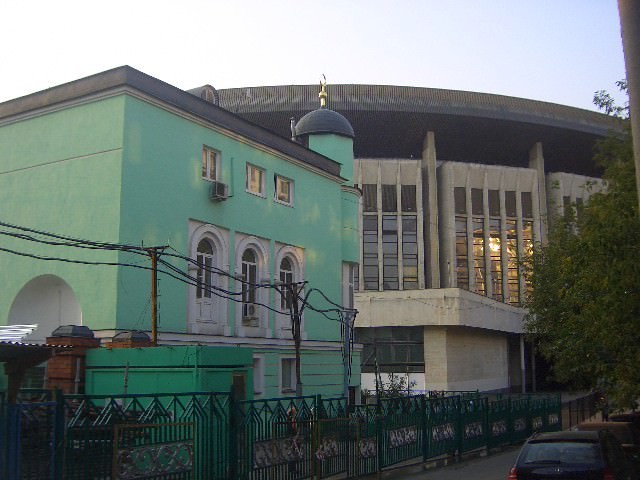
It seems only yesterday that I bid farewell to the last Ramadan—a Ramadan that wasn’t particularly high on my list of “great Ramadans”. I remember spending the first 10 days of my Ramadan in Moscow on an MBA school trip, in other words, away from the comfort of home and community. Other than my visit to the two main mosques in Moscow (the green one below right next to the Moscow Olympic stadium) and meeting up with Muslims from countries that some of us may not even know existed, I don’t recommend Moscow being on any Muslim’s vacation plans. But this post isn’t about that trip either.

As everyone who works in the West knows, Ramadan is basically a non-event. Other than the formality of the President (at least in America) sending Ramadan greetings to Muslims, for everyone else work is regular ole work. For Muslims, life becomes doubly hard. The following cycle may be familiar to many of us:
Suhoor happens of course before work. Then if you want to pray Fajr in the masjid (and you should), you have to rush in wrapping up your cereal bowl (for some, that is more like parathas and lassi— don’t recommend it!). You come back from Fajr, and you are jumping in the shower to get ready for work. Usually there isn’t enough time to get in some Qur’an between Fajr and getting ready for work, but those who have that luxury of time, this is a great time to do it.
Then it is off to work, spending the entire day (“regular” hours) dealing with the “regular” work issues. Dealing with the opposite sex continues to be a challenge. If it’s summer, the fitna of women shedding more and more clothing continues to be an eyesore for us, the fasting Muslim men! And dealing with lunch-meetings becomes an annoyance, not as much fitna.
After a hard-day’s work, you rush towards home, sometimes missing the iftaar, especially if something urgent comes up at work, or if the sun sets earlier than your office hours. Once you reach home, you change, barely have time to embrace your family (let alone read Qur’an), before settling in to eat your iftaar / dinner.
Within an hour or so, the time of Isha starts towering over your head. So, you drink your chai (to calm your throbbing headache, which usually rear its ugly head during the first few days), and take a bit of rest. You are barely rested, and it’s time to get to prayer! If the masjid is far, you have to leave several minutes early to make it (hence, the importance and benefit of living near the masajids).
And then there’s tarawih. Depending on your Imam’s “recitation speedometer”, you could easily spend 1-2 hours at the masjid. By the time you get home, you are sometimes an hour removed from midnight (and it is going to get worse with Ramadan moving earlier and earlier in summer).
Of course, you do need to wrap up other “regular” activities, like getting clothes ready for the next day, paying bills, visiting MM for the daily Ramadan dose ; ), and before you know it, it’s midnight. Suhoor being only hours away adds to your tension and stress about the next day at work, and this can only help with delaying your much-needed slumber!
If you are one of the lucky, devoted Muslims (all the power to you), you want to get up for some qiyaam-ul-layl before suhoor (it is Ramadan after all). Assuming you do get up, you pray, and before you know it, the time for suhoor is quickly escaping. So, you stop praying, wake up the family, and get ready for suhoor (if you are on a paratha-routine, consider skipping it this Ramadan to save some time!).
Repeat.
That was last year.
No more inshallah. At least not the same routine!
First of all, no moonsighting controversies! In fact, on the 29th Shawaal, a “crescent-lookout” night, we went to pray Isha. After Isha, I was still psychologically prepared for some “news” of Ramadan, and got a weird look when I inquired! You see, within an hour of Maghrib, the question of Ramadan’s beginning no longer exists. No more crescent-wars, no more waiting till midnight to find out if some poor guy’s crescent sighting in California would pass muster with a committee of astronomical experts wanting to know everything from position and curvature of the crescent : ) Once Isha rolls in, no tarawih means no Ramadan. Simple as that. Ramadan was going to be Saturday, no questions asked! Text messages from local phone companies also greeted you (some of the “texting culture” here does get annoying though).
Back to our topic of being a professional at work, things definitely weren’t going to be routine this Ramadan!
We received an employee notice, a scrubbed version of which can be seen below.
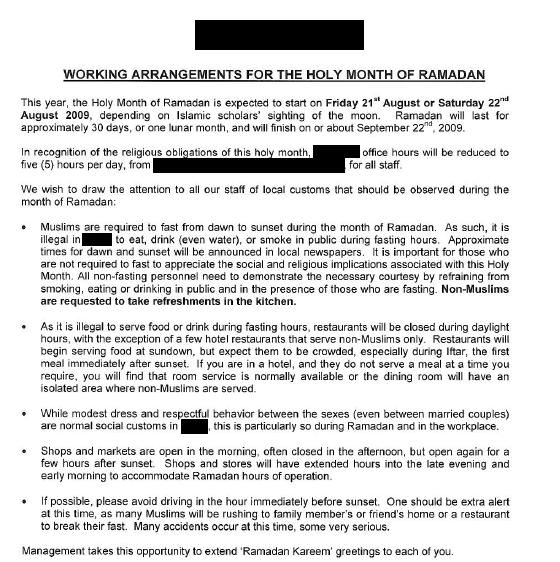
I should make clear that this sort of notice isn’t unusual here. 90% of the companies have some version of reduce work-hours. Let me break this notice down for you:
- Ramadan is an event at work, whether you are a Muslim or not.
- Twenty-five hours of work per week… that’s about 50-60% of the usual workload in the West (other than France of course, where people don’t work year-around, let alone Ramadan : ) )
- Illegal to consume anything in public during fasting hours. So, one could be arrested for doing so. Now, let me add that it wouldn’t bother me that much if non-Muslims consumed food in front of me, as food is seeing food isn’t really a big deal (the smell is probably harder to take!). But the point is for non-Muslims to recognize that life isn’t usual, as well as being a common courtesy. In fact, a Hindu coworker mentioned to me how he actually appreciates and voluntarily joins Muslims in the fasting routine (he only drinks water). Interestingly, he did complain about Muslims binge eating at the iftaar with the “feast routines”, a perspective shared by other non-Muslims, and something that should be taken into account (what is the point of fasting when you end up gluttonous on suhoors and iftaars?)
- No restaurants in operations during fasting hours. Our company though is planning to provide lunches to the non-Muslims, but they will have to eat in secluded areas.
- “Modest dress and respectful behavior”—a personal highlight for me! That means no short-skirts at work (yes, some women, even nominally Muslim, choose to (un)dress at work).
- Be careful on roads around iftaar—hungry Muslims on the run : ) I found that particularly humorous. Imagine telling a cop in your non-Muslim locale, who stops you for speeding, about your need to get to iftaar! I should add that there is another aspect to this “warning”. As most people who have lived in this part of the world know, driving isn’t the most pleasant and safe activity. In fact, you would be lucky if you weren’t in a close shave (accident-wise) everyday.
So indeed something different this year at work!
After work, I plan to check out different masajids for tarawih. The choices are infinite. From the “quickies” of 30-45 minute to 2 ½ hour marathons. Available qarees from Bangladesh to Egypt and plenty of choices for recitations as well. One Imam is known to do Baqarah in one or two rakahs during Qiyaam.
So, that’s that… another reason for those who have the opportunity to move to a Muslim country, probably should (at least for Ramadan : ) ). Though I will admit that the challenge of fasting in a non-Muslim country comes with its own rewards, and tests of will and devotion. Pros and cons for each.
As for me, I haven’t yet started “Ramadan work”. So, let’s see inshallah if the hype lives up to its billing!
May Allah make this a blessed Ramadan for all of you, regardless of which part of the world you witness it in.
A special note: On the first night of Ramadan, a few of us went four-wheeling into the desert. We climbed up what appeared to be a massive dune to me (to be told that this was a “medium size”) and parked some “chattais” (twig sheets) on the desert floor. There we lay down to gaze at the sky, decorated with a million stars. Then we enjoyed some southern fried chicken (okay, not quite “eastern food”), and prayed qiyaam out in the open, under the light of the stars. Perhaps I’ll share expound on this experience another time inshallah.
Keep supporting MuslimMatters for the sake of Allah
Alhamdulillah, we're at over 850 supporters. Help us get to 900 supporters this month. All it takes is a small gift from a reader like you to keep us going, for just $2 / month.
The Prophet (SAW) has taught us the best of deeds are those that done consistently, even if they are small. Click here to support MuslimMatters with a monthly donation of $2 per month. Set it and collect blessings from Allah (swt) for the khayr you're supporting without thinking about it.




So You Want To Become A Lawyer? [Part I] – On Faith, Duty, And The Legal Profession

On Infertility And Not Having A Child: A Letter To Couples Going Through The Silent Struggle

From The MuslimMatters Bookshelf: Your Summer 2026 TBR

Far Away [Part 17] – The Caravan

The Woman Who Corrected Umar: Mahr, Tafseer, and Advocacy

The Muslim Soldier From Ellis Boulevard Who Never Came Home
On Infertility And Not Having A Child: A Letter To Couples Going Through The Silent Struggle

Arafah: The Door That Opens Once a Year

Know Where Your Charity Goes: A Guidebook by Tauqir Sharif for Muslim Givers this Dhul Hijjah

The Best Actions for Eid al-Adha [Imam Dawud Walid]
The Best Actions for Eid al-Adha [Imam Dawud Walid]

Coming Full Circle: Who Are You Now? | Night 30 with the Qur’an

Running Away From Who We Are | Night 29 with the Qur’an

Building From the Ground Up: Week 4 Recap | Night 28 with the Qur’an

The Muslim You Are Becoming | Night 27 with the Qur’an
MuslimMatters NewsLetter in Your Inbox

Sign up below to get started
-

 #Current Affairs1 month ago
The APA Gave Him A Human Rights Award. Then They Cut His Microphone For Talking About Gaza.
-
#Culture4 weeks ago
The Muslim Soldier From Ellis Boulevard Who Never Came Home
-
#Life2 days ago
On Infertility And Not Having A Child: A Letter To Couples Going Through The Silent Struggle
-
#Islam1 month ago
Not Everyone Goes To Hajj…But Everyone Is Called: Gaza, Gratitude, And Dhul Hijjah




Amad
August 22, 2009 at 5:54 AM
Pls feel free to share your own experiences here if you went through a similar “hijrah” :)
Faraz Omar
August 23, 2009 at 1:56 AM
Persian Gulf? U could be sued for calling Arabian Gulf Persian Gulf in the Arabian/Persian Gulf.. lol… i’m not sure u know how sensitive they are about this
abu abdAllah Tariq Ahmed
August 22, 2009 at 6:55 AM
As salamu alaykum, Amad. And Ramadan Mubarak. And keep an eye out for jobs for your MM buddies. ;) LOL, we had a great brother from Dubai at IlmSummit, alhamdolillah. I think you and he would get along.
Ramadan here at “home” is not so bad, though. It’s all in what you bring to the table. But for all our fellow Muslims who find work challenging during Ramadan, rejoice — Allah Knows you would only go through that for Him.
And for everyone remember that Ramadan is a month of historic accomplishments for Muslims. Alhamdolillah, Muslims accomplished much during Ramadan that would have been challenging at any time of the year. So make dua to Allah for strength and use it to do great deeds. May Allah Accept them from you and from me, and may He overlook our mistakes and shortcomings. Ameen.
Arif
August 22, 2009 at 7:34 AM
Masha’Allah, looks like you’re really enjoying yourself there. One of the things that I loved about just being in a Muslim country is the multiple Adhans being blared from the Masaajid. I can believe that feeling gets intensified in Ramadan, with long mats spread out with all kinds of food and large gatherings of Taraweeh… can’t wait to go during Ramadan Insha’Allah!
AnonyMouse
August 22, 2009 at 8:07 AM
As-salaamu ‘alaikum wa rahmatullaahi wa barakaatuh,
Ramadhaan Mubarak from Egypt, where MM’s resident mouse now has to be careful of all the stray cats wandering around!
Just wanted to say salaam and Ramadhaan Mubarak, and that contrary to what many may believe, I have nothing particularly interesting to share about Ramadhaan in a Muslim country that Amad hasn’t already covered :)
May Allah accept our fasts and every other deed we do in this month for His Sake, ameen.
-Zainab (AnonyMouse)
Amad
August 22, 2009 at 8:22 AM
alhamdulilah for this post’s ability to extract Sr zainab out from hiding :)
i am sure egypt is far more exciting than the persian gulf… try an iftaar party on the nile!
muslimah
August 22, 2009 at 8:19 AM
which muslim country are you talking abt? maybe you mentioned and im dumb and skipped..
muslimah
August 22, 2009 at 8:22 AM
ramdan kareem to all of you! May Allah shower His divine mercy upon all of us, forgive us our sins, grant us the protection from the hell-fire during this entire month, also grant us desired strength to fast and pray and help us attain Taqwa, and accept our fasts, prayers, and our good deeds, ameen ya rabb!
muslimah
August 22, 2009 at 9:17 AM
its ok if you dont want to mention the country..its not like we are going to stalk on you or something. lol
Amad
August 22, 2009 at 9:38 AM
you never know who really “wants you” :)
Observer
August 22, 2009 at 10:03 AM
“the fitna of women”
Dear brother, please consider a better word choice. I couldn’t help but pause in horror once my eyes caught this phrase.
It’s not just our “fasting Muslim men” who have these challenges. Have you ever talked to a sister who lives in a predominantly gay neighborhood where the majority of the men are well-built, in shape, well-dressed, and freely expose their musculature in the summer months?
It goes both ways, but I guess we don’t call it “the fitna of men” now, do we?
Amad
August 22, 2009 at 10:41 AM
“Observer”, do you know that even your children are referred to as “fitna” in the Qur’an (Taghabun-15). I guess my point being that just because something is referred to as a fitna (trial/test), doesn’t mean that the thing itself is bad… I mean children are the most precious entities in the world. But if not raised properly or if they lead a person to engage in haram, then they have indeed become a fitna for the negative.
With that clarification, the Prophet(S) mentioned that there is no bigger fitna for men in the ummah than the women. Generally speaking, that fitna is much stronger than vice-versa. Not that there aren’t exceptions in both cases.
I do find your gay-neighborhood example quite humorous and I guess if you feel the fitna, then I am not the one to deny it. Point noted.
MR
August 22, 2009 at 10:26 AM
From what I hear, Ramadan is one big halal party in Muslim countries. Everyone sleeps during the day and eats, prays, chills at night.
Amad
August 22, 2009 at 10:32 AM
I don’t think you misheard…
Traditionally, “dinner” is served at 1130PM at local “iftaar /dinner” invites. It will be interesting.
muslimah
August 22, 2009 at 11:26 AM
cos they stuff in so much iftaar..then wait for all of it to digest until after taraweeh. then the aunties ‘decide’ if they should take out dinner. and it’s almost 10..then ‘meetha’ and later chai.
Ameera
August 23, 2009 at 3:43 AM
That is sooo true… that’s why my father doesn’t want to host/be a guest at “Iftaar parties”… people go on eating and eating and hardly anyone gets up for fard prayer, let alone Taraweeh. May Allah guide us! Now, an Iftaar gathering of Muslims with strong Imaan would be very different and delightful, I’m sure. May Allah strengthen our Imaan!
Sh Muhammad Al Shareef’s recent talk at ilminar.com covered this issue in general terms .
Agajuice
August 22, 2009 at 11:19 AM
JazakAllahu khayran for the article. I pray that your ramadan honeymoon lasts :) Btw I feel that you might have exagerated the ramadan in the west part slightly in that a person leaves for work after fajr, returns after iftar and comes back from taraweeh close to midnight. I don’t think all 3 of those are common or even possible (2 might) and if so, I’d recommend the person to look into a career change!
Having lived in both the environments, here’s a short list of what I liked and disliked in each environment:
West:
Dislikes: -No changes during work hours (but then again I don’t know if the sahabas had reduced hours during ramadan?), most of the people don’t even know about ramadan.
Likes: When I go to the masjid, I see a lot of people I actually know and it’s great chit chatting with them for a few mins. There are lots khatirahs and talks. Lots of activities and special events for the youth! (e.g. youth qayam.) Many fundraisers during taraweeh (some people dislike it but I think it’s great since worship is not limited to salah only.) Masjid iftars brings the community closer. Basically the community aspect of the masjid really comes to life! Also, by the time ramadan is over, you feel like you achieved something. You were pushed to the limit (so to speak) and you’re done alhumdullilah. Finally if you live in a big city, there is a lot of choice for taraweeh too alhumdullilah.
Gulf:
Dislikes: The party mood. The place I grew up used to have a very sucessful “Night Cricket Tournament” with a lot of music and food (families used to come and camp out.) Other families would go and sit in the park and watch movies on a big screen. Kids play soccer late into the night. Muslim employees used to come into work looking dead tired and really scruffy (you know they just ran out of bed without a shower.) They did this because everyone else was doing it plus Hey it’s ramadan! I feel Muslims in the west make an extra effort to look spiffy at work. Iftar parties are just weird (more like weddings.) My in laws were invited to a suhoor party in a hotel in jeddah during last ramadan where they had close to 50 dishes and all the women were all decked out in gold. Now don’t get me wrong: that’s not everyone. I’m sure they are many zuhhaad praying qayam but unfortunately it’s this stuff that you get to see and hear about.
Likes: Everyone’s participating in ramadan. Plus all the other things Amad mentioned (people are just laaaid baaack.) Also neighbours often send iftaar dishes to each other.
I don’t know if I would prefer one over another. Both have their positives and negatives!
BintKhalil
August 22, 2009 at 1:05 PM
Assalamu alaikum
Oh, tell me about the “party mood” – during my one Ramadan in Madinah (which was the most phenomenal life experience I have ever had – we spent all day and night in the Haram praying and reading Qur’an except to come home to sleep) – you would see all the foosball tables moved into the empty lots and the party lights strung out and the Madinan teenagers out having a grand time all through Taraweeh and beyond,making use of those shortened school hours. And there’s the whole lineup of special Ramadan TV programming. “Full House” anyone? LOL. It was only after I spent several years in a non-Muslim country (having grown up in Riyadh) that I managed to appreciate Ramadan when I had the opportunity to spend it again in Riyadh.
Also, it is essential to have the right kind of company. While you have the crowd like the kind I described and you would see the long lines of cars waiting for a parking spot in front of the malls as you return from Taraweeh, you would also see men and women dedicated to their prayers. There was this one masjid in Riyadh (the name totally escapes me) – it had a very Masjid Al-Nabi-like ambiance and it had accommodations for women to do i’itikaf and the front row was filled with Saudi teenage girls at i’itikaf. We went there on the 30th of Ramadan and it was incredibly crowded (with Saudis, for some reason there weren’t many expatriates at that masjid), and when the Imam recited Surah Al-Qadr, the entire jama’ah burst out in tears ’cause Ramadan had ended. But you don’t hear about Muslims like that much because they tend to keep a lower profile than the partiers. If anything, your Ramadan experience is a reflection of yourself and the company you keep, having experienced both sides of the coin myself.
muslimah
August 22, 2009 at 1:12 PM
that was a beautiful comment..i almost started crying myself reading the last para..subhanAllah.
Ameera
August 23, 2009 at 3:48 AM
I got goosebumps… and the motivation to be like those teenage Saudi girls… SubhanAllah… such slaves of Allah are worshipping away in the Masajid… what will become of me?
muslimah
August 22, 2009 at 11:32 AM
lol @ observer. haha that really made made me laugh lol
@ amad
i was just curious..maybe you are talking about dubai? cos you mentioned it before in one of your posts (i think)
Amad
August 23, 2009 at 7:51 AM
dubai? nope. Wouldn’t want to really live there actually. Dubai’s neighbor, Abu Dhabi would be better though…
muslimah
August 23, 2009 at 9:19 AM
yeah too much fitna in dubai. i never liked abdu dhabi. not safe for women..once when i went there one paki uncle, yes *uncle* was trying to follow me around. since then im intimidated to go out anywhere w/o a mahram by my side in AD. dubai is relatively safe for women and the other emirates too.
on a sidenote, did you notice there are a lot of niqabis in AD? masha’Allah you dont see that anywhere else in the emirates!
muslimah
August 22, 2009 at 11:39 AM
@ agajuice
of course we always get to hear the negative side of the story..in a muslim country it’s not very easy to organize masjid events or the like. you have to take permission from the ministry of islamic affairs, have your stuff checked out etc. they are very strict when it comes to propogating Islam..if your caught and dont have the official permission, they put you behind the bars and a lot of times even deport you.
and by the way who gives a party for suhoor? that’s really low…i mean inviting someone to have suhoor with you is something..but throwing lavish parties..subhanAllah.
Need
August 22, 2009 at 11:41 AM
Assalamu Alaikum,
Pls vote in this survey for eid in USA.
http://www.kirotv.com/surveyresults/19959755/index.html?taf=sea
o
August 22, 2009 at 12:21 PM
Well one Muslim country that has major moonsighting issues is Pakistan…
Also…a lot of special deals for sahoor and iftar in every restaurant in the country – an excuse to stuff yourself more than you normally do in the other 11 months. What was the point of fasting?
Other than that – less work/school hours is great :)
The Muslim Kid
August 22, 2009 at 12:28 PM
Salam,
I’m a big fan of Muslim Matters, yet most of the time the posts entail everything I could possibly want to comment, so I don’t comment.
This is so interesting! I went to Pakistan last summer and I agree with some aspects of what you are saying. It wasn’t Ramadan but in general…
Mostly everyone (not everyone) partakes in the religious requirements of living in a Muslim country yet it is more culture than religion to them. ( I shouldn’t even be saying this–don’t know their intentions)
It seems to me that in the west we are almost more sincere, that fasting and Ramadan isn’t a part for us. (quite the opposite)
And finally. I always tell myself I want to grow up (Currently 15) and live in a Muslim country. I know people say that living in a Muslim country doesn’t solve all your problems, if anything might create more problems but I disagree. Muslims in Muslim countries pray, fast, etc. even if all this is because of societal pressure and not wanting to be the “astagfurillah look at that brother” one, they are nevertheless fulfilling those requirements. So praying, fasting, reading Quran, etc. all that good stuff is a part of life, disregarding why your doing it: your doing it.
In the west is quite different, which is in a sense good, but bad too because sometimes you aren’t able to do all this.
Just some thoughts. :P
-The Muslim Kid-
Ameera
August 23, 2009 at 4:04 AM
Perspective from someone living in a Muslim country:
Assalam-o-alaikum Muslim Kid…
I think my reply to you here will also suffice as my “two pence” contribution to the comments thread.
I’m really glad you have the desire to live in a Muslim environment… don’t we all Alhamdolillah? Although, you know what, when I visit MM and when I listen to and watch Islamic lectures and talks by Du’aat in the West, I always feel like I’m missing out on something HUGE. You must be thinking, “No way!” But really, the kind of scholarship that is emerging from the West, the conferences and gatherings of Taqwa that you guys are being part of (Ilm Summit, Journey of Peace, TDN, etc.) make me feel like you guys are the ones living in a Muslim country and not the other way around.
In my country, in the upper-middle-class social group I belong to, it’s generally a blemish on you if you strive to become more practicing. Boys who study in good schools and come from “educated” and well off families will find they’re becoming easy joke material. Even parents get upset when their child is seen to start leaving traditional practices that have roots in Jahiliyya and adopt the Quran and the authentic Sunnah. It’s okay to keep observing basic “rituals” but any more and you’re the ugly duckling, the odd one out in society. So if you want to go out for Eid prayer in the morning? No, that’s not done because tradition doesn’t support it… who cares for the Sunnah?
Of course there are good points too… like the adhaan sounding, a general observance of Ramadan and no one telling you to “go back where you came from”. Also, if you live in Saudi Arabia, there’s the unparalleled joy of visiting the Masjid-ul-Haraam and the intense Islamic spirit prevailing throughout the region. I grew up in S. Arabia, in a city called Tabuk, and I remember falling asleep at night with the neighborhood mosques sounding with the Quran recitation in Qiyaam-ul-layl. It’s a joy I haven’t been able to experience in Pakistan and miss highly.
So, in conclusion… I’d love to be in S. Arabia for the “middle path” it offers me between the West and Pakistan. Yeah, S. Arabia has its own “night life” aspect too in Ramadan but, I know from experience and growing up there, the good part prevails and makes Ramadan the joy of joys!
Ameera
Someone
August 23, 2009 at 5:40 AM
I totally agree with you. After listening to all these lectures and ilm summit etc. i feel that i am missing on a huge thing which i will never be able to feel or witness in Pakistan and for that matter alone i want to move to the west :) There is no comparison at all here with the level of scholarship in the west.
On the outside it looks very good to be ab able to live in a muslim environment where everyone is praying, fasting etc. but thats not the case. More and more people are straying from the right path and becoming more secular. It is not easy to practice over here as you are looked down by your own family, friends, coworkers. Ramadan and other events here more are a cultural thing than religion.. Even the practicing ones practice only that part of islam which fits with their culture/traditions and disregard those which clash with their Jahiliyya beliefs.
Of course everyone have their own pros and cons, but for me the cons of living in Pakistan (islamically) are too high in terms of understanding the religion and growing in it.
Abu Rumaisa
August 24, 2009 at 1:06 PM
The west offers these Islamic institutions… the same is available in Middle East but I guess the difference is the language of instruction. Most of lectures, courses in ME are in Arabic & since most expats can’t speak a word of Arabic.. they loose out.
Z
August 22, 2009 at 2:17 PM
Assalamualaikum,
I’ve spent two Ramadhan in Pakistan, and for me, it hasn’t been too great of an experience.
I was a student and class would start at 7:45am meaning I’d leave home around 6:30. It’d end at 3:30pm so I would get home around 5:00. Classes weren’t shortened in the least.
The worst thing though was that I could not go pray taraweeh. Being a female, in a culture with male-only masajid was horrible. Praying taraweeh at home is nothing compared to praying them in the Masjid. You feel the spirit of Ramadhan way more when in Jamaa. There were no community/masjid qiyaam ul layl.
All in all, I didnt particularly enjoy my Ramadhan’s spent over seas.
Amad
August 22, 2009 at 2:46 PM
the character of Ramadan in Muslim countries varies greatly from country to country. Pakistan and the GCC (Arab countries around Persian gulf) are way different. Here, you see tons of women at tarawih and EVERY masjid has excellent facilities for them.
Sadaf Farooqi
August 23, 2009 at 1:51 AM
Yes; what you are saying about women not having designated areas in regular masajid is quite sad, to say the least. But I live in Karachi, and the bigger mosques that are founded on knowledge of Islam, usually having Islamic education being imparted in them as a routine (for example: Dr Israr Ahmed’s Quran Academy in Sea View, Madrassah Saeedia in Zamzama, Masjid Aishah of Khayaban-e-Ittehad, Binori Town masjid in Defence phase 4 – maybe it is called Abu Bakr Masjid; (I am not sure) and many other big masajid) have seperate, airy rooms for women designated for taraweeh during Ramadan. Also, women in Karachi usually pray taraweeh congregations held in spacious lawns of private homes, or in “shaadi”/wedding lawns that usually also have late-night qiyam al lail and duroos arrangments; here again, men and women have seperate areas for praying. Praying under the sky surrounded by trees is amazing.
Next time, I hope you will contact someone who has been living for decades in the Pakistani city for details about mosques in Ramadan. May Allah help you enjoy taraweeh in case you visit again! :)
mystrugglewithin
August 23, 2009 at 12:50 PM
Nice defense, agreed! :>
Regarding Pakistan
I came to USA a couple of years ago. I lived in Karachi all my life. I lived there with friends who took Ramadan as more of a burden than blessing. I was one of them.
But I flipped the moment I landed here – something happened [alhamdolillah]. Now, for most of the part, I don’t deserve to compare the Pakistani Ramadan with the Western Ramadan. I didn’t know the right people, or the right places there, I never sought the righteous company.
Just a suggestion, I hope I am clear! :>
Pakistani X
August 24, 2009 at 9:00 PM
Founded on knowledge of Islam?! Firstly, masaajid that don’t have a space for women base it on a valid fiqhi view point. Secondly, in their defence it can be said that a woman’s prayer much more greater in reward at home than at masjid. Taraweeh is not fardh- hence not praying it in masjid, by staying at home and being able to gain more ajr- isn’t a bad deal.
Thirdly, a person just has to look for the right place. There are plenty of masaajid with space for women, especially the Ahl-e-hadis masaajid. All the Ahl-e-hadis masaajid that I’ve been to, had space for women. And, there are plenty of them around. If a lady wants to attend taraweeh at masjid, a little bit of extra effort won’t hurt either.
Ameera
August 23, 2009 at 4:16 AM
I think what you mean is that there isn’t a real tradition of going to the mosque for Taraweeh when it comes to women. I feel that strongly because it means that if I want to adopt it, it’s always going against the tide and having to explain to people why I want to go for Eid prayer in the morning. Of course, Allah(swt) makes ease and Alhamdolillah, as Sadaf pointed out, there are emerging opportunities for Muslim women to pray Taraweeh in Karachi, which is where I live too.
About being a student, I couldn’t agree with you more. I miss S. Arabia in this matter too… I mean, we had school hours from 10 to 2 for Ramadan and I suspect the Universities weren’t that different considering even working hours were made shorter. Today in Pakistan with the Daylight savings still in place, we hardly get time to recite a half juz of the Quran after Fajr and we’re hurrying off to school (some school vans start their route before sunrise!) or college. Even there, the work hours are not shortened in any major way… just 1.5 hours rolled back while you’re expected to maintain the same level or work. In my case, that means I’m expected to put in 6-8 hours of study daily… but I’m not planning to, or I’d miss out on my Ibadah… Taraweeh, etc. May Allah make it easy upon us! It’s considered a great folly to even expect an easier schedule in Ramadan in Pakistan… there’s secularism for you.
This isn’t intended to be a rant though, but a statement of the facts as they stand. And of course, there’s some Khayr in everything which means there is a lot of good that comes from living in Pakistan during Ramadan too Alhamdolillah. :)
Abu Bakr
August 22, 2009 at 10:26 PM
The routine here in Saudi is quite sad. I feel like slapping everyone and tell them to wake up and get back to work.
Faraz Omar
August 23, 2009 at 1:55 AM
Ramadan is the BEST in KSA… masha Allah… tabaarak Allah…
though i agree to wat u say about attitudes during work…
Ameera
August 23, 2009 at 4:19 AM
I second that. I third that. I fourth that. I *infinity* that.
Faraz Omar
August 23, 2009 at 6:59 AM
LoL… may Allah continue to bless the country… the blessings here really cannot be compared to any place on earth…. and ramadan is really unique… masha Allah… as i heard on radio the presenter quoting prince naif saying that our salaamah is because of islam (bi-islaaminaa) and our aman is because of our eemaan (bi-eemaaninaa)
Omar
August 22, 2009 at 11:34 PM
Jazakallah khair,
really need to move to the gulf once done with my masters! inshAllah
sounds amazing
Abu Abdullah
August 23, 2009 at 7:09 AM
Salam.
Ramadhan in KSA is unbeatable. You have so many nice quran reciters, even the local masjids is probably just as good as one of the best in UK/USA !!!
Its normal to do iftar with your friends .. one day you invite a few families .. next few days .. your invited !!! less cooking for all !!!
Work hours reduced .. not that it makes any difference .. even in the long hours prodcutivity is the same !!! No change there .. But obviously you get a little more time before maghrib to do your special worship like read quran, talk to your family, help with the cooking (well maybe not the cooking but at least wash and cut the fruit !!!) and finally make dua and thanking Allah that you have such a nice wife that can cook proper desi food to open your fast with !!
muslimah
August 23, 2009 at 7:25 AM
lol are you implying the wife is only for cooking good iftar? ramadan in any muslim country in the gulf is amazing. but yeah saudi is something else..subhanAllah.
Abu Abdullah
August 24, 2009 at 5:58 AM
not only for cooking good iftar (parathas in suhoor too!).. but it was one of the important conditions (i.e. good desi cook!) i was looking in a wife .. i love my desi food too much!
muslimah
August 23, 2009 at 7:14 AM
@ ameera
assalaamu’alaikum
i live in a muslim country myself and agree with you. it does feel like we are missing out on something huge. but alhamdulillah for the internet :)
” But really, the kind of scholarship that is emerging from the West, the conferences and gatherings of Taqwa that you guys are being part of (Ilm Summit, Journey of Peace, TDN, etc.) ”
most of the shyuookh in the west studied in muslim countries (saudi, egypt, syria etc) so it’s not like we dont have good scholars or Islamic universities here. we just dont have that kinda interaction with the shyuookh. plus the islamic conferences are always held for the shyuookh only. but it;s ok…i guess. ’cause we have the Qur’an, tafsir, and hadith books. that imo is more important to study than attending islamic conferences. though i wont mind having both. alhamdulillah 3ala kulli 7aal. there are pros and cons in every situation. you just gotta decide what’s best for you.
Ameera
August 23, 2009 at 9:54 AM
Yeah, Alhamdulillah for the internet! :D Totally agree with you there, sista!
When I mentioned conferences, I forgot to add the Jumua khutbahs at masajid and Islamic centres (are they the same?) that ladies can and do attend. The Shuyookh have studied in Muslim countries many-a-times, yes (eg: Yasir Qadhi, Nouman Khan) but the freedom with which they do their work in the West, and with all the technology and the far-reaching effects they have, it’s just not like that… in Pakistan at least. Well, you could count Dr Farhat Hashmi of Al Huda and Dr Israr of Tanzeem-e-Islami but that’s mostly it. Alhumolillah alaa kulli haal… what we WILL be questioned about is whether we utilized what he had (i.e. multimedia, internet) to avail of an American scholar’s khutbah?
:) Like you said, pros and cons in every situation.
muslimah
August 23, 2009 at 10:05 AM
i think the shyuookh in muslim countries need to get more tech savvy to reach out to a larger audience :-)
muslimah
August 23, 2009 at 9:24 AM
all schools and universities in saudi are off during ramadan! im so jealous :(
Ameera
August 23, 2009 at 10:01 AM
Tell me about it! :S Actually, no, don’t tell me… I’ve got to go to college tomorrow and gotta push myself for it. Y’know, seriously, women who stay at home when their husband and children (if they’re old enough) go off to school and they’re alone at home to worship in peace and comfort… that’s what I envy. May Allah give us the Tawfeeq to experience that as women, even for a little while!
Sadaf Farooqi
August 23, 2009 at 9:10 PM
Have to admit, I love that time to myself too. The first two hours, especially.
Don’t worry, insha’Allah when you’ll be done with the hard work most women do during their twenties (including education and initial career start), you’ll be able to sit back and enjoy the fruits of your labor. This is Allah’s law – as you sow, so shall you reap.
All in good time. :)
Ameera
August 23, 2009 at 9:52 PM
“All in good time”
That’s it! :)
Nahyan
August 23, 2009 at 9:31 AM
wow man, sounds like quite an experience.
I remember back in Qatar, at iftar time we would be served huge dishes with tons of chicken or lamb.
5-6 per plate, enjoy the beautiful weather and chilling beside a crazy expensive masjid.
Hope you have a spectacular Ramadan bro and everyone else here.
Nahyan
Mash
August 23, 2009 at 1:49 PM
Salam wa alkum amad its Sherif from Maijd ibrahim. Give me a call or e-mail me. I’m missing those nights at your house during ramadan!
Amad
August 23, 2009 at 2:57 PM
Mash, my dear pal… glad that you still use the nick that I bestowed on you ;)
I’ll call you inshallah…
Amad
August 23, 2009 at 3:27 PM
Tonight, I enjoyed praying tarawih behind Shaykh Mohammed Al-Arifi and listening to his speech afterwards. The Shaykh is visiting our town. I remember the Shaykh from a videoconference that he did with us at Texas Dawah many years ago.
With his crystal-clear fusha Arabic, it is amazing how much I was able to understand! What an orator mashallah!
For those who don’t know him, here’s his speech on youtube with translation:
http://www.youtube.com/watch?v=I1214SEa7oQ
P.S. Gotta admit that you can’t get this treat easily in the West :)
muslimah
August 23, 2009 at 5:24 PM
i just noticed the ‘special note’. must be amazing mashaAllah. to my knowledge southern fried chicken exists only in the uae. anyway i love those chicken strips! they are the best after al beik.
Ameera
August 23, 2009 at 8:08 PM
“after al Beik”
Haha… that is SO true. :) That also reminds me of Madinah now, where I had my Al Baik last (in 2006).
Sadaf Farooqi
August 23, 2009 at 9:05 PM
Ah, I love Al-Baik too. Also had it in January 2006, in Mina, when I was on Hajj. Why is chicken on everyone’s minds? :) Because of hunger pangs in Ramadan?
muslimah
August 24, 2009 at 7:21 AM
i was so hungry after reading the ‘special note’ on this post that i went out after taraweeh last night and brought some chicken strips for myself lol…they werent as good as SFC or even al beikh but at least they satisfied my cravings..lol
Muadh Khan
August 24, 2009 at 9:05 AM
Asslamo Allaikum,
Re: Celebrating Ramadhan or being Lazy?
I grew up in Pakistan so had some inkling of how Muslims study/work/go about their business during Ramadhan, yes the activities do tend to slow down a bit in Ramdhan and then I worked in the Middle-East during Ramadhan and what happens totally blew my mind.
During office hours, people lounge around most don’t even show up to work until mid-day and then after Salah doze off (in the local Musalla) or even somewhere at work. After Taraweeh, people SHOP ALL NIGHT and YOUNGSTERS drive around on the streets almost until dawn.
The Arab fascination with wasting time is note-worthy (outside of Ramadhan) but in Ramadhan its taken to new heights!
Life grinds to a halt in the offices where most Offices are Air-Conditioned, houses are Air-Conditioned, Cars are Air-Conditioned BUT the poor labours (Indian/Pakistani/Bangali etc.) continue to do their construction work on the sides in hot weather and life goes on for them (a bit relaxed but not by much).
The stories about Taraweeh are exaggerated at best, yes there is a general increase in people (in the Mosques world-wide) but compared to the neighbourhood population and %age of people praying in Jummuah, Taraweeeh attendance is not that significance.
When Non-Muslims view the general “laziness†of Muslims in Ramadhan there is nothing, it gives them more ammunition to slander Islam.
My job required me to travel extensively throughout Saudia and Dubai and I dealt with many major Governmental organisations in the Kingdom. You will hardly find people who “honestly†work 1-2 hours let alone 5 (or whatever) hours your contract stipulates.
Lines at the Airport/Banks/Telephone/Power companies are massive because some “Muslim†decides that he has gotten a headache from fasting (45 minutes into showing up for work).
My stance was very simple, I was getting paid to work (25/30 whatever hours it was) and I was going to work in those hours. My responsibilities as a Muslim of reciting excessive Qu’raan and Qiyaam should be done ON MY OWN TIME!
My intention in life is to feed my family with HALAL INCOME and NOT to make a mockery out of my responsibilities on the pretence of Ramadhan and in Middle-East this is precisely what happens in Ramadhan i.e. people find an excuse for their lazy habits.
Personally, I was extra careful with my behaviour in the Middle-East because there were Non-Muslims around and their opinion of locals (and thereby in their mind of the entire Muslim Ummah) is pretty bad to begin with & I didn’t want to add anything to it. Most Non-Muslims after working in the Middle-East believe that Muslims are lazy & indisciplined people, who lounge around and take break after break on religious grounds (i.e. Salah, Ramadhan etc.)
Simple, pimple!
P.S: As a 8 year US Military veteran, I have done exercises, worked out and taken assessments while fasting and never had a headache or anything and there are many Brothers who go through life (in the West) during Ramadhan and get on with it. I am neither promoting serving in Western Militaries nor advocating that it wouldn’t be nice to “take it easy during Ramadhanâ€.
muslimah
August 24, 2009 at 10:01 AM
arent you making a HUGE generalization based on your personal experiences?
“After Taraweeh, people SHOP ALL NIGHT and YOUNGSTERS drive around on the streets almost until dawn”
there you go again. i went out last night after 12 am and was quite surprized to see empty roads! there were hardly a lot of people around. you cant group all people into one category. like one of the commentators above said, *good* people tend do keep a low profile.
Muadh Khan
August 24, 2009 at 11:11 AM
Asslamo Allaikum,
Its fairly common observation to see people SHOPPING, DRIVING ALL NIGHT, SKATING, WALKING, SITTING BY CAFES, SMOKING SHEESHA etc. during nights of Ramadhan. You have perhaps not been around long enough or wandered wide enough.
Basically it’s the same behaviour you see on the weekend nights; places like Al-Oliyya (in Riyadh) are prime places for all to see this, beaches in Jaddah and Dhahraan etc. Cross the border into Bahrain from the Bridge (which I used to do very frequently for work/VISA needs) and “Ramadhan Piety†issue is shred to pieces, nothing else needs to be said about the subject.
Empty Roads in Ramadhan after 12 midnight? I am not sure which country or city you are referring to but I take your word for it. But I can almost guarantee that what you state is absolutely against the Norm.
There are Masha’Allah good people everywhere but the Majority of the society behaves (youth etc.) in the way which I have described. People in the West need to STOP viewing/promoting Muslim countries as UTOPIA because they are not. It creates havoc and chaos within the psyche of Muslims in the West, because they ASPIRE to get to UTOPIA and then when they get there they find out it isn’t all that which it is made out to be. And then they communicate back to the people (here in the West) and give half picture of goodness (and hide the general behaviour of common society) to whip up the frenzy of UTOPIA.
Again, Masha’Allah people upon the Sunnah and those who value Ramadhan are everywhere.
Having extensively worked, studied and lived in Muslim countries there is a greater percentage of Muslims (in the West) who are practising then Muslims in the West and this isn’t to start to whip up a debate about Hijrah.
Its Ramadhan so lets busy ourselves with the recitation of the book of Allah (SWT) and work on increasing the Hasanaat, Insha’Allah.
Anyone who is interested in the subject, can fly over and see the “Piety†for themselves on public display during Ramadhan in the Middle-East.
Allah (SWT) knows best.
muslimah
August 24, 2009 at 11:34 AM
waliakumsalam
how do you know there are people out on the streets all at night? are you up too,hanging around? lol…i dont know since i dont go out much at anytime of the year…let alone in Ramadan.
anyway, what you say might be true, but pls have a disclaimer that your making a generalization. it makes the rest of us look bad.
ive a problem with the utopia thing too. saudi isnt the model islamic state. people gotta start accepting that. saudis are people just like anywhere else, with their own ‘underground’ culture. let’s stop expecting them to be holy becoz they happen to belong to the birthplace of Islam. let’s change ourselves before we point fingers at others. what have you done for the ummah around you? verily, Allah doesnt change the state of a nation until we change ourselves. idk where im going with this comment so i’ll stop here!
Amad
August 24, 2009 at 10:02 AM
jazakallahkhair Muadh. I think you are spot on in many areas. Ramadan does become a month-long vacation for many and having worked many years in the West, I know man is “designed” to be able to work “normally” during fasts… it’s nice to have extra time for ibadah (not fun), but the abuse is pervasive. And the party all night concept is something I haven’t witnessed yet, but I know is happening around me. Dinners starting at 1130pm are quite usual.
So, yes, there is a dark side to the easy hours of ramadan.
muslimah
August 24, 2009 at 1:45 PM
@muadh khan
im not tryin to be rude, but pls stop being so negative. when i went out last night, i saw 2 arab guys dressed like rock stars eating away at a fast food restaurant. my first thought was ‘gee, dont they have nothing else to do do with their lives’. later when i went home i felt guilty. i know nothing abt these guys or their family. how can i judge away them at one glance? idk abt you, but i cant think negative abt any muslim. remember the 70 excuses? instead of being judgemental it’ll be better if we can make du’aa for our fellow muslim brothers and sisters.
and like i said abv, there are pros and cons in every situation. you just have to decide what’s best for you and your family. cant have it all..that’s what jannah is for..
muslimah
August 24, 2009 at 1:48 PM
*judge them away
Abu Ayesha Al Emarati
August 24, 2009 at 2:02 PM
Being born in the UAE, I was foolish enough to make ”Hijrah” back to my place of birth.
This place is a Deen-killer. It seduces you, lulls you into a false sense of security because it is a ”Muslim” country, because you can hear the Adhan, because life from a Dunya point of view is generally easier. Your wife can wear niqaab and nobody raises a fuss (although beards in multi-national companies are still a trick proposition), Halaal food everywhere, loads of Muslims.
Five years later and you start wondering where it all went wrong.
The Muslims in the West fight every day, every moment to practice their Deen. They are conscious of their surroundings, of the necessity to build and nurture a community, of sticking together, of spreading and reviving Sunnahs.
Places like the UAE, Qatar, Kuwait et cetera take that fight away or should I say you surrender to these places because you think you are safe now and hence saved.
Big mistake.
I hate exaggerated speech and I choose my words carefully when I say that I was a ”better Muslim” whilst growing up and living in London.
When the Islamic state is established, worry about hijrah.
Otherwise, its a big, fat con.
Stay where you are, learn Tawheed, learn your Deen, read books by the scholars of the Salaf As Saalih (Ibn Taymiyyah, Al Albaani, Ibn Baaz) and make Da’wah through your Islamic behaviour.
Leave pipe-dreams where they belong.
In a pipe.
Abû Mûsâ Al-Ḥabashî
August 24, 2009 at 2:44 PM
I find this comment confusing. Are you saying that London and other Western countries are better for your dîn because you have to struggle to practice it there in the face of unIslâmic influences? If so, I would think that an Islâmic state would be much “worse” than the countries you mentioned.
muslimah
August 24, 2009 at 2:45 PM
“This place is a Deen-killer. It seduces you, lulls you into a false sense of security ”
if you made hijrah for the sake of ‘attaining security’ then you were wrong to begin with for verily this dunya is like a prison for the believer. and if you get *seduced* easily then maybe you should recheck your eman.
what are you trying to say? that all practicing muslims in the east make hijrah to the west? what will happen to the muslim world then? isnt it our duty to stay back and do d’awah? didnt the Prophet salAllahu’alaihee wasllam stay amongst the mushrik and munafiqeen? do you think he salAllahu’alaihee wasallam was having the time of his life even after he made hijrah to madinah? go back and read the seerah again no offense.
just to make it clear, i dont have anything against muslims in the west. i believe you have to make a choice that’s best for you.
Abu Ayesha Al Emarati
August 24, 2009 at 2:04 PM
By the way, I think I might have gone to school with Amad in Dubai.
I might be wrong of course…
Amad
August 24, 2009 at 2:32 PM
Abu Ayesha, email at info at muslimmatters dot org or submit a comment with a correct email address and I’ll contact you back. We’ll see if you are wrong or not :)
Abu Ayesha Al Emarati
August 24, 2009 at 3:04 PM
Amad, Allah knows best but I feel my guess is good.
My email is correct.
If Haseeb rings a bell, then you know I know you!
Walillahil Hamd!
Amad
August 24, 2009 at 7:58 PM
bro,
i am really curious now… waiting for ur email…
Abu Ayesha Al Emarati
August 24, 2009 at 3:01 PM
Jazaak Allah Khayrun Abu Musa Al Habashi and Muslimah for your comments.
I was refering specifically to the UAE and the Gulf countries in general.
Anyone who has lived here for a few years will emphatise with what I have to say.
Don’t make the Gulf countries a Utopia, please.
The closest you can get to a proper Islamic environment is Saudi Arabia and even then the society can be a bit oppressive at times. My mother is a Saudi, I’ve lived in Saudia and hence I feel qualified to comment on this issue.
Muslimah and Abu Musa both of you are putting words in my mouth and I urge you to be more considered in your reactions.
If you disagree with me, fine, may Allah rectify our affairs and lead us to what is best for our Deen, Dunyah and Aakhira. Aameen
Abû Mûsâ Al-Ḥabashî
August 24, 2009 at 3:22 PM
Wa iyâkum. This is nothing to get into an argument about, but I don’t think I put words into your mouth at all; maybe you yourself misrepresented what you meant. As a matter of fact, I think you’re putting words into my mouth by implying that I claimed that the Gulf countries are Utopian. Obviously they’re not, but I definitely take issue when people more-or-less use the argument that just because they’re not Utopian, they’re not better for your religion (although I’m not saying you’re doing this now).
Abu Ayesha Al Emarati
August 24, 2009 at 3:32 PM
Alright my brother. I hope I have clarified the matter now. And you did not claim Gulf countries to be Utopia, it is true. If I implied that, then I apologies and take it back.
You are right and I am wrong.
May Allah increase us in taqwa and forgive us our sins in this blessed month. Aameen
Abu Ayesha Al Emarati
August 24, 2009 at 3:16 PM
The irony here is that we label Spubs and crew as mutashadiddeen and having ta’asub but the manners of the posters on here leave much to be desired.
What happened to the ayah in the Quraan about having mercy for the believers?
Abû Mûsâ Al-Ḥabashî
August 24, 2009 at 3:32 PM
I’m not sure who you mean by “we” but I think it requires a certain level of ta’assub to glean harshness from any of the comments I’ve made lol. Ramaá¸Ã¢n Mubârak akhil-karîm.
Abu Ayesha Al Emarati
August 24, 2009 at 3:38 PM
Wa Iyyakum akhil kareem. Wa antum min ahlul jazaa’!
muslimah
August 24, 2009 at 5:39 PM
@ abu ayesha al emarati
can you please kindly point out where did i glorify the muslim world as the model islamic state? it’s you putting words in my mouth.
“Anyone who has lived here for a few years will emphatise with what I have to say.”
ive lived in the uae and i dont deny the fahishah that exists there. you arent reading me at all.
“The closest you can get to a proper Islamic environment is Saudi Arabia and even then the society can be a bit oppressive at times. My mother is a Saudi, I’ve lived in Saudia and hence I feel qualified to comment on this issue.”
so what do you want? a perfect Islamic state filled with sahabah type men and women? sorry but such a place doesnt exist, not at least in this dunya. you sound so unhappy, why dont you move back to london? you made the choice of *hijrah* without much researching. now you go fix it.
p.s- by the way it’s saudi and not saudia
Abu Ayesha Al Emarati
August 25, 2009 at 2:29 AM
JazaakAllah Khairun for the kind words.
You are right, ukhti and I am wrong.
Assalaamualaikum
Abu Ayesha
Abu Ayesha Al Emarati
August 25, 2009 at 5:36 AM
”p.s- by the way it’s saudi and not saudia”
More irony.
MAy Allah rectify our affairs, ukthi.
Abu Rumaisa
August 25, 2009 at 9:21 AM
Abu Ayesha Al Emarati is rite when he says saudia… it’s only expats who call it saudi as they r referring to it by it’s English name.
Pakistani X
August 24, 2009 at 9:05 PM
Ramadhan here is pretty heartless, I don’t see the spirit, I don’t feel the spirit. Instead, I hear people complaining about being hungry and tired. WAllahul musta’an. Ramadhan in public conscious here is more like an excruciating exercise they all have to go through every year, and in the last ten nights they fuss more about clothes to wear on ‘eid than qiyaam.
It’s sad really.
Muadh Khan
August 25, 2009 at 5:00 AM
Asslamo Allaikum,
While living in Saudi a 17 year old Bangali kid (working in the a apartment block of a friend) was mowed down by 2 teenage Saudi kids driving a Capri Classic right next to a Soccer game witnessed by “42†people. His brain was splattered on the side of the Road, police came and took witnesses and went to arrest the guy who simply said, “witnesses were wrong and I was in Madina at the time with the car”
A Non-Muslim colleague’s Australian Girl-friend (who also lived at the same apartment complex) contacted Arab News and other Media and the heat was put on Saudi Government, she was called into Australian Consulate and told NOT to make a fuss about this ELSE she will get deported.
We along with the “Non-Muslims†collected a few thousand Riyals and sent to his blind father and old mother (in Bangladesh) and Saudees did nothing, case dropped.
On Sharh Sitteen a Pakistani labour was run over by a Saudi in a Range Rover and he kept going, the traffic kept swearing around it and kept moving, NOT A SINGLE CAR STOPPED! We were on the other side so we turned around and called the Ambulance and parked our car deliberately in a way (blocking the lane) and forced the Police to respond. Police came but since there was a British, Australian, South African (“white peopleâ€) with us they didn’t say anything.
A Sudani friend of mine was doing his MBA and as part of his course practise got assigned to a Saudi agency which deals with “15-16 year old Indonesian maids†and provides them “work†within Saudi homes, his dissertation documents some “interesting stuff†about how Muslimahs get treated within the Saudi society. I have no reason to believe that the brother was making stuff up as he went along just to get his degree!
Incidents like this happen in Saudi day in & day out and anyone denying it is simply living in a delusional world.
All sounds very Islamic & Pious; a society with Sunnah underpinnings don’t you all think?
Lets leave the clutches of “evil Chicago†and spend our holy month in Jaddah and live the blessed month in the company of “members of a pious society†striving to be upon the Sunnah :-)
So what if some Indian/Pakistani/Bangali/Indonesian/Pilipino Muslims get rapped, beaten up, not paid & treated like dirt…they deserve it don’t they? They come to the Kingdom to earn money and do slave labour and that’s how they should be treated!
As long as work hours are reduced in Ramadhan, all is forgiven.
Faraz Omar
August 25, 2009 at 5:44 AM
WOW!!!! That’s a whole new level of Saudi bashing.
i don’t say that there’s no injustice or that ther’s no abuse of maids…. but please this is not the norm as its being presented. muadh khan… fear Allah… u will be questioned about what ur propagating.
here are just a few links of the number of Saudi nationals beheaded for murder or other crimes…
Beheaded for killing a Bangladeshi farm worker
Beheaded for theft, child abduction, rape, and alcohol and drug violations
Executed for murder
For shooting dead a Yemeni
Beheaded for molesting and leaving the boy to die in desert
If one wants to collect all the bad in one place or searches for taht alone… he may be successful in that but that doesn’t give the complete picture of a society or a country.
so ur conclusions
are really not valid.
The sunnah is strong here and no one can deny it.
moreover all u have is eye witness account of third person narratives who did not even wait to see what the reality of those incidents were… or what were its conclusions…
i can cite several hundreds of accounts that only depict the good side of Saudi Arabia… the kind that u may never hear in any other place…
this discussion was about ramadan … n a balanced view was that truly Ramadan is unique here… though there are issues like some people spending lots of time shopping, others not committed to work etc… but that definitely is not to be generalized…
anyways… i’m really wasting my time here… i gotta manage my subscriptions better in comments…
Abû Mûsâ Al-Ḥabashî
August 25, 2009 at 9:43 AM
Jazâkumullâh khayr akhî. Ridiculous sweeping generalizations like Muadh’s really get under my skin.
muslimah
August 25, 2009 at 10:52 AM
muadh’s comment is just about as accurate as saying all muslims are terrorists.
Faraz Omar
August 25, 2009 at 5:52 AM
did i mention that i don’t deny injustice against people of different nationalities or abuse of maids ?… its just the generalization n the conclusion sticking on the place as a whole that i oppose… becuz definitely the good outweighs the bad for many… n vice versa for others… this is true for all countries…
Abu Ayesha Al Emarati
August 25, 2009 at 5:53 AM
Akhi, Muadh, as you will see from my previous comments I am in agreement with you on many points.
However, we must be clear and careful about distancing ourselves from the takfeeriyoon and the hizbiyoon who use the faults found within Saudia and other Muslim countries as an excuse to rebel against the governments and then scholars who live under these regimes.
In my experience, the rulings on Hijrah must be applied on a case to case basis. If you are living in France for example and find your religious expression severely compromised then moving to a better environment is perhaps waajib, Allahu A’lam.
Personally, living in London I never faced any difficulties with my practice of Islam. I got time off for Jum’ah, my wives wore niqaab no issues, the neighbours were respectful of us, I was never asked to trim or shave my beard by my employer (British Telecom).
My first seven interviews in Dubai and every single one had an issue with my beard. And these were all Muslim prospective employers, by the way. Alhumdulillah, I was eventually hired by a French kaafir (!).
Anyways, akhi, make dua for the Muslims, that Allah eases all our affairs for us, that Allah guides our leaders to implementing Islam in their countries, that Allah guides US to the proper understanding of the Quran and the Sunnah and that Allah joins the hearts of the Believers the world over. Aameen.
Amad
August 25, 2009 at 6:00 AM
abu ayesha… u can email here if you wish: amad at carsreloaded dot com
were you in Haseeb’s class?
Abu Ayesha Al Emarati
August 25, 2009 at 6:06 AM
My brother I replied to the email you sent me.
Have you not seen it?
Now forwarded to reloaded!
Muadh Khan
August 25, 2009 at 6:28 AM
Asslamo Allaikum,
Agreed my brother and Ameen to your duas and may Allah (SWT) save us from falling into Fitnah & Fasad (Ameen).
muslimah
August 25, 2009 at 6:50 AM
@ abdu ayesha
im sorry if ive been rude. may Allah forgive me. but i really mean it . move back to london if you find it easy to practice your deen (and not dunya) there. if you stay, then keep in mind our nabi salAllahu’alaihee wasallam went thru worse things even after he made hijrah (see surah munafiqoon). personally, i try to look at everything as a sign indicating the end of times. we have been told that Islam will become rare, something strange, but there will always be one group of people who will follow the Quran and sunnah till the Last Day. may Allah make us among them, ameen!
@ muadh khan
im not denying the abuse that exists in saudi but much worse things can be said about the west. do you forget the two world wars, the mass murder of ethnic indians, hiroshima and nagasaki bombings, abu ghraib prison, guantanomo (not sure if that’s how you spell it) bay, and continued support for israel against our brothers and sisters in palestine? just do a a quick google search and compare the stats of crimes in the east vs the west.
also it’s interesting how you pick on arabs but leave out your fellow pakistanis. i suggest you read the post here on muslimmatters-”pakistani independence day, is pakistan really independent?’
im not interested in taking this *discussion* any further . fear Allah brother. even the worst of muslims is better than a kafir.
Muadh Khan
August 27, 2009 at 6:13 AM
Asslamo Allaikum Sister,
I did let go of the subject but you have raised some additional points which need to be addressed. No one is stating that the West or Western people are Angelic and free from blame, rather the discussion is about “Muslim societies†who profess Tawheed and (pay slip service) to following the Sunnah.
You are putting a slant on discussion which isn’t relevant. Western society is primarily Non-Muslim and make no claims to following Islam, Muslim societies on the other hand “claim†to follow Islam and therein lies the difference.
The actions of Saudi Government in letting the US establish bases, assisting in carpet bombing of Iraqi Muslims, their backing of so called “Palestinian Stateâ€, sending their Imam to Pakistan to defuse public uprising during Jamia Hafsa affair and their Imam making dua for Musharraf publicly and openly NEED to be judged according to Qur’aan and Sunnah.
http://www.youtube.com/watch?v=mRrbRuXbUOc
While it is absurd to suggest that actions of Government of Barack Obama or Gordon Brown need to be judged according to Qur’aan and Sunnah as they don’t profess their belief in it.
The domain of discussion revolves around “Arabs and Middle-East†because again the thread pertains to that geography and ethnicity. There is little point in discussing Data Darbar in Lahore (and all the Bidah/Shirk) which goes there, similarly in the thread which you refer you it would be irrelevant and absurd to talk about Riyadh!
Again, You are putting a slant on discussion and bringing an angle of Nationalistic pride/racism which doesn’t need to be addressed.
If your intention is defend the Saudees and their government at all costs then so be it, no need to make accusations and try to put a spin or slant on the discussion.
Muadh Khan
August 27, 2009 at 6:15 AM
Asslamo Allaikum Sister,
I did let go of the subject but you have raised some additional points which need to be addressed. No one is stating that the West or Western people are Angelic and free from blame, rather the discussion is about “Muslim societies†who profess Tawheed and (pay slip service) to following the Sunnah.
You are putting a slant on discussion which isn’t relevant. Western society is primarily Non-Muslim and make no claims to following Islam, Muslim societies on the other hand “claim†to follow Islam and therein lies the difference.
The actions of Saudi Government in letting the US establish bases, assisting in carpet bombing of Iraqi Muslims, their backing of so called “Palestinian Stateâ€, sending their Imam to Pakistan to defuse public uprising during Jamia Hafsa affair and their Imam making dua for Musharraf publicly and openly NEED to be judged according to Qur’aan and Sunnah.
http://www.youtube.com/watch?v=mRrbRuXbUOc
While it is absurd to suggest that actions of Government of Barack Obama or Gordon Brown need to be judged according to Qur’aan and Sunnah as they don’t profess their belief in it.
The domain of discussion revolves around “Arabs and Middle-East†because again the thread pertains to that geography and ethnicity. There is little point in discussing Data Darbar in Lahore (and all the Bidah/Shirk) which goes there, similarly in the thread which you refer you it would be irrelevant and absurd to talk about Riyadh!
Again, You are putting a slant on discussion and bringing an angle of Nationalistic pride/racism which doesn’t need to be addressed.
If your intention is defend the Saudees and their government at all costs then so be it, no need to make accusations and try to put a spin or slant on the discussion.
The idea that either I or the other Brother are suggesting a Kaafir to be better then a Muslim is repugnant and absurd and it is clear that you have some issues which need to be resolved.
Muadh Khan
August 27, 2009 at 6:33 AM
Asslamo Allaikum,
Insha’Allah, last comment from me unless someone directs a question towards me which needs a reply for me to clarify my position.
I have been asked to “Fear Allah†while reporting my observations and eye-witness Accounts of some incidents while I lived in Saudia (or Saudi, pronounce it as you will, Insha’Allah)
Alhumdolillah I appreciate the golden advice to “Fear Allah†and may Allah (SWT) give me the ability to be conscious of it all the time (Ameen) but if someone can provide the context and relevance of this golden advice & reporting eye witness Accounts from the Qur’aan & Sunnah that’s be great.
No doubt there is a lot of good amongst Saudees (Masha’Allah), nevertheless the society as a whole has many serious issues which simply cannot be brushed under the carpet by negative voting me, being presumptuous or judicial about my intentions and/or advising me to “Fear Allahâ€.
Being presumptuous and/or judicial are open sins.
We are advised to encourage good and forbid evil (on the whole), even if a society has million good and 99 evil, the 99 evil deeds would still need to be pointed out and corrected while the million good are appreciated.
Million good don’t justify closing your eyes to 99 evil or brushing them under the carpet.
I make dua to Allah (SWT) to give me the ability to “Fear Allahâ€
muslimah
August 27, 2009 at 11:27 AM
@muadh khan
walaikumsalam
i dont have any *issues* ok? im happy with my life alhamdulillah ‘ala kulli haal so stop making assumptions based on a couple of comments.
im not supporting the saudi govt. i dont deny the racism, the double standards they have. but at the same time i know they are my brothers in Islam and i simply cant bad mouth (gheebah) them. dont we all sin? the difference is our leaders are always in the limelight, everything they do is talked abt. im not defending the saudi or any muslim govt for that matter, may Allah guide them, but i refuse to bad mouth them. i pray and ask Allah to guide them. our leaders are just a reflection of the pathetic state our ummah is in.
regarding the saudi society, yes i agree they have got serious issues. but doesnt every culture? look at the desi society. dont even get me started on the jahiliya culture that a lot of desis have . everyone has their own drawbacks. you are singling saudis out. its true they claim to follow the shair’iah but they dont. not completely. but they do in many aspects. if you dont like saudi, dont stay there (but pls for God’s sake stop making generalizations), but as a muslim, please make du’aa for saudis along with the rest of the muslims b/c they are part of our ummah. they need to overcome their backward, opressive culture just as we desis need to.
i dont like partaking in these east vs west debates. they just make me sad. our ummah is already divided. our youth have deviated from islam. let’s spend our time doing d’awah (to muslims and non-muslims alike) and do our part in contributing to the ummah. let’s not point fingers for verily Allah doesnt change the state of a nation until they change themselves.
may Allah guide us to what pleases him. may Allah bestow opon us hikmah and give us the tawfeeq to guide our communties to the the staright path. may peace and blessings of Allah be upon our nabi salAllahu’alaihee wasallam, his family, his companions, and all that follow him till the Last day. Allahumma ameen.
wasalmau’ alaikum
Wish I Could spend Ramadan in KSA
September 11, 2009 at 2:03 AM
ASAK ALL.
Grew up in the UK.. I have the most awesome memories of our Ramadan . Ramadan happened to be in the summer during my ‘formative’ teenage years. We had a blast. After iftari we would head out to our local mosque (school or no school), attend the Isha prayers, Taraweeh prayers and head home. However on Friday nights and the weekends, we would spend Suhoor at the Mosque, followed by Fajr prayer, then head back home, hit the sack, and wake up mid afternoon. Often after iftaari or early hours of the morning, we would go to the the backyard and play badminton or cricket. We had to complete a reading of the Quran during this month, observe extra salaat..I remember being petrified if I thought of being angry, or saying bad word, that would nullify my fast. Our family always had a habit of sharing food, and my mum made pots of food which we distributed to our neighbours and friends. At least once a week she would send food fit for an army to some of the local masjids, so folks could open their fasts.
Now with a family of my own, we have made our own Ramadan traditions and memories. I slack off with the children during Ramadan when it comes to everyday things. I feel it is important for them to attend Taraweeh prayers,and put school work at a distant 2nd!. They get up, pray Tahajjud, read some Quran, do Sahoor and Fajr and head back to bed. Up again for school and college. Upon returning , Iall hit the bed to sleep (we are human after all),, they fit in their h/w and salaats as they see fit. Never been the type of folks who love to go out for Iftari, really defeats the purpose. Have minimum food during iftari, none of the tidbits and empty stomach fillers. Just one meal that all enjoy together,and before you know it, Isha and Taraweeh are upon you. After all..it is ONLY one month., that is what i tell them. And they love it. Just the other day they said’ Mom, we have had the best Ramadan, and have the best memories of Ramadan’. I am so glad.
When the reading of the Quran ( Taraweeh) draws to an end, i find myself in tears, missing already this beautiful month that we have been given,and wondering if I will be alive for the next Ramadan. Really we do not know. as my 9 yr old puts it ‘Mommy, Ramadan is the bestest month’.
Having spent Ramadan in Pakistan,and not being impressed, i would dearly love to spend it in Allah swt house in Mecca and again in Madina. Just to do ibadaat, and to reflect upon the Almighty, that is what i would like to do. InshaAllah, may Allah swt take me there during this magnificent month.
Well ..just a few days remaining. make the most of what is left, make duaas, beg for Forgiveness, Forgive one another. May Allah swt Increase our Imaan, and erase our sins and faults. Ramadan will have come and gone.
abu abdAllah Tariq Ahmed
September 22, 2009 at 9:15 AM
So Amad, how was Eid in the Persian Gulf? :)
bro
October 24, 2009 at 11:58 AM
as salaam alaikum
I disagree
Ramadan IS a special time wherever you are -not just internally but externally.
Its astonishing how many dawa opportunities arise in this month compare to all the others
Pingback: Umrah Road-Trip to Makkah & Madinah | MuslimMatters.org
Pingback: Ramadan in Doha, Qatar: It’s Awesome, even if just for the Tarawih! Sh. Areefi Du’a Audio | MuslimMatters.org
Pingback: Bosnia: Ramadan Experiences & Customs | MuslimMatters.org
Pingback: Allah in the Land of ABBA: Ramadan in Stockholm, Sweden | MuslimMatters.org
Pingback: Yaser Birjas | Unforgettable Memories of I’tikaaf in al-Masjid al-Haram in Makkah | MuslimMatters.org