
Islamic Art
Islamic Art Feature: Pick of the Month, 05/11


Welcome to the another edition of MuslimMatters.org’s regular Islamic Art feature. If you want to see your work on MM, then either email us your images to art[@]muslimmatters[.]org or submit them to our Flickr group.
Click on the images below to view the original.
Keep supporting MuslimMatters for the sake of Allah
Alhamdulillah, we're at over 850 supporters. Help us get to 900 supporters this month. All it takes is a small gift from a reader like you to keep us going, for just $2 / month.
The Prophet (SAW) has taught us the best of deeds are those that done consistently, even if they are small. Click here to support MuslimMatters with a monthly donation of $2 per month. Set it and collect blessings from Allah (swt) for the khayr you're supporting without thinking about it.
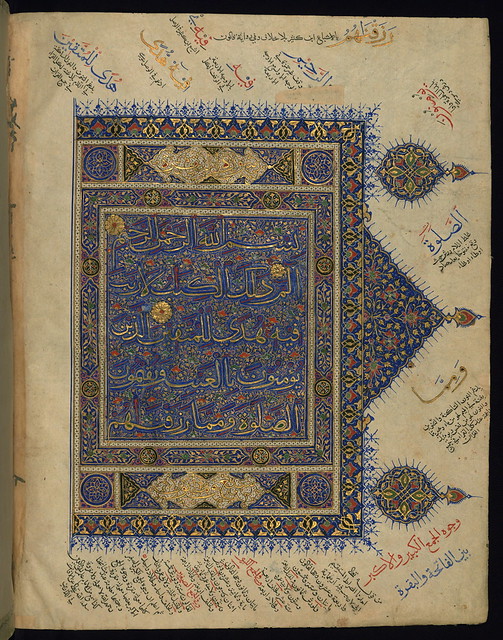
Illuminated Manuscript, Walters Art Museum. This large-format, illuminated Timurid copy of the Qur'an is believed to have been produced in Northern India in the ninth century AH / fifteenth CE. The manuscript opens with a series of illuminated frontispieces. The main text is written in a large vocalized polychrome muḥaqqaq script. Marginal explanations of the readings of particular words and phrases are in thuluth and naskh scripts, and there is interlinear Persian translation in red naskh script. The fore-edge flap of the gold-tooled, brown leather binding is inscribed with verses 77 through 80 from Chapter 56 (Sūrat al-wāqiʿah). The seal of Sultan Bayezid II (1481-1512 CE) appears on fol. 8a. There is an erased bequest (waqf) statement and stamp of Sultan ʿUthmān Khān (1027-31 CE) on fol. 3a.
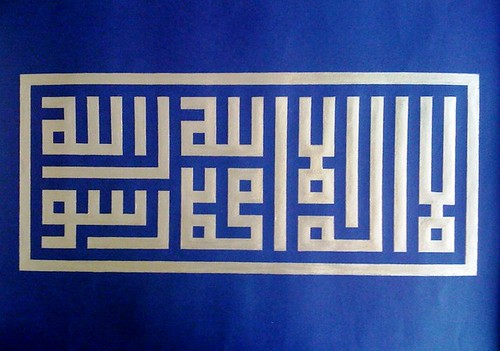
Tawhid, by Fouad EA
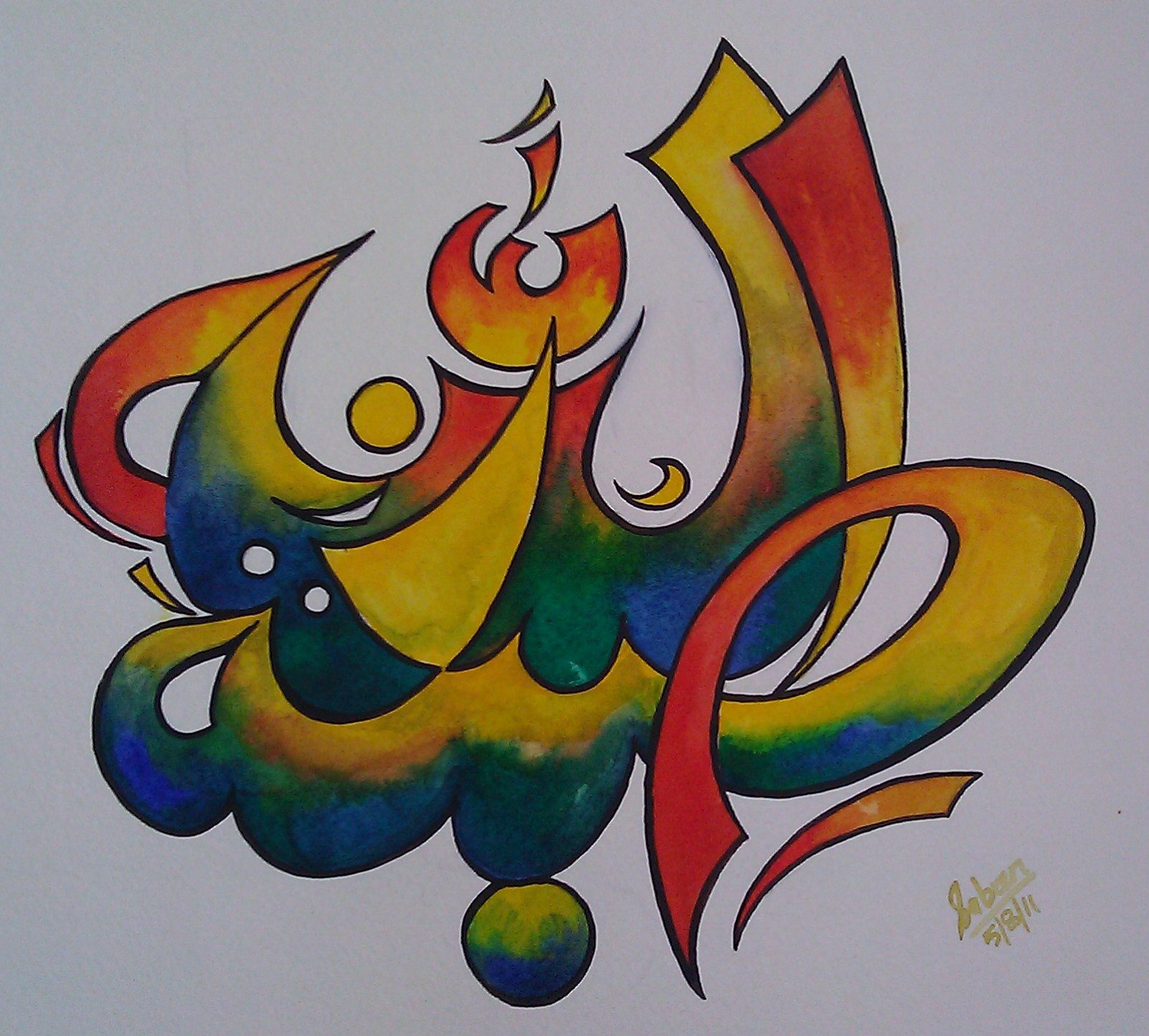
Drenched in the Deen, by Sabeen M.

Eat, Relax, Enjoy (Al-Baqarah: 173), by muslimahbutterfly.
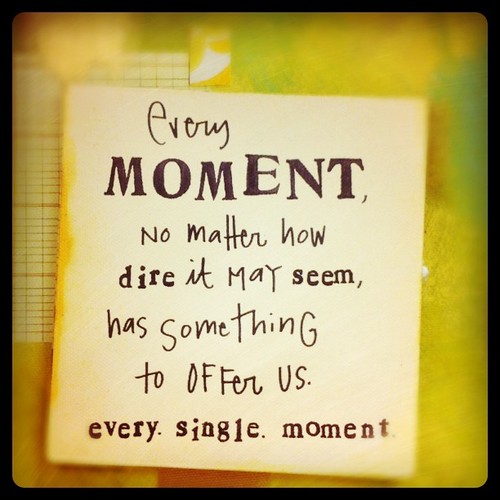
Every moment, by trusimplicity
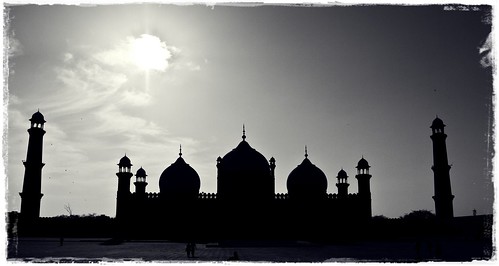
Badshahi Masjid, By arfa

Click the image to find a free collection of Islamic desktop and iPhone wallpapers, by Ihsaan Fusion.
Visit the MuslimMatters Flickr group to view the other entries…
—
Note: all the images presented in our Islamic Art feature are copyrighted to the original producers. Do not reproduce them without seeking their prior consent.
Keep supporting MuslimMatters for the sake of Allah
Alhamdulillah, we're at over 850 supporters. Help us get to 900 supporters this month. All it takes is a small gift from a reader like you to keep us going, for just $2 / month.
The Prophet (SAW) has taught us the best of deeds are those that done consistently, even if they are small. Click here to support MuslimMatters with a monthly donation of $2 per month. Set it and collect blessings from Allah (swt) for the khayr you're supporting without thinking about it.


School Counseling Grounded In The Qur’an And Sunnah: A Framework Of 10 Prophetic Traits

A Case For Critical Reading As Muslims: Reading ‘The Power of Your Subconscious Mind’ Through An Islamic Lens

Far Away [Part 31] – Following Your Lead

When A Place Teaches You What Softness Is Not

[Podcast] Wait, Muslims Have Been Here HOW Long?! | Hassam Munir

When The Shaykh Never Spoke – Deepfakes, Synthetic Scholars, And The Coming Crisis Of Religious Trust

CAGE, Muslim Leadership, And Imran Khan: The Silence Test

Is It Ever Too Early To Prepare For Ramadan? Reflections On Rifq, Forgiveness, And Healing The Heart

Maryam: The Story Of The Muslim ‘Virgin’ Mary
Far Away [Part 31] – Following Your Lead

The Best Actions for Eid al-Adha [Imam Dawud Walid]

Coming Full Circle: Who Are You Now? | Night 30 with the Qur’an

Running Away From Who We Are | Night 29 with the Qur’an

Building From the Ground Up: Week 4 Recap | Night 28 with the Qur’an

The Muslim You Are Becoming | Night 27 with the Qur’an
-

 #Life3 weeks ago
When The Shaykh Never Spoke – Deepfakes, Synthetic Scholars, And The Coming Crisis Of Religious Trust
-
#Culture1 month ago
The Stirring Of A Muslim Population In Japan: The Story Of Yusuke Fujitani
-
#Current Affairs1 month ago
Long War Without End: A Quarter-Century Since The War On Terror
-
#Culture1 month ago
[Podcast] Faith, Motherhood, and the Call to Gaza | Dr. Samaiya Mushtaq



Mona Adam
May 21, 2011 at 6:50 PM
Salaam Alykoum:)
JazakAllahu khairn for choosing my picture.
May Allah bless you,ameen!
Mohammed Homam
May 23, 2011 at 2:14 PM
This is beautiful art. Thanks to all who participated and shared such wonderful pictures.
G M
March 17, 2012 at 5:48 PM
Assalamualaikum wa rahmatullahi wa barakatuh
It was narrated that ‘Aa’ishah (may Allaah be pleased with her) said: “The Messenger of Allaah (peace and blessings of Allaah be upon him) came back from a journey and I had placed a curtain of mine that had pictures on it over (the door of) a room of mine. When the Messenger of Allaah (peace and blessings of Allaah be upon him) saw it, he tore it and said, ‘The people who will receive the severest punishment on the Day of Resurrection will be those who try to make the like of Allaah’s creation.’ So we turned it (the curtain) into one or two cushions.” (Narrated by al-Bukhaari, al-Libaas, 5498). It was narrated that ‘Abd-Allaah ibn Mas’ood said: “I heard the Prophet (peace and blessings of Allaah be upon him) say: ‘The people who will be most severely punished on the Day of Resurrection will be the image-makers.’” (Narrated by al-Bukhaari, al-Libaas, 5494). It was narrated from Ibn ‘Abbaas that the Prophet (blessings and peace of Allaah be upon him) said: “Whoever makes an image in this world will be commanded to breathe the soul into it on the Day of Resurrection, and he will not be able to do that.” Narrated by al-Bukhaari (5618) and Muslim (2110). It was narrated from Ibn ‘Abbaas (may Allaah be pleased with him) that a man came to him and said: O Ibn ‘Abbaas, I am a man who earns a living from what my hands make, and I make these images. Ibn ‘Abbaas said: I will not tell you anything except that which I heard from the Messenger of Allaah (blessings and peace of Allaah be upon him). I heard him say: “Whoever makes an image in this world, Allaah will punish him until he breathes the soul into it, and he will never be able to do that.” The man was very afraid and his face turned yellow. He [Ibn ‘Abbaas] said: Woe to you! If you must do that, then (make images of) these trees and everything that has no soul. Narrated by al-Bukhaari (2225) and Muslim (2110). It was narrated from Abu Hurayrah (may Allaah be pleased with him) that Jibreel (peace be upon him) said to the Prophet (blessings and peace of Allaah be upon him): “Tell someone to cut off the head of the statue so that it will be like a tree.” Narrated by al-Tirmidhi (2806), Abu Dawood (4158); classed as saheeh by Shaykh al-Albaani in Saheeh al-Targheeb (3060).
Al-Bukhaari (5347) narrated that Abu Juhayfah (may Allah be pleased with him) said: The Prophet (blessings and peace of Allah be upon him) cursed the image makers.
Therefore you should repent immediately and take down the pictures to avoid punishment.