
Dawah and Interfaith
The Hadith of the Palm Shoot and the Crisis of Islamic Work


One Hadith that never cease to motivate me to contribute to the cause of Islam is:
“If the Hour starts to happen and in the hand of one of you is a palm shoot or seedling; then if he’s able to plant it before the Hour happens, then let him plant it”. As-Silsilah as-Saheehah #9.
No doubt, there are many lessons that we can extrapolate from this short yet super-powerful Hadith. But the first lesson that comes to my mind is that a Muslim should learn to contribute under all circumstances. Now, I don’t think any Muslim would dispute the fact that the Day of Judgment is the ultimate accumulation of the most difficult set of conditions for a human being to operate in. There is no shortage of Quranic verses that describe to us the human condition on that Day.
Keep supporting MuslimMatters for the sake of Allah
Alhamdulillah, we're at over 850 supporters. Help us get to 900 supporters this month. All it takes is a small gift from a reader like you to keep us going, for just $2 / month.
The Prophet (SAW) has taught us the best of deeds are those that done consistently, even if they are small. Click here to support MuslimMatters with a monthly donation of $2 per month. Set it and collect blessings from Allah (swt) for the khayr you're supporting without thinking about it.
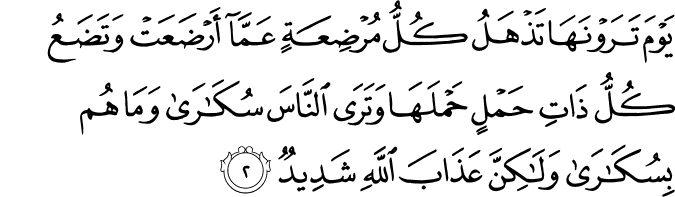
In Surah 22:2, Allah says, “On the Day you see it, every nursing mother will think no more of her baby, every pregnant female will miscarry, you will think people are drunk when they are not, so severe will be God’s torment”. In such extreme circumstances, it may have been expected that the Prophet would have instructed us to throw out that plant, and to concentrate on prayer or something. Yet, the Prophet manages to draw a breathtaking picture of someone who’s fighting against the Day of Judgment, it starting to happen and the man is trying to plant a shoot before it happens!! SubhanAllah, not even the Hour is an excuse for the one of us not to contribute to society and to the benefit of humanity.
But if we look at our condition today, we see some Muslims, at least subconsciously, ignoring or even opposing this prophetic message. We have come to a point where some of us have become experts at manufacturing excuses. Moreover, this attitude has managed to encompass all spheres of Islamic work, from prayer all the way to social service, civil rights, and political activism. Take for example the prayer of Fajr esp. in congregation. In the summer, we claim that Fajr is too early. In the winter, we convince ourselves that it’s too cold.
When it comes to staffing programs and manning projects for the Muslim community, you see meager participation. Those of us who are active sometimes joke amongst ourselves that it’s the same people who are getting together to design fundraising for a masjid, planning a program for the youth, organizing a delegation to talk to a newspaper that offended Islam, and on and on. So, where is the rest of the Muslim community?? Even the 80/20 rule falls short from describing our condition. This rule simply states that it’s usually 20% of the people that contribute 80% of the work. I think I won’t be exaggerating if I said that in our case it’s probably 5% of our community that is contributing 95% of the work.
My intent here is not to expose or highlight a negative trend as much as to contrast our condition with the extremely positive message of the hadith at hand. In other words, many of the excuses that you may hear from Muslims for not taking part in Islamic work are revolving around the difficult conditions that they find themselves in. On the one hand, you hear excuses like
“Oh brother, I’m so busy, I have no time, I have a family and I have a full time job”.
Or you may hear,
“Oh brother, after 9/11, conditions have changed, I can’t work for this organization, and I can’t give money to that charity”.
On the other hand, you find the hadith saying that you contribute regardless of the condition you are in. Otherwise, there may never be an ideal condition for you in this life that perfectly suits your liking. May Allah have mercy upon this Muslim poet who beautifully captured this type of mindset when he said:
ويلهيك حسن جمال الربيع فأخذك للعلم قل لي متى
If you are bothered by the heat of the Summer
the dryness of the Fall and the cold of the Winter
And you are overtaken by the beauty of the Spring
Then seeking knowledge tell me when?
In other words, it’s either not comfortable (too hot, too cold, too dry, too wet, etc.), or it’s too comfortable (too cozy, too beautiful, too soft, etc.), but it’s never just right! If you are waiting for the perfect condition to start working for Islam, it may never materialize, not soon anyway. But wait a minute, this is the perfect condition. It’s in the time of crisis that you can contribute most, that you are most needed, that you can influence and cause change and affect impact. Lots of Muslims immigrated to this country for a better life. They came here to seek a degree or find a dream job. And for a while that seemed to work perfect. Many Muslims became successful and began to enjoy the American dream. But, now that conditions have changed and are not as pleasant as they used too, it’s not time to get all depressed and negative. Now, it’s time to recapture and revive the spirit of our Muslim ancestors who operated under much harder conditions, but with a very strong and positive attitude.
Just to cite one example of many, Abu Yusuf  , the famous student of Imam Abu Hanifa was on his death bed and was losing consciousness when his student Ibrahim ibn al-Jarrah arrived. When Abu Yusuf woke up and saw Ibrahim he asked, “what do you say about this Mas’alah [a religious issue]?” Ibrahim proclaimed shockingly, “while you are in this state?” Abu Yusuf replied, “what’s wrong with that? We study so maybe one person will benefit or be saved [by the correct answer]”. Ibrahim goes on to narrate that it only took him to finish debating the Mas’alah and reaching the door till he could hear the weeping of his teacher’s family [signaling his death]. Can you imagine someone who was teaching and learning till the last moment of their lives? I say Abu Yusuf, and many others of this Ummah, were a true embodiment of the Hadith of the Faseelah [palm shoot] mentioned above. They contributed what they were best at under the harshest conditions and until the last moment of their lives. They contributed selflessly even if they didn’t see the results in their works in their lifetime.
Just like this man that the Prophet described. He’s planting the palm shoot, but he’s not sure if he or the plant will make it for the next hour. But that’s okay since this man has fulfilled his responsibility. The rest is on Allah.
Keep supporting MuslimMatters for the sake of Allah
Alhamdulillah, we're at over 850 supporters. Help us get to 900 supporters this month. All it takes is a small gift from a reader like you to keep us going, for just $2 / month.
The Prophet (SAW) has taught us the best of deeds are those that done consistently, even if they are small. Click here to support MuslimMatters with a monthly donation of $2 per month. Set it and collect blessings from Allah (swt) for the khayr you're supporting without thinking about it.







Undecided Nation: How A Mosque In Kamagasaki Fills Japan’s Immigration Gap – A Photo Story

Trusting Allah: Lessons from Hudaybiyyah

When Tawakkul Isn’t Enough: Why Financial Silence Hurts Marriages

From The Chaplain’s Desk – Custody Of The Eyes: Lowering The Gaze In A Hyper-Visual World

Rules Of Islamic Inheritance: Dispensing One’s Final Act Of Justice In This Life

On Infertility And Not Having A Child: A Letter To Couples Going Through The Silent Struggle

How To Build A (Muslamic) Library

The Woman Who Corrected Umar: Mahr, Tafseer, and Advocacy

Far Away [Part 17] – The Caravan

So You Want To Become A Lawyer? [Part I] – On Faith, Duty, And The Legal Profession

The Best Actions for Eid al-Adha [Imam Dawud Walid]

Coming Full Circle: Who Are You Now? | Night 30 with the Qur’an

Running Away From Who We Are | Night 29 with the Qur’an

Building From the Ground Up: Week 4 Recap | Night 28 with the Qur’an

The Muslim You Are Becoming | Night 27 with the Qur’an
MuslimMatters NewsLetter in Your Inbox

Sign up below to get started




abu Abdullah
March 14, 2010 at 7:00 AM
jazak Allaah khayr for this reminder. barak Allaah feek.
abu Abdullah
March 19, 2010 at 7:06 AM
Bismillah.
@author, i am going to plant my tree today insh Allaah. may Allaah increase you in good.
wassalam
Mariam E
March 19, 2010 at 10:50 AM
Asalamu Alikum,
Very nice reminder, mashaAllah. Jazakum Allah khair.
Uthman
March 19, 2010 at 1:55 PM
truly a much needed reminder! jazakAllah khair!
Amatullah
March 19, 2010 at 2:08 PM
Jazaak Allahu khayran.
Abd- Allah
March 19, 2010 at 3:04 PM
JazakAllah khayr for the article.
There are several reasons why sometimes 20% of the people contribute 80% of the work, while the rest of us don’t help out. Many times, I wanted to volunteer and help out with a certain project in the community or organization, only to be turned down by those who are in charge. It seems like those who run things are sometimes afraid to let others share the work they do so that they don’t lose control over that organization. This isn’t the case with all Muslim organizations, but it has been with a few which I have tried to work with and help out. They simply turn you down when you offer to help out and they say that they have things under control and are not in need of any help.
Another reason is that those who are in charge run things as if it is a dictatorship. They do not even listen to what others around them have to say. I heard of one organization who “dismissed” the Imam that they had on their board to advise them because they were no longer in need of his services.
So it isn’t always that the people don’t want to help out in their communities, because sometimes it is those who hold the positions and are in charge are not running things the way they are supposed to. I know people will say get involved to change things from the inside, but how do you get inside if all the doors are closed?
Anas Hlayhel
March 19, 2010 at 11:56 PM
Assalaam Alaikum akhi Abd-Allah,
Since I’ve been on both sides of the fences, maybe I can offer some perspective. In short, you may have to prove yourself before an organization will approach you for help. Lots of organization look for potential candidates and they look for certain qualities. What I suggest is get involved wherever you can. One thing will lead to the other. If you prove that you are a reliable resource, I’m very sure that more doors will open. Also, there are many venues of help outside organizations. Bottow line, we all have to start somewhere. But with sincere intentions and hard work, Allah will provide us more and better opportunities. Still, if no organization wants your services, I’d say … start your own :) May Allah empower you to serve Him and His cause.
Abd- Allah
March 20, 2010 at 1:01 AM
Walaykum Assalam Warahmatullah akhi Anas.
JazakAllah khayr for your advice. I have thought about starting my own projects and what not, but I would rather just help out with ones that are already up and running because having more organizations or projects out there isn’t going to achieve anything if we don’t work with each other, so I’d rather just help out the ones that are currently in place rather than start my own thing.
Alhamdulillah I have helped out in several projects in the past, but several other times when I offered to help out I was turned down. But as you said if we work hard on keeping our intentions sincere then we have gotten our reward even if we don’t do anything. Besides, not being able to volunteer too much isn’t that bad, this leaves some free time to seek knowledge, so either way there is good!
i
March 19, 2010 at 4:31 PM
Salaam,
mA the article was well written and was a great reminder
I don’t know where to put this comment or request, so I’m going to put it here. I was wondering if on this blog, we can have a discussion on “how the prophet would’ve handled the health care situation” or if we could look at everything that goes on in society and apply to “how the prophet would handle it”. I think this would be a very interesting post(s). I think it would be an interesting idea and will definitely inform the mass.
Pingback: uberVU - social comments
Reina
March 19, 2010 at 7:48 PM
JazakAllah khayran
Very inspiring!
Marium
March 20, 2010 at 4:19 AM
JazakAllahu Khair for the thought provoking post!
Farooq
March 20, 2010 at 4:53 PM
Now is deffinitely the best time to contribute! If someone works on establishing Islam in America e.g. Building masaajid organizations projects events bridging gaps he is going to be receiving reward as long as they exist. Help establish these things before someone else does and you miss the boat
Ahmad
March 20, 2010 at 9:44 PM
Jazak Allahu Khair, excellent article that is relevant to our current times and current excuses. i am going to turn this into a Jumaah Khutbah inshallah for next week. May Allah grant you and all of us the best of this world and hereafter.
Wael - IslamicAnswers.com
March 23, 2010 at 4:50 PM
An amazing hadith which I had not read before. Jazak Allah khayr for sharing it and for your thoughts.
The other “excuse” one hears a LOT is, “What’s the point? One person cannot make a difference anyway. This problem (whatever it may be) is too huge, you are wasting your time trying to solve it.”
This hadith completely refutes that excuse, in such a powerful way, really. It points out that even if it’s true, even if one person’s actions are not going to solve the problem (after all, even if you managed to plant that shoot, when Qiyamah begins all will be destroyed), you do it anyway because there is goodness in the deed, and that is the focus of the Muslim.
Gibran
March 5, 2013 at 1:16 PM
Assalamuallaikum wa rahmatullahi wa barakatuh
JazzakAllahu khair (I think this means Allah has recompensed you with good?..)
I just wanted to bump up this article.
Mohamed Moustafa
November 28, 2014 at 2:07 AM
Very nicely explained and very motivating.
Jazaka Allah khair
Anas Hlayhel
November 28, 2014 at 8:55 AM
Alhamdulillah, I’m very grateful that my brother and sisters are still benefiting from this article
Samet Faruque
December 20, 2017 at 12:58 PM
Assalamualaikum. I think theres a tiny error in quoting the hadith. Isn’t it إِنْ قَامَتِ السَّاعَةُ instead of إذا قامت الساعة. Jazakumullah khair.