
Opinion
An Exegesis of the Basmala

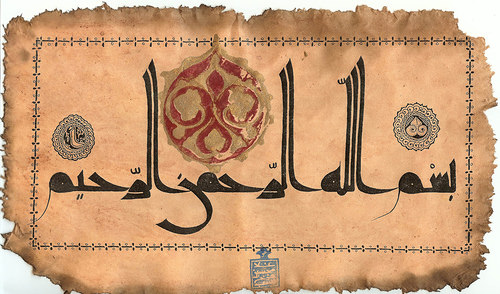 “It is from Solomon, and it says:
‘In the name of God, the Compassionate, the Merciful’”
Al-Qurʾān 27:30
* * *
Question:
Do an exegetical experiment with the Basmala. How can it be understood grammatically? What does the term al-Raḥmān mean in the three different possibilities of reading the Basmala? Why is there such a strong qurʾānic emphasis on the idea of the mercy in God, who is called Allah in the most nameless way possible? With the help of your exegetical exercise, can you show how the tradition of al-Raḥmān for God’s name became integrated into the Qurʾān and united with the nameless God, Allah, in the Meccan phase of Muḥammad’s qurʾānic proclamation?
Keep supporting MuslimMatters for the sake of Allah
Alhamdulillah, we're at over 850 supporters. Help us get to 900 supporters this month. All it takes is a small gift from a reader like you to keep us going, for just $2 / month.
The Prophet (SAW) has taught us the best of deeds are those that done consistently, even if they are small. Click here to support MuslimMatters with a monthly donation of $2 per month. Set it and collect blessings from Allah (swt) for the khayr you're supporting without thinking about it.
Answer:
Introduction
The basmala, or the phrase bismillāh al-raḥmān al-raḥīm, is one of the most oft-recited phrases in the life of every single observant Muslim. It occupies a key place in the Qurʾān itself, for it is the only non-Qurʾānic phrase that all copies of the Qurʾān included, apparently as a ‘marker’ between the Sūrahs. Numerous works have been written specifically about the basmala.1 In this response, a brief linguistic and grammatical explanation will be offered, followed by a discussion of the name al-Raḥmān.
The Basmala as Portrayed in Early and Medieval Islamic Sources
The first verse of the Qurʾān has almost unanimously been portrayed as being Q. 96:1, ‘Recite in the name of your Lord who created.’ From this, some derived that the status of a rudimentary basmala was established, as the ‘name of your Lord’ is invoked. In another early Meccan Sūrah, Noah is told to ride the Arc ‘…in the name of God’ (Q. 11:41), and in yet another Meccan Sūrah, reputed to have been revealed after this one, Solomon writes a letter to Queen Sheba, in which her advisors tell her, “This (letter) is from Solomon, and it (says): In the name of God, the Raḥmān, the Raḥīm” (Q. 27:30).2
The fact that the basmala in its present form was introduced to the Meccan Arabs by the Prophet is quite explicitly mentioned in many sources. One incident, recorded in some canonical works of ḥadīth and the Sīrah of Ibn Isḥāq (d. 150/767), mentions that during the writing of the Treaty of Hudaybiyyah in 6 A.H., one of the emissaries of Mecca, Suhayl b. ʿAmr, refused to allow the Prophet to begin the treaty with the basmala. His reputed reason was, “As for this ‘al-Raḥmān’, I do not know who He is, but rather, write as we are accustomed to write, ‘In your name, O God (bismik Allahum).’”3
There are quite a few prophetic traditions that expound upon the blessings of this phrase and when it should be said.4 It might also have served a more mundane role: Ibn ʿAbbās is alleged to have said that the Prophet was not able to recognize the end of one Sūrah from the beginning of the next until the basmala was recited by Gabriel.5
The basmala is the only phrase of the Qurʾān that Sunnī scholars have disagreed about: is it a verse of the Qurʾān or not? There is agreement that it is a part of Q. 27:30, where it is mentioned in Solomon’s letter to Sheba, and there is also agreement that it does not form a part of Sūrah 9. But there was disagreement over its status at the beginning of all other Sūrahs, and especially the first Sūrah, al-Fātiḥa. This disagreement is found amongst the four canonical schools of law as well as the ten recitations (qirāʾāt) of the Qurʾān. Some of them opined that the basmala was a separate verse at the beginning of every Sūrah, others said it was part of the first verse. A third group claimed it was only a verse at the beginning of the al-Fātiḥa, while a fourth denied that it was a verse in any of these instances. And a fifth group posited that it was a verse by itself, not connected to any Sūrah, which had been placed there as a ‘divider’ to separate two consecutive Sūrahs. This difference of opinion had a direct impact on certain rituals, such as whether one was obliged to recite the basmala out loud in every prayer or not.6
A Grammatical Breakdown and Exegetical Explanation of the Basmala
The basmala consists of four words, the first of which has a prepositional letter attached to it. All of these words are nouns; no verbs or verbal nouns are present.
The first letter of the basmala, the ‘b-‘ is a prepositional letter (ḥarf jar), thus causing the first word (‘bism‘) to be in a genitive state The preposition b- has many uses, but over here appears to be for seeking help (istiʿānah).7 The word ism is the Arabic for ‘noun’. Linguists differed whether it originated from sumuw (s-m-w), meaning ‘to elevate’, or from wasam (w-s-m), meaning ‘to brandish’; the Basran school opted for the former, whilst the Kufan preferred the latter.8
Due to the fact that the phrase bism is in a genitive state, it needs some actor (ʿāmil) to which it can be attached (taʿalluq). The Kūfan school of grammar typically assumes that all missing actors must be verbs, as that is the basis of words for them. In contrast, the Basran school considers all missing actors to be nouns due to their position that nouns are the basis of words. The Kufans then split up amongst themselves in three specific issues regarding the basmala. Firstly: what was this missing verb? Was it, ‘I recite,’ or ‘I begin,’ or perhaps a verb that varied depending upon the action being done at that time? Secondly, what was the tense of the verb: was it a command or was it in present tense? In other words, is the recitor saying, ‘I recite with the name of God’, or is God saying ‘I command you to recite with the name of God?’ Thirdly, what was the position of this missing verb: before the ‘bism‘ or after?
Most of the Kufans, and also al-Zamakhsharī in his al-Kashshāf, came to the conclusion that the verb is specific to the context of invoking the basmala (hence it can be used for any permissible act), that it was in the present tense (since the purpose of the basmala is to obtain God’s blessings upon the recitor), and that the missing verb’s place was after the ‘bismi‘ (since it is more blessed to begin with the name of God, and since it reminded one that the purpose of doing any act was for God, and because it is a clear refutation of the pagans who would begin by saying ‘In the name of al-Lāt‘).
The Basrans, on the other hand, generally held that the missing noun was ‘My recitation’ (qirāʾatī), or ‘My beginning’ (ibtidāʾī), and that it was placed before the genitive. 9
The question also arose: what does it mean seeking help from the ‘name’ (ism) of God? Specifically, the issue concerned the theological controversy over the implication of the Divine Names: are these Names God Himself, or do they belong to God, or originate from Him, or is the noun ‘ism‘ superfluous (zāʾid) and only needed for emphasis? The Ashʿarites, Muʿtazilites and Ahl al-Ḥadīth (to name the more prominent groups) each had their own positions.10
The next noun in the basmala is the divine name ‘Allah‘. This name raises a whole slew of questions, of which only a few will be dealt with here.
There is no doubt that the name ‘Allah‘ was the primary name of the Islamic divinity. The name appears more than 2,700 times in the qurʾānic text, and there is an overwhelming amount of evidence to show that this name was used for many centuries by the pagan Arabs to refer to a Supreme God – a god that even they, with their permissive idolatry, refused to draw or carve images of.11
The linguistic meaning and origin of this name has always been a topic of much discussed in Muslim scholarship. Although a minority of Sunni theologians and linguists considered this name to be a proper name, devoid of any meaning,12 the majority of them considered it to be derived from some three letter root.13 Some suggested that it was a rare transmutation from walaha, which means ‘to confound and confuse’, as if the nature of God (‘Allah‘) confuses and befuddles the minds of all those who try to grasp or understand Him.14 Others suggested that it is from lāhā, which means ‘to conceal and cover’, since the true nature of God is concealed from all.15 However, the most prevalent opinion, amongst linguistics, theologians, and exegetes, is that the name is derived from alaha, which means ‘to show servitude and worship’; hence God (‘Allah‘) is the only Being that is worthy of servitude and worship.16
Some Western Islamicists have posited Aramaic, Syriac or Hebrew origins for this name; strong evidence to substantiate this claim, however, remains lacking.17
To summarize before moving on, the first two words of the basmala translate as, ‘My recitation is with the name of Allah‘ for the Basrans, and as, ‘With the name of Allah I recite…’ for the Kufans.
This name (viz., ‘Allah‘), is then followed by two other nouns, al-Raḥmān, and al-Raḥīm. Both can be derived from the root r-ḥ-m, which means ‘to have mercy, to be compassionate.’ Both utilize known and common morphological forms: faʿlān for the first and faʿīl for the second. Before translating the basmala, it is crucial to understand the grammatical role of these two nouns, as that will decidedly determine the understanding of the basmala. We shall discuss the alleged origins of ‘al-raḥmān‘ in the next section.
Almost all classical works that I was able to reference (including works of theology, exegesis, and shurūḥ al-ḥadīth) appear to understand these two nouns as adjectives of the first noun, viz., ‘Allah‘. Many books of grammatical analysis do not even mention any other opinion. If these two nouns are understood as adjectives (i.e., naʿt), this would then imply that both al-raḥmān and al-raḥīm are describing and characterizing God (‘Allah‘). So it is as if the basmala translates as (according to the Kufan understanding), “With the name of Allah, who is ever Merciful (al-rahmān) and extremely Compassionate (al-raḥīm), I begin this recitation.”
Numerous opinions are found in classical sources regarding the difference between these two names. Most scholars (but not all) are in agreement that the two names are not synonymous or even as efficacious as each other, but rather that al-Raḥman is more indicative of God’s mercy than al-Raḥim. Some opine that al-Raḥman is indicative of God’s mercy to believers and unbelievers in this world, and al-Raḥim is indicative of His special mercy to believers in both worlds. Yet another opinion is that al-Raḥman indicates that God’s Mercy is an essential part of His character, whereas al-Raḥim indicates that God’s actions are always merciful.18
Quite a few scholars sought to understand the wisdom of this particular order of names. Al-Ṭabarī posited that the reason these three names are in this order is that the Arabs typically start off with the primary name and then with its descriptions. God’s primary name is ‘Allah‘, hence it was used here. And since al-raḥman was more specific to God than al-raḥim, it was given precedence to it.19 It is interesting to note that some researchers have offered parallels of such a rendering in Jewish liturgy.20
So far we have considered both nouns to be adjectives, and this is by far the ‘standard’ opinion. There seems to be another opinion, rarely expressed, that considers these two nouns to be substitutes (badal).21 As a substitute, the basmala would translate as (according to the Basran opinion this time, for ease of understanding), ‘My recitation begins with the name of Allah; my recitation begins with the name of al-Raḥmān; my recitation begins with the name of al-Raḥim.’ The purpose of these reiterations would obviously not be to express three distinct deities but rather to express three of God’s 99 names. A modern theologian, Muḥammad ʿAbduh, who appeared to lean towards such an explanation, claimed that this reiteration was meant as a refutation of the Trinity of the Christians, who began their rites with ‘In the Name of the Father, the Son and the Holy Ghost.’ By mentioning three of His Names, God intended to demonstrate to the Christians that even if He has many attributes, He is still One in His essence.22
Some modern Islamicists posit a third position, and that is that only the first of these two nouns is a substitute (badal), and the second is an adjective (naʿt) of it. If this understanding is taken, the basmala would translate as, ‘My recitation begins with the name of Allah, the merciful al-Raḥmān.’23 I was not able to find any scholar within the Muslim tradition who understood it in this manner. Additionally, since both al-Raḥmān and al-Raḥīm are placed after the first noun, in the same grammatical context, one would have to show why one of these nouns should be given a different grammatical role than the other, as this would be an awkward rendering of the Arabic expression.
To summarize these three opinions, the following chart will prove helpful:
|
Grammative case of ‘Allah‘ |
Grammative case of ‘Al-Raḥmān‘ |
Grammative case of ‘Al-Raḥīm‘ |
Rough Corresponding Translation |
|---|---|---|---|
| Proper noun, genitive | Adjective (naʿt) | Adjective (naʿt) | In the name of God, the Merciful, the Compassionate |
| Proper noun, genitive | Substitute (badal) | Substitute (badal) | In the name of God; in the name of al-Raḥman; in the name of al-Raḥīm |
| Proper noun, genitive | Substitute (badal) | Adjective (naʿt) | In the name of God, the merciful Raḥmān |
If this third position is taken, then obviously the question arises as to why two names are emphasized (‘Allah‘ and ‘al-Raḥmān‘), and what the relationship is between them. In order to do this, we need to first discuss the opinions regarding the origins of the name ‘al-Raḥmān‘.
The Origin of the Name al-Raḥmān
The discussion regarding the origins of the name al-Raḥmān is an ancient one. The Qurʾān itself quite explicitly states that this name was unknown to the Quraysh (as in Q. 25:60).24 Most scholars are of the opinion that al-Raḥmān is a unique name of God, and so cannot be used to describe the creation, unlike most other Divine Names, including al-raḥim. This is due to 17:110, where the two names ‘Allah‘ and ‘al-Raḥmān‘ appear to be equivalent in sanctity. There is also a tradition in the canonical works, a ḥadith Qudsī, in which God is reported as saying ‘I am al-Raḥman; I created the ties of kinship (al-raḥm), and from it derived one of My Names.’25 This was one of the primary evidences used by those who claimed that this name is derived from r-ḥ-m. On the other hand, a number of early Islamic authorities, such as al-Mubarrad, considered al-Raḥmān to have a Jewish origin. Quite a few authorities are on record as stating that this name was a name given to ‘ancients’ as well.26
It is clear that the Qurʾān itself considers the name al-Raḥmān to be an ancient name. Apart from the reference in Solomon’s letter (already given), this name is used as the God of all previous nations in Q. 43:45; Abraham beseeches God with it (Q. 19:44); Aaron uses it to remind the Israelites of their God (Q. 20:19); it appears on the tongue of an Israelite community (Q. 36:15); and it appears on the tongue of Mary, mother of Jesus twice (in 19:18 and 19:26).
Modern research has shown that this name was indeed used by certain Jews (and perhaps Christians) in Southern Arabia.27 This group would praise Raḥmānān as the ‘Lord of the Jews’, ‘Master of Heaven’ and the ‘Praiseworthy One’. They would invoke Him to ask for His mercy, to answer their prayers, to grant them a life of justice, and to bless them children who will fight for Rahmānān.28 Nöldeke as well considered it to have been ‘borrowed’ from the Jews.29 Arthur Jefferey acknowledges that al-Raḥmān originated from the common Semitic root r-ḥ-m and that there is little doubt that it was imported from S. Arabia. Whether from Christians or Jews, Jeffery says, ‘the matter is uncertain’.30
Greenfield documents some references to similar divine names found in Akkadian and Aramaic sources from the mid-ninth century BCE, which of course pre-dates Hebrew usage in Southern Arabia. He also shows some usage of the term in Jewish liturgical chants. However, he concludes, “There remains, nevertheless, doubt that rḥmnn was the source of al-Raḥman, since the impact of South Arabian culture on cities like Mecca and Medina seems to have been limited. There is evidence that al-Raḥman was used in Arabic itself before Muhammad.”31
It is claimed by some that this name was a Meccan name that was later not emphasized as much, and perhaps even sidelined by later Muslims as a primary name of God.32 However, the name is mentioned in quite a few Medinan verses as well (for example, Q. 2:163, and 59:22). In addition, every single Sunnī theologian who discussed the Divine Names considered the name ‘al-Raḥman‘ as being one of those 99 names.33
Conclusion
To conclude, as with many issues dealing with the academic study of religion, how one chooses to interpret the basmala has a lot to do with one’s basic theological and historical premises. If one believes that Muḥammad conjured up a new monotheistic system in order to unite the Arabs, then it is plausible to suggest that he might have wished to unite various factions of Arabia under the deities that they would be familiar with, hence ‘Allah‘ for the Arabs of Ḥijāz and ‘al-Raḥmān‘ for the Arabs of Southern Arabia. And this is indeed the position of many modern Islamicists. But such a position does lead to other questions, such as: why did he only choose the name of the god of one faction of Arabia (Southern Arabia), and not other areas and provinces? And why was he so stubbornly opposed to all the Meccan (and Ḥijāzite) pagan deities, allowing no compromise with those deities whatsoever?34 Also the question arises as to how the name of this obscure divinity reached him. The claim that Muḥammad was reaching out to convert Arabs in Southern Yemen while he was still in the early stages of his career at Mecca presupposes that he was envisioning this new religion to be a dominant force in the farthest corners of Arabia, even while being persecuted and rejected in his own city.
From a Muslim theologian’s perspective, the fact that ‘al-Raḥmān‘ was similar to the name that some Jews in southern Arabia used to refer to God is not problematic in the slightest. Firstly, since the name clearly has an Arabic root (r-ḥ-m), and is completely consisted with a standard morphological form (al-faʿlān), there is no need to assume foreign influence, especially in light of the fact that some pre-Islamic poetry exists mentioning this name. Secondly, the similarities between Aramaic/Hebrew rḥmnn and al-Raḥmān could possibly be ascribed to common Semitic roots between Aramaic or Hebrew on the one side, and Arabic on the other. Thirdly, even if foreign influence is assumed, since Judaism and Christianity are seen as being the theological predecessors of Islam, there is no problem for a Muslim to posit that al-Raḥmān was a Divine Name given to them as well. The fact that this opinion (viz., that the name has a Hebrew origin) is expressly found in many classical sources (even being attributed to Ibn ʿAbbās), and yet no controversy arose, shows how little this opinion perturbed Muslim scholars. Even if they linguistically did not agree with this position, the fact that a divine name had been used by the Jews or other previous nations did not raise any theological alarms for them.
It is relevant to conclude this response with a quote from the Encyclopedia Of Islam:35
“That al-Raḥmān should have been the name of a single God in central and southern Arabia is in no way incompatible with the fact that, when adopted by Islam, it assumes a grammatical form of a word derived from the root RḤM.”
Footnotes
- These include classical works, such as those by Fakhr al-Dīn al-Rāzī, Aḥkām al-Basmala, and the Ṣūfī ʿAbd al-Karīm al-Jīlanī (grandson of the famous ʿAbd al-Qādir), al-Kahf wa al-Raqīm fī Sharḥ Bismillāh al-Raḥmān al-Raḥīm, and many modern works as well. There are also numerous unprinted manuscripts (some of them at Yale) dealing with the basmala.
- EI2, s.v., ‘Basmala’
- Ibn Hishām, Sīrah, v. 3, p. 439. The same phrase (bismik Allahum) is recorded to have been written at the top of the pact of the ‘Boycott’ that the Meccans employed against the early Muslims. See, ibid., v. 1, p. 325.
- Various ḥadīth explicitly mention that the basmala blesses every action that begins with it and confounds and angers Satan; that it should be mentioned before entering a mosque or house, before eating or drinking, before hunting or sacrificing an animal, before traveling or engaging in battle, before reciting Qurʾān, praying or performing ablutions, and even before intercourse – in fact, it should be said before performing any permissible act; its accidental absence causes about a lack of blessings, and intentionally avoiding it makes sacrificial meat unlawful and, according to some, nullifies ablution. For a detailed discussion of all of these ḥadīths and legal points, refer to Mukhtār Marzūq ʿAbd al-Raḥīm, al-Subul al-Mudhallala ilā Asrār wa Fawāʾid al-Basmala (Cairo: 1999), p. 121-213.
- Reported in Abū Dāwūd’s Sunan, and other works. There are many other traditions to this effect, some of them allegedly from the words of Prophet himself. Fakhr al-Dīn al-Rāzī has collected most of them in his Aḥkām, p.25-27.
- For details of this, see: al-Rāzī, Aḥkam al-Basmlah, p. 17-18; Qadhi, An Introduction, p. 157-60; EI2, s.v., ‘Basmala’ . The latter half of al-Rāzī’s work is a very detailed legal discussion pertaining to whether the basmala should be recited out loud in the prayer or not.
- One of the types of b- is known as ‘bā al-istiʿānah‘ or the prepositional letter to indicate seeking help and support. See: Ibn Hishām, Ḍiyāʾ al-Sālik (explanation of Alfiyyah of Ibn Mālik), v. 2, p. 258. Due to this technical meaning, I prefer to translate this type of b- as the English ‘with’ rather than the conventional ‘in’, as the meaning implied is to invoke the memory and blessings of God, as if God is ‘with’ the invoker.
- Khalīl b. Aḥmad, Kitāb al-ʿAyn, v. 7, p. 318.
- See: al-Kashāf, v. 1, p. 17-19; al-Ḥalabī, al-Durr al-Maṣūn, p. 21-24; al-ʿUthaymīn, Tafsīr Sūrat al-Fātiḥa, p. 51-53.
- The theological controversy over the relationship of the ism to the musammā is discussed in great detail in the works of al-Rāzī and Ibn Taymiyyah. See, for example, al-Rāzī’s Lawāmiʿ al-Bayyināt, p. 24, and Ibn Taymiyyah in Majmūʿ al-Fatāwā, v. 6, p. 201.
- Encyclopedia of the Qurʾān, s.v., ‘God and His Attributes’.
- The most famous of them being Ṣībawayh (d. 180/797) and the Mālikī scholar Ibn al-ʿArabī. Numerous other scholars disagreed, amongst them Ibn ʿAbbās, al-Zajjāj, Ibn Sīdah, al-Ṭabarī, Ibn al-Athīr and al-Zamakhsharī. Ibn al-Qayyim has a good discussion of these opinions in: Badāʿi al-Fawāʾid (Beirut: 1991), v. 1, p. 22-3.
- In my own research, I have come across eight opinions about this issue.
- Ibn Manẓūr, Lisān al-ʿArab, v. 13, p. 561.
- Ibid., v. 13, p. 539.
- Ibid., v. 13, p. 466. Also, for these and other opinions, see al-Samīn al-Ḥalabī, al-Durr al-Maṣūn, v. 1, p. 24-7; Ibn al-Qayyim, Badāʾi al-Fawāʾid, v. 1, p. 22-3.
- Encyclopedia of the Qurʾān, s.v, ‘Attributes of God’
- See: al-Tabarī, v. 1, p. 38-40; al-Ḥalabī, al-Durr al-Maṣūn, v. 1, p. 30-32; Ibn al-Qayyim, Badāʿi al-Fawāʾis, v. 1, p. 23.
- Al-Ṭabarī, Tafsīr, v. 1, p. 45. This opinions seems to have found preference amongst many exegetes, such as al-Rāzī and Ibn Kathīr.
- J. C. Greenfield, “From ‘LH RḤMN To AL-RAḤMĀN: The Source Of A Divine Epithet,” in B. H. Hary, J. L. Hayes & F. Astren (Eds.), Judaism And Islam: Boundaries, Communication And Interaction – Essays In Honor Of William M. Brinner, (2000), p. 390
- See: al-Samīn al-Ḥalabī, al-Durr al-Masṣūn, v. 1, p. 30, who attributes this position to a linguist known as al-Aʿlam al-Shantamirī (d. 446/1054), and then refutes it.
- Ibn ʿĀshūr narrates this from Muḥammad ʿAbduh in his al-Muḥarrar al-Wajīz, v. 1, p. 151. I was not able to find anyone before ʿAbduh who held a similar position.
- Encyclopedia of the Qurʾān, s.v., ‘Attributes of God’.
- However, many exegetes do not seem to take this at face value; al-Ṭabarī, for instance, claims that he who claims the Arabs did not know the name ‘al-Raḥmān‘ is being foolish (ghabāʾ), as what the verse indicates is that they rejected God out of arrogance, and not this name. As proof, he quotes other verses (such as Q. 43:20) and also lines of pre-Islamic poetry which shows that the Arabs new this name.
- Reported in Aḥmad, Musnad, v. 1, p. 498.
- Al-Qurṭubī, Tafsīr, v. 1, p. 141; Ibn Manẓūr, Lisān al-ʿArab, v. 12, p. 284; Jefferey, Foreign Vocabulary, p. 140.
- Encyclopedia of the Qurʾān, s.v., ‘Attributes of God’
- J. C. Greenfield, “From ‘LH RḤMN To AL-RAḤMĀN: The Source Of A Divine Epithet,” in B. H. Hary, J. L. Hayes & F. Astren (Eds.), Judaism And Islam: Boundaries, Communication And Interaction – Essays In Honor Of William M. Brinner, (2000), p. 388.
- Theodor Nöldeke, “The Koran” in Ibn Warraq, The Origins Of The Koran: Classic Essays On Islam’s Holy Book, (1998), Prometheus Books
- Jeffery, Foreign Vocabulary, p. 141.
- Greenfield, op. cit., p. 387, 389.
- Encyclopedia of the Qurʾān, s.v., ‘Attributes of God’
- There has been a lot of research done in modern times regarding the opinions of classical and medieval Sunnī scholars on the 99 names of God. The most comprehensive of these works is a massive study undertaken by my own master’s dissertation advisor, Dr. Muḥammad al-Tamīmī, in his Muʿtaqad Ahl al-Sunnah fī Asmāʾ Allah al-Ḥusnā (Kuwait: 1996). In it, he compiles the lists of around twenty classical and medieval scholars who wrote about this topic, and compares their opinions, one by one, regarding the Divine Names. There are a few names that are common to all of these lists without exception; al-Raḥmān is one of them.
- Even if one understands the ‘Satanic Verses’ incident as being such an attempt, the fact remains that he did not persist in allowing any compromise in worshipping these other gods.
- EI2, s.v., ‘Basmala’
Keep supporting MuslimMatters for the sake of Allah
Alhamdulillah, we're at over 850 supporters. Help us get to 900 supporters this month. All it takes is a small gift from a reader like you to keep us going, for just $2 / month.
The Prophet (SAW) has taught us the best of deeds are those that done consistently, even if they are small. Click here to support MuslimMatters with a monthly donation of $2 per month. Set it and collect blessings from Allah (swt) for the khayr you're supporting without thinking about it.


An Inconvenient American in Syria: The Curious Case of Bilal Abdul-Kareem

Far Away [Part 19] – An Apple For Belly

Good Speech and Sacred Trust: Lessons from Sultan Mehmed II and Shaykh Abu’l-Wafa

Undecided Nation: How A Mosque In Kamagasaki Fills Japan’s Immigration Gap – A Photo Story

Trusting Allah: Lessons from Hudaybiyyah

On Infertility And Not Having A Child: A Letter To Couples Going Through The Silent Struggle

The Woman Who Corrected Umar: Mahr, Tafseer, and Advocacy

So You Want To Become A Lawyer? [Part I] – On Faith, Duty, And The Legal Profession
Far Away [Part 17] – The Caravan

From The MuslimMatters Bookshelf: Your Summer 2026 TBR

The Best Actions for Eid al-Adha [Imam Dawud Walid]

Coming Full Circle: Who Are You Now? | Night 30 with the Qur’an

Running Away From Who We Are | Night 29 with the Qur’an

Building From the Ground Up: Week 4 Recap | Night 28 with the Qur’an

The Muslim You Are Becoming | Night 27 with the Qur’an
-

 #Life3 weeks ago
On Infertility And Not Having A Child: A Letter To Couples Going Through The Silent Struggle
-
#Culture1 month ago
How To Build A (Muslamic) Library
-
#Islam4 weeks ago
The Woman Who Corrected Umar: Mahr, Tafseer, and Advocacy
-
#Life3 weeks ago
So You Want To Become A Lawyer? [Part I] – On Faith, Duty, And The Legal Profession




Sunie
August 13, 2008 at 3:15 AM
Ohhhh… soo complex.. My head hurts :)
Ibn Masood
August 13, 2008 at 5:00 AM
JazakAllahu khair! This will go beautifully with my current reading of ‘A Spiritual Cure’ – a collection of detailed and lengthy tafsirs on Surah Al-Fatihah.
May Allah bless you and grant you khair.
MR
August 13, 2008 at 9:26 AM
Sh. Yasir Qadhi, may Allah (swt) bless you and increase you your rank and knowledge. Ameen! This was an excellent article and probably one of the top MM posts. These are the type of articles that need to be written more often on many other subjects. JazakAllah khair.
Ammar
August 13, 2008 at 12:05 PM
As always Shaykh Yasir Qadhi give us a splendid article. I pray that Allah will give him what he likes in this dunya and ahirah. Just as a reminder, i see that some of Shaykh’s articles they aren’t finish, and hopefully the Shaykh will have a time to finish them. May Allah reward contributors of this site for their generous work.
salams, from an albanian brother
ksr
August 13, 2008 at 1:19 PM
As Allah, the Glorious and Exalted, has willed, Shaykh Yasir Qadhi has given us an article of outstanding scholarship and erudition. May the Almighty continue to guide him in his learning until the Day of Recompense, and may He open the eyes of Sh. Yasir’s readers to the tradition of Islamic scholarship that the civilization of the Book that we seem to be abandoning.
Bassam Zawadi
August 14, 2008 at 4:51 AM
Check this article out http://www.islamic-awareness.org/Quran/Sources/Allah/rhmnn.html
Dawud Israel
August 14, 2008 at 11:57 PM
Bismillah
Alhamdulillah, this was tops…learned a lot.
Jazaka Allahu khayran.
When is that book of yours on Asma wa Siffat coming out?
I just realized that I’m the only one to start my post with the basmala…I hope others are paying attention !!!
muslimah
August 15, 2008 at 5:51 PM
you guys have been listed here. wow-pathetic
-Edited. Link to the “revolution” website removed. Please do not post links to sites condoning terrorists and terrorism. And please do not judge us by the standards set by a fringe extremist. -Amad
jimmy abdalsalam
August 16, 2008 at 4:01 PM
dont you have to say peace be up him after every time you say muhammad?
muslimah
August 17, 2008 at 6:03 AM
whatever. but I’m waiting for you guys to write abt Aafia siddiqui!!!
muslimah
August 17, 2008 at 6:06 AM
And please do not judge us by the standards set by a fringe extremist. -.
oh wow. you guys actually worry about sitting next to the opposite in gender on a subway. i guess that’s very liberal!
muslimah
August 17, 2008 at 7:17 AM
*opposite gender
umtalhah
August 19, 2008 at 7:57 PM
as salam alaikum.
an excellent article. may Allah SWT amptly reward sh. yasir.
for those who are interested and do better w/ listening rather than reading there is an audio cd set by sh. jamaal zarabozo (jz) on surah al-fatihah. it is a 16 cd set. the first 3 cd’s he speaks on teh basmalah. for anyone interested in the basmalah, it is a must.
Nouman Ali Khan
August 20, 2008 at 5:47 PM
Excellent article. I translated something from Urdu on the ‘minority’ opinion with reference to the origins of لفظ الجلالة . Its great to be exposed to multiple sides of the discourse.
Pingback: সূরা ফাতিহা – আমাদেরকে যা শেখানো হয় না | কু'রআনের কথা
Pingback: সূরা ফাতিহা – আমাদেরকে যা শেখানো হয় না » www.islameralo.org | www.islameralo.org