
Education
Craig Venter: Playing God?

 “For the first time, God has competition“, Pat Mooney, the ETC group.
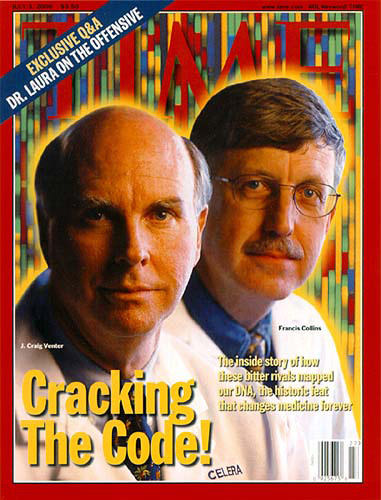
This is one of the quotes that the rector of Imperial College London, Sir Richard Sykes, chose to introduce the infamous biologist, Dr Craig Venter, who had been invited to present a Centenary Prestigious Lecture, on the evening of October 23rd. Dr Venter is best known for his work on the Human Genome Project, founding the company Celera Genomics. Recently, he was the first individual to have read through his own genome, and was named one of the Top 10 hottest nerds by Newsweek. As if that wasn’t enough for his C.V., Dr Venter has re-entered the limelight with the announcement that his team will soon be the first to create an artificial life-form: a synthetic microbe. It is no surprise that such an amazing feat in Biology has been accompanied by grave accusations that Venter is attempting to “play God”. As a Muslim and a biologist, I had to seriously question the validity of such a statement; how would this development sit with my core belief that there is only one being capable of creating life: Allah, Al-Khaliq – God, the Creator?
It seems that various groups of religionists and biologists have long been at odds over something or other; the origins of life on Earth being the more recent point of contention. With the creation of a synthetic microbe, it is not hard to imagine that the more atheistic among the biologist community maybe rubbing their hands with glee, and the more blinkered of the religionists might now be sweating at the brow. “What does this all mean?”, the rest of us cry! Our dear Prophet Muhammad, peace be upon him, once said: “asking is the cure for ignorance”. So it is best we try to understand the facts of the matter, rather than jumping straight to finger-wagging, and condemnation.
Keep supporting MuslimMatters for the sake of Allah
Alhamdulillah, we're at over 850 supporters. Help us get to 900 supporters this month. All it takes is a small gift from a reader like you to keep us going, for just $2 / month.
The Prophet (SAW) has taught us the best of deeds are those that done consistently, even if they are small. Click here to support MuslimMatters with a monthly donation of $2 per month. Set it and collect blessings from Allah (swt) for the khayr you're supporting without thinking about it.
One of the main questions I had in my mind before attending the lecture was not a philosophical one, but rather, a technical one: “How exactly is he planning to do this?”, I wondered. During the talk, Venter described previous work conducted by himself and his colleagues, that identified a set of genes crucial for bacterial survival, known as the Minimal Genome Project. As bacteria are the simplest form of life on Earth (though, please don’t take that to mean that bacteria are simple creatures; far from it!), these genes were also proposed to be the basic genes required for life. In the latest project, Venter et al, used this data to answer the same questions, but in reverse. That is, initially, they used experiments on living cells to collect information about the genes necessary for life; now they plan to use this information to create a life-form from scratch, via chemical means, in order to confirm their previous findings, and also to discover new ones, such as the importance of gene order on the chromosome. At this stage they can only synthesise the DNA that encodes the survival genes. However, chromosomal DNA is akin to a piece of software: by itself, it does nothing, but load it onto a computer (in this case, a naturally-produced, bacterial cell), and hey presto… stuff happens! In other words, the artificial microbe will be generated by transplanting the laboratory-synthesised chromosome into an existing living cell; the transplanted DNA will then “hijack” the cell’s machinery, taking over cellular function, (similar to how virus software manipulates the resources of its host computer), theoretically resulting in a new species of bacteria.
Without a great deal of analysis, the above information is clear proof that Venter (by his own admission, may I add) is in no way “competing” with God. For a start, he is using information based on existing life forms to produce an artificial one. In effect, he is photocopying at the molecular level. This does not constitute “creation”. God created the Heavens and Earth, and all that lies in between, from His Own infinite wisdom – not by stealing someone else’s idea! Even though the new microbe is not an exact copy, that is, there will be some genetic “tinkering” carried out in order to experimentally elucidate various biological principles, Venter’s knowledge about naturally-occurring life, and his ability to create new life, will never compare to that of the Creator. He, and all scientists, will always be reliant upon information that at some point had to be gathered experimentally, using God’s creation. Only an arrogant fool would claim otherwise (unfortunately, there are enough of such people in Biology).
Genomic modification of existing life-forms, including bacteria, yeast, soya, mice, rats, and even pigs, has routinely been used by labs all around the world for decades, to answer fundamental questions of biology. I myself have tinkered with the odd genome in my short time as a molecular biologist, with reassurance from various shayookh that it was allowed, as long as there was a sincere intention and purpose to help humanity, and that it would not cause unnecessary harm to any of the creatures under my care, God-willing. Their justification came from the Islamic concept that all of Earthly creation has been placed under the stewardship of humankind, from which we are allowed to derive benefit in a responsible manner. So, as the tools and methods used in synthetic biology are not new, Venter claims that the project constitutes a conceptual leap in Biology, rather than a technological one.
The generation of synthetic, simple organisms such as bacteria, yeast and algae from scratch, may have many beneficial applications. One that Venter mentions frequently is the production of “designer” organisms that can remove carbon dioxide and other pollutants from the environment, and turn them into beneficial by-products, including substitutes for ancient-carbon sources of fuel, such as crude oil and coal. Of course, there is also potential for great harm by those who wish to use such knowledge for personal gain, no matter what the cost in human misery, such as in biological warfare. However, this is a threat that is associated with all forms of scientific discovery. For example, nuclear technology can create power plants capable of running entire cities, but can also be used in weaponry capable of destroying those same cities. Should we let those with evil intent hold us back from progress that could help end, and/or prevent human suffering on a massive scale? In fact, the major criticisms of Venter’s work have not been from knowledgeable religionists, but rather from those biologists and ethicists who fear such abuse.
Just to clarify the issue, I approached Dr Venter after the lecture and asked him whether any religious groups had raised objections about his work (I do wonder what he thought of a hijab-clad woman asking him such a question). He replied in the negative, reminding me that his work did not begin until the project had been subjected to a 1.5 year ethical review. He in turn asked me: “Why? Should there be [any objection]?”. After hearing the facts, and mulling it over, the only answer that came to my mind was: “No”, and upon further reflection, I still stand by my answer – and Allah knows best.
Now, if you really want to get your teeth into a juicy, ethical dilemma, one could ask: what about synthetic humans? The modification of the human genome will always be the most widely debated of topics in bioethics, Islamic or otherwise. Venter’s future work on the Human Genome Project includes a study comparing the genomes of 10,000 humans, in order to assess the genetic factors that may predispose one to preventative illness, such as heart disease and diabetes. Is it possible that one day, more sophisticated levels of genetic tinkering may allow scientists to completely remove such traits from our lineage?
It is imperative that Muslim geneticists, ethicists and other intellectuals actively engage in this field of research, in order that mankind may be granted knowledge that benefits, and may be protected from knowledge that harms, by constantly keeping in mind the guiding principles of Islam in all their affairs. And from Allah stems all knowledge, blessings and protection.
Recommended links:
- Muslim DNA – a Yahoo Health group aimed at bringing together Muslims researchers and clinicians involved in genetics.
- Craig Venter’s interview on BBC’s Hardtalk – suitable for the lay person.
- Craig Venter’s lecture at Imperial College London (RealPlayer) – more aimed at those with some knowledge of Biology. Also available for download as a videocast (127Mb).
Keep supporting MuslimMatters for the sake of Allah
Alhamdulillah, we're at over 850 supporters. Help us get to 900 supporters this month. All it takes is a small gift from a reader like you to keep us going, for just $2 / month.
The Prophet (SAW) has taught us the best of deeds are those that done consistently, even if they are small. Click here to support MuslimMatters with a monthly donation of $2 per month. Set it and collect blessings from Allah (swt) for the khayr you're supporting without thinking about it.


A Case For Critical Reading As Muslims: Reading ‘The Power of Your Subconscious Mind’ Through An Islamic Lens

Far Away [Part 31] – Following Your Lead

When A Place Teaches You What Softness Is Not

[Podcast] Wait, Muslims Have Been Here HOW Long?! | Hassam Munir
Far Away [Part 30] – The Rock Splitter And The Parthian Shot

When The Shaykh Never Spoke – Deepfakes, Synthetic Scholars, And The Coming Crisis Of Religious Trust

[Podcast] Faith, Motherhood, and the Call to Gaza | Dr. Samaiya Mushtaq

The Stirring Of A Muslim Population In Japan: The Story Of Yusuke Fujitani

CAGE, Muslim Leadership, And Imran Khan: The Silence Test

Is It Ever Too Early To Prepare For Ramadan? Reflections On Rifq, Forgiveness, And Healing The Heart

The Best Actions for Eid al-Adha [Imam Dawud Walid]

Coming Full Circle: Who Are You Now? | Night 30 with the Qur’an

Running Away From Who We Are | Night 29 with the Qur’an

Building From the Ground Up: Week 4 Recap | Night 28 with the Qur’an

The Muslim You Are Becoming | Night 27 with the Qur’an
-

 #Culture1 month ago
Far Away [Part 26] – Shaytan Is A Liar
-
#Life1 month ago
[Podcast] 50k Mahr, Hiding Money, & Who Pays for the Wedding? | AML Finance
-
#Life2 weeks ago
When The Shaykh Never Spoke – Deepfakes, Synthetic Scholars, And The Coming Crisis Of Religious Trust
-
#Current Affairs1 month ago
Long War Without End: A Quarter-Century Since The War On Terror





Moiez
October 27, 2007 at 1:27 PM
Mashallah, this is something I will inshallah have to get into this and of course stem cell research for thats the field im going into, genetics.
AnonyMouse
October 27, 2007 at 2:51 PM
“he is using information based on existing life forms to produce an artificial one.”
Exactly! Reminds me of a joke I read somewhere – a scientist claims that he’s as good as God, so he’s told to create a human being. He collects a handful of mud, and then is told, “Nuh uh, you have to make your own mud!”
AnonyMouse
October 27, 2007 at 2:54 PM
By the way, excellent post, masha’Allah!
The coolest thing is that I actually understood what you were talking about… I guess studying Bio in high school does help a bit here and there! :p
Ali M.
October 27, 2007 at 4:14 PM
“Nuh uh, you have to make ur own mud”
End of story.
Alhamdulillah.
La Hawla Wala Quwwata Illah Billah.
Mujahideen Ryder
October 27, 2007 at 10:43 PM
Interesting post. Especially the fact it took him such a long time just to get ethically approved to conduct his research.
Amad
October 27, 2007 at 11:06 PM
Even the wierdest imaginary creation out of imagination copies something from the existing creation— legs, hands, eyes, hair or some other creation… think of all the aliens in star wars and other movies…
We can’t even IMAGINE other creations exclusive of what is already present, let alone create one out of vacuum…
Moiez
October 28, 2007 at 12:03 AM
How about a discussion on this topic because im pretty sure there will be evidences in the quran about genetics and the muslims being the pioneers on that will be pretty sweet, but where should we start?
Stem Cell Research or Pregnancies?
Ibrahim
October 28, 2007 at 6:34 AM
Very interesting post. However, it appears to me – an average, not very up on genomes, bioethics, genetic manipulation or other concerns within the biological science community – that the professor has not created anything, only as mentioned in the article, taken a copy of an existing part of creation to try to make that part into something resembling creation.
But Allah created the universe from . . . . . well . . . . nothing!
So?
Nasir
October 28, 2007 at 9:01 AM
Assalamu Alaikum,
I agree there’s alot of benefit in molecular science,genetic research, and experiments.
But when a scientists claims they can PRODUCE LIFE “from scratch” this is shirk.
Some of these scientists actually believe they can take chemicals, proteins, other elements mix them together and produce life.
Such a person is making himself a partner with Allah in creation.
And its not the action so much as the belief thats behind it.
We all know it is impossible for anyone except Allah to produce life.
But the overwhelming majority of these scientists believe in the evolutionary concept, that life is and can be created from matter.
Taking this into consideration, they do believe life is created by mixing various chemicals and proteins.
iMuslim
October 28, 2007 at 6:56 PM
Assalamu ‘alaykum wa rahmatullahi wa barakatu all
Jazakallah khair for your comments. This is my first entry for MM, and i was worried about how it would be received, considering the high standard of work from the other MM authors… i’ve been away from the computer all weekend (alhamdulillah – i survived!) so i was scared about what i would be facing upon my return! Alhamdulillah, you’ve been kind to the newbie. :)
Moiez – It’s great that you’re considering entering this field, inshallah. Please join the group Muslim DNA so you can get in touch with other Muslim geneticists, for careers advice, and general discussion.
Mouse – Good joke, and so true! Jazakallah for your kind comment. Biology is only the best school subject! Note: i might be slightly biased there. ;)
Ali. M – Exactly! Next time, i’ll just post the joke, rather than spending several hours writing an entry. :)
M.R. – This case was also special as usually scientists apply for ethical review after completing preliminary experiments. Venter didn’t/couldn’t do anything until the review was completed.
Amad – Agreed. We don’t appreciate just how dependent we are on Allah for everything – even our imaginations.
Moiez – “Stem Cell Research or Pregnancies?” Could you clarify what you wish to discuss in this regard? It would be great if one or more of the MM shayookh added their highly-valued 2 pence, inshallah. *cough hint* :)
Ibrahim – you hit the nail on the head there. This is not “creation” in the true Islamic sense. Duplication, imitation, production, engineering… but not creation. Unfortunately the limitation of the English language is such that the word “creation” is often used… even i used it a few times when first writing the entry, until i realized the implications, and altered the word to “generation” or “production”. The power of language!
Nasir – “But when a scientists claims they can PRODUCE LIFE “from scratch” this is shirk.”
That is true, if they mean they can create life from nothing whatsoever, or without Allah’s permission. However, it is possible to generate simple lifeforms (not ensouled beings, but creatures that fulfil the biological definition of being “alive”) from more basic subunits, as in this case.
However, it would be virtually impossible, if not incredibly inefficient, to create a bacterium from the most basic subunit, of amino acids. The cell is too complex – too many proteins, too many components, where would one begin? That is why Venter has to transplant the artifical chromosome into an existing cell to get his synthetic microbe.
Even Allah’s most simple of creation is so incredibly sophisticated, i can’t imagine anyone even bothering to create life from amino acids as a means to accomplishing anything, other than trying to figure out how life emerged on Earth (actually, i think it has been attempted, but failed miserably).
Anyway, even if someone did produce a simple cell from basic amino acids, does that take Allah out of the equation? Never! Who put the amino acids on the Earth? Who created the Earth? Who made every atom, and sub-atomic particle in the Universe? Al-Khaliq, Al Baari, Al-Musawwir, that’s Who. So really, to say that life cannot be created from matter is an overstatement. Allah always has a method and a way for everything He does in dunya. If His way was to mix amino acids together in a “primordial soup” to make the first life on Earth, then so be it. If He wanted to do it “kun fa ya kun” stylee, then so be it. We don’t know for sure either way, so best just to say “nothing is impossible for Allah” and leave it at that.
Wa Allahu ‘alam.
P.S., i’d also like to add that there is no evidence from Qur’an & Sunnah for or against the theory of evolution, or speciation. Rather, the only truely contested fact between hard-core evolutionary biologists and Muslims is the Origins of Man, as the Q&S clearly states how Adam ‘alayhis salam was created by Allah and the origins of mankind on Earth. However, the knowledge of the manner in which Allah created all the other creatures on this planet rests with Him alone, at present… perhaps He will reveal this knowledge to us in the future, and evolution may have been His way, or maybe not. Once again, Allahu ‘alam.
Pingback: Craig Venter: Playing God? « iMuslim
Shan
October 28, 2007 at 8:48 PM
Nicely said.
I don’t think the shot at Dawkins was necessary, even for a cheap laugh, it’s not really productive for someone who probably feeds off of the disparaging comments of his opponents. And better to focus on the topic, than to veer off into supposedly “irresistible” remarks about Iran or other world issues.
Other than that, I thought it was easy to follow, but maybe another paragraph explaining the process in the simplest language possible would be good for those unfamiliar with the basics.
It’s worth noting that by definition, no one can play the role of Allah. So no matter what mankind can accomplish, by definition, it is lesser than what God is doing. Therefore, nothing can be unethical in the sense that it encroaches upon the dominion and power of Allah, and thus there is no reason for any believer in Allah to condemn a test of human ability. If every particle can become infinitesimally smaller, then whatever we construct is using the building blocks already made by Allah, swt. That being said, there should be due credit given to the important and impressive feat of turning non-living matter into living matter. But remember, we have defined life by our own standards and often debate it. An organism lacking true DNA like a virus may be or may not be alive. Plants we say are certainly lifeforms. My point is, if we raise the bar of what a living organism is from the moving, functioning cell to a complex organism, a sentient one, or higher, we’ll find that creation hasn’t quite been reached.
Right now, I would place this impending achievement in a class with Dolly. Not that that is anything to baa at.
iMuslim
October 28, 2007 at 9:18 PM
I don’t think the shot at Dawkins was necessary, even for a cheap laugh, it’s not really productive for someone who probably feeds off of the disparaging comments of his opponents. And better to focus on the topic, than to veer off into supposedly “irresistible” remarks about Iran or other world issues.
But cheap shots are all i have! That and his overwhelming arrogance. But two wrongs don’t make a right… so criticism duely noted… jazakallah khair. :)
And i agree with your very Shan-esque explanation of why no-one can play Allah’s role as Creator.
“Right now, I would place this impending achievement in a class with Dolly. Not that that is anything to baa at.”
:roll:
iMuslim
October 28, 2007 at 9:32 PM
Btw:
“An organism lacking true DNA like a virus may be or may not be alive.”
Viruses do possess DNA… unless you mean RNA-based viruses, of course. :) But i get your point – viruses are not considered by most to be “alive”, as they cannot reproduce independently, but rely on other cells, but it’s a shaky argument.
It is interesting how biology and philosophy so often overlap… they both question life: “How does it work?” and “What does it mean?”.
Mahdi Bray
October 28, 2007 at 9:58 PM
This was a very interesting article. I thought exactly the same thing as others have expressed here when he claimed to “create from scratch” in that: he is using Allah’s creation to do it!
It is like saying that a person “created” a car or a desk or even their own child. It is nonsense.
While on one level I marvel at the genious of these brilliant scientists, on another I am amazed at the level of their arrogance.
What a shame that many such men ultimately waste their God given talent
Salik
October 29, 2007 at 12:19 AM
Agreed: so arrogant comparing their creation with that of Allah ta’ala… subhanAllahi ‘amma yasifoon.
Shan
October 29, 2007 at 12:44 AM
Shanesque?! Have I become that monotonous?
I’ll need to develop a new voice. I mean…. the voice, from my core, will be reborn, or something.
And I didn’t feel the need to be precise about viruses since I knew you’d know what I was talking about. ;)
jalees
October 29, 2007 at 1:44 AM
Dear sir,
Aslamo aaikum,
It is no surprise that biologists so called and scientists r coming in front with nature.The quran said that bani israel did not obey the command of fishing not on sabath day and so were they turned into monkeys.The elders r monkey i barzakh and they keep on asking their progeny to change that order which made them monkey.so these geniuses r at work to combat and quarrell with God almighty so that they understand the code which made theem and their coming generation monkeys.It is simply what satan did-not obeyed but confronted.They r in in confrontation with Allah so r with Holy Prophet-peace Of Allah on him-because HE was the last sent messenger of Allah,whose universal message has stunned them since centuries
iMuslim
October 29, 2007 at 11:47 AM
Mahdi Bray – it seems people are having issue with the phrase “from scratch”. I am now thinking it was not the best one to use… i meant producing a cell from basic components rather than nothing whatsoever, which everyone knows (Muslim or not) is impossible – for humans, anyway. :)
Salik – it is arrogance, but not all scientists are guilty of it. In fact, many scientists are humbled by the discoveries that they are blessed to witness. I myself cannot help but marvel at the sophistication and complexity of all the biochemical processess that occur within a single living cell. It also drives me mad, as i can’t figure out how it all fits together, which in turns encourages me to praise Allah for His magnificent Wisdom! Of course, not all scientists go to the point of praising God, but i am sure the more open-minded do begin to question in themselves what it all means, and it could be the first step in their guidance to the truth of Islam, inshallah.
Shan – Shan-esque is not monotonous. It’s just your unique style! I love it, mashallah. :)
jalees – Wa ‘alaykum salam wa rahmatullah. Jazakallah for your comment, though i must first point out that i am a Madam. :)
I think your analogy is not fitting here, as Allah has not prohibited the study of his creation. If anything, He encourages all of mankind to consider the signs present therein, one of which i have briefly described above in my response to Salik: the sheer complexity of the processes that drive a living cell. It is truly inspiring.
Of course, intentions are extremely important. When a Muslim studies or works in any field, their intention should be to please Allah. The field of genetics has great potential to help humanity and thus be pleasing to Allah – Muslims need to engage in this field to ensure that research is in accordance with Allah’s commands.
ummali
October 29, 2007 at 12:16 PM
Asalam Alaikum
No matter what they do, they are not God and never will be. All that they have accomplished would never have happened with out God original creation. Let them think as they will, they will come to know inshaAllah.
Moiez
October 29, 2007 at 1:08 PM
iMuslim: What I was trying to say is for students like myself where should we begin once we enter the field so that when we go into the field with the intentions to use Quran and Islam to pave the way for science in genetics and stem cell research or pregnancies or genomes were just a couple of fields to list.
Dawud Israel
October 29, 2007 at 8:06 PM
This was a great review for my upcoming microbiology exam. Venter is an OLD guy, lots of experience under his belt.
Quick question: there was an experiment where human DNA was injected into a mouse embryo to see if it would develop. It still continued to develop. But they ended the experiment because of ethical issues. I think you know of this experiment or something similar (my description might be off)…
Would such an experiment be allowed in Islam, especially considering that it could produce a human-like mouse? :)
Moiez
October 29, 2007 at 11:37 PM
Dawud: Have you ever read Flowers for Algernon? :)
Shahzad
October 30, 2007 at 11:00 AM
Assalamu ‘alaikum,
Jazakallah Khairan for this thread. It is amazing that as Muslims, we have no problem excelling in the bilological sciences while remaining firm on our aqeedah. The Islamic concept of Allah’s creative power is far reaching. And like iMuslim said the mechanics of creation can include evolution. I see no contradiction between evolution and our aqeedah. That said the Muslim student of the sciences (as taught in the West) needs to fortify his/her heart and knowledge with Islam so as to not get caught up with the philosophical extensions of modern science (especially evolutionary biology and neuroscience) in which scientisits arrogantly deny their Creator.
The history of science in the West is quite different than its role in Islamic history. While the Muslim studies science to appreciate better the signs of Allah, the West used science to demolish the Church’s literal application of the Bible to describe natural events and history, and eventually to deny God.
It is important for Muslims to be able to articulate our aqeedah while embracing our observations from scientific research. For example I see a lot of benefit in the books of Harun Yayha. They are colourful and engaging, and remind us of the beauty of Allah’s creation. But his treatment of evolution and Darwinism is a bit too one-sided. It may be true that philosophical extensions of Darwanism influenced the development of facism and communism (i.e. application of “survival of the fittest” concepts to politics and sociology), but it would be very damaging for Muslims to jump on the anti-Darwinism bandwagon like the Christians do (ex: heard about the creationist museum in the States?) . As a Muslim I can embrace evolutionary concepts while at the same time saying that Allah is our Creator.
Allah knows best.
Salik
October 31, 2007 at 2:10 AM
sister iMuslim, I wasn’t referring to you or other scientists being arrogant :-) just the ones mentioned in your post. SubhanAllah, learning biology and other sciences really does increase your emaan b/c you see the creation of Allah in a different scope. There is this really nice pictures I saw online…see for yourself:
http://www.imageposter.com/storage/4/686992.jpg
http://www.imageposter.com/storage/t4/83313.jpg
http://www.imageposter.com/uploads/get/12402
http://www.imageposter.com/storage/t4/66625.jpg
The creation of the heavens and the earth is indeed greater than the creation of mankind, yet most of mankind know not. (Surah Ghafir ayah 57)
and also this presentation: http://micro.magnet.fsu.edu/primer/java/scienceopticsu/powersof10/
the unviverse in powers of 10 mashaAllah.
talk about Rabbul Alamin! And humans think the world revolves around them subhanAllah.
iMuslim
October 31, 2007 at 11:48 AM
Umm Ali – Wa ‘alaykum salam wa rahmatullah. Indeed, we will all come to know.
Moiez – That is a good question. IMO, one does not have to “use” Qur’an or Islam, but rather, abide by its principles. In that sense, we need to discuss the pressing issues with the ulema, so they can warn us of what to avoid, inshallah. I don’t think the list of “don’ts” is so long, and will be very similar to general ethical concerns of other groups. For example, respecting the sanctity of all life, especially human life. Wrt stem cell research, there has been some discussion on this subject, though i will have to look for the articles now. Fundamentalist Christians have issue with it, as they believe every embryo is a life that must be protected. Muslims also have great respect for life, but as we believe the soul is not breathed into the foetus until later stages (some difference of opinion as to when exactly, but way after the initial embryo stage when stem cells are collected), there is less of an ethical dilemma, inshallah. Though i’m not sure about how these embryos are meant to be generated – for example, are we allowed to use aborted embryos, left-over IVF embryos, can we make our own? etc. Lots of questions that need answers.
Dawud: I’m not sure of the experiment you mention… there have been many experiments where human genes have been expressed in mice. But only one or two genes at a time, so they could not be called “human-like mice”. :) Perhaps you mean where human sperm was used to fertilise a mouse egg, or vica-versa? It is highly unlikely that such a coupling would lead to anything but an arrested embryo, considering how different the two species are… but whether such an experiment is allowed in Islam, i’m not sure. Have to ask someone who can issue fatwas. :)
Shahzad: Wa ‘alaykum salam wa rahmatullah. Harun Yahya’s books have their good and bad sides, as you said. I did appreciate the arguments against the theory of evolution; they should definitely be considered. However, i don’t think there is any evidence to conclusively support or reject the idea of evolution. There are a set of facts and observations that can be interpreted by both sides to support their theories… as i said, the only thing we, as Muslims, can comment on for sure, is the origins of humanity, as we have faith in the revealed knowledge of the Qur’an. However, non-Muslim (or perhaps, areligious, seeing as many religions have views about the creation of man) scientists are not going to accept that argument, understandably.
Salik: Jazakallah khair for the images… though in one of them, the sun looks like a dinosaur egg! :D
Hamdi
November 5, 2007 at 10:22 AM
http://www.kff.com/english/kfip/2000/science.html
Pingback: VirtualChaos - Nadeem’s blog » On the verge of creating synthetic life
Pingback: muslimmatters.org » And One Year Ago, MM was Born
Pingback: Random « ThoughtPad