#Islam
When Knowledge Stands Between Us And Our Character


On Al-Ghazali, Ibn Taymiyyah, and the meaning of the Prophet Muhammad’s  mission to perfect noble character.
The most difficult religious lesson may be the one we already know but have never permitted ourselves to learn.
A father raises his voice at his son and then lectures him about respect. A teacher humiliates a struggling student while insisting upon the importance of education. A man who has studied patience for years becomes offended when someone questions his judgment.
Keep supporting MuslimMatters for the sake of Allah
Alhamdulillah, we're at over 850 supporters. Help us get to 900 supporters this month. All it takes is a small gift from a reader like you to keep us going, for just $2 / month.
The Prophet (SAW) has taught us the best of deeds are those that done consistently, even if they are small. Click here to support MuslimMatters with a monthly donation of $2 per month. Set it and collect blessings from Allah (swt) for the khayr you're supporting without thinking about it.
None necessarily misunderstands the principle he is defending. The difficulty lies in how he exercises what he believes to be right.
We often assume that moral failure results from insufficient knowledge. Yet a person may understand an obligation thoroughly and still struggle to recognize when it places demands upon him. Indeed, religious knowledge can sometimes complicate self-examination. The knowledgeable person possesses not only principles by which to judge conduct, but also arguments with which to defend his own.
This tension occupies an important place in Islamic moral thought, particularly in the writings of Abu Hamid al-Ghazali and Taqi al-Din Ibn Taymiyyah. Although they differed on significant theological and intellectual questions, both examined the relationship between knowledge, inward disposition, and outward conduct.
Their reflections illuminate a statement attributed to the Prophet Muhammad, peace and blessings be upon him, in Imam Malik’s Al-Muwatta: “I was sent to perfect good character.”1 Malik ibn Anas. Al-Muwatta, Book 47, Hadith 8, Yahya ibn Yahya al-Laythi recension. The statement “I was sent to perfect good character” is transmitted as a balagh, meaning that Imam Malik reports receiving the statement without presenting a complete chain of transmission in this passage.
In this passage, Malik transmits the statement as a balagh, without providing a complete chain of transmission. This qualification deserves acknowledgment, although the statement’s emphasis is consistent with the Qur’anic portrayal of the Prophet’s moral excellence.
What does it mean to perfect character? The question concerns more than acquiring knowledge of justice, patience, or humility. It concerns what happens when those virtues demand something of us.
Al-Ghazali and the Knowledge That Flatters the Self
Al-Ghazali recognized that moral education encounters resistance within the person it seeks to reform. In his Ihya Ulum al-Din, he examines how habits, desires, and attachments shape character, particularly through pride, ostentation, and self-admiration.2Al-Ghazali, Abu Hamid. Ihya Ulum al-Din (The Revival of the Religious Sciences), Book 22, On Disciplining the Soul; Book 28, On the Condemnation of Status and Ostentation; and Book 29, On the Condemnation of Pride and Self-Admiration. See T. J. Winter’s translation, Al-Ghazali on Disciplining the Soul and on Breaking the Two Desires (Islamic Texts Society, 1995), and Mohammed Rustom’s translation, Al-Ghazali on the Condemnation of Pride and Self-Admiration (Islamic Texts Society, 2018).
Consider a scholar who begins his studies with sincere intentions. As his knowledge increases, others seek his guidance, and his reputation grows. Such recognition may be deserved. Yet over time, he may become attached to being consulted, admired, or regarded as an authority.
When challenged, he may experience disagreement not merely as an intellectual problem but as a personal threat.
Al-Ghazali’s examination of ujb, or self-admiration, is especially relevant here. Accomplishment can become the basis of a favorable self-image that resists correction. The problem is not knowledge itself, but the attachment that develops around being knowledgeable.
This tendency extends beyond scholarship. A person who considers himself patient may justify his anger when provoked. Someone convinced of his humility may regard criticism as evidence that others fail to appreciate him.
What makes such self-deception difficult is that it need not involve deliberate dishonesty. We may sincerely believe our intentions are sound while overlooking the influence of pride, reputation, or the desire for recognition.
For al-Ghazali, moral formation therefore requires more than understanding the definitions of virtues. His discussion of riyadat al-nafs, the disciplining of the soul, emphasizes the cultivation of habits and dispositions through sustained practice.
Patience becomes meaningful under provocation. Humility becomes demanding when acknowledging an error threatens our reputation. Generosity becomes a test of character when no gratitude or recognition follows.
The essential question is not simply whether we know what goodness requires, but whether we have disciplined ourselves to act accordingly.
Ibn Taymiyyah and the Conduct of the Person Who Is Right
Ibn Taymiyyah approaches moral responsibility through a framework that emphasizes devotion to Allah  , obedience to revelation, and the proper exercise of religious obligations.
In Al-Ubudiyyah, he presents servitude to Allah as encompassing both inward devotion and outward obedience. Religious commitment cannot be reduced either to correct beliefs or to declarations of sincere intention.3Ibn Taymiyyah, Taqi al-Din. Al-Ubudiyyah (Servitude). This treatise addresses servitude to Allah through worship, love, humility, and obedience, encompassing both inward devotion and outward religious practice.
His treatment of commanding right and forbidding wrong is particularly instructive.
Ibn Taymiyyah identifies knowledge, gentleness, and patience as necessary qualities for moral correction. Knowledge must precede intervention, gentleness must accompany it, and patience must follow it.4Ibn Taymiyyah. Al-Istiqamah, vol. 2, p. 233. The passage identifies knowledge, gentleness, and patience as necessary qualities for commanding right and forbidding wrong, with knowledge preceding correction, gentleness accompanying it, and patience following it. This reference is corroborated by a secondary quotation of the Arabic text; the exact pagination remains subject to confirmation against the printed edition.
The sequence carries considerable practical wisdom.
Imagine a parent discovering that his child has lied. The parent may be justified in expressing disappointment and imposing consequences. Yet if the response involves uncontrolled anger or humiliation, the child receives two lessons: that dishonesty is wrong and that authority may be exercised without restraint.
The second lesson may undermine the first.
The problem is not correction itself. Moral education sometimes demands difficult conversations and firm consequences. Rather, the question is whether the manner of correction serves its legitimate purpose.
Ibn Taymiyyah’s consideration of the benefits and harms of moral intervention reinforces this responsibility. An attempt to oppose wrongdoing cannot be justified solely by identifying the wrong being opposed if the intervention produces greater harm.5Ibn Taymiyyah. Majmu al-Fatawa, vol. 28, especially the discussions concerning commanding right and forbidding wrong, and the consideration of benefits and harms when intervening against wrongdoing. See also vol. 28, p. 137, for the discussion of knowledge, gentleness, and patience.
The principle applies equally to teachers, parents, scholars, and community leaders.
A teacher may identify genuine weaknesses in a student’s work but communicate criticism in a way that discourages learning. A religious scholar may defend a valid position while treating disagreement with contempt. A leader may enforce a necessary rule while imposing unnecessary humiliation.
Being right about a principle does not make every response to its violation right.
This distinction becomes especially important when religious conviction is involved. We may begin to confuse the truth of what we defend with the moral quality of our defense.
Yet revelation does not acquire its authority from the perfection of the person interpreting it. Religious obligations remain binding, but those who invoke them remain accountable for their conduct.
Two Scholars, One Moral Challenge
Al-Ghazali and Ibn Taymiyyah should not be reduced to representatives of two separate domains, one concerned with the heart and the other with religious law. Both addressed inward devotion and outward conduct, although their intellectual approaches differed.
Al-Ghazali’s ethical thought incorporated philosophical discussions of habituation and virtue within his theological and spiritual framework. Ibn Taymiyyah gave significant attention to fitrah, the original human disposition, while emphasizing the authority of revelation and criticizing aspects of the intellectual traditions within which al-Ghazali worked.6Griffel, Frank. “Al-Ghazali.” Stanford Encyclopedia of Philosophy. Hoover, Jon. “Ibn Taymiyya.” Stanford Encyclopedia of Philosophy.
These differences deserve recognition rather than erasure.
Nevertheless, reading their work together helps illuminate two related moral difficulties.
The first concerns the motives behind apparently good actions. A person may give generously while secretly desiring admiration. The recipient benefits, but the giver’s attachment to recognition remains morally significant.
The second concerns the judgment through which sincere intentions become actions. A person may genuinely wish to prevent wrongdoing yet employ methods that cause unnecessary harm.
An outwardly beneficial action does not automatically establish purity of intention. Likewise, sincerity does not guarantee sound judgment.
Character requires attention to both.
What It Means to Perfect Character
The Prophetic emphasis on perfecting character brings these concerns into a broader religious perspective.
The Qur’an describes the Prophet Muhammad, peace and blessings be upon him, as possessing great moral character.
“And indeed, you are of a great moral character.” [Surah Al-Qalam; 68:4]
It also connects his gentleness toward the community with Allah’s Mercy, explaining that harshness would have driven people away from him.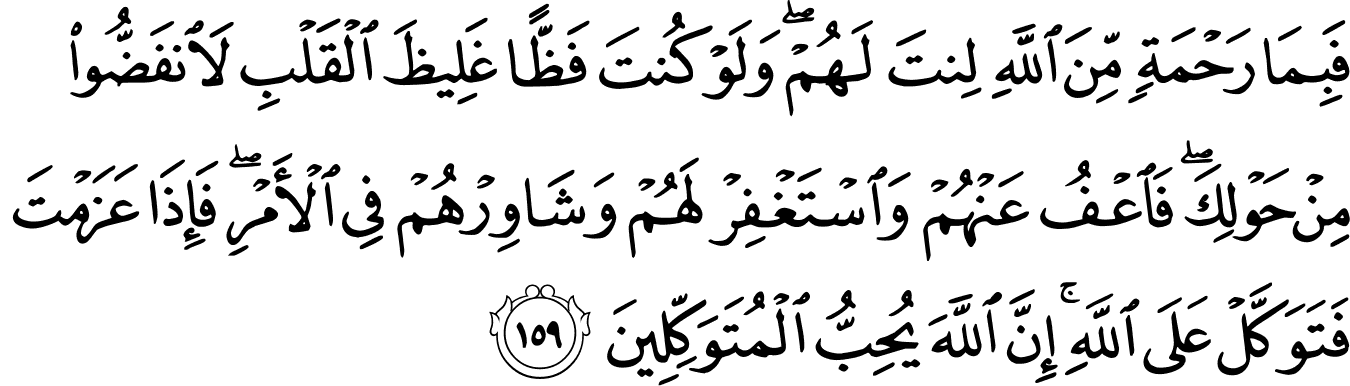
“So by mercy from Allah, [O Muhammad], you were lenient with them. And if you had been rude [in speech] and harsh in heart, they would have disbanded from about you. So pardon them and ask forgiveness for them and consult them in the matter. And when you have decided, then rely upon Allah. Indeed, Allah loves those who rely [upon Him].” [Surah ‘Ali-Imran;3:159]
These passages are significant because the Prophet’s mission involved more than personal kindness. It required guidance, correction, leadership, and difficult decisions.
Gentleness was not a substitute for responsibility. It informed the manner in which responsibility was exercised.
The Prophet’s teaching concerning anger illustrates this relationship. In a hadith recorded in Sahih Muslim, true strength is associated not with overcoming others physically but with controlling oneself during anger.
Anger may arise in response to genuine wrongdoing. What matters is what we allow that anger to justify.
A father may possess the authority to punish his child. A teacher may have the power to embarrass a student. A leader may be able to impose consequences upon someone who challenges a decision.
Yet possessing authority does not establish that every exercise of it is just.
Self-restraint matters precisely because human beings can mistake the satisfaction of exercising power for the fulfillment of moral responsibility.
This is where the perfection of character becomes visible in ordinary life: not necessarily through extraordinary sacrifices, but through the judgment we exercise when our pride has been injured, and another person is vulnerable to our response.
The Difficult Work of Being Corrected
There is another test of character that deserves our attention: accepting correction from those over whom we possess authority.
A parent may readily acknowledge an error to another adult yet resist apologizing to a child. A teacher may welcome criticism from a colleague but dismiss the same observation from a student. A leader may encourage honest feedback until that feedback challenges a personal decision.
Authority can become entangled with our sense of worth. We begin to imagine that admitting error diminishes our legitimacy.
Yet the opposite may be true.
A father who acknowledges speaking unfairly has not surrendered his responsibility to guide his child. He has demonstrated that fatherhood does not exempt him from moral obligation.
A teacher who corrects an inaccurate explanation has not weakened intellectual authority. He has shown that fidelity to knowledge matters more than protecting a reputation.
Al-Ghazali helps explain why acknowledging error can be difficult: pride and self-admiration interfere with our ability to examine ourselves. Ibn Taymiyyah’s treatment of moral responsibility reminds us that legitimate authority remains subject to ethical obligations.
The person who corrects others must also remain open to correction.
This does not mean accepting every accusation or abandoning sound judgment. Criticism may be mistaken or unfair. But its possible unfairness does not relieve us of the responsibility to examine it carefully.
The intellectual task is to consider the evidence. The moral difficulty arises when that evidence concerns ourselves.
The Knowledge We Must Permit to Judge Us
The writings of al-Ghazali and Ibn Taymiyyah remind us that knowledge, however valuable, does not automatically transform character.
Knowledge may clarify what is right without removing the desires that make wrongdoing attractive. It may establish principles for responsible judgment without ensuring that we apply those principles fairly.
The Prophetic emphasis on perfecting character directs us beyond the accumulation of religious information toward the formation of the person who possesses it.
Return to the father with whom this reflection began.
Suppose he recognizes that his son behaved disrespectfully but also acknowledges that his own anger was excessive. He can accept both truths without confusing them. His child’s conduct required correction, and his response did as well.
There is no loss of moral authority in recognizing that distinction. Indeed, he may become better equipped to fulfill his responsibilities because he no longer treats himself as exempt from the principles he teaches.
The same challenge confronts scholars, educators, and religious leaders. Knowing the obligations of others does not release us from examining our own.
Perhaps one of the most demanding consequences of the Prophetic teaching on character is that the knowledge through which we recognize wrongdoing in others must also be permitted to challenge the explanations we construct for ourselves.
We may know enough to teach patience, justice, and humility. Whether we have learned them becomes clearer when we must be patient, when our judgment is questioned, and when we are the ones who need to apologize.
Knowledge can prepare us for the work of moral transformation. It cannot accomplish that work on our behalf.
Related:
– Akhlāq 101: Character Development For Muslims I Dr. Yasir Qadhi
– Imam Al-Ghazali: The Hero I Stumbled Upon
Keep supporting MuslimMatters for the sake of Allah
Alhamdulillah, we're at over 850 supporters. Help us get to 900 supporters this month. All it takes is a small gift from a reader like you to keep us going, for just $2 / month.
The Prophet (SAW) has taught us the best of deeds are those that done consistently, even if they are small. Click here to support MuslimMatters with a monthly donation of $2 per month. Set it and collect blessings from Allah (swt) for the khayr you're supporting without thinking about it.





When Knowledge Stands Between Us And Our Character

Chris Van Hollen: The Pakistan-Born Senator Too Principled For Pakistan’s Powerful

Marriage & Money [Part II] – Me Before We: Understanding Our “Financial Personalities” To Improve Our Marriages

Far Away, Book 2: [Part2] – The Domain of the Dzungars

[Film Review] Your Mother, Your Mother, Your Mother: A Complex Story Of Faith And Fatherhood
Far Away, Book 2: [Part 1] – Meilin’s Tale
Far Away, Book 2: [Part2] – The Domain of the Dzungars

[Podcast] A Light of Her Own: Muslim Womanhood, Seasons of Life, & Female Scholarship
[Film Review] Your Mother, Your Mother, Your Mother: A Complex Story Of Faith And Fatherhood
Marriage & Money [Part II] – Me Before We: Understanding Our “Financial Personalities” To Improve Our Marriages

The Best Actions for Eid al-Adha [Imam Dawud Walid]

Coming Full Circle: Who Are You Now? | Night 30 with the Qur’an

Running Away From Who We Are | Night 29 with the Qur’an

Building From the Ground Up: Week 4 Recap | Night 28 with the Qur’an

The Muslim You Are Becoming | Night 27 with the Qur’an
-

 #Culture4 weeks ago
Far Away, Book 2: [Part 1] – Meilin’s Tale
-
#Culture3 days ago
Far Away, Book 2: [Part2] – The Domain of the Dzungars
-
#Culture1 month ago
Far Away [Part 31] – Following Your Lead
-
#Culture1 month ago
A Case For Critical Reading As Muslims: Reading ‘The Power of Your Subconscious Mind’ Through An Islamic Lens