#Life
On Infertility And Not Having A Child: A Letter To Couples Going Through The Silent Struggle

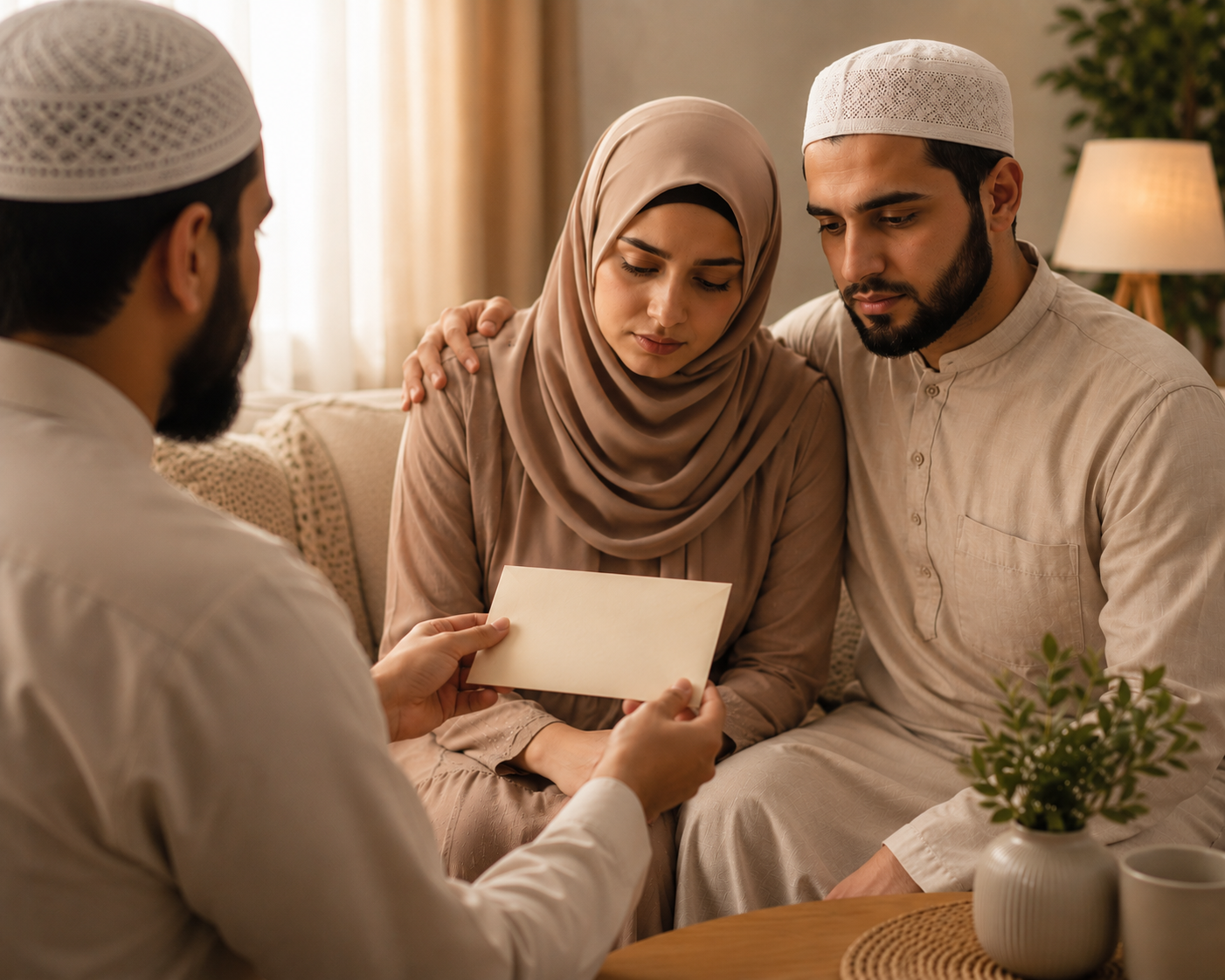
Dear Struggling and Distressed Muslim,
This letter was meant for you. Yes, you specifically. The one who has been struggling and not understanding why it’s not working out. The one who has seen countless members of your family and friends “getting ahead” and sailing through this stage of life. The one whose suffering is not as visible or discussed in our communities, despite the pain striking and settling at the core of your heart, as you feel you have been left behind. This is regarding your pain from infertility and the struggle of not being able to have a child.
Know that you are not alone. There are millions across the world who are dealing with the same exact problem. But you have something that many do not: the Ultimate Supporter and Creator of the Universe is with you.
Keep supporting MuslimMatters for the sake of Allah
Alhamdulillah, we're at over 850 supporters. Help us get to 900 supporters this month. All it takes is a small gift from a reader like you to keep us going, for just $2 / month.
The Prophet (SAW) has taught us the best of deeds are those that done consistently, even if they are small. Click here to support MuslimMatters with a monthly donation of $2 per month. Set it and collect blessings from Allah (swt) for the khayr you're supporting without thinking about it.
Infertility is not a sign of Allah’s  Displeasure, but rather a test. As with every test, everyone advises patience; yet, sincerely practicing patience is difficult. It is, however, a choice and an action. How we actively practice patience will inshaAllah bring peace and blessings to our hearts and lives. While I cannot take away your pain and struggles, what I can offer is advice to remind you of some actions that can be taken to strengthen your relationship with Our Creator, and find ease through this difficult time.
Advice #1: Elevate Your Du’a and Fully Trust Allah 
Du’a is not simply asking from Allah . It’s the essence of worship and a way to rewrite our destiny. Du’a is, without a doubt, the most powerful tool we have at our disposal, but there are ways to make it more effective and meaningful. I will focus on these 3 points:
- Etiquettes of Du’a
- Focus on Forgiveness
- Practical Game Plan
The Etiquettes of Du’a
The first etiquette is regarding what we should say before we even start making dua to Allah . Specifically, praising Him and sending durood (peace and blessings) upon the Prophet  . Sending durood on the Prophet is so powerful that even if we were to not ask anything and just spend our entire time sending durood on the Prophet , our worries would disappear and our sins would be forgiven.
This isn’t to say we shouldn’t ask and make du’a for what we want, but it’s just a point of how many blessings there are in just sending peace and blessings on the Prophet . It could be that Allah appreciates so much that you send peace and blessings on the Prophet -the most beloved creation to Allah – instead of asking for your own needs, that He solves your problems and rewards you for it too. Do we really think that any problem in the world can withstand so many blessings coming from Allah ?
The second etiquette I want to mention is calling on Allah by His many blessed Names and Attributes.
Specifically, some names that come to mind are:
- Al-Kareem and Al-Wahab – the One who is the Most Generous and Gives the best of gifts
- Al-Qadeer and Al-Azeez – there is absolutely no problem we can ever have that will be more powerful or unable to be solved by the Almighty and All-Powerful
- Al-Jabbar – the One who can mend your broken heart while you suffer through the pain
The third etiquette is to mention your weaknesses to Allah and never be disappointed in making du’a. When Zakaria  made du’a to Allah for a child, he knew that his state of being old didn’t matter – the Lord of the Worlds could change anything and everything if He willed it. He went decades without children but remained optimistic.
Do not focus on what you can realistically do, but focus on what the Lord and Creator of the Worlds can do. Allah
The fourth etiquette is to have full trust in Allah’s Plan for you. This leads to consistency and surrendering yourself to Allah – you cannot lose hope. Even if you do not receive what you asked for, remember that Allah gave or will give you something equivalent or better; but it will be on Allah’s timeline, not ours. Our task is to be patient in making du’a.
“Every one of you will have his supplications answered, as long as he is not impatient and he says: I have supplicated, but I was not answered.” [Bukhari and Muslim]
I’ve been guilty of this, where I make du’a and expect that my problem will be immediately solved. But du’a doesn’t always work like Amazon Prime. I personally know a couple who had multiple miscarriages, and it took almost 10 years for them to have their first child. We have to remember and trust that Allah knows and decides when the best time is for everything. He knows what is good for us and when it is good for us, and we do not.
This is part of the perfection of our faith: to be content with what Allah has ordained after we have done everything we possibly can. This sentiment is perfectly encapsulated by the beautiful du’a of the righteous caliph Omar ibn Abdul Aziz  :
:
“O Allah, make me pleased with Your decree and bless me in Your providence, such that I would not like to hasten anything You delay, nor delay anything You hasten.”
The fifth and last etiquette I will mention is to take advantage of the times when du’a is accepted. These include:
- The last third of the night
- Between the adhan and iqaamah
- When it is raining
- When in sujud
- When traveling
- A fasting person as they break their fast
Focus on Forgiveness
We all fall short of our duty to Allah , and we all make mistakes. Even if we fulfill the obligations, did we fulfill them to a level that is befitting the Lord of the Universe? But, by the Mercy of Allah , He still may accept our broken actions.
Allah created us so that we would turn back to Him after we slip. What’s also interesting is that asking forgiveness from Allah for those same mistakes is directly linked to certain blessings.
A man once came to al-Hasan al-Basri and complained to him: “The sky does not shower us with rain.” He replied: “Seek Allah’s forgiveness (i.e. say أستغفر ألله).”
Then another person came to him and said, “I complain of poverty.” He replied: “Seek Allah’s forgiveness.”
Then another person came to him and complained, “My wife is barren; she cannot bear children.” He replied: “Seek Allah’s forgiveness.”
The people who were present said to al-Hasan: “Every time a person came to you complaining, you instructed them to seek Allah’s forgiveness?”
Al-Hasan al-Basri said, “Have you not read the statement of Allah? ‘saying, ‘Seek your Lord’s forgiveness, ˹for˺ He is truly Most Forgiving. He will shower you with abundant rain, supply you with wealth and children, and give you gardens as well as rivers.’”[Surah Nuh:10-12]
So, given that asking for forgiveness is one of the best ways to have a child, what is one of the best ways to ask for forgiveness?
The Prophet taught us Sayyid al-Istighfar – the master du’a for forgiveness. I would highly recommend memorizing it and repeating it often.
Finally, an important part of seeking forgiveness is to leave the sins that we are knowingly committing. While we cannot eliminate every mistake, we can at least do our best to leave the things we know we are doing that are crossing the boundaries of Allah .
Practical Game Plan
Now, what is a practical way to implement some of these etiquettes of du’a? Here is a game plan inspired by the dua of the mother of Imam Bukhari and of the legendary hero Salahuddin when he defended Jerusalem from the Crusaders. While you may not be able to do all of this, the goal is to try to do the best of your ability and at least do part of it.
- Wake up during the last 1/3 of the night, especially on Friday night, about 30-45 minutes before Fajr, and pray 2 rakaats and make a long dua during sajdah (remember that in the Islamic calendar, Friday night starts on Thursday after maghrib)
- Go to the masjid, especially on Friday morning, right before fajr adhaan
- Combine the intention to pray 2 rakaats sunnah of fajr, sunnah of entering masjid, and sunnah in between adhaan and iqaamah, and make dua during sajdah
- Make dua right after fajr salah, after you’ve done the adhkaar after salah
- Consistently repeat this at least once a week, if not daily
During your du’a, complain of your own poverty to Allah and how you have done everything you possibly can, but there is nothing else you can do. Keep knocking on Allah’s door, just like Imam Bukhari’s mother. Imam Bukhari was born almost blind, and his mother would spend her nights making du’a for her son’s eyesight to be restored.
For 2-3 years, she she didn’t lose hope or give up. Just kept knocking and asking for a medical miracle from Al-Shafi.
Then one night, she saw Prophet Ibrahim in a dream, who told her that because of her persistent du’a, her son’s eyesight had been restored. Imam Bukhari would go on to author the most authentic book ever written by man, leaving behind a legacy of scholarship that still endures over 1,000 years later.
This is the power of du’a. Not because of what you can do. But because of what Allah can.
There are many other things that can be done to elevate one’s du’a, but the crux of du’a is recognizing that Allah is in control and we need Him . When we show and verbalize our need to Allah and show that we are not self-sufficient but rather completely reliant on Him , we hope He will shower His Mercy and Bounties upon us. And just like anything in life, if we continue to do the same thing over and over again the exact same way, du’a can start feeling mundane and even empty, so I hope implementing some of these points can revitalize and reenergize our du’a again.
Advice #2: Internalize the Quran
The Quran was sent as a mercy to mankind and the way to expel darkness from our hearts and lives as we go through the trials of life. But when we only focus on reading it without reflection, especially as non-Arab speakers, we miss many subtleties and messages.
Do these 2 things, and you will see how your perception of the Quran will change and how peace will enter your heart:
- Make yourself the audience of the verses you are reading. Do not just read the story of Musa and think of it as a nice history lesson. Internalize the message as if the Quran is speaking to you and that the verses were revealed specifically for you. If there are verses about arrogance, ask yourself – am I arrogant? If there are verses about patience, ask yourself – am I patient? And so on and so forth.
- Pay attention to the Names of Allah that are used in the verses. Allah is the Greatest Writer, and every word and Name He places is placed in a very specific location for a reason. Reflect on what the verse is saying to YOU and why that specific name of Allah is being used.
Advice #3: Practice Gratitude
Often, when we are struggling with something difficult, patience is what is recommended. But the fact of the matter is, sincere patience requires something even before that: gratitude.
Allah told us in the Quran: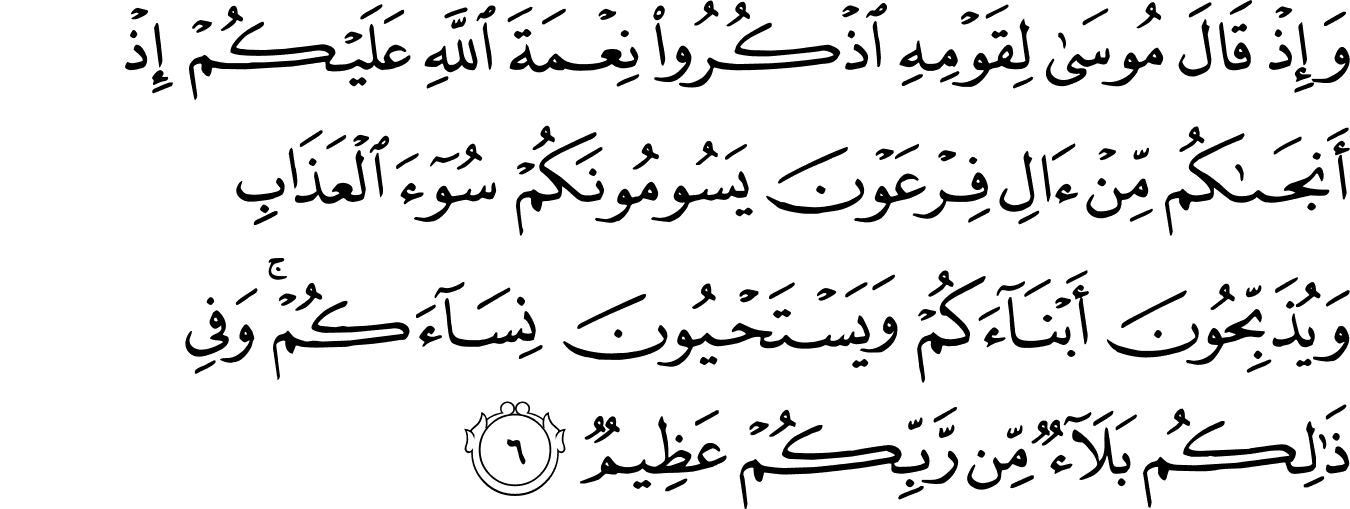
˹Consider˺ when Moses said to his people, “Remember Allah’s favour upon you when He rescued you from the people of Pharaoh, who afflicted you with dreadful torment—slaughtering your sons and keeping your women. That was a severe test from your Lord.
And ˹remember˺ when your Lord proclaimed, ‘If you are grateful, I will certainly give you more. But if you are ungrateful, surely My punishment is severe.’” [Surah Ibrahim; 14:6-7]
The Bani Isra’eel, after being tested with hundreds of their babies being murdered by Firawn, are not being told to be patient. They are being advised to be grateful. Ponder this profound point. Why would Allah and Musa advise them on gratitude and remembering the blessings they have? Does not patience in this scenario make more sense?
The only way to practice sincere patience is to first appreciate all the blessings Allah has already given us. Only then will we find the strength to sincerely endure the hardships we are facing for the sake of Allah .
And for those who think, “What blessings do I even have to be grateful for?”, consider these questions:
- Would we trade even one of our eyes for Elon Musk’s trillion-dollar pay package?
- Would we trade our warm beds for living in makeshift tents during the freezing, wet winter of Gaza while consistently being threatened by bombs and airstrikes? Or for a place in a Rohingya refugee camp?
- Would we trade the security of our lives for the constant violence, hunger, and humanitarian crises happening in Sudan and Lebanon?
- Would we trade our freedom to practice our religion and beliefs for the religious and political persecution happening to Uyghurs in China or Muslims in Kashmir and India?
None of this is to say that we don’t have problems or tests in life. But when we consider the enormous blessings Allah has bestowed upon us, we would not trade our problems for anyone else’s across the world.
Furthermore, not having a child does not mean you don’t already have a loving, supportive spouse – do we appreciate him/her as we should? Or do we wonder if things would have been better if we had married someone we could have children with? If so, we are failing at understanding that while children can be a beautiful part of marriage, not having children does not mean a marriage is any less successful or less full of love. The Prophet loved Aisha  more than anyone else, and their marriage serves as a role model for all of us. This is despite them not having any children together.
Another point that I want to mention is that if we are given children and one of them causes us to lose our faith, was that child really a blessing? This point is emphasized during the story of Musa and Khidr in Surah Al-Kahf. Khidr kills a child and later explains to Musa that Allah wanted to replace that child with another one for the parents, as the first child could have caused them to become kuffar and destroy their relationship with Allah . Who is to say that if we are given a child, that would not happen to us, and Allah is in fact protecting us from a greater evil?
The final point I will mention is that there will always be blessings given to others that we may never receive. At the same time, we have been given blessings in our lives that others can only dream of. This is by the decree of Allah . So our focus should be on the blessings we have and how we can maximize them in pursuit of pleasing Allah .
As Prophet told us, “Know that whatever happens to you could never miss you, and whatever misses you could never reach you.” [al-Mu’jam al-Kabīr]
Advice #4: Increase in Good Deeds
Part of showing and practicing gratitude to Allah is to obey Him and fulfill the obligations He ordained on us. But, if you only fulfill the obligations, that alone will not necessarily get you special treatment from Allah . If you think about our careers – how do we get ahead? We have to work harder than our coworkers, contribute extra on projects, serve on committees, etc., to get promoted. Those who barely do their job, under fair circumstances, would not be the ones who would get promoted and benefit from a bump in salary, benefits, perks, etc.
In a hadith qudsi, Allah
“Whosoever shows enmity to someone devoted to Me, I shall be at war with him. My servant draws not near to Me with anything more loved by Me than the religious duties I have enjoined upon him, and My servant continues to draw near to Me with supererogatory works so that I shall love him. When I love him, I am his hearing with which he hears, his seeing with which he sees, his hand with which he strikes, and his foot with which he walks. Were he to ask [something] of Me, I would surely give it to him, and were he to ask Me for refuge, I would surely grant it to him. I do not hesitate about anything as much as I hesitate about [seizing] the soul of My faithful servant: he hates death, and I hate hurting him.” [Bukhari]
There are so many good deeds that can be discussed, including qiyam al-layl (which is the best prayer after the fardh salah), dhuha salah, various adhkaar, praying in the masjid, fasting, etc., but the one I want to emphasize is sadaqah. It’s an absolutely amazing, widely encompassing, and easy deed if we have the right mindset. Moreover, in the current state of the world where everyone is talking about investing and making money, the fact of the matter is, whatever money we spend in charity is our real investment because that is what we will see on our scale of good deeds in the Hereafter.
“Envy consumes good deeds just as fire burns wood. Charity extinguishes sinful deeds just as water extinguishes fire. Prayer is the light of the believer, and fasting is his shield from the Hellfire.” [Ibn Majah]
Advice #5: Seek Professional Help
The problem with this step is that we often either prioritize this step over fixing our relationship with Allah , or neglect this step completely. Take advice from qualified medical professionals, talk with your family and elders, pray istikharah, and make a decision regarding next steps in your journey. We will never know what will or will not work unless we try, but we should be informed about the risks and benefits of each avenue available to us so we can make an educated decision.
I would also mention that infertility can come with a whole set of emotions, including depression, anger, despair, hopelessness, etc., so a qualified therapist, especially one with an Islamic background, could be beneficial in understanding how to process and manage our emotional state from both an Islamic and psychological perspective. I have included a list of resources for mental health at the end of this letter.
A man said, “O Messenger of Allah! Shall I tie it and rely (upon Allah), or leave it loose and rely (upon Allah)?” The Prophet SAWS said: “Tie it and rely (upon Allah).” [Tirmidhi]
Final Thoughts
The Prophet frequently made a du’a asking Allah to make him firm in his religion.
It’s so hard to be consistent, and it’s even harder at times to be consistent and trusting when you don’t have physical proof in your hand of what you’re aiming for. There’s a reason why Muslims are called believers – one of them is that we believe in the Unseen. And can you imagine that the greatest of all creation, the Prophet , is making du’a to be steadfast on Islam? It’s surreal to me because he had the Quran revealed to him by Jibreel . But while we’ll never have the same level of iman as the Prophet , that doesn’t mean we don’t try. It’s up to us to remember that Allah is writing our story in the best way possible.
Don’t be displeased with Allah . You are where you are, and I am where I am, and every person is where they are exactly as the Greatest Story Writer has written. While we don’t know how things will go in the future, our job is just to do our best with what we know now. And part of this journey for you involves your family, so encourage them to do the things you all find beneficial – inshaAllah you all will grow closer together as you continue to support each other.
At the end of the day, it very well could be you’re never gifted a child. That doesn’t mean that all your efforts and du’as went to waste. We don’t know what Allah protected us from and what reward Allah has prepared for us in the Hereafter.
I want to end with this advice a friend pnce gave to me:
“One of Allah’s Mercies towards you is that He continually creates needs for you to Him. Whenever He fulfills one of your needs, He creates another for you, so that you do not become detached from Him. Indeed, souls are inclined to detach from those they feel self-sufficient without. Whoever becomes self-sufficient from Allah and detaches from Him will perish. Therefore, some scholars have said: ‘that Allah creates needs for you so that your servitude to Him may grow.’”
May Allah always guide and bless our families and us to what is best for us in this life and the next, relieve our struggles, anxieties, and fears, and always keep us hopeful in His Mercy and Plan.
List of Mental Health Resources:
- Muslim therapists in various localities in the USA: https://www.mapsnetwork.org/
- For a local Muslim mental health professional: Please take a look at the resources here to find a local Muslim therapist:
- If you are looking for assistance regarding spiritually-related concerns: Please consider Khalil Center: https://khalilcenter.com/. They are able to provide many psychospiritual resources, including therapy and religious consultations.
- For general options: Please try www.psychologytoday.com. This website can narrow searches down by religion, therapy type, insurance, and zip code.
Keep supporting MuslimMatters for the sake of Allah
Alhamdulillah, we're at over 850 supporters. Help us get to 900 supporters this month. All it takes is a small gift from a reader like you to keep us going, for just $2 / month.
The Prophet (SAW) has taught us the best of deeds are those that done consistently, even if they are small. Click here to support MuslimMatters with a monthly donation of $2 per month. Set it and collect blessings from Allah (swt) for the khayr you're supporting without thinking about it.


[Film Review] Your Mother, Your Mother, Your Mother: A Complex Story Of Faith And Fatherhood

Far Away [Part 32] – Meilin’s Tale

[Podcast] A Light of Her Own: Muslim Womanhood, Seasons of Life, & Female Scholarship

School Counseling Grounded In The Qur’an And Sunnah: A Framework Of 10 Prophetic Traits

A Case For Critical Reading As Muslims: Reading ‘The Power of Your Subconscious Mind’ Through An Islamic Lens

When The Shaykh Never Spoke – Deepfakes, Synthetic Scholars, And The Coming Crisis Of Religious Trust

CAGE, Muslim Leadership, And Imran Khan: The Silence Test

Is It Ever Too Early To Prepare For Ramadan? Reflections On Rifq, Forgiveness, And Healing The Heart
Far Away [Part 32] – Meilin’s Tale

Maryam: The Story Of The Muslim ‘Virgin’ Mary

The Best Actions for Eid al-Adha [Imam Dawud Walid]

Coming Full Circle: Who Are You Now? | Night 30 with the Qur’an

Running Away From Who We Are | Night 29 with the Qur’an

Building From the Ground Up: Week 4 Recap | Night 28 with the Qur’an

The Muslim You Are Becoming | Night 27 with the Qur’an
-

 #Life4 weeks ago
When The Shaykh Never Spoke – Deepfakes, Synthetic Scholars, And The Coming Crisis Of Religious Trust
-
#Culture1 month ago
The Stirring Of A Muslim Population In Japan: The Story Of Yusuke Fujitani
-
#Culture1 month ago
[Podcast] Faith, Motherhood, and the Call to Gaza | Dr. Samaiya Mushtaq
-
#Current Affairs4 weeks ago
CAGE, Muslim Leadership, And Imran Khan: The Silence Test