
#Culture
Ramadan In India’s Capital: A Photo Essay
From quiet household preparations to the crowded lanes of Old Delhi, Ramadan unfolds through prayer, commerce, community, and resilience.

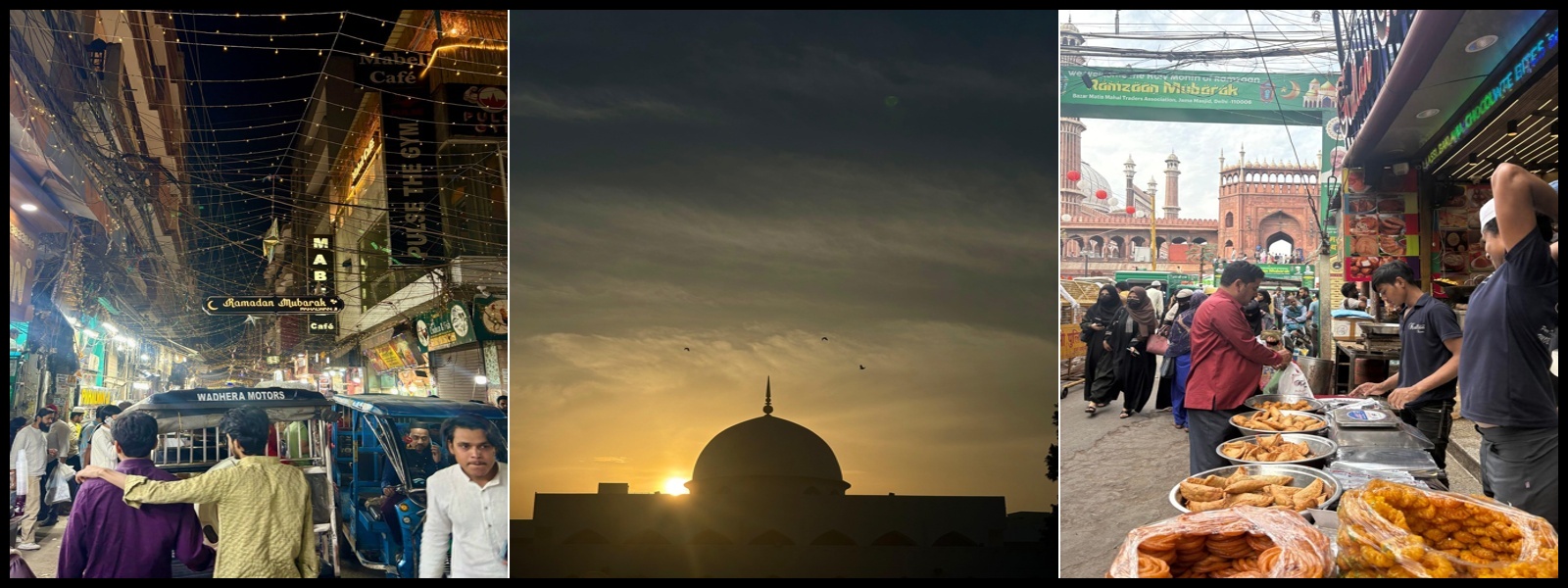
From quiet household preparations to the crowded lanes of Old Delhi, Ramadan unfolds through prayer, commerce, community, and resilience amid a climate of communal polarisation.
Photo essay by Omama A. Talha and Fatima Zohra.
Keep supporting MuslimMatters for the sake of Allah
Alhamdulillah, we're at over 850 supporters. Help us get to 900 supporters this month. All it takes is a small gift from a reader like you to keep us going, for just $2 / month.
The Prophet (SAW) has taught us the best of deeds are those that done consistently, even if they are small. Click here to support MuslimMatters with a monthly donation of $2 per month. Set it and collect blessings from Allah (swt) for the khayr you're supporting without thinking about it.
Home to 11% of the world’s Muslim population, India marked the beginning of Ramadan on Thursday, the 19th of February. Long before the crescent moon is sighted, Ramadan announces itself quietly. Around the 15th Sha’bān, a conspicuous shift takes place within the household and, in parallel, within the self. The house enters a state of preparation: cupboards are rearranged, forgotten corners, behind doors, beneath shelves, under beds are revisited. What appears to be a domestic routine reveals itself as an external rehearsal for an inward purification.
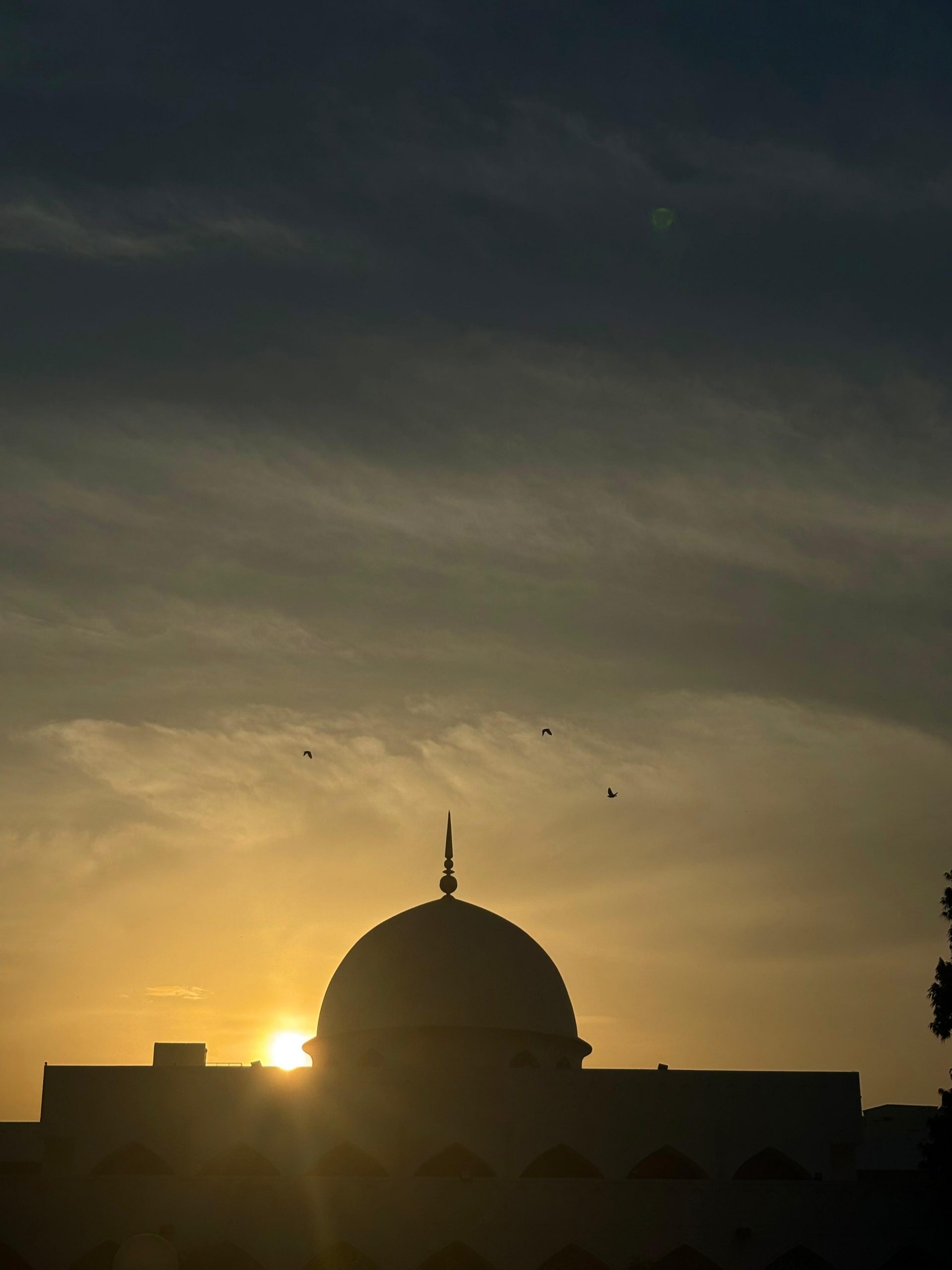
Within Islamic theology, purification precedes devotion, and intention precedes action. As space is cleared, the self is invited to account for its own accumulations. In this act of wiping and cleaning lies the practice of tazkiyah: the cleansing of what has gone clouded through neglect, distractions left unattended, and habits carried without reflection. Before the body is asked to endure hunger, the heart is summoned to loosen its attachments. Here, devotion does not commence beneath the mosque’s dome, but within the most ordinary spaces of life. The home becomes the first site of preparation. The aroma of the spices being roasted in the kitchen permeates the domestic interior. These olfactory traces function as mnemonic cues, evoking recollections of earlier Ramadans and communal iftars.
By afternoon, this inward preparation begins to spill outward.
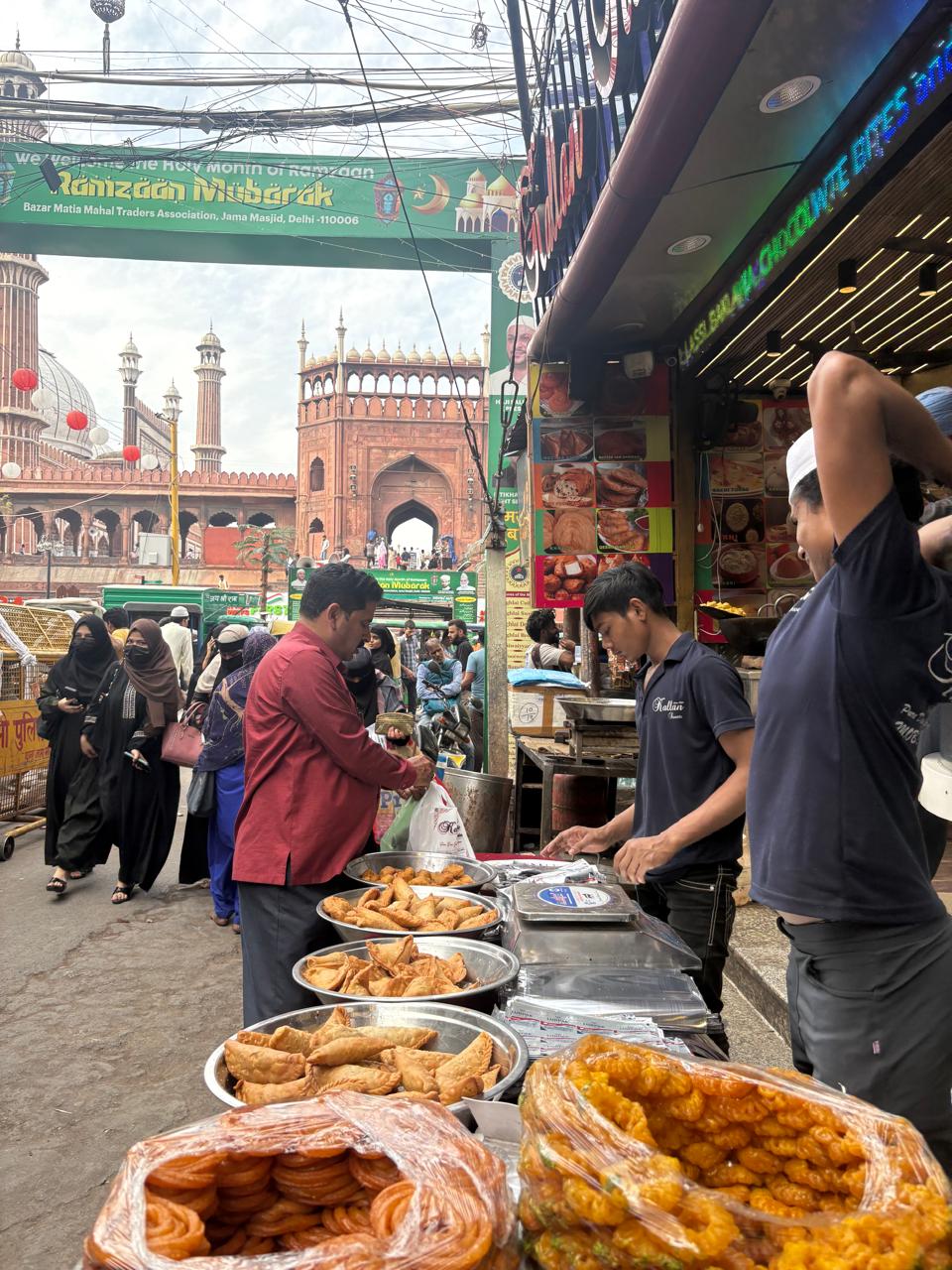
Men selling fried items like samosa, jalebi, and pakora for iftar at Bazar Matia Mahal outside Jama Masjid in Old Delhi.
People buying dates, bread, and other food items at Batla House market, New Delhi.
What takes shape within the household soon finds its echo in the street. The walled city of Delhi, founded as Shahjahanabad and known today as Old Delhi, comes alive at night during Ramadan. Long a busy commercial centre since the Mughal period, its kuchas and katras gradually stir as the day recedes towards iftar time. Congested lanes fill with passing crowds, moving slowly through narrow passageways, while the scent of freshly cooked dishes drifts from small street-side shops, saturating the air and drawing people forward.
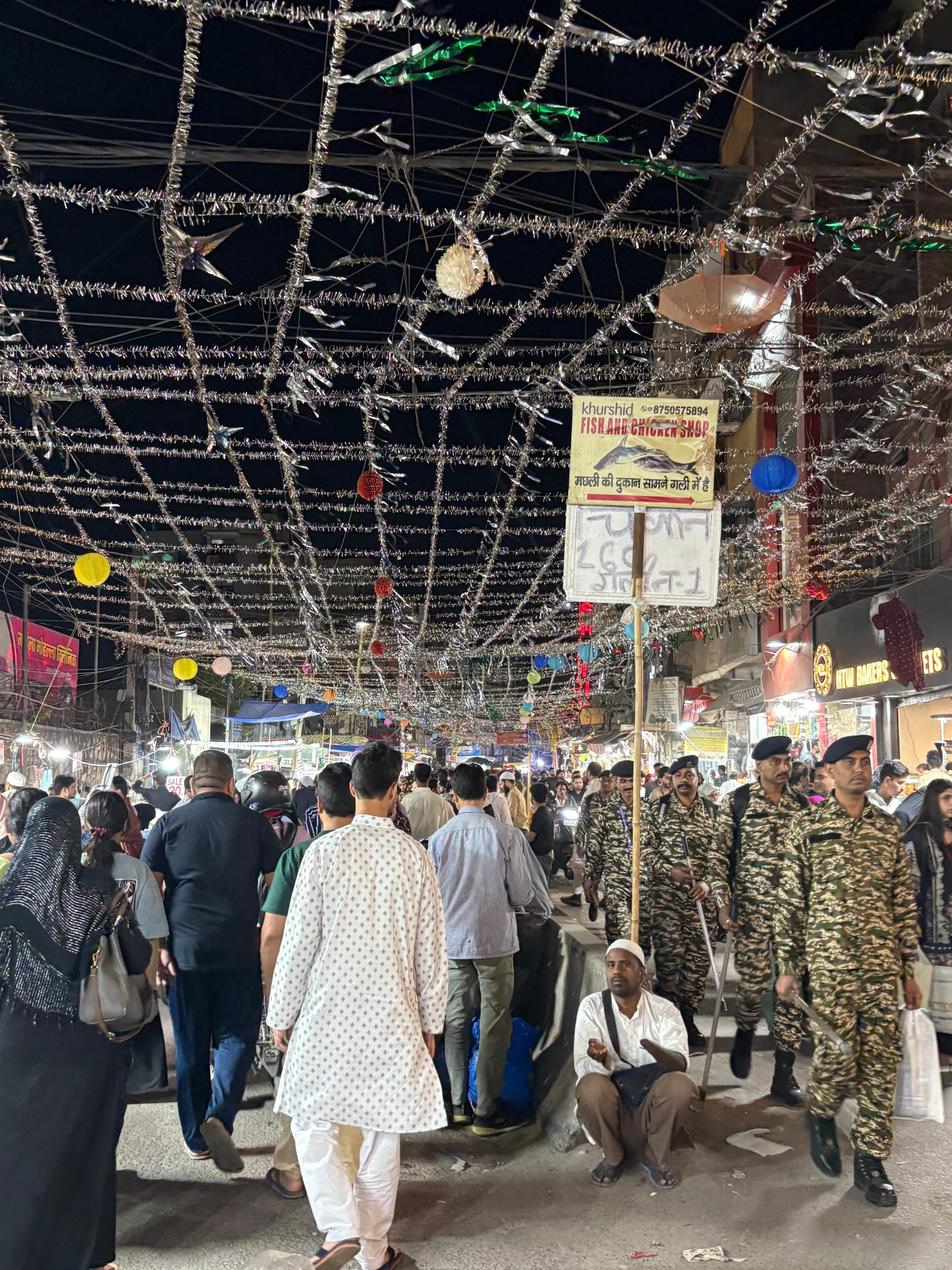
Men in uniform patrol as Muslims gather at night in the Ramadan bazaar.
In recent years, however, Ramadan in Delhi has undergone a noticeable transformation. What was once largely a Muslim communal observance has increasingly become a shared urban spectacle, attracting crowds of diverse religions and ethnicities eager to participate. This shift stands in marked contrast to the intensification of communal polarisation and hostility directed toward the Muslim community under the current political climate.
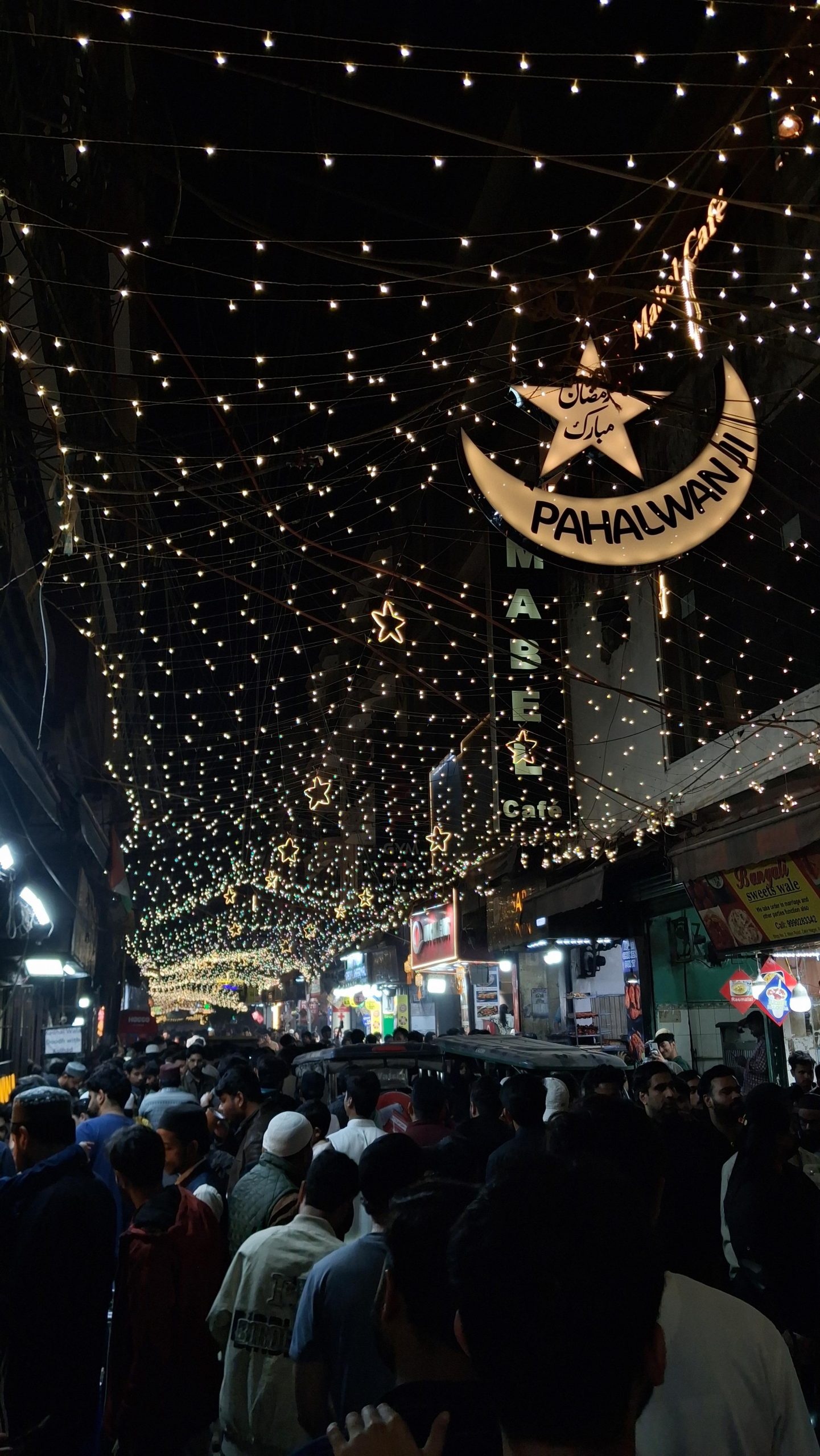
Markets and streets lit up with Ramadan lights in the Muslim areas of Delhi.
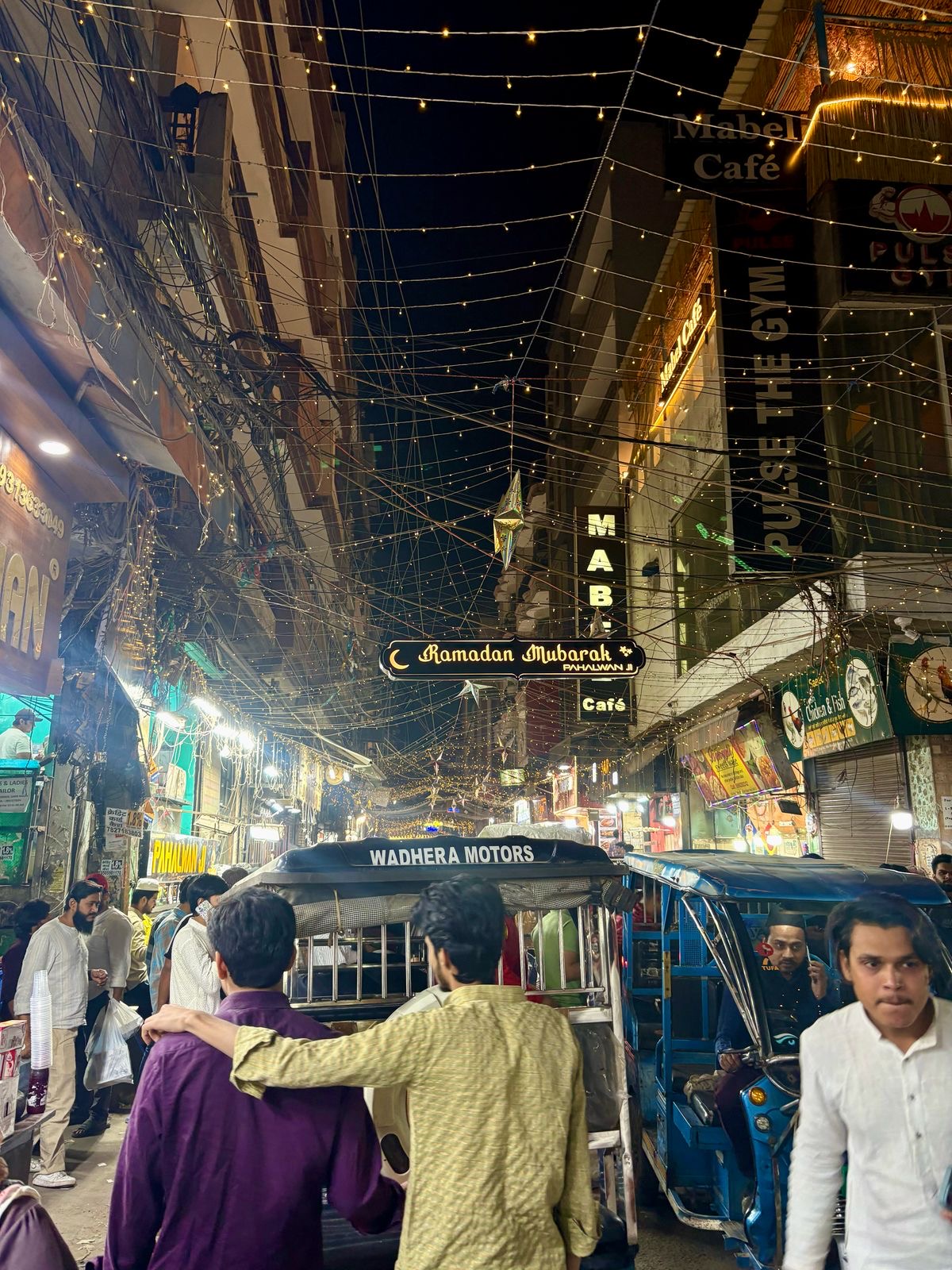
The Ramadan bazaar is popular with visitors of all types.
Among the emerging trends is the rise of all-night food walks during Ramadan, curated by culinary experts and social media influencers and attended by visitors eager to engage with the city’s cultural life. The Ramadan bazaar, in this context, may be read as a ritualised urban public space in which religious devotion intersects with commerce, leisure, and sociality. Drawing on Henri Lefebvre’s notion of the production of space, the bazaar becomes a site where space is neither purely sacred nor purely secular, but relational, shaped by fasting schedules, prayer times, economic exchange, and embodied discipline.
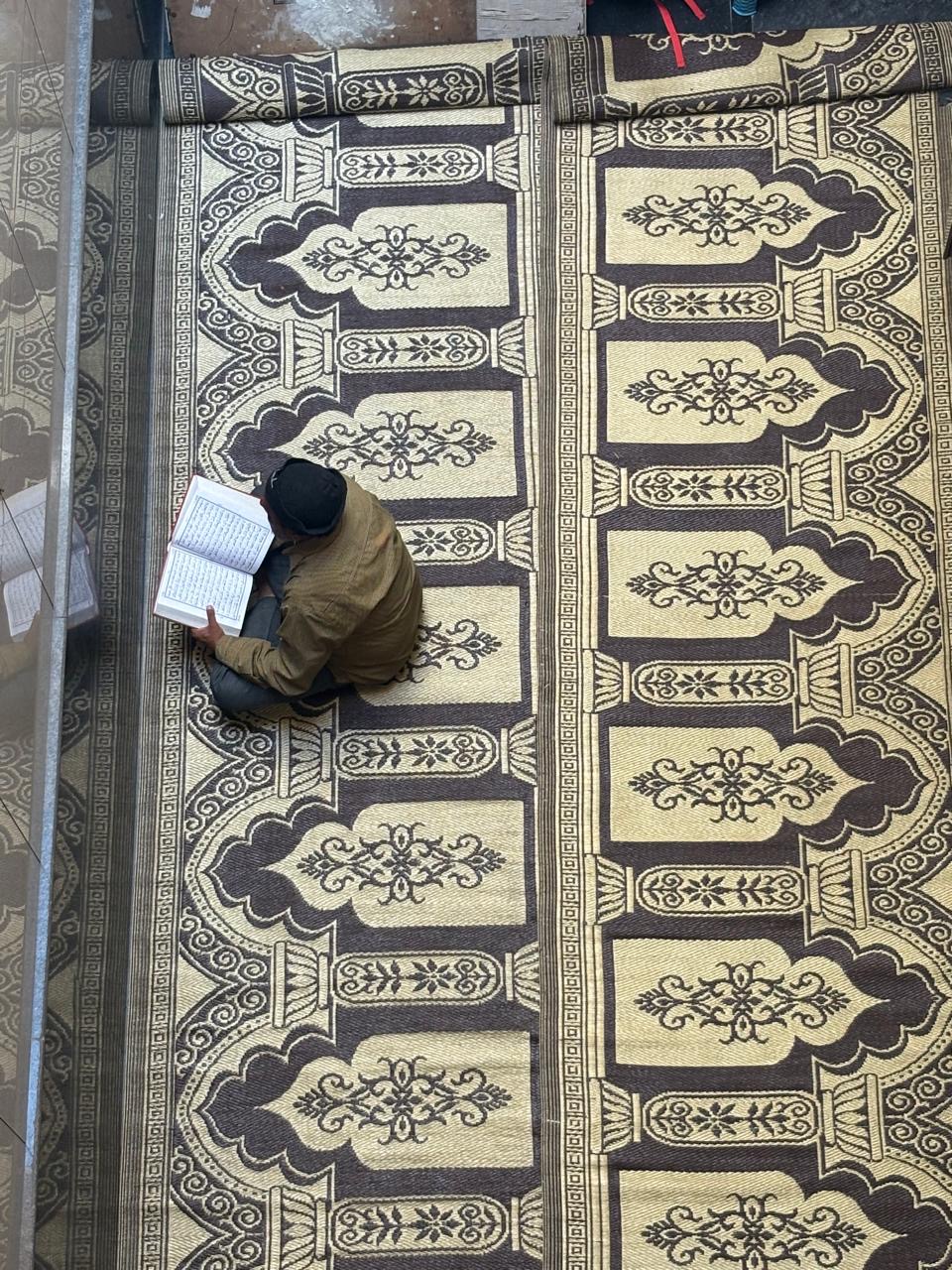
A man sitting in seclusion, reading the Quran in Moti Masjid, Connaught Place, New Delhi.
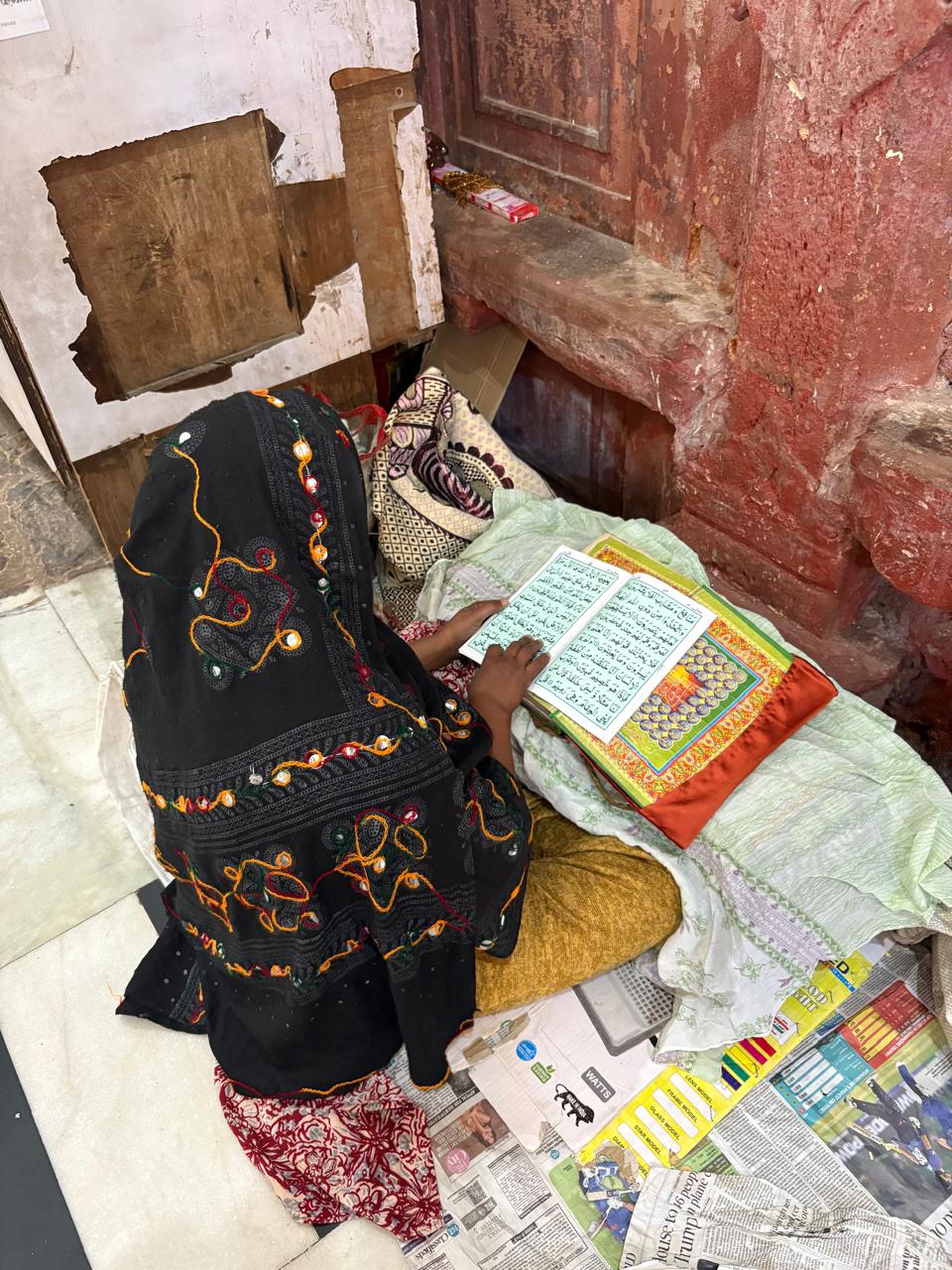
A woman sitting in the lane of Nizamuddin, reading the Quran.
Among the most enduring traditions of Ramadan, traced to the practices of the Prophetic era, is the khatm of the Qur’an: its completion once, twice, or manifold times within the sacred month. The Quran becomes the companion of believers worldwide, who endeavour to complete at least one full recitation by the month’s end. With the Mushaf close at hand, they weave its blessings into the fabric of their hours- engaging in regular reading, recitation, and memorisation, by day amid worldly occupations and by night when silence descends, and the world lies still. Irrespective of distinctions of class, caste, or occupational status, men assemble in masajid, momentarily suspending the pursuits of worldly labour to devote themselves to Allah’s kalaam, dhikr, and sujood, while women, in turn, observe their prayers mostly within the domestic sphere.
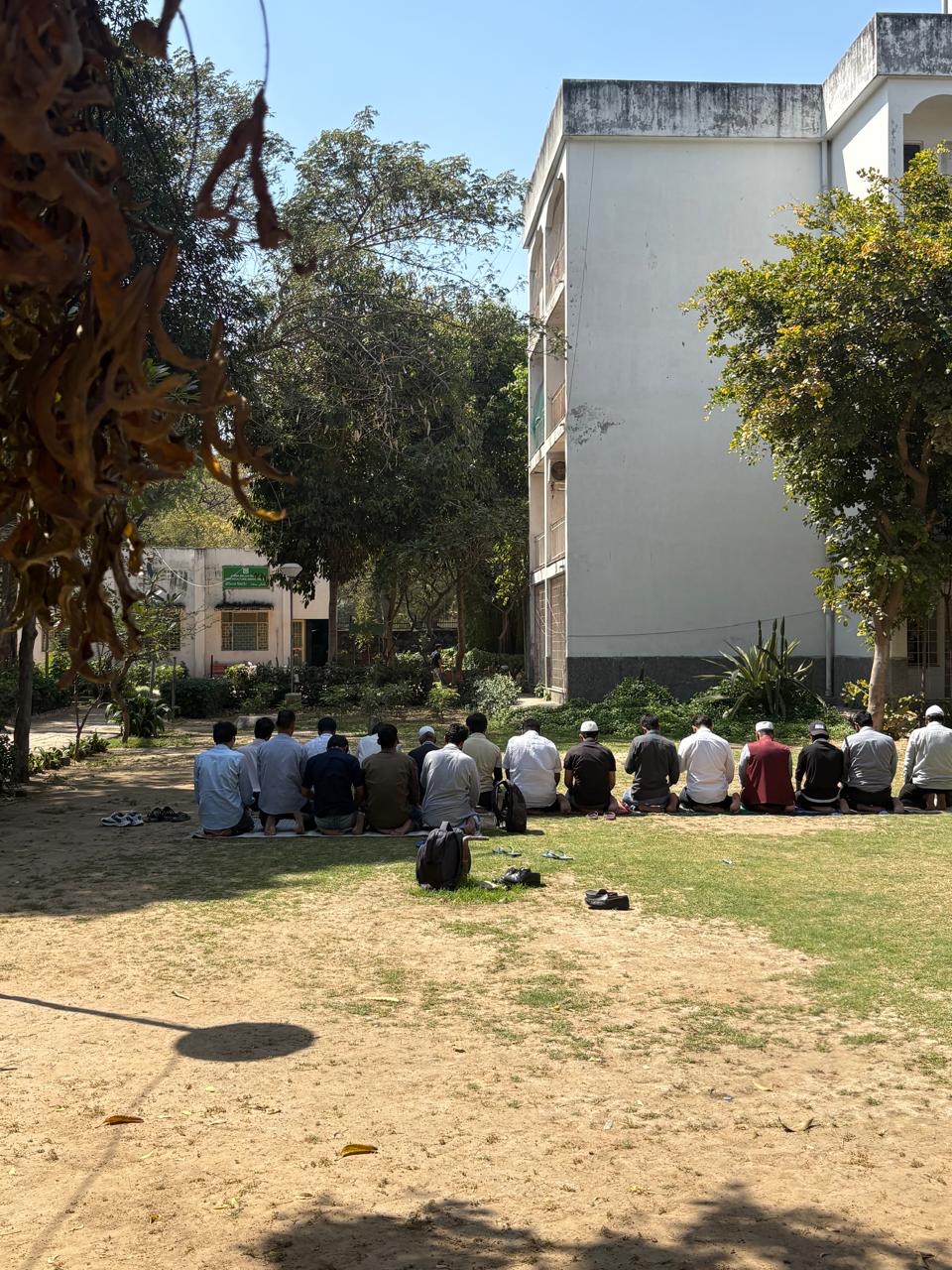
Students offering Dhuhr prayer in congregation at the campus lawn of the central university, Jamia Millia Islamia.
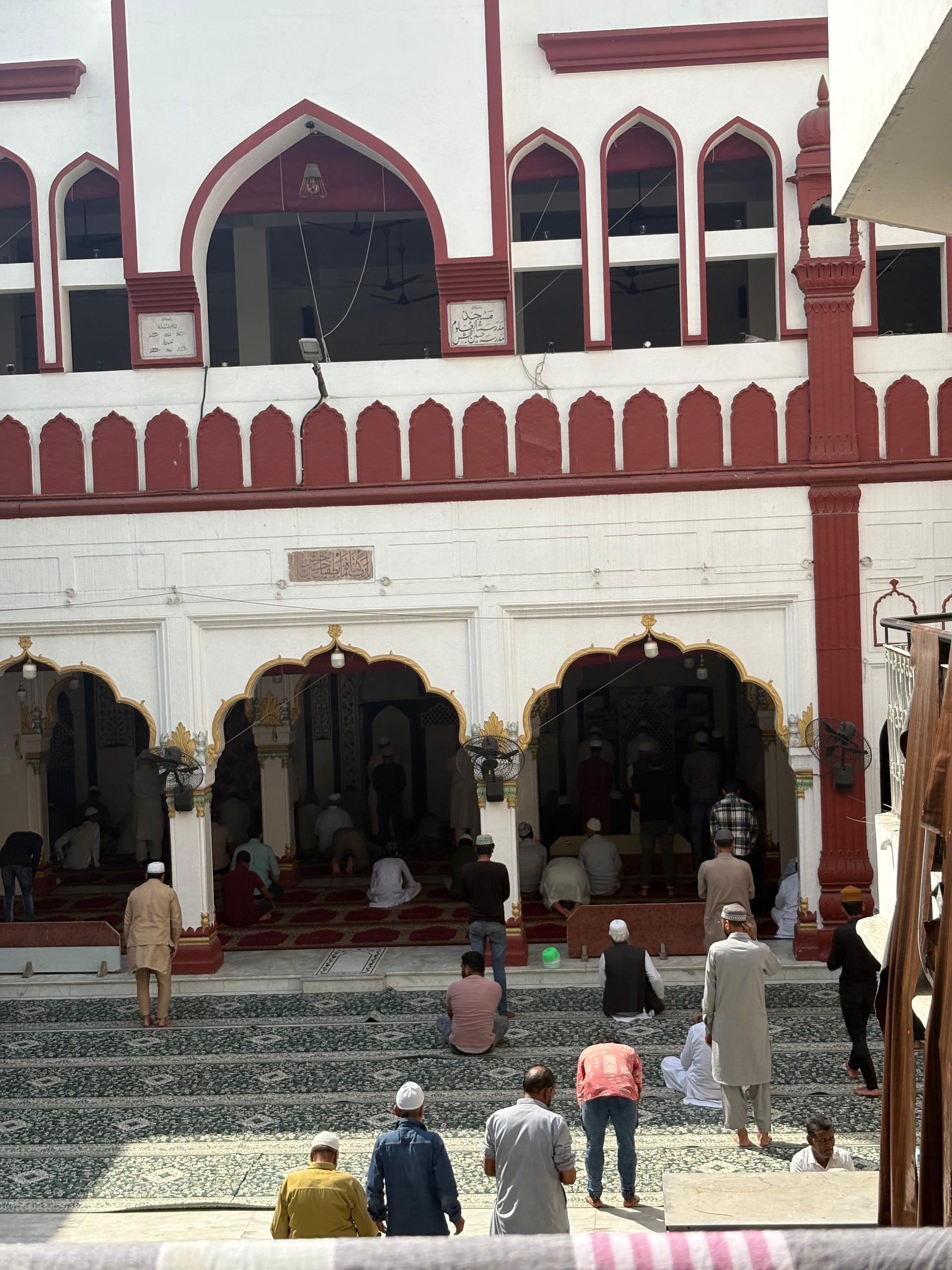
Men offering sunnah prayer before Dhuhr at Hussain Bakhsh Madrasa, Old Delhi.
In the midst of intensifying surveillance of Muslims in India and the increasing regulation of congregational worship, the simple act of standing shoulder to shoulder in submission to God becomes a revolutionary act. Across the country, despite persistent scrutiny and administrative oversight, Muslims continue to observe Ramadan and fulfil its obligations, reaffirming the aqeedah through shared devotion. The normalisation of mob vigilantism has substantially constrained the possibility of performing prayers in public spaces. Yet within certain Muslim minority institutions, students persist in quietly defying unlawful prohibitions, carving out moments for congregational worship amid the demands of rigorous academic life.
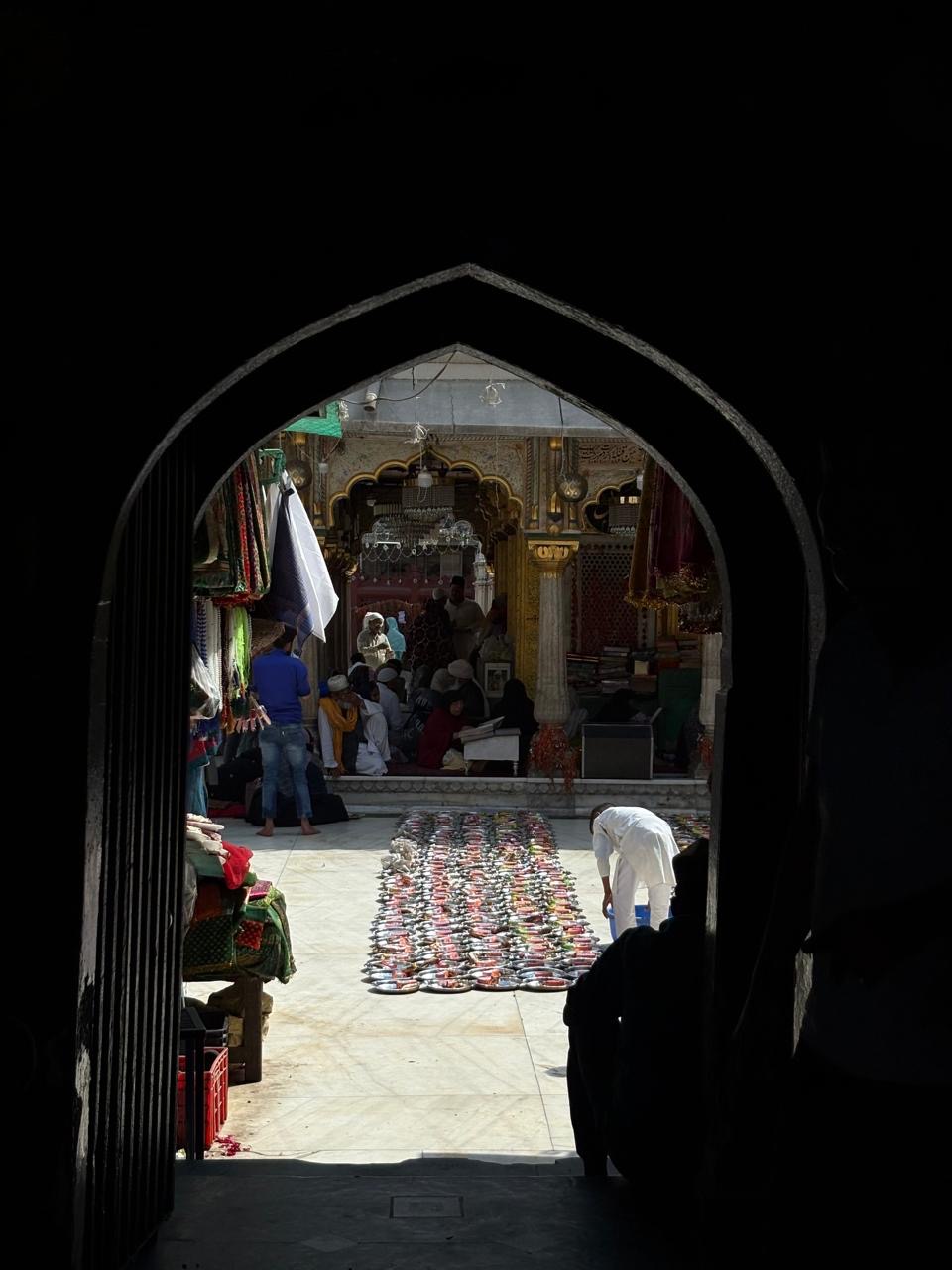
Free Iftar meal being laid out for the public at the shrine of Nizamuddin, Delhi.
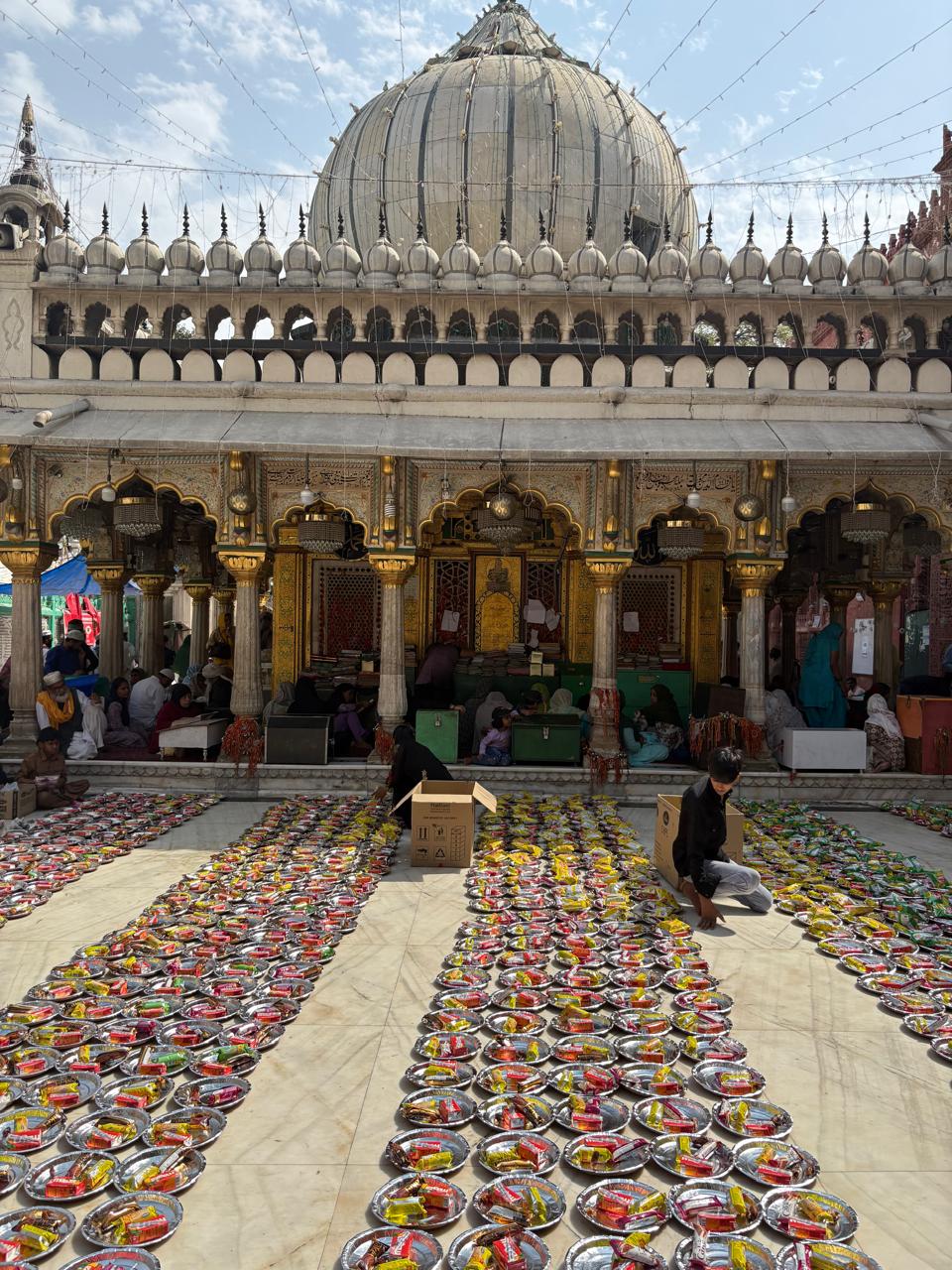
Free Iftar meal being laid out for the public at the shrine of Nizamuddin, Delhi.
Across the subcontinent, numerous shrines and mosques, both prominent and lesser known, open their doors during Ramadan to travellers, underprivileged, tourists, and local residents alike for the communal iftar meal. Among the most notable is the shrine of the celebrated Sufi saint Nizamuddin Auliya, situated in the heart of Delhi. Renowned for its historical and spiritual significance, the shrine exemplifies a longstanding tradition of inclusive hospitality throughout the holy month.
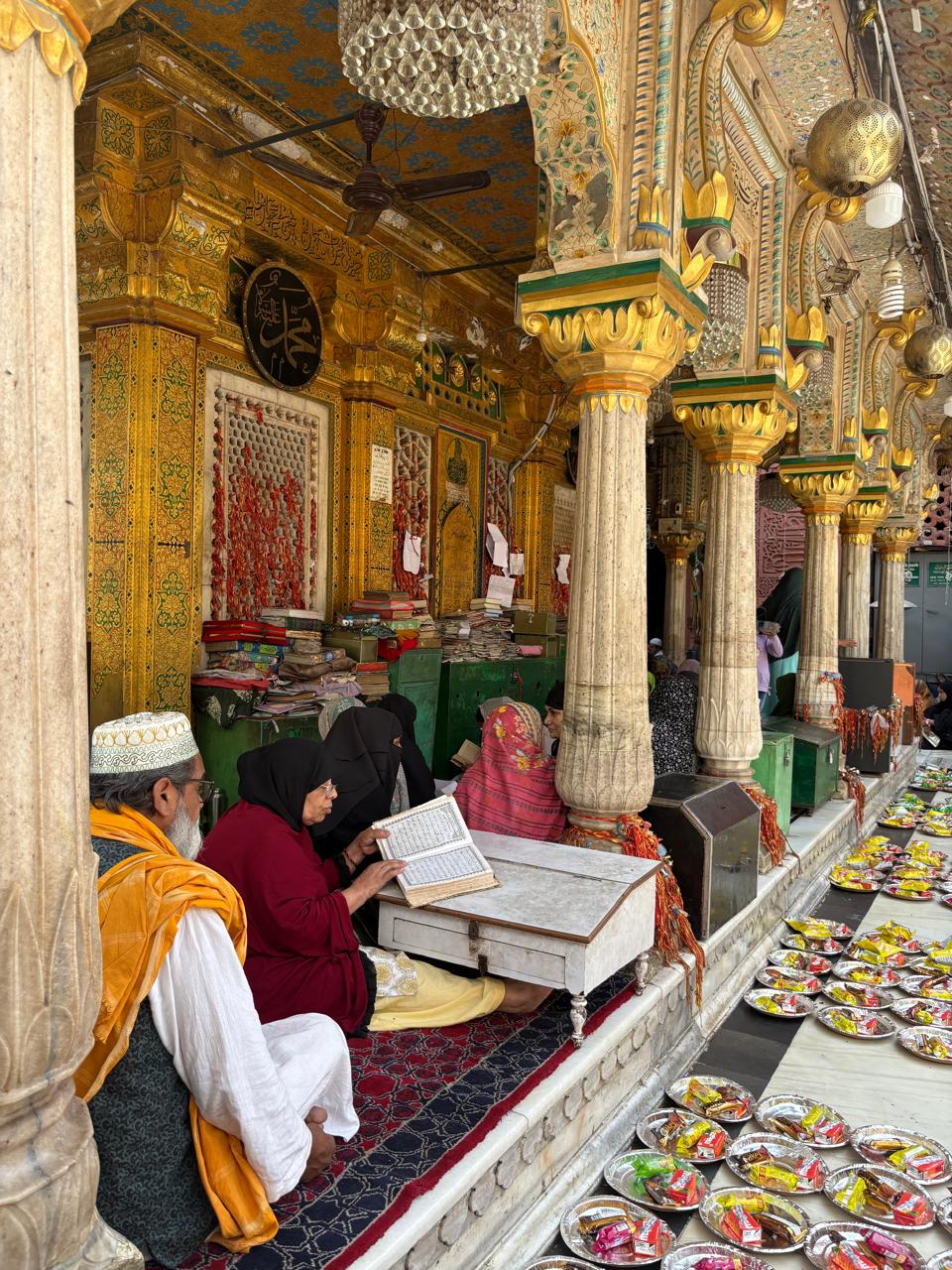
Men and women reciting the Quran and doing dhikr in the veranda of Nizamuddin Mosque.
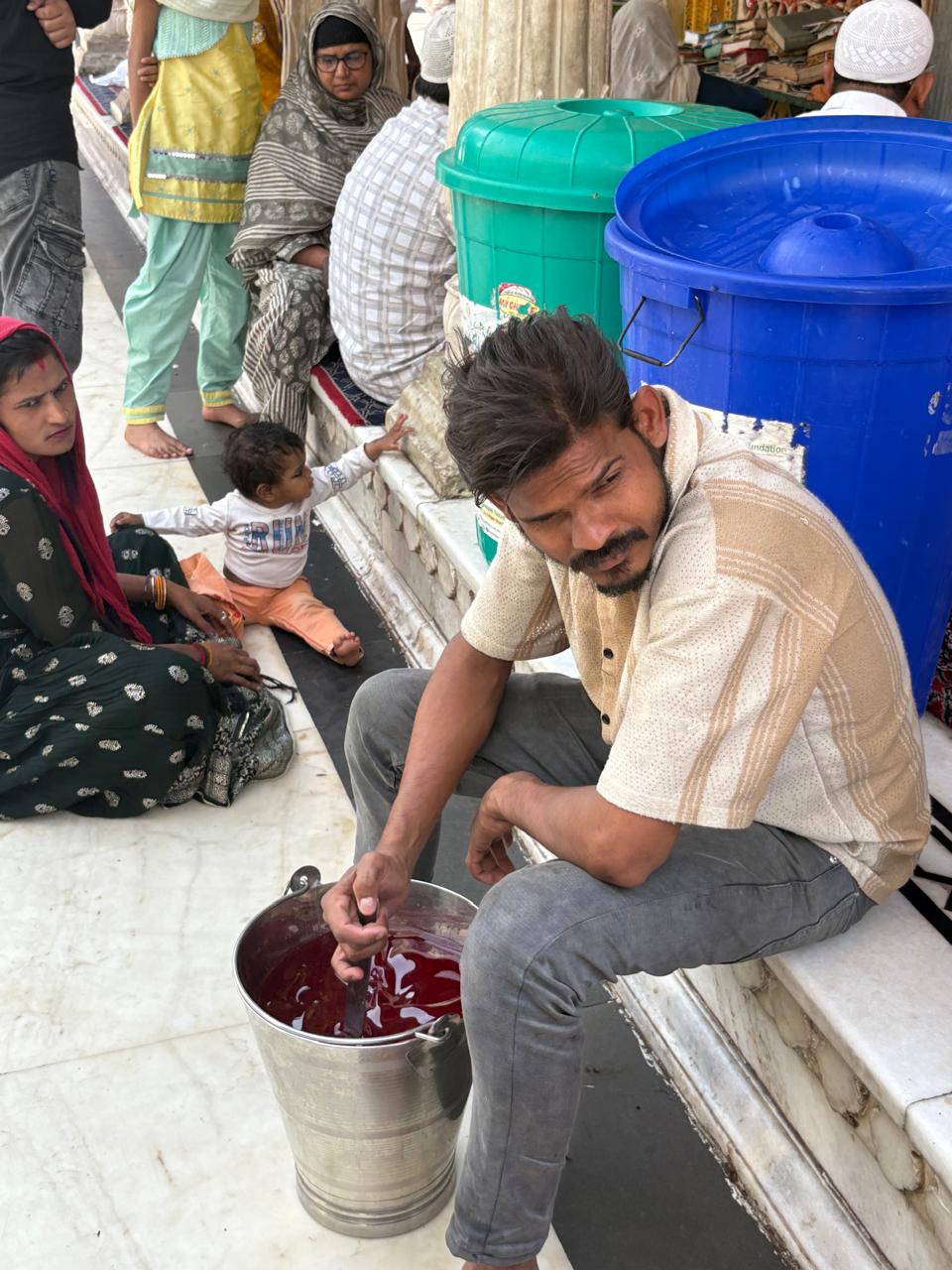
A man making Rooh Afza Sharbat, a sweet, refreshing drink, which makes it to the iftar table of the Muslims in the Subcontinent.
In the hours following the ʿAṣr prayer, the atmosphere within such sanctuaries becomes charged with devotional anticipation. Men and women gather in the courtyards, arranging dates and water, laying out cloths for the iftar, reciting verses from the Qur’an, and listening to Sufi kalām that resonates through the air.
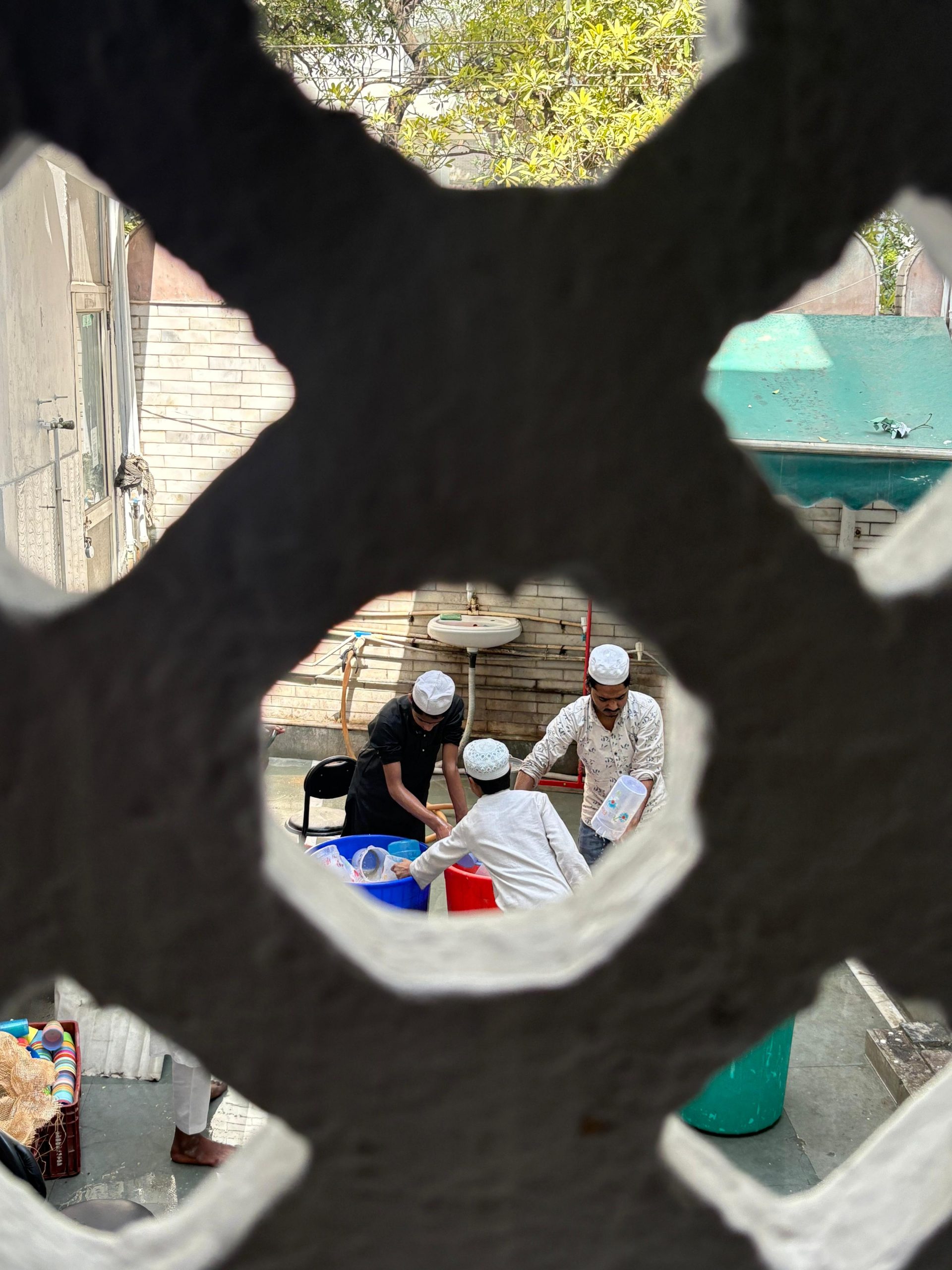
Young boys enrolled in Madrasa, washing utensils for iftar at Green Park Masjid, Delhi.
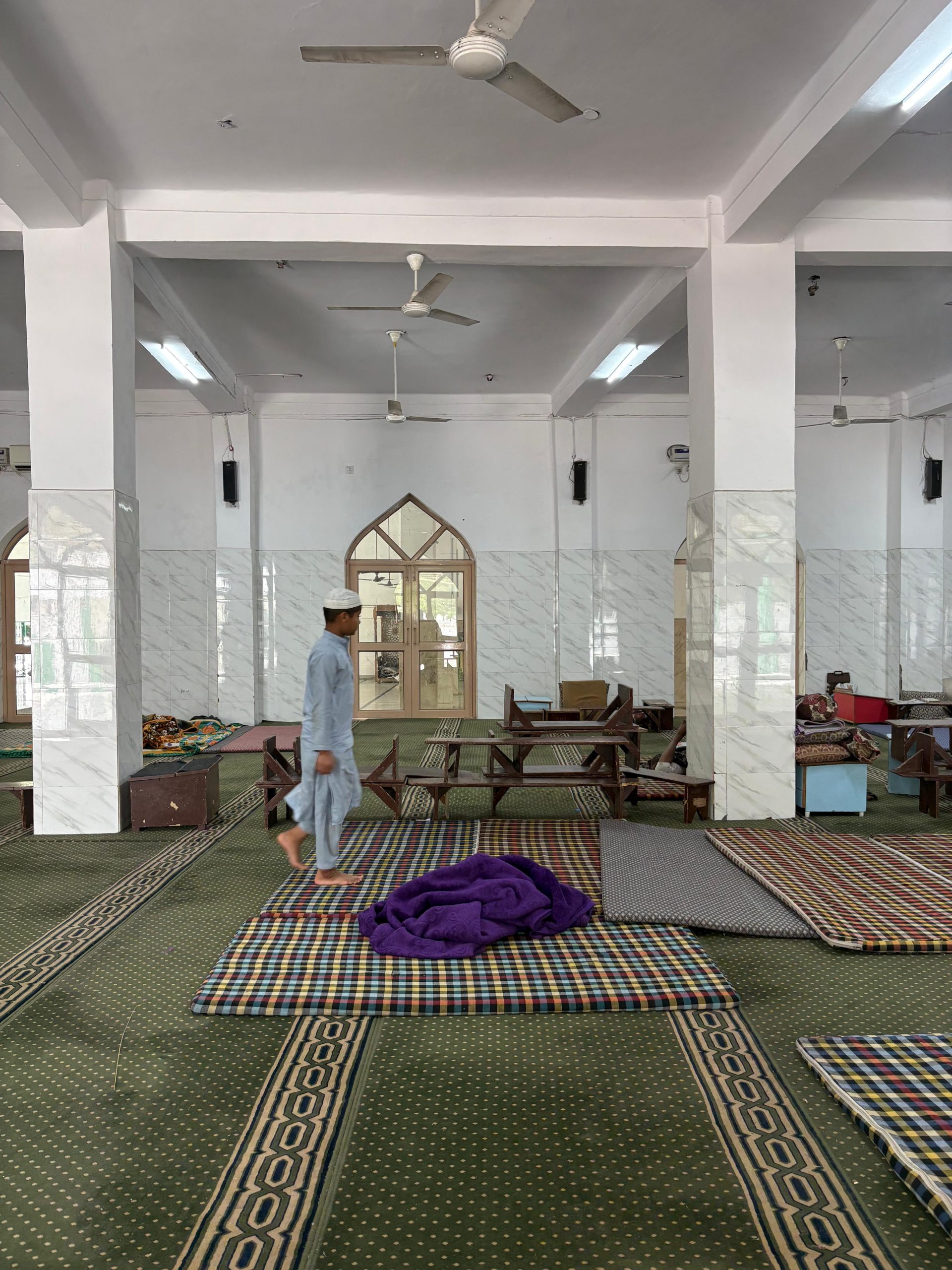
Students of Madrasa at Defence Colony.
This tradition of preparing and offering ifṭār, however, is not confined to prominent shrines and mosques; it extends equally to madrasas- institutions dedicated to Islamic learning. In many parts of India, these seminaries continue to rely predominantly upon public charity, much of which is gathered through the humble, door-to-door efforts of their staff during this blessed month. Receiving and hosting such representatives, whether in mosques, madrasas, or private settings, is widely regarded as an honour among Indian Muslims.
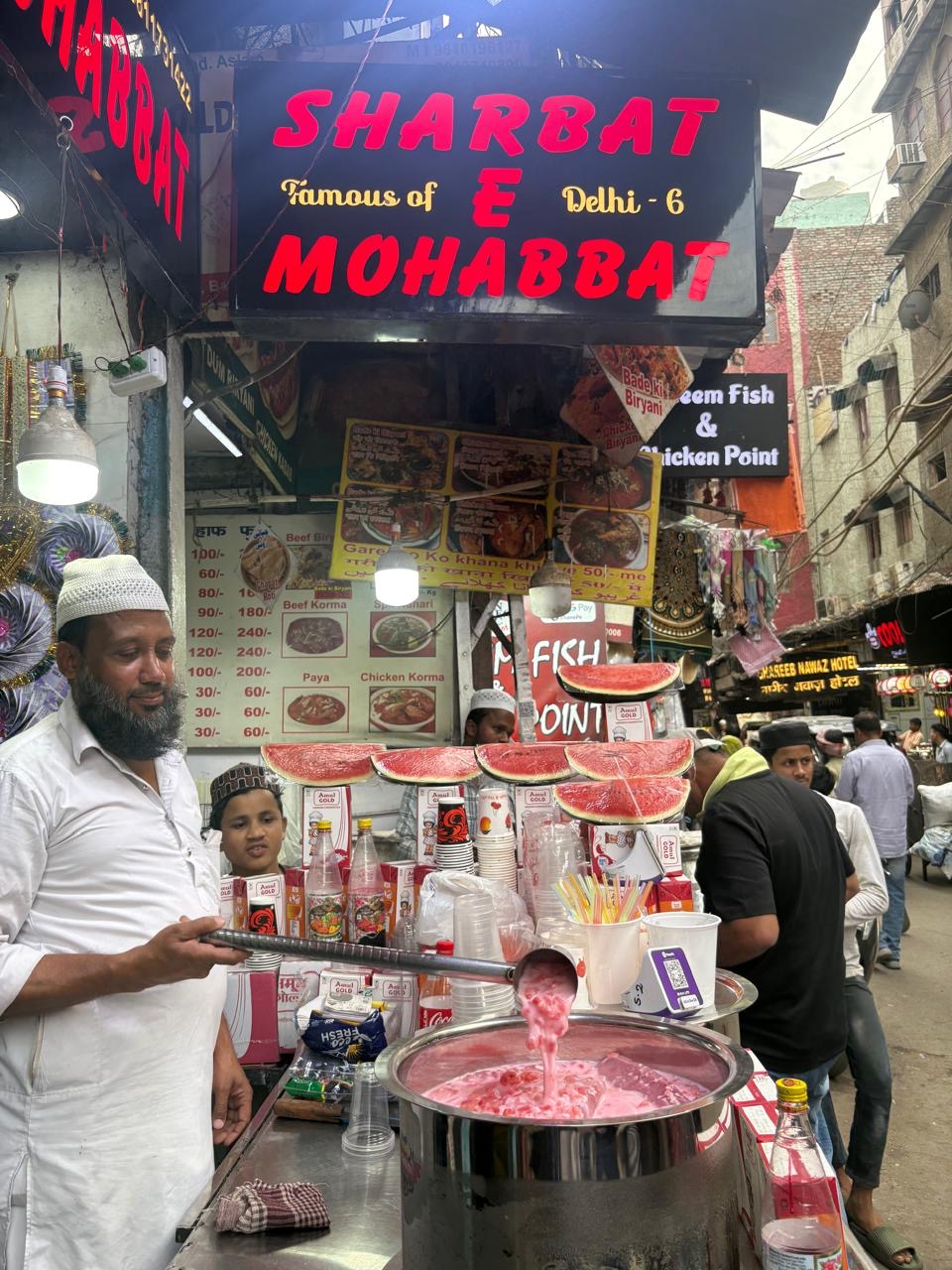
A man selling the famous ‘Sharbat-e-Mohabbat’(Drink of Love) in Old Delhi.
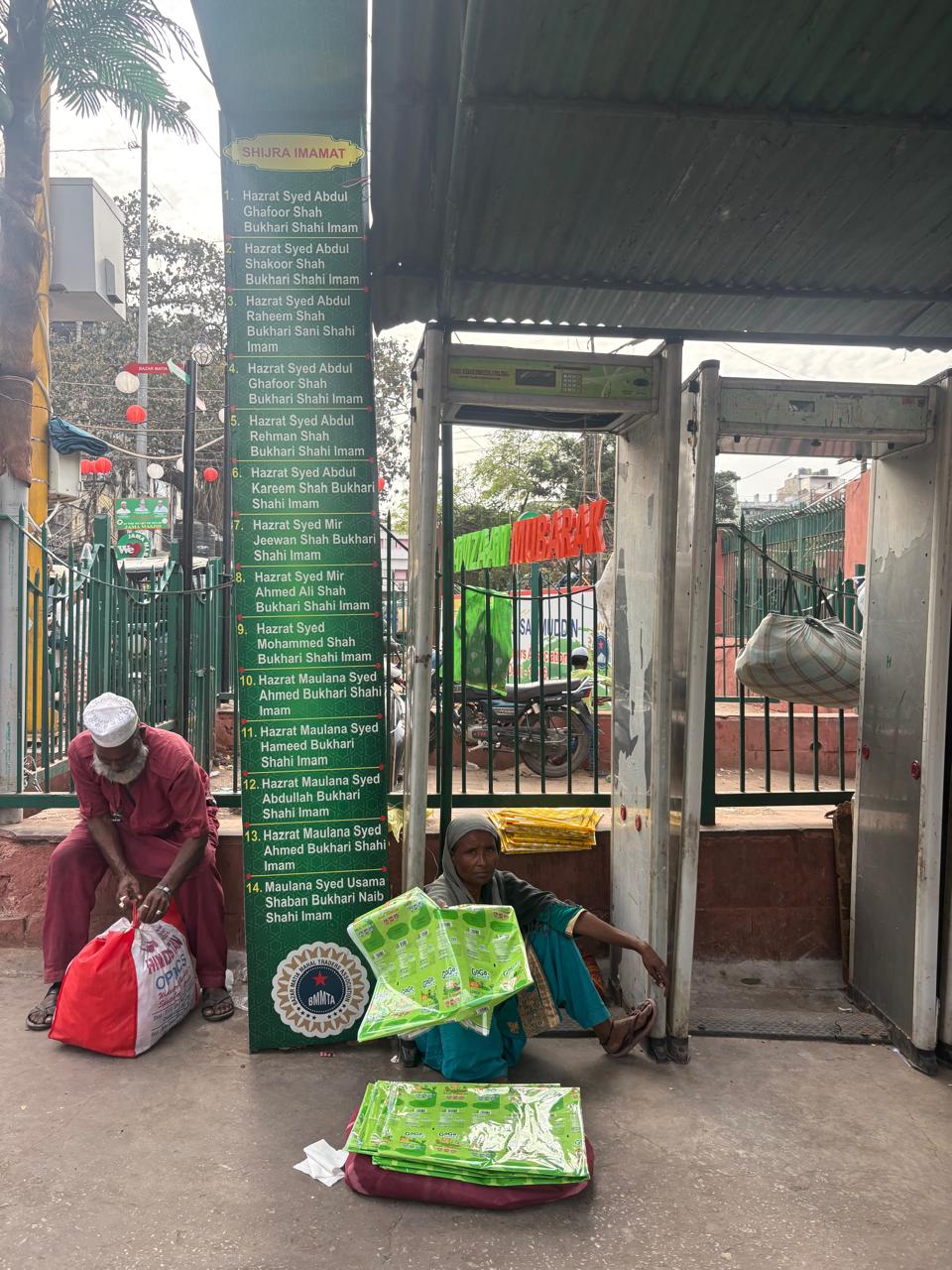
Nafeesa Begum selling plastic tablecloths outside the Jama Masjid.
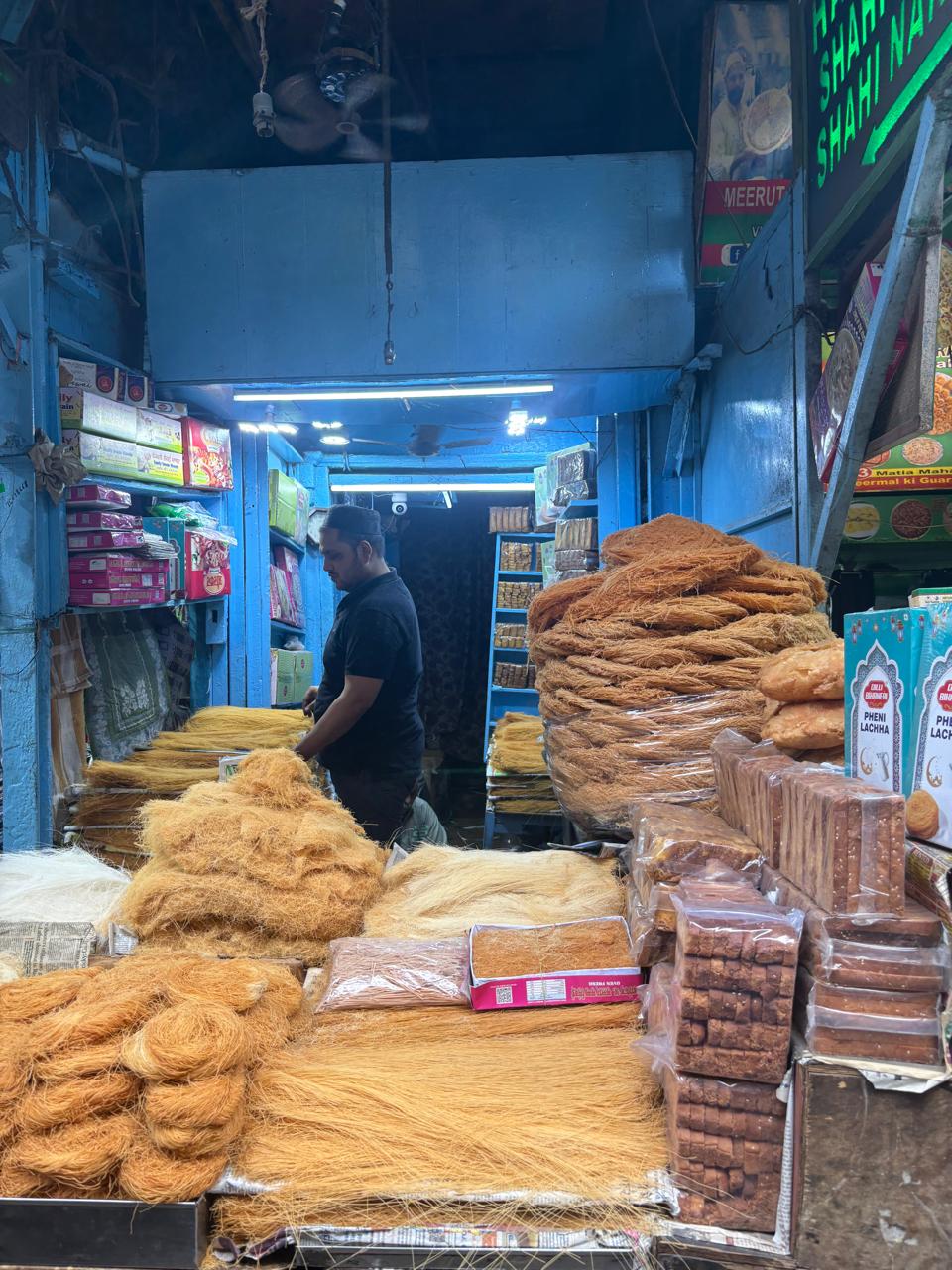
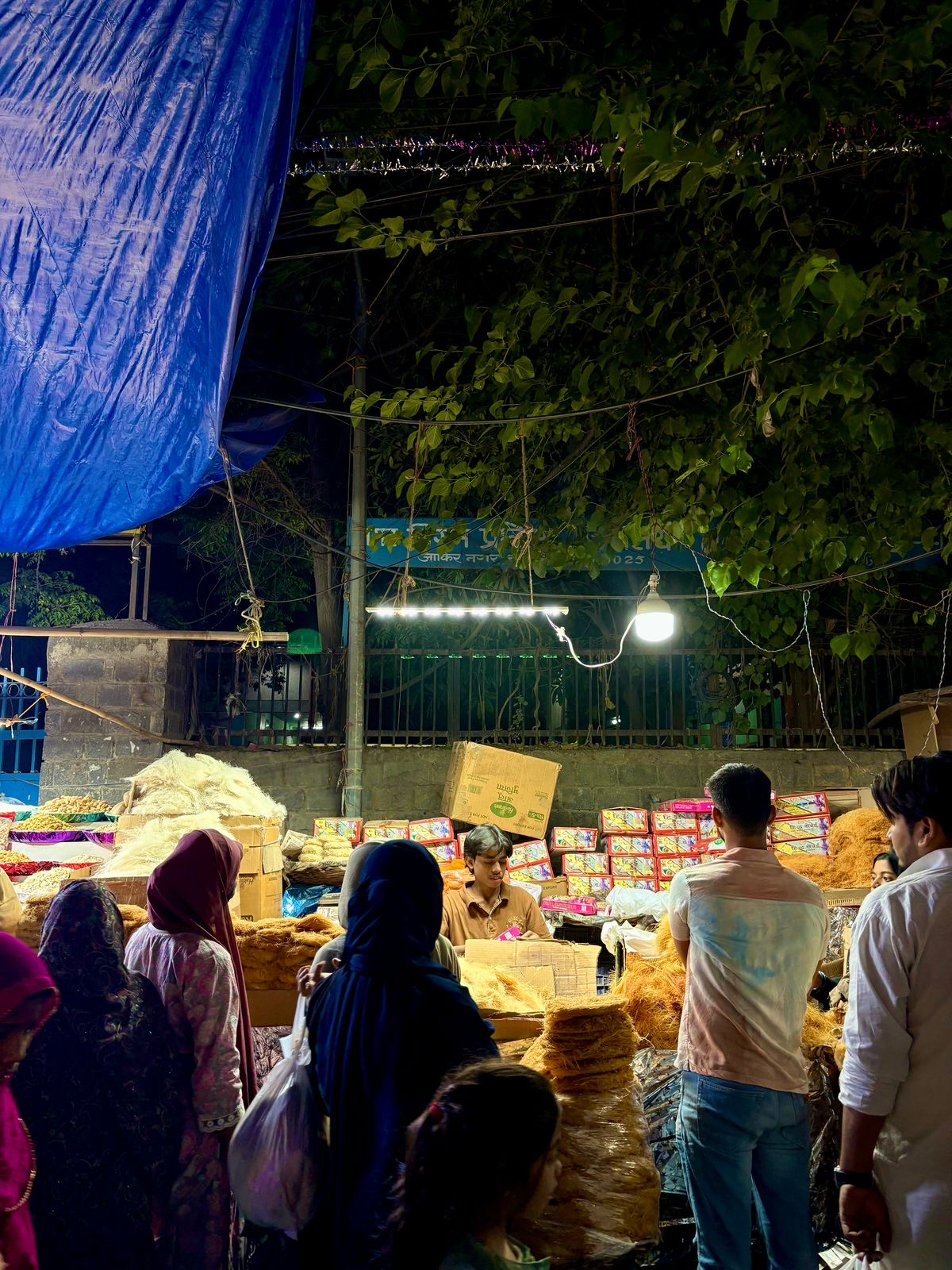
Pheni/Sewayi, a traditional Indian sweet dish being sold in markets.
Ramadan also emerges as a vital source of livelihood for many. Markets thrum with energy, fruit vendors witness a surge in demand, and food shop owners experience some of their busiest evenings of the year. For individuals like Nafeesa Begum, a widow who sustains herself by selling plastic dastarkhwans (tablecloths) outside Jama Masjid, Ramadan also becomes a season of survival. Each evening, as thousands gather in the mosque’s courtyard to break their fasts, she lays out her wares, hoping the generosity of the month will bring enough income to carry her forward. Seasonal delicacies such as Pheni, a pre-fried vermicelli made with flour, semolina, and ghee, return to the markets during Ramadan, cherished at sehri and offered to guests on Eid.
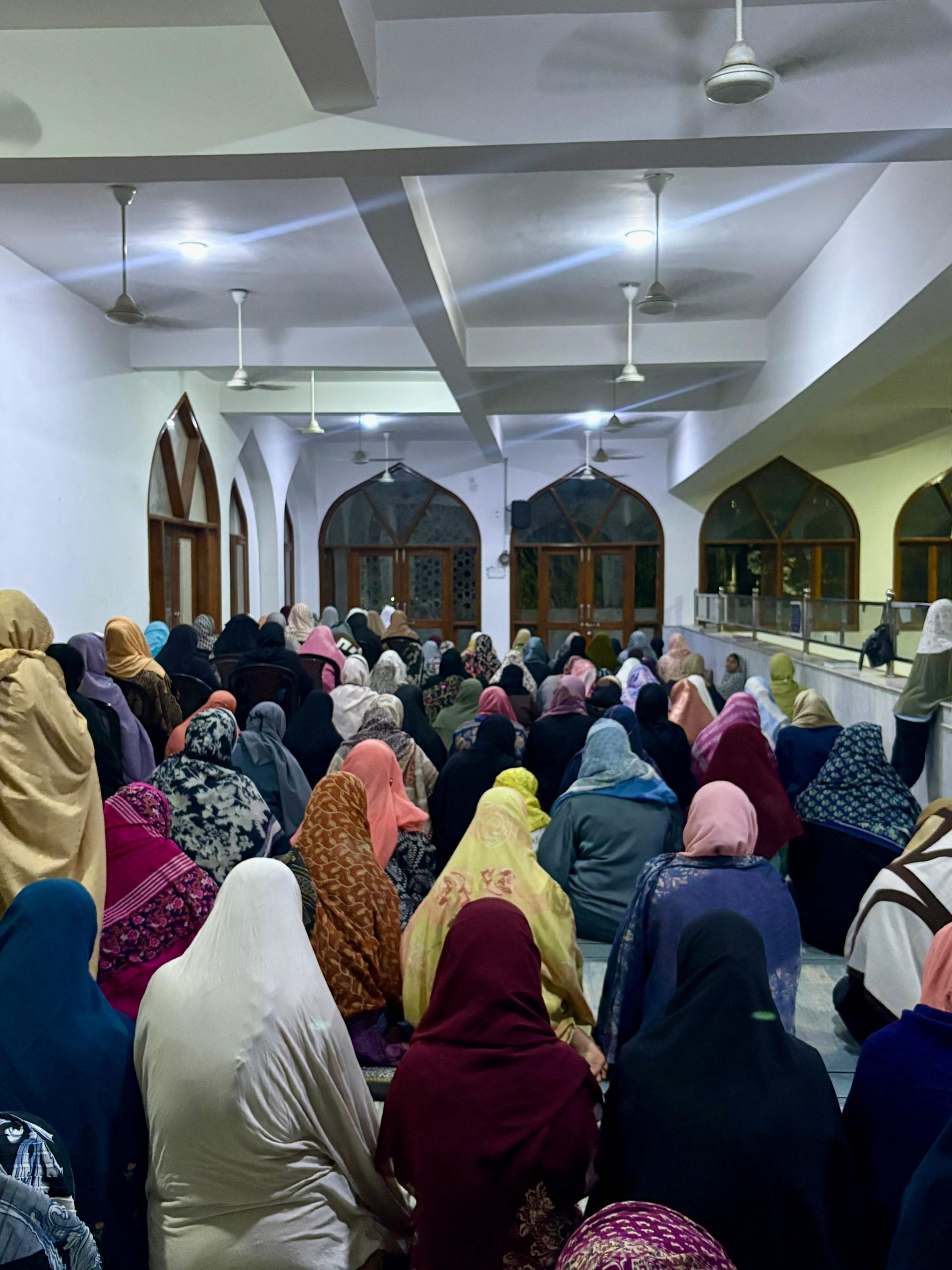
Women offering Taraweeh in congregation at Ishat e Islam mosque, centre of Jamat Islami Hind.
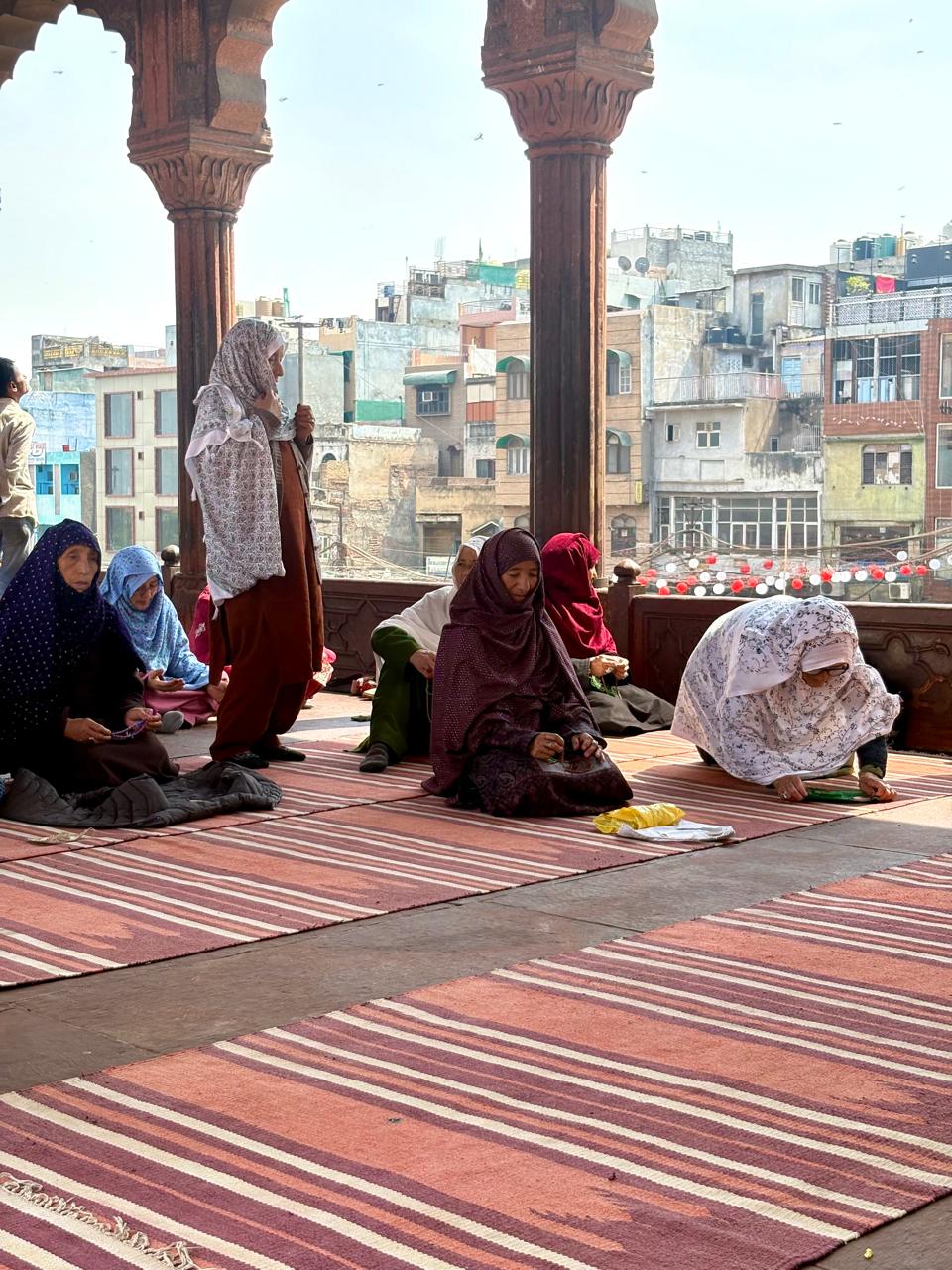
Women offering nafl prayers at Jama Masjid, the largest mosque in Delhi.
For generations, Muslim women were largely confined to the domestic sphere, where acts of ibadah were often performed along with the demands of household responsibilities, thereby distancing them from the communal and spiritual dimensions of Ramadan. In recent years, however, there has been a significant shift. In India, particularly in urban cities such as Delhi, Muslim women have begun to reassert their presence within religious institutions and masajid, seeking not merely access but meaningful inclusion. Although equitable access to such spaces remains an aspiration for many, it is now more common to observe Muslim women participating in Salat al-Jumu‘ah and Taraweeh prayers during Ramadan, fostering bonds of sisterhood grounded in shared love for the deen of Allah subhana wata’ala.
Ramadan in Delhi today exists in a striking tension between visibility and vulnerability. The month now treated as an aestheticised spectacle was historically anchored in inward discipline and deep-rooted Muslim traditions. It has now been incorporated into broader economies of tourism, media and urban branding. Yet this visibility coexists with growing insecurity. In a political climate marked by surveillance, administrative regulation of congregational worship, and the normalisation of anti-Muslim hostility, gathering for prayer, organising public iftars, or occupying mosque courtyards after dark becomes a quiet refusal to disappear. We ought not forget that at its theological core, Ramadan resists material excess. The practice of tazkiyah calls for refinement of the self rather than amplification of display. In this sense, the growing materialisation and aestheticisation of Ramadan across the subcontinent stands in productive tension with the month’s spiritual purpose.
Related:
UPDATE(10) Qatar, UK, US, Pakistan, South Africa | Snapshots: Eid Photos from Around the World
Keep supporting MuslimMatters for the sake of Allah
Alhamdulillah, we're at over 850 supporters. Help us get to 900 supporters this month. All it takes is a small gift from a reader like you to keep us going, for just $2 / month.
The Prophet (SAW) has taught us the best of deeds are those that done consistently, even if they are small. Click here to support MuslimMatters with a monthly donation of $2 per month. Set it and collect blessings from Allah (swt) for the khayr you're supporting without thinking about it.


Ramadan In India’s Capital: A Photo Essay

The Pilgrim [Part 2]: Things To Give – A Ramadan Story

Taqwa: The Foundation | 30 Nights with the Qur’an

Speaking to Allah in the Last 10 Nights: Du’a for Our Children | Part 2

Entering The Last 10 Nights: What Ramadan In Gaza Taught Me About Gratitude

30 Nights with the Qur’an: A Ramadan Series for Muslim Teens

Where Does Your Dollar Go? – How We Can Avoid Another Beydoun Controversy

An Unending Grief: Uyghurs And Ramadan Under Chinese Occupation

[Podcast] Ramadan Is Not For Your Private Spirituality | Dr Farah El-Sharif

Who Am I Really? What Surat Al-‘Asr Teaches Muslim Teens About Identity | Night 1 with the Qur’an

What Will You Leave Behind? Legacy in Islam | Night 25 with the Qur’an

The Why Behind Our Actions | Night 24 with the Qur’an

Your Place in the Ummah | Night 23 with the Qur’an

What’s My Purpose? | Night 22 with the Qur’an

Doubt, Depression, Grief, Shame, Addiction: Week 3 Recap | Night 21 with the Qur’an
-

 #Islam4 weeks ago
30 Nights with the Qur’an: A Ramadan Series for Muslim Teens
-
#Society3 weeks ago
Where Does Your Dollar Go? – How We Can Avoid Another Beydoun Controversy
-
#Current Affairs3 weeks ago
An Unending Grief: Uyghurs And Ramadan Under Chinese Occupation
-
#Islam1 month ago
[Podcast] Guardians of the Tradition: Muslim Women & Islamic Education | Anse Tamara Gray


