
Middle-East
Palestine Papers Confirm Already Suspected Truths about Mideast Peace Process

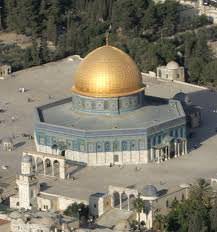 As of Sunday January 23rd, several international news outlets have obtained what has been dubbed the Palestine Papers. For those just now tuning in, these papers are more than 1,600 classified leaked documents that expose the inner workings of the Israeli-Palestinian negotiation process. Al Jazeera is one of the news outlets in possession of these documents, and they are not reporting how they have come to obtain them. So what exactly do the papers contain? According to Al Jazeera, the documents date from 1999 to 2010 and they contain “memos, e-mails, maps, minutes from private meetings, accounts of high level exchanges, strategy papers and even powerpoint presentations.” The papers reveal conversations about the peace process between officials from the Palestinian Authority, Israel, and the United States. Wikileaks has been keeping a low profile in the last couple of months, ever since its founder Julian Assange began legally battling an accusation of sexual misconduct in British courts. But if not Wikileaks, where else are these documents coming from? We may find out in the days to come, but for now it is crucial to understand what the major revelations of the Palestine Papers are.
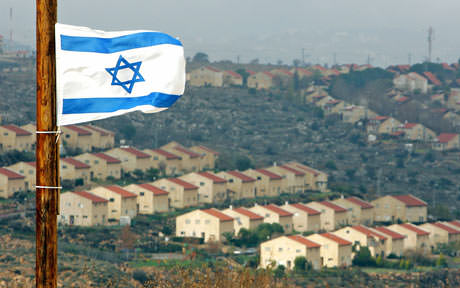
First, these leaked documents confirm that aside from its public declaration of seeking negotiation, Israel is not willing to negotiate over its claim to occupied East Jerusalem, including major settlements. In the past, Western media has projected the scenario that Israel lacks a viable partner for peace in the Palestinians, who are portrayed as fractured and incapable of accepting the “generous concessions” made by Israel. But these papers reveal an alternative reality, one in which Palestinian negotiators acquiesced settlements such as Ramat Shlomo, “along with every other bit of illegal construction in the Jerusalem area” to Israel, in return for nothing. Readers may recall the Ramat Shlomo settlement from the controversy that erupted after Vice President Joe Biden’s visit to Israel last year. After his trip, Israel announced that it would continue building new settlements in Ramat Shlomo, to which Biden said that this “undermines the kind of trust we need” between both negotiating parties. But what these papers reveal is that the Palestinian negotiators had behind closed doors, since 2008, allowed Israel to annex Ramat Shlomo. This is only one example of many found in these papers where Palestinian negotiators have agreed to swap land with Israel.
More shocking, and of concern to Muslims around the world is the revelation that Saab Erekat, the chief Palestinian negotiator, was willing to grant control of the Haram al-Sharif – home of Masjid al-Aqsa to an international oversight committee. These are Erekat’s exact words: “… the Haram can be left to be discussed – there are creative ways, having a body or a committee, having undertakings for example not to dig [excavations under the al-Aqsa mosque]. The only thing I cannot do is convert to Zionism.” Obviously, it would be a provocative development to have the Haram officially controlled by other than Palestinians, but to even have it on the negotiating table is undoubtedly troubling to many Muslims. Jews also lay claim to the Haram al-Sharif (which Jews call the Temple Mount) as holy ground. In the past, Israel has conducted “archaeological excavations” in the tunnels beneath al-Aqsa mosque, inciting protestation from Palestinians.
The fallout from these documents is just beginning to unfold, and as expected the Palestinian Authority has rejected the findings as propaganda. Mr. Erekat has denounced the exposé, saying: “we don’t have anything to hide. [The papers have been] taken out of context and contain lies … Al-Jazeera’s information is full of distortions and fraud.” Fortunately, these papers confirm an assumption that many individuals have always held – that the Palestinian negotiators hold no sway whatsoever in discussions with Israel and the United States. The revelations also confirm that the Palestinian negotiators are more than willing to throw their own people under the bus, and any plans for a unified Palestinian front are squandered by a plethora of factors that are beyond the scope of this discussion.
Keep supporting MuslimMatters for the sake of Allah
Alhamdulillah, we're at over 850 supporters. Help us get to 900 supporters this month. All it takes is a small gift from a reader like you to keep us going, for just $2 / month.
The Prophet (SAW) has taught us the best of deeds are those that done consistently, even if they are small. Click here to support MuslimMatters with a monthly donation of $2 per month. Set it and collect blessings from Allah (swt) for the khayr you're supporting without thinking about it.
More findings will continue to be released by Al-Jazeera and the Guardian – the only two news outlets that appear to be scrutinizing these papers. I encourage those readers interested in this topic to follow the information that is going to be released in the following days. Al-Jazeera has a user-friendly application to access the documents. For some reason, The New York Times seems to be down playing the revelations, which is not all that surprising given that these documents shed an unfavorable light on Israel as a negotiating partner. It is always amusing to watch how the media reacts to certain news stories, and the Palestinian Papers are no exception.
For a good analysis on the implications of these papers, below is a Democracy Now! segment that features Rashid Khalidi, a Professor of Arab Studies at Columbia University:
[youtube=http://www.youtube.com/watch?v=7VTAmLnOLZM]
References:
AlJazeera English. (2011). “The Biggest Yerushalem.” http://english.aljazeera.net/palestinepapers/2011/01/2011122112512844113.html
AlJazeera English. (2011). “Erekat’s Solution for the Haram.” http://english.aljazeera.net/palestinepapers/2011/01/2011122114545946119.html
The Guardian. (2011). “Palestine Papers are a Distortion of Truth, sayPalestinian officials.” http://www.guardian.co.uk/world/2011/jan/24/palestine-papers-distortion-truth-reaction
Keep supporting MuslimMatters for the sake of Allah
Alhamdulillah, we're at over 850 supporters. Help us get to 900 supporters this month. All it takes is a small gift from a reader like you to keep us going, for just $2 / month.
The Prophet (SAW) has taught us the best of deeds are those that done consistently, even if they are small. Click here to support MuslimMatters with a monthly donation of $2 per month. Set it and collect blessings from Allah (swt) for the khayr you're supporting without thinking about it.




![faith is resistance [WANNxMM]](https://c7c8edde.rocketcdn.me/wp-content/uploads/Faith-is-Our-Way-of-Resistance-1-400x240.png)
![faith is resistance [WANNxMM]](https://c7c8edde.rocketcdn.me/wp-content/uploads/Faith-is-Our-Way-of-Resistance-1-80x80.png)

Israel Seeks Escalation For Latitude – The Regional “Conflict” Widens

Post-Ramadan Reflections From A Mother Of Littles

[Podcast] Palestine in Our Hearts: Eid al-Fitr 1445 AH

Foreign Affairs Official Resigns Over Gaza Genocide

A Ramadan Quran Journal: A MuslimMatters Series – [Juz 30] Solace For The Sincere And Vulnerable

IOK Ramadan: 7 Qualities of Highly Effective Believers | Keys To The Divine Compass [Ep18]
IOK Ramadan: Choose Wisely | Keys To The Divine Compass [Ep15]
IOK Ramadan: Making Time for Allāh at Night | Keys To The Divine Compass [Ep21]
IOK Ramadan: They Were Not Created Without Purpose | Keys To The Divine Compass [Ep23]
IOK Ramadan: Appreciating the Prophet ﷺ | Keys To The Divine Compass [Ep22]

IOK Ramadan: The Importance of Spiritual Purification | Keys To The Divine Compass [Ep30]
IOK Ramadan: The Power of Prayer | Keys To The Divine Compass [Ep29]
IOK Ramadan: The Weight of the Qur’an | Keys To The Divine Compass [Ep28]
IOK Ramadan: Families of Faith | Keys To The Divine Compass [Ep27]
IOK Ramadan: Humility in Front of the Messenger | Keys To The Divine Compass [Ep26]
-

 #Islam3 weeks ago
IOK Ramadan: 7 Qualities of Highly Effective Believers | Keys To The Divine Compass [Ep18]
-
#Islam3 weeks ago
IOK Ramadan: Choose Wisely | Keys To The Divine Compass [Ep15]
-
#Islam3 weeks ago
IOK Ramadan: Making Time for Allāh at Night | Keys To The Divine Compass [Ep21]
-
#Islam3 weeks ago
IOK Ramadan: They Were Not Created Without Purpose | Keys To The Divine Compass [Ep23]
F
January 24, 2011 at 8:52 PM
Is anyone really surprised the PA is willing to sell the Palestinian state? Explains why Israel won’t deal with Hamas.
Safia Farole
January 25, 2011 at 11:27 AM
No F, is not all that surprising. We knew it all along. Its just good that now we have the cold hard proof.
Usama
January 24, 2011 at 10:44 PM
As Salamu Alaikum,
There is no such thing as a two-state solution; even if there was, Muslims should reject it. Zionism and Palestine are incompatible, and we can see who has more power at present.
There is a book that really explains this process and its past. The Ethnic Cleansing of Palestine by Ilan Pappe is excellent. When you read this book, you understand why Israel was created, how it was created and what it intends with regard to Palestinian territory.
Usama
abu Abdullah
January 25, 2011 at 12:21 AM
The ‘Palestine Papers’ being published this week by al-Jazeera confirm in every detail what many Palestinians have suspected for a long time: their leaders have been collaborating in the most shameful fashion with Israel and the United States. Their grovelling is described in grim detail. The process, though few accepted it at the time, began with the much-trumpeted Oslo Accords, described by Edward Said in the LRB at the time as a ‘Palestinian Versailles’. Even he would have been taken aback by the sheer scale of what the PLO leadership agreed to surrender: virtually everything except their own salaries. Their weaknesses, inadequacies and cravenness are now in the public domain.
Now we know that the capitulation was total, but still the Israeli overlords of the PLO refused to sign a deal and their friends in the press blamed the Palestinians for being too difficult. They wanted Palestine to be crushed before they would agree to underwrite a few moth-eaten protectorates that they would supervise indefinitely. They wanted Hamas destroyed. The PLO agreed. The recent assault on Gaza was carried out with the approval of Abbas and Hosni Mubarak in Egypt, not to mention Washington and its EU. The PLO sold out in a literal sense. They were bought with money and treated like servants. There is TV footage of Ehud Barak and Bill Clinton at Camp David playfully tugging at Arafat’s headgear to stop him leaving. All three are laughing. Many PLO supporters in Palestine must be weeping as they watch al-Jazeera and take in the scale of the betrayal and the utter cynicism of their leaders. Now we know why the Israel/US/EU nexus was so keen to disregard the outcome of the Palestinian elections and try to destroy Hamas militarily.
The two-state solution is now dead and buried by Israel and the PLO. Impossible for anyone (even the BBC) to pretend that there can be an independent Palestinian state. A long crapulent depression is bound to envelop occupied Palestine, but whether Israel likes it or not there will one day be a single state in the
region, probably by the end of this century. That is the only possible solution, apart from genocide.
by Tariq Ali,
wassalam.
ps , moderators what is the meaning of this new feature (?) for posting comments at MM.
January 25, 2011 • 12:21 am
Your comment is awaiting moderation.
Ify Okoye
January 25, 2011 at 12:39 AM
This is not a new feature, for any number of reasons, one’s comment may trigger one of our automatic moderation safeguards (language, multiple links, length, etc.) and if so, you will receive the message above so you know your comment has been saved and do not need to resubmit it.
ahlam
January 25, 2011 at 5:35 AM
A lot of PLO supporters seemed to have a strong dislike for Hamas.It seems now, they’ll see clearly which of the two parties are more loyal to their principles.
Safia Farole
January 25, 2011 at 11:26 AM
In my opinion I also see the idea of an independent palestinian state as something that may be very difficult to arrive at (impossible? – only Allah knows). There are just too many factors that stand in its way. So the question arises – is Israel going to officially become an apartheid state if settlement building continues? I think we’re headed in that direction.
Usama
January 25, 2011 at 11:35 AM
Sister Safia,
Israel already is an apartheid state. But I feel that simply focusing on the ‘apartheid’ character of the state is a mistake. We must recognize that it is first and foremost a settler state and reducing it to an apartheid state such as South Africa may lead many to think that one day Israeli Jews and Palestinian can live side by side, which is absolutely impossible.
We must also realize that Arab-Israelis inside Israel pose a big problem for Israelis and their deportation in the future is looking increasingly likely, especially since one day they will outnumber Jews inside Israel.
Zionism and non-Jews inside Israel are incompatible.
Safia Farole
January 25, 2011 at 1:28 PM
Usama, hence the phrase “officially become an apartheid state” (with an emphasis on officially). I’m not an expert on the Israeli-Palestinian conflict, but I understand that there is more to the solution than just branding Israel an apartheid state. I pray that the entire nations of the world will soon rise up for justice for palestinians (perhaps without the US).
Linda (II)
January 24, 2011 at 11:47 PM
http://cnn.com/video/?/video/world/2011/01/23/beeper.israel.flotilla.report.cnn
Safia Farole
January 25, 2011 at 11:29 AM
Linda(II) are you using this video as an example of how difficult change will be?
Wael - IslamicAnswers.com
January 25, 2011 at 11:35 PM
I don’t know what the solution is, but I know that there must be one, and I trust Allah to bring it about. People can only take so much oppression. They are calling out to Allah day and night, and He hears them, and He will not neglect His servants.
I’m not saying let’s throw up our hands and go home, and Allah will fix it all (I could hear those objections coming). I’m saying, let’s continue speaking, writing, sending money and fighting, and have faith that Allah will grant His aid.
Safia Farole
January 26, 2011 at 8:43 AM
I believe your reponse is the best for all parties who are emotionally invested in this situation – continue making dua and being positively proactive.
Saif
January 29, 2011 at 9:23 AM
Umamah Al-Bahili (ra) reports that the Prophet (saw) said, “A group of my Ummah will remain on truth, they will vanquish their enemy and those who disagree with them will not be able to harm them until Allah commands”. “Where are these people”? The Companions (ra) asked. The Prophet (saw) said, “In and around Al-Quds (Jerusalem). (Ahmad)
Muawiyah Ibn Sufyan (ra) relates that the Prophet (saw) said, “There is a group among my followers who will continue to be openly on the truth. No one who opposes them can harm them until the coming of the Hour”. The Companions (ra) asked, “Where will they be”? The Messenger of Allah said, “They will be in and around Bayt Al-Maqdis (i.e. Jerusalem)”. (Ahmad)
Abu Hurayrah (ra) relates that the Prophet (saw) said, “A group of my Ummah will not cease to fight at the gates of Damascus and at the gates of Al-Quds (Jerusalem) and its surroundings. The betrayal or desertion of whoever deserts them will not harm them in the least. They will remain victorious, standing for the truth, until the Final Hour rises”. (Tabarani)