
Education
Commencement Time: Reflection for Muslim Graduates

Written by Safia Farole, our newest MuslimMatters Associate writer. Please welcome sister Safia!
Safia was 4 years old when, by the mercy of Allah, she was able to flee with my family from the ravaging civil war that took place in Somalia in the early 90’s. 17 years later she’s proud to be a resident of the Pacific North West, in the beautiful city of Seattle, where the community is trying to revive AlMaghrib’s former Qabeelat Ruhma. She has degrees in Psychology and Political Science, and is currently involved in Political Science research. InshaAllah she would like to join the academic discourse in the fields of International Relations or American government because we are in need of more Muslim voices on college campuses. Krispy Cream and coffee are her favorite pastimes.
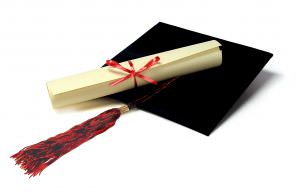 This time of year many Muslim students across the country graduate from colleges and universities. A lot of them sit through commencement speeches that are peppered with words of wisdom, reflection, and advice for life. Particularly, for undergraduate students commencement speeches mark the end of one’s formal education (unless they will be continuing on to graduate school) and the progression into the “real world.” Yet, with all the precious gems of good natured advice that are weaved throughout these speeches, hardly will you find words of reflection on the purpose of life and the significance of an educational degree in this endeavor. Understandably, most higher education institutions in the US are secular, so one shouldn’t expect commencement speeches that are laced with deep philosophical issues. I, myself having sat through several commencement speeches this spring, including my own, found that I was yearning to have things put into perspective.
Keep supporting MuslimMatters for the sake of Allah
Alhamdulillah, we're at over 850 supporters. Help us get to 900 supporters this month. All it takes is a small gift from a reader like you to keep us going, for just $2 / month.
The Prophet (SAW) has taught us the best of deeds are those that done consistently, even if they are small. Click here to support MuslimMatters with a monthly donation of $2 per month. Set it and collect blessings from Allah (swt) for the khayr you're supporting without thinking about it.
What I came across in these speeches is that they were often structured by a theme, be it failure, imagination, legacy of women’s rights struggle, dance, or psychology. The question that kept coming to mind was what would a commencement speech be like if a Muslim student were graduating from a fully accredited Islamic University right here in the US? Inshallah, I believe that dream can one day be realized. But back to those speeches I had to sit through. As many other students will agree, the life advice found in these speeches, even as delivered by non-Muslims are often useful things to keep in mind as we enter an ever more challenging world. But as Muslims our entire religion is a code of ethics, and we cannot talk about advice and inspiration without acknowledging our link to our Creator. I came to the conclusion that the best commencement speech has already been delivered. It was delivered 1400 years ago by the best human being to walk this earth. In his final sermon, the Prophet Muhammad confirmed the delivery of his message, and he gave us true gems of wisdom that are essential for the Muslim throughout the journey of life. No one else can do it as succinctly as he. Below I share with you some of these timeless reminders from his last sermon that I’m sure graduates can also reflect on.
“O People, just as you regard this month, this day, this city as sacred, so regard the life and property of every Muslim as a sacred trust. Return the goods entrusted to you to their rightful owners. Hurt no one so that no one may hurt you. Remember that you will indeed meet your Lord, and that He will indeed reckon your deeds.”
“Beware of Satan, for the safety of your religion. He has lost all hope that he will ever be able to lead you astray in big things, so beware of following him in small things.”
“O People, it is true that you have certain rights with regard to your women, but they also have rights over you…Do treat your women well and be kind to them for they are your partners and committed helpers.”
“O People, listen to me in earnest, worship Allah, say your five daily prayers (Salah), fast during the month of Ramadan, and give your wealth in Zakat. Perform Hajj if you can afford to.”
“All mankind is from Adam and Eve, an Arab has no superiority over a non-Arab nor does a non-Arab have any superiority over an Arab; also a white has no superiority over a black nor does a black have any superiority over a white except by piety and good action. Learn that every Muslim is a brother to every Muslim and that the Muslims constitute one brotherhood. Nothing shall be legitimate to a Muslim which belongs to a fellow Muslim unless it was given freely and willingly. Do not, therefore, do injustice to yourselves.”
“So beware, do not stray from the path of righteousness after I am gone.
O People, No Prophet or Apostle will come after me and no new faith will be born. Reason well, therefore, O People, and understand words which I convey to you. I leave behind me two things, the Quran and my example, the Sunnah and if you follow these you will never go astray.”
Now THAT is what I call a commencement speech for all time. I’ve selected only a few passages from the Messenger’s last sermon, but understand how comprehensive these brief words are. In the sermon he (SAW) reinforces for us the essentials of our living – following the Quran and his Sunnah. Furthermore he (SAW) covers the many forms of injustice that are perpetrated through acts of aggression, finance, relations with women and in interracial conflict. What is even more riveting about this sermon is that it is not bound by time or borders. Truly, the advice found in the sermon is one that the Muslim should keep in mind at any stage in life.
A college degree may not be worth what it was a couple of decades ago, but with it Muslim students are joining the ranks of an elite community, in a country where more people continue to obtain a bachelors degree. Some of this year’s graduates are going to continue education in professional schools (i.e. in medicine, law, pharmacy, etc.), others are going to graduate school (i.e. to earn a Masters degree, PhD, etc.), and the final group of graduates are going to hunker down in their parents home to ride out the recession and weather a bad job market. Whatever the scenario, upon completion of a degree the first thing a Muslim should say is “Alhamdulilah” – all praise is due to Allah, without whom we could not have accomplished anything. Thereafter, as the famous saying goes “with great power comes great responsibility.” As cliché as it sounds, knowledge is power, and with certainty most of us are leaving college having learned information or skills that are important for living. The next step is to use those skills to serve our communities. One thing I learned in my undergraduate experience is that universities and colleges are institutions that hold a lot of influence in the lives of ordinary citizens. Professors and lecturers have the ability to shape opinion and set the discourse on crucial issues, many of which have to do with Islam and Muslims. This is one reason why I urge Muslims to pursue positions in higher education – if we are not setting the narrative, it gets filled in a vacuum. A career in academia is not for everyone, and speaking from a podium in a lecture hall is not the only way to set the agenda concerning Muslim affairs. But whatever Muslim graduates decide to do, be a mentor. Help others in your community to navigate the currents of college life and inform them of the vast array of skills that the Ummah needs. I encourage Muslim students who are currently in college or college-bound to look beyond the confines of a career in professional fields such as medicine and law. Allah knows we need a lot of Muslim and Muslimah doctors and lawyers, but lets also invest in Muslim oceanographers, anthropologists and sociologists. All I’m saying is don’t limit yourself, explore your options and tailor that to your skill set. And whatever you do, don’t forget to celebrate your accomplishments. Congratulations Muslim graduates of 2010!
Keep supporting MuslimMatters for the sake of Allah
Alhamdulillah, we're at over 850 supporters. Help us get to 900 supporters this month. All it takes is a small gift from a reader like you to keep us going, for just $2 / month.
The Prophet (SAW) has taught us the best of deeds are those that done consistently, even if they are small. Click here to support MuslimMatters with a monthly donation of $2 per month. Set it and collect blessings from Allah (swt) for the khayr you're supporting without thinking about it.







Israel Seeks Escalation For Latitude – The Regional “Conflict” Widens

Post-Ramadan Reflections From A Mother Of Littles

[Podcast] Palestine in Our Hearts: Eid al-Fitr 1445 AH

Foreign Affairs Official Resigns Over Gaza Genocide

A Ramadan Quran Journal: A MuslimMatters Series – [Juz 30] Solace For The Sincere And Vulnerable

IOK Ramadan: 7 Qualities of Highly Effective Believers | Keys To The Divine Compass [Ep18]
IOK Ramadan: Choose Wisely | Keys To The Divine Compass [Ep15]
IOK Ramadan: Making Time for Allāh at Night | Keys To The Divine Compass [Ep21]
IOK Ramadan: Appreciating the Prophet ﷺ | Keys To The Divine Compass [Ep22]
IOK Ramadan: They Were Not Created Without Purpose | Keys To The Divine Compass [Ep23]

IOK Ramadan: The Importance of Spiritual Purification | Keys To The Divine Compass [Ep30]
IOK Ramadan: The Power of Prayer | Keys To The Divine Compass [Ep29]
IOK Ramadan: The Weight of the Qur’an | Keys To The Divine Compass [Ep28]
IOK Ramadan: Families of Faith | Keys To The Divine Compass [Ep27]
IOK Ramadan: Humility in Front of the Messenger | Keys To The Divine Compass [Ep26]
-

 #Islam3 weeks ago
IOK Ramadan: 7 Qualities of Highly Effective Believers | Keys To The Divine Compass [Ep18]
-
#Islam3 weeks ago
IOK Ramadan: Choose Wisely | Keys To The Divine Compass [Ep15]
-
#Islam3 weeks ago
IOK Ramadan: Making Time for Allāh at Night | Keys To The Divine Compass [Ep21]
-
#Islam3 weeks ago
IOK Ramadan: Appreciating the Prophet ﷺ | Keys To The Divine Compass [Ep22]
Syed
July 22, 2010 at 12:41 PM
Mashallah this is a very good article!
Muslim ummah certainly needs a lot of diverse careers in order to move forward and we should move ahead of just being engineer or doctors albeit they are also required.
zarif
August 29, 2010 at 1:35 AM
thank u ! may allah bless u for ur these best deeds that preach islam . i encourage u for ur these performance. may allah preserve you from evils and take u toward goodness and may you be successfull in your all performance
zarif
August 29, 2010 at 1:42 AM
safia plz can u write a commencement for me . i ve a speech after some days and i lack commencement
Sayf
July 22, 2010 at 1:30 PM
Mash’Allah excellent job! I really love this article, lot’s of gems of wisdom with huge depth in such a short read.
Thanks Uncle Ben! lol you would be surprised how much I use that line in naseeha (to myself and others).
Amatullah
July 22, 2010 at 1:49 PM
“with great power comes great responsibility.â€
ah, Spiderman.
Really nice article Sofia! Jazaaki Allahu khayran. Welcome to MM, may Allah grant you success in your endeavors.
Siraaj
July 22, 2010 at 4:08 PM
knowledge is power, and with great power comes great responsibility, but power corrupts, absolute power absolutely corrupts…
THEREFORE KNOWLEDGE IS CORRUPT!
(take that Uncle Ben!)
Siraaj
P.S. I kid, I kid, power is a tool, it isn’t inherently good or evil, its all a matter of the user…etc…etc.
muslimah
July 22, 2010 at 6:22 PM
i have the last sermon pasted onto my wall. JazakAllah alf khayr for reminding us:)
Please stay on topic – Editor
muslimah
July 22, 2010 at 7:44 PM
pobody nerfect? lol i think you mean nobody is perfect. I wouldn’t recommend watching spiderman either..too many haram scenes..the rest of it is ok..even kiddish (think sandman)
p.s actually guys shouldnt be watching movies at all..since women are not dressed these days..it’s difficult to lower your gaze in real life as it is..
Muslim
July 23, 2010 at 11:41 PM
Sister I don’t understand your viewpoint at all, it seems you are of the opinion that females can watch movies and it is not a sin for them. From what I have read of your posts it seems you have openly declared that you have watched all of HP movies, have watched Spiderman series, and were going to watch all of Mahesh Bhatt movies also. I personally read this blog so that I can become a better person and avoid sins and not to get new ideas on committing sins, hence please give good advice even though you think that it might not be practicable in today’s Hollywood influenced world.
Safia Farole
July 24, 2010 at 12:50 PM
@ Muslim: ahem….what exactly are you talking about?
muslimah
July 23, 2010 at 3:20 AM
excuse me amatullah, i dont want to go off tangent but i think ppl who justify their behavior becoz they grew up in the west are living very isolated lives. Basically the young generation in this day and age go thru similar temptations regardless of their location..perhaps to different levels.. hollywood is a global culture now. With tv, internet, wifi, peer pressure etc we all go thru the same things.
Tony Balis
July 23, 2010 at 6:42 AM
To amplify your excellent insights, may I suggest that you and your readers would find these 39 commencement speeches inspiring and intriguing, no matter what your age or background: please see http://www.humanity.org/voices/commencements.
TB
Safia Farole
July 23, 2010 at 11:09 AM
Thank you for the recommendation Tony. They look great.
elham
July 24, 2010 at 3:33 AM
BarakAllahu feeki for writing this short(maybe not!) but sweet article for us,its not yet my graduation time but regardless puts so much of our life’s goals in perspective-to worship Allah and move towards that with everything we do.
Sigh,this hurts : “So beware, do not stray from the path of righteousness after I am gone”. May Allah swt put us guide us to it and keep us steadfast on it.
SA
July 27, 2010 at 5:27 PM
Congrats Safia!!I completely agree with this
“One thing I learned in my undergraduate experience is that universities and colleges are institutions that hold a lot of influence in the lives of ordinary citizens.”
As much as I like the growing precedence we set on obtaining a university degree too many of us have begun using it as a yardstick to determine a persons worth. There was a lot that university taught me but at the end of the day it boiled down to how my perspective on life and people had changed. I am sure there are many people who didn’t obtain a formal education but through their individual experience had learned just about as much as I did.For those of us who were able to get a degree we should thank Allah and be humble about it for surely we could never have done it without Him. Just as the Prophet (PBUH) said “a white has no superiority over a black nor does a black have any superiority over a white except by piety and good action“