
Quran and Sunnah
Eye Opening Words in the Quran Describing the Life of this World


Surah Al-Hadid (its title meaning, ‘the iron’) talks about the reality of the transient life of this world. Several descriptive words are used to reveal to us its true nature. After that, Allah warns us to remember that the life of this world is nothing but a “deceptive enjoyment”.
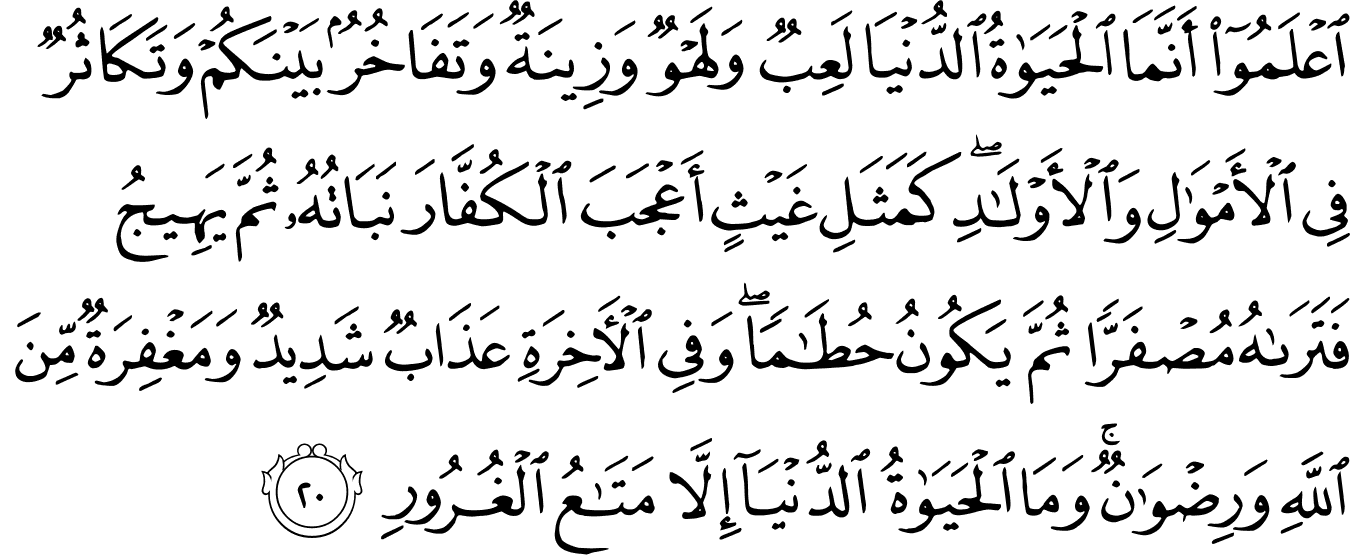
“Know that the life of this world is only play and amusement, pomp and mutual boasting among you, and rivalry in respect of wealth and children, as the likeness of vegetation after rain, thereof the growth is pleasing to the tiller; afterwards it dries up and you see it turning yellow; then it becomes straw. But in the Hereafter (there is) a severe torment (for the disbelievers, evil-doers), and (there is) Forgiveness from Allah and (His) Good Pleasure (for the believers, good-doers), whereas the life of this world is only a deceiving enjoyment“. [57:20]
In order to see the real picture being painted by our Creator as He details to us the reality of the life of this world, it would be beneficial to ponder on the root meanings of the several Arabic words He has used in the above verse. All the meanings have been taken from Edward William Lane’s online Arabic-to-English Lexicon:
Keep supporting MuslimMatters for the sake of Allah
Alhamdulillah, we're at over 850 supporters. Help us get to 900 supporters this month. All it takes is a small gift from a reader like you to keep us going, for just $2 / month.
The Prophet (SAW) has taught us the best of deeds are those that done consistently, even if they are small. Click here to support MuslimMatters with a monthly donation of $2 per month. Set it and collect blessings from Allah (swt) for the khayr you're supporting without thinking about it.
(i) Play, sport, game, fun, joke, prank, or jest.
(ii) Diversion, pastime, sport, or play; especially that which is frivolous or vain; that which occupies a person so as to divert him or her from that which should render him sad or solicitous/anxious/concerned.
(iii) Decoration, finery, show, pomp, or gaeity.
(iv) Glorifying or boasting (viz. to each other), praising or commending own selves for certain properties or qualities, such as enumerating or recounting the particulars of their own ancestral nobility or eminence; or their honorable deeds. Contending for superiority by reason of honors arising from memorable deeds or qualities, or from parentage or relationship, and other things relating to themselves or their ancestors; also: boasting of qualities extrinsic to themselves such as wealth, rank or station.
(v) Contending, one with another, for superiority in number of (different types of) wealth and children.
(vi) The word مَتَـاعُ means anything useful or advantageous viz. utensils, furniture, or food, and the word الْغُرُور means that by which one is deceived; something false and vain. In other words, the life of this world is a provision that is deceptive. It can be used to achieve the best end i.e. Allah’s pleasure and an abode in Paradise in the Hereafter, but is very deceptive in and of itself.
Allah has used a total of five terms and phrases to describe to us the reality of the life of this world in the Quran. Analysis of their meanings clearly reveals that indeed, the life of this world is such that it makes a believer lose focus of the Hereafter.
Consider this – games are fun to play. They cause us to get really involved in them, whether as participants, or as onlookers. The aspect of winning versus losing, or earning more points by achieving a target, enthuses the more keen ones among us to a state of physical and mental euphoria.
When anyone is involved in a game as a participant, whether he is playing outside, or playing a computer game indoors, he is distracted perhaps from more pending matters that require his attention. For some sports enthusiasts, tearing themselves away from a game to answer a call of nature, eat a meal, or pray an obligatory prayer also becomes difficult.
Now, with this picture in mind, we can see why Allah has called the life of this world “a game.” We get so involved in the “game” itself, in its short-term goals and enjoyments, that we tend to lose focus on the importance of the Hereafter. As an example, someone might postpone performing Hajj if important events related to his career are scheduled to take place at the same time in the calendar.
Allah has next called the life of this world “لَهْوٌ” – a “diversion.” It has the potency to make a person lose focus of the goals of the Hereafter. Imagine a person driving a car; if he or she spots something interesting on the side of the road that will “divert” him or her from driving, he or she will definitely lose focus of the road, resulting in a possible collision.
Another interesting point about the word “لَهْوٌ” is how it has been used in Surah Al-Jum’uah to refer to a caravan that was beating its drums. When the Muslim congregation gathered in the mosque for Friday prayers heard these drums, they rushed towards the caravan:
“Yet [it does happen that] when people become aware of [an occasion for] worldly gain or a passing delight, they rush headlong towards it, and leave you (O Muhammad) standing [and preaching]”. [62:11]
According to a narration that Imam Ahmad recorded, Jabir [رضى الله عنه] narrated, “Once, a caravan arrived at Al-Madinah while Allah’s Messenger [صلى الله عليه و سلم] was giving a khutbah. So the people left, and only twelve men remained. Then Allah revealed the above verse”. [Tafsir Ibn Kathir]
It is clear that in this incident, the word “لَهْوٌ” was used to indicate the beating of the caravan’s drums. However, its effect was such that worshippers immediately got diverted or distracted from their goal of listening to the Prophet’s [صلى الله عليه و سلم] sermon whilst attending Friday prayers. With this perfect simile in mind, we can see why Allah has used this word to refer to the life of this world. It can easily distract us, with its short-term goals, from the more important objective of success in the Hereafter.
The word زِينَةٌ means beauty and decoration; anything that is naturally pleasing to look at, or beautified to attract our attention. This could include everything that falls under the umbrella of natural beauty e.g. scenic landscapes, lush vegetation, flowers, and waterfalls, to those things that are made beautiful; which the human heart enjoys.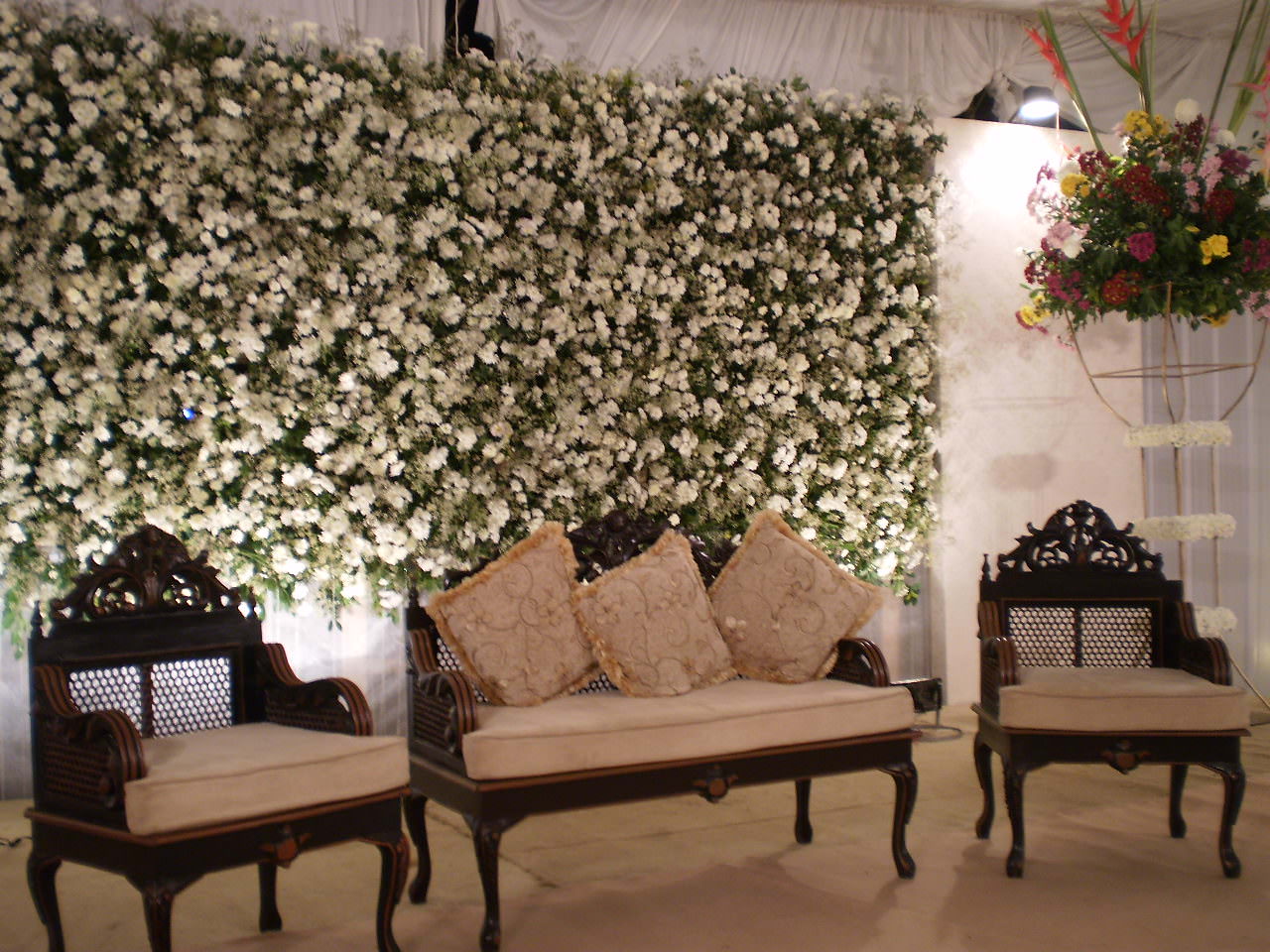
Bring to mind festivals, celebrations, jewelry, interior decor, architecture, branded/stylish couture, glamour, fashion, luxuries, accessories and diverse cuisines. Human beings love to create, experiment and play around with every conceivable kind of raw material provided by Allah, to transform it into something beautiful for their adornment or consumption- animal hides are transformed into plush seating; edible textures and tastes are whipped up into sweet and savoury delicacies, and threads are transformed and weaved to produce a myriad of clothes and dresses! Yes, the life of this world definitely revolves a lot around زِينَةٌ !
The words تَفَاخُرٌ بَيْنَكُم imply boasting to others, and being boasted to, as the above explanation has stated, about intangible assets of prestige and value, such as honorable lineage, awards and achievements, or righteous deeds. Anything that can cause a person to become proud in and of themselves, can be boasted about. It is important to note here, that a person’s intention makes the difference – perhaps a graduation party thrown to genuinely celebrate one’s happiness at an adult offpsring’s educational milestone with loved ones, could instead become a means of تَفَاخُرٌ بَيْنَكُم , if done with the intention of boasting of this achievement to relatives in order to up oneself in their eyes.
Similarly, several people display their honors, awards and plaques in their drawing rooms or offices, where they receive guests. This, too, if done to establish one’s credibility in one’s profession, for example, as a practicing doctor whose patients want reassurance that they are coming to a reliable person, would not be blameworthy. However, if it is done to make oneself appear better than others, than it would be تَفَاخُرٌ بَيْنَكُم. This mutual boasting starts from childhood (“I have more dolls than you!”) and goes on, increasing in type and intensity, well into adulthood and old age (“All my children are qualified doctors who graduated summa cum laude from top-notch universities.”).
Similarly, تَكَاثُرٌ فِى الاٌّمْوَلِ وَالاٌّوْلْـد , quite simply put, means the “rat race” we are all inadvertently so familiar with, and to an extent, also involved in. This usually starts when a person enters their twenties and beyond, which is a time in their lives when they get married, start having children, and also start earning money through their careers.
 Beyond one’s twenties, there is a distinct “keeping up with the Joneses” aspect in one’s life, that subtly creeps in. Whenever one hears of a neighbor, sibling, relative or friend moving into a bigger, luxurious house, acquiring foreign citizenship (this applies mostly to us Eastern dwellers of developing countries), having another child, getting promoted, or adding an SUV to their drive, we immediately start imagining how wonderful it would be if the same happened to us.
It is interesting how Allah has combined two of the words He has used in this verse of Surah Al-Hadid to describe the life of this world, in another verse in the Quran: the first verse of Surah Al-Takaathur:
“The mutual rivalry for piling up (the good things of this world) diverts you (from the more serious things)“. [102:1]
Since تَّكَاثُرُ means contending to increase in numbers of tangible blessings, it is clear from this verse too, that human beings are naturally “diverted” in this life by this, from their primary goal – which should be success in the Hereafter.
Allah goes on after this, in the above verse, to elaborate the simile of this world’s life: of it being like the vegetation or herbage that grows on earth, and pleases its tiller/farmer when it reaches its lustrous, colorful peak viz. the plants or crops become strong and fully grown, bearing fruit or grain. However, after a short period of this lustre, color and vibrance, the plants eventually wither, become dry, lifeless straw, and die. The same earth that was alive with crops a while ago becomes empty and plain again; the color, leaves, fruit, grains or flowers are nowhere to be seen, as if they never existed!
That is, in reality, the same thing that happens to everyone and everything during the life of this world. The young, beautiful face becomes wrinkled and haggard; the lustrous hair becomes limp and grey; the strong bones become brittle, and strong muscles give way to weakness; the eyes lose their sight; the erect spine becomes bent. Moreover, every inanimate thing also goes into decline: the architecturally sound mansion becomes depleted and worn over the years, erosion causing its dilapidation and ruin; the clothes lose their newness, shine and glory, withering away; ‘new’ technology loses its value and becomes obsolete and unwanted; the flashy vehicle goes out of vogue and ends up in a junk yard as rubble. The list is endless.
Now that our eyes have been opened to the truth about the life of this world; about how its adornments and distractions are alluring but deceptive in nature, because they divert our attention from the Hereafter and make us think that all this ‘glitter’ will last forever; when in fact, everything on this earth will turn to dust as Allah has promised, we should remember the importance of consistently reciting and reading the Quran as a daily routine, so that we are reminded of this important fact about this transitory life. That way, the reminders such as this verse, that tells us in the end about the two options we have before us – either painful torment, or the forgiveness of Allah and His pleasure – will help keep us focused on those deeds that will enable us to enjoy the truly enjoyable, beautiful, desirable, and eternal life, insha’Allah — the one in the Hereafter.
Keep supporting MuslimMatters for the sake of Allah
Alhamdulillah, we're at over 850 supporters. Help us get to 900 supporters this month. All it takes is a small gift from a reader like you to keep us going, for just $2 / month.
The Prophet (SAW) has taught us the best of deeds are those that done consistently, even if they are small. Click here to support MuslimMatters with a monthly donation of $2 per month. Set it and collect blessings from Allah (swt) for the khayr you're supporting without thinking about it.






Callous Campus Crackdowns on Pro-Palestinian Protesters Grip the United States

Yemeni Islah Leader Abdul-Majeed Zindani Passes Away

Bismillah, The Beast [Part I] – A Short Story

We Are Not Numbers x MuslimMatters – Ramadan While Under Attack In Gaza

Fallujah Aflame: Remembering The Bloodiest Battle Of The Iraq War

IOK Ramadan: 7 Qualities of Highly Effective Believers | Keys To The Divine Compass [Ep18]
IOK Ramadan: Choose Wisely | Keys To The Divine Compass [Ep15]
IOK Ramadan: Making Time for Allāh at Night | Keys To The Divine Compass [Ep21]
IOK Ramadan: They Were Not Created Without Purpose | Keys To The Divine Compass [Ep23]
IOK Ramadan: Appreciating the Prophet ﷺ | Keys To The Divine Compass [Ep22]

IOK Ramadan: The Importance of Spiritual Purification | Keys To The Divine Compass [Ep30]
IOK Ramadan: The Power of Prayer | Keys To The Divine Compass [Ep29]
IOK Ramadan: The Weight of the Qur’an | Keys To The Divine Compass [Ep28]
IOK Ramadan: Families of Faith | Keys To The Divine Compass [Ep27]
IOK Ramadan: Humility in Front of the Messenger | Keys To The Divine Compass [Ep26]
MuslimMatters NewsLetter in Your Inbox

Sign up below to get started
-

 #Islam4 weeks ago
IOK Ramadan: 7 Qualities of Highly Effective Believers | Keys To The Divine Compass [Ep18]
-
#Islam4 weeks ago
IOK Ramadan: Choose Wisely | Keys To The Divine Compass [Ep15]
-
#Islam4 weeks ago
IOK Ramadan: Making Time for Allāh at Night | Keys To The Divine Compass [Ep21]
-
#Islam3 weeks ago
IOK Ramadan: They Were Not Created Without Purpose | Keys To The Divine Compass [Ep23]
Yousuf
May 12, 2010 at 2:36 AM
Beautiful article!! Especially the explanation of the words helping to understand. i will make it as a reminder to keep me in check, as the glitter of this world to take us away from the real purpose. May Allah bless you! Ameen
sabir abdus-samee
September 25, 2014 at 4:50 AM
It makes you think that something is yours when he truth is nothing is yours
bashir
January 9, 2015 at 12:52 PM
JazaqumLlahu Khairan…What a good reminder!
Warith
June 1, 2016 at 8:28 AM
Great brother. Made me smile while reading it. May Allah bless him, you, and all of the believers. Amin
Yahya Ibrahim
May 12, 2010 at 3:44 AM
Bismillah,
It is also interesting to note that every time Allah calls us to knowledge of an issue (i’laamu), the verses that follow will have a call to action.
In this case the next verse is:
“Race one with another in hastening towards Forgiveness from your Lord (Allah), and towards Paradise, the width whereof is as the width of heaven and earth, prepared for those who believe in Allah and His Messengers. That is the Grace of Allah which He bestows on whom He pleases. And Allah is the Owner of Great Bounty. ”
Knowledge and action are linked together without exception by Allah and His Messenger (s).
Also interesting is the syntax of the words to describe the dunya.
1.Play leads to 2.diversion which leads to 3.show and pomp which leads to 4.boasting and finally 5.contending and gathering more of the above four – similied in Wealth and children.
Wealth before children is a theme in the Quran. Many would forego their children on account of seeking an increase in their wealth.
What is interesting is that each of the five is relative to the individual in question. You can be boastful while poverty (an illness of the heart mentioned by the prophet (s).
Thank you for the reminder.
Yahya Ibrahim
Amad
May 12, 2010 at 4:26 AM
outstanding… your comment was further adornment for this beautiful post.
Sally
May 12, 2010 at 6:11 AM
I wasn’t aware of the wealth before children theme. Thanks for highlighting this relevant point!
Yaqeen needed
May 13, 2010 at 12:36 AM
Barakallahu feek Sadaf This is no doubt one of the most beneficial articles have read here.
As Amad said, the comment by Yahya gives the article much appreciated value. A case of cooperating in good synergistically
Going the path of the companion Hudhaifa -raidallahu anh- who often always looked at the negative aspects of issues in order to avoid them, the issue of application of ilm as raised by Yahya is really disturbing.
I mean in our times we give great deal of of emphasis omn seeking knowledge. If one is not a maghribite its packing of the bag and going to madinah or cairo for knowledge. The worry – egged on by Yahya- is that of all the knowledge we acquire, how much do we express or strive to express in deeds.
As an example, how may of us are willing to immediately seek out a brother who is MIA from namaz fajr. We know it is from the sunnah to do so. And we know this itself when done sincerely is a true brotherhood building mechanism. Much more authentic and long lasting than emails or meeting in corridors after dars or ilminars? We read over and over again how Allah gives precedence to sacrificing in His path in the quran and how we more often than noit dilute it it out in our pursuit of our 9-5 daily lives. Of course we often have the back of academic ossified to fall unto – this is fard kifaayah,this is fard kida kida, there is ikhtilaf,etc. Allah praises and ecourages jihad and hijrah and we ..well we what we do ? Help downgrade the status , justify downgrading the status and then feel cool with having downgraded the status of issues highly preferred by Allah jalla shanu. And so the ‘J’ word we have made synonymous to terrorism and thus disliked to muslims. And so like Yahya implied , we learn the fiqh of da’wah, jihad and hijra but then make it like the xtains issues not to be practised anymore or given the due priority it was given by Allah jalla shanu and His messenger alayhi salam
To put this self criticism snowball started by Yahya in perspective, it is reported that Umar used to ask Hudhaifa if he was one of the munafiqin. Abu Bakr and Hanzala – radiallahu anhum were all afraid of being munafiqin. If we have or seek or glorigy knowledge and do not truly practise them even where such practice demands limitless sacrifice, we should be questioning ourselves like these glorious companions. They are the ones we should truly look up to and not people of our times
Lukman Adam, Ilorin Nigeria.
May 15, 2010 at 3:53 AM
Beatful article, wonderful comments. I suggest recirculation as we have many thing diverting our attention from Allah in mordern world than those calling our attention to Allah. Jazaakumullahu khaeran.
Sadaf Farooqi
May 16, 2010 at 12:04 AM
Jazak Allahu khair, Seikh Yahya! You have given us really deep insight into this verse. The part about wealth always coming first in mention before children in the Quran….I never thought about that! Of course it is so true; so many people reduce their number of children, delay having them, or resort to abortions, only because of their love of wealth or fear of poverty. Subhan Allah.
umm musa
May 12, 2010 at 4:08 AM
Very wise and beautiful words from the Quran. Interestingly, UmmahPulse.com has used exactly the same quote from the Quran in an article about TV. I would recommend reading it as an good followup to this excellent article.
http://www.ummahpulse.com/index.php?option=com_content&view=article&id=563:amusing-ourselves-to-death&catid=22:jumahpulses&Itemid=130
Yaqeen needed
May 14, 2010 at 10:25 PM
Now we know or are reminded about the evils of TV, I believe it calls for action or renewed action against this source of evil in the ummah. The sort of action Yayha calls. may Allah give us taofiq for the sacrifices needed. BTW, the TV’s value added feature as an evil endengering piece is very apt in the world cup craze the bug of which may have affected some of us
Sally
May 12, 2010 at 6:17 AM
Excellent reminder. Your article made me appreciate the perfect structure of Islam even more. Allah sent us here amidst all the distractions, but not without plenty of help! The prayers, dhikr, Quran, are all built in to keep our focus on what really matters.
It also helps to see the life of the world in context of our imminent death. Understanding that in a split second death can claim us helps weaken the distractions slightly.
Iesa Galloway
May 12, 2010 at 6:47 AM
Masha’Allah – GREAT article, may Allah increase you!
darthvaider
May 12, 2010 at 7:33 AM
I really enjoyed this read. Jazaki Allah khayr for posting it.
Amatullah
May 12, 2010 at 7:56 AM
Jazaaki Allahu khayran Sadaf for this great piece. May Allah protect us from making the dunya our main concern and the limit of our knowledge.
Hafsa
May 12, 2010 at 8:50 AM
Aameen.
Mariam E.
May 12, 2010 at 8:28 AM
Asalamu Alikum warahmatu Allah
SubhanaAllah. May Allah reward you for this excellent reminder.
Hafsa
May 12, 2010 at 8:48 AM
Jazakallahu Khayr. :)
abu Abdullah
May 12, 2010 at 8:54 AM
Jazak Allaah Khayr for posting this article. Barak Allah feek.
Abu Aaliyah
May 12, 2010 at 1:22 PM
Asalaamu Alaikum,
MashAllah nice article. Br. Nouman has a beautiful lecture on this same ayah. http://www.halaltube.com/nouman-ali-khan-overview-of-life-in-a-few-ayat
Sadaf Farooqi
May 16, 2010 at 12:05 AM
Thank you for the link. Jazak Allahu khair.
Chowmein
May 12, 2010 at 1:59 PM
SubhanAllah, yet another testimony to the miracle of the Qur’an. Could mankind think of any better words to describe the temporary nature of this world?
JazakAllah khair.
ummfatima
May 12, 2010 at 3:34 PM
Jazakillahu khairaa for an excellent reminder.May Allah give us towfeeq to work for something long lasting and doesn`t wither away.
Sayf
May 12, 2010 at 4:27 PM
Mash’Allah, excellent work!
All that glitters is not gold,
take heed of the Hereafter,
before your soul is sold.
You may grab and cling in a hungry craze,
but Izra’eel will surely take yours
at the end of your days.
anon
May 12, 2010 at 7:10 PM
JazakaAllahu Khair for this very important reminder. We so often only focus on the present and not on the future (Hearafter) knowing that what we build for this world will leave us, but what we build for the Hearafter will not.
shiney
May 12, 2010 at 7:51 PM
I love your post because it highlighted in detail the ayah above. this ayah is one of my favorites but I have never read a better explanation. Jazakallah khair for the very educational post=)
mystrugglewithin
May 12, 2010 at 11:20 PM
Sister, jazakallah khayrun for the beautiful explanation.. may Allah swt bless you and your family with the best of this world and hereafter.
islamicnet
May 13, 2010 at 12:22 AM
Jazakillahu khairaa for an excellent reminder.May Allah give us towfeeq to work for something long lasting and doesn`t wither away.
Quran
May 13, 2010 at 12:50 AM
Thanks for the post. Really motivational. There are lots of words in Quran like this that are eye opening.
abu Rumay-s.a.
May 13, 2010 at 7:42 AM
jazakie Allahu khairun for the well written article and reminder about the reality of this world. SubhanAllah, after having moved to an oil rich Muslim country, I see this problem ever more so evident, may Allah cleanse us of our sins…ameen…
I’d just like to add a point for further clarification that possessing wealth in and of itself is not blameworthy and can be praiseworthy if it is gained in the proper way and spent accordingly. Also I believe that liking a nice house, or a car or to have a lot of children is natural in human beings as Allah ta`ala made those things for us..even the prophets liked such things…
I think the main point is that irrespective if one has these things or not, it is, as Shaykh Ibrahim alluded to, each individual’s state of the impoverishment to Allah in the heart… the state of faqr does not imply that one lose all the worldy things to reach it, rather it is detaching your love for it in the heart to where it distracts you from your deen.
An example is that the poorest person could have love for the dunya while he does not even possess it or conversely, the richest person could have all the dunya but without love of it in his heart…
And Allah knows best…
Sadaf Farooqi
May 16, 2010 at 12:13 AM
Yes, you are right. Wealth is not a bad thing in and of itself. Even the Quran testifies to that:
“And violent is he in his love of wealth” [Quran, 100:8]
In this verse, Allah calls wealth الخير – which translates to “good”. It is the love of this wealth in man that causes some problems.
We should remember that our pious predecessors would not pass a day after receiving lots of wealth before giving it in charity. Also, Prophet Dawood [عليه السلام] was granted kingdom and wealth, the like of which no one had. But he didnot let the love of this wealth distract him from sincere worship or obedience to his Lord.
Allah knows best.
Yusuf
September 17, 2016 at 10:48 AM
Asalam Alaikun to everyone.. Abu rumay-s.a..I really appreciate your comment..may Allah continue to bless us both in this world and hereafter
weslink
October 5, 2016 at 11:00 AM
An example is that the poorest person could have love for the dunya while he does not even possess it or conversely, the richest person could have all the dunya but without love of it in his heart… !
whoever desire the life of this world with his deed we give him what is decreed for him and has no share in the hereafter 42:20
Ameera
May 13, 2010 at 7:58 PM
JazaakAllah! What a way to put things into perspective, SubhaanAllah! I could think of some many things I do or which I take interest in that are “La’ib” and “Lahw”. May Allah(swt) keep us all on the right track! Ameen!
Shuaib Mansoori
May 14, 2010 at 6:33 AM
JazakiAllah Khairan Ukhti! May Allah shower you with His abundant blessings both in this Dunya and Aakhira. Truly a beautiful reminder.
And JazakAllah Khair Shaykh Yahya for the followup comment. SubhanAllah seeing the Divine method of putting together 2 concepts (I’lamu and ‘amal) was indeed thought provoking. BarakAllahu Feekum Ya Ustadh.
sa
May 15, 2010 at 5:47 PM
Sadaf its interesting how you put up a picture of a wedding stage.I have yet to read your entire article but while browsing through it I was struck by the picture you posted.
Over the past few months I have been overwhelmed by the amount of extravagance and finery seen at weddings and especially with wedding forums I have begun to wonder whether everyone is trying to outdo everyone else and when does one say something is too much!Your article puts things in perspective for me atleast.
Maybe I really don’t need to have it all!!! I just hope Allah gives me the sabr to accept this.
Sadaf Farooqi
May 16, 2010 at 12:20 AM
I put up that picture to illustrate the concept of زÙينَةٌ, as mentioned in the article. The picture was taken at a wedding which I attended, but just for the record, they were extremely well-off industrialists, so perhaps they could afford the excess flowers. Allah knows best if it was extravagance or not.
But I agree with you that flowers worth thousands of our local currency for a few-hours-long ceremony, after which they just wither and get trampled under everyone’s feet……doesn’t seem fair, with so much hunger and poverty all around, in the same country. Our weddings and their decor are getting more and more extravagant by the day.
Allah knows best.
Halal Media
May 22, 2010 at 10:19 AM
You have a great point there. Come to think of it, all facets of our lives are similar to the flowers. We spend so much time, resources and energy at the expense of our children and our duty to perfect their religion, not to mention ours. In the end, it amounts to naught and when we finally do realise it, into the grave we go, with just a white cloth wrapping our naked bodies and trembling at the sight of Mungkar and Nangkeer. SubnaAllah. May the writer and everybody else who enriches this post get their well deserve rewards by The AlMighty. Ameen.
nighat shah
May 15, 2010 at 11:31 PM
assalam alaykum sadaf,excellent article!may allah show us the right path by following quran and sunnah,and forgive our sins AMEEN!!!
Zafar Muhammad Khalid.
May 16, 2010 at 8:54 AM
Assalaamu ‘alaikum and Jazakallahum Ghairan.
Al-Qur’aan is MU’JIZAATHUL MU’JIZAATH meaning Miracles of Miracles.
The Prophet’s uncle ‘Abdul ‘Uzza bin ‘Abdul Muttalib also known as Abu Lahab (Father of the Flames) was his greatest enemy. In surathul TABAT also known as MASAD and AL-LAHAB are many things to learn.
After given the instructions to convey, the Prophet Sallallaahu ‘alaihi wa sallam started his mission at Makkah. The Prophet Sallallaahu ‘alaihi wa sallam said he was sent as a warner before the SEVERE TORMENT. At this, Abu Lahab said, “Have you gathered us for this? May you perish.” Then Allaah Almighty revealed:
MAY THE HANDS OF ABU LAHAB BE PERISHED. HIS WEALTH WILL NOT AVAIL HIM OR THAT WHICH HE GAINED. HE WILL (ENTER TO) BURN IN A FIRE OF (BLAZING) FLAME. AND HIS WIFE (AS WELL) -THE CARRIER OF FIREWOOD. AROUND HER NECK IS A ROPE OF (TWISTED FIBRE). -Al-Qur’aan 111:1-5
The miracle about this particular Revelation was, for ten years until Abu Lahab met his death at the Battle of Badr, he knew this revelation and knew his and his wife’s fate. If only he declared the SHAHADA within this ten years, may Allaah forgive me – the Qur’aan would have been null and void. Now then, the question arises
what prevented him from declaring the SHAHADA? Allaah Azzawajal says in the Qur’aan that the Religions is His and He WILL SAFEGUARD IT.
So today We will save you in body (preserved and not destroyed) that you may be to those who succeed you a sign. And indeed many among the people of Our signs are heedless.
Al-Qur’aan Ch.10 Yoonus Vr.92
For image of THE PRESERVED BODY OF THE PHARAOH visit: http://al-qalam.webs.com/firaun.JPG
The lesson from Firaun is that with all the luxury which he could think of, his body shown in the above link shows that his body is in a box with no pomp or pageantry – WEALTH AND CHILDREN ARE BUT ADORNMENT OF THE WORLDLY LIFE. Al-Qur’aan 18:46.
Zafar Khald.
Pena Maya
May 21, 2010 at 2:33 PM
subhanAllah.
Pingback: » Blog Archive » Eye Opening Words in the Quran
Asim13285
June 8, 2010 at 1:02 AM
Jazaaki Allahu khayran Sadaf for this great piece. May Allah protect us from making the dunya our main concern and the limit of our knowledge.
zakir
December 26, 2010 at 7:46 AM
Jazakallah
Moin
February 28, 2012 at 3:50 AM
Mashallah Tabarakallah ! Some of the CORE themes of the Quran penned in a very dynamic approach !
Whenever Allah SWT mentions same topic/idea in more than one place, it is always SERIOUS ….{in our terms what we call as … We mean Business } ! The message of can be seen almost exactly same or similar in … !
And in , says “This, because ye used to take the Signs of Allah in jest, and the life
of the world deceived you….”.
And also the saying of Allah SWT that “…Who has created death and life, that He may test you which of you is
best in deed. And He is the All-Mighty, the Oft-Forgiving..” …. All point to the same CORE message that this worldly life, for a Believer, should not deviate his GOAL of achieving a good record in Akhirah, to become among the Muflihoon …. ABSOLUTE Successful !With reference to your statement : “Now, with this picture in mind, we can see why Allāh has called the life of this world “a game.” We get so involved in the “game” itself, in its short-term goals and enjoyments, that we tend to lose focus on the importance of the Hereafter. ..” Just as a general comment … maybe I’m wrong, … but I have strong OBJECTION to someone attributing REASONS for any Quranic Ayah ! Allah SWT has absolute ilm (knowledge) and our ilm is limited to what He wills and wishes us to have. With this limited ilm we can surely interpret and try to infer
His words but should not GIVE SUCH A BOLD STATEMENT AS TO THE REASON FOR ALLAH TO REVEAL SUCH AND SUCH AYAH ?!?!? With different level of ilm and in different times , there could be a better and more closer interpretation of any verse ! Attributing a clear reason as to why Allah has revealed a particular Ayah is as if challenging the authority that on this particular issue my ilm has come to perfection ?!? And Allah probably does not like this …. so did Musa PBUH think when he was asked to see Khidr.
May the Almighty Allah bless you and your family with the best of both the worlds ! Ameen.
Pingback: The Perfect Happiness. « AbuWhy
Abdurahiman
February 17, 2015 at 2:48 AM
It is the Grace and Mercy of Allah that He created the Hereafter with two different nature of life; the life in the Paradise and the life in the Hell. By creating these two different nature of life, Allah really wants all Human beings and Jinns to strive hard to win the Paradise and to save themselves from the abysmal of fire by obeying His orders and evading His Prohibitions. By obeying all His Orders a man really constructs the path through which he and others are keeping on travelling with beautiful decorations and by disregarding His Prohibitions man makes the road through which and others travel dirty and filthy . The concept of Islam is so beautiful .
bilal
August 24, 2015 at 7:24 PM
Ma Shaa Allah …So nice explanation .. Keep me update your next post. Jazak Allah
Husna Bint Azeem
October 21, 2015 at 7:59 AM
Beautiful explained, well done. MaShaAllah :)
Waqar
October 21, 2015 at 8:12 AM
Thanks for this great article. However, after reading the ayah, I cannot help but think that it is a generalization. Too many people in this world are suffering. Our brothers in Islam in Syria, Iraq, Afghanistan, Myanmar, and Palestine; our brothers in humanity in Democratic Republic of Congo, El Salvador, Mexico, South Sudan, eastern Ukraine, to name a few crisis zones, are suffering, struggling to survive. In the US, we see numerous examples of police brutality and gang violence causing families and peoples to suffer. The verse starts out by saying ““Know that the life of this world is only play and amusement…” but surely as we can see from history and from the present day, surely, for too many people, the world is not only play and amusement, but rather a struggle, a struggle to survive and provide a semblance good life for one’s self and one’s family. The recent refugee crisis with Syrians quite literally dying at see in order to make it to Europe illustrates this point quite well. To be fair, no doubt, perhaps a majority of the earth’s population is hedonistic and too many people are caught up in play and amusement and boasting and such. However, there is a not insignificant portion of the world that is suffering tremendously, for whom the world is surely not “play and amusement.” In this context, then, how can we make sense of this verse? Are we simply to ignore the real suffering of people who are struggling to survive everyday? Or is there a deeper meaning of the verse that we are missing? I certainly do not mean any offense by this comment, but rather, wanted to one give different analysis that has not yet been put forth on this board and two help myself to arrive at the truth.
Samiullah
October 25, 2015 at 4:21 PM
ASalam alaikum brother, it is a good point you have made, I want you learn the holy quran further in order to discover the truth. The answer to your question is with Allah swt. You do have to go with the fact that this life is a test. I have tried to answer your question.
I too was confused after discovering the role of Satan, which made me question the creation.
After reading this verse
It is We Who created you and gave you shape; then We bade the angels bow down to Adam, and they bowed down; not so Iblis; He refused to be of those who bow down. (God) said: “What prevented thee from bowing down when I commanded thee?” He said: “I am better than he: Thou didst create me from fire, and him from clay.” (God) said: “Get thee down from this: it is not for thee to be arrogant here: get out, for thou art of the meanest (of creatures).” (7: 11–13)
I realised that after Allah swt created the earth he created the mankind, jinns (unseen) and the Satan equally until Satan disobeyed Allah swt. Before Satan disobeyed, God wanted to create a world where he would allow the mankind and jinns to be tested by giving them freedom where they would be enjoying referring to
“Know that the life of this world is only play and amusement, pomp and mutual boasting among you, and rivalry in respect of wealth and children, as the likeness of vegetation after rain, thereof the growth is pleasing to the tiller; afterwards it dries up and you see it turning yellow; then it becomes straw. But in the Hereafter (there is) a severe torment (for the disbelievers, evil-doers), and (there is) Forgiveness from Allah and (His) Good Pleasure (for the believers, good-doers), whereas the life of this world is only a deceiving enjoyment“. [57:20]
However, since Allah swt wanted to test mankind and the jinns he added Satan and allowed him to mislead the mankind with the help of the jinns. The answer to your question is Satan which is part of Allah swt test.
Waqar
October 26, 2015 at 11:38 AM
JazakAllahkhair for your response, that really helps!
honey lili
October 24, 2015 at 7:16 AM
jazakallah for this super article, and informative comments :–)
Ibrahim
June 21, 2016 at 9:46 AM
Omg the best article I have ever read may allah bless you brother
Muhammad Uthman,
February 23, 2021 at 8:33 AM
Masha Allah, this is really very informative article,