Bismillah wal-hamdulillah
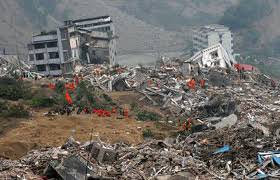
As the scope of destruction of the recent earthquake in Haiti became public over the last 2 weeks, a brother I spoke to said to me, “It’s moments like this when I wish I was a doctor [so I could go there and provide relief].”
His comments were heartfelt and sincere, but in them I witnessed once again an interesting cycle of human behavior connected to disaster relief. I have had the great privilege to assist on-scene in a few natural disaster relief operations and developed this understanding by carefully studying what was happening around me in those moments. I was not surprised to see the relief effort in Haiti following similar parallels. I decided mainly to write this so that those who want to physically contribute can know WHAT is needed, and so we also know WHEN to respond.
Keep supporting MuslimMatters for the sake of Allah
Alhamdulillah, we're at over 850 supporters. Help us get to 900 supporters this month. All it takes is a small gift from a reader like you to keep us going, for just $2 / month.
The Prophet (SAW) has taught us the best of deeds are those that done consistently, even if they are small.
Click here to support MuslimMatters with a monthly donation of $2 per month. Set it and collect blessings from Allah (swt) for the khayr you're supporting without thinking about it.
The phases I want to discuss in this post are as follows:
1. The Acute Phase Triage Response:
A. Search and Rescue
B. Media and donation frenzy
C. Food, water and shelter distribution efforts
D. Urgent Medical Treatment
E. Mass burials/Search and Recover missions
2. The Long-term Response
A. Disease prevention and Long-term Medical Care
B. Long-term Physical and Mental Rehabilitation of Survivors
C. The Struggle to Draw Media Attention
The Acute Phase Triage Response
Although I have listed five separate events, often these processes are happening to some degree simultaneously, but if you had to order them they would likely fall into an order close to this one.
The first event is the most time-sensitive in a natural disaster, and to a lesser extent war-zones; you need to find the living and get them to safety before they die from exposure by either drowning, being crushed, dehydration, etc. This event is handled by people trained in search and rescue techniques and for those who have flexible schedules and can respond at a moment’s notice to a disaster scene, then you can get your own training through NASAR (National Association for Search and Rescue). They have excellent and practical courses.
The second event is the one that is the most saddening to me and others who have worked in disaster relief – the media and donation frenzy. The media flies in to chronicle the suffering which directly leads in turn to people donating to relevant organizations. Eventually though, the story gets old and the media moves on – and people’s donations also die off, well before the disaster has been effectively handled. Keep this in mind if you really want to make a difference, because needs will continue to be great for at least ONE YEAR after a natural disaster, although the media attention rarely lasts longer than one month.
The third event is food, water and shelter distribution. Once people have been found, then the attention turns to protecting the survivors from the elements before they too die. This phase often happens in concert with the fourth phase which is emergency medical care – surgical, orthopedic and infectious disease in particular.
What was particularly frustrating about the Haitian disaster and many others in general, is that due to the media frenzy, organizations often rush “to get people on the ground” before facilities are suitable for them to work. I received several calls from organizations ready to fly me out to Haiti within 48-72 hours of the earthquake, but supplies were never addressed. A whole week into the earthquake, I discovered that tens – if not hundreds – of doctors had been flown in, but were now just sitting around without anything to work with. No casting material to cast broken bones, no anesthesia medicines for surgery, no surgical instruments, no pain medicines, no antibiotics, etc.. Why be an extra mouth to feed when others are already starving? If you can’t help, at least don’t make things worse – or “do no harm” as we are taught in medical school.
The last event is the saddest and most emotionally traumatizing. Realizing that the chances of finding survivors are virtually impossible, efforts are diverted away from search and rescue to search and recovery of dead bodies who are then often buried in mass graves. In Haiti for example, 10,000 people are buried at one time in a mass grave with a macabre appearance afterward as arms and legs stick morbidly out of the sand.
The Long-Term Response
After life has taken on some semblance of routine – as abnormal as it may be – the long-term response begins and typically lasts for years or more than a decade in certain cases. What makes this phase difficult is that the cause is no longer “sexy”. You will not get interviewed on camera or for a major newspaper, funds are low to non-existent and results are not immediate. Its easier to dig a living person out of a collapsed structure with cameras flashing – to save a life – than to labor for hours in the darkness of insignificance to prevent people from contracting dysentery, malaria or a host of other opportunistic infections, and thereby save maybe thousands of lives.
Long-term medical care also involves significant amounts of counseling as post-traumatic stress disorder (PTSD) sets into the survivors who have just witnessed death and loss on a scale we can hardly even imagine, much less deal with emotionally. Depression, anxiety and hopelessness abound and require a careful approach. A Muslim psychiatrist has set-up an excellent initiative to train people in providing counseling to survivors of wars and natural disasters and I have personally seen his efforts. They are admirable and if you have the time and interest you should take his course.
In the long-term response, you can’t just drop in for a week and expect to make a difference, but you have to be ready to commit several months or even a year of your life if you want to make a significant difference. You have to help reconstruct homes, establish jobs and most of all, fight off corruption.
The ruthless and morally unscrupulous are always ready to steal the food truck or container filled with donated teddy bears, toiletries and jackets meant for the poor and needy so that they can sell it off in the black market. If you get beaten up or even shot, no one may ever know because hardly anyone cares anymore since the media turned its eye a long time ago to another more sensational story.
But if you have ever wanted to truly make a difference in the lives of so many others, then this is the time to do it. This is where you will make real friendships that will last a lifetime, where you can really save lives almost every single day and where you can know that you are truly, sincerely needed. Those who have had the fortune to serve in settings like this have almost ALWAYS spoken of how it changed their lives forever and how it changed their perspective on life forever.
What are the places that are still struggling with long-term relief? Muzzafarabad, Pakistan which was hit by an equally destructive earthquake in late 2005; Rwanda which still has not recovered from the genocide it experienced in 1994 where close to a million people were murdered; Gaza, Palestine which suffers a disaster on a yearly basis if not more often; Yogyakarta, Java in Indonesia which has suffered two major earthquakes in 2006 and 2008 respectively leaving close to 300,000 people homeless.
In addition to this small and incomplete list, there are dozens of other regions in the world that live as if struck by a natural disaster. Regions that need caring people to go into them and provide help, education, medicine and caring to its beleaguered populations.
We can make a difference, but it can happen only after we assess our abilities and commit to using those abilities where they will bear fruit and having the knowledge and preparation to proactively help in the next disaster rather than just numbly following the media to wherever they wish to direct us.




 #Current Affairs2 weeks ago




Joyhamza
January 28, 2010 at 12:37 PM
Its articles like this which has made Muslimmatters.org an important place to keep coming back. Dr. Ali Shehata, Jazaakallah Khairan wabaarkallah feek.
Muslim Apple
January 28, 2010 at 12:43 PM
Dr Paul Farmer (read: Mountains beyond Mountains) and Partners in Health have been doing tremendous work on the ground in Haiti for decades. We should support them.
Pingback: Keys to Understanding Natural Disaster Relief in Light of Haiti Earthquake « Islam Checks in
Amad
January 28, 2010 at 1:36 PM
Exceptional as always Dr. Ali!
And you have walked the talk when you went all the way to Kashmir… foreign land, foreign language, stricken area… and you lend a hand to people who really needed it.
May Allah reward you for all your contributions.
Pingback: uberVU - social comments
muslimfitforlife
January 29, 2010 at 8:56 AM
Jazaka Allahu khair! Very informative article. Now we have to lend our dua and support.
Abu Ayyub
January 30, 2010 at 1:47 AM
Assalam Alaikum,
Jazakallah khair Dr. Ali Shehatah on your informative and timely article on how Muslims can help the people of Haiti. I’d also like to thank the MuslimMatters staff for highlighting Islamic Relief’s commendable relief work, and I am sure that many people donate to them as a result of the reminder posted on this blog.
It was narrated that Abu Mas’ood al-Ansaari said: The Messenger of Allaah (peace and blessings of Allaah be upon him) said: “The one who tells another about something good is like the one who does it.â€
Narrated by Muslim (1893)
It was narrated that Jareer ibn ‘Abd-Allaah said: The Messenger of Allaah (peace and blessings of Allaah be upon him) said: “Whoever sets a good precedent in Islam will have the reward for that and the reward of those who do it after him, without that detracting from their reward in the slightest. And whoever sets a bad precedent in Islam will bear the burden of sin for that, and the burden of those who do it after him, without that detracting from their burden in the slightest.â€
Narrated by Muslim (1017)
May Allah ease the affairs of the Muslims and guide them to do that which pleases Him; Indeed He ids the Most Merciful, the Most Wise.
Amatullah
January 30, 2010 at 9:07 AM
Jazaak Allahu khayran Dr Ali, very beneficial contribution.
sister
January 30, 2010 at 10:23 AM
Assalamualykum ,
Mashaallah.Jazakallahu khairaa .May Allahtaala accept all your services and reward you amply in the hereafter.Indeed the action which is continuous is loved by Allah more..May Allah give all of us towfeeq to be Muhsineen.
Jam Reyes
March 28, 2010 at 5:15 AM
i have several relatives who were also vicitimized by the earthquake in Haiti. thank God that they were not seriously hurt. i hope and pray that Haiti would be able to recover soon from this disaster.
Enosh
March 31, 2010 at 4:13 PM
How can I get in contact with you Dr. Ali? I want to ask you questions on going to medical school and not taking riba loans.
thanks
Enosh
April 3, 2010 at 9:45 AM
I don’t know if there is any advice you have for me?
thanks
Mike Harry
April 21, 2010 at 7:51 AM
some of my friends who work in haiti were also victimized by that terrible earthquake.. i was very thankful that they only suffered minor scratches.
Pingback: Ali Shehata | On American Foreign Policy and Answering the “What Can We Do?†Question | MuslimMatters.org