
Quran and Sunnah
13 Steps to Memorize the Quran by Yasir Qadhi

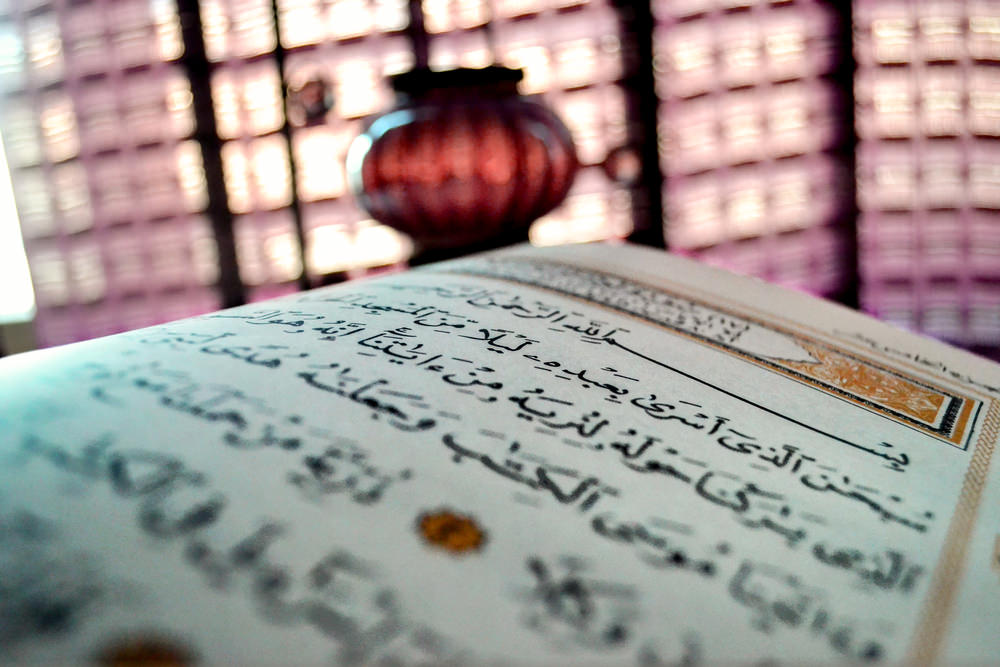
During one of his seminar about the Sciences of the Qur’an, Sh. Yasir Qadhi shared with us some practical steps that helped him memorize the Quran during his teenage years.
Realize it’s a spiritual AND physical project. It’s a miracle and blessing from Allah  that you’re able to absorb the Qur’an. If you want to take advantage of this blessing, you should be in a position to receive it and therefore strive physically to achieve it and strive spiritually to get the maximum benefit.
1. Sincerity. The first matter you have to pay attention to is your intention (if you intend good you will get good). Make sure that the intention you are making is only for the sake of Allah  , to seek His Pleasure so that inshAllah, with His Mercy, we will be rewarded in the Aakhirah. It is not to show off in front of others that you have memorized a lot. Sincerity is not a one time factor rather it’s a continual battle that you always have to renew.
Keep supporting MuslimMatters for the sake of Allah
Alhamdulillah, we're at over 850 supporters. Help us get to 900 supporters this month. All it takes is a small gift from a reader like you to keep us going, for just $2 / month.
The Prophet (SAW) has taught us the best of deeds are those that done consistently, even if they are small. Click here to support MuslimMatters with a monthly donation of $2 per month. Set it and collect blessings from Allah (swt) for the khayr you're supporting without thinking about it.
2. Consistency. The more frequently you memorize, the easier it becomes. It is very essential to be consistent, and not to skip even one day. There is no weekend in worship. The bare minimum that one should memorize is at least 3 lines, 5 is more ideal. If you are consistent, inshAllah, you will be able to be huffadh in 5-6 years
3. Timing. The first thing you should do in the day is memorize – even do so before your breakfast, because this is your spiritual breakfast. The best time to memorize is right after Fajr. . (Sh. Yasir used to take one hour to memorize a page in the beginning, and eventually came down to 15-20 minutes)
4. Atmosphere. Have a secluded place to go to and memorize in a place that is quiet. You just can’t memorize properly with distractions, so turn off all your devices (like cell phones)
5. Familiarity: start at the same time, at the same place and use the same mushaf every day. You need to have your own copy of the Mushaf (the Madani Mushaf is highly recommended), it will later become so dear to you.
6. No Magic trick: repeat, repeat, repeat, over and over again. It is just repetitive recitation and/or listening that will help to memorize.
7. Memorize with the meaning: read the translation before you start and try to match the Arabic words with their meanings
8. Surround yourself with recitation: listen to the Qur’an. Before you start memorize, listen to what you are about to memorize. Sh. Husary is highly recommended (see here the best resources to help you memorize)
9. Find a recitation buddy: get a friend, a family member or someone you know who will listen to your recitation every day. Ideally, get someone who is also memorizing to create a peer pressure system.
10. Recite daily in your salaat what you have memorized. If you forget one portion, you will immediately rush towards the Qur’an and correct your mistake and you will never do this mistake again.
11.Triple daily dose:
a) New memorization at your assigned time of the day
b) Revision of the previous 7 days, just before you start the new memorization: This is because the fastest thing you forget is the new memorization. And doing so, will also build the connector between the old ones and the new portion you are going to memorize. Plus, it will be a good warm up for the brain when you recall from your memory and recite, before you go into the real exercise of doing the new memorization.
c) At a later/another time of the day, revise those before the recent 7 days. The bare minimum should be 4-5 pages.
12. Do not jump around. Be consistent. Don’t try to go to another surah if you find it difficult and stick to the order. That way, you will have the satisfaction of having completed a juz rather than leaving some portions here and there.
13. The three chunks. Start from the back. Shorter surahs will bring you a big boost. You should divide the memorization of the Qur’an in three parts:
a) Juz 28, 29, 30 or just Juz 29, 30
b) Surah Al-Kahf till Juz 28
c) Surah Al-Baqara to Surah Al-Kahf
(JazakAllah Kheir to those who shared their notes from the class)
Keep supporting MuslimMatters for the sake of Allah
Alhamdulillah, we're at over 850 supporters. Help us get to 900 supporters this month. All it takes is a small gift from a reader like you to keep us going, for just $2 / month.
The Prophet (SAW) has taught us the best of deeds are those that done consistently, even if they are small. Click here to support MuslimMatters with a monthly donation of $2 per month. Set it and collect blessings from Allah (swt) for the khayr you're supporting without thinking about it.





When The Bed Walked Away [Part 1]

The Woman Who Was Heard Above the Seven Heavens

Far Away [Part 24] – The Whipping

Unquiet on the Western Front: Watchdog documents hate crime spree in North America and Western Europe

[Podcast] Will Your Credit Card Send You To Hell? | New Series

Muslims and the F-Word: Feminism, Dhulm, and Jahiliyyah
Far Away [Part 24] – The Whipping
Far Away [Part 23] – Delirium
When The Bed Walked Away [Part 1]
Far Away [Part 22] – The Raid

The Best Actions for Eid al-Adha [Imam Dawud Walid]

Coming Full Circle: Who Are You Now? | Night 30 with the Qur’an

Running Away From Who We Are | Night 29 with the Qur’an

Building From the Ground Up: Week 4 Recap | Night 28 with the Qur’an

The Muslim You Are Becoming | Night 27 with the Qur’an
MuslimMatters NewsLetter in Your Inbox

Sign up below to get started
-

 #Life1 month ago
The Arithmetic Of Longing: On Loneliness, Desire, And Learning To Want Well
-
#Current Affairs2 weeks ago
Muslims and the F-Word: Feminism, Dhulm, and Jahiliyyah
-
#Current Affairs1 month ago
The Legacy Of Professor John Esposito: The Scholar Who Refused To Turn Islam Into An Enemy
-
#Culture2 days ago
Far Away [Part 24] – The Whipping






Anisse Adni
October 27, 2009 at 3:20 PM
These are great tips mashaAllah!
I live in Indianapolis, IN and alhamdulillah we have our own program for memorizing the Qur’an in our community. The Indianapolis Institute for Qur’an Memorization was established by Sheikh Tewfik Choukri and Sheikh Boubakeur Amiri here in Indy and alhamdulillah we have already had in the two years it’s been in place 6 huffadh graduate in both Hafs and Warsh recitations! It’s really a wonderful program mashaAllah with daily memorization and review at the masjid and supplementary classes on tajweed and tafsir and review sessions on the weekends. All of the students memorize by writing down what they have to memorize in a well organized notebook which is then approved by Sheikh Boukakeur for memorization. Tip #9 is really helpful I think, and alhamdulillah at masjid al-fajr we have plenty of buddies! :-)
Loga
November 20, 2009 at 4:40 PM
BarakAllah fiikum.
I’ve also posted some great free resources for learning Arabic here.
InshaAllah you’ll find them useful.
salaam alaykum.
Idris kabir
November 6, 2016 at 8:04 PM
Slm to all muslin brothers and sisters God is ready to help any of his savant that ask for help, and may he guides us to the right part.
MaryHadAlittleLamb (:
March 24, 2010 at 5:06 PM
Anisse talks tooo much :D
Mashallah for the program in Indianapolis!
Nimco Musse
February 27, 2016 at 4:27 PM
Yes Mashallah you are right i memerized so quick i will always try this and i wont tell ANYONE
Ummsarah
October 1, 2019 at 2:05 AM
Barakallahufeek. Jazaka llahu khairan.
Samina Farooq
September 1, 2014 at 7:03 AM
take baby steps and keep going forward…
http://understandquran.com/10-reasons-learn-10-verses-surah-kahaf-cc.html
hibaq
February 20, 2016 at 12:57 PM
this is mashallah i recommend the site and the sh reads so clear
Layla
September 1, 2016 at 7:45 PM
Yo it’s exactly 2 years later did U learn the whole Quran or nah
Moizam
October 5, 2016 at 1:06 PM
Very good tips I learned Quran in 2 years THANKS
Ayan abdi
May 9, 2015 at 12:52 PM
JazakAllah kheir this was very helpful.
Dauda Ahmad Sabo
June 15, 2015 at 1:26 PM
Alhamdulillah, barakallahu fikkum
Yazan
November 20, 2015 at 2:08 AM
Salam,
You guys made the error of putting salla allahu alayhi wa sallam after the word allah, you should replace with subhanahu wa talaa
Bob
August 14, 2016 at 4:49 PM
Cn you give me more information on the method of memorizing Qur’an by writing
Noor
November 7, 2016 at 5:50 AM
Mash Allah I found your tips very useful. I have just started Hifz
UmmAdam
January 1, 2017 at 7:23 PM
Where in Indy I live there also?
Dawud
January 2, 2017 at 3:51 AM
Arabic is a unique language. The early scholars of Arabic used sciences to teach Arabic. One book on grammar, Al ajrumiyah, have held high rank among scholars, teacher and students for hundreds of years. It tells you about Arabic from an Arab point of view. It tells you what speech is, how to identify words. It explains the three parts of speech (a noun is an adjective, adverb, pronoun). It tells you how vowels give means to words. Sadly few teachers have the skills to teach a beginner from a book like Al ajrumiyah. Instead we learn Arabic like English – no science. Only words with one meaning. They can’t build you up to understand how what looks like one words can have seven meanings so the focus is on lots of words. Why learn Arabic the language of the Quran with weak methods. Learn it with the tools designed to show you how easy Arabic is and why Allah choose it. Arabic is a superior language but we treat it equal to English with weak teaching methods. Start with sarf and run from the one that tells you otherwise Im happy I did.
Sadman Samee
April 7, 2017 at 12:16 AM
An excellent collection of resource for Memorizing quran. List of ways to memorize quran, inspiration and various resources to assist memorize quran.
Download: https://archive.org/details/MemorizeQuran
Abdullah
October 27, 2009 at 4:21 PM
As-Salamu-Alakum
Sh Yasir, from your experience in Medina, how do the Shooyukh do it??
What I mean is that the Imams of the Haramain work, have familes, and yet somewhat read 5 parts of the Qur’an a day….
Yet when we try that here is hard to even read one. From your experience how do the Imams / Ulama do it??
Wasalam
Yasir Qadhi
October 28, 2009 at 6:58 AM
It is obvious that Allah puts baraka in their time – there is no other explanation for it!
Where there is a will there is a way; if you prioritize the Quran, Allah will bless your day and allow you to do more during it.
Najma
May 16, 2014 at 6:06 PM
Asc you have helped me a lot May Allah help you. I have been living in a muslim country for 8 years( left to learn my diin)and I have heard the Quran being read,listened to and being acted upon now that I am back in America it is harder for me to adapt because you don’t hear the azan or the Quran leave alone being read mostly no one speaks about it here so it became hard for me but you reminded me how important it is to be closer to Allah so May Allah reward you for all your kind work and make you of those who enter paradise and make your xasanat be more than your sins.amen amen!!!
doctor
February 21, 2015 at 4:01 PM
salam shaik i am memorizing alquran and found this some links that tell of memorising it in a 2 month or 2 and half is this possible and if yes can that person be able to recall what he memorised without looking at the quran? ( for me memorising means you can be able to recall all of if necessairy at any moment ) thanks link 1 (http://www.theidealmuslimah.com/2014/01/medical-student-memorized-quran-in-2-and-a-half-month/ ) link 2 (http://salaf-stories.blogspot.com/2011/04/memorizing-entire-quran-in-2-months.html
Faiza
February 7, 2016 at 4:14 PM
Thanks for saying that. I am memorizing quran and got really really disappointed because of a wrong teacher who kept scaring and discouraging me .. I am too discouraged and i think of giving up. I have a small kid and a full time job in western country.. So its naturally challanging for me .. And that teacher told me that because i live abroad i would have better english but not quran .. And told me even if i memorize quran twice i cant get it right..
Thats soo bad i cant explain and i cant even get back to memorizing .. But as you said where theres a will theres a way.. Make dua for me that i find a way..
Maryam
April 30, 2016 at 4:13 PM
Dear sh
Every time I try to pass to my quran teacher, I forget what I was going to say. My parents say I’m not reading it at home, but I really try. I just get nervouse in front of people. I honestly memorize it, but I get scared and stumble around. What do I do?
rani
October 30, 2016 at 1:19 PM
thank you may allah guide you to jannatil fardous i am practicing now
Abdullah
October 27, 2009 at 4:23 PM
Also Sh Yasir
how would you advise to deal with those verses that are very similar. Lie the Ayahs that appear alot (Story of Musa (AS)
Wasalam
Yasir Qadhi
October 28, 2009 at 7:01 AM
Two ways:
1) Constant repetition of reciting the verses AND listening to them being recited
2) Figuring out some wisdoms behind the word variations (these are sometimes found in Tafsir literature, and always found in advanced linguistic explanations of the Quran and specialized works on the subject).
Sameera
May 1, 2013 at 11:56 AM
salam I live in Brazil, and I reverted to less than a year, do you think I can memorize home alone?
ayesha zahid
July 23, 2013 at 3:33 PM
im from pakistan!
i want to do the same! just about to take a start! i guess its quite possible to do it in home alone if you are focused towards your goal!
good luck
Majid
June 12, 2014 at 8:44 PM
My dear brother, you can in sha’ Allah surely memorize Quran even if you are 75 yo. Have faith in Allah SWT, that is Allah who help people memorize, otherwise it would never be possible for anyone!
Wassalam
Hatim
September 1, 2014 at 9:26 PM
Asalamu Alaikum,
I attend an islamic school where Quran Memorization is part of my GPA and I find myself memorizing for the class than anything else so my intention is wrong. Is there anyway you can help me fix this issue?
-Hatim
Mohammed
September 2, 2014 at 9:57 AM
Before memorizing read durood sharif x11 times and have the intention that you will untimately be reciting in front of Allah All mighty one day, and the goal is to recite perfectly mistake free to him on that day…
Aly Balagamwala
September 4, 2014 at 9:51 AM
Dear Hatim
I would suggest you submit this question to our What’s The Matter section.
Best Regards
Aly
Comments Team Lead
Abbas
November 3, 2016 at 4:16 PM
Dear bother I am 5o yr old and I have a hearing impairment, can I memorize it at home or I have to join a madrasa,
anonymous
October 29, 2009 at 10:16 AM
A technique I found useful for the “similar” verses, is when you get to a place that is similar to another, you review all of those places.
For example, when I reach the story of Musa (as) in ANY of its places in the Quran, I review ALL of them, noting the differences.
Another example: I review the Prophet stories in A’raaf, Hud, and Shua’raa’ together.
It will be difficult at first, but it will give to a “CD-rom” type memory (where you can jump around and learn the verses singularly) as opposed to “tape-deck” memory. and Allah knows best.
OGM
October 29, 2009 at 11:29 PM
It helps to look at the structure of the ayats as well. For example look at 6:102 and 40:62. These two ayats are very similar except in the first the kalima comes first and the creation second. Why? In Surah 6 look at the previous verse (and also the previous page) and you will see there are a lot of laams whereas in Surah 40 this is not the case.
Secondly, the dominant theme in Surah 6 is Tawheed thus the Kalima comes first.
In Surah 40 look at aya 57. It starts to talk about creation. Also the previous ayats do not end in the same letter. However, starting with 57 the ending letters are all noons. Also the Kalima is mentioned in surah 40 but it is after 62 and at 65.
I hope that makes sense. It is much easier to explain this with a mushaf.
I also recommend listening to Tafseer especially from Bayyinah Dream. Once you listen enough you start to realize how ayats and Surahas are linked and the general structure of the Qur’an.
Rahma Abdullah
December 14, 2014 at 8:53 PM
Hatim,
I would like to tell you a short story.
One day when I send my son to a religious school (a private school for memorizing the Holy Qur’an, to be exact) the first thing he was asked was, are you here because your mother asked or forced you to come here? I was watching my son at that moment. He looked sad but didn’t say anything. The religious teacher that was interviewing him said, ” I see, your silence means, someone forced your to come here. if you don’t change that idea or intention, then, we will not take you here. Silence continued… and then my son started to cry,… okey, now I understand the importance of intention. My mother’s intention in sending me here is good and I need to take it positively, this is my life after all. How many parents will do like what my mother will do, sending me here in this far place and she will be left all alone in the house (without me). I will be so blind if I will not be able to see the good intention and sacrifice of my mother.
So he utter his own intention, ” I am here because I want to be here to learn and to memorize the Qur’an.” And so he was taken in, in that school.
“You can change your intention on your own.” Remember, this life here on earth is short and hopefully but should be enough to make preparations so that we will be ready to face the eternal life in the Hereafter, where we will see our Creator – ALLAH!
RAHMA
usman
October 27, 2009 at 4:55 PM
Salaam, by the mercy of Allah i was able to memorize the quran. I did it a traditional pakistani style madrasa. Our program was pretty decent it went like this:
After fajr reciting the lesson memorized the night before (we would memorize brand new verses after isha)
Then recite from the beginging of the juz which we were memorizing all the way until the last verse recited that fajr. (ex. memorizing juz 5 and have memorized half of the juz, so we would recite from the beginging of juz 5 until half of the juz)
Then we would recite one juz from the ones we had memorized already. Say we learned 5 juz, so on monday we would recite juz 1, tues juz 2, etc etc.
Lastly we would memorize new verses after Isha at night to be recited the following day after fajr, and then all over again. I agree memorizing after fajr is the best time, it is so much easier to learn at that time than any other time.
Inshallah this program might be beneficial as well. Inshallah keep me in ur prayers wsalaam
aarij
October 27, 2009 at 6:28 PM
Jazak Allaho khairan for the article. Some of my thoughts:
– The most important thing (after sincerity) is to have a system. A system meaning you have a teacher who you recite to and a system of memorization of the actual pages of the Qur’an.
If you are memorizing on your own, you won’t get anywhere even after a long time. On the other hand, if you memorize in a system (e.g. in a 9-3, mon-fri hifdh school) you can finish the Qur’an very quickly, anywhere from 4 months to 1.5 years. A good place to start off hifdh is part-time with a teacher on the weekends and weeknights, even if its on the phone.
– System of memorization: you must have a technique to memorize. If you have a technique, then memorization becomes very easy and methodical. Otherwise its haphazard and you’ll get discouraged very quickly. Here is my technique:
1. Split the page into two. So you have roughly 8 lines in the first half and 7 in the second half.
2. The first ayah or line, you read 3 times while looking closely at the page. Make sure that you follow your finger over the page. Your goal is to store a copy of the page in your head.
3. Then you recite the ayah/line from memory without looking, but your finger is still following the ayah on the page. (You’ve read the ayah/line 4 times now)
4. Now look again at the ayah/line, finger on paper, and read. (You’ve read the ayah/line 5 times by now)
5. Now read without looking, finger on paper following approximately. (You’ve read the ayah/line 6 times by now).
6. One more time looking and not looking (You’ve read the ayah/line 8 times by now).
You’re done the first ayah/line!
7. Move on to next ayah/line. Repeat same process from 2-6.
8. Now read from beginning of the page to where you have memorized, 3 times looking and 3 times not looking, alternating as mentioned above. Please make sure to keep your finger on the text at all times.
You’re done the second ayah/line now, combined with your first ayah/line.
9. Move to ayah #3 or next line. Repeat from 2-8.
10. Continue until you reach your halfway mark. Recite the half page 3 times looking and 3 times not looking, alternating, keeping finger on the page.
Now this half of the page is stored in memory! You should be able to close your eyes and read the page from your mind.
11. Repeat for the second half of the page.
12. Now read the entire page once looking and once not looking, keeping finger on the text. Read more if you are not confident.
Now the whole page should be stored in your memory. You should be able to close your eyes and “see” the page.
13. Go recite the page to your teacher.
This process to start off takes a good 1-1.5 hours per page, but you can speed it up all the way to 30 minutes.
This technique really makes you remember the page in your head. It works really good, alhamdulillah.
Moosa
July 14, 2014 at 6:13 AM
aarij this helped me alot jazakallah khair
Wassalaam
LolliLove
March 21, 2016 at 4:13 PM
Thank you… Alhamdulillah, it work for me.
Simeen
June 9, 2016 at 8:54 PM
dear brother, I am so grateful for this tip. May Allah ta’ala grant you the best of this world at the Hereafter
Ahmad
August 16, 2016 at 4:25 PM
Wonderful Brother … Thank you
hakimaa
October 27, 2009 at 6:31 PM
jzkk
Abdullah Syed
October 27, 2009 at 9:30 PM
Wow that was baller! Now I just have some how get thru step 1, sinceritiy, inshaAllah. Jazak Allahu Khairan Sh. Yasir and Sh. Aarij for your tips.
Ibn Masood
October 27, 2009 at 10:56 PM
BarakAllahu feekum. From personal experience, I would say #6 is the most valuable tip. JUST do it. Start small and DO IT. The more excuses you make and shortcuts you look for, the less the chance of it ever happening. It’s not easy in the beginning, face it. If you want it badly enough, you won’t care.
aboo masood
October 28, 2009 at 2:11 AM
asalamualaykum, i read some comments that if you memorize yourself you wont go any where and in order for you to complet the quran you need to go to a hifz school
this is not correct, allamdullah allah blessed me to complet 17 and half juzz ( and counting) my self without and school, i currently study in univeristy , and every day i do around 5 lines and recite to my mom or grandma, ( of course the ideal is to have a shaykh ect qari and what not, but you have to look at your situation and make the best out of it, allah spoke the truth when he said in surah qamar ” verily we have made this quran easy to remember , will there be anyone to take admonition”nearst meaning
allah knows best
Yasir Qadhi
October 28, 2009 at 7:04 AM
Totally agree. I myself did not go to any madrassa but memorized by myself, at home.
Anonymous
July 6, 2012 at 12:44 AM
As salamu alaykum
In regards to point 8
Which one is recommended , is it sh.husaairy murattal or mujawwad recitation ?
Thanks
OGM
October 29, 2009 at 11:32 PM
From my personal observation, most people that have memorized at home do not have solid memorization. I think one can memorize at home, provided one has a teacher who simply listens to the new lesson. How else would one catch minor mistakes in memorization and major Tajweed mistakes? Also this is not the traditional method of learning the Qur’an.
Secondly, one needs to constantly review, which is difficult for many without being in a school.
binti riyaadh
April 2, 2016 at 7:48 AM
may Allah have mercy on you.
the baraqah one recives with an ustaadh cannot be gained without having one.
Nuruddeen Lewis
October 28, 2009 at 9:00 AM
Barakallahu feek!
As a beginner without a native Arabic tongue, I’ve found it quite helpful to split each line in the Mushaf to about three parts. I repeat this small part (1/3 of line) constantly until I find it easy for my tongue to recite this portion. I then move to the next small portion. When I’m comfortable with it, I then join the two parts together.
I’d also like to remind myself and others that the goal is not to finish the Qur’an as fast as you can. Rather, our aim should be to learn the Qur’an and have it firmly settled in our hearts so that it would serve as guidance throughout our lives.
MR
October 28, 2009 at 9:54 AM
(This is not a plug for my website but a simple comment)
My problem is that when I memorize, I forget the parts i memorized a few months ago. I do practice but due to work, family obligations, Islamic work, etc. practicing is hard. That’s why one of the reasons I built halaltunes.com is so anywhere I am (I’m usually always connected to the internet somehow) I can listen to the Qur’an. In fact I am listening to it right now. It saves me time trying to download and add to an iPod or mobile player. Also saves time trying to listen to different reciters.
The most difficult task I’d probably say after memorizing is retaining it and keep reciting it.
Majid
June 12, 2014 at 8:49 PM
Key to solving this problem is make Dua’ to Allah SWT and keep ask for more knowledge. Another key point that really benefits me is to understand what’s being said in Quran and imply in your life, in sha’ Allah you will see difference.
Wassalam
walid
October 11, 2015 at 6:27 PM
shukur that was helpful
Abdul Sattar
October 28, 2009 at 10:08 AM
Assalamu Alaikum Sh. Yasir,
jazakAllahu khair for the advice.
I have heard before that the madani mushaf is highly recommended and should be adhered to, and was advised to stay away from the Persian (aka Indo-Pak) script. I made the switch but was wondering what the reasons were?
wa alaikum assalam
AS
abuadam
October 28, 2009 at 10:43 AM
Assalamu alaikum
The Mauritanian method of memorisation technique is mentioned in the link below
http://forums.alkauthar.org/showthread.php?t=3889
Seems very interesting mashAllah.
seeker-of-knowledge
October 28, 2009 at 10:52 AM
Assalam Alaikum
Sh. Yasir,
What exactly are the advantages of the Madinah Mushaf over the other Mushafs, such as the Pakistani one ?
Would you recommend someone from Pakistan, who doesn’t speak Arabic, to memorise from the Madinah Mushaf rather than the Pakistani one ?
I find it easier to recite from the Pakistani one.
Fi Amanillah
Yasir Qadhi
October 29, 2009 at 10:24 AM
Salaam alaikum
Well it really is a personal choice, and there’s nothing ‘wrong’ about using mushafs printed elsewhere.
However, the mushaf printed in the Madinah Complex, in my humble opinion, is the most academic and thorough printing of the Quran ever attempted. The scholarly committee that was convened for this purpose (their names are listed in the back) is a virtual who’s who of the most erudite scholars of Quranic recitation and Quranic sciences of our era. Additionally, the scribe who wrote this mushaf (his name is Uthman Taha) is a living legend, and it really is a beautiful work of art.
There are finer points that demonstrate the superiority of this script and writing over others, but these finer details do not affect one’s actual memorization, and if someone is accustomed to another script that is perfectly fine.
BTW, I myself began memorizing with the Nastaliq script of Pakistani prints, but then switched over to the Naskhi script of the Madinah print and have been a faithful follower ever since :)
Yasir
Habeeb
October 29, 2009 at 10:38 AM
BTW, I myself began memorizing with the Nastaliq script of Pakistani prints, but then switched over to the Naskhi script of the Madinah print and have been a faithful follower ever since
Me too.. :)
ba3eed jiddan
October 31, 2009 at 4:40 PM
Some of the ‘finer points’ the shaykh referred to:
A little known fact – the Madani mushaf has some tajweed rules built in. Yes, those color-coded mushafs are somewhat unnecessary if you know how to recognize the signs in the regular one.
Idhhaar – the sukoon is written; tanween is lined up perfectly (if fathah or kasrah), one on top of the other if dammah (tadpole-shape)
Ikhfaa – the sukoon is not written; tanween is offset slightly (fathah and kasrah), dammas are written side by side.
Idghaam – written similar to ikhfaa
Qalqala, heavy letters/heavy ikhfaa, other details – learn tajweed ;)
I’m sure there are many more intricate details as well. MashaAllah, a very scientific mushaf…may Allah reward all those involved in writing it.
*sidenote*: there are two very slightly varying versions of the madani mushaf! The ones in the Haramain have a bit more ‘slanted’ and ‘sharper’ writing and don’t match up exactly with the ones that are common in america. You’ll find them occasionally, about one out of 10 in the average masjid (the color of the cover is a tiny bit lighter that the others, with more flowery designs inside).
Of course then there are the mushafs used by the old folks in egypt, which are totally different…;)
Habeeb
October 31, 2009 at 5:07 PM
*sidenote*: there are two very slightly varying versions of the madani mushaf! The ones in the Haramain have a bit more ‘slanted’ and ‘sharper’ writing and don’t match up exactly with the ones that are common in america. You’ll find them occasionally, about one out of 10 in the average masjid (the color of the cover is a tiny bit lighter that the others, with more flowery designs inside).
Does that have something to do with the publishers? I know that the King Fahd Complex in Madinah is the main publisher of the Madani mushaf, and they are supplied to the haramain, as well as many other countries throughout the world, including the US. I have also noticed that some islamic organzations/bookstores/publishers in the US have published their own copies of the same Madani mushaf by Uthman Taha. It looks almost identical to the ones from saudi, except for the different cover, publisher contact info etc. I did not take a closer look at the actual script to see if there was a difference, like you have pointed out.
As for my sidenote, the King Fahd complex regularly prints new ‘editions’ just about every year. The script is the same of course, just some background colors and design are changed, as well as the front cover. ‘Al-Quran Al Kareem’ is always there, but the designs around it are changed. If you look in the back pages, after the contents, there is one page with arabic writing that has (what I presume) to be the hijrah publishing year. Also, their Madani mushafs, are usually always green. I have even noticed that the same king fahd complex publishes the ‘Pakistani Quran’ version too (sorry if this sounds derogatory). They usually have a blue cover, as opposed to the green, but I have noticed that this is not always the case.
Habeeb
Khaled
June 5, 2015 at 8:47 PM
Assalamualaikum sheikh yasir, How can i get a mushaf mentioned in your reply? Can you give the web address or anything so that i can buy one mushaf with note in english.Than you
Anonymous
October 28, 2009 at 1:59 PM
The Madani mushaf always finishes at the end of a verse. This way you can visualise the whole page without having to keep turning over.
The above point is also useful if you get to the stage of memeorising a page a day (or any other given time frame) or half a page.
Additionally, they say that the colour of the paper and ink has been selected such that it is easier to memorise from (your brain will link with it more ‘fluidly’) – without aversion to it.
You can also find the madani mushaf quite easily in many parts of the world. And until recently we’d say, that the print between them all in setting and format, would be the same. This becomes important as you over time get very ‘attached’ and almost dependent on your regular mushaf, alluded to in the article.
The print is also quite clear in general. Furthermore, many/most tajweed initiatives use that text over the majeedi text (the persian one).
Allah knows best.
yalla
October 28, 2009 at 2:57 PM
Salom Dear Shaykh.
My biggest issue, now that i speak Arabic, is that i have to know what i’m memorizing or else i can’t move forward. I need to know why the vowels are the way they are and what the context of the vocabulary is. With this in mind, I’m not moving forward, but i must admit, from the little i’ve memorized like this, it is so much better of a feeling. i know what I’m saying in the prayer and the din becomes a lot more beautiful. It’s like an addiction so much so that blind memorization, while i respect it, has actually become more difficult for me. I respect any approach but was curious as to any advice you have for me. Shall i just work harder and continue to memorize the meaning as i go along or shall i sacrifice that and just look into quantity and not quality, of course, for now.
Thanks Shaykh Qadhi.
Yasir Qadhi
October 29, 2009 at 10:26 AM
Do both. Never posit an ‘either – or’ scenario that is of your own construction.
Memorize the Quran while understanding its meaning, and don’t sacrifice quantity or quality.
Put your heart into it, Allah will make time for your effort.
Leo
October 28, 2009 at 6:02 PM
Great article shaykh but I have one question please: I’m the sort of person who can’t concentrate on many different things at once. I am currently taking Arabic language lessons and would like to memorise Quran. Do you think I should focus my energy on memorising Quran and put other studies eg fiqh, Hadith on hold? I am 30 years old and have been practising for 4 years. Btw the tajweed course you presented- assafaratulkeram is excellent- you should put it on DVD
Yusuf
October 28, 2009 at 10:03 PM
Jazaka Allah Kahir for sharing the info.
My question to the shaykh: Is it more important to memorize or understand the quran or both?
MM Associates
October 29, 2009 at 1:07 AM
Here is a lecture by Kamal El-Mekki on how to strengthened one’s memory: http://www.youtube.com/watch?v=aQRZocj0CL8
sis
October 29, 2009 at 3:30 PM
If sisters want to join a very structured Quran program, Durbah sisters’ hifdh has their deadline today to apply:
http://forums.almaghrib.org/showthread.php?t=35653
Salman
October 29, 2009 at 4:06 PM
Assalamualikum Sheikh,
I feel that memorizing Quran in your daily life is on going process that can be done by pretty much everyone by listening and reading at home while traveling and etc.
However i have a question that if one is memorizing by listening to his favourite Qari and basically imitating the tajweed while memorizing, is this okay? I just need advice of what would you recommend for someone to learn and perfect his Tajweed by himself at his house or through his daily life.
Please advise.
Jazakallah kher, may Allah accept all your efforts
Yasir Qadhi
October 29, 2009 at 5:10 PM
Sure that’s OK… we all have a little bit of ‘Abdul-Basit wannabes’ within us ;)
But make sure you do recite to a Shaykh to correct your tajweed.
Also, as I’ve written about elsewhere, don’t take the imitation thing too far. Eventually, do find your own voice somewhere along the line.
Sister
October 29, 2009 at 8:28 PM
Assalam Alaikum Sh. Yasir Qadhi,
Do you have any advice for sisters to stay on track with their Qur’an memorization during the time of menses?
I’m not sure if there’s other opinions in this regard, but I follow the opinion that a menstrauting woman cannot recite Qur’an.
So how would I keep myself in the habit of memorizing and reviewing?
I know you have not experienced this :) alhamdulillah. But any advice would help.
Jazakum Allahu Khairan
Tahmid
October 29, 2009 at 10:06 PM
Assalamu Alaikum brother yasir qadhi, I have seen almost every video of yours on youtube and they are all excellent I would like to know how much going to University of madinah help you and do they teach Arabic over there using english teachers? and more related to this topic what is a mushaf and specifically the madani mushaf? Jazak Allah khair.
Umm Reem
October 30, 2009 at 1:51 AM
salam alaikum sh. yasir:
JazakAllah khair for sharing this with us…I wanted to ask you:
How did u manage your revision once you started going back to school/college?
What was the bare minimum you reviewed on some days?
Would the tilaawah with looking helped if a soorah was difficult and you didn’t have time to review it from your memory?
barikAllahu feek…
the_middle_road
October 30, 2009 at 9:39 AM
Assalamu alaikum
Memorising the Qur’an is only the beginning. Maintaining the hifz is the real challenge.
I agree with the user who said that one should review all the mutashabihat when coming across them. But to do that you first have to know where they are, which can be quite difficult.
ubaida
October 30, 2009 at 8:45 PM
i follow this method which is very good for me
Sunday, Tuesday, Thursday ONLY for memorization
Saturday, Monday, wednesday ONLY for revision and
Friday is a holiday.
ubaida
October 31, 2009 at 7:13 AM
I forgot the add that i memorize half page and after 6 months then i memorize 1page and it shouldnt take more than 1hour.
Yasser Khan
October 31, 2009 at 11:33 PM
Assalamualaikum Shaikh Yasir,
I am 22 years old, I have intention in my heart to do Hfidz,
I started the memorizing the last 3 juz on my own.
But get my age keeps demoralizing me.
All these years of my life I have pursued the Ilm of dunya for my parents happiness.
I am graduating from University, InshaAllah, and now want to pursue the knowledge of Quran.
All the Hufaaz I have seem or met have memorized in their teennage years.
Is it possible for me at this age, 22?
Do Quran memorization schools allow students of my age?
newbrother
November 1, 2009 at 7:31 PM
Brother Yasser Khan,
Assalamualaikum,
You can DEFINITELY memorize at this age, no problem at all. I started when I was 22 years old, am 23.5 now and have alhamdulillah memorized 12 Juz, and I don’t have a teacher or anyone assisting me, except Allah. If you can have a teacher then that would assist you a lot and I would suggest you try your best to find a teacher. Otherwise, start with Juz Amma by listening to it as well as by looking into the mushaf. It is important to first make a clear niyat as to why you want to memorize the Quran so that your efforts pay off when it really matters (i.e. on the Day of Judgement). Then I recommend you use a mushaf that ends with an ayat on every page, either the Saudi one or the Pakistani one, whichever you find easy to read. Once you begin memorizing, DO NOT be disheartened if you find it hard. Thats because for dunya we don’t have to memorize anything, we only need to “understand concepts”, so memorizing would be new. But once you get used to it, it will Inshallah become a part of your life, and Inshallah become natural and easy.
May Allah help you in your noble task,
Wassalam
Yasser Khan
November 1, 2009 at 10:42 PM
JazakAllah Khairann brother, it feels better after listening to you.
Dr Humayon Pervez
November 1, 2009 at 4:55 AM
JazakAllah Khair
SP
November 2, 2009 at 8:59 AM
Jazakallah for the article.Although I am deviated slightly away from the point of the article it is essential you do not forget what you have memorized. This applies after completing Hifz.
may Allah make easy for those wishing and wanting to become Hafiz and may Allah bless those who have completed the memorizing.
SH
November 5, 2009 at 12:09 PM
JazakAllah khair for this inspiring article!
I would like to inshAllah start memorizing the Quran but my concern is that I don’t want to memorize it incorrectly. I have never taken proper tajweed classes so what would you guys suggest in my case? I’ve tried listening to a reciter as I memorize but I’m still scared that I may be reading incorrectly..
Atufa
November 5, 2009 at 12:55 PM
assalam o alaikum…
i want to ask a question to sh. yasir qadhi..
is it right for amenstruating woman to recite Holy Qura’n if she is doing hifz-e-qura’n or has already done? as it becomes very difficult to learn it very well if these days are to be skipped.. specially if its not very well learnt by heart.. i have read many articles, some says she can and some says she can’t.. what is the correct view? may i know…
jazakAllah Khair
Sister
November 11, 2009 at 9:14 PM
Salams Br. Yasser Khan,
22 is not an old age to begin to memorize the Qur’an.
Many Sahaba memorized the Qur’an as adults too. And MashaAllah they became masters of Qur’an.
Also, look at the many converts we have that have learned so much. Sheikh Suhaib Webb (who just became Hafidh Ul-Qur’an in his 30’s) – it took him 8 years btw. , and look at Hamza Yusuf too, who has mastered the arabic language- even though he is a convert. mashAllah.
And remember all the Sahaba were converts too…They started learning the deen of Allah at an age far beyond that of most Muslims these days. :)
I’m assuming your not a convert but take them as an example of people who started from scratch and have accomplished so much mashAllah.
Hope that inspires you to understand that it is possible with the help of Allah (Rabb al A’lameen)
BA
March 7, 2010 at 8:45 PM
assalam U alikum
i have a question for everyone
i memorized 17 juzz(parahs) but i did not repeat them a lot and
now i dont remember most of it.
can anyone tell me how to get them back
i remember like 5-6 juzz(parahas) now.
HELP HELP HELP
PRAY FOR ME!
MAY ALLAH PUT WHATEVER I MEMORIZED AND WHAT I DIDNT MEMORIZED
BACK INTO MY HEART AND BRAIN
AMEEN SUMMA AMEEN
sabirah
March 9, 2010 at 10:55 PM
mashallah…! but maybe just read them up again that might do the trick
Vail Tribe
June 24, 2012 at 8:12 AM
Please correct me if I am wrong.. but i remember (don’t remember if its hadith or quran may Allah forgive me amen) saying if you don’t use it then you will lose it.. also check your self.. Check your sins, your behavior .. what are you doing in your life? It might not be the reason but could be.. that if you falling in to sins.. and in sins and so on. that it might be the resin you lost it..
mslm
March 9, 2010 at 7:13 PM
Sheikh Yasir, please answer-
As a muslim women memorizing quran, what should I do during my time of the month. I memorize a certain amount daily but not being able to memorize for a week will definitely disrupt the process. Please help
Zuhayr
March 9, 2010 at 9:48 PM
JazakAllah khaira for the advice Shaykh.
Pingback: Qualities of a Hafidh | Muslim Youth Musings
Pingback: Qualities of A Hafidh « DUS Youth
Pingback: Jawaad Ahmad Khan » Blog Archive » Insincere Intent
faduma
April 14, 2010 at 2:53 PM
it also helps when you listen to the lesson you are learning daily e.g. while you are on the bus at work doing chores using a mp3 or phone you can also viit the website http://www.quranexplorer.com/quran/
Pingback: Commiting The Quran To Memory « The Sword of Allah
Abu Sumayyah
June 14, 2010 at 8:56 AM
Asalamu Alaikum WR WB:
Regarding the last point. Should you memorizing starting at Al Kahf and work your way forward to the 28 Juz or commence at the 28 th juz and work backward to al Kahf?
Baraka Allahu Feeka for this great Advice!
Akhuka Abu Sumayyah
Pingback: 13 steps to memorize the Qur’an by Yasir Qadhi | MuslimMatters.org « Qur'an Gems
Fouwzi
October 19, 2010 at 9:54 AM
SC WR WB – I have been reading last two days the comments of this Forum and I really enjoyed. Can someone give me some advice on the list Quran memorazition schools in Madinah AL Munawwara.
Baraka ALLAHU Fikum
ALLAH Knows Best
yusuf
March 18, 2011 at 9:19 PM
Mashallah may Allah give you strength in memorizing the quran. Don’t forget the quran or you forget Allah
Faiza Mahek
March 19, 2011 at 12:58 PM
Assalamalaiqum,
Iam a reverted Muslim (Born to a hindu parents). For past 7 years i offer salat. Allhamdullilah. I love Islam, i want myself and my kids to practice islam, thats why i got Married to muslim person. Allhamdullilah i lead a good life. I have completed my M.Pharm degree. my kid is one year now. before my son memorizes Quran, i want myself to memorize Quran properly. INSHALLAH. my mother tongue is tamil and at present reciding in Abu Dhabi. I just want to know any person in Abu Dhabi, who can help me memorize Quran with meaning of it.
iqbal basagili
July 14, 2011 at 2:53 AM
Assalamu’alykum warahmatullahi wabarakatuuh,
Jazakallahu khairan jaza’, may Allah bless you all my brothers and sisters.
it’s a great way to memorize quran, i always find difficullty when start the proccess. I tried and tried but never finding the good way. so, Alhamdulillah may after I read this article, I’m not difficult anymore, thank you very much
Wassalamu’alykum warahmatullahi wabarakatuh
Asjad
March 12, 2012 at 9:22 PM
did all of these, i was sincere from the start, but slowly it deteriorated and now its diffucult. read all over everywhere and asked people for tips, none of them worked
QB
July 2, 2012 at 4:19 PM
I am sorry to hear that. But saying things like this can discourage other people. Regards.
Pingback: The Qur’an Is Easy To Remember – Part 2 | The Student's Path
GREENFORTIMPEX
April 27, 2012 at 10:34 PM
VERY NICE
Paul
May 9, 2012 at 11:55 PM
i am inventing the knowledge of understanding Qur’an , making know about the magnetization in Quran words are infinity , TO know the inner mayan , TO know about the truth about understanding is great knowledge leads , thank , God the allmighty to know about it.
Pingback: How do you get a four year old to memorise “Quran e Majeed” « mehlam
adnan
July 22, 2012 at 5:08 AM
Asalamu Alykum …i have memorized Quaraan in one of our village school…because of my faults means not going to School regularly, not getting new lesson every day i did not complete the revision, in 2010 i came to dubai and started job..i also tried to revise the Quraan in dubai but i could not find teacher because of the hard time table….now i m feeling to much about Quraan, i should memorize and revise it…now i have plan to go back to pakistan and get start from Juz 1.now i m 24 year old can any one tell, can i memorize the Quraan at this age, i do telawat every day but Hifz is difficult here in dubai because of the job…please pray for me and give me suggestion that i should leave dubai or should stay in try to hifz it? please brothers and sisters i m too much in tension please
Anon
August 11, 2012 at 4:25 PM
Assalaamu ‘alaykum,
I’m a sister who just finished memorizing the Qur’an alhamdulillah but unfortunately didn’t care much when I started as a child to review what I memorized. This practice become consistent and I put more emphasis on quantity and finishing faster than quality. I am now reviewing one juz at a time. Its not impossible but its taking me a long time. Any advice you suggest, especially since every month the process is disrupted?
ibnumuhis
October 17, 2012 at 2:21 PM
Assalamu’alaikum. I am Indonesian . I am 63 years old. I’m a granpa of seven grand children. I would like starting to memorize Al Quran even it’s too late. I think it’s better late than none. I’ve just finished downloading of your ’13 steps to memorize the Quran’. It’s too late for me to memorize Al Quran, but I’ll try it . I hope that your tips in memorizing Al Quran will be very useful . Thanks very much of your tips. May Allah bless you and me.
sister ani
December 1, 2012 at 5:04 AM
Asalamu alaikum. i am 14 and am aiming to memorize the whole of Juz Ammah. these steps of how to memorize Quran was very useful. I showed it to all my siblings and they also used these steps to memorize the Quran.
Highly recommended!
kool aid
January 23, 2013 at 8:03 PM
thank you brother for the information. It has made my life a lot easier. That does AAAA mean. Did not get that part
Aly Balagamwala | DiscoMaulvi
January 23, 2013 at 11:36 PM
Dear Kool Aid
The AAA characters are due to some corruption when the site transferred to new structure. We are in the process of rectifying these errors but it is an extensive work.
Regards
-Aly
Pingback: Insincere Intent « Jawaad Ahmad Khan
Abdullah
March 1, 2013 at 12:05 AM
Great article, may Allah reward you for writing/posting it! memorizing Quran is a GREAT thing! i ask Allah to help us all memorize all 114 surahs(for those brothers and sisters to havent yet, including myself.)!
Pingback: Question Curriculum for the Beginner student of Al-Islam
annonymous
April 29, 2013 at 10:49 AM
jazakAllah khair to sheikh Yasir Qadhi & all contributing to this Brilliant article, i came across this article last year when i decided to start memorising. looked and relooked this several times since then. AlhamdulilAllah, summa-AlhamduililAllah I am about to finish my 3rd Juzz now besides several severe family setbacks, 3 job changes and keeping up with family in 3 cities. Hifz Quran is not a 1,2 or 3 years project. sometimes am able to memorise a bear minimum 3 lines and sometimes 5 or 6 in the top 2 hours of the day just after Fajr. sometimes i dont get any time at all if I end up sleeping at 1 am at night coz of some family engagements and wake up for fajr with huge difficulty InshAllah one day I’ll complete the whole Quran. My advice to everyone is concentrate on remembering it correctly and accurately. its important to have a memorisation system/routine as mentioned above, but nobody will be able to stick to it 100%. just dont get dishearted if its taking a bit longer.. I am not that exalted that I could guide someone and give out suggestions, I just wanted to share my experience to buck up others who are trying like me. Remember, if we walk towards Allah, he’ll run towards us…that’s why he’s Rahman and Raheem :)
ayesha zahid
July 23, 2013 at 3:29 PM
it was quite helpful!
baffa
August 8, 2013 at 11:54 AM
may Allah Almighty help ol of us and jannah should be our final abode ameen
Hafsa
August 19, 2013 at 8:38 AM
This was very helpful may Allah grant you paradise
Pingback: Surat Al-Mulk Hifdh Guide | ~ Ash-Shams ~
Pingback: How does this group work? | ~ Ash-Shams ~
shayma
October 30, 2013 at 8:17 PM
Asalamu aleikum sh yasin you help me a lot masha allah May Allah reward you Jannatul fardosa
Saad
November 22, 2013 at 11:46 PM
If you can read the Holy Quran from your computer or tablet, here is a very good link http://www.quranpda.com
The thing i liked about this website that it offers a verse by verse translation in two colours which makes it very easy to understand and recall and helps a lot in memorization.
Though I am not a Hafiz, (I wish I was) but I have started to memorize few Surahs. My peferred method is:
1. Repeatedly listen the Surah on my mobile in loud voice or (whichever device is convenient for you. I personally like Sheikh Sa’ad Al Ghamidi’s voice)
2. Then read it from the website menioned above (you can download the pdf files)
3. Recently what I have started is, I have copies individual verses on an excel sheet and marked the verse no. adjacent to each verse and its translation. This way I am trying to create a link between the verse and it’s number. My objective is that e.g. if i want to recall verse 15 of Surah Mulk, I can relate that individual verse rather than recalling the whole Surah.
Meg
November 28, 2013 at 2:37 PM
Allhamdulillah.
Thanks for the advice.INSHALLAH i want to byheart myself the whole Quran.
JAZAKALLAH KHAIR. :)
abdishakuuur
December 3, 2013 at 1:52 PM
iam requesting all of u to make me due,,,, u know one of my biggest problem is i can`t study quran constantly always each week i use to memorize 3 days while i want 5 or 6 days
jazaaakalaa kheir
soumayyah
December 29, 2013 at 7:23 AM
i have done what you said sheikh and i am succeeding while i m learning my quraan . i thank you very much
Adamu sulaiman
January 29, 2014 at 1:29 AM
Jazakallahu khayr
Muslimah
January 31, 2014 at 12:55 PM
Asalamu Alaykum,
Jazakallahu khairan yaa akhii,
Am 23 years, am Somali woman, I have been memorized 15juz in around 7 years ago. I always eager to finalize it but my soul seems to be prevailed rather then me. yesterday I decided to completely change my life style and follow the right path insha Allah, so far am feeling happiness and safety in my heart. I will continue insha Allah upto the death. may Allah make me simple to memorize the holy Qur’an.
Hassan
March 17, 2014 at 2:30 PM
Masha Allah walaashay! good for you! May Allah make it easy for you..
Najma
May 16, 2014 at 6:17 PM
Asalaamu Alaykum. May Allah make you happy and pray for me for I also have the same problem.
mohammed iddi
February 9, 2014 at 5:12 PM
Asalam.aleikum….my way of memorising is pretty simple…fr 1week i.listen to 1whole surah (eg Maryam)…then the flow sticks in.my mind..next week is just brushing off the little ayyats i hd forgettn..its very easy and simple…needs you to.be keen in the.listening.got whole Quran in my phone so anytime.im free i put my earphones n listen attentively….its so easy and also gives you a flow..i listen to sheikh sudais…..Alhamdulilah im goin on with my memorisation.
Saad
February 12, 2014 at 1:05 AM
Waalaikum-us-Salaam. Masha’Allah exactly what i follow. Addiitionally I also have the copy of the Holy Quran in my phone. If you use Android or iphone, please do search for “AsanQuran” Audio & visual both play a vital part in memorization.
Pingback: Qualities of a Hafidh | Muslim Youth Musings
zubair noori
April 7, 2014 at 9:04 AM
JazzakAllah Khayr
thank you for this post these are the best tips to memorize The Holy Quran
Quran is the best thing that we can understand more and more about Almighty God
May Allah Reward you in Aakhira
muhammad zakariyya
May 15, 2014 at 2:41 PM
Jazakallah for your help.
but I need to tell you that you suould write the mutashabihat in your quran so when you revise it then you will know that where it is, and every time you revise you must reffer it so it will be fresh.
request for special duaas for my hifz
Najma
May 16, 2014 at 6:13 PM
Jazakallah for your advice and may Allah help you become the man you want to be,the man that makes Allah and his parents proud.Inshallah Allah will help you memorize the Quran.Amen amen.
SALAMATOU ALHASSANE
May 22, 2014 at 6:48 AM
Bismillah ir-Rahman ir-Rahim, my sister please run away from this man the earlier the better before your friends that awaiting a moment of this situation to laugh and make your feel your becoming a muslim is what put you in this situation. a man of such nature makes the life of their partner unbearable. courage.
SALAMATOU ALHASSAN
May 23, 2014 at 4:55 AM
ASC, I am new in your column, I want to join your readers that you have helped a lot, may Allah bless you and me for this wonderful work you are doing, I’ve reached Surat Yasin but I am stock there, I am going to make use of your method to assist myself. thank you again and God Bless.
rainbow quran
June 8, 2014 at 2:58 AM
thank, very good article
Mohammed
August 11, 2014 at 2:49 AM
Anyone interested in memorizing Quran should also watch Traveller with the Quran on Youtube its where one borther from Kuwait travels the world and comes across so many different types of memorisation for hifz depending on what part of the world, some of the characters and learning methods are truly inspirational. Its into its second season its in arabic but click the caption box on youtube and you’ll get english subtitles
ksoleh
September 9, 2014 at 7:33 PM
Assalamualaikum. I hope I can memorize surah Al-Mulk. Hopefully I’m free from grave’s punishment. Dua for me. Thank you
Mariyam
October 6, 2014 at 10:04 AM
Ma Sha Allah. This article was really helpful for me. Jazakillah khaira!
Waiting to see more articles like this.
Isa
October 7, 2014 at 6:13 AM
Assalumaleikum Sheikh! Thank you for these very useful advises. I tried them myself and I can say they helped me a lot. When I am on the move to work or to the city, I need to repeat what I learned back home. I searched the Appstore for an appropriated app and found “Memorize Quran for Kids & Adults”. I can just listen to the quran, configure short breaks after each verse so I can repeat it after hearing it. I also found it very useful because I added a personal profile to track what I am currently learning. Here is their website:
http://memorize-quran-app.com
JazakAllahu khairan for this great article. I hope I could help some brothers and sisters too.
Wassalam
Pingback: 13 STEPS TO MEMORIZE THE QURAN BY YASIR QADHI | PASS THE KNOWLEDGE (LIGHT & LIFE)
saadand rajafamily
October 22, 2014 at 6:51 AM
Asalamualikum
I am boy of 13yrs and I a m doing hifdh
At a nearby madresa .i have alhamdulillah finished 3paras/juz .I am having difficulty in memorizing .I am currently free most of the day .when there is school I go from 2 to 4 in the evening .now I also go from 8 to10.pls give me a time table for now and for next year. (I go to school from 7 to 2 45)
Mugeeth
October 26, 2014 at 3:06 AM
Asalamualaikum!
I started memorising the Quran 2 days ago after reading some inspiring stories online about how people become a hafidh even though they started late after their teens. I’m very determined to do it inshaAllah and I hope that after a few years I’ll return to this article and tell you that I’m a hafidh inshaAllah. I have two big targets in my life. I’ve already achieved one Alhamdulillah and this is the next. Please make dua for me.
May Allah bless you!
Aly Balagamwala
October 28, 2014 at 3:48 AM
May Allah (SWT) grant you barakah in your learning and in your time.
hamza
October 26, 2014 at 6:18 AM
Assalamualaikum I am Hamza and I have doing Hifz and I have completed 10 Juz and out of that i remember only 5-6 pls pray so that i may remember all of them
Aly Balagamwala
October 28, 2014 at 3:50 AM
May Allah (SWT) allow you to safeguard its entirety in your chest, and to implement it in your life.
Saleem Kazi
October 27, 2014 at 10:49 PM
I’m 55 years old Indian muslim. I know its too late for me but I have a very strong urge for memorizing the Quran. Can I do it now and how long it would take if I devote an hour per day?
Irfan Alam
November 13, 2014 at 3:12 AM
Nice blog.You must have pure objective for learning and memorizing the holy words of Quran. If you have ardent urge to keep them in your memory, you will be successful for sure in memorizing this Holy book.
Devotion for accuracy is the other quality you should have in memorizing Quran. The verses are special andholy words. They should be uttered with best authenticity to enjoy the best effect.
In order to memorize Quran you need to practice itdaily with best sincerity and honesty.Regular revision and recitation are the best possible supports you can offer yourself for memorizing Quran: it will be your lifetime asset.
Thank you for sharing with us.
Zulqarnaini Malami
December 8, 2014 at 5:01 AM
there is this sheikh in Nigeria with about 53 children and all most all of them have memorised the Qur’an. Some say it’s magic and some say it is real. Please is it possible for someone to memorise every part of the Qur’an at the age of five. Allah A’a lam
Nura
July 6, 2015 at 12:25 PM
Assalam. Yes it’s possible, because the Quran memorization is a blessing from Allah, if Allah says u and your family should memorize the Quran, nothink could restrict from it.
Nura
July 6, 2015 at 12:26 PM
Assalam. Yes it’s possible, because the Quran memorization is a blessing from Allah, if Allah says u and your family should memorize the Quran, nothink could restrict from it. Thanks
Omar
January 18, 2015 at 5:20 AM
Salam alaikom,
Just a quick question.
When You are talking about 5 lines a day, do you mean 5 ayat or 5 lines from the book, because some ayat are composed of several lines.
Thank you Jazak Allah khair
muhammad nazir
April 10, 2015 at 6:01 PM
salamualaikum warahmatullah…. Shaykh yasir and my brothers and sister’s i am just 20 years old and i am attending in a madrasa in my country(gambia)and i have the intention to learn the qur’an and am on it for now but i really need help from anyone of you my fellow muslims,i want to study and memorise the qur’an in abroad like saudi arabia and i am seeking for sponsorship so that i can get out of my country to concentrate only on the qur’an and the sunnah of our prophet muhammad(s.a.w)so i will remain silent to listen to anyone of you who understand and have the heart of helping me and i am also thaking all my brother’s and sister’s in islam for reading my situation……walaikum salaam warahmatullah….
nurul
April 20, 2015 at 12:43 AM
Salam alaik. I just started to memorize al Quran. i would like your suggestion on which juz should i start first? Is it juz 30 or juz 1? Because i already memorize juz 30 and now i want to memorize the Quran. Jazakallah.
muhammad nazir cham
April 21, 2015 at 8:57 PM
asalamualaikum warahmatulah my fellow brother and sisters please i need help for the sake of Allah who so ever is willing or have the ability to help me learn the quran in saudi arabia please help me i need help…salamuaalaikum warahmatulah!
Samreen
May 2, 2015 at 6:58 PM
Good tips!!! They helped me a lot!!! x3
Abdul Azeez ibn akeem
May 9, 2015 at 1:19 PM
I really appreciate this it has boosted my memorizing skills both in arabic school and high school
Khaled
June 5, 2015 at 9:20 PM
I have a request sheikh, can you provide the web address for the mentioned mushaf?
Majid
August 20, 2015 at 8:47 AM
muflihun.com has it akhi
rukaiya
June 24, 2015 at 1:51 AM
assalamu alaikum sheikh! I’m a seeker of knowledge can u give me some tips on doing mutala’a and takrar of madrasa studies
MuhammAd Wasim Ibn Mehbub Qurayshi
June 26, 2015 at 3:02 AM
hi,,, This is Helpfull….. But I Want to Ask that Can i moemorize…??? Becoz i’m of 18. And khaled You Can Download Best front Mushaf From Play Store.
Pingback: Some Resources To Help With Hifz | Aweslimah
Zeba hasan khan
July 13, 2015 at 7:18 PM
Assalamu alaikum
I am an 18 year old girl. I have done my studies from an ICSE school and now I am planning to do studies of hafiza. I am joining a madarsa in my city very soon InshaAllah. I found this site very helpful. I am from Jamshedpur (India) . I am just a little worried that will I be able to do it or not. Need help!
waseem Aabdullah
August 9, 2015 at 12:51 AM
assalamu alikum sir, i have completed my btech and now i want to learn arabic and want to do hifz .please can anybody help me .Allah will help u
Abdullah
August 14, 2015 at 10:22 AM
Great Article – Alhamdulillah
Abdullah
August 20, 2015 at 1:45 PM
Nice i loved it
Ryan
August 23, 2015 at 1:21 PM
Wagwan my shadooodioos ballllllaaaaaaaa
yusuf usman
September 3, 2015 at 10:06 AM
Assalumu alaikum my name is yusuf usman a 20year old secondary school graduate from Nigeria need help on how to memorize the qur’an becos i need it seriosly jazakallahu khayran.and may Allah help all the muslims around the world ameen.
Hassan
September 9, 2015 at 3:07 AM
by the grace of GOD am intrested
Pingback: Comment on 13 Steps to Memorize the Quran by Yasir Qadhi by Hassan | Souqhub | Blog
Rafaqat
October 8, 2015 at 1:48 PM
Allah azo wa ajal bless you in all ways.Very useful and best tips for brain storming of Hifz Quran pak
shoukat firfiray
November 3, 2015 at 2:12 AM
May Allah (SWT) bless long live to this valuable outstanding scholar Insha-Allah.
Anas m
November 4, 2015 at 7:09 AM
i prefer to byheart quran but my age is 19 so friends curses me that time is over.is there is solution for that?
Abban Fadilah
November 7, 2015 at 4:25 AM
What’s wrong at 19? I memorized Bukhari and Muslim at my 21, and I am now 25. You can… only if you are determined. Good luck.
Bilal
December 2, 2015 at 8:26 AM
Assalam o Alaekum,
MashaAllah, a wonderful summary of the lecture. Repetition is very very vital to memorize effectively. Besides repetition , I think its very necessary to be able to read it correct first because without a proper tajweed, its very hard to memorize it. Here is a resource i found to be very effective in this matter. here. It would be very good if you add the link in the post for easy access.
Wa Alaekum Assalam
Syed Bilal
Mariama
February 16, 2016 at 10:07 PM
Insha’Allah it will work for me. I’ve been trying to memorize for a while and keep forgetting. Thank you for the advice. :)
Muhammad light mwetsgwa
March 10, 2016 at 8:58 AM
Am in kampala-uganda east africa. I have tried to memorise 13 juzus in the past 2-3 yrs but i still find difficulty in reading hifdhan….what should i do coz i wanna complete it this year inshallah?
Muhyiddeen
March 13, 2016 at 1:30 AM
Jazakallahu Khairan
Qassim
March 21, 2016 at 11:17 AM
I like these tips, i will use them accordingly
Leen Alquwatly
April 16, 2016 at 10:20 AM
That was so helpful!
Thanks ;)
aamira
May 14, 2016 at 2:01 PM
Assalamu alaykum
I am a revert memorizing Quran myself and Ive memorized a great deal. . While I do agree with your tips. I want to say there is absolutely no way you can just memorize on your own by yourself. You have to have a proper teacher who has studied the rules of Tajweed as its haram to read Quran with out this. If you memorize without having a teach it would be wrong and then it would be difficult to go back and have some one correct you later as you will would of have memorized wrong. I strongly suggest you get a teacher. Also even if you cant no afford it,if you check around your local masjids sometimes offer free classes with a teacher of Quran
aamira
May 14, 2016 at 2:04 PM
sorry for the typos, but also would like to add. What helped me memorize.
Stay away from sin, and Review daily. Whatever you do. Never forget to review. Also keep your intentions purely for the sake of Allah. In sha allah may Allah make us upon the righteous
Allah ka Banda
May 30, 2016 at 11:40 PM
AssalamuAlaikum,
Please do add it https://juliherman.wordpress.com/ its a beautiful webiste which has Verses of Qhuran with the best english translation.{Sahih International} Please check it out at once,InshaAllah it will find much helpful to you…
md afan anwar
May 31, 2016 at 12:42 AM
Jzak allah this way is very nice and beautiful for memorize quran
Nuzhat
June 14, 2016 at 12:37 PM
Asalamualikum I am Hafiza of Quran by grace of Allah but have always found it challenging to retain Quran in my heart and mind. It has been a few years since I finished memorizing but never find enough time to properly revise due to college…what do you suggest i do? I have free time for a few months to re-memorize but am concerned that when college starts back up, the situation will go back to not finding enough time to properly revise. Please make dua for me and thank you for any suggestions. May Allah SWT bless you in this life and the hereafter. Ameen.
Zia-e-Taiba
July 23, 2016 at 8:22 AM
Nice to see the Blog Post regarding Memorize the Quran.
Umar
August 5, 2016 at 11:33 AM
Am Nigerian, indigen of kaduna . I am graduate and serving my country in Sokoto state. I have the intention of memorising Qur’an since, but I only memorised 12 hizf in two years. Now that I am in Yabo local govt., I am memorising one page everyday, include me in your prayer for Allah to make it easy for and rest of Muslim Umma.
Leen
January 1, 2017 at 8:32 PM
May Allah (swt) make Quran easy and beautiful for you and the rest of us (Muslims). Inshallah
Namaz Vakitleri
August 10, 2016 at 9:36 AM
Find the daily prayer times for your location, automatically detected.
SwagyIslam
September 19, 2016 at 5:36 PM
Thank you so much on the tips. allhumdulliha I was a ble to memeorize most suras, duas, and even the ayat al kursy.
Abdulquadir Giwa Musa
October 9, 2016 at 7:03 AM
Al-hamdulillahi. It worked. Barakallahu fikum and jasakumullahu kairan (AMEN)
Zia-e-Taiba
October 31, 2016 at 8:49 AM
Everybody also should read this article Memorizing the Quran in just one month
Anoon
November 28, 2016 at 1:02 AM
sebenernya sih pngn hafal quran min, cuman ya bagaimana niatnya kurang euy, ditambah juga untuk ikt hafidz harus ada biaya
Pingback: ابدأ بنفسك – Begin with Thyself ♥️
Muhammed Ali Demiral
February 8, 2017 at 5:26 PM
Salam alaykum shaykh.
Which type of husarys recitation do you recommend? There are 3 different Murattal styles in hafs.
In one of them he recites quite quickly and in the other ones pretty slow.
( Ex.baqara: 2h / 2h 50+mins /3h 10+mins )
And someone (hafiz) told me to start from the last verse of each side. He said I should memorize from the bottom to the top. He also told me not to divide the site in parts, because it would be harder to remember later.
Memorize Quran Online
February 14, 2017 at 4:10 AM
I would suggest all to contact OnlineQuranTeacehrs.com for their Quran Memorization. I have found them the best teachers for all.
IBRAHIM BOUBAKARI
September 12, 2018 at 8:30 AM
Alhamdoullilah that’s great. These tips are openly, explicit. I thanks so much. May Allah increase you the knowledge,health,Iman and long life full of joy.
arabic fusha
March 4, 2021 at 3:01 AM
Great article about Steps to Memorize the Quran, If you want to learn arabic fusha i am able to teach you in the best way.
quran for kids
May 12, 2021 at 12:42 AM
Great article, I like these tips
Hebah
January 25, 2022 at 3:22 AM
Asalamu Alaykum for this awesome article. May Allah (SWT) reward you with Jannatul Firdaus. However, I’ve noticed that in the 1st or 2nd paragraph, it says “ It’s a miracle and blessing from Allah ṣallallāhu ‘alayhi wa sallam (peace and blessings of Allāh be upon him) that you’re able to absorb the Qur’an.”. Astaghfirullah, the phrase (SAW) is supposed to be for Prophet Muhammad, not for Allah (SWT).
muzammil
February 13, 2023 at 2:50 PM
You have written a very helpful post
, I appreciate it if you continue to write in the same way and solve people’s problems
Abdul Fathah tp
October 20, 2023 at 6:35 AM
Alhamdulillah,The Quran courses offered by MeeM Academia have been of good quality. The curriculum is very atractive, well-structured, and aligned with the needs of young learners. The instructional materials are clear and engaging, making it easy for my child to understand and retain the teachings.
https://meemacademia.com/