
Worship
Ramadan Aftermath [Part 1 of 2]

 Guest-post by Nahyan Chowdhury
Keep supporting MuslimMatters for the sake of Allah
Alhamdulillah, we're at over 850 supporters. Help us get to 900 supporters this month. All it takes is a small gift from a reader like you to keep us going, for just $2 / month.
The Prophet (SAW) has taught us the best of deeds are those that done consistently, even if they are small. Click here to support MuslimMatters with a monthly donation of $2 per month. Set it and collect blessings from Allah (swt) for the khayr you're supporting without thinking about it.
It is said that “it takes 21 days to build a habit” but so many people keep saying they weren’t able to maintain much after Ramadan.
With Ramadan being 30 days that should guarantee fantastic new habits in our lives such as more Quran, longer prayers, less distractions. Unfortunately, that’s not the case.
The problem obviously is not with Ramadan itself, but our approach to Ramadan.
In this two-part article, we’ll first focus on understanding the problem and then explore solutions.
There are 2 areas of Ramadan that are misunderstood or even unknown to many Muslims.
1 – Habits (as mentioned earlier)
2 – Momentum
Habits
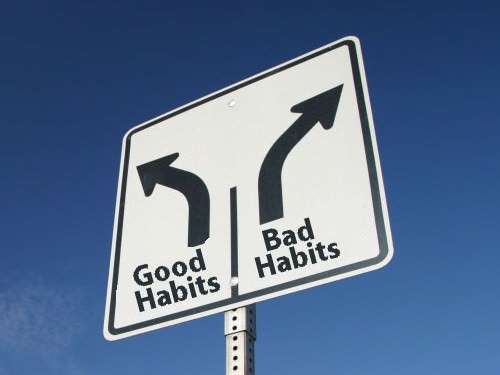
Here’s the thing: habits (the ones you want) usually don’t build themselves automatically, they have to be built.
With what I call “Habit Building and Habit Busting” the key matter to understand is that it all sparks from one single point – the point of decision/initiation. For you and I, there was once a time you didn’t know how to walk, until you tried it for the first time and practiced it to the point it became habitual.
Example : Salah – busting “skip salah” habit and building “establish it” habit
- You made a decision to take salah seriously.
- You prayed the first salah with that goal in mind.
- There were some slips along the way, so mixed with persistence the salah became (somewhat) established in your life [[if not, then follow this process]].
“First you make your habits, then your habits make you.”
You’d probably agree that it’s hard before it gets easy. With habits in general, the hardest part of it is the initial stage because your mind and body is being taken out of its comfort zone. And like Sh.Muhammad Alshareef talked about in his Heart Wheel Journal and Ramadan Ilminar, the beginning of Ramadan is when the body is making that shift into “fasting mode.”
I want to share with you what some people in my network said about their post-Ramadan experience. See if you relate to these.
Sabine, France – “I’ve caught Ramadan’s perfume and I don’t want to let it go…
I’ve made a plan starting with the “habits” I managed to take during Ramadan (like reading the Quran, praying, fasting, etc). The most difficult thing today is to wake up and pray at night (it was much easier during Ramadan…so I am working on that).”
Wais, Calgary – “I think this Ramadan was one of my best …. After Ramadan, however, things did not feel the same…I think I heard in a lecture about the post-Ramadan state about how the Sahabah always remembered Ramadan throughout the whole year. Six months after Ramadan they prayed to Allah to accept their ‘ibadah and du’as and the next six months they prayed to Allah to give them the opportunity to witness another Ramadan. That helped me continue some of the duas I wrote and continually think about Ramadan.”
Nobera, Toronto – “Post-Ramadan is better then pre-Ramadan… It’s harder to have a set schedule for Qur’an, there’s lesser patience for long salaat and more time for distractions…Nonetheless, effort is put into keeping some new habits that were formed in Ramadan.”
Anonymous – “Man it feels [horrible], it went downhill…big-time!”
Thirty days is more than sufficient to build positive habits so a missing piece of that puzzle is understanding…
Momentum
I went to visit Sh.Waleed Abdul-Hakeem (IlmPath and AlKauthar instructor), it happened to be while he was preparing his Jum’a khutbah (before Ramadan). So I ask him what he’s planning to speak about, so he says “how the Prophet (sallAllahu alayhi wasalaam) would fast in Sha’ban and build momentum for Ramadan.”
I thought, “cool, I was thinking about the same thing…let me see where else this momentum concept applies.”
Momentum is like the on-ramp & off-ramp to a highway. It sets you up to either accelerate or slow down so you flow right in with the other cars.
Amazing Lesson – Ramadan is cushioned in between two momentum makers.
They’re the months of Sha’ban and Shawwal (before and after Ramadan).
Sha’ban – This was the month the Prophet (sallAllahu alayhi wasalaam) would fast more in than any other month. He built momentum going into Ramadan; so his body already adjusted to ‘fasting mode’ and his mind is prepared to go ‘in the zone’ during the next month.
Shawwal – The Muslim has fasted for 1 full month, so to continue that Ramadan momentum there are the 6 fasts of Shawwal (hadith below).
The positive habits and extra ‘ibadah (worship) is connected to the fasting in Ramadan, so bringing the fasting (connector and catalyst of extra worship) to regular life also pulls with it those positive habits and extra ‘ibadah.
——–
6 Fasts of Shawwal – “Whoever fasts Ramadan, then follows it with six days of (fasting in) Shawwaal, it will be as if he/she fasted for an entire year” (Saheeh Muslim, no. 1984)
Note: Shawwal ends Oct/19 so if you haven’t started, you are kind of late for this time, but 5 fasts are better than 6!
——–
In summary, in this article we looked into:
- Habits – they need to be built. The building process is hard before it gets easy.
- Few perspectives and experiences of people after Ramadan
- Momentum – how momentum works like the on-ramp & off-ramp to a highway and that Ramadan is cushioned by two momentum makers with the months of Sha’ban and Shawwal
——–
Part 2 will cover:
- How to start building those Ramadan habits, even now…
- My Habit Building Formula
- A hadith about habits?
——–
I’m looking forward to all your successes,
Br. Nahyan
Keep supporting MuslimMatters for the sake of Allah
Alhamdulillah, we're at over 850 supporters. Help us get to 900 supporters this month. All it takes is a small gift from a reader like you to keep us going, for just $2 / month.
The Prophet (SAW) has taught us the best of deeds are those that done consistently, even if they are small. Click here to support MuslimMatters with a monthly donation of $2 per month. Set it and collect blessings from Allah (swt) for the khayr you're supporting without thinking about it.



Israel Seeks Escalation For Latitude – The Regional “Conflict” Widens

Post-Ramadan Reflections From A Mother Of Littles

[Podcast] Palestine in Our Hearts: Eid al-Fitr 1445 AH

Foreign Affairs Official Resigns Over Gaza Genocide

A Ramadan Quran Journal: A MuslimMatters Series – [Juz 30] Solace For The Sincere And Vulnerable

IOK Ramadan: 7 Qualities of Highly Effective Believers | Keys To The Divine Compass [Ep18]
IOK Ramadan: Choose Wisely | Keys To The Divine Compass [Ep15]
IOK Ramadan: Making Time for Allāh at Night | Keys To The Divine Compass [Ep21]
IOK Ramadan: Appreciating the Prophet ﷺ | Keys To The Divine Compass [Ep22]
IOK Ramadan: They Were Not Created Without Purpose | Keys To The Divine Compass [Ep23]

IOK Ramadan: The Importance of Spiritual Purification | Keys To The Divine Compass [Ep30]
IOK Ramadan: The Power of Prayer | Keys To The Divine Compass [Ep29]
IOK Ramadan: The Weight of the Qur’an | Keys To The Divine Compass [Ep28]
IOK Ramadan: Families of Faith | Keys To The Divine Compass [Ep27]
IOK Ramadan: Humility in Front of the Messenger | Keys To The Divine Compass [Ep26]
-

 #Islam3 weeks ago
IOK Ramadan: 7 Qualities of Highly Effective Believers | Keys To The Divine Compass [Ep18]
-
#Islam3 weeks ago
IOK Ramadan: Choose Wisely | Keys To The Divine Compass [Ep15]
-
#Islam3 weeks ago
IOK Ramadan: Making Time for Allāh at Night | Keys To The Divine Compass [Ep21]
-
#Islam3 weeks ago
IOK Ramadan: Appreciating the Prophet ﷺ | Keys To The Divine Compass [Ep22]
Umm Amin
October 14, 2009 at 8:01 AM
Masha Allah wa ta barak Allah.
Ahmed
October 14, 2009 at 8:28 AM
Nahyan on MM! Awesome!
sr shazna
October 14, 2009 at 8:43 AM
tabarak allah great article,..
i most benefitted from the habibit building..
***to actually build ther habibit!!!***
insha allah more feed back to come!
once i have ecvtracted some lessons for my self!
jasak allah khayr!
look forward to the second part!
sr shazna
October 14, 2009 at 9:12 AM
tabarak allah great article,..
i most benefitted from the habit building..
***to actually build ther habits!!!***
insha allah more feed back to come!
once i have extracted some lessons for my self!
jasak allah khayr!
look forward to the second part!
Nahyan
October 14, 2009 at 10:57 AM
wa iyyakum sr.Shazna, always great to hear your feedbacks.
Hanan
October 14, 2009 at 9:13 AM
MAsh’allah, valuable advice. May Allah benefit you and us with it.
Abd- Allah
October 14, 2009 at 9:30 AM
It is true that Muslims should practice more through out the year, especially brothers need to start coming to the 5 congregational prayers in the masjid or at least fajr and isha (think: “those 2 prayers fajr and isha are the hardest prayers for the hypocrites”… that will help you go to the masjid if you are really sincere and don’t want to be like the hypocrites) if they can’t come to the other 3 because they are at work.
However, it is only realistic that people don’t go through the entire year as if it was Ramadan, or else what difference would Ramadan be if it is just like any other month? Besides, what do we expect to be the difference between having the shayateen locked up versus having them running around freely.
I guess what really counts so that you have benefited from Ramadan is that a person becomes better and has more Eman and Taqwah after Ramadan than before Ramadan, and so even if he doesn’t keep all his Ramadan habits after it, at least he will be a better Muslim in general.
Nahyan
October 14, 2009 at 11:03 AM
my man Br.Abd-Allah, you’re spelling out Part 2 before I can :D
I agree with you completely.
That’s actually the problem I see since people focus so much on Ibadah without considering the other aspects of life. Once Ramadan is done, it’s difficult to carry that level of ibadah, so many people don’t leave Ramadan with much personal growth…then back to old old life or something like.
Like this year it hit me that Ramadan is a fantastic training ground for whatever one wants it to be (ibadah + more)
Jazakallahukhair
Mercy
October 14, 2009 at 10:18 AM
Assalama ‘Alaykum Wa Rahmatullahi Wa Barakatuhu,
Masha’Allah, very cool way of looking at our habits during Ramadan/and afterwards…almost equation like..reminds me of Shaykh Yaser Birjas articles on the ramadan-guest analogy.
Wassalama ‘Alaykum Wa Rahmatullahi Wa Barakatuhu
Nahyan
October 14, 2009 at 11:08 AM
wa alaikum assalaam warahmatullahi wabarakatuh
Barakallahufeekum sister.
Tarif
October 14, 2009 at 7:28 PM
Mashallah very good article, congrats on getting it accepted. Picture looks fake though lol jkz. I find that a lot of times, its easier to build momentum with anything if its done in a group. The support/pressure from a peer or group is very effective.
matata
October 14, 2009 at 8:15 PM
“Momentum – how momentum works like the on-ramp & off-ramp to a highway and that Ramadan is cushioned by two momentum makers with the months of Sha’ban and Shawwal” – what a blessing that Allah has already has this designed in our life- the onramp/offramp analogy.
this can be use in all aspects of life, whether someone starts eating healthy before starting a full diet or reading other books before university starts or even starting to look good [in front of mahrams] before getting married so it doesn’t go downhill 3 months after.
it also adds a lot of excitement to whatever one may be doing
Nahyan
October 15, 2009 at 9:41 AM
@Tarif – the group point is very good, sometimes the good (or bad) just rubs off without any effort
@Matata – yes. alhamdulillah.
The momentum thing works to just prepare one self going in and out, instead of sudden shifts that’ll mess em up
Omar
October 16, 2009 at 5:36 PM
Bro Nahyan, great article.
I never thought about habits being ‘built’ ourselves.
Smae with the momentum around Ramadan.
I’m really waiting for part 2 :)
– Omar
hamid
October 18, 2009 at 5:25 PM
salamulaikum wa rahmatullah
nice nahyan, i’m glad to be going to a school where i’m in the company of brothers like you.
Somalia's Finest
October 18, 2009 at 6:50 PM
MashaAllah BR Nahyan! I love it…
I really admire your enthusiasm. This is a stepping stone for further beneficial words… I can’t wait to see your next articles.
looking forward to all your successes.
Pingback: Ramadan AfterMath: Recovery Time [Part 2 of 2] | MuslimMatters.org
Amy
October 25, 2009 at 8:44 PM
Assalaamu alaykum
How are women supposed to form habits like that, when they have to stop everything for their periods? I had built up really good habits after Ramadan, and when my cycle came at the end of Ramadan, I was still able to keep up the habits for the next month. But then the 2nd time was just like back before Ramadan again… I feel soooo bad about it.
Abd- Allah
October 25, 2009 at 9:13 PM
Assalam Alaikum
sister Amy, no one said women have to stop everything when they have their period!
Question:
What are the actions that a woman who is on her menses, the actions she might perform while she is looking for lailatul qadr?
Answer:
By Shaikh Ubaid al Jabiree
Oh my daughter, have glad tidings and give glad tidings to the others; your sisters in Islaam the daughters of the sunnah, those that follow the sunnah.
That the woman who is in her menses she is allowed to do all things that are legislated for the men and the women that are out of their menses except for fasting and praying. Besides that, he said, you know and you should teach the other sisters in Islaam, that the woman, the Muslim woman, is allowed to stand in lailatul qadr or establish in lailatul qadr: the recitation of the quraan, and making dua supplication to Allaah for all that is good, as well as istighfaar seeking Allaah’s forgiveness, and takbeer saying Allaahu Akbar and tasbeeh saying SubhaanAllaah, and tahmeed saying Alhumdulillaah and saying also laa illaaha illAllaah and the other forms of remembrance and dhikr. The shaikh while he was handing me the mic reminded us of the statement that the Prophet (sallAllaahu `alayhi wa sallam) used to say while looking for lailatul qadr
(Dua’a read aloud in Arabic)
“Oh Allaah you are the Pardoner and the giver of asylum, so Pardon me because you love to Pardon.”
And he said that you should know that any person that is kept back, and prevented from doing what is better for them from performing righteous actions, any person who is prohibited or a matter comes between them and these righteous actions due to a legislated excuse then this person should know that if they have the right intention and they have a strong will to come closer to Allaah and to better themselves with prayers or fasting or with whatever action it might be, whoever has an excuse a legislated excuse and has that strong will and that strong intention then they should know that Allaah Writes the aj’ar or benefits or reward for them. This is as we find in the hadeeth of the Prophet (sallAllaahu `alayhi wa sallam) when he was travelling with some of the sahaba on a path to the battlefield where he said that,
” There are a people in Madeenah from your brothers, that you don’t pass any mountain, and you don’t go through any valley except that they, your brothers in Madeenah are with you in the aj’ar, in the reward and benefits, that you are gathering the good deeds that you are gathering by going out in the path of Allaah, the only thing that stopped them meaning your brothers in Madeenah the only thing that stopped them and came between them in being with you is a legislated Islaamic excuse.”