
Gender Relations
Misogynistic Women: Reinforcing Gender Injustice

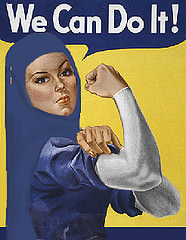 I’ve just discovered my newest pet peeve: misogynistic women. That is, those women who believe in and perpetuate gender-related stereotypes… the most common one being that of women’s inferiority, and men’s superiority (in more than the Islamic sense/ understanding). Misogyny is something that is quickly and oft-identified within men, but recognized much less within women – after all, how is it that there are women who look down on themselves, who see themselves as less than their male counterparts? It does, however, exist; and is surprisingly (and scarily) quite widespread.
I am hesitant to blame misogynistic attitudes amongst women on immigrants, but in my experience that’s how it is. Like so many other examples of gender injustice, it seems to be based on culture; specifically, cultural notions about women, their status in society, and their overall capabilities. It never fails to astound me how in some cultures, they’ll be eager to send their daughters off to university and get their degrees – only to expect them to come home, get married, and pop out babies for the rest of her life without ever actually using her God-given intelligence! And if she does dare to take a stance on issues, to have an opinion, to be active in some way outside the home (and I mean in a halaal way, not a haraam way), she’ll be told to “behave like a proper woman” (i.e. keep her mouth shut, smile, and nod) and looked down upon and criticized.
The worst thing is when they make misogynistic comments in an Islamic context – for example, using the (grossly mistranslated!) Hadith about women being “deficient” in religion and intelligence. This happened to me the other day when some common incident took place wherein I didn’t recall making a certain commitment and another woman did – and that woman then said, “You see, that’s why the Shari’ah requires the testimony of two women, because your memory is so weak!”
Keep supporting MuslimMatters for the sake of Allah
Alhamdulillah, we're at over 850 supporters. Help us get to 900 supporters this month. All it takes is a small gift from a reader like you to keep us going, for just $2 / month.
The Prophet (SAW) has taught us the best of deeds are those that done consistently, even if they are small. Click here to support MuslimMatters with a monthly donation of $2 per month. Set it and collect blessings from Allah (swt) for the khayr you're supporting without thinking about it.
Aside from the irony – she being only one woman, not two, who claimed to have heard me make the commitment, and so technically her testimony wouldn’t count either – it was the commonality of such an attitude that infuriated me. I said nothing due to her age and her position over me, but in my head I was outraged!
Then there’s the other thing that’s constantly held against women: their hormones! I find it absolutely ridiculous that whenever a girl gets angry or upset over something, she is so often dismissed by others (women even more so than men!) by being told, “Stop spazzing; just because it’s your time of the month you don’t need to take it out on the rest of us!” (Or something to that effect.) Why is it immediately assumed that for a female to be angry, it’s because of her hormones? Why is it that men can get angry and outraged about the silliest of things, and still be taken seriously; but that a woman is dismissed the majority of the time because she experiences a short period of time during which she can be a little, well, unreasonable? And what about women who don’t suffer PMS at all? Are their concerns also to be blamed on hormonal irrationality?
“Oh no, not another feminist rant!” is probably what you’re thinking… well, yes and no. I don’t at all deny the differences – both physical and psychological – between men and women, nor do I deny anything in the Shari’ah (two female witnesses, etc.). What I do take issue with is, as I listed above, how people will take something from the Shari’ah and use it as a general excuse to use against women in anything and everything – even though it’s totally out of context!
Okay, so what does this have to do with Muslim matters, you ask? In my opinion, it has a lot to do with Muslim matters: such attitudes severely restrict what Muslim women are capable of. Attitudes like that are what’s stopping our daughters, our sisters, our wives, from following in the footsteps of the great Muslim women of the past: Aisha bint Abi Bakr, Hafsa bint Umar, Umm Habiba bint Abi Sufyan, and many more (radhi’Allahu anhuma ajma’een). They were all extremely intelligent, and what’s more, they were outspoken! They didn’t just learn by rote; they learnt by observing, questioning, and implementing.
When we read some of the ahadith of these noble women, we are sometimes be shocked by their behaviour – such as when they would argue with the Prophet (sallallaahu ‘alaihi wa sallam) himself! Not to say that it’s a free license for us to argue about everything and anything with anyone and everyone, but it’s a sign that the women around the Messenger (sallallaahu ‘alaihi wa sallam) were certainly not mindless robots who only cooked, cleaned, and popped out babies.
So when we’re told that “good Muslim girls” don’t ask questions or think too much, then let’s remember those women whom the Prophet (sallallaahu ‘alaihi wa sallam) loved and taught and did not rebuke for their intelligence, and most certainly did not degrade.
To paint women as fragile, emotional, hormone-controlled vessels liable to have a psychological breakdown at any moment belittles us and insults the intelligence that Allah has blessed us with. Furthermore, it crushes the potential our girls have to be amazing assets to this Ummah, as teachers and as leaders within our communities.
Women are indeed the driving force of any society. They are the ones who raise the children, the ones from whose lips and laps babies learn the behaviour and attitudes of the family, which in turn affect the society as a whole. We learn what our role as women in society is from our mothers – and so it’s imperative that our mothers break away from these negative attitudes towards femininity; and that we, when we become mothers, can pass onto the daughters of this Ummah the message that as women we are NOT inferior or deficient but rather the full twins of men and equal in the Sight of Allah.
It is important to note that sometimes the male head of the household can have very open ideas about women’s roles, can encourage his daughters to pursue more in life than the traditional ideal… yet if the matriarch believes otherwise, then it’s almost guaranteed she’ll pass on her attitude to the younger females. In that is an example of the powerful role women play in society: they can “make or break” attitudes and traditions, and it is this power which needs to be tapped into when trying to create and implement a solution to this problem.
All right, so now that we’ve identified the problem, what is the solution?
The idealist in me has it all figured out: more from the minbar speaking out against this and emphasizing a need to take the great Muslim women of the past as role models; Islamic lessons, courses, and workshops on the same subject, empowering women, as it were; and implementation/ reinforcing the lesson by creating and providing opportunities for Muslim women to take on a greater role in our Ummah, by taking part in community activism.
We talk so much about the beautiful rights that Islam has given women, yet in our own homes and in our masaajid we rarely allow our women to practice those rights. We also talk of wanting our communities to be like the community that existed during the time of our beloved Messenger Muhammad (sallallaahu ‘alaihi wa sallam). Here’s one way of accomplishing that: by letting our womenfolk take on roles that were practiced by the womenfolk of the first Muslims. Not just wives and mothers, but students and teachers, professionals and activists.
The reluctantly realistic part of me, however, recognizes that this won’t necessarily cause a 180-degree change in attitude. The struggle to change the way Muslims – men and women – believe about the status of women as individuals and their roles in society will be long, and I doubt it will ever be 100% successful.
As with all worthy struggles, though, insha’Allah I won’t give up on it – and neither should you! Masha’Allah, I know wonderful people (men and women alike) who are trying their best to address this issue (amongst the many others our community needs to be dealth with) from the Islamic point of view, educating themselves and others about what Islam REALLY says about the rights and responsibilities of each gender. In my opinion, the best thing they’ve done is to provide opportunities for sisters to realize their potential within the Muslim community: by encouraging them to start studying Islam more deeply, to get involved in community projects, to strengthen their identity and just feel good about themselves as Muslimaat!
May Allah grant us all knowledge, wisdom, and understanding of the Deen, and aid us in implementing it for the benefit of our souls (which will need all the ajr it can get on its side for the Day of Judgement) and for the benefit of our Ummah, ameen!
Related:
- Perfect Justice: Debunking the Male Bias Myth by Sheikh Yasir Qadhi
- Muslim Women and Activism by AnonyMouse
Keep supporting MuslimMatters for the sake of Allah
Alhamdulillah, we're at over 850 supporters. Help us get to 900 supporters this month. All it takes is a small gift from a reader like you to keep us going, for just $2 / month.
The Prophet (SAW) has taught us the best of deeds are those that done consistently, even if they are small. Click here to support MuslimMatters with a monthly donation of $2 per month. Set it and collect blessings from Allah (swt) for the khayr you're supporting without thinking about it.





Israel Seeks Escalation For Latitude – The Regional “Conflict” Widens

Post-Ramadan Reflections From A Mother Of Littles

[Podcast] Palestine in Our Hearts: Eid al-Fitr 1445 AH

Foreign Affairs Official Resigns Over Gaza Genocide

A Ramadan Quran Journal: A MuslimMatters Series – [Juz 30] Solace For The Sincere And Vulnerable

IOK Ramadan: 7 Qualities of Highly Effective Believers | Keys To The Divine Compass [Ep18]
IOK Ramadan: Choose Wisely | Keys To The Divine Compass [Ep15]
IOK Ramadan: Making Time for Allāh at Night | Keys To The Divine Compass [Ep21]
IOK Ramadan: They Were Not Created Without Purpose | Keys To The Divine Compass [Ep23]
IOK Ramadan: Appreciating the Prophet ﷺ | Keys To The Divine Compass [Ep22]

IOK Ramadan: The Importance of Spiritual Purification | Keys To The Divine Compass [Ep30]
IOK Ramadan: The Power of Prayer | Keys To The Divine Compass [Ep29]
IOK Ramadan: The Weight of the Qur’an | Keys To The Divine Compass [Ep28]
IOK Ramadan: Families of Faith | Keys To The Divine Compass [Ep27]
IOK Ramadan: Humility in Front of the Messenger | Keys To The Divine Compass [Ep26]
-

 #Islam3 weeks ago
IOK Ramadan: 7 Qualities of Highly Effective Believers | Keys To The Divine Compass [Ep18]
-
#Islam3 weeks ago
IOK Ramadan: Choose Wisely | Keys To The Divine Compass [Ep15]
-
#Islam3 weeks ago
IOK Ramadan: Making Time for Allāh at Night | Keys To The Divine Compass [Ep21]
-
#Islam3 weeks ago
IOK Ramadan: They Were Not Created Without Purpose | Keys To The Divine Compass [Ep23]
AnonyMouse
November 7, 2007 at 1:43 PM
Disclaimer: I’m not trying to do an Irshad Manji or Amina Wadud here! :p
Seriously though, I’ve found that many times when someone tries to address this subject, they’re accused of being “brainwashed feminists” or of wanting to “create a new feminist Islam” or something.
I find this disturbing because all of those claims are unfounded and untrue!
Just because Hirsi Ali/ Manji/ Wadud have all spoken on these subjects and come up with their own “solutions” doesn’t mean that WE should stop talking about this problem and coming up with an Islamic solution of our own.
In fact, it makes the need for us to talk about this problem even more urgent… because if WE don’t present the Islamic solution (and start implementing it), then rest assured that there are others who have noticed this problem and are equally disgruntled with it. We don’t want to drive them off into the welcoming arms of the progressives, who as we all know are quite vocal about this and actually DO things about it (unfortunately not always the right thing).
Hala
February 17, 2010 at 5:53 PM
hirsii ali isnt a muslim just an embarasment to the world she seeks political fame because she has no life and enjoys insulting the prophet thats why its so disturbing when muslim women happy with their fiath their islam and roles are compared to her when they ask for their islamic rights
salaam
hala
Sequoia
November 7, 2007 at 2:16 PM
Interesting topic Mouse……I was just watching a movie the other day about orthodox jews…i believe it was called Kadash..or the english translation is sacred…anyways there was one character who said that a womans sole duty was to provide children (context of this quote was a couple was having trouble having a child and many were telling him to leave his wife, for they interepreted Jewish orthodox tradition to do so). This way of thinking towards woman is unfortunately a universal problem. And I agree with you completely Mouse that it is dangerous to say because Maji or Hirsi also take this position that it must be against Islam. The world and more importanly the family, is better off with women’s contributions. Does this mean all woman are going to be life saving surgons or great entreprenuers? Obviously not. But there is a danger for any group to marginalize any part of its population. I rember hearing a black baseball coach talk about how it wasn’t the most important thing for black to get the chance to succed, but rather that they get the equal chance to fail.
Peri Fisher
May 16, 2011 at 3:15 PM
Orthodox Jews have something worse than that. In their morning prayers, men thank god for not being made women!
Amad
November 7, 2007 at 2:21 PM
There is another big difference between ur rant and manji’s whining… While u r trying to wake up the spirit of the sahabiyat (female companions), manji finds all of islam backwards and quoting the sahabiyay would imply as “living in the 7th century” to her. She finds no comfort or reliable pillar of suuprt for her positions in islamic tradition, while you are echoing a revival of that “old” but golden spirit.
Mighty differences!
ruth nasrullah
November 7, 2007 at 3:05 PM
Asalaamu alaikum. I would add that the issue of space equity in the masjid is a major influence on women’s participation as well as how they see their potential for participation (as I touched on in a previous post ).
I have a question regarding the issue of female hormones, which AnonyMouse brings up – I have always been told that women’s apparent estrogen-induced instability is the reason they can’t be leaders in the community, and I’ve often wondered about the accuracy of that from an Islamic point of view. The argument could be made that testosterone has led to far worse situations than estrogen ever did. What is the Islamic evidence that fluctuations in female hormones necessarily bar women from certain activities?
Br. Daoud
November 7, 2007 at 3:12 PM
Salaam Alaykum,
I have 3 daughters. I encourage them to think about the problems Muslims face and tell them if they work hard they can be leaders in the community. Sisters need to be better represented in our boards and committees so that we can take full advantage of their input. Everything good comes from Allah; to belittle or disregard the intellectual contributions of our women is a waste.
AnonyMouse
November 7, 2007 at 4:49 PM
Wa ‘alaikumus-salaam wa rahmatullaahi wa barakaatu,
Re: hormones – I personally have not come across anything from the Qur’an and Sunnah that specifically takes issue with our hormones… yet it’s mentioned a lot in fataawah and explanations by various shuyookh.
Does anyone else have an idea of how they came to the conclusion that we’re too hormonal to be reasonable?
Umm Reem
November 7, 2007 at 6:03 PM
Mouse, good post!
The problem is, when a sister becomes ‘too’ active she reduces her chances of getting married to good brothers!! :)
Seriously….some time ago, I was trying to get a VERY good sister married off, but good/active brothers would refuse simply because she was too active in her community. They all wanted a sit-at-home wife!!!
Peri Fisher
May 16, 2011 at 3:17 PM
Their loss! Besides, she should reject anyone who would try to deny her the right to live her life as SHE sees fit!
Amatullah
November 7, 2007 at 8:47 PM
It says in the Qur’an
وَيَسْـَلُونَكَ عَنِ الْمَحِيضِ قُلْ هُوَ أَذًى
translation:
“And they ask you about menstruation. Say, “It is harm..” 2:222. the word for harm in arabic is “adhan” ( أَذًى) and that literally means any injury or pain that is felt by a living being. So from this we can conclude (also in tafsir) that menstruation is a source of pain; and even medically, we know that with a woman’s meses, she gets a lot of symptoms..easily angered being one of them :-) But of course that doesn’t give anyone the right to blame the sisters…it’s an Adha!
Allahu ‘alam.
Shama
November 7, 2007 at 8:47 PM
Agree entirely with the general spirit of the post – it has bothered me alot and I see how women demoralize other women. What I find is often times its out of their own insecurities. I have examples of practiscing sisters that wore niqab and were labelled immoral becasue they participate in MSA activities or attend AlMaghrib classes or go to an all sisters get together – and mostly its done by someone close (family/relatives) who were not given the chance to participate in their communities and utilize their skills. For me its either envy or insecurity and it used to bother me alot but with time I developed an attitude to give a deaf ear to people’s personal issues.
At the same time, dear anonymouse, there are certain expressions in this article that I felt were quite deregatory, especially “popping out babies”. I mean where did we learn to express a noble ability of bearing children, something that Allah honored women with and elevated their status with in such lowly manner. Its important to not loose balance when addresssing a problem.
[46:15]And We have enjoined on man to be dutiful and kind to his parents. His mother bears him with hardship and she brings him forth with hardship, and the bearing of him, and the weaning of him is thirty (30) months, till when he attains full strength and reaches forty years, he says: \”My Lord! Grant me the power and ability that I may be grateful for Your Favour which You have bestowed upon me and upon my parents, and that I may do righteous good deeds, such as please You, and make my off-spring good. Truly, I have turned to You in repentance, and truly, I am one of the Muslims (submitting to Your Will).
[31:14]And We have enjoined on man (to be dutiful and good) to his parents. His mother bore him in weakness and hardship upon weakness and hardship, and his weaning is in two years give thanks to Me and to your parents, unto Me is the final destination.
Its understadable that we borrow terms from a culture that we live in. Lets discuss our problems without having to devalue the ability of bearing children honored by Allah subhanahu wa ta’ala in His noble speech
Faiez
November 8, 2007 at 12:25 AM
This article reminds me of a commercial:
http://www.youtube.com/watch?v=liKnJ-ejztw
I think you should have less “rant” persay, and more evidence (i.e. ayaat from Qur’an, stories of sahabiyaat, stories of women scholars).
That would add strength to your argument and strongly differentiate you from the “feminazis”.
Just some adwice.
Asalaamu alaikum
ruth nasrullah
November 8, 2007 at 1:43 AM
Asalaamu alaikum, Amatullah. Thanks for your comment. Menstruation is indeed a source of pain, as I’m sure any woman on this board will attest to :)
However, I don’t know if emotional lability is a universal or necessary aspect of the menstrual cycle. I wonder as well if it wouldn’t be better for a woman to overcome whatever irritability or sadness she feels rather than resign herself to being that way forever because it’s an intrinsic part of her nature as a woman.
Sequoia
November 8, 2007 at 2:11 AM
Mouse and others, from what source (Quran or Hadith) does this behavior get justified? And in your opionon what sources or traditions (ie women in the prophets life) would you use to counter these beliefs.
sillybachi
November 8, 2007 at 2:29 AM
You make a lot of good points in your article. It never fails to surprise me how an auntie can be complaining about how little her son-in-law does around the house, while she ladles out food for her own grown son.
It’s all about how we condition our kids (well, when we have them). If we teach our daughters that they’re only good for making babies and cleaning the house, it’ll just allow the cycle to continue.
Also, you say that you see this happening more in immigrant communities, but honestly it’s a worldwide thing…even in the West. I took a gender studies course in college, and it was just shocking to see the parallels between Muslim women and Western women. Actually, in some ways, Western women have it worse. At least in Islam women don’t have to work, and if they do they have total control over their earnings..but a lot of the Western working women have to support themselves and their families with their paychecks…AND also take on most of the chores (it’s called the “second shift”). I could go on and on but I’ll stop here :)
Women everywhere need to stand up for their rights and the best way to do that is to start in our own homes
Moiez
November 8, 2007 at 9:27 AM
I dont know what to say its all soo compelling of a discussion and everytime this topic comes up I get scared because it is something I will soon have to face. Umm well….islam is the middle way but, being human, we are prone to indulge in bias from the culture we come from whether it is from the north, south, east, or west. What should probably be done is both men and women should look at the women and men who were chosen by Allah as the best women ever on the earth and see what they did in their lives. Why did Allah chose them what character and actions did they have in their life.
Seriously it’s quite a question that I have yet to comprehend yet is their manners, is it their knowledge, is it the amount of work they did in society, is it how they raised their children, treated their parents, treated their husbands, neighbors ect. I mean what is it, my conclusion is that it’s a combination of all but not at a high or a low level. Allahu’alam
And I have to bring out the point Umm Reem brought up because it is a big issue that is never touched upon. Good/Active (Im taking it in a sense that this means they contribute to their community, are good husbands/sons, and are true to their eman/religious duties) males do in fact desire a less “active”(in this sense I take that it means participative in big events, on the board for some orginization, an outgoing women) female or a “sit-at-home” wife, although this word does not describe the actual meaning of a ‘desired female’. A sit-at-home wife is probably a wife who takes care of the household, kids, her husband and not one who works outside the home or has other major responisbilities like being a member on the board of the masjid or having a job that needs alot of time, effort and responsibility, and man wouldnt want that from his spouse. The point that im trying to get to is that, this is not the only thing that a “sit-at-home” spouse does but she should be ‘active’ up to the point where the responsibilities of the activity does not override the responsibilities of the home and the fear of that happening scares the good/active brothers because they do not want to infringe on the activity of the spouse because it is a good thing she should have other things to do rather than sit-at-home.
Now on a personal note and PERSONALLY(do not generalize) and this is a sad thing is that I have developed a bias of muslim women raised in the west much like the bias muslim women have developed of muslim men from a place other than the west(east). This bias leads me to the conclusion that in marriage I do not want a women raised in the west. I hate myself for this fact but it is the sad truth. I asked myself why this is so? My answer (and this is my personal biased opinion through observation) is that muslim women have been seeing the way the males from the ‘east’ have been treating the females(their moms) they have developed a bias against men or a feminist approach to men. This bias affects their way of behavior and understanding regarding actions and words uttered my the males and this same thing is happening to me except it is the other way around I see actions or hear words that flip the switch of feminist. For the females it is the overpowering male switch that is switched. This problem is silent but HUGE and is effecting the lives of muslims in the west in regards to marriage or male and female interaction in general, the halal interaction where you speak and act in orginizations or clubs or at school or work.
But that is where I am at right now… I would say more but I think I have spoken too much
Hala
February 17, 2010 at 6:02 PM
i keep noticing that when men and women discuss these topics especially unmarried men and women they come out sounding like they are about to wage war on eachother, i dont think you should say “i wont marry from the east” or “west”, because think about it , unless your being forced into marriage or something whoeevr you marry there is something that attracted you to to them, you have a love for them and want to stay with them sa7?, youll endure as much as you can from little things like watching programmes you hate to bigger things, therefore attitudes to subjects like these you should be able to discuss and sort out together, i understand muslim men arent the most domestic of men and it doesnt mean that you are being opressed if he didnt wash the tea cup, similarly shes not a wild and manic feminist just because she wants a job, because to tell the truth i did not wake up at 7am for my entire life to just stay at home ofcourse if they told me to sleep all day in the first place i might not have minded :P
salaamz
hala
Moiez
November 8, 2007 at 9:40 AM
correction
“and man wouldnt want that from his spouse”
please insert a “what” between the “and + man”
Umm Reem
November 8, 2007 at 12:56 PM
“Good/Active (Im taking it in a sense that this means they contribute to their community, are good husbands/sons, and are true to their eman/religious duties)”
Yes…
“males do in fact desire a less “active”(in this sense I take that it means participative in big events, on the board for some organization, an outgoing women)”
Allow me to be bold enough to say…I call this ‘narrow mindedness’!
“she should be ‘active’ up to the point where the responsibilities of the activity does not override the responsibilities of the home and the fear of that happening scares the good/active brothers because they do not want to infringe on the activity of the spouse because it is a good thing she should have other things to do rather than sit-at-home.”
I didn’t quite understand what you mean, but if you are saying that the fear of neglecting home stops a husband from letting his wife become an active member of the community then this is my very problem.
Why can’t brothers be less demanding when it comes to household work, the house doesn’t have to be ‘sparkling’ clean all the time, dinner doesn’t have to have 3 varieties every day etc. If they offer a helping hand around, or become a bit understanding, a sister can have spare time to offer to her community.
Why can’t she be on a masjid’s board or organize a major event? If her husband realizes the need of da’wah especially to the sisters, and look at the ‘broader’ picture and the ‘bigger’ benefit his wife/sister/daughter can bring to the community, he would be able to spare her a week or two (around the conference time for instance) of negligence around the house knowing that she would resume her duties once the event is over!
This is high time good sisters need to be equally active in the community and lead the younger ones towards the right direction.
The way I see it is we have two extremes: one is leaving the household responsibility in toto and only taking care of outside activities or community (mostly younger generations), the others are only staying home busy with cleaning and cooking all day.
I want to see a middle way. With a little cooperation from families and husbands, many sisters can contribute much more to their communities, the contribution that is needed in our communities.
So are you going to ban your sister from coming to my class now…I might turn her into a feminist! :)
zaynab
November 8, 2007 at 3:04 PM
Br. Moiez…thank you for being honest.
As a sister who is very involved in the Muslim community, and somewhat involved in broader community volunteering, this thought is always in the back of my head.
I can’t wrap my head around it. If a sister decides to use her time to do something that benefits others, doing da’wah work or just being a productive member of society…how is that a bad thing? Doesn’t this just mean she is a well rounded person? That she driven and motivated?
It’s this insane paradox of being a Woman today: on one hand you are told that being a woman should not hold you back in society, that those days are over; and you are simultaneously told that you shouldn’t be ‘too successful’, ‘too intelligent’, ‘too USEFUL’ or good luck finding a man sister! And sadly, it’s worse in the Muslim & Immigrant communities
Why do you have to stifle yourself to be loved?
It’s not fair to say that an active sister will be less likely to be a good & devoted mother. If someone is really that active and able to juggle things successfully they should understand the idea of prioritizing. Just because they may be involved in a million things now, doesn’t mean that they will always be so busy, or that they will be selfish and choose their own fulfillment over their children’s.
We need an MM article on this topic :) With brothers contributing honestly! It’s a very big deal in our community, especially as more sisters are going to college and getting involved in their communities.
Amad
November 8, 2007 at 3:21 PM
I think those brothers who don’t want active sisters as wives are PLAIN LOSERS :) And I bet most of these same brothers are not active either. So, they don’ t want their wives to upend them in dawah and make them feel like the losers they are!
Sorry for being blunt. But this sort of attitude is ridiculous! I mean, do we have people lining up to do the tons of dawah activities and programs that we need? Do we have enough people to counter the misconceptions about Islam propogated by media and Islamophobes everyday? Anyone who is in the dawah field will tell you that the answer is a vehement NO in both regards. So, instead of having our wives sit at home and gossip or do other wasteful activities, WHY not accept them as productive and beneficial partners in this “battle FOR Islam”?
Interestingly, many of these same brothers wont mind their wives finish their secular degrees or even work. Yet, islamic activities are off-limits!
However, the balance is important… the home-life is what should come first for both husbands and wives. And since the husband’s rights over their wives are quite significant, it is even more important for the latter to be careful in balancing the challenges. This is also why sisters need to be careful when picking a spouse…. make sure you don’t end up with one of the losers I mentioned in the beginning :)
Amad
November 8, 2007 at 3:23 PM
Zaynab why don’t you write the article… if its good, we’ll publish it… seems you have already some good thoughts to pen down!
We have a big back log of good ideas on MM but not enough time to tackle all!
AnonyMouse
November 8, 2007 at 4:04 PM
Haha, it’s good to see the comments coming in! Al-Hamdulillaah, it looks like the (apparent) hiatus of commenters here at MM is over… :)
“They all wanted a sit-at-home wife!!!”
Perhaps we should ask them, “sit-at-home-and do WHAT”?!
there are certain expressions in this article that I felt were quite deregatory, especially “popping out babies”.
I apologize if it sounded as though I’m against having children or being a stay-at-home, because I certainly didn’t mean it!
What I was trying to convey was that I find it upsetting when people reduce a woman’s role in life to ONLY having children, as though she is not a “real woman” if she isn’t a mother. As well, I’m not telling women to go to work and leave their kids at home, not at all! My mom’s a stay-at-home mother, but I see her as much more: she’s a teacher, a counsellor, a women’s/ youth group organizer, etc. She never neglects us kids, or my dad (hehe), or the house… yet she manages to accomplish a great deal at the same time, and this is what I’d love to see more of from our sisters in Islam!
@ Faiez
JazakAllahu khair for the naseeha, I’ll keep it in mind for furture articles, insha’Allah :)
With this post, I didn’t include ahadeeth and so on because it was already getting too long, and I was writing with the assumption that readers would know what kind of things I was referring to (i.e. “twin halves of men” and the names of Sahaabiyaat, even if I didn’t include their stories). I might go back and edit the post to include them, though :)
“Mouse and others, from what source (Quran or Hadith) does this behavior get justified?
Well, there’s always the “men have a degree over women” thing (from the Qur’an), and then as I mentioned there’s the infamous Hadith about women being “deficient” in intelligence (which is mistranslated – see the link in the post for more info).
Unfortunately, many people pick and choose from the evidences without taking things in context or looking at the bigger picture (e.g. the sunnah of the Prophet (sallallaahu ‘alaihi wa sallam), which teaches us just how he used to treat women and honour them).
And in your opionon what sources or traditions (ie women in the prophets life) would you use to counter these beliefs.
As I said above, the sunnah of the Prophet (sallaallaahu ‘alaihi wa sallam) is one of the first places to look at to see how women in Islam are really to be considered and treated! He used to teach them, honour them, ask their advice (and follow it!), and later on after his death many of his female Companions were considered sources of Islamic knowledge and were referred to by famous men of the time. Even after the female companions, there were many female scholars and prominent women in Islamic society.
And of course, even before that we should look to the Qur’an and the examples it holds for us: Aasiyah, the wife of Pharoah, who believed in Prophet Moses’ message and remained a true believer even though her husband tortured her to death; Sarah and Hajar, the wives of Prophet Abraham who were both incredible women and displayed strong faith; Mary the mother of Prophet Jesus, who from her childhood dedicated herself to worshipping God.
Moiez
November 8, 2007 at 4:16 PM
Umm Reem:
“if you are saying that the fear of neglecting home stops a husband from letting his wife become an active member of the community”
Close interpretation but one tweak if I might put in. It doesnt stop a sister from becoming an active member but it causes problems between the spouses, a brother or rather I wouldnt stop a sister from being active but I would try and tell her in a nice way to keep your eye on the house too. This statement, as nicely or as good hearted as you can say it, will blow up; I think it will anyways. The reason im saying this is because we are human and one has to be pretty darn good if he/she can juggle things around like that, I mean the house is hard enough right. Oh and when I mean house I mean kids appts, shopping, cleaning, cooking, husbands/family. So the possibility of going to an extreme is pretty high. I mean look at alot of the guys we work and blow everything else off, like home and the community. So being a woman isnt much of a difference right? Ask yourself a question: If your husband just said Im getting a promotion to management position should I take it? What are you going to think(Great! but wait a sec… AllahuAkbar he is gonna be gone from the house forever). Being afraid of losing your husband you are gonna try to tell him a nice way sure but dont forget about us or is there another way to get a raise? Im just giving some examples.
“Why can’t brothers be less demanding when it comes to household work, the house doesn’t have to be ‘sparkling’ clean all the time, dinner doesn’t have to have 3 varieties every day etc”
It doesnt have to be sparkling clean Holy moly! I have to tell my mom that more than 3 times yet she persists in making it like junnah or something. It should be decent. 3 meals heck no! im trying to stay in shape for you babe and cuz I hate fatness…alot(this comment is to my future wife) those are pretty extreme demands, for me anyways. The thing is about the western raised guys is that we too have seen the way of the east and saw the extreme of how to treat the spouse and if these guys were smart they probably know that they could never to that.
I agree with the rest of your response because you have both aspects, I suppose because im assuming you came to the west during your teen years, so you have the eastern respect along with the western which seem to be closest to the middle way.
Sister should be active in the community but again I still fear they will put other responsibilities aside which is why I decided to look for a pious muslim women who was raised in both areas. She has both extremes which balance each other out. This is my opinion anyways.
And no my sister will come to your class and if she doesnt she better have a good reason she missed it and why would you turn her into a feminist personally I think your keeping her away from it unless im wrong…. :), even if I tried to stop her from coming or rather from doing anything she wills, you can put me down on the shaheed list. :P
Zaynab: Wa iyak, honesty and respect is a muslim characteristic which I a make a big really big deal out of whether its myself or with friends because if I dont see that… well someone better change or physically a change will happen. :)
And I feel good taking this off of my chest because seriously Im scared. Getting married is right around the corner and its half ones religion. The half that I have know has fitnah from everywhere in this society trying to hurt it and its fighting very hard to keep them out and I fear that the other half will be a problem which I wont know how to handle so I want to overcome the coming problem as fast and as best as I can. I mean I could just marry a sit-at-home mom but that’s not what I want I want an “active sit at home mom” one who shares the responsibility but niether to an extreme, and what I mean by this is the middle way is not to be super sit-at-home mom and super active muslimah at the same time but a decent in activity and a decent in the home mom. not too hard and not too easy.
So yah honestly I have fear and alot of it.
Umm Reem
November 8, 2007 at 4:17 PM
“And in your opionon what sources or traditions (ie women in the prophets life) would you use to counter these beliefs.
Too add to mouse’s examples, let us not forget Aisha (ra), a devoted wife yet a leader and a teacher for her community, Fatima (ra), Safiyah (ra)…these examples are so many.
And of course, my ‘most’ favorite :), Asma bint Abu Bakr whose bravery and courage is unbeatable in our contemporary socieites yet her involvement in her community didn’t hold her back from serving her husband and raising children like Abdullah ibn Zubair (may Allah give us tawfeeq to follow her footsteps)!
“And I bet most of these same brothers are not active either.”
Unfortunately, many of them are active. However, when it comes to their wives being active, they have a different perception.
Amad: We need an article on MM from an active brother who supports and encourages his wife’s involvement in the community. And I think you should write an article since you are a good example! :)
Moiez
November 8, 2007 at 4:25 PM
WoW I wrote alot of stuff and it disappeared from the page, does anyone know what happend?
AnonyMouse
November 8, 2007 at 4:28 PM
Moiez:
Hmmmmmmm, I don’t know what to say to you that Umm Reem, Zaynab, and Amad haven’t already said!
I was going to ask why you wouldn’t want to marry a Muslimah raised in the West, but re-read your comment and saw what you said… so here’s what I have to say instead:
“muslim women have been seeing the way the males from the ‘east’ have been treating the females(their moms) they have developed a bias against men or a feminist approach to men.”
Really, it depends on what kind of treatment they’ve seen from “eastern” men – if it’s a condescending, inconsiderate, superior attitude, then I agree that we “Western Muslimahs” might take a huge dislike to it since the culture here has a different way of dealing with women (not always the right way, and I’m definitely aware of the hypocrisies of the West).
But for the Islamically educated female, it’s not a bias against “men” per se, or a “feminist approach to men”; rather it’s a dislike of that specific attitude and a desire to see more of “Sunnah-style” treatment of women in our Muslim men. (Major hint for the unmarried brothers! Take note! :p)
Trust me, not all the intelligent active Muslimahs who’re raised in the West are going to criticize absolutely each and every thing you say… we ARE (or can be) a bit more reasonable and flexible than you think! :)
Don’t be scared! Different women have different personalities, different goals and ambitions. If you don’t want an assertive kind of woman, then there are plenty of “softer” sisters out there also who are just as intelligent and educated and won’t bite your head off ;)
AnonyMouse
November 8, 2007 at 4:29 PM
Moiez, it probably went into the spam box… I’ll fish it out in a minute.
AnonyMouse
November 8, 2007 at 4:31 PM
We need an article on MM from an active brother who supports and encourages his wife’s involvement in the community. And I think you should write an article since you are a good example!
Forgive me for my totally mushy girly reaction:
AWWWWWWWWWWWWWWWWWWWWW!
:D
Moiez
November 8, 2007 at 4:40 PM
yah I didnt want to say anything because im a quiet kind of guy and because I thought me saying something want to ruin it but since Mouse already broke the ice.
AWWWWWWWWWWWWWWW!
lol :)
AnonyMouse
November 8, 2007 at 4:46 PM
“And I feel good taking this off of my chest because seriously Im scared.”
Expressing yourself is always therapeutic, and since none of us here know you personally you need not fear any of coming after you with a butcher knife :D
I get what you mean, though… and don’t worry, those kinds of sisters DO exist (my mom and her friends being perfect examples)… may Allah grant you (and all the other single brothers) a pious, righteous “ideal Muslimah” wife (soon), ameen!
Moiez
November 8, 2007 at 4:59 PM
But Mouse how do I know I mean at the beginning all women are soft because they dont know you. I mean I’ll be as shy as toddler who moves his head back onto the parents shoulder when somone says salaam and I figure that the family is only going to give you a really good impression I mean whos family wouldnt, you know.
Moiez
November 8, 2007 at 5:01 PM
Ameen!
AnonyMouse
November 8, 2007 at 5:13 PM
“But Mouse how do I know”
I’m sorry, but this is another AWWW moment! You remind me of my little brother… haha…
(Sorry, I’m probably being annoying now, aren’t I?)
All right, seriously speaking:
The key is to find out about the sister before you work up the nerve to approach her wali. Which means: you get your sister (if you have one, or more) to ‘spy’ on her.
(Although spying sounds evil, so it’s probably not the right word to use.)
Basically, have your sister spend some time with the lady you’ve got in mind, find out what the lady’s personality is like, what she’s involved in, etc. Those will be your first clues as to what kind of wife she might make.
Girls are good at finding things out about other girls :D
Moiez
November 8, 2007 at 5:20 PM
nah, it didnt evern cross my mind….seriously it didnt but I made it sound like it did didnt I.
“I’m sorry, but this is another AWWW moment! You remind me of my little brother”
Great now I sound like a little kid lol, me and my whining I should keep my mouth shut lol
AnonyMouse
November 8, 2007 at 5:27 PM
Well, no, you don’t really sound like a little kid… just very sweet and innocent and confused…
Once again, may Allah make your search for a good wife easy and successful, ameen.
And if you need any tips, the writers and readers at MM will probably be glad to help out :)
Moiez
November 8, 2007 at 5:29 PM
I know it was just a joke, ameen, and jazakallah khair
Umm Layth
November 8, 2007 at 5:39 PM
[quote]can encourage his daughters to pursue more in life than the traditional ideal… [/quote]
So what exactly is the traditional ideal?
AnonyMouse
November 8, 2007 at 5:53 PM
Obviously it depends on what culture you come from… writing from my personal life/ experience, the traditional ideal is to be a good cook (the women in my family have some odd obsession with perfecting recipes, which is good when you get to eat the end result! :p) and being able to keep a house spick-and-span.
Being a good wife and mother is definitely a big part of the “ideal woman” but it’s not what I’m against; it’s other qualities such as silence (not the wise kind of silence, which is something else, but the all-encompassing silence), not getting involved in “things that aren’t your business” (i.e. anything outside of your own home), etc.
Basically, it’s when girls/ women are encouraged to become Stepford wives and nothing else, that I’m upset about and strongly disagree with because I believe that’s NOT what the ideal Muslimah really is.
inexplicabletimelessness
November 8, 2007 at 8:50 PM
as salaamu alaikum
Great article sister Mouse, mashaAllah.
A good current day example of a balanced Muslimah/mother is my mom (ok, fourth “Awww ” in this discussion :D)
MashaAllah she is a wonderful, great mother who wants to raise her kids up well and have a good Islamic upbringing, a good wife, an awesome cook, and a wonderful housekeeper. She picks and drops kids from school/other activities… but that’s not all!
She is a journalist and freelance writer who’s published over 200 op/eds and currently works from home for a writing company (online). She is also a Qur’an teacher who teaches Qur’an in the afternoon.
But that’s not all: she’s currently working on a book, mashaAllah!!! :)
I would say: she has a perfect balance and I really do love my Ammi. :)
With that said: I don’t think brothers who just want their wife to cook and clean all day have any substantial evidence why, Islamically or otherwise, because the IDEAL Muslimah is balanced in all regards:
1) Deenwise, because first of all, we are all servants of Allah (swt)
2) Family wise
3) Housewise
4) Helping the Ummah at large
I think both brothers and sisters who are unmarried, furthermore, have to realize that no one is a robot, and their future spouse (inshaAllah) is a human being just like them: with certain likes, dislikes, passions, ambitions, etc…
And the best way, ultimately, to have a successful marriage is to have a sincere niyyah (intention) to please Allah (swt) and make sure one is following the Qur’aan and the sunnah of our Prophet (salallahu alayhi wassalam) primarily, and not just cultural/social influences.
Ameen to all the du’aas. wassalamu alaikum.
inexplicabletimelessness
November 8, 2007 at 9:11 PM
ps I have a hypothetical question for practicing brothers (married or unmarried)
What if:
your wife was a hijabi/niqabi, practicing Muslimah, exceptional mother/wife, not a feminist but just accepted her role as a Muslimah that Allah honored her with….but if she also worked outside the home.
For ex: if she was a female doctor, professor in a women’s college. (and her niyyah was to please Allah by being active in her community/use her knowledge & capabilities to help the Ummah and to do da’wah)
What would your feelings be towards that? If she was totally balanced in everything and an outstanding wife/mother at the same time?
Amad
November 8, 2007 at 9:12 PM
salam… ur mom sounds pretty awesome…
who is she?? I mean if she has published articles in mainstream media, she can’t be anonymous like you… so why don’t you spill the beans on that one??
Moiez
November 8, 2007 at 10:10 PM
inex: That’s Cool
inexplicabletimelessness
November 8, 2007 at 11:13 PM
wa alaikum assalam,
her name’s Irum Sarfaraz : -)
Moiez
November 9, 2007 at 8:16 AM
Subhanallah Your mom is the founder of the Pakistan Link, Im looking at this website and it has soo many articles its like a lawn with each blade of grass being an article!
Moiez
November 9, 2007 at 8:17 AM
oops wait the articles are by more people than just her haha…. whew!
Amad
November 9, 2007 at 8:56 AM
A nice article by IETL’s mom:
http://www.helium.com/tm/155132/muslim-women-hijabsetting-record
Amatullah
November 9, 2007 at 10:46 AM
mashaAllah your mom is awesome! may Allah azza wa jal increase you both in goodness.
Moiez
November 9, 2007 at 10:09 PM
Mouse you should hook up with inex’s mom and talk about the writing a book project
Umm Layth
November 9, 2007 at 11:05 PM
The ideal Muslimah is the woman who is devoted to Allah, through thin and thick. Bottom line. She can stay home, not stay at home. But her focus, always, is Allah and doing what is right, what is recommended and even avoiding what is just halal, that may lead her to what is even disliked.
zaynab
November 10, 2007 at 12:36 AM
^ thank you! BarakAllah feek
Umm Zaid
November 12, 2007 at 7:08 PM
Salaam ‘Alaikum
I like Umm Layth’s comment. Brings us back to the focus for any Muslim male or female.
Umm Reem
November 13, 2007 at 12:32 PM
^ obviously the reason we are talking about this issue is to benefit the ummah, which is for Allah’s pleasure and to establish His deen.
Moiz: “It doesnt stop a sister from becoming an active member but it causes problems between the spouses,”
Another way of looking at it is maybe it could become a way to ‘strengthen’ the relationship between the spouses. IF they work together to organize conference or work for the Masjid etc. they will have a lot in common, a lot to share and a lot to talk about!
I can tell you this from my own personal experience. With TDC for instance, me and Amad would attend meetings together, plan out things together etc. He realized that in order to benefit 3000+ Muslims, he will have to be a bit patient with me for 3+ weeks! And I, too, could understand his busy schedule and I wouldn’t nag for his time either…in fact I didn’t have to because I myself was a part of it too. We were in the same team working for the same goal!
I saw it as a ‘benefit’ to the marriage rather then a harm. As for some other sisters whose husbands were actively involved in organizing the conference but the wives were not, I often found them complaining about how their husbands’ had been so busy and they had barely talked or seen them etc. etc.
Of course, this is just my view, others may disagree with me on this.
“I would try and tell her in a nice way to keep your eye on the house too. This statement, as nicely or as good hearted as you can say it, will blow up; I think it will anyways.”
I will have to disagree with you on this Moiz. If you say it at the right time, with the ‘right’ wordings, it may not necessarily always blow up.
There are many ways to get the right message through; sometimes it is better not to ‘directly’ word it. Or sometimes, you can offer a helping hand…this is another way of telling your wife that house needs to be clean.
“The reason im saying this is because we are human and one has to be pretty darn good if he/she can juggle things around like that,”
Absolutely, but this is why I like to remind the brothers that with a little cooperation from them, their wives can become an active part of the community. Remember, I am not saying ‘super’ active.
Firstly, and to clarify, a sister must remember and recognize her duties towards her family and house first. She must know that her husband must be pleased and that should be her goal.
BUT (and that is why I have to point out the brothers again) if their husbands show displeasure in her active role, discourage her from participating in activities and rather encourage her to stay home, then what can she do?!
For instance, every time I had to organize a DOA conference I had to stop homeschooling my kids for a week at least. And at times, I had to order food, laundry would pile up for a week, and the house would be liveable but not clean enough to host anyone. But that would be a matter of week. After that life would be normal again.
IF I had a husband who would pick on these issues and could not even be patient for a week then obviously I would have never been able to organize any of those conferences.
Or even the Friday that I have for the girls for instance. Every Friday he has to wait until 9 to get his dinner instead of 6.
And believe me there are many sisters who want to come to the class but they can’t just because their husbands want their dinner on time!! Seriously, they can’t even spare one day of the week!!!
If brothers expect their wives to set their priorities right, then brothers, too, should prioritize issues.
wAllahu ta’ala ‘alam
Zeynab
November 13, 2007 at 10:50 PM
Salaam waleykum.
YES! YES! YESSSSSSSSSSS! (Dancing around) I’m glad you wrote about this. And, as an Islamic feminist, I AGREE WITH YOU THE AUTHOR! It’s not just men who put women down; it’s OTHER women (Brainwashed or not) that put us down!!!
Moiez
November 14, 2007 at 12:28 AM
Umm Reem: Absolutely You’re Right. As I said before Im just scared because I can be taken advantage of very easily and I dont want my softness to be the reason for my wife to stop caring about certain things. These certain things can be “super sit-at-home” or “super active”. I guess it is just my personality which will bring me into this situation and not the wife.
aamer khan
July 2, 2008 at 5:08 AM
to be honest, i have seen many (in the teens) of women who are very active outside of their home, and have kids who are no different from their non-muslim friends. it seems kind of pointless to me that those specific women spend so much time helping other people that they neglect ther own children.
so my questions are: how should women strike a balance between home/activism? what is their priority? keyword: priority.
ps.: i don’t care for personal opinions as much as Quran and Sunnah quotations and interpretations of the Ulema (which I have seen lacking in many MM posts recently).
Bethany GM
February 9, 2009 at 8:02 AM
“Women are indeed the driving force of any society. They are the ones who raise the children, the ones from whose lips and laps babies learn the behaviour and attitudes of the family, which in turn affect the society as a whole. We learn what our role as women in society is from our mothers – and so it’s imperative that our mothers break away from these negative attitudes towards femininity; and that we, when we become mothers, can pass onto the daughters of this Ummah the message that as women we are NOT inferior or deficient but rather the full twins of men and equal in the Sight of Allah.”
Awesome!
I am not Muslim, but I do think male misogyny permeates most of the world, actually. People (mainly men…) hurl “feminist” like it is an insult, and we take it as such. We probably should try not to. I recently had some experiences – and started majoring in History at college- and all of this together has really brought to bear all the crap we’ve (women) have suffered over these thousands of years. It weighs me down whenever I read about it, and it doesn’t matter where (or when) the women are from. I don’t even know where to begin to fix it, because like you said, women actually participate.
I won’t blame the men or the women for perpetuating the problem- our beliefs and values are shaped from the time we are small.
Men and women can certainly change if they choose to– but the more likely solution, like you said, would be to make sure we raise our boys and girls to respect each other and give equal value to what both boys and girls have to offer- (And stress that boys and girls can excel at the same exact things, usually!!!)
**I saw usually, since we have to recognize our differences, though. A man may always be physically able to lift a box better than many girls, and a man will never be able to nurture a child in his womb or at his breast.- so, we are different in some respects, but certainly equal in the capabilities of our minds.
Bethany GM
February 9, 2009 at 8:07 AM
I just want to add that—
you can keep whatever traditions you wish…
If a parent needs to be in the home to nurture the child- then the goal is to
elevate the status of the person who stays home!!!
If we teach our kids to place the same value on both roles, then whoever fulfills these roles should be accorded greater respect than they enjoyed previously.
I don’t know if this is possible, but it should be.
The raising of children and the tending of the hearth is just as (if not more!) important as any job done outside the home.
What we value more is what is messed up.
It isn’t fun to do a hard job that doesn’t earn you the respect you deserve for doing it, I think.
Just my .. extra 2 cents. ;)
Sediqua
January 2, 2010 at 10:13 PM
My mother is a female misogynist. I am her only daughter. I am not muslim, I am black. In every shape way and form, she devalues me because I am a women, and punishes me for all my accomplishments, and happiness. Its a sad state of affairs..She attempted to pass along her self hatred to my daughter, and this was the last straw.. We no longer speak.
Hala
February 17, 2010 at 6:09 PM
i think the topic turned into what muslim men want in their wives instead of women who look down upon themselves, i absolutely hate it when women tell me that just because im a woman ill end up a mans property or slave or servant i.e i have an auntie who for an educated person academicaly is the biggest woman hater ive ever met, even though she works herself because shes not married right now she keeps telling me that if i dont learn to cook and be a servant for my husband theres something wrong with my womaness i do plan to learn how to cook, because like wheres the fairy tale guy who CAN cook, and to save myself from starvation, after leaving mammas house, so thats not the problem the poroblem is she beleives that ill be my husbands maid my job is to do as he says i have no opinions etc that is not a marriage thats like prisoner and prison guard or something, i also had a woman tell me the only reason women should be educated is so that they can teach what they learnt to their sons and remain at home stupid and talking about what to make for dinner tonight aagh
ok salaamz
tanya
August 12, 2010 at 7:54 PM
Love the topic, masha’A! :)
Before I converted to Islam I considered myself a feminist and had to learn to separate the western viewpoint from the Islamic. And the only way for Muslim women, especially culturally, indoctrinated women, to overcome misogynistic viewpoints is through Islamic knowledge. That becomes hard however if women are content to keep things as they are. Fighting cultural tradition is hard to do.
I watched a film a couple weeks ago called “Water” – about Hindu divorced women (and children) in India. According to Hindu scripture, divorced women are ostracized and kept together in closed quarters. The rest of the population make sure not to touch the divorced women b/c they believe some sort of evil will befall them. And not to mention divorced women can not remarry; they are left to die alone.
Therefore, this practice, even today, still applies. You may have those who believe the practice isn’t right, but overcoming that sort of mindset and creating change is hard.
The same goes for Muslim women. Unfortunately, cultural belief/practice supersedes the religious, thus creating weakness w/ in the ummah. Activism is great, but Islamically, change must begin w/ the home b/c we are held accountable for ourselves and our family, and then the community. Who did the sahaba practice dawah on first? There family, and then from there Islam spread to the outer community.
Lastly, I love the idea of Islamic feminism b/c so much oppression still exists for Muslim women, and cultural practices have a lot to do w/ that. Muslim women, single and married, need to also know that marriage isn’t just about pleasing the man either. We hear too much of that and not enough about how the husbands should work on pleasing the wife.
Priya
March 13, 2011 at 10:28 PM
isn’t it insulting to tell a woman who’s been a wife and mother her whole life that choosing marriage and motherhood (“popping out babies”) is not using her intelligence?
Peace
June 19, 2011 at 7:50 PM
Salam all,
I recall perusing through a book about the model Muslim husband at an Islamic bookstore and much to my dismay, found that the book was teaching husbands to kindly treat their wives because woman are born from a crooked rib and thus are obstinate, deficient, irrational, rash, etc and thus it is not their fault and should be dealt with patiently.
Why is it that many back-home Muslims and some western Muslims are so eager to point out the stereotypical flaws of woman but gloss over men? Sometimes, I feel like people have a tendency to emphasize the more emotional aspect of a woman and use that as a basis for deeming them rash, irrational, obstinate, etc.
Yes, woman are more emotional but that doesn’t mean that it is to their detriment and at the expense of rational behavior. Both men and woman are guilty of irrational behavior. Though emotion may cause some woman to be irrational, ego, arrogance, and stubbornness can also cause men to be irrational.
A man’s position as “head” of household no way predicates the notion that men are more rational and can make better decisions. Rather, allowing the man to be the “head” of the household only conforms to the disposition of both the male and female. A man needs to feel needed by his wife and feel that she has a certain level of respect for him. He also wants to be obeyed. Regardless of whether this is fair is besides the point. Since this is generally the disposition of a man, and since marital discord and disharmony would result if each person weren’t getting what they need in a relationship, men are allowed to be “head” of the household, but not because they are inherently rational and wise. A woman’s disposition and needs in a relationship are slightly different. More than feeling needed, they need to be shown affection, attention, and love. Thus, a male head of the house, because of his ego, is usually what is needed to secure a happy home. However, head does not mean dictator. Shura is essential in decision-making.
So I guess, generally, woman can’t assume the position of “head” of household due to the male ego. However, I wonder if boys can be conditioned to think more along the lines of equal-partnership. Would they still feel the need to dominate? Or is it so much ingrained in their nature?
I am curious how feminist husbands who have equal-partnerships with their wives fare? Are the husbands discontented? Do the wives lose respect for their husband? Or are they truly happy but a rare couple?
Comments greatly appreciated!
Wasalaam
Parvez Khan
December 11, 2013 at 4:01 PM
http://www.letmeturnthetables.com/2009/06/why-hadith-says-that-women-are.html
julina
May 23, 2016 at 6:53 PM
Salaam, I feel this post too much.
In ruminating I think even trying to discuss this topic anymore in Islamic terms is now a dead end and the mindset of the ummah has too far gone, too much time has passed, too many bad habits, there are terrible attitudes amongst the learned and if anyone is going to learn anything I suggest anthropology – yes, lets all of us do like Zulqarnain RA, go on an OE together in the west and the east, look around and look at different tribes behaviour.
Among them there still exist pockets of fitrah while despite the people being sadly living a life on the edge, with death literally at their doorsteps, their lands being ravished, they are uncovered, and pagans- may Allah guide them- among them, some of their women are also ideally mothers, nurturers, cares, but also simultaneously educators -usually in medicine or artisian, survival craft, some of their feminine positions are highly respected and honoured by both men and women, femininity, motherhood, sisterhood, is proudly upheld, respected, they can be considered elders of their community and their voices are not only heard but their opinions can be sought. especially in these cultures where women *actually are* literally the guardians of the unseen: crone, healer, medicine woman etc.
This Islamic narrative in the OP^^ has reduced women from a complete being, queen consort, just through the language used alone, look, now we have only the meaning of “Aunty”, “sister” – you’re either: available/taken, still viable/past it, cooking cleaning skills/lack thereof, nagging-gossiping/dutiful etc. thats it. Shocking: a brother is concerned his future wife won’t be dutiful if she can think for herself, far out. That alone is a tragedy.
That’s all we come up with in our language? no wonder we fall into this misogyny vs feminism trap. our natural deen has not survived the colonialism, or post colonialism materialistic modernity. The old attitudes have died, we won’t relearn them from books or muftis except find those who still naturally possess it.
a possibly enriching relationship between a husband and his wives has been reduced to “will you procreate, cook and clean? and if you do will you complain about it?”
“will you be limiting my potential, and nit picking me over all my behaviours every day of my whole life”
spoiler: people every where in the world *do their work anyway* FYI normal people all over the world don’t have to have this discussion because they *do their work anyway.*
the simplest people see a need then do something about it.
if someone did work, then there is gratitude for it having been done. full stop.
People have better things to do in the world, like try to survive, work together, be responsible.
This whole issue is just sad. It’s all about Ego, chest beating, feelings of entitlement,
(aka: Shaytan not admitting Adam RA’s status) and precisely because we have a law written down that features clear entitlements, it became nigh impossible to seperate feelings and ego from that..
the whole attitude is now fixated about demanding Our Rights! be it pro male or pro female. What happened to men and women being allies?
Common sense or even basic human goodness has been neglected and any true sense (fitrah) of humanity, caring: that plant has wilted in the shadow of this very discussion. We shouldn’t even have to be having this discussion. It’s so sad.
Now all we’re left with is to peddle the self fulfilling belief (scary reminder: the angels are always saying ameen) that “men’s fitrah is that of the feral animals whose base needs better be tended to (by women) or else all hell will break loose, and womens fitrah is crooked as well as a fitnah and all this needs to be straightened out by her ferel husband, if his ego is not satisfied, she will be denied jannah.”
Personally, I don’t think that’s the description of Allah’s SWT “vicegerent on Earth” (Rather, it is Shaytans version, as he is the one who want to debase humanity.)
Who in their right mind would accept that ideology. be honest. If that belief was presented in a dawah stand with that on a pamphlet, would you accept it?
No sane person with a beating heart would. But you know.. we teach our sons and daughters this very concept. Either by our own learned behaviour and attitude or sending them off to the madrassa only to be told flatly that -actually- all of us suck real bad.
I honestly don’t belive that we modern muslim these days are anything near to what was originally prescribed for us. Don’t you think it’s time to stand up and shake off the debris? This discussion alone is shaping thoughts, language, beware, the angels are constantly saying ameen.
we are going to be asked about this issue. thats ..scary.