#Current Affairs
CAGE, Muslim Leadership, and Imran Khan: The Silence Test

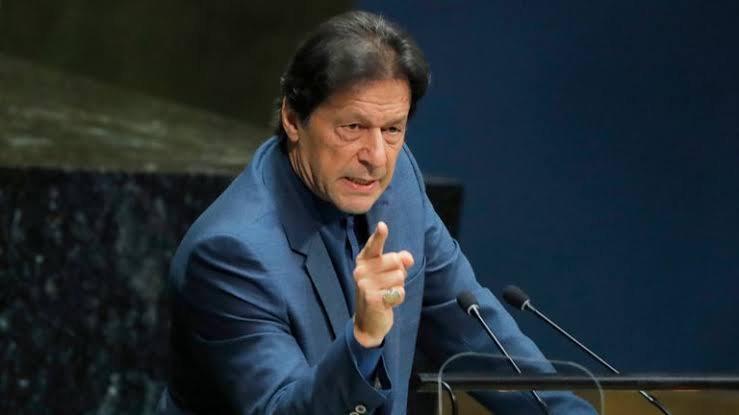
There is often an uncomfortable unevenness in contemporary Muslim moral courage. Western Muslim leaders and organizations have shown admirable clarity in confronting the crimes of Empire and Zionism. The more difficult test comes when the same principles implicate governments, institutions or relationships closer to home.
Pakistan has become an unusually revealing test.
Western Muslim leaders and organizations have rightly spoken forcefully about Palestine, Hindutva, Kashmir, Islamophobia and the abuses of the War on Terror. Yet when those same moral categories implicate institutions inside a Muslim-majority state, the vocabulary often becomes more hesitant.
Keep supporting MuslimMatters for the sake of Allah
Alhamdulillah, we're at over 850 supporters. Help us get to 900 supporters this month. All it takes is a small gift from a reader like you to keep us going, for just $2 / month.
The Prophet (SAW) has taught us the best of deeds are those that done consistently, even if they are small. Click here to support MuslimMatters with a monthly donation of $2 per month. Set it and collect blessings from Allah (swt) for the khayr you're supporting without thinking about it.
That is why CAGE International’s intervention matters.
On September 22, CAGE formally designated former Pakistani prime minister Imran Khan a “War on Terror prisoner of conscience.” Few organizations are more closely identified than CAGE with sustained opposition to arbitrary detention, rendition, torture, counterterrorism law and the erosion of due process.
Its decision places Khan within that history. CAGE has refused to treat the War on Terror as something Western governments merely did to Muslim countries. Its architecture also depended upon intelligence cooperation, security establishments and political elites inside Muslim-majority states.
The passport of the jailer does not alter the condition of the prisoner.
Consider the causes that have defined Muslim public advocacy for a generation: Islamophobia. Kashmir. Palestine. The War on Terror. Drone warfare. Political prisoners. Aafia Siddiqui. Muslim dignity against imperial power.
These are also causes with which Imran Khan became internationally identified.
He condemned drone warfare and Pakistan’s participation in the War on Terror. He internationalized Kashmir. At the United Nations he made Islamophobia a major subject of Pakistani diplomacy when few Muslim heads of government spoke about it with comparable visibility. CAGE itself emphasizes his opposition to Western intervention and the War on Terror in explaining its designation.
The irony is difficult to miss. A Muslim political figure associated with causes Western Muslim leaders themselves describe as fundamental has spent more than three years imprisoned while much of that institutional world has remained comparatively subdued.
Amnesty International has not been subdued. In August 2026 it said Khan had been denied a fair trial, subjected to prolonged solitary confinement and restricted in access to medical care, relatives and lawyers. It recalled that the UN Working Group on Arbitrary Detention had found his detention arbitrary under international law.
The UN Special Rapporteur on torture, Alice Jill Edwards, has gone further, urging Pakistan to address what she described as Khan’s reported “inhumane and undignified” detention conditions and warning that they could amount to torture or other inhuman or degrading treatment.
Nor does the coercive environment end with Khan. His family and political associates have faced detention, while critics outside PTI — including human-rights lawyers Imaan Mazari-Hazir and Hadi Ali Chattha — have faced prosecutions and rearrests.
Then there is Aafia Siddiqui.
Khan’s involvement in publicizing her case was not retrospective political branding. In 2008 he helped bring extraordinary attention to what became one of Pakistan’s defining War on Terror cases. Muslim institutions that have spent years invoking rendition, detention and prisoners of that era therefore confront an awkward historical continuity when discussing Khan.
The contradiction extends to Palestine.
Former senator Mushtaq Ahmad Khan became one of Pakistan’s visible Palestine-solidarity figures and participated in the Gaza-bound Global Sumud Flotilla. He was later detained in Pakistan over political protest connected to Pakistan-administered Kashmir and passed through the country’s anti-terrorism legal machinery.
And then there is Kashmir itself.
For decades Muslim leaders and organizations have justifiably discussed Kashmiri rights overwhelmingly through the prism of mass Indian repression. That concern remains legitimate. But events in Pakistan-administered Jammu and Kashmir in 2026 make a one-sided moral geography increasingly difficult to sustain.
In June, Amnesty described a “violent and sweeping crackdown” involving an internet shutdown, mass arrests and deadly force. Authorities proscribed the grassroots Jammu and Kashmir Joint Awami Action Committee under anti-terrorism law. Protesters and police officers were killed in clashes. Further unrest brought additional deaths, detentions and communications restrictions. In July, Amnesty again raised concerns about lethal force in Rawalakot and the continuing blackout.
The consistency problem is difficult to avoid. If Kashmiri political agency merits defense when Delhi suppresses it, the principle cannot disappear when Kashmiris confront Islamabad. A right does not change character upon crossing the Line of Control.
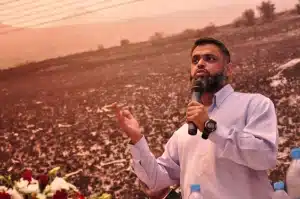
Moazzam Begg, founder of CAGE International, is a former prisoner of Guantanamo Bay who had been abducted in his native Pakistan (Photo: CAGE International)
South Africa provides a revealing contrast. Dr. Naledi Pandor, Imam Rashied Omar, Rev. Allan Boesak, Ronnie Kasrils and other prominent South African figures have associated themselves with international appeals concerning Khan, while South African Muslim media have treated his imprisonment as an international human-rights issue. Pandor’s involvement carries particular resonance because, as foreign minister, she became internationally associated with South Africa’s proceedings against Israel at the International Court of Justice.
The late Professor John Esposito represents the same consistency test from another direction. Esposito, who died on July 15, 2026, spent decades challenging hostile Western representations of Islam.
I am reminded of one of my final interactions with him. Esposito was indignant about Pakistan’s authoritarian trajectory and Khan’s treatment. When a senior Pakistani official replied that outsiders simply did not understand Pakistan, Esposito sharply rejected the argument.
That episode remains memorable because Muslim scholars, governments and organizations had spent decades embracing Esposito when he challenged Western caricatures of Islam. The harder test came when he applied the same moral seriousness to Pakistan.
The Quranic injunction to stand firmly for justice even against oneself is demanding precisely because consistency becomes hardest when one’s own relationships are implicated.
Longtime non-Muslim allies of Muslim causes such as Medea Benjamin or Clive Stafford Smith have repeatedly been welcomed into campaigns concerning American wars, Israeli policies, Hindutva and Islamophobia. What might such allies make of the comparative quiet when Pakistan itself faces accusations of political repression, prolonged imprisonment and coercion against Kashmiris?
Western Muslim leaders can condemn Guantánamo, Palestine, Hindutva and Islamophobia while also scrutinizing Islamabad. Kashmiris do not acquire political agency only when confronting India. Counterterrorism law does not become benign because the state employing it is Muslim.
CAGE International’s intervention matters because it applies the logic of its work without granting Pakistan an exemption.
The larger question therefore reaches beyond Imran Khan: whether the moral vocabulary built around Islamophobia, Kashmir, Palestine and the War on Terror operates as a universal set of principles — or changes according to the political geography of the offender.
CAGE has made its position clear. Its intervention places a test before the wider Western Muslim institutional and religious leadership: whether principles confidently invoked elsewhere will be applied with the same seriousness when Pakistan is the state under scrutiny.
There is still room for that silence to end.
If it does not, the silence will become increasingly difficult to describe as caution or complexity. It will stand instead as an enduring contradiction between the principles Western Muslim leadership has proclaimed and the circumstances in which it proved willing to apply them.
CAGE has made the consistency test impossible to ignore.
What follows will reveal how the rest of that leadership answers it.
[Disclaimer: this article reflects the views of the author, and not necessarily those of MuslimMatters; a non-profit organization that welcomes editorials with diverse political perspectives.]
Keep supporting MuslimMatters for the sake of Allah
Alhamdulillah, we're at over 850 supporters. Help us get to 900 supporters this month. All it takes is a small gift from a reader like you to keep us going, for just $2 / month.
The Prophet (SAW) has taught us the best of deeds are those that done consistently, even if they are small. Click here to support MuslimMatters with a monthly donation of $2 per month. Set it and collect blessings from Allah (swt) for the khayr you're supporting without thinking about it.


CAGE, Muslim Leadership, and Imran Khan: The Silence Test

Far Away [Part 28] – Death In District Nine

The Stirring Of A Muslim Population In Japan: The Story Of Yusuke Fujitani
Far Away [Part 27] – The Prince’s Ring

[Podcast] Faith, Motherhood, and the Call to Gaza | Dr. Samaiya Mushtaq
Far Away [Part 26] – Shaytan Is A Liar
Far Away [Part 25] – To Save A Prince

From a Syrian Prison to the UN: The Case of Bilal Abdul Kareem

[Podcast] Muslim Money Matters: Do You Know How to Halal Hustle? | Adam Taufique

Putting Lipstick On The RSS Pig

The Best Actions for Eid al-Adha [Imam Dawud Walid]

Coming Full Circle: Who Are You Now? | Night 30 with the Qur’an

Running Away From Who We Are | Night 29 with the Qur’an

Building From the Ground Up: Week 4 Recap | Night 28 with the Qur’an

The Muslim You Are Becoming | Night 27 with the Qur’an
MuslimMatters NewsLetter in Your Inbox

Sign up below to get started