
#Culture
NICOTINE – A Ramadan Story [Part 1] : With A Name Like Marijuana
When Ramadan exposes the addiction that rules her life, a struggling Muslim convert is caught between her habit and her faith.

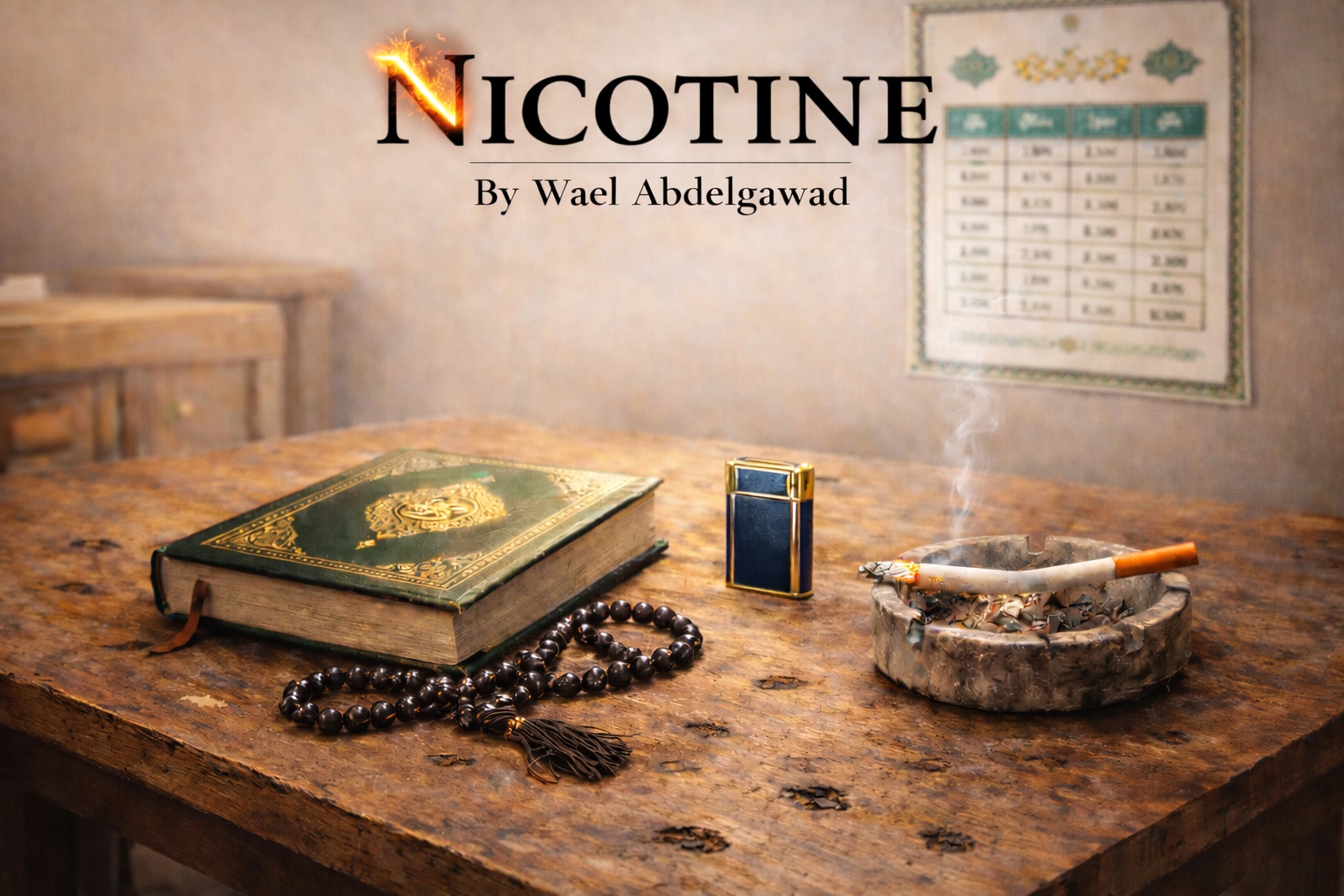
When Ramadan exposes the addiction that rules her life, a struggling Muslim convert is caught between her habit and her faith.
Note: This is part one of a two part story.
* * *
Forty a Day
Keep supporting MuslimMatters for the sake of Allah
Alhamdulillah, we're at over 850 supporters. Help us get to 900 supporters this month. All it takes is a small gift from a reader like you to keep us going, for just $2 / month.
The Prophet (SAW) has taught us the best of deeds are those that done consistently, even if they are small. Click here to support MuslimMatters with a monthly donation of $2 per month. Set it and collect blessings from Allah (swt) for the khayr you're supporting without thinking about it.
Ramadan was three days away. Thinking of this, Mar winced and took a drag from her cigarette. The wind rattled the window pane. It was always windy in San Francisco. She lay in bed, propped on her elbow, a glass of lemon water beside her. Two months ago, before she converted to Islam, it would have been a double shot of vodka to help her sleep.
Quitting alcohol wasn’t a big deal. It wasn’t a heavy habit. That wasn’t what made her gut knot up.
She exhaled the smoke through her nostrils, watching it fall, then rise, passing in front of the bedside lamp like a line of crows passing in front of the sun.
Her habit was up to forty cigarettes a day, often lighting one from the last. She hadn’t gone to the movies in years because she couldn’t get through two hours without smoking, let alone an entire day.
With a name like Marijuana I was doomed from the start, she thought as she took another drag. Her mother’s work, naming her that. But she went by Mar. No one had ever called her Marijuana except her mother, the DMV, and new teachers on the first day of school – making the class break out in a riot of laughter.
The cigarette had burned down to the filter. She took today’s number 39 out of the pack. For a long time she’d held herself to thirty, swearing up and down that she’d never cross that burning red line. But what use was it? She had no control.
She must have fallen asleep and dropped the cigarette, because she woke when it burned her forearm. “Crap!” she cried out, snatching it up and smacking the sheet to extinguish a burning bit of tobacco.
She sat up, swinging her bony legs down, and setting her feet with their yellow toenails onto the floor. “Astaghfirullah,” she said. “Sorry for the curse word, Allah.”
Thirty Years of Sucking Smoke
Feeling chilly, she rubbed her arms, thinking that it had been a long time since she’d been touched by another human being. Not since her brief, failed marriage in her thirties.
She’d started smoking when she was fourteen years old, to impress a boy. But instead of becoming her boyfriend, he became physically aggressive with her, then dumped her when she fought his advances. Instead of quitting the cigarettes, her young, stupid self doubled down, finding in the delicate little cylinders a moment of escape and independence – a middle finger to the world.
Now she was forty four. Thirty years of sucking smoke into her lungs.
A vicious coughing bout tore through her, and she nearly dropped number 39 again. When the coughing passed, she dropped the glowing butt into the water glass.

She went to the bathroom, brushed her tar-stained teeth and performed wudu at the sink. Her reflection in the mirror showed a woman on the brink of a chasm, hanging on to a rope. This Islam thing was her last chance. It had to work, and it would, because she truly believed in it. She prayed salat al-Ishaa holding a cheat sheet in her hand, reading the words for each posture of the prayer. She was working on memorizing them, but it was hard.
In bed, she cast one last, longing glance at the pack. Cigarette 40 sat untouched, calling sweetly to her like a mischievous jinn, promising flavor and friendship, but in reality providing nothing more than ash.
She turned off the lamp.
She pulled the blanket – pockmarked with cigarette burns – tightly around herself and fell asleep listening to the rattling of the window pane and thinking of her idiotic 14 year old self, trying to impress a boy. It had all been downhill from there. Her studies suffered. She lost friendships and relationships. She barely made it through college, scraping by with nicotine-fueled late night study sessions as she worked as an at-home sex line operator.
But now she had Islam. Now she had a way forward. If it wasn’t too late.
A Good Word
The next day on the way to work, as she came up out of the Powell Street station a man of twenty five or so asked her for a dollar for food. He was well dressed and didn’t look hungry, though one could never tell for sure, she supposed.
“I’ll buy you a slice of pizza if you like.” Mar gestured. “Pizza by the slice, right there. It’s pretty good.”
“Go shoot yourself, you ugly hag,” the man snarled.
Mar’s eyes narrowed. She wanted to say something vicious and demeaning. But what she said was, “Peace be upon you,” and walked away. Two months ago she would have cursed him out with every filthy phrase known to man, woman or beast. She’d always had a sharp tongue, and as life had soured her heart and spirit, her tongue had become a razor blade.
But Islam had taught her better, and she was trying to change. At one of the Jumuahs she’d attended shortly after her conversion, the khutbah had been all about language. The Prophet, sal-Allahu alayhi wa sallam, said that every joint of the body had to do sadaqah every day, and a good word was sadaqah. He also said, and she remembered this verbatim, “The believer does not insult others, he does not curse others, he is not vulgar, and he is not shameless.”
People came to Islam for different reasons, she knew, but in her case it was all about the Prophet ﷺ. She’d seen a random video about him on the internet, and then had purchased and read a detailed biography of the man. The level of detail astounded her.
And what a man! Unmistakably human, but with the courage of a lion. She’d fallen in love with him, not romantically but from the soul. And that, in turn, had led her to the Quran, which she had realized was the source of strength that the Prophet ﷺ drew from, and the guide that kept him on the path.
So if he told her not to curse, then she would not curse.
Ugly Hag
Striding up Powell Street, dodging tourists, litter and taxis, the beggar’s words burned their way through her mind like creeping lava. “Ugly hag.” She could not object, for he was right, she was uglier than the old rubber mat inside her apartment door. She was so thin that her cheeks looked scooped out, and her hip bones protruded through her pants. Her skin was yellow, and her teeth were stained brown. Her hair was as thin as cut straw, and her left side was burned from when she’d fallen asleep smoking and the sheets caught fire.
Remembering the words of the Prophet ﷺ, she wondered if giving herself a good word counted as sadaqah. “Hang in there, Mar,” she told herself. “You’re Muslim, and in Islam no one is better than anyone else, except by taqwa. Stay the course.” But the words rang hollow in her rickety, worn out heart.
Arriving at her building, she found to her dismay that the sole elevator was under repair. The office was on the second floor. Surely she could make it? But by the tenth step she was gasping like a goldfish taken out of its tank, and gripping the railing with white knuckles. She slowed it down. Take a step, wait a full minute, take a step.
When she was a kid, their little apartment was on the fourth floor above her mother’s bakery. When Mar was done at the bakery, she ran up the four flights to the apartment, taking the steps two at a time. She’d been healthy and happy back then. How had she let this happen? No one ever chose self-destruction, she supposed. Instead they made a series of choices, each one like a little paper cut. Death by a thousand cuts.
Take a step, wait a minute.
You Stink
She was a manager at a call center, with thirty people working under her. They all despised her, as she had cursed them all out more than once. She stopped doing that after she became Muslim, but their opinions of her were formed in concrete, she was sure. Walking in, she didn’t bother greeting anyone. Stepping into her office, she heard someone say, “walking chimney,” followed by low laughter.
A thought hit her, and she froze. With the elevator down, how would she take her smoke breaks? There was no way she could walk up and down the stairs every time.
Yet she did. Up and down the stairs at ten. When she did it again at eleven, she fell to her knees on the stairs, broke into a fit of hacking coughs that left her dizzy, and nearly tumbled down the stairs.
Luckily by noon the elevator was repaired.
At the end of the day, as she stepped into the elevator to go home, three of her subordinates were behind her. Seeing her in the elevator, they hesitated.
“We’ll catch the next one,” one of the women said.
Mar wanted to say, “How about if I fire you all instead?” But what she said was, “I’m sorry, okay? I’m sorry for being a rotten boss.”
“It’s not that, ma’am.” This was Sarah Kim, a young Korean-American woman who was one of her best workers. “It’s just that…” Sarah looked at the ground. “You smell bad. You stink of cigarette smoke. And it’s catching. Like, if I’m around you, I can smell it on my own clothes later. I’m so sorry.” Sarah turned away, embarrassed by her own words. Another young woman, Katie, stood open mouthed, waiting to see what fiery insults Mar would unleash.
“I understand,” Mar said.
The elevator closed.
Get Through The Day
The next two days passed in a cloud of smoke and with a heart full of dread. Then Ramadan arrived. It was a Wednesday, and Mar had to work, like any other day.
 Just get through the day, she told herself. Twelve hours. Half a clock face. The instant the sun goes down you can light up your own little fire.
The converts meeting took place every Wednesday night at the Islamic center. She’d been to four of these meetings already, and to her dismay she had found herself isolated, shut out by the other sisters. She didn’t think it was racial. The majority of them were Latinas and African-Americans, but there were a few white women there too, and occasionally an Arab or Pakistani. But they did not sit with her, did not invite her to sit with them, and didn’t talk to her beyond a salam or a nod of the head.
The exception was Juana, a Latina convert who’d been Muslim for many years, and was Imam Ayman’s wife. She didn’t always attend, but when she did she was a whirlwind, always prepping and serving food, passing out materials for workshops, and cleaning up afterward. Juana was the only one who spoke kindly to Mar, greeting her with the salam and asking about her experience with Islam so far.
Tonight there would be a special Ramadan iftar. The masjid would provide the main meal, but the attendees were expected to bring side dishes. Mar had decided to bake brownies. Nice and simple, and it was something she did well, or at least she used to. She hadn’t baked in a long time, it was true, but she’d known how to bake nearly anything by the time she was twelve years old. By the time she was fourteen she could have practically run her mother’s bakery by herself, if her mother hadn’t banned her from the shop. “You stink of smoke,” her mother had said. “You’re contaminating the food.” As if she was a disease, not a daughter.
By ten in the morning her hands began to tremble.
It started in the fingertips, a faint electrical buzz, as if she’d touched a live wire and never quite pulled away. She tried to type through it. The cursor jittered across the screen. She backspaced entire sentences and retyped them, only to delete them again.
Her mouth would not stay wet. She swallowed her saliva, but there hardly seemed to be any to swallow. Her tongue felt too large for her teeth, as if it had been swapped out for a horse’s tongue.
She glanced at the clock obsessively. Six hours until sunset. Five hours fifty minutes. Five hours forty five minutes.
Inventing Reasons
At noon she stood up too fast and the room tilted. Her office swayed as if an earthquake had hit. Out on the floor, someone laughed. The sound drilled into her skull. The fluorescent lights hummed – a sound she had never noticed before and now could not escape.
Her body began inventing reasons to smoke:
Just one in the stairwell. No one would know. Allah is Most Merciful. It’s not food, after all. Just smoke. How is it any different from walking down the street and breathing in smog? It shouldn’t count. I’d still be fasting.
Twice she reached for the pack in her purse, then pulled her hand back. Allah was watching. Islam was her deen. She had to stay the course, she must. There was nothing else left for her. Nothing of purpose in this life.
She sat down hard in her chair and gripped the armrests until her knuckles blanched. “La ilaha il-Allah,” she whispered, not as repentance but as a buoy in a rough sea. “La ilaha il-Allah.”
A wave of heat rolled through her. Sweat broke out across her back, under her arms, along her hairline. Her heart kicked like it was trying to climb out of her chest. Her leg began to bounce uncontrollably. She pressed it down with both hands.
By noon the headache came. It was not pain but pressure, a metal band cinching her skull. She closed her eyes and imagined the flare of a lighter. Both her thumbs were heavily calloused from flicking the metal wheel of the lighter. Opening her eyes, she realized she was actually flicking her thumb.
She grabbed her purse and stood up. Exiting her office, she took a step toward the elevator, then stopped. If she went downstairs, she would smoke.
She returned to the office and shut the door. The tremor had spread to her whole body. She sank onto the floor with her back against the desk, breathing like she’d just run a mile.
If she was hungry, she wasn’t aware of it. Thirsty, yes. Her throat was a desert. But most of all it was the cigarettes. She wanted the nicotine, she craved it, she needed it. The hunger pulsed with every heartbeat.
“I’m fasting,” she told the empty room. “I’m Muslim and I’m fasting. Allah, help me out. I beg you, help me.”
Baking Brownies
Home, but not Maghreb time yet. She was exhausted. Her legs felt like matchsticks.
In her apartment, she went straight to the kitchen and opened the brownie mix she’d bought on the way home, feeling ashamed to be baking from a mix. But there was no way she could bake from scratch. Her hands shook so badly she tore the box opening it.
Her cigarettes lay on the counter beside the sink, exactly where she’d left them in the morning. The lighter on top. The familiar geometry. They expanded until they filled her field of vision. The cigarette box, as big as a building, the beautiful contrast of red and white. The lighter, that magical fire maker. They were her friends. Her beloved pets. Her lovers in a world where no one else loved her. In an instant she could light up and inhale, and all this physical pain – the headache, shakes, nausea – would vanish.
“Aoothoo billah,” she said out loud. “Help me Allah, help me.” She thought of the Prophet, peace be upon him, in the early years of his mission in Mecca. Rejected and abused by his people, mocked by those who had formerly loved him. Yet he had persisted in his mission, even in the face of possible death.
She would stick to her plan.
Turning on the oven, her mother’s kitchen rose in her mind: flour dust in sunlight, the long wooden spoon, her half-hippy mother’s CD player belting out Janis Joplin and Jimi Hendrix. You measure from the wrist, honeypie, her mother would say. Not from the cup.
Her hand reached for a bowl and knocked it over. It rolled across the floor and struck the wall.
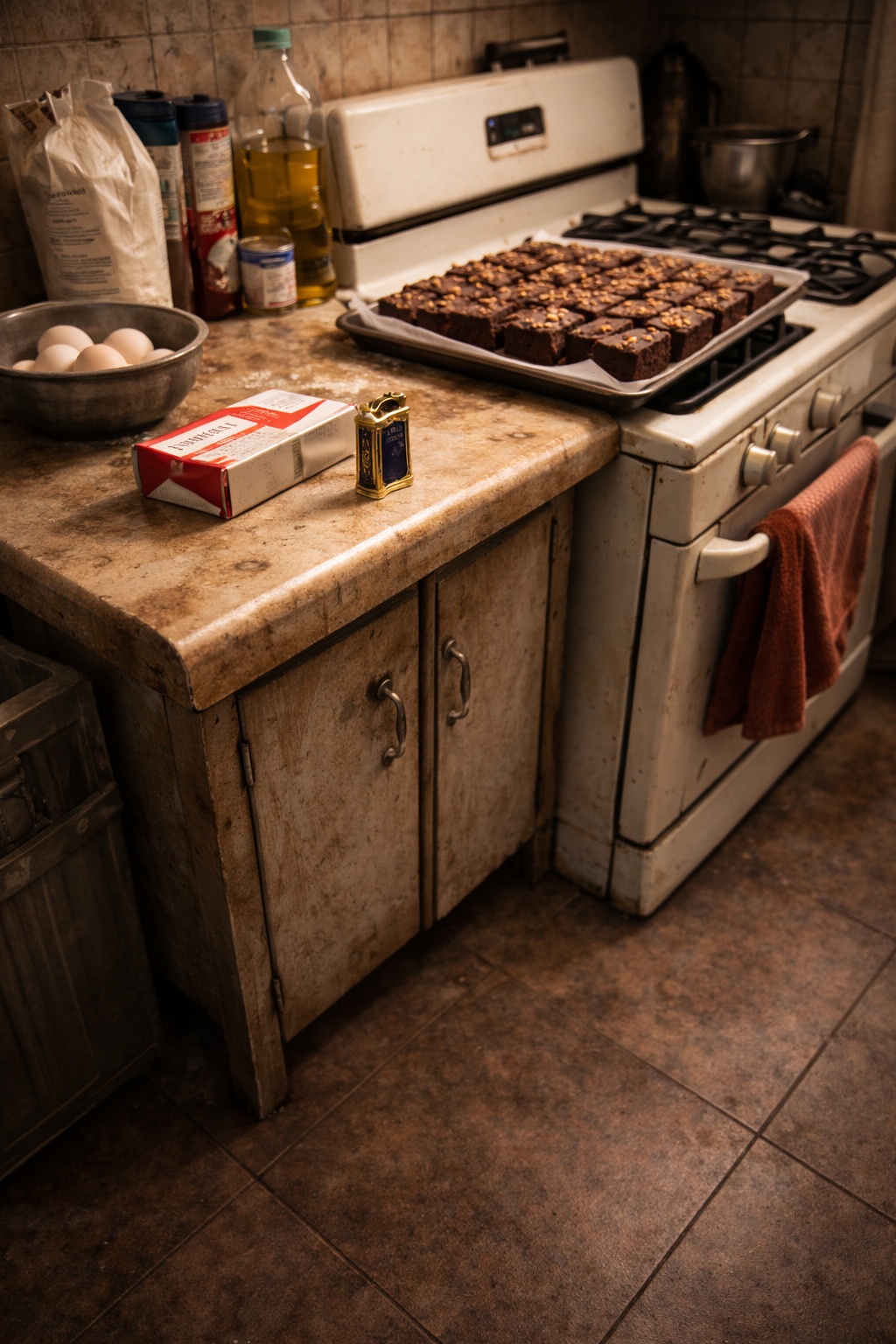
Her eyes returned to the cigarettes and lighter. She snatched them up, walked to the bedroom. Ignoring the unmade bed, the sheet with holes burned in it, and the glass of water with two cigarette butts floating in it like dead fish, she shoved the cigs and lighter into the pocket of an old winter coat hanging in the closet.
The batter was lumpy. She mixed harder, arm aching, until it smoothed.
When she slid the pan into the oven she waited for that old, familiar scent of baking brownies: chocolate, rich and warm. The scent never came, and she frowned until she remembered that she had very little sense of smell anymore. The cigs had killed it off long ago, along with her sense of taste. Part of why she was so thin. Food tasted like nothing anymore. Why eat if everything tasted like newspaper?
She went to the little bookshelf and slid out her copy of the Quran. Sliding down to the ground with her back against the wall, she flipped it open to the well-worn page of Surah 94, Al-Inshirah:
Have We not uplifted your heart for you,
relieved you of the burden
which weighed so heavily on your back,
and elevated your renown for you?
So, surely with hardship comes ease.
Surely with hardship comes ease.
So once you have fulfilled (your duty), strive (in devotion),
turning to your Lord with hope.
It was true, Allah had relieved her of the burden of a life without meaning. He’d given her light and hope. “But I’m still waiting for the ease, Allah,” she said out loud. “I know it’s coming, but I’m just saying.”
The Uber
The driver was white, middle-aged and portly, with thin blond hair. He glanced at Mar in the rearview mirror as she got in the back seat, pan of brownies in her lap. Within a block he rolled his window down. By the second block he rolled the other one down. At the third he pulled to the curb.
“I’m sorry,” he said, not looking at her. “You can’t ride in my car smelling like that.”
She glared at him. “Like what?”
“Cigarettes. The smell gets into the fabric of the seats. Other passengers complain, I get bad ratings… I don’t need that.”
“I’ll tip you extra.”
“It’s not about the tip.”
Her chest tightened. “I’m going to the mosque. I’m fasting. Please.”
He met her eyes then, briefly, and she saw the decision had already been made. “You need to get out.”
Mar wanted to say, “And you need to run out of gas on a dark road. With a serial killer loose.” But what she said was, “Peace be upon you,” and got out of the car.
The evening was cooling. The sky was an aging gray battleship shot through with red rust. In the West, fog from the ocean poured over the hills and down into the Civic Center district where she stood. The wind cut right through Mar’s coat. The masjid was two miles away. She took out her phone and checked the bus schedule: next bus in forty minutes. But iftar was in twenty minutes. She felt hollowed out, as if someone had drilled holes in the bottoms of her feet, and all her blood had run out, disappearing into a storm drain in a crimson stream. Reaching into her purse, her hand gripped the pack of cigarettes, squeezing it too tightly.
She thought of the Prophet ﷺ in his Year of Sorrow, after the death of his beloved wife Khadijah and his protector Abu Talib. He had walked all the way to the city of Taif to preach to them. They rejected him and stoned him, and he walked out bleeding from head to toe.
She was not the Prophet ﷺ, but he was her example. She let go of the cigarettes and began to walk.
Breaking Fast
Every step jarred her head. Halfway there she had to stop and lean against a light pole, her breath sawing in and out.
Finally she sat on the edge of a low planter in front of a medical complex, unable to walk further. She could see the masjid in the distance, a block and a half away. She set the brownies and her purse on the planter beside her. The brownies were as cold as ice by now. The sun was gone, disappeared behind the aggressive bank of clouds rising in the west. A minute later the sound of the adhaan rose from her phone. It was time for Maghreb.
Mar had no water or dates, and didn’t want to spoil the brownie tray by eating from it. Excuses, she knew. With trembling hands, she drew the pack from her purse, withdrew a single, sweet cylinder, and lit it. She knew the dua for breaking fast, but did not say it. How could one say a dua before smoking? It would be obscene.
The first drag hit her lungs like rocket fuel. Her whole body sagged. The headache dissolved. The tremors stilled. She smoked it to the filter, watching the sky darken to purple, then flicked the butt into the planter. Shame coursed through her veins. She’d broken her fast with a cigarette. She’d made a joke out of her religion.
She prayed Maghreb on the sidewalk, in the cold, accepting the feel of the hard, dirty cement against her knees and forehead as a kind of penance.
Then she resumed walking. By the time she arrived at the masjid, the converts meeting, which was held in the masjid cafeteria, was half over. She set the pan of brownies on the end of the serving table. No one looked up.
Ignoring the jugs of juice and coffee, she took a large cup of water and a few dates, and sat at one of the sisters’ tables. To her disappointment, Juana was not there. At the front of the room, an Egyptian sister named Ranya was lecturing about the true meaning of Ramadan, which, she said, was not hunger or thirst, but growing closer to Allah.
The sister next to her scooted her chair away, widening the space between herself and Mar. Then the sister on the other side did the same.
When the lecture ended, people went for the food. Someone cut the brownies into neat squares. For a moment her heart lifted. A girl took one. Another. Mar herself had very little appetite. What she really wanted was another cigarette. She accepted a small serving of rice, salad and chicken, and sat by herself. The food had little flavor, but was hot in her belly. It felt good.
Smell Funny
When she was done eating she took her paper plate to the trash can. The brownies were there, in the garbage. Barely eaten pieces, most untouched, piled on top of the plates. A smear of frosting against the black trash bag.
As she stood there, a little boy tossed a brownie into the trash. Mar wanted to seize his ear and call him a wasteful rug rat. But instead she asked him why he was throwing it away.
He shrugged. “It smells funny.”
“Funny how?”
“Like my uncle.”
Mar pursed her lips. “Does your uncle smoke cigarettes?”
The boy nodded, wide eyed. “Uh-huh. How did you know? It’s cool. He looks like a dragon.”
“It’s not cool. It’s what made the brownies smell.”
“Oh, okay.” The boy ran off.
Outside the night air was cool. She walked to the bus station, lit a cigarette and waited, empty brownie pan hanging by her side in one hand. A car passed by with sister Fatima at the wheel – one of the sisters from the meeting. Two others rode in the back seat. Mar knew they saw her – Fatima’s eyes met hers – but they did not stop.
By the time the bus came forty five minutes later, she had smoked five cigarettes, tears running silently down her cheeks, smearing her mascara. She didn’t bother wiping her face. For the first time since she had said the shahada she wondered if there was a place for her in this religion that had already become the only place she had left.
Jumuah
By Friday, the third day of Ramadan, the tremors had moved deeper into her bones.
It was no longer the visible shaking of her hands, though that still came and went, but a hollow, vibrating weakness in her thighs and lower back, as if her skeleton had been replaced with one of those plastic Halloween skeletons, and could not support even her meager weight.
She had slept badly. She always slept badly now. The ten cigarettes she crammed into the hours between Maghreb and bedtime gave her a brief, treacherous calm, and then her heart ran wild in her chest for hours. She woke before fajr with her mouth tasting like burnt paper and her mind already begging. There was just enough time for one or two hasty cigs, smoked hungrily, then she was back to fasting.
The cycle was wrecking her.
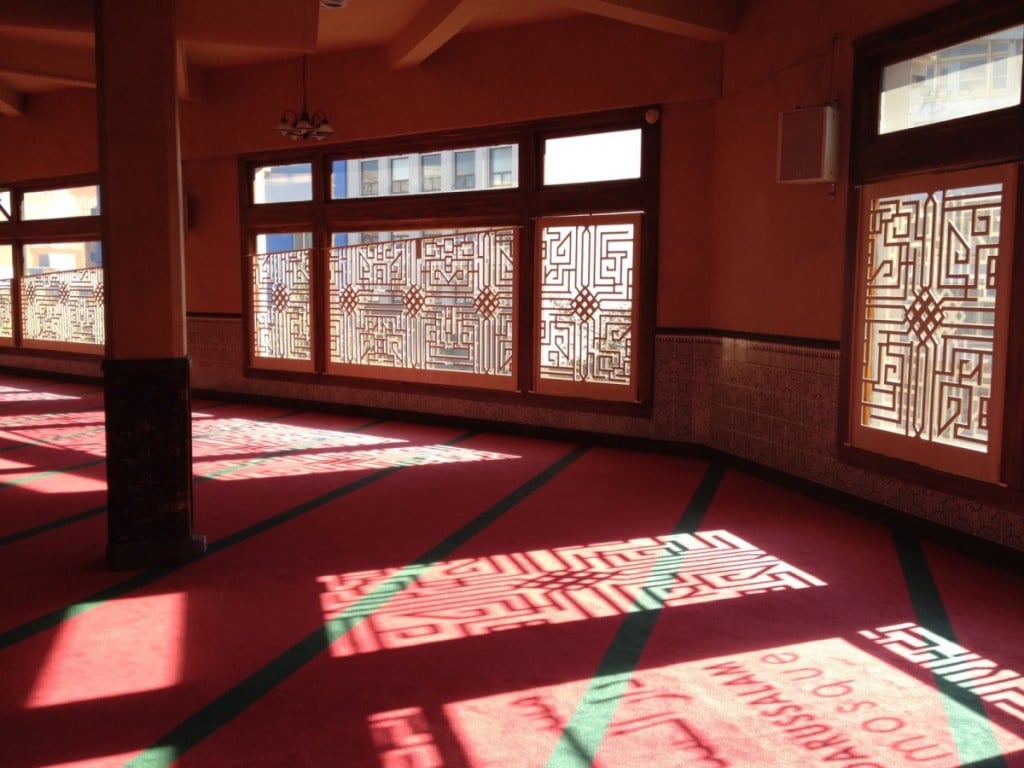
No one sat near her.
Her mouth was so dry her tongue stuck briefly to the roof of it when she tried to swallow. The headache had returned – not the iron band from the first day but like a small hammer pounding rhythmically on her forehead.
She folded her hands in her lap to hide their shaking.
Imam Ayman began. At this masjid, the women and men were in the same hall, with only a low barrier separating them. Seated, she could see the Imam at the mimbar. He was a tall, lean Palestinian, and was surprisingly young – mid 30s, maybe – and with a very good American accent.
Baby Gods
“Some of you,” Imam Ayman said, “are carrying around little baby gods in your hearts and minds, and praying to them all day long, while thinking you are sincere Muslims. You worship these baby gods instead of Allah, and if you don’t change, I worry you will face an unpleasant surprise when you meet Allah.”
This was different. Mar was intrigued. What could the Imam be talking about?
“Some people are obsessed with wealth. Every decision in their lives – their educational path, career, where they live, their lifestyle, friendships, and how they view other people – is based on the acquisition and preservation of wealth. If they must abandon Islamic principles to increase their wealth, they do so. If they have to cheat and lie, neglect their children, neglect their own health even, mashi, full speed ahead. Money to them equals success, no matter what else is happening with their family and the world. They don’t worship money physically, but in their hearts they are in a permanent state of sajdah to the almighty dollar.”
Mar nodded slowly. She’d seen a few people like that, though she’d never been one, alhamdulillah. Even though she’d been rough on her workers in the past, and she’d certainly fired people for a variety of things – being drunk on the job, always late, stealing supplies – she’d always resisted pushes from corporate to fire people simply for being slightly less productive than others.
“Other people worship their egos. They post to social media obsessively and check constantly to see how many likes and followers they have. Their entire sense of self-worth is tied to what people think of them. Not what Allah thinks. Not what good they are doing in the world. Their ego is a baby god and they chase it like eager little worshipers.”
A teenage girl in front of Mar turned off her phone and discreetly put it away.
“And some people,” Imam Ayman said, “worship a dirty habit. Gambling, cigarettes, alcohol, drugs, porn, zinaa. That’s their own little god. They are slaves to it, as surely as if their necks were chained. They cannot say no to their god, and don’t want to. Their day is structured around it. Their money is spent on it, rlationships are damaged for itk, health is destroyed for it. They leave gatherings for it, stand outside in the cold or the heat for it. They hide it from their loved ones, knowing it’s filthy.”
Mar’s breath caught in her chest.
“They are the servants of their habit. It commands, and they obey. All the while thinking they are servants of Allah. No. They have a baby god riding their backs.”
Mar’s hands tightened into fists.
“And the tragedy,” Ayman said, “is not only that they worship the habit – but that it does not love them, does not forgive them, and does not save them.”
Thirty Years
The words struck Mar with physical force.
For a moment the masjid disappeared and she saw herself at fourteen, leaning against the brick wall behind the bakery, the boy’s lighter in her hand, inhaling and coughing while he laughed.
She saw her mother sitting in the small living room, tears on her face from worry and fear for her daughter who had not come home until one in the morning.
She saw the hospital room where her mother had spent her last days, the machine beside the bed, the way Mar had stepped outside to smoke because she could not exist without it.
Thirty years of enslaving herself to a vicious little baby god that rode her like a demon.
Her chest began to heave. She bent forward slightly, pressing her forehead to her palms, hoping it looked like reflection.
She understood now that quitting smoking during the day was not enough. All she was doing was enduring so she could prostrate to the baby god again at sunset. La ilaha il-Allah. O Allah, forgive me.
The khutbah ended and the prayer began. She prayed where she was, alone against the wall.
Sea in Spanish
On the way out of the masjid, a wave of dizziness hit. Just outside the building was a courtyard with a planter surrounded by a low wall. She sat on the wall, gripping the rough trunk of a tree that grew out of the planter.
A man approached. He was tall, maybe 6’1”, a youngish white guy with close-cropped blond hair. “Sister, are you alright?”
Mar swallowed. “It’s just the fast. I’m not used to it.”
The man chuckled. “None of us are. This is only my second Ramadan, myself. What about you?”
“First.”
“I’m Layth.”
Mar nodded. “Mar.”
“Like sea in Spanish?”
Mar shrugged. “If you like.”
“Hold on.” The man looked around and called out to a tall, elegant African-American woman in a green dress and black hijab. She sauntered over.
“Making friends?” the woman said. She had a Southern drawl. The Carolinas maybe, or the Virginias.
“Babe, this is Mar. It’s her first Ramadan. Mar, this is my wife Khadijah.”
Khadijah sat right next to Mar on the wall, and the blond guy found a chair and pulled it up.
Mar and Khadijah talked about Ramadan, being Muslim, and family, while Layth mostly listened. The two of them were a charming couple, and very obviously in love. Mar noticed how Layth watched his wife as she talked, and how Khadijah reached out every now and then to touch her husband’s arm or shoulder. Mar wondered, had she ever been that in love with her husband? She thought she had, but she hadn’t treated him well, and the marriage soured quickly.
At a lull in the conversation, Mar said, “Don’t you think I smell bad?”
Khadijah touched Mar’s arm. Her hand was warm. “Why would you say that?”
“You smell like ikhlaas to me,” Layth said.
“Don’t be corny, honey,” Khadijah said.
“What is ick-loss?” Mar asked tentatively, afraid she’d been insulted again. If that were the case, it would break her heart. “I don’t know that word,” she finished lamely.
Layth grinned. “I know, learning all the Arabic is a killer. I’m lucky, or maybe unlucky, because I’m fluent. Ikhlaas means sincerity.”
“He’s trying to say,” Khadijah added, “that you smell sweeter than a peach pie, because of your faith.”
Mar’s lower lip trembled, and she began to cry. Khadijah put an arm around her shoulders and squeezed.
Layth had a red sports car with an engine that roared. He and Khadijah gave her a ride home. They didn’t usually attend the converts meeting, they told her, but if she would be there next week, they would too.
“Layth, why would you be unlucky because you’re fluent?” Mar thought to ask.
“Because of where I learned.”
Khadijah, sitting in the back seat with Mar, put her hands around her mouth and mouthed, “Iraq.”
Mar mouthed a silent, “Oh.”
* * *
Read Part 2 – Cold Turkey
Reader comments and constructive criticism are important to me, so please comment!
See the Story Index for Wael Abdelgawad’s other stories on this website.

Wael Abdelgawad’s novels – including Pieces of a Dream, The Repeaters and Zaid Karim Private Investigator – are available in ebook and print form on his author page at Amazon.com.
Related:
Keep supporting MuslimMatters for the sake of Allah
Alhamdulillah, we're at over 850 supporters. Help us get to 900 supporters this month. All it takes is a small gift from a reader like you to keep us going, for just $2 / month.
The Prophet (SAW) has taught us the best of deeds are those that done consistently, even if they are small. Click here to support MuslimMatters with a monthly donation of $2 per month. Set it and collect blessings from Allah (swt) for the khayr you're supporting without thinking about it.





[Podcast] Wait, Muslims Have Been Here HOW Long?! | Hassam Munir

Far Away [Part 30] – The Rock Splitter And The Parthian Shot

Maryam: The Story Of The Muslim ‘Virgin’ Mary

Is It Ever Too Early To Prepare For Ramadan? Reflections On Rifq, Forgiveness, And Healing The Heart

Lessons From The Battle Of Badr: A Personal Transformation Perspective

[Podcast] 50k Mahr, Hiding Money, & Who Pays for the Wedding? | AML Finance

Long War Without End: A Quarter-Century Since The War On Terror

[Podcast] Faith, Motherhood, and the Call to Gaza | Dr. Samaiya Mushtaq

What The Makkah Agreement Is Missing

When The Shaykh Never Spoke – Deepfakes, Synthetic Scholars, And The Coming Crisis Of Religious Trust

The Best Actions for Eid al-Adha [Imam Dawud Walid]

Coming Full Circle: Who Are You Now? | Night 30 with the Qur’an

Running Away From Who We Are | Night 29 with the Qur’an

Building From the Ground Up: Week 4 Recap | Night 28 with the Qur’an

The Muslim You Are Becoming | Night 27 with the Qur’an
MuslimMatters NewsLetter in Your Inbox

Sign up below to get started




Tawfiq
February 23, 2026 at 2:48 AM
I’m about the the same age as Mar when she started smoking and I would NEVER light up one of those poison sticks. But I get it, for our parents and grandparents it was different, like, they didn’t know all the affects. I think the cigarette companies lied and made it seem super glamorous. But even if I ever DID want to smoke, I definitely wouldn’t after reading this story! Anyway I’m hyped that Mar made some friends at the end because she NEEDED it. Anyway bruh Wael you’re leaving no crumbs on this one.
Wael Abdelgawad
February 23, 2026 at 9:19 PM
Tawfiq, glad to hear you would never consider smoking. Alhamdulillah our youth today are smarter about their health.
Kathleen
February 23, 2026 at 2:39 PM
Brother Wael, this is one of the most powerful things you’ve written. If I didn’t know better, I’d think you’d been through this yourself. Mar is hard to look at at first, because her life is hard. The cigarettes, the smell, the social isolation, the way everything revolves around the next smoke. Sadly I know people like this.
When she breaks her fast with the cigarette on the sidewalk, that really hurt to read. Such a low point.
Layth and Khadijah were like a glass of water in the desert. I loved them immediately. Are they the same Layth and Khadijah from your earlier writing? It must be, right?
The sensory writing is incredible. The cigarette as a “mischievous jinn,” the geometry of the pack and lighter, the body remembering the lighter in her pocket. All of it makes the addiction feel alive.
Oh, and the baby gods khutbah. It made me think about the things we structure our lives around without admitting they own us.
Wael Abdelgawad
February 23, 2026 at 9:40 PM
Kathleen, thanks so much for your comment. I’m glad you appreciated the imagery and khutbah. And yes, this is the same Layth and Khadijah from Pieces of a Dream, The Deal and Hassan’s Tale.
umm_ismael
February 23, 2026 at 8:31 PM
BarakAllahufeekum … may Allah Grant you sadqah e jaariyah through these beautiful heartfelt expressions that outline completely what human experiences feel like. We judge and for us that is our baby god… judging those all around… Islam is empathy… has always been
Wael Abdelgawad
February 23, 2026 at 9:41 PM
Umm Ismael, ameen to your dua. Your comment is insightful. You’re right, for may of us the real sin is judging others.
bespectacled
February 23, 2026 at 10:04 PM
Beautifully vibrant writing, very reminiscent of your older work. It’s obvious plenty attention was paid to the prose and themes. Mar is portrayed so genuinely, an instant favorite among your protagonists (though I struggle to find her full name believable). The Layth and Khadija cameo was a fun surprise!
Wael Abdelgawad
February 23, 2026 at 10:11 PM
Jazak Allah khayr for the comment. I chose the name based on someone I knew when I was young and living in Libya. An American woman married to an Arab. Her name really was Marijuana. Thin older woman with adult children. Beautiful in a fragile sort of way, or at least my 12 year old self thought so. Lonely and out of place in Libya. She used to listen to the Eagles (the band). My first exposure to rock and roll. I remember her sitting quietly in their big apartment, looking out the window and smoking a cigarette, smoke curling up slowly. She would have been born in the 1920’s or so, and was probably given the name Marijuana for the flower, like Rose, Lily or Daisy, not for the narcotic effect.
Leanna
March 4, 2026 at 4:54 PM
Beautifully written…I was excited to see that you didn’t take a total break from writing during Ramadan although I do see this as a type of worship. You definitely created a new empathy in me. My heart broke reading how hard it is to deal with abstaining from cigarettes and the sad beginning of the addiction. Many are the young girls that compromised for a boy that wasn’t worthy of their time.
I’m so grateful that Khadijah and Layth are there to support Mar; it was the highlight of the story. Unfortunately, I relate all to well to the challenges of being a convert; yet another poignant and accurate description of lived experiences. However, I was also impressed by Mar’s dedication to attempting to change and her instinct to follow the Prophet’s ﷺ example.
Another great submission. Jazakum Allahu Khairan
Wael Abdelgawad
March 5, 2026 at 12:09 AM
I appreciate you sharing that, Leanna. The struggle of addiction, and the loneliness that can come with being a convert, are both very real things, and I hoped to portray them honestly without losing sight of hope. I’m glad Layth and Khadijah stood out to you. Everyone deserves friends like that in their lives.