#Current Affairs
Parenting Through Times Of Fear, Injustice, And Resistance: A Trauma-Informed, Faith-Centered Guide

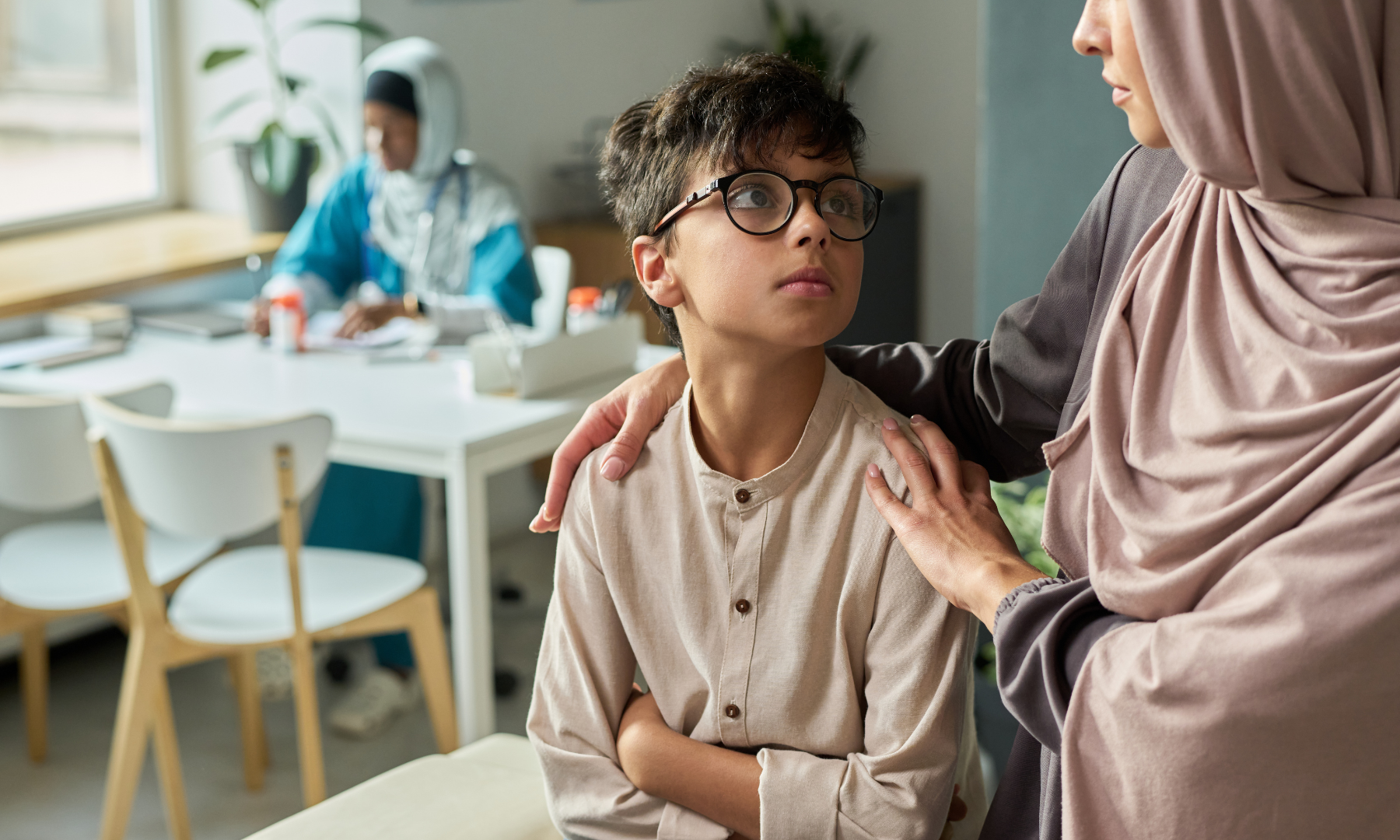
On a quiet school morning, a mother stands frozen at her front window, watching the street. Her child’s backpack rests by the door. The bus is coming. But so is fear.
Across the country, Black, Brown, Indigenous, immigrant, and Muslim parents are waking up each day with the same question: Is it safe to send my child outside today?
Immigration raids, masked enforcement officers, public arrests, and aggressive policing have turned ordinary routines like school drop-offs, grocery trips, and morning commutes into moments of terror. Parenting in this climate is no longer just about guidance and discipline. It is about survival, protection, and moral courage.
Keep supporting MuslimMatters for the sake of Allah
Alhamdulillah, we're at over 850 supporters. Help us get to 900 supporters this month. All it takes is a small gift from a reader like you to keep us going, for just $2 / month.
The Prophet (SAW) has taught us the best of deeds are those that done consistently, even if they are small. Click here to support MuslimMatters with a monthly donation of $2 per month. Set it and collect blessings from Allah (swt) for the khayr you're supporting without thinking about it.
For Muslims and families of color, this moment is not new. It is history repeating itself, and our nervous systems know it.
When History Enters the Living Room: What Families Are Feeling
For Black and Brown communities, regardless of faith, today’s fear is deeply familiar. Masked raids, public arrests, and militarized enforcement mirror older systems of racial terror, slave patrols, the KKK, lynchings, and state-sanctioned violence. The uniforms have changed. The trauma has not.
One father described the moment his child whispered, “Are they going to take you too?” Another parent shared that her elementary-aged daughter began packing her favorite toy in her backpack just in case she never made it home.
Our nervous systems respond before our minds can catch up. Hearts race. Muscles tense. Breathing becomes shallow. This is trauma physiology, the body recognizing danger long before logic arrives.
Children should be in school learning, not hiding in fear from masked men who resemble symbols of racial terror. Yet families are afraid to leave their homes, to go grocery shopping, or to send their children to the bus stop. That constant fear reshapes daily life, fractures trust, destabilizes families, and erodes dignity.
Even if policies change tomorrow, the psychological imprint remains.
When children witness this, their sense of safety, justice, and belonging is fundamentally shaken.
Collective Trauma and the Cost of Dehumanization
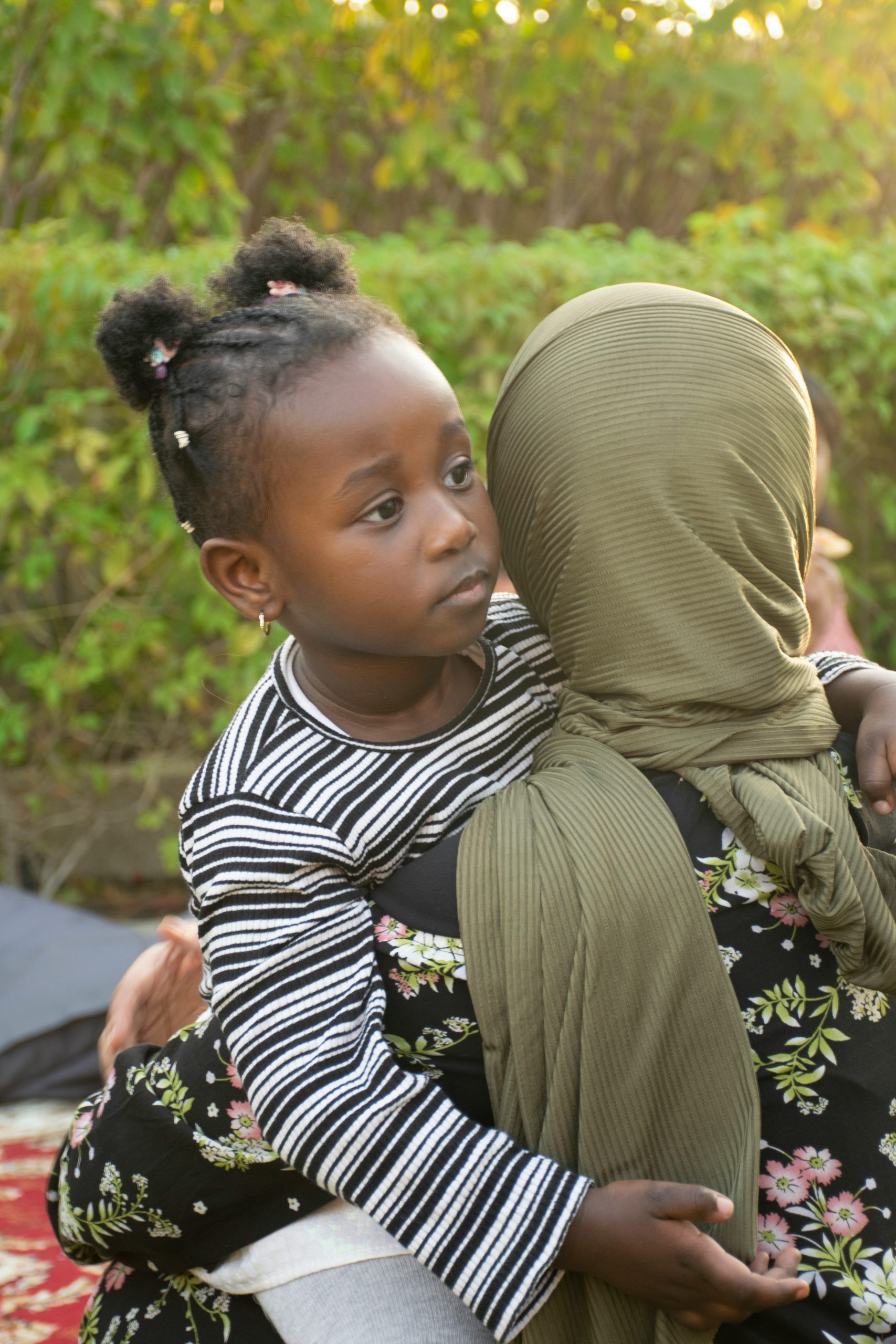
“Children should be in school learning, not hiding in fear from masked men who resemble symbols of racial terror.” [PC: Tamirlan Maratov (unsplash)]
For generations, violence has been normalized towards Muslim and non-Muslim Black and Brown bodies. It has been expected, dismissed, and minimized. But when fear enters white communities, something shifts. Suddenly, the threat becomes real, urgent, and visible.
One parent said, “For the first time, my white neighbors looked afraid, and I realized they were just beginning to feel what we have carried for centuries.”
Healing requires reckoning with how violence is stored in our bodies, normalized in our culture, and selectively grieved.
The Qur’an reminds us that division weakens and unity protects:
“And hold firmly to the rope of Allah all together and do not become divided.” [Surah ‘Ali-Imran: 3;103]
When communities fracture, they become easier to control. Collective care and collective strategy are how we survive agendas rooted in dehumanization.
Grief, Fear, and Finding God in the Middle of the Storm
What families are experiencing is collective grief layered with shock, numbness, anger, helplessness, and profound loss of safety.
One mother shared, “Every siren feels personal. Every knock at the door makes my chest tighten.
In Islam, spiritual grounding is not passive. It is psychologically protective and proactive.
When human power becomes abusive and unpredictable, reconnecting to Allah  restores emotional stability, dignity, and hope.
We begin by anchoring our families in Allah’s Names that heal fear and rage:
-
Al-‘Adl (The Utterly Just): So injustice never feels permanent.
-
Al-Ḥakam (The Ultimate Judge): When courts and systems fail.
-
Al-Mu’min (The Giver of Safety): When the world feels dangerous.
-
Al-Jabbār (The Restorer of the Broken): When hearts are shattered.
-
Al-Qahhār (The Overpowering): When oppression feels unstoppable.
-
Ar-Raḥmān & Ar-Raḥīm (The Most Merciful): When grief overwhelms.
While we have so many emotions and feelings about what we are witnessing and feeling, the Prophet  reminded us of the power these emotions have:
“Beware the supplication of the oppressed, for it is answered.” [Bukhari]
The Qur’an also helps us give meaning to our challenges that we are witnessing by reminding us:
“Do people think once they say, ‘We believe,’ that they will be left without being tested?” [Surah Al”Ankabut: 29;2]
This spiritual grounding transforms fear and despair into moral courage and purpose.
Parenting in Crisis: How Do We Talk to Our Children?
Children are absorbing everything: conversations, headlines, social media clips, whispered worries. Silence does not protect them. Connection does.
One father described sitting on his son’s bed, trying to explain why people were being taken away. His son listened quietly, then asked, “But Allah sees, right?”
That question holds everything.
Trauma-informed parenting means:
-
Starting with emotional connection
-
Asking what children already know
-
Gently correcting misinformation
-
Letting children ask their hardest questions
-
Naming emotions: fear, anger, sadness, confusion
-
Teaching body awareness: “Where do you feel that fear?”
-
Practicing grounding through dua, prayer, breathing, movement, and routine
-
Offering constant reassurance of love and presence
Emotionally safe children are not shielded from reality. They are anchored in relationship, faith, and belonging.
Community as Medicine: Why Healing Must Be Collective
The Prophet warned:
“Stick to the community, for the wolf eats only the stray sheep.” [Tirmidhi]
In moments of fear, community becomes medicine. In mosques, community centers, and living rooms, families are gathering, sharing food, childcare, prayers, legal resources, and emotional support. Children play while parents exchange updates. Elders remind everyone: We have survived worse.
Community regulates nervous systems, restores dignity, and prevents despair.
The Prophet taught us:
“Whoever among you sees injustice, let them change it with their hand, their voice, or at the very least, their heart.” [Muslim]
Collective action — mutual aid, coalition-building, advocacy, and peaceful organizing — transforms fear into resistance.
From Fear to Moral Courage: A Call to Parents
This moment calls parents to raise children not only in safety but in dignity, justice, and courage.
Standing against injustice becomes an act of worship. Advocacy becomes healing. Solidarity becomes faith in action.
Silence is not neutrality. Silence allows harm to grow.
Our children are watching. They are learning how to respond when the world becomes unjust.
Trauma-informed, spiritually grounded parenting offers children more than survival. It offers purpose. It teaches them that they belong, that they matter, and that they are never alone.
Through faith, community, and courageous action, families of color do more than endure. They resist, heal, and rise.
May they learn that fear can become courage. That grief can become service. And that faith can become resistance.
Related:
Keep supporting MuslimMatters for the sake of Allah
Alhamdulillah, we're at over 850 supporters. Help us get to 900 supporters this month. All it takes is a small gift from a reader like you to keep us going, for just $2 / month.
The Prophet (SAW) has taught us the best of deeds are those that done consistently, even if they are small. Click here to support MuslimMatters with a monthly donation of $2 per month. Set it and collect blessings from Allah (swt) for the khayr you're supporting without thinking about it.




Far Away [Part 28] – Death In District Nine

The Stirring Of A Muslim Population In Japan: The Story Of Yusuke Fujitani
Far Away [Part 27] – The Prince’s Ring

[Podcast] Faith, Motherhood, and the Call to Gaza | Dr. Samaiya Mushtaq

Long War Without End: A Quarter-Century Since The War On Terror
Far Away [Part 26] – Shaytan Is A Liar
Far Away [Part 25] – To Save A Prince

[Podcast] Muslim Money Matters: Do You Know How to Halal Hustle? | Adam Taufique

From a Syrian Prison to the UN: The Case of Bilal Abdul Kareem

Putting Lipstick On The RSS Pig

The Best Actions for Eid al-Adha [Imam Dawud Walid]

Coming Full Circle: Who Are You Now? | Night 30 with the Qur’an

Running Away From Who We Are | Night 29 with the Qur’an

Building From the Ground Up: Week 4 Recap | Night 28 with the Qur’an

The Muslim You Are Becoming | Night 27 with the Qur’an
MuslimMatters NewsLetter in Your Inbox

Sign up below to get started