
#Culture
Far Away [Part 2] – Alone
Alone on the farm, Darius must survive hunger, violence, and the quiet ache of abandonment as he clings to hope that his father still lives.

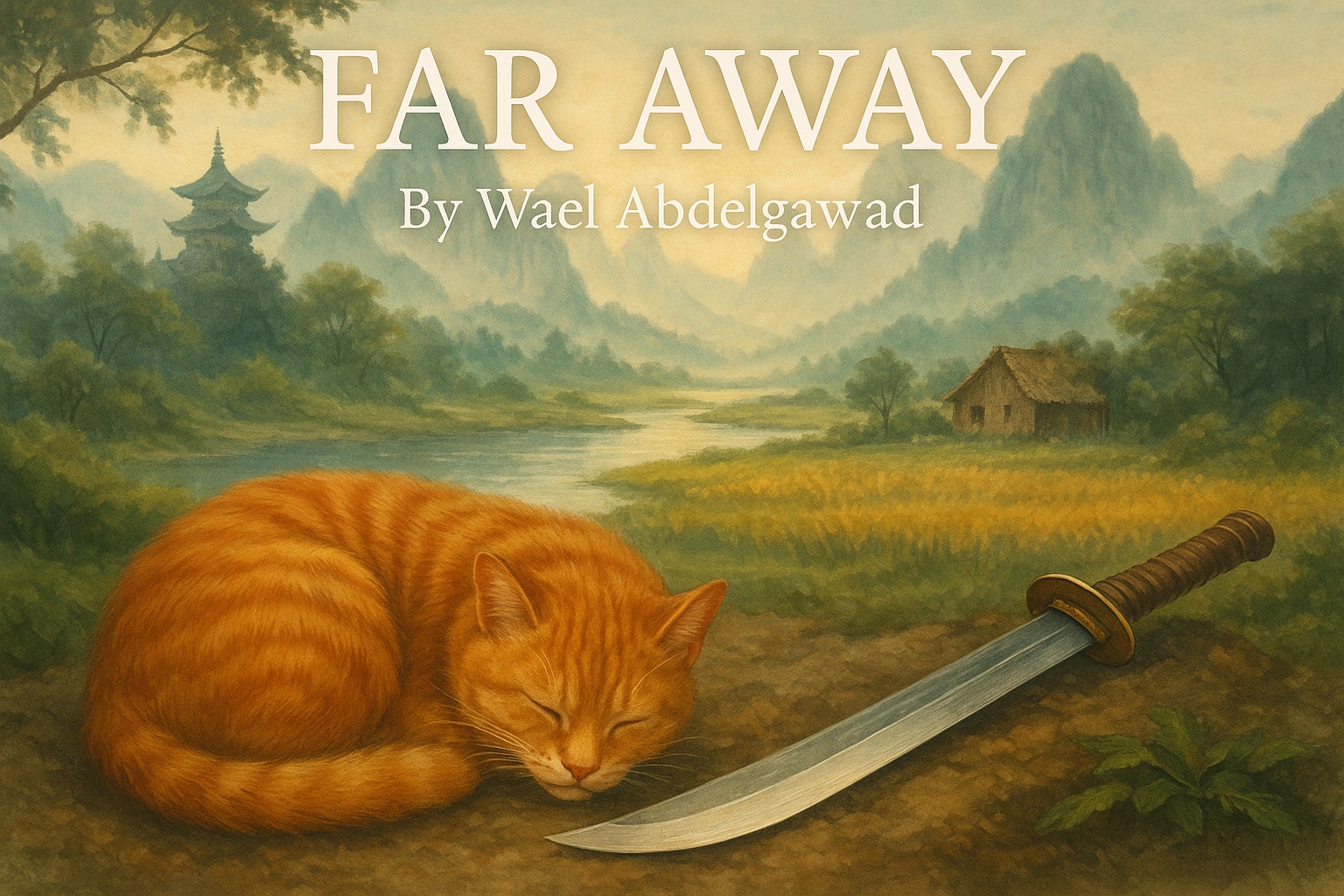
Alone on the farm, Darius must survive hunger, violence, and the quiet ache of abandonment as he clings to hope that his father still lives.
Read Part 1
* * *
The Mayor’s Account
Keep supporting MuslimMatters for the sake of Allah
Alhamdulillah, we're at over 850 supporters. Help us get to 900 supporters this month. All it takes is a small gift from a reader like you to keep us going, for just $2 / month.
The Prophet (SAW) has taught us the best of deeds are those that done consistently, even if they are small. Click here to support MuslimMatters with a monthly donation of $2 per month. Set it and collect blessings from Allah (swt) for the khayr you're supporting without thinking about it.
The Mayor lived in a narrow wooden house behind the tax office. Its roof tiles were mottled with moss, and two faded lanterns hung by the door. I knocked and waited. Through the thin walls I heard the clack of an abacus, then footsteps.
He opened the door wearing a simple hemp robe, belted high on his waist. His eyes flicked to the dao on my back, then to the calluses on my hands, then to my face. Something in his expression softened. Perhaps he saw how I had grown.
“Darius Lee,” he said, according me an unusual degree of respect. “Have you harvested already?”
“Yes,” I replied. “And I have come for my father’s salary.”
He hesitated, just for a heartbeat. A man with nothing to hide does not hesitate.
“Salary?” he repeated. “Boy… Darius… the army sends what it can. There are many delays. Your father may have-” He lifted his hand vaguely. “You understand. He might have fallen. Or the messengers may have been robbed. Highway bandits prey on couriers these days. You must consider -”
“I have considered,” I said.
He fell silent. Behind him, in the dim interior, I saw a low table with a tea set arranged neatly on a lacquer tray. Steam curled gently from the spout. The smell of roasted barley drifted through the doorway.
“What I mean,” he continued more firmly, “is that many soldiers’ families never see a coin. There are piles of unclaimed payments at the garrisons. Dead men whose names no one remembers. I am sorry, but it is likely your father is dead.”
I was only a boy. Another child might have been frightened by this commentary, or intimidated into submission. But my father had been a proud man, unafraid of anyone. He had always spoken his mind, could never be bullied, and would never, ever walk away from what was rightfully his, even as he stole from others what was rightfully theirs.
I had learned from my father what it meant to be a man. So I nodded and said, “Of course, if he were dead, I would not expect anything, Mayor. But you know what my father is like. If he is alive, and someone has withheld his pay…” I lifted my gaze to meet his. “He would come for it. And whoever kept it from him would not fare well.”
The Mayor swallowed. His hand twitched once, then settled on the doorframe.
“Well,” he said with a thin smile, “now that you mention it… I do recall something. A delivery arrived last month. A single gold coin, marked for your household. I must have… misplaced the record.”
He stepped away from the doorway with unconvincing haste. I heard drawers sliding open, the rustle of papers, a quiet curse under his breath. Then he returned, holding a coin between two fingers as though it burned him.
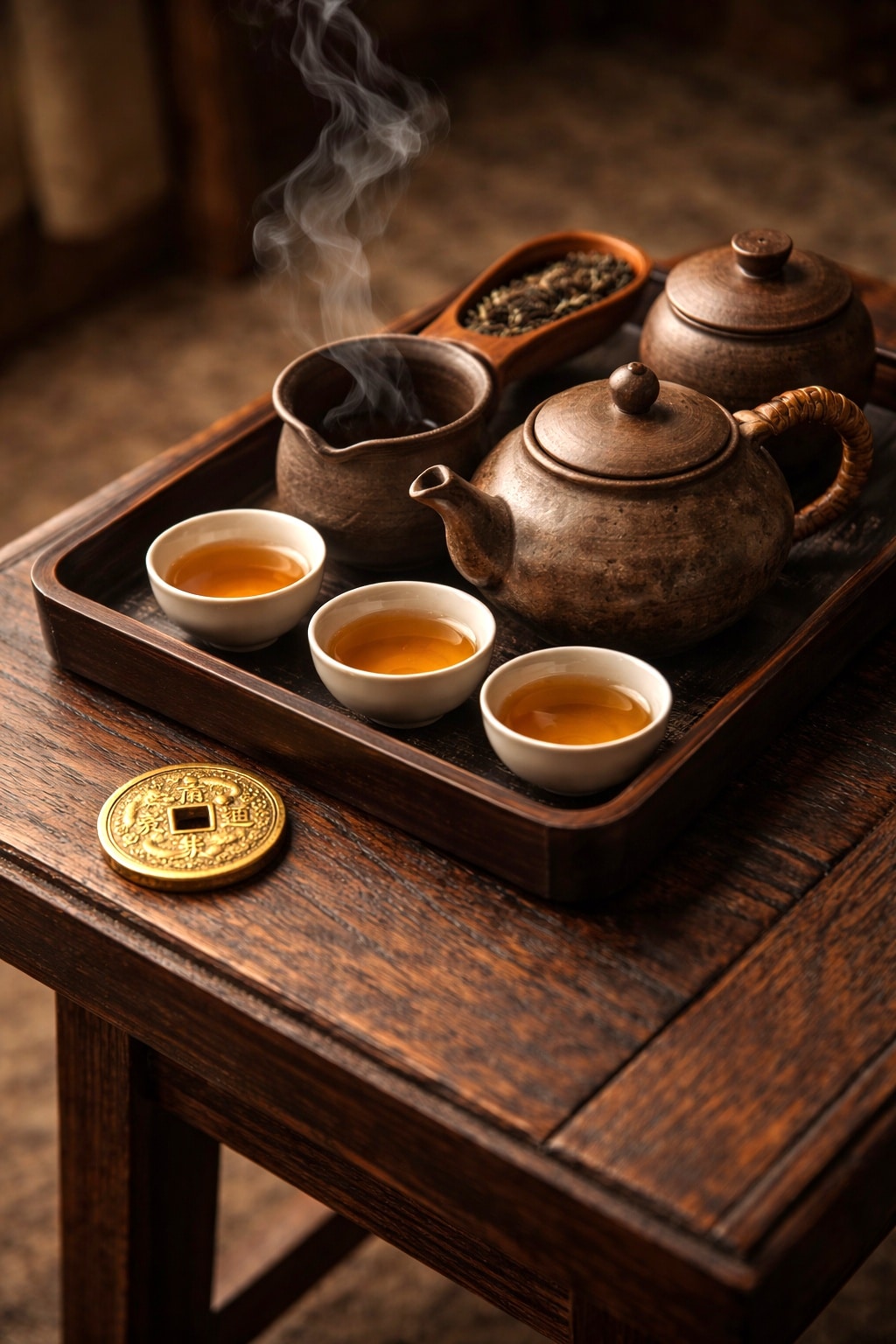
“Here.” He dropped it into my palm. “This belongs to you.”
The coin was cool and heavy. I closed my hand around it.
“Thank you, Mayor.”
He gave a stiff nod. “If any further payments arrive, I will notify you at once. Immediately. You have my word.”
I inclined my head politely, though I did not believe him.
As I stepped out into the street, the sunlight glinted off the coin in my fist. I slipped it into the hidden pouch sewn inside my tunic and walked away without looking back.
Down the street, I paused to observe the people entering the temple of the statue. I went to the door and watched. I was fascinated by them. They left food or coins in front of the statue, then sat before it cross-legged, chanting. Their chants were mesmerizing. Part of me wanted to join them. I had money, I could leave a few coins for the statue. I would be part of something bigger than myself.
Just inside the temple gates stood a small stone-lined pool, its surface broken only by the slow glide of bright orange carp beneath broad lotus leaves. Now and then, a ripple spread across the water as one of the fish snapped at a drifting petal, while the lanterns hanging above reflected in wavering, fractured lines. A few children lingered at the edge, tossing crumbs and laughing softly. I wondered at the lives of those fish, living all their lives in that small pool, but then I realized that there was nothing to wonder about, as my life was just the same.
The interior of the temple was peaceful and hushed. It was inviting. I could relax there a bit, and be among other people without conflict or expectations.
But I could not do it. I knew my father was right, that the statue was no more than an inanimate object. If I were to walk up and slap it, it would do nothing. No evil would befall me, no curse would tumble onto my head. Well, the worshipers would hang me from the nearest tree, but that was entirely physical and real.
I sighed. My father considered these people fools. I walked on.
I knew that the God my father had mentioned – Allah – could never be a statue, or my father would not have believed in him. And he must not have a temple, or I would have seen it. So I put the matter aside and turned to things more solid and immediate.
Lady Two
With the profit from the harvest, I bought a cow, whom I named Lady Two. She was large and was white with large brown patches, and was a lot of work.
I was already fatigued to exhaustion most of the time, not to mention distracted by the incessant gnawing of hunger in my belly. Certainly, I had food, but it was mostly a meager diet of rice and vegetables, and it did not sustain me well. Now, on top of my other work, I had to purchase and haul hay for Lady Two to eat, shovel her manure from the barn, and cart it out to the field to be used as fertilizer. I had to brush her coat, let her out to walk – I bought a cowbell to keep track of her – and milk her in the mornings.
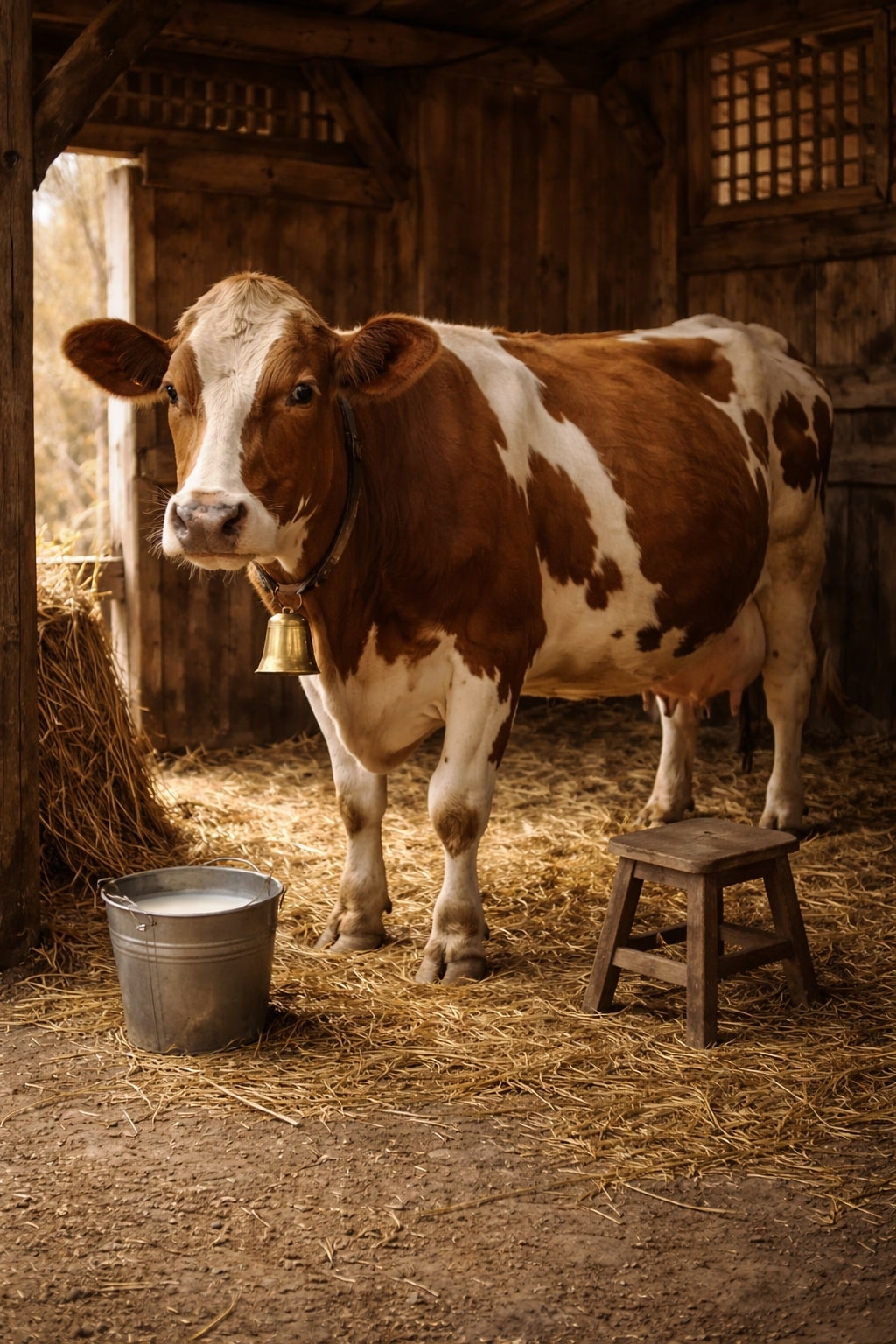 Ah, but the milk! The first time I milked Lady Two and drank, I smiled and teared up at the same time, because it tasted so good, and it took me back to my younger years when I used to help my mother milk our cow, Lady, before my father sold her for drinking money.
Within a week of drinking her milk each morning and evening, I began to feel changes I had not expected. The constant trembling in my limbs eased, and the dull ache in my bones softened. I no longer felt as if I might topple over if I worked too long in the sun. My head felt clearer as well; I did not lose myself so easily in hunger and weariness, and I could think, plan, and even hum to myself sometimes as I worked. I slept more deeply too, without waking in the night to the pangs in my stomach.
After two months, the change was even more profound. I was startled to notice that my pants, which had previously come down to my ankles, now only reached midway down my calves, while my shirt was tight across my shoulders. I no longer dragged myself through each day but plowed and sowed the field with newfound strength. I had the energy to train with the dao in the evening. My movements were fast, and the occasional bruises from training faded faster.
I maintained my mother’s grave, just as my father had done. The flowers flourished, and I kept the plot clear of weeds. Often, when my work was done in the evening, I would sit beside her grave and look at the distant mountains, or the stars in the sky. Where was my mother now? I did not remember her well, but I remembered her gentleness, the songs she used to sing, and the small sesame cakes she made every Friday. I would like to be able to say that I missed her, but what I missed was the idea of her. The idea of being loved and cared for. But it seemed very distant now, and did not sadden me.
Far Away
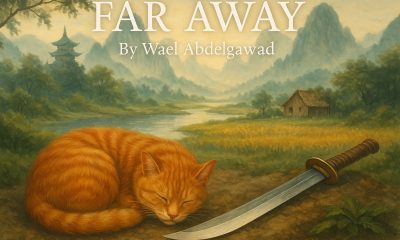
A stray cat came to the house, an orange tabby that I named Far Away. He was long and lean, and and while he seemed young, he bore the marks of a hard life. He was half-starved, with his ribs protruding, and an old red scar marked the side of his neck – a bad bite wound, I would guess.
My father had no patience for animals, but he was not here, so I took Far Away in. He must have been previously domesticated at some point, because he was happy to sleep with me on the straw mattress, and when I petted him he would curl up and purr happily. I discovered that he had a kink in this tail. It was not obvious to the eye, but when I ran my hand down the tail I could feel it – a knot in the bone, as if it had been broken and healed unevenly. I wondered if had injured it in a fight with another cat, or if someone had been cruel to him on purpose. I knew what it felt like to be a survivor of violence, and I vowed that I would keep Far Away safe from now on.
I gave him a saucer of milk every morning, and bits of meat when I had it. In the beginning he ate and drank desperately, but after a while he came to understand that food would always be provided. He didn’t have to live on the edge of starvation anymore.
I found myself talking to Far Away at times, just random things about farming, Five Animals, and memories of my mother. When I talked to him, he winked and purred, and this made me happy, which was a strange sensation that I never truly got used to. I had never had a friend, and didn’t understand what friendship entailed, but it occurred to me that Far Away was my first ever friend.
The Mayor continued to send my monthly coin, to my surprise, yet another confirmation that my father was still alive. I didn’t talk about my father to Far Away nor anyone else. If I did not talk about him, he must stay alive, for the dead must be honored and remembered, but the living can be ignored. It became a superstitious rule that I imposed on myself.
The next crop came in even better, and I sold it for a pretty penny. I saw people whispering as I collected my coins, and noticed more than a few envious and even angry glances. The Mayor, when he handed over my father’s salary, was surprised to see the changes in me. “You are taller than your father,” he said. I had not realized this, and I felt embarrassed. Somehow, it seemed a betrayal of my father that I should surpass him in any way. I knew objectively that I had done more with the farm than he ever had, and this made me feel guilty. I was also ashamed that my mental image of him was growing dim.
I let the field lie fallow through winter, as my father had told me to do. I spent the winter days running through my Five Animals forms, and training with the dao and spear until the ground in front of the house became muddy with my pouring sweat. Far Away watched me, sometimes with interest, other times grooming himself as if all my leaping, striking, and kicking were meaningless. Perhaps it was.
Sent Away
I planted again when spring came. This time, however, at the 100-day mark, the Mayor came to my house in a horse-drawn wagon and informed me that my father had died in the war, and that I would be sent to live with my aunt. I did not truly believe that my father was dead, and knew that I must be here when he returned. Besides, I had been caring for myself for two years.
The Mayor produced the cloth badge that had been sewn onto my father’s uniform, indicating his unit, rank, and duty. It did not bear his name, but the Mayor explained that badges never carried names. I asked about the iron chain my father wore around his neck bearing the symbol of Five Animals style – a dragon clutching a golden ball in one clawed hand and a dao in the other – for my father had worn it every day and night since I had known him. The Mayor replied that no such chain had been sent, and that the sad reality was that bodies on the battlefield were often looted.
Yet I noticed that the Mayor would not look me in the eye. If he was lying about my father’s death, there would be much for him to gain. He could keep my father’s salary for himself. And I suspected that now that my land was producing a healthy cash crop, the Mayor wanted it for himself.
I refused to go, but the Mayor said it was against the law for a 13-year-old to live alone, and that if I did not go willingly, he would send soldiers to take me.
Anger coiled in my belly. I was tired of this man and his deceptions. I remembered how easy it had been to kill the two robbers, and pictured myself doing the same to the Mayor. The image repelled me. I was not a murderer. Besides, I could fight the Mayor, but I could not fight the soldiers who would come if I hurt him. I had no wish to be whipped and sent to prison.
There was nothing I could do. I mentioned the cow I’d purchased, and the Mayor reimbursed me half of what I had paid for her.
I told the Mayor. “If… if a mistake has been made, and my father turns out to be alive, tell him where I went.”
The Mayor nodded but still did not meet my eyes, and I knew he would not do as I asked.
I filled a peanut sack with my meager belongings, strapped the dao to my back, and concealed my purse within my clothing. The spear I took as a walking stick. I put Far Away in another sack and took him with me. Before leaving, I turned to look at my home one last time. It was a sad, pathetic place. The house had chinks in the walls through which the wind entered, and one of the walls of the barn was listing. The parcel was small, and if we had been a full-sized family living here, it would barely have sustained us.
Yet it was the only home I had ever known, and it had provided for me. I walked to the back of the house, stood beside my mother’s grave, and inhaled the cold morning air. I did not speak to her out loud. My chest rose and fell. I would have said a prayer if I knew one, and knew who to direct it to. Who would maintain her grave now? Who would water the flowers, and pluck the weeds? I shook my head helplessly, then turned and left with the Mayor.
I was put on a transport carriage bound for a city three days’ journey away.
Thoughts of my father swam through my head like the carp in the temple pool, circling endlessly. Was he truly dead, or was that a lie? And if he was dead, how had it happened? Had he killed any of the invaders? Where was his body buried? Was his spirit with Mother now? And if so, was he treating her better than in the past? Yet I did not weep for him. Alive or dead, he would not have liked to see me cry.
Loss of a Friend
When Far Away ran away, however, I did weep.
He was constantly unhappy in the sack, yowling and scratching, and the other three passengers on the carriage complained incessantly. The carriage always camped overnight, and when I woke up the second morning and opened the sack to feed Far Away, he was not there. Either he escaped, or someone let him out.
I walked through the woods, calling and calling for him, then finally fell on the ground sobbing. I felt as if my heart was a crop that had died on the vine. For my father I did not cry, but losing Far Away nearly broke me, for he had loved me with nothing but tenderness and gratitude. He was the only friend I’d ever had, and the only truly good and sweet thing in my life. Why had he left me? I was only trying to keep him safe. Why did he have to go?
I remember very little about the rest of the voyage.
The town where my aunt lived was large and bustling. I found myself disoriented by the sounds of carriages rumbling through, hawkers calling out wares, two men brawling in the street, the stink of garbage and sewage, and music drifting through the open doors of a saloon. I had never seen anything like this town, nor imagined so many people so close together.
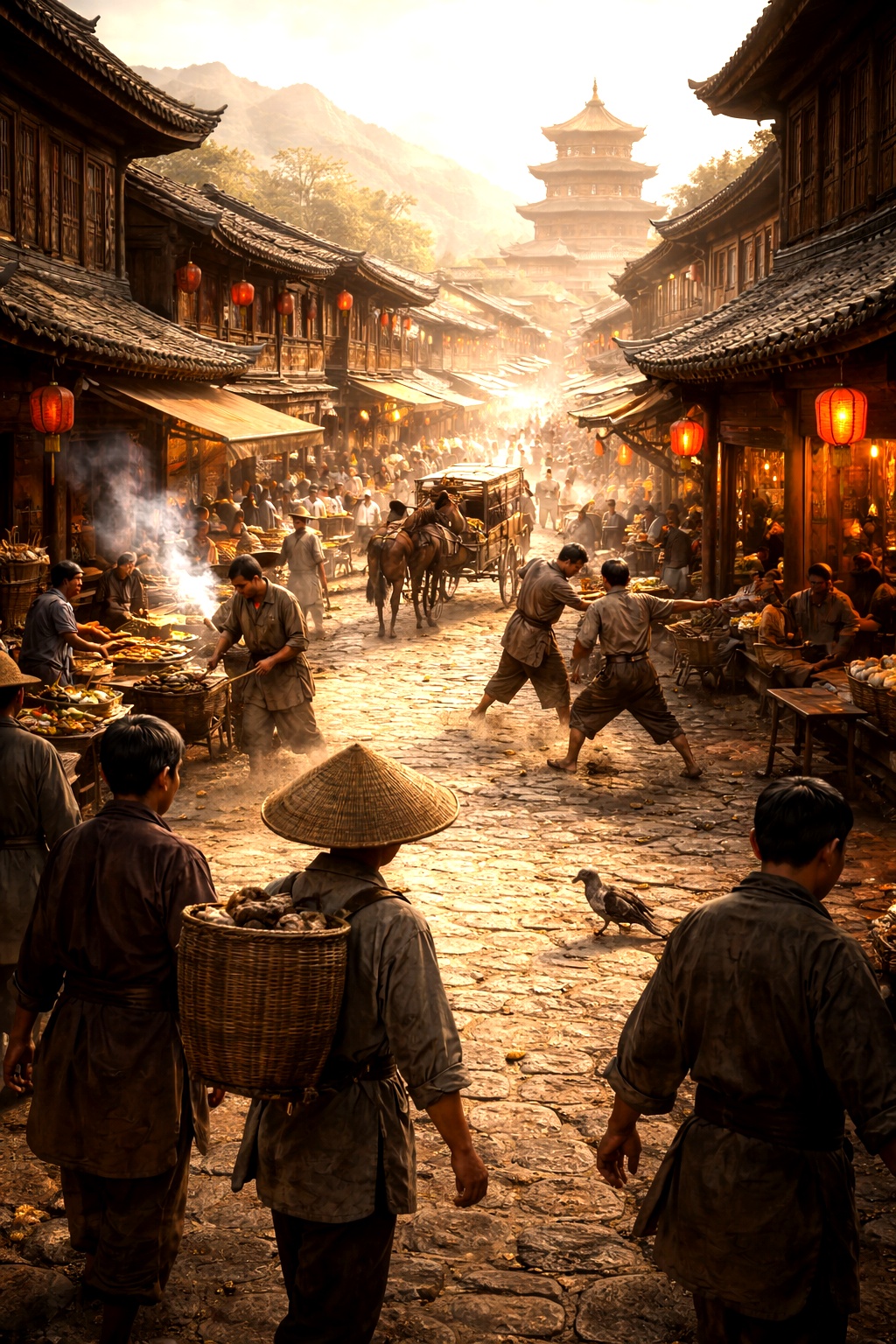
My sweet mother used to play the flute, and I could hear one now, along with a lute, erhu, cymbals, and drums. They played a slow, sentimental tune that pulled at me. I might have gone in to listen. I was still deeply sad over the death of my father and the disappearance of Far Away, and I even missed Lady Two, and the way she greeted me by nuzzling her head against mine when I entered the barn. A little music would have been a welcome distraction, but as I took a step in that direction, two young ruffians stepped up, blocking my path.
They were thin in the way hungry dogs are thin, all sharp bones and restless movement. Their hair was greasy and tied back with filthy strips of cloth, and their clothes hung in mismatched layers that smelled of sweat and smoke. One had a scar that pulled down the corner of his mouth so that even when he wasn’t smiling, his face looked cruel.
The other had red-rimmed, feverish eyes, and filthy hands with long nails. The two of them reached into their jackets, no doubt ready to draw knives. They stood too close to me, and I could smell the alcohol on their breaths.
The one with the scarred mouth said, “That’s a pricey looking sword on your back.” And the other snarled, “Let us have a look at it.”
* * *
Read Part 3 – Wounded
Reader comments and constructive criticism are important to me, so please comment!
See the Story Index for Wael Abdelgawad’s other stories on this website.

Wael Abdelgawad’s novels – including Pieces of a Dream, The Repeaters and Zaid Karim Private Investigator – are available in ebook and print form on his author page at Amazon.com.
Related:
Keep supporting MuslimMatters for the sake of Allah
Alhamdulillah, we're at over 850 supporters. Help us get to 900 supporters this month. All it takes is a small gift from a reader like you to keep us going, for just $2 / month.
The Prophet (SAW) has taught us the best of deeds are those that done consistently, even if they are small. Click here to support MuslimMatters with a monthly donation of $2 per month. Set it and collect blessings from Allah (swt) for the khayr you're supporting without thinking about it.



[Podcast] Wait, Muslims Have Been Here HOW Long?! | Hassam Munir

Far Away [Part 30] – The Rock Splitter And The Parthian Shot

Maryam: The Story Of The Muslim ‘Virgin’ Mary

Is It Ever Too Early To Prepare For Ramadan? Reflections On Rifq, Forgiveness, And Healing The Heart

Lessons From The Battle Of Badr: A Personal Transformation Perspective

[Podcast] 50k Mahr, Hiding Money, & Who Pays for the Wedding? | AML Finance

Long War Without End: A Quarter-Century Since The War On Terror

[Podcast] Faith, Motherhood, and the Call to Gaza | Dr. Samaiya Mushtaq

What The Makkah Agreement Is Missing

When The Shaykh Never Spoke – Deepfakes, Synthetic Scholars, And The Coming Crisis Of Religious Trust

The Best Actions for Eid al-Adha [Imam Dawud Walid]

Coming Full Circle: Who Are You Now? | Night 30 with the Qur’an

Running Away From Who We Are | Night 29 with the Qur’an

Building From the Ground Up: Week 4 Recap | Night 28 with the Qur’an

The Muslim You Are Becoming | Night 27 with the Qur’an
MuslimMatters NewsLetter in Your Inbox

Sign up below to get started



Kathleen
December 28, 2025 at 6:50 PM
Aww, I felt happy for Darius when he got the cow then the cat, and he was doing well for a while. Then it was all taken away. When he stood beside his mother’s grave before leaving, wondering who would care for it, I got teary eyed.
The images are tres cool. Do you make those?
Wael Abdelgawad
December 28, 2025 at 7:58 PM
Kathleen, yes, I use ChatGPT to make the images. Sometimes it takes a while. You have to be very specific in your prompts, and often the images need refinement.
Amer Rizvi
December 28, 2025 at 7:13 PM
Thank you for choosing the name Darius for your protagonist. It’s a traditional Persian name also used by Parsis, the Zoroastrian community in South Asia. Highlighting Darius as the main character shows cultural awareness and sensitivity!
Wael Abdelgawad
December 28, 2025 at 7:59 PM
Amer, thanks for the comment. I knew it was Persian, but I didn’t know about the Parsis. The name came to me in a dream along with the idea for the story. I don’t know why.
Bint Ari
December 29, 2025 at 2:39 AM
I really enjoy the vibe of this story. I’ts easy for me to picture the environment and characters. I also like the faster pace of this story. Excited for part 3!
Wael Abdelgawad
December 29, 2025 at 12:05 PM
MashaAllah, I’m glad you’re enjoying it :-)
Amer Rizvi
December 29, 2025 at 2:53 PM
I’m amazed that the name Darius came to you in a dream. Dreams can be such a wonderful source of inspiration, Alhamdulillah (All Perfect praise belongs to Allah)!
A little background on Parsis: Parsis are Zoroastrians, called Al-Majūs in the Qur’an. Many fled persecution in Iran and settled in Karachi; our family also immigrated to Karachi to escape persecution. Parsis were instrumental in the creation of Pakistan. I knew some of them at my school. They are very prosperous merchants and highly influential. I’m sure they’d enjoy reading about Darius in your story :-)
Karim
December 30, 2025 at 6:26 PM
The chapter ending and I went ‘nooo!” what happens next? Darius!! Can’t wait for the next chapter. This one hooked me much quicker than usual. The historical backdrop, attention to scenic detail and impending excitement are on point! I’m really looking forward to Chapter 3…