
#Islam
Fourteen Centuries Since Badr: Recalling Islam’s First Decisive Battlefield

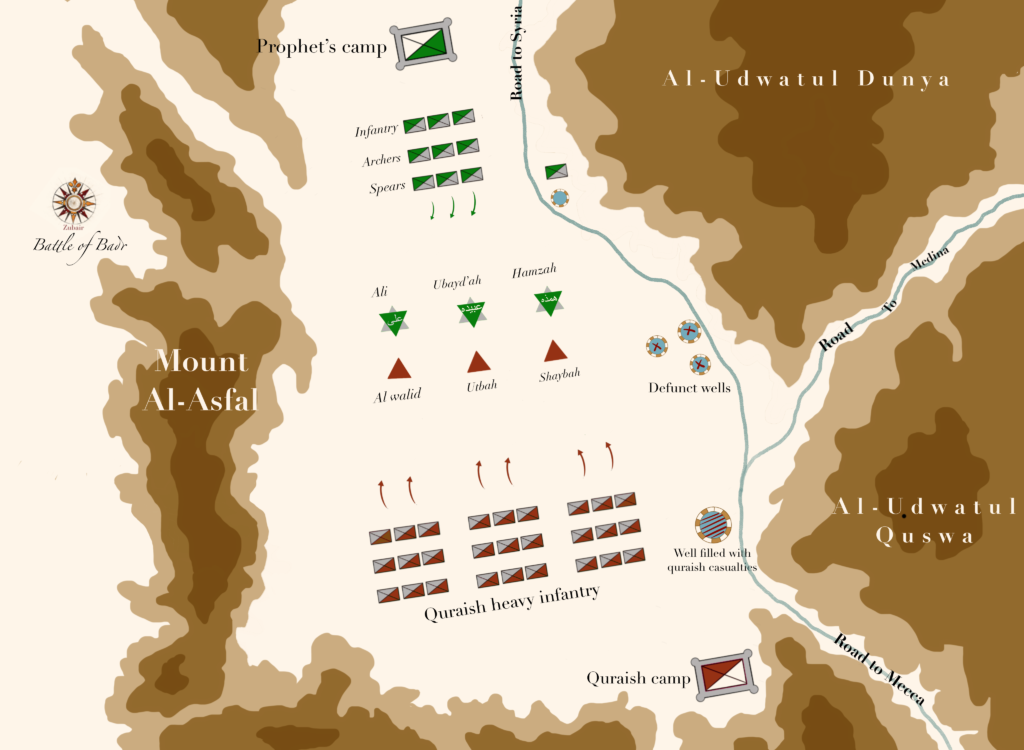
By both lunar and solar calendars, this month (March and Ramadan) marks an event that changed the course of Islamic history for good: the Battle of Badr, where the Prophet Muhammad, may Allah grant him blessings and peace, and Islam won its first decisive triumph in the battlefield, in the Ramadan of the Second Year after Hijrah, corresponding to the year of our messiah 624. Since then there have been countless battlefields and many successes in the annals of Islam, yet none compares in gravity to the day when Allah  reinforced three hundred and thirteen valiant Muslim troops, against a force over thrice as large, with thousands of angels in battle array. This article will recall the context, events, and significance of Badr as well as the lessons it holds for us today.
Background
Though Badr was not the first armed engagement by the Muslims, it was the first major battle and one whose outcome utterly transformed the political landscape of Arabia. Just two years earlier, Muslims might have appeared to many Arabs as something of a curiosity, a small if perseverant and growing community of believers persecuted by the region’s Qurashi elites in the holy city of Makkah. The Prophet  and his Muhajiroun’s subsequent migration to Medinah, where the Aws and Khazraj clans embraced Islam and became his Ansar, had given Islam extra political strength, but even so the pagans of Makkah, along with unbelieving Arabs and Jews in Medinah, had continued to plot the faith’s downfall, none more ruthlessly than the arrogant “pharaoh of his nation”, Abu Jahl Amr b. Hisham. At Badr, however, not only did a small Muslim force vanquish the pagan army, but did it so emphatically – in the process wiping out the same elites of Makkah, men of wealth and renown who were known and feared throughout the region – that from this moment on, Islam could no longer be dismissed: Medinah was now not the capital of a minor religious group but the coolly confident capital of an emerging civilization.
The original battalion of Muslims who had set out with the Prophet had originally intended to accost a Makkan caravan, in which much of the city had shares, led by Abu Sufyan Sakhr b. Harb on his way home from the Levant. Though he had eventually managed to evade them, Abu Sufyan’s missives to Makkah were eagerly latched on by the pagan leaders of the city, who spotted a chance to draw out the Prophet and finish him for good. None was more virulent than Abu Jahl: first, his taunts incited more fearful Makkan leaders such as Umayya b. Khalaf to join in, and then persuaded the more reticent Utba b. Rabia to go in pursuit of the Muslims against his better judgement. Realizing that a veritable army, with bells and whistles for the occasion, was on the way, the Prophet conferred with his companions which foe to face.
Keep supporting MuslimMatters for the sake of Allah
Alhamdulillah, we're at over 850 supporters. Help us get to 900 supporters this month. All it takes is a small gift from a reader like you to keep us going, for just $2 / month.
The Prophet (SAW) has taught us the best of deeds are those that done consistently, even if they are small. Click here to support MuslimMatters with a monthly donation of $2 per month. Set it and collect blessings from Allah (swt) for the khayr you're supporting without thinking about it.
Though many preferred to face the (apparently easier) target of Abu Sufyan’s caravan, the Prophet decided on Allah’s direction that they stand and face to a decision a Quraish army that, he observed, had brought the cream of the city’s crop. The emigrants who had accompanied him from Makkah were naturally willing to face their erstwhile persecutors, but the Medinah Ansar, who comprised some three-quarters of the Muslim force, proved equally prepared for the upcoming battle, with Aws chieftain Saad b. Muadh offering firm support and personally setting up and guarding the Prophet’s camp.
On the astute advice of an Ansar lieutenant, Habab b. Mundhir, the Prophet camped at the far end of the Badr valley on a dune near the northern passage through the mountains: this both enabled the outnumbered Muslims to face their enemy in similar numbers at a time and, with the onset of a cooling rain that Allah sent overnight, fight an enemy slogging their way uphill through muddier ground. With one exception by their camp, the valley’s wells were filled in overnight, so that the attackers would be forced to take risks for much-needed water. Showing the combination of faith and practicality that marked his life, the Prophet carefully organized the Muslim ranks, which held fast with great discipline, as well as praying fervently for Allah’s aid. The battle’s earliest duels were fought between the Prophet’s family members – Ali, Hamza, and Ubaidah b. Harith – and Utba with his son and brother; the latter were killed and Ubaidah mortally wounded before battle proper began.
The Quraish made several sorties, first attempting to outflank the Muslims, who nonetheless regrouped and held fast. Knowing their relative scarcity of resources, the Muslims held fast to their defence, conserving their weapons for best use.
Whenever he could, the Prophet
devoted himself to fervent supplications to Allah
Allah answered the call with thousands of angels, the archangel Jibril at their helm, that utterly routed the pagans, who were driven to rout. Some Makkan notables such as Suhail b. Amr were captured; others, like Abu Jahl – bitterly sneering to the end – were slain; Umayya was first captured, by Abdurrahman b. Auf, but then was torn apart by the former slave, Bilal b. Rabah, and others whom he had so sadistically tormented at Makkah.
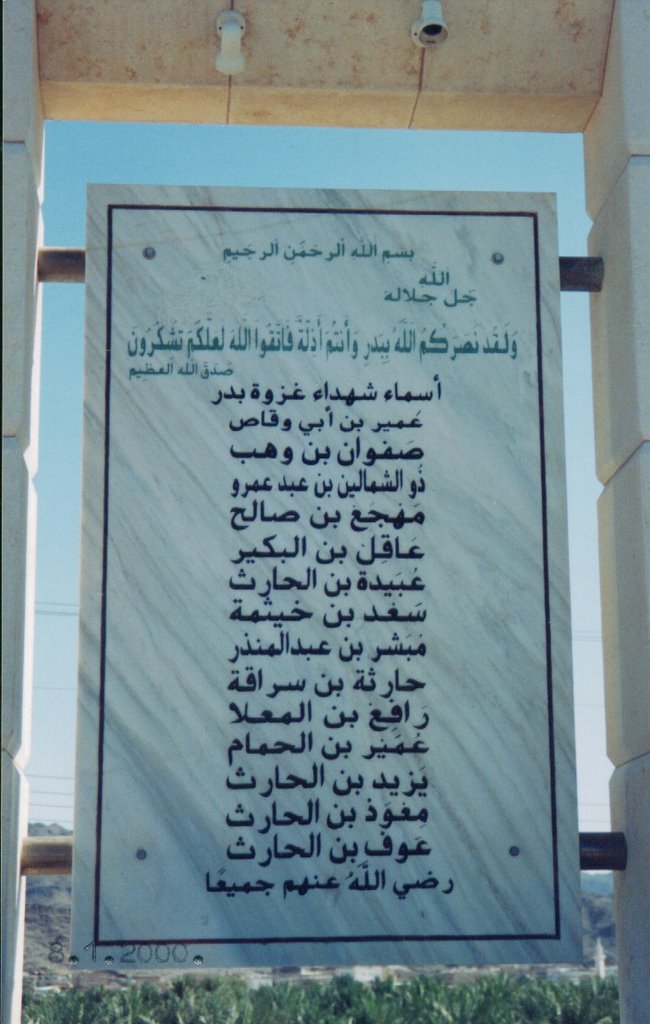 It is hard to overstate the significance of Badr. By the time battle was joined, the pagan army had every intention of cutting and finishing off the Prophet and the community that they had victimized, relentlessly, for some fifteen years. Instead, the prestige of Arabia’s elites had been shattered, beginning a process of steady Muslim military resurgence that culminated six Ramadans later in the Muslims’ reconquest of Makkah. The battle transformed the Muslims of Medinah into a regional force with whom everybody, from haughty Khaibar in the north to unpredictable Najd in the east, had to reckon; within a decade they would become the preeminent force in Arabia and beyond. There have been many battles, in those days and since, often with more fighters or weapons involved, but in none has the fate of Islam itself hinged as totally, consequentially, and directly as it did at the very start at Badr.
We can glean a few lessons from the campaign of Badr, which forms the main topic of the Quranic chapter Al-Anfal and is also elsewhere mentioned in the Quran. One important lesson is that the route to reward occasionally requires the risk of hardship: had the Muslims avoided a decisive counter with a plainly ravenous enemy, it would have left them exposed once more at Medinah with little to show for their expedition save, perhaps, some wealth from Abu Sufian. At the time this might not have seemed obvious to the Muslims: why fight a much larger, better-equipped, and prepared enemy? But when they accepted the risk of standing their ground, the rewards poured in beyond their expectations. Allah reminds the Muslims,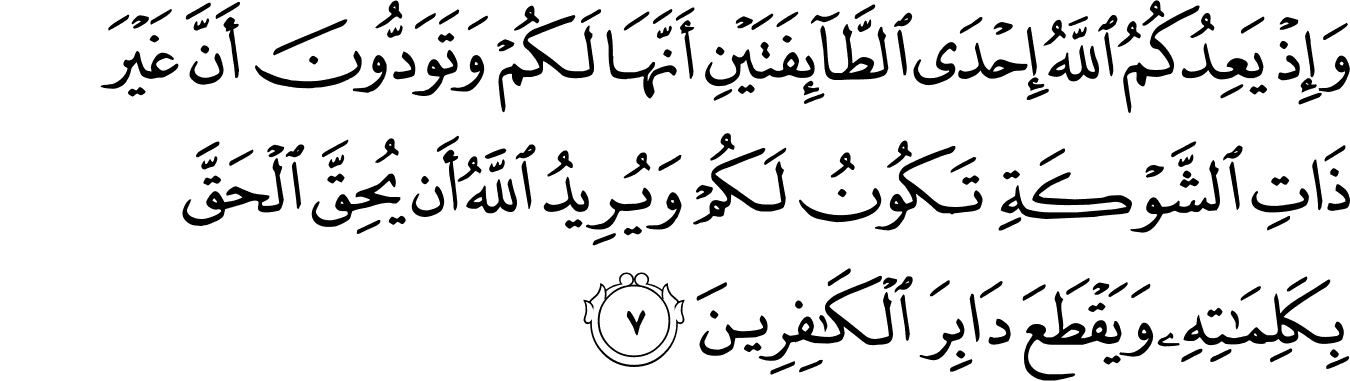
“When Allah promised you one of the two groups – that it would be yours – and you wished that the unarmed one would be yours. But Allah intended to establish the truth by His words and to eliminate the disbelievers.”
“That He should establish the truth and abolish falsehood, even if the criminals disliked it.” [Surah Al-Anfal: 8;7-8]
It was a decisive moment, and the Prophet made sure to seize it.
The Muslim force, small and outnumbered though they may have been, also showed commendable fortitude and discipline in both their operations and their conduct: the Prophet’s clear instructions were closely followed. Yet this discipline did not translate to autocracy or pomp of the sort that both religious and military leaders often entertain; on the contrary, the Prophet consulted his companions and took on board their opinions. This occurred when Saad assured him of the Ansar’s support; when Habab advised him on where to set up camp; and when, after the battle, he consulted his companions about what to do with the prisoners, with his own inclination to side with Abu-Bakr Siddiq’s leniency overruled by Allah , Who instead confirmed Umar Farouq and Saad’s opinion that the Prophet subdue the unbelievers [Surah Al-Anfal: 8;67]. Even though he retained an executive decision, in each case the Prophet relied on advice, consultation, and cooperation before making his decision. Allah says,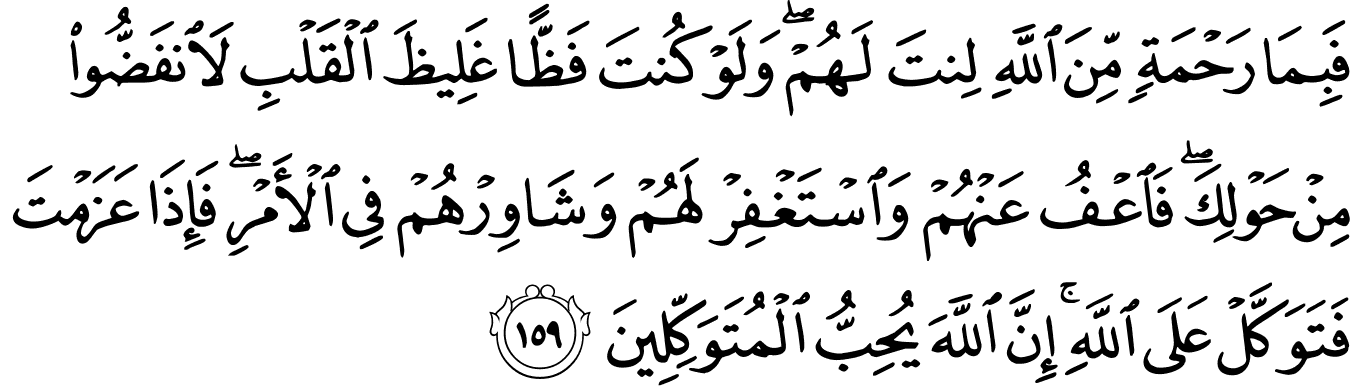
“So, it is through mercy from Allah that you are gentle to them. Had you been rough and hard-hearted, they would have dispersed from around you. So, pardon them, and seek Forgiveness for them. Consult them in the matter and, once you have taken a decision, place your trust in Allah. Surely, Allah loves those who place their trust in Him.” [Surah ‘Ali-Imran: 3;159]
On the outcome of the battle, Allah says,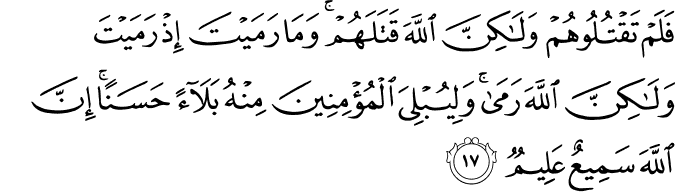
“So, it is not you who killed them, but in fact Allah killed them. And you did not throw when you threw but Allah did throw, so that He might bless the believers with a good favour. Surely, Allah is All-Hearing, All-Knowing.”[Surah Al-Anfal: 8;17]
The Battle of Badr had been a striking success, with the Muslims’ careful planning, skill, courage under fire, and determination rewarded by Allah . Yet none of this would have been possible except by the permission of Allah , to Whom belongs the outcome of every matter. As somebody with a more-than-passing interest in military history, I find this particularly important to highlight. Fighting mettle, good order, tactics and strategy, courage, and capable military leadership is essential for battle; warfare collectively puts these factors to the test as much as almost any human endeavour.
Yet alongside plans and preparation, comes prayer and recognition of the ultimate power over any battlefield. No commander plans or orders, no soldier moves, and no outcome occurs except by Allah’s
Conclusion
In the centuries since, Badr and its significance has been recalled, again and again, on many a Muslim battlefield – at the momentous Battle of Ain Jalout, for instance, or more recently in the Sinai campaign against Israel, both of which also took place in Ramadan. Today, those of us lucky enough to enjoy stability and security see other Muslims around the world, struggling for their rights against often formidable odds. It can be tempting, and has indeed become fashionable, for more secure Muslims to click our tongues in faux sympathy and wonder why they bother at all: pragmatism has become a disguise for neglect and pessimism. Such narratives ignore both the situations and the lessons of history, where Allah has repeatedly aided the believers against imposing enemies. The lessons of Badr remain as relevant today as they were on that momentous day fourteen centuries ago.
Related:
– Perpetual Outsiders: Accounts Of The History Of Islam In The Indian Subcontinent
– The Long Road To Muslim Bangsamoro: 10 Years On
Keep supporting MuslimMatters for the sake of Allah
Alhamdulillah, we're at over 850 supporters. Help us get to 900 supporters this month. All it takes is a small gift from a reader like you to keep us going, for just $2 / month.
The Prophet (SAW) has taught us the best of deeds are those that done consistently, even if they are small. Click here to support MuslimMatters with a monthly donation of $2 per month. Set it and collect blessings from Allah (swt) for the khayr you're supporting without thinking about it.



When A Place Teaches You What Softness Is Not

[Podcast] Wait, Muslims Have Been Here HOW Long?! | Hassam Munir

Far Away [Part 30] – The Rock Splitter And The Parthian Shot

Maryam: The Story Of The Muslim ‘Virgin’ Mary

Is It Ever Too Early To Prepare For Ramadan? Reflections On Rifq, Forgiveness, And Healing The Heart

When The Shaykh Never Spoke – Deepfakes, Synthetic Scholars, And The Coming Crisis Of Religious Trust

[Podcast] Faith, Motherhood, and the Call to Gaza | Dr. Samaiya Mushtaq

The Stirring Of A Muslim Population In Japan: The Story Of Yusuke Fujitani

CAGE, Muslim Leadership, And Imran Khan: The Silence Test
Is It Ever Too Early To Prepare For Ramadan? Reflections On Rifq, Forgiveness, And Healing The Heart

The Best Actions for Eid al-Adha [Imam Dawud Walid]

Coming Full Circle: Who Are You Now? | Night 30 with the Qur’an

Running Away From Who We Are | Night 29 with the Qur’an

Building From the Ground Up: Week 4 Recap | Night 28 with the Qur’an

The Muslim You Are Becoming | Night 27 with the Qur’an
MuslimMatters NewsLetter in Your Inbox

Sign up below to get started
-

 #Culture1 month ago
Far Away [Part 26] – Shaytan Is A Liar
-
#Current Affairs1 month ago
From a Syrian Prison to the UN: The Case of Bilal Abdul Kareem
-
#Life1 month ago
[Podcast] 50k Mahr, Hiding Money, & Who Pays for the Wedding? | AML Finance
-
#Life2 weeks ago
When The Shaykh Never Spoke – Deepfakes, Synthetic Scholars, And The Coming Crisis Of Religious Trust




Wael Abdelgawad
April 11, 2024 at 4:41 PM
Beautifully written, with some salient points, for example that the Prophet (sws) was not a dictator, but rather took shurah from his companions every step of the way. And a hard-hitting conclusion.