
#Society
My First Ramadan As A Convert: The Lengths Small Acts of Kindness Can Go
A convert navigating her first Ramadan carries questions, vulnerabilities, and often complicated family dynamics.


I embraced Islam at the end of August 2000, over twenty-five years ago. Ramadan arrived just three months later, beginning in late November and stretching into late December. It was the year Ramadan coincided with the heart of the American holiday season. Thanksgiving had just passed, and Christmas was around the corner. My mother had decorated the house with a Christmas tree and string lights; familiar carols were playing in grocery stores; families were out shopping for gifts, and it seemed that everyone was anticipating the holidays except me.
I was a brand-new Muslim.
Although I had been studying Islam quietly for several years before taking my shahada, I had never fasted before. Coming from a Catholic tradition and a Puerto Rican background meant that Lent was the only type of fast I knew. For us, it meant not eating meat on Fridays and giving up vices for forty days. The Ramadan fast was something completely different. I understood the basic rulings like no food or drink from just before dawn to sunset, but that was the extent of my knowledge. I did not know the finer details of fasting or its legal rulings. I did not know what would invalidate the fast, what was disliked, or how to structure my days around it. What I did know was that I would be doing this largely alone. Yet even in that season of uncertainty, there were a few individuals whose quiet acts of kindness would shape my first Ramadan in lasting ways.
Keep supporting MuslimMatters for the sake of Allah
Alhamdulillah, we're at over 850 supporters. Help us get to 900 supporters this month. All it takes is a small gift from a reader like you to keep us going, for just $2 / month.
The Prophet (SAW) has taught us the best of deeds are those that done consistently, even if they are small. Click here to support MuslimMatters with a monthly donation of $2 per month. Set it and collect blessings from Allah (swt) for the khayr you're supporting without thinking about it.
At the time, I was living in Augusta, Georgia, and I did not know of a Muslim community nearby. The world was different back then. We had landline cordless telephones mounted to kitchen walls, analog cell phones with limited minutes, and VHS tapes stacked beside television sets. There were a fortunate few like me who had access to a desktop computer, where the internet was accessed through the unmistakable mechanical screech of dial-up. Unlike now, there was no social media, no unlimited texting, and no smartphone alarms or adhan clocks to remind you to wake up for suhoor.
If a new Muslim had a question, they either found someone to call or they waited. Unless they had an established support system, it was a lonely time to be a convert. My closest Muslim friends lived in Maryland, but since I had moved to Georgia, they did not even know I was considering converting. Much of my journey unfolded internally, between myself and Allah  .
.
The Phone Call that Started it All
I relied heavily on America Online (AOL) chat rooms, searching for Muslim screen names or anyone who might live somewhere near Georgia. I would enter digital spaces filled with strangers, hoping to strike up a conversation or to find someone who would answer a question about Islam. That is how I had met the brother who helped me declare my shahada – a youth coordinator from a mosque in Atlanta. When I first reached out to him in a chatroom, he seemed apprehensive, but when I explained my interest in Islam, he offered to call me. That lone phone call changed the course of my life. After asking me some questions, he helped me recite the declaration of faith over the phone. Then he drove nearly three hours to introduce me to his cousins, who lived near me, bringing a prayer rug, a hijab, and a few introductory books. Little by little, my support system started to take shape.
But Ramadan was approaching, and not only would it be my first fast, but it would also be the first time I would quietly step back from the holidays my family still cherished. I was still living under my parents’ roof, so I understood this transition would require patience and care. I learned to move thoughtfully, navigating the quiet tension between the faith that I had embraced and the home in which I had been raised. As the reality of the fast dawned on me, I began to realize that the thirst I would experience would extend beyond drink. I would be thirsty for guidance, for companionship, and for a sense of community.
The Convert who Gave me a Book
As Ramadan drew closer, I started to feel a sense of panic. I knew that fasting was obligatory. I knew that I was expected to abstain from food and drink from dawn until sunset. What I did not know was how I would manage it in a household that was not fasting, or whether I would be able to endure it physically and emotionally. The thought of it intimidated me. I wondered how I was supposed to enter such a significant month of worship without guidance.
Around that time, I connected online with another convert who was living on the military base near us. My father worked on that same base, so in a way our worlds overlapped, even if only slightly. His name was Idris. When I confided in him about my anxiety over my first Ramadan, he listened with understanding that only another convert could fully offer. He told me he had a small book that might help answer some of my questions and brought it to me in person.
The book was called The Essentials of Ramadan. It was modest in size, but to me it felt comprehensive. It explained the structure of the fast, the suhoor meal before dawn, what would invalidate the fast, and what would not. It clarified matters I had not even thought to ask about, including the small details that can cause uncertainty for someone new. Having that information gave me confidence. It transformed Ramadan from overwhelming to structured and attainable.
Decades later, I remain genuinely grateful to Idris for that act of kindness. After he gave me the book and we spoke about Ramadan, our paths diverged, and I never heard from him again. Over the years, I have sometimes reflected on how brief yet meaningful that chance encounter was. Allah knows best the wisdom behind such moments, but I do know that his willingness to share a simple resource changed my experience of that first Ramadan in ways he likely never imagined.
Looking back now, I see how small acts of support can leave a lasting imprint. A book. A phone call. A message that says, “Here is what you need to know.” For someone entering Ramadan without family support or community, that guidance can be the difference between fear and confidence. Even if our time is limited, even if our role in someone’s life is brief, we can help steady their steps. More than twenty-five years later, I still remember the brother who handed me a small book and made me feel less alone.
The Supportive Sister
Idris was not the only person who helped me during that first Ramadan. Surprisingly, once the month began, I found the fast manageable. I was attending school and working at the same time, so my days were busy enough to keep my mind occupied. I worked in the customer service department of a local newspaper, so I was constantly speaking with people. The structure of my schedule helped the hours pass quickly, so the hunger and thirst did not overwhelm me. What unsettled me most was something far more trivial. I felt self-conscious about my breath while fasting!
Because I worked closely with customers and colleagues, I worried that fasting made my breath unpleasant. Before Islam, chewing gum throughout the day had been routine for me, and suddenly that small habit was no longer available. I remember wondering whether the people I spoke to could notice, and whether they would judge me. For a new Muslim already navigating an internal transformation, even something as minor as this felt magnified.
During Ramadan, a sister who was related to the youth director who had helped me take my shahada came to visit me at work. She had recently returned from a trip and brought me dates and a few small gifts. More importantly, she came simply to check on me and ask how I was managing my first Ramadan. When I confessed to her that it was not the fast itself that was the difficulty, but the embarrassment about my breath, she responded with gentle reassurance. She shared with me the words of Prophet Muhammad, peace and blessings be upon him, who said:
“By the One in whose hand is my soul, the odor coming from the mouth of a fasting person is more pleasant to Allah Almighty than the scent of musk. Allah said: He leaves his food, his drink, and his passions for My sake. The fast is for Me and I will reward him for it with a good deed ten times like it.” [Sahih Bukhari 1894]
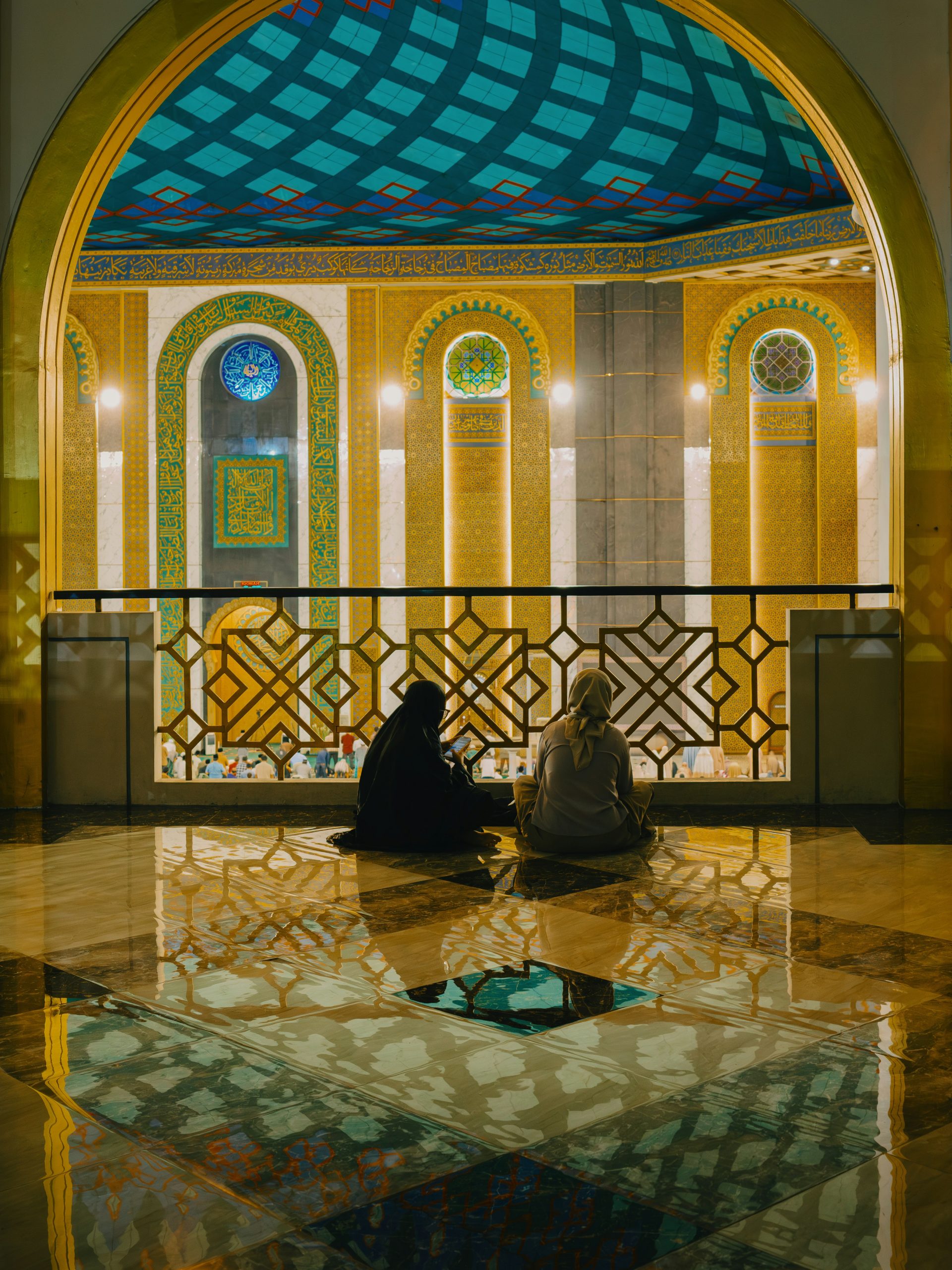
“For a new Muslim, that kind of understanding carries immense weight. It communicates that someone sees you, understands your sensitivities, and wants you to succeed.”
Hearing that hadith changed my perspective immediately. What I had viewed as a source of shame was, in reality, an act beloved by Allah . I felt a rush of confidence and relief, along with a deeper love and awe for my Creator. She also offered practical advice, reminding me that I could rinse my mouth carefully without swallowing water and brush my teeth during the day as long as I was cautious. That combination of comfort and practical guidance brought me so much ease during a vulnerable moment.
In retrospect, I realize how significant that visit was. The sister addressed my concerns without delivering a lecture or overwhelming me with legal rulings. She simply took the time to show up, ask how I was doing, and share a hadith that reframed my experience. For a new Muslim, that kind of understanding carries immense weight. It communicates that someone sees you, understands your sensitivities, and wants you to succeed. More than twenty-five years later, I still remember that conversation, especially whenever I come across this hadith:
“Whoever relieves the hardship of a believer in this world, Allah will relieve his hardship on the Day of Resurrection. Whoever helps ease one in difficulty, Allah will make it easy for him in this world and the Hereafter…” [Sahih Muslim 2699]
I pray that Allah rewards every single individual who supported me before and during my first Ramadan, those who answered questions, shared resources, visited me at work, or simply took the time to check in. Their gestures may have seemed small to them, but they carried tremendous weight in my life. With their encouragement, I found the confidence to continue stepping forward.
The Continuous Search for Belonging
Part of that journey included attending taraweeh prayers. I did not attend many during that first Ramadan because of my work and school schedule, but when I did go, the experience was unforgettable. The mosque community at the time was warm and welcoming. I was introduced to the imam, and when I told him I was a convert, he made a point of making me feel comfortable. He offered his contact information and encouraged me to reach out if I needed guidance.
I also traveled to Maryland to visit my Muslim friends and participated in community gatherings and tarawih there. Moving between communities allowed me to see the broader fabric of the ummah, and it reminded me that even if I lived in isolation, I was part of something much greater. There was a tangible sense of unity in the masjid. I knew that everyone was fasting and striving, and that awareness gave me strength. Even when I returned home to a household not observing Ramadan, I knew that across the city and around the world, others were fasting alongside me.
Experiencing that communal spirit was important, especially as someone who had entered Islam with limited local support. At the same time, I came to understand that not every convert encounters the same welcome. Some enter mosques and feel invisible. Others lack family stability or community connection. For new Muslims, Ramadan can magnify both belonging and isolation. That is why our Islamic centers must be intentional in cultivating spaces of care, guidance, and understanding. A convert navigating their first Ramadan carries questions, vulnerabilities, and often complicated family dynamics. My hope is that in this Ramadan and in many Ramadans to come, new Muslims experience the same welcome and reassurance that carried me through my first fast.
Related:
– [Podcast] Navigating Christmas: Advice to Converts, from Converts | Hazel Gomez & Eman Manigat
– I’ve Converted, And It’s Christmas…
Keep supporting MuslimMatters for the sake of Allah
Alhamdulillah, we're at over 850 supporters. Help us get to 900 supporters this month. All it takes is a small gift from a reader like you to keep us going, for just $2 / month.
The Prophet (SAW) has taught us the best of deeds are those that done consistently, even if they are small. Click here to support MuslimMatters with a monthly donation of $2 per month. Set it and collect blessings from Allah (swt) for the khayr you're supporting without thinking about it.





Beyond Ramadan: Connecting to Allah Through His Beautiful and Majestic Names

15 Things You Didn’t Know About Makkah and the Ka’bah [Part 2]

Widening Wars Leave the Middle East in Shambles
15 Things You Didn’t Know About Makkah and the Ka’bah [Part 1]

Eid Mubarak from MuslimMatters

She Cried At The Door Of The Masjid: A Case For Children In Mosques

The Trials Playlist: A Chaplain’s Set To Steady Your Heart

[Podcast] Is Your Sadaqah Paying an Influencer Instead of Going to Charity? | Mufti Abdullah Nana & Dr Shafi Lodhi

When The Qunoot Becomes Politics: Religious Theater in Saudi Arabia

Accessibility As Mercy: How Laylatul Qadr Guides Towards Disability Justice

Coming Full Circle: Who Are You Now? | Night 30 with the Qur’an

Running Away From Who We Are | Night 29 with the Qur’an

Building From the Ground Up: Week 4 Recap | Night 28 with the Qur’an

The Muslim You Are Becoming | Night 27 with the Qur’an

What Will You Leave Behind? Legacy in Islam | Night 25 with the Qur’an
MuslimMatters NewsLetter in Your Inbox

Sign up below to get started
-

 #Current Affairs1 month ago
[Podcast] Ramadan Is Not For Your Private Spirituality | Dr Farah El-Sharif
-
#Society4 weeks ago
She Cried At The Door Of The Masjid: A Case For Children In Mosques
-
#Islam4 weeks ago
The Trials Playlist: A Chaplain’s Set To Steady Your Heart
-
#Islam1 month ago
When to Walk Away from Toxic Friends | Night 9 with the Qur’an


