
Civil Rights
Outsourcing Torture: U.S. Court Blocks Maher Arar’s Lawsuit

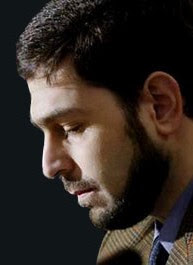
Maher Arar
by J.Hashmi
Keep supporting MuslimMatters for the sake of Allah
Alhamdulillah, we're at over 850 supporters. Help us get to 900 supporters this month. All it takes is a small gift from a reader like you to keep us going, for just $2 / month.
The Prophet (SAW) has taught us the best of deeds are those that done consistently, even if they are small. Click here to support MuslimMatters with a monthly donation of $2 per month. Set it and collect blessings from Allah (swt) for the khayr you're supporting without thinking about it.
In 2002, Maher Arar was detained without charge by the INS and denied the right to counsel. Even though he was a Canadian citizen, the United States government–based on Canadian intel–deported him to Syria to be tortured for information. For ten months, Mr. Arar was thrown in a three-foot by six-foot “grave” and was brutally beaten with shredded electrical cables. His beatings were so severe that he became suicidal, claiming that death would be better than what he was made to endure.
Mr. Arar noted that the Syrian interrogators asked the exact same questions that were asked by American interrogators, which led him to believe that this was a case of torture by proxy. After 374 days of repeated beatings, Mr. Arar was released without charge, and he was finally reunited with his family in Canada. The Syrian government declared that they could find no terrorist links, and Imad Moustapha, a Syrian official, stated: “We tried to find anything. We couldn’t.”
Mr. Arar sued the Canadian and American governments, demanding a formal apology for violating his constitutional rights. The Canadian government established the Commission of Inquiry into the Actions of Canadian Officials in Relation to Maher Arar to investigate the issue. After more than two years of investigation, the Commission of Inquiry ruled in Mr. Arar’s favor, concluding that he had absolutely no terrorist links and that the Canadian government played a role in his deportation to Syria and subsequent torture.
In September of 2006, the RCMP Commissioner Guiliani Zaccardelli issued the following public apology to Mr. Arar during the House of Commons session:
Mr. Arar, I wish to take this opportunity to express publicly to you and to your wife and to your children how truly sorry I am for whatever part the actions of the RCMP may have contributed to the terrible injustices that you experienced and the pain that you and your family endured.
In January of 2007, the Canadian government awarded $11.5 million to Mr. Arar in a compensation settlement, and the Canadian Prime Minister Stephen Harper issued a formal and public apology on behalf of the government. However, no punitive actions were taken against any Canadian officials.
Meanwhile, Mr. Arar also sued the United States government, bringing a suit against former Attorney General John Ashcroft, the FBI Director Robert Mueller, and former Secretary of Homeland Security Tom Ridge, amongst others. The suit alleged that the United States government denied Mr. Arar his constitutional right to due process, and that it had violated the Torture Victims Protection Act and international law.
The U.S. government quashed the case by invoking “States Secrets Privilege,” dismissing the suit due to “national security concerns.” The Center for Constitutional Rights, which represented Mr. Arar, appealed the verdict. However, this week Al-Jazeera reported that the federal appeals court rejected the appeal: “In a 7-4 vote on Monday, the US court of appeals for the Second Circuit agreed with a lower court that Arar could not sue US officials.”
The question now is: will Mr. Arar appeal his case to the Supreme Court?
Anderson Cooper of CNN covered the story:
[youtube]http://www.youtube.com/watch?v=LBWp4iMnHN0[/youtube]
In 2006, the Letelier-Moffitt Human Rights Award was given to Mr. Arar. The United States government did not permit him to collect the award, and so Mr. Arar was forced to give a video acceptance speech:
[youtube]http://www.youtube.com/watch?v=pzQXqGuHGKk[/youtube]
In 2007, Mr. Arar was honored in the annual TIME Magazine 100, listed under number 58 in the Heroes and Pioneers category. The entry, written by US Senator Patrick Leahy, declared that his case “stands as a sad example of how we have been too willing to sacrifice our core principles to overarching government power in the name of security, when doing so only undermines the principles we stand for and makes us less safe.” The U.S. government again denied him the right to attend the TIME awards ceremony.
Although the case received considerable media coverage in Canada, it has largely been ignored by the U.S. mainstream media.
For further details, visit www.maherarar.ca
Keep supporting MuslimMatters for the sake of Allah
Alhamdulillah, we're at over 850 supporters. Help us get to 900 supporters this month. All it takes is a small gift from a reader like you to keep us going, for just $2 / month.
The Prophet (SAW) has taught us the best of deeds are those that done consistently, even if they are small. Click here to support MuslimMatters with a monthly donation of $2 per month. Set it and collect blessings from Allah (swt) for the khayr you're supporting without thinking about it.







Beyond Repression: Muslim Sexuality On Campus

Bismillah, The Beast [Part II] – A Short Story

Zionist Instigators Storm Los Angeles Campus

Quranic Verses For Steadfastness For The Valiant Protestors On Campus

Callous Campus Crackdowns On Pro-Palestinian Protesters Grip The United States

Foreign Affairs Official Resigns Over Gaza Genocide
Callous Campus Crackdowns On Pro-Palestinian Protesters Grip The United States
Zionist Instigators Storm Los Angeles Campus

A Ramadan Quran Journal: A MuslimMatters Series – [Juz 29] Preparing For Trials And Loss

[Podcast] Palestine in Our Hearts: Eid al-Fitr 1445 AH

IOK Ramadan: The Importance of Spiritual Purification | Keys To The Divine Compass [Ep30]
IOK Ramadan: The Power of Prayer | Keys To The Divine Compass [Ep29]
IOK Ramadan: The Weight of the Qur’an | Keys To The Divine Compass [Ep28]
IOK Ramadan: Families of Faith | Keys To The Divine Compass [Ep27]
IOK Ramadan: Humility in Front of the Messenger | Keys To The Divine Compass [Ep26]
-

 #Islam1 month ago
IOK Ramadan: 7 Qualities of Highly Effective Believers | Keys To The Divine Compass [Ep18]
-
#Islam1 month ago
IOK Ramadan: Choose Wisely | Keys To The Divine Compass [Ep15]
-
#Islam1 month ago
IOK Ramadan: They Were Not Created Without Purpose | Keys To The Divine Compass [Ep23]
-
#Islam1 month ago
IOK Ramadan: Making Time for Allāh at Night | Keys To The Divine Compass [Ep21]

Bintkaleem
November 4, 2009 at 12:20 AM
Oh no not again. Can we discuss another topic please ya shuyukh?
BK
Hudhaifa
November 4, 2009 at 8:13 AM
A true believer feels for their fellow muslim brothers/sisters….
Ask yourself… Why dont you feel for them? You might jus surprise yourself!!!
Amad
November 5, 2009 at 4:34 AM
guess who “bintkaleem” is?
sockpuppets anyone?
Hassan
November 5, 2009 at 6:53 AM
Ya Allah, let it be Muhammad Khan so you can ban him.
abu abdAllah Tariq Ahmed
November 4, 2009 at 1:16 AM
Jazak Allah khayr for this update on this sad case. The refusal of the US government to admit its wrongdoing, when there is hardly any doubt of what took place, when the Canadian government has investigated the case fully and made restitutions, these bear testimony to the shallowness of America’s leaders. Sadly, there are many such cases we know about that do the same, and many, many more prisoners who are still secreted away.
Leaders of the free world? Leaders in accruing shame, perhaps.
Siraaj
November 4, 2009 at 6:52 AM
May Allah give justice to brother Maher, and may the scum in the US government who perpetrated this injustice be named, shamed, and prosecuted to the full extent of the law.
Siraaj
Garibaldi
November 4, 2009 at 10:48 AM
Thank you for this update. It highlights how there are many injustices in the US that still have to be mended, it also casts a shadow over the way our government has proceeded post-9/11. This case is one of a plethora that shows the depravity of our policy. Also, notice the disparity in media coverage between Canada and the US. No one here touched it.
Ibn Masood
November 4, 2009 at 10:36 PM
InshaAllah I think I will watch that 2nd video everyday to remind myself that I cannot sit still and do nothing to benefit the ummah for even one second.
How pathetic it is that my dear brother must resort to a non-Muslim government and HRW to help him, all because I, his brother, is too weak and lazy to do anything.
Allahu Musta’an.
anon
November 4, 2009 at 10:50 PM
was anyone there at RIS during the interview with Maher Arar and his wife? the couple themselves, they looked like they’ve gone trough obstacles/trials/ pain, their expressions looked worn out but the strength they had mashallah you could see it from podium, its something I’ve never seen before, I cant really explained it, they were so meek and humble but yet so strong . I remembered at one point they turned towards the audience and talked about how its important that Muslims should be more involved politically and in their communities. Although they didn’t directly or indirectly say it I’ve felt like i let them down as Muslim.
Amad
November 4, 2009 at 11:35 PM
mashallah, that’s the true spirit. It is a reminder for all of us that the solution to fight injustice is not to hide in the basement and spend countless hours bemoaning the situation, but rather to do something constructive. And I do believe it all starts with becoming integrated in the local community and making a positive change. There is no better friend for Muslims than word-of-mouth dawah.
Hassan
November 4, 2009 at 11:54 PM
Hmm you have something against basements.. alhamdulillah we do not have them in Texas, but I have heard they come in handy.
johnny
November 10, 2009 at 9:22 AM
I, Johnny, as an American Christian do apologize on behalf of ones with a conscience that i so deeply regret that our country has come to these things and forsook the very fundamentals that once made us great. My heart goes to each of my foreign brothers and sisters of any faith.
May mercy find us in our great time of need, now
Amad
November 10, 2009 at 10:51 AM
Johnny, that’s a standup thing to do.
thanks.
Muslim Girl
November 13, 2009 at 6:08 AM
Jazakum’Allah khair for the update. It’s good to know that him and his wife are still fighting for his rights which were so degradingly denied to them. I think they should continue to do this as long as they can and even then I think no “compensation” will ever be enough to recompense the horror he was subjected to.
I’m currently doing a Political Science Specialist program in university and although I was trying to switch back to Business, reading this makes me want to stay a little bit so that I can at least try to make a difference in cases like these, even if it’s a little.
Amad
November 13, 2009 at 7:59 AM
That’s the spirit! May Allah help you in helping the ummah.
Sarah
November 24, 2009 at 5:46 AM
I had the opportunity of meeting his wife a few years back in the midst of all the craziness. She is quite the woman mashaAllah.
Alhamdulillah for the fact Canada slightly regained its senses with the lawsuit and inquiry. The day America does though… subhanAllah, that’s when things will slightly lessen.
Keep all your brothers in your du’aas inshaAllah. They’re still being arrested left and right for no reason… may Allah swt protect our Ummah.
Pingback: hudhaifa