
Books
Belonging & Banishment: Being Muslim in Canada – Book Review

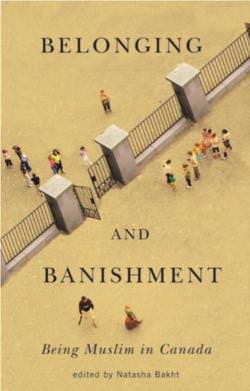 Ever on the lookout for the latest publications on Muslims in the West (and specifically in Canada), my interest was piqued when I was notified about a new book titled Belonging and Banishment: Being Muslim in Canada. The book is an anthology of essays by Canadian Muslim writers and edited by Natasha Bakht, spanning a variety of topics related to the theme of Canadian Muslims.
Upon receiving the book from the publishers (TSAR books, whom I thank for sending me a copy), I admit that I was extremely suspicious and cynical of what it might contain – my opinion of Canadian Muslims is, unforunately, rather low after having seen what it is that it is produced by them in the media. The majority of those who have any presence in the public eye tend to be either of the ‘progressive’ strain or cringe-inducingly wishy-washy (feel free to bash, flame, and lynch me now…).
I digress. The book, as I said, is a collection of essays – 11 of them, titled and authored as follows:
- Muslims and the Rule of Law; Haroon Siddiqui
- Bearing the Name of the Prophet; Syed Mohamed Mehdi
- Knowing the Universe in All Its Conditions; Arif Babul
- Raising Children in a Diverse World; Rukhsana Khan
- Islamic Theology and Moral Agency: Beyond the Pre- and Post-Modern; Anver M Emon
- Muslim Girl Magazine: Representing Ourselves; Ausma Zehanat Khan
- Towards A Dialogical Discourse for Canadian Muslims; Amin Malak
- Islamic Authority: Changing Expectations Among Canadian Muslims; Karim H Karim
- A Case of Mistaken Identity: Inside and Outside the Muslim Ummah; Anar Ali
- Victim or Aggressor? Typecasting Muslim Women for their Attire; Natasha Bakht
- Politics Over Principles: The Case of Omar Khadr; Sheema Khan
Keep supporting MuslimMatters for the sake of Allah
Alhamdulillah, we're at over 850 supporters. Help us get to 900 supporters this month. All it takes is a small gift from a reader like you to keep us going, for just $2 / month.
The Prophet (SAW) has taught us the best of deeds are those that done consistently, even if they are small. Click here to support MuslimMatters with a monthly donation of $2 per month. Set it and collect blessings from Allah (swt) for the khayr you're supporting without thinking about it.
It is difficult to make a judgement of the entire book, to label it as either “good” or “bad.” From an ‘aqeedah point of view, my worst suspicions were confirmed – Ismailis, progressives, and flat-out atheists were the majority featured, with the exception of the slightly more ‘mainstream’ Haroon Siddique, Sheema Khan, and children’s author Rukhsana Khan. However, it must be noted that most of the essays did a surprisingly good job at not portraying their chosen topic with too much of a slant towards the author’s ideological leaning (with the except of “Bearing the Name of the Prophet,” which I found to be absolutely ridiculous and nonsensical).
Political/ Media
Three of the essays dealt specifically with mainly political issues, drawing on well-known incidents involving Canadian Muslims. Haroon Siddique’s Muslims and the Rule of Law, Natasha Bakht’s Victim or Aggressor? Typecasting Muslim Women for Their Attire, and Sheema Khan’s Politics Over Principles: The Case of Omar Khadr were all excellent.
Muslims and the Rule of Law covers the presence of Islamophobia in Canadian politics and media, discussing such high-profile cases as the Maher Arar tragedy, the ‘Shari’a court’ controversy, the infamous Maclean’s brouhaha, the disturbing Quebec “reasonable accomodations” xenophobia, and much more. Siddique did a fantastic job in analysing the coverage of these incidents in the media, and the political and social responses that were broadcast all over the country. He criticizes and refutes the popular Islamophobic arguments found both in the media, political statements and actions, and amongst the general Canadian population; effectively using Canadian law, examples of anti-hate and hate-speech incidents from Canadian history, and plain old logic to point out the many faults and inconsistencies of the Islamophobic arguments. The essay concludes with the warning that unless anti-Islam and anti-Muslim sentiments are effectively combated, the very nature of Canada’s tolerant and inclusive foundations will be destroyed.
I strongly recommend Sheema Khan’s article Politics Over Principles: The Case of Omar Khadr for its excellent coverage of one of the most tragic ongoing events in Canadian history. She discusses the background of the case, the latest developments as of publishing date (2008), and the huge waves it has caused in the fields of law, human rights, and politics. Her essay is one of the most comprehensive summaries I have read so far on the subject, drawing upon indisputable sources and emphasizing the shocking oppression being perpetrated in a land that claims to stand for justice and freedom.
Victim or Aggresor? Typecasting Muslim Women for Their Attire by Natasha Bakht was, to me, surprisingly good. She discusses the contradictory stereotypes put out by the media in their coverage of Muslim women, specifically Muslim women who wear hijaab. She lists and refutes the attitudes we have found common in media presentation of Muslim women, specifically those of “Protecting Muslim Women from the dangers of hijaab” and “Protecting Canadians from fraudulent Muslim women.” She refers to the flurry of anti-hijaab bans in the field of sports, and the absurd veils-and-voting incidents. Her analysis of “unhelpful Muslim responses” is also spot-on, pointing out the danger of self-appointed ‘Muslim representatives’ such as the Muslim Canadian Congress who make matters worse when they issue statements declaring that hijaab is simply a patriarchial tool to control women.
Spirituality/ Philosophy
My reaction to the two essays, “Bearing the Name of the Prophet” and “Knowing the Universe in All its Conditions,” were mixed. The former annoyed me intensely, being as it is the insistence of an atheist of Shi’i background that one need not believe in or practice Islam in order to be Muslim. Quite frankly, the piece is a load of hogwash… although it did alert me to the prevalency of the idea of self-identity and (what I perceive as) its absurdity. The idea that one is Muslim simply because they call themselves so, and not because they actually believe in Islam, is about the same as one considering themselves a doctor simply because their father was one. However, I’ll save my spiel on this subject for another time.
The other essay, Knowing the Universe in All its Conditions, is by an Isma’ili. Arif Babul, the author, makes it clear from the beginning what kind of faith background he is coming from, which is good to know as he does refer to Isma’ili beliefs and mentalities throughout his article. That being said, however, the essay is actually a personal, spiritual reflection about how the author does not consider his career as an astrophysicist to pose a challenge to his beliefs, but rather affirms them. Once one filters out the skewed ‘aqeedah, the essay is quite good and most of it is easy to relate to.
The third article which could be included in the category of philosophy is a rather obscure work titled “Islamic Theology and Moral Agency: Beyond the Pre- and Post-Modern.” To tell the truth, I struggled to get through it without falling asleep, as discussions on qadaa wa’l qadr and its nuances as debated amongst the Mu’tazilah and Ash’arites are not my cup of tea. Sheikh YQ might be interested in it though :)
Muslim Identity in the West
The rest of the essays touch upon the general theme of Muslim identity in the West – raising a family, creating Muslim-friendly media, personal reflections, interactions between the Muslim community and non-Muslim society, and the changing internal views of members of the Muslim community.
A Case of Mistaken Identity: Inside and Outside the Muslim Ummah by Anar Ali was not particularly impressive – a short musing by an Ismaili about growing up as one of the few coloured people in his school; feeling unrepresented by self-appointed spokespeople of Muslims such as Irshad Manji; and his personal experience in writing a children’s book about Ismailis.
In Raising Muslim Children In A Diverse World, Rukhsana Khan reflects upon the difficult, yet not impossible, task of bringing up Muslim children who are aware of their non-Muslim surroundings but firmly grounded in their Deen. She shares stories of her own childhood, and from the journey that continues as she raises her own children in Canada. Her personal anecdotes make us aware that no matter how many times the issue is discussed, Muslim families in the West continue to struggle with the challenges of Islamic parenting in a non-Muslim society. Overall, the essay is good and great to share with non-Muslims who may be interested in the challenges that Muslim parents face in the West.
Muslim Girl Magazine: Representing Ourselves by Ausma Zehanat Khan is a look at the background and birth of Muslim Girl Magazine by one of its founders and editors. I was particularly interested in this article as I once purchased a copy of the magazine to review for MM (my apologies for not having gotten around to it yet), and have a lot to say about it. It was, as expected, a summary of how a group of people felt that the views of Muslim girls were either being sidelined or skewed, and that a new medium was required to fully represent them. Thus was Muslim Girl Magazine born for the Western Muslim teenage girl… to “enlighten, celebrate, and inspire.” Stay tuned for my own full review of the magazine, coming to MM sometime in the future (more likely distant than future), insha’Allah.
Towards A Dialogical Discourse for Canadian Muslims by Amin Malak is a discussion of how Canadian Muslims can reach out, connect, and dialogue with other Canadian citizens as a means to overcome anti-Islamic sentiments and prejudices in general. Basically, it goes on about the responsibilties of Muslims and non-Muslims alike to overcome isolationism, extremism, and stereotypical cliches. I personally found the essay tiresome, if only because this is a topic which has been discussed to death both in the Muslim community, in interfaith/ inter-community dialogues, and online. Nonetheless, it was nice to see these oft-expressed thoughts and sentiments being put down on paper and through a medium that will reach out to a wider audience (although it contains a distinct flavour of modernism/ progressiveness that I find distasteful).
Islamic Authority: Changing Expectations Among Canadian Muslims by Karim H Karim was another one of the “meatier” essays which caught my eye. It actually happens to be a summary of a research project that the author was involved in; the findings of which have since been publicized in various media articles including this one in the Toronto Star. The essay examines the way that Canadian Muslims/ Western Muslims in general view ‘Islamic authority’ (that is, the leaders and sources of Islamic knowledge in the Muslim community) and the attitude that they extend to them.
The focus is on the shift of mentality from the ‘back home’/ traditional attitude of trusting fully in the words of the Imam/ Sheikh/ Maulana/ Mufti, to a new way of dealing with Muslim leaders – critically, often doubting or challenging their qualifications and their ability to comprehend, understand, and deal with the context of Muslim life in the West.
The study, conducted in Canada, the U.S., and the UK, asserts that “The faithful no longer continue to think of traditional authorities in the same manner as in the past. This appears to be happening because they tend to have more education than religious authorities, enjoy access to primary intellectual sources of Islamic traditions, continually come into contact with new ideas, and are able to use communication technologies to discuss religious issues over vast distances.” The article expresses findings which have, up until now, been recognized only implicitly in community circles – basically, the changes which the Muslim community in the West at large has been experiencing, as it evolved from being founded by immigrants to incorporating young Muslims born and raised here, struggling with the challenges of studying the Deen and implementing it.
Interestingly, the essay refers to the growth of such institutes as the Muslim College in London and the Zaytuna Institute (although I was disappointed to not see mention of alMaghrib), and how part of the ‘implicit criteria by which [Canadian Muslims] asses the validity of Islamic authority’ has come to include having both an Islamic and secular educational background, as well as being involved in social and/or political activism and work. A variety of quotes from participants in the study are included, expressing differing opinions and mentalities which are prevalent amongst Western Muslims across the ideological spectrum.
The essay concludes that “the sociological conditions that exist presently for Muslims in the West are historically unique,” and I think that this something most of us can agree with. Indeed, this essay was certainly intriguing, for even if it didn’t bring to light anything that we don’t already know, it still emphasized many important points for those of us involved in community activism and Islamic education need to be aware of.
…
Most of the essays in Belonging and Banishment provided food for thought and were worth the time I spent on them. If nothing else, I appreciated that trends and ideas which have been tossed around, expressed, argued about, and developed by the Muslim community have been brought together in such a concrete manner. Although I disagree with a great deal of what was said in several of the articles articles, I think that for those who aren’t easily confused or impressed by philosophical or intellectual types, it’s a good book to have on hand.
As a whole, I am cautious of recommending the book to all and sundry; there are a few essays which I feel are great for general reading and sharing with friends and colleagues, but there are also a few which I feel can only be fully understood if one has a relatively thorough background in the history of Muslims in the West and their current socio-ideological situations. Certainly, I will be keeping this book as a reference text of sorts, and I have no doubt that many of the thoughts expressed within it will be excellent fodder for future essays, articles, and even books and lectures.
Rating: 4 out of 5 stars
Keep supporting MuslimMatters for the sake of Allah
Alhamdulillah, we're at over 850 supporters. Help us get to 900 supporters this month. All it takes is a small gift from a reader like you to keep us going, for just $2 / month.
The Prophet (SAW) has taught us the best of deeds are those that done consistently, even if they are small. Click here to support MuslimMatters with a monthly donation of $2 per month. Set it and collect blessings from Allah (swt) for the khayr you're supporting without thinking about it.


Far Away [Part 31] – Following Your Lead

When A Place Teaches You What Softness Is Not

[Podcast] Wait, Muslims Have Been Here HOW Long?! | Hassam Munir
Far Away [Part 30] – The Rock Splitter And The Parthian Shot

Maryam: The Story Of The Muslim ‘Virgin’ Mary

When The Shaykh Never Spoke – Deepfakes, Synthetic Scholars, And The Coming Crisis Of Religious Trust

[Podcast] Faith, Motherhood, and the Call to Gaza | Dr. Samaiya Mushtaq

The Stirring Of A Muslim Population In Japan: The Story Of Yusuke Fujitani

CAGE, Muslim Leadership, And Imran Khan: The Silence Test

Is It Ever Too Early To Prepare For Ramadan? Reflections On Rifq, Forgiveness, And Healing The Heart

The Best Actions for Eid al-Adha [Imam Dawud Walid]

Coming Full Circle: Who Are You Now? | Night 30 with the Qur’an

Running Away From Who We Are | Night 29 with the Qur’an

Building From the Ground Up: Week 4 Recap | Night 28 with the Qur’an

The Muslim You Are Becoming | Night 27 with the Qur’an
-

 #Culture1 month ago
Far Away [Part 26] – Shaytan Is A Liar
-
#Life1 month ago
[Podcast] 50k Mahr, Hiding Money, & Who Pays for the Wedding? | AML Finance
-
#Life2 weeks ago
When The Shaykh Never Spoke – Deepfakes, Synthetic Scholars, And The Coming Crisis Of Religious Trust
-
#Current Affairs1 month ago
Long War Without End: A Quarter-Century Since The War On Terror




abu abdAllah Tariq Ahmed
April 22, 2009 at 2:36 AM
Jazak Allah khayr for that thorough review!
umA
April 22, 2009 at 8:53 AM
Jazakillahu Khayra for that review. You can regularly find Dr Sheema Khan’s columns in The Globe & Mail, while Haroon Siddiqui writes for another national newspaper, The Toronto Star http://www.thestar.com, may Allah reward them both.
btw apparently, Muslim Girl is no longer being published. Personally I’m really happy that I now receive the print edition of Sisters magazine: a stunning and riveting read for (dare I say) traditional modern Muslimahs.
Anonymouse could you please do a review of Sisters Magazine?
SALAMI TUNDE IDRIS
September 28, 2009 at 12:32 PM
HOW IS WORK AND YOUR FAMILY, I PRAY THAT THE GUIDIAN AND MERCY OF ALLAH BE WITH YOU AND YOUR FAMILY.
FIRST I WANT YOU TO READ MY LETTER VERY CAREFULLY AND UNDERSTAND IT VERY WELL BECAUSE IT;S ALLAH ALLAH FAVOUR FOR YOU.
AM SENDING THIS MAIL TO YOU REGARDING THE FORMAL PRESIDENT SON ABDUL LATEEF OBASANGO, I GOT TO MEET HIM THROUGH MY ELDER BROTHER WHEN WILL WENT TO ABUJA FOR MUSLIM CONGRESS FORUM LAST MONTH, AFTER THEN HE HAS ME TO SEE HIM THAT HE HAS A BUSINESS TO DISCUSE WHITH ME, BECAUSE MY BROTHER TOLD HIM THAT AM GOOD IN COMPUTER .
ON THE 7TH OF MARCH 2009 HE TOLD ME THAT HIS FATHER, THE FORMAL PRESIDENT DEPOSITED THE SUM OF {$32,470,000 DOLLARS} IN A BANK CALL {ZENITH BANK NIG PLC} WITH THE FORMAL PRESIDENT SON NAME {ABDUL LATEEF OBASANGO} AND THE FORMAL PRESIDENT SON HAS MEET WITH THE BRANCH MANAGER OF THE ZENITH BANK WHICH THE MONEY IS BEEN DEPOSITED, BUT THE MANAGER TOLD HIM THAT HE WILL NEED AN FORIEGH ACCOUNT TO TRANSFERED THE MONEY INTO BEFORE THE MONEY CAN BE SPEND, THE MANAGER TOLD HIM ALSO THAT THE DIRECTOR OF THE DID NOT KNOW ABOUT THE MONEY EXEPT HIM ALONE.
THAT IS WHY THE FORMAL PRESIDENT SON ABDUL LATEEF OBASANGO TOLD ME TO LOOK FOR A PERSON LIKE YOU WHO IS FROM ANOTHER COUNTRY THAT WILL CAN TRUST AND HAVE FAITH THAT HAVE THE FEAR OF ALLAH IN HIS MIND, THAT CAN PROVIDE AN FORIEGH ACCOUNT FOR THE TRANSFERED OF THE MONEY INTO YOUR ACCOUNT, AND HE PROMISE TO GIVE YOU 30% OF THE MONEY WHICH YOU WILL REMOVE WHEN THE MONEY IS BEEN TRANSFERED INTO YOUR ACCOUNT AND YOU WILL HELP US TO TRANSFERED THE REMAINING 70% BACK TO THE FORMAL PRESIDENT PRIVATE ACCOUNT, HE TOLD ME HE WANT TO US OF THE MONEY FOR MUSLIM CHARITY FORUM AND BIULD A BIG MOSQUE IN THE STATE.
NOTICE—– PLS YOU CAN MAILL YOU ACCOUNT DETIALS TO ME AND THE BANKING DETAILS THEN I WILL REFFER YOU TO THE BANK MANAGER AND HE WILL TELL YOU WHAT TO DO, PLS HIS VERY URGENT.
I WILL EXPECTING YOU REPLY TODAY PLS WILL DONT HAVE MUCH TIME {ALLAH BE WITH YOU AND ME}
BEST REGARD
SALAMI TUNDE IDRIS
PLS REPLY ONLY ON THIS EMAIL AND THE PHONE 234-8062744424 [email protected]
Shahzad
April 22, 2009 at 11:25 AM
An interesting observation I’ve made which is reflected in this article, is that “mainstream” Muslim writers rarely contribute content of a spiritual / aqeeda nature; most of our contributions focus on political or advocacy issues. Most of the spiritual / aqeeda content I tend to come across is contributed by more esoteric Muslim groups such as Ismailis or Shias. This has to change, considering that tawheed and calling to Allah should be first priority in our da’wah mission. What needs to be communicated to non-Muslims is Islam as a solution for their lives and salvation.
iMuslim
April 22, 2009 at 3:23 PM
Nice review, Zainab, masha’Allah. Regarding contributions from those who we, as conservative Sunni Muslims, disagree with: the book was titled “Being Muslim in Canada”, as opposed to “Being A Conservative Sunni Muslim in Canada”… not that I encourage the proliferation of certain ‘skewed’ ideas (especially when it comes to aqeedah), but such variation does exist in the larger “Muslim” community.
Who was the book aimed at? A Muslim or non-Muslim audience? I imagine the latter, else the message would have been more consistent.
Zainab (AnonyMouse)
April 22, 2009 at 4:40 PM
@ UmA
Ohhh, I hadn’t heard that about MGM… you’re right, though, I just checked the site and there’s a notice about it. Nonetheless, I still hope to do a review of the mag since it raised several ideas and issues for me which I think are really important in regards to Muslims and our presence in the (non-politically-centred) media.
Insha’Allah I’ll try to do my best wrt reviewing SISTERS; the trouble is that it’s not available in print (my preferred format) in my area. We’ll see, though, insha’Allah :)
@ Shahzad
Yes, this is definitely something I’ve noticed also, and think that we as a (conservative Sunni) community need to address. Actually, I have several ideas about books that I hope we (the MM team, along with others, insha’Allah) will be able to compile, publish, and distribute to a wider audience.
@ iMuslim
Yeah, that is something which I recognize… what I’m disappointed about is that the majority of the time, especially in Canada (North America?), the modernist/ progressive/ other sect minorities have a larger presence in the media – whether it be on TV, the radio, books, etc. Conservative Sunnis, on the other hand, tend to be portrayed as fundamentalists or the more ‘unfriendly’ Muslims. This is something which we need to address, insha’Allah through such means as I mentioned above (publishing our own books for a wider non-Muslim audience).
umA
April 22, 2009 at 6:02 PM
Zainab you can’t receive it where you are? I receive it in Ontario. But you know they should really send you a sample for review. Email me if you’d like more postage info.
Mustafa
April 23, 2009 at 10:31 AM
@iMuslims
@Zainaib
When reading a few of the comments I came across “conservative” sunni muslim. What is a “conservative” sunni muslim? I have never heard of that before. I’ve heard of Sunni Muslim or Sunni Orthodox Muslim, but I have never heard of “conservative” sunni muslim. Can you guys please explain?
JazakAllah
iMuslim
April 23, 2009 at 3:21 PM
@Mustafa… Personally, I see the terms ‘conservative’ and ‘orthodox’ to be synonymous. Not sure what Zainab thinks.
‘Sunni’ refers to the root aqeedah and ‘conservative’ to the interpretation of that aqeedah. There are many Sunni Muslims, but we don’t all have the same views on how we should act upon the Sunnah. Even amongst conservatives, there are significant differences of opinion.
I am not seeking to divide, but rather to define, in order to illustrate why such books about “Muslims” are not always so representative of everyone who chooses to go by that label.
Zainab (AnonyMouse)
April 24, 2009 at 9:45 PM
@ Mustafa
iMuslim’s explanation is correct as to how I too view ‘conservative’ and ‘orthodox’ Sunni Muslims.
Pingback: C L O S E R » Blog Archive » Closing the week 18
barakah
June 22, 2009 at 9:04 PM
The Ismaili Imam, His Highness the Aga Khan, has spoken about the term “Clash of Civilizations” which is used to describe the relationship between the West and the Muslim World. He attributes this so-called phenomenon not as a “Clash of Civilizations” but rather as a “Clash of Ignorance” which he says can be overcome if both sides make a concerted effort to understand each other’s civilizations – he certainly places the onus more on the West with its highly developed educational system, and has proposed ways to overcome the ignorance.
First though, I think as (educated) Muslims we have to address our own ignorance that we seem to have of each other, and which I am afraid websites like yours appear to perpetuate and spread.
I am of course referring to your inappropriate labelling of the Ismailis as “flat out atheists.” This term is derogatory, abominable and an unacceptable insult to a community and their leader who certainly believe in Allah and carry an abiding love for the Holy Prophet Muhammad (sas) and his descendants. Honestly, to me and others I have spoken to, this particular statement harbours on the fringe of a hate statement. But Ismailis, due to the advice of their Imam, do not react with threats and violence to provocations such as these!
My teenage daughter was quite shocked to read this! What a shame on your part to disgrace people, including children, along these lines and to poison people’s attitudes and minds towards an admirable and highly respected Jamat.
Perhaps you and your readers and highly educated Phd contributors who harbor similar opinions should avail yourself about the Aga Khan’s remarkable insights on the issues of the day. No leader that I have read speeches of has placed as much importance on the equilibrium between the practice of Din and Dunya as he has.
Please read his speeches and the wonderful work the Ismailis do before you judge an entire community.
I recommend that you visit http://www.akdn.org to educate yourself. By doing this you will play a part in your own little way to overcome the “Clash of Ignorance”.
Thank you and may Allah’s Grace be bestowed on you.
Barakah
Abu Noor
June 22, 2009 at 9:34 PM
Barakah,
I think you’ve misread the article. Sister Zainab does not call Ismaili’s “flat out atheists.” She talks about writings in the book coming from Ismailis, progressives, and “flat out atheists.” These are three different groups, although each of them is different from the Sunni Orthodox aqeedah, sister Zainab is not saying they are all the same thing.
barakah
June 22, 2009 at 11:43 PM
Yes, I seem to have misread it but her bias against the Ismailis is quite evident from reading the review. Of course, the aqeedah of the Shias and the Shia Imami Ismailis will always be problematic to individuals like Zainab. Just as Nabuwat is for all Muslims a Divinely Ordained Institution so is Imamah to the all Shias, including Ismaili Shias.
With regard to “flat out atheists”, yes their opinions are impotant too. Do we know the workings of the Almighty Creator – can we predict the time and period of His immense Grace and Bounty? In life we encounter situations of extremes sometimes, don’t we? People sometimes go astray and others who were flat out atheists all their life are led to the straight path….
Anyway, apologies to Sister for misreading her and thank you Abu Noor for drawing that to my attention.
Aalia
June 28, 2009 at 12:32 PM
Of course, the aqeedah of the Shias and the Shia Imami Ismailis will always be problematic to individuals like Zainab
For somebody who knows the correct `aqeedah and are not confused by innovations or misguided sects, the `aqeedah of Shia Imami Ismailis would be problematic to ANYONE.