
Uncategorized
Virtopsy: The Non-Invasive Autopsy

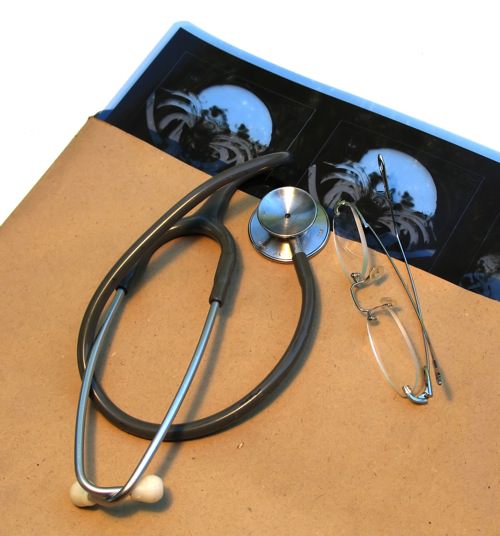 The subject of death, and especially autopsy, is a little more macabre than I’m used to dealing with. Even so, I could not resist sharing some information on the matter that I discovered via an unlikely source: my “They Work For You” email alerts. A free, online service that allows users to track UK Parliamentary goings-on, by keyword and/or a manner of other useful filters.
The email linked to a debate regarding an amendment to Clause 15 of the Coroners and Justice Bill, which covers the issue of post-mortem examinations. Muslims (and as it turns out, Jews as well) require the body to be buried as soon as possible after death occurs. In addition, generally speaking, many people have a special sensitivity towards surgical autopsy, as they don’t wish the body of the deceased to be ‘harmed’ in any way.
The debate revealed that Manchester’s coroners jurisdiction has been offering MRI-based autopsies for some time, developed in response to the needs of its sizeable Muslim and Jewish communities. Apparently, not only is the procedure non-invasive, but it is also much quicker than the traditional, dissection-based method, as it does not rely on the analysis of biopsies, which can delay the results of a post-mortem for days, or even weeks.
Keep supporting MuslimMatters for the sake of Allah
Alhamdulillah, we're at over 850 supporters. Help us get to 900 supporters this month. All it takes is a small gift from a reader like you to keep us going, for just $2 / month.
The Prophet (SAW) has taught us the best of deeds are those that done consistently, even if they are small. Click here to support MuslimMatters with a monthly donation of $2 per month. Set it and collect blessings from Allah (swt) for the khayr you're supporting without thinking about it.
The following excerpt provides more information on the technique [Source]:
Powerful new technologies are yielding postmortem images that allow medical examiners to comprehensively understand cause of death while avoiding some of the drawbacks of traditional scalpel autopsy.
In the past, determining cause of death meant careful examination of the body by dissection—a time-consuming, expensive procedure some cultures find objectionable.
On the other hand, virtual autopsy, as it is generally known, uses CT and MR imaging to capture detailed images of cadavers. Radiologists can then create 3D visualizations that enable pathologists, coroners and medical examiners to investigate the condition of the body for clues to the cause and manner of death.
Swiss pioneers of the technology have trademarked the name Virtopsy® to describe their unique forensic reconstruction strategy that combines different imaging methods—computed tomography (CT), MR imaging, image guided biopsy and postmortem angiography, among others— with special database and application software.
…
Given that forensic evidence doesn’t last forever, virtual autopsy’s most obvious advantage is that it creates a 3D image—a permanent record that can be studied, archived or sent on to others.
…
Another key benefit of virtual autopsy is that it allows investigation without destroying the body, a procedure many people of different faiths and cultures find invasive or offensive. People of Jewish and Muslim faiths that believe most autopsies violate religious laws… while others find the idea of autopsy on relatives distasteful or unnecessary. “You have the decorum of a funeral, interrupted by a slight detour to chopping block—that’s the way some people see it”.
There was no mention in the parliamentary debate of other local British jurisdictions providing this service on a routine basis, though there was suggestion that it would become more widely available in the near future. It seems that this is an issue that Muslim and Jewish groups could easily lobby for, considering that MPs and coroners both appear sympathetic to the cause, and the cost of the procedure is not much higher than that of the surgical alternative.
Furthermore, as the advantages of this procedure are not restricted to the appeasement of cultural and religious obligations, but also include the better management of time and medical resources, its widespread adoption would be of benefit to the entire community, God-willing.
Keep supporting MuslimMatters for the sake of Allah
Alhamdulillah, we're at over 850 supporters. Help us get to 900 supporters this month. All it takes is a small gift from a reader like you to keep us going, for just $2 / month.
The Prophet (SAW) has taught us the best of deeds are those that done consistently, even if they are small. Click here to support MuslimMatters with a monthly donation of $2 per month. Set it and collect blessings from Allah (swt) for the khayr you're supporting without thinking about it.


![faith is resistance [WANNxMM]](https://c7c8edde.rocketcdn.me/wp-content/uploads/Faith-is-Our-Way-of-Resistance-1-400x240.png)
![faith is resistance [WANNxMM]](https://c7c8edde.rocketcdn.me/wp-content/uploads/Faith-is-Our-Way-of-Resistance-1-80x80.png)



Israel Seeks Escalation For Latitude – The Regional “Conflict” Widens

Post-Ramadan Reflections From A Mother Of Littles

[Podcast] Palestine in Our Hearts: Eid al-Fitr 1445 AH

Foreign Affairs Official Resigns Over Gaza Genocide

A Ramadan Quran Journal: A MuslimMatters Series – [Juz 30] Solace For The Sincere And Vulnerable

IOK Ramadan: 7 Qualities of Highly Effective Believers | Keys To The Divine Compass [Ep18]
IOK Ramadan: Choose Wisely | Keys To The Divine Compass [Ep15]
IOK Ramadan: Making Time for Allāh at Night | Keys To The Divine Compass [Ep21]
IOK Ramadan: They Were Not Created Without Purpose | Keys To The Divine Compass [Ep23]
IOK Ramadan: Appreciating the Prophet ﷺ | Keys To The Divine Compass [Ep22]

IOK Ramadan: The Importance of Spiritual Purification | Keys To The Divine Compass [Ep30]
IOK Ramadan: The Power of Prayer | Keys To The Divine Compass [Ep29]
IOK Ramadan: The Weight of the Qur’an | Keys To The Divine Compass [Ep28]
IOK Ramadan: Families of Faith | Keys To The Divine Compass [Ep27]
IOK Ramadan: Humility in Front of the Messenger | Keys To The Divine Compass [Ep26]
-

 #Islam3 weeks ago
IOK Ramadan: 7 Qualities of Highly Effective Believers | Keys To The Divine Compass [Ep18]
-
#Islam3 weeks ago
IOK Ramadan: Choose Wisely | Keys To The Divine Compass [Ep15]
-
#Islam3 weeks ago
IOK Ramadan: Making Time for Allāh at Night | Keys To The Divine Compass [Ep21]
-
#Islam3 weeks ago
IOK Ramadan: Appreciating the Prophet ﷺ | Keys To The Divine Compass [Ep22]
abu abdAllah Tariq Ahmed
February 28, 2009 at 2:35 AM
BarakAllaho feek!
J
February 28, 2009 at 2:06 PM
Jazakh-Allah khair.
Excellent stuff! Al-Hamdu Lillah.
I wonder if this is an option on the “other side of the pond”!
talib
February 28, 2009 at 3:52 PM
wow….thanks for posting this!!!
this is so fascinating subhanAllah. Medicine is just so awesome(after med school, before med school, or when ur an AOA)…
wassalaam!
AnonyMouse
February 28, 2009 at 6:33 PM
Reminds me of something I’ve seen on CSI :D
On a more serious note, this is excellent – it would be extremely useful for Muslim communities everywhere… hmmm, I wonder if there’s a way to contact your local legal authorities (police, the hospital since they’re usually in charge of autopsy stuff) and advocate for the introduction of the “virtopsy”…
Jad
February 28, 2009 at 10:17 PM
Salam,
This is a great idea. This is the first time I hear about this and it sounds really cool, so I do not know much about it. InshaAllah, I am planning on reading on it. I am a little skeptical though because the article did not offer any drawbacks to this technique. There are many disease processes that connot be diagnosed without a biopsy and many more lesions that are not detectable through MRI or CT.
I think a hybrid method of a virtopsies and minimally invasive guided biopsies is the way to go.
iMuslim
March 1, 2009 at 7:48 PM
Wa ‘alaykum salam wa rahmatullah Jad. The source I quoted from was definitely trying to ‘big up’ Virtopsy, for their own interests. But generally speaking, it looks like coroners would not give up on surgical autopsy completely, for the reasons you mentioned.
Sister
March 2, 2009 at 10:14 PM
wow this is interesting…
Ameera
March 10, 2009 at 2:12 PM
A practical and useful alternative to the regular autopsy is always welcome. On the very first day of my 3rd year at med school (last year), I was shown an autopsy video by the Forensic Med dept! It was very, very difficult to watch it, especially certain parts. However, you cannot deny the benefit that comes from autopsies, especially in suspected criminal cases. As a med student, I am amazed by how much doctors can discover from autopsies. In fact, dissection halls have enabled medicine to progress by leaps and bounds… I cannot imagine medicine without the anatomical, pathological, surgical information that can be learned through dissections and autopsies.
However, EVEN IF the best and most honorable, so to speak, methods are used… these procedures are no little thing and while “chopping block” is not the best description of the autopsy table, it does come ominously close.
Karen Timlin
October 1, 2013 at 9:57 PM
Hi guys……..I just lost a friend,…..neither of us thought our different religions was anything to be bothered by…….we just treated each other the same……but I’m just here because I wanted to know he was treated with absolute respect when he died…… I feel a lot better knowing that because he was muslim, his body was cared for…not subjected to what most Irish people are…. I don’t appreciate the way catholic’s bodies are treated when we die….. the whole process just isn’t respectful….. i dont know if an autopsy was preformed on him…. it was just a tragic accident…. we dont believe any fowl play was involved….. so i dont think there was a need to do one…. i really hope one wasnt performed anyway….can a decreased person’s family object if it was suggested? i dont know if any religion can or cannot, i never thought to ask….he was missing for a long time, but once he was found, he was buried within two days…. i read that its tradition to only cleanse the body in scented water and wrap in clean sheets…. i really hope that was what happened for my friend…. is that what always happens? sorry for my ignorance… ive always been open to finding out all i can about other religions, just, i never looked into or even asked my friend while he was here, what happens when you pass away…. its just not something we ever thought of…. he was just 2 days off turning 20, and Im only 21…ive lost other friends, but losing a friend, especially a young, talented guy, that just happened to be a different religion, isnt something you plan for……..losing a muslim friend just isnt something you ever think about……maybe when your older, but at 20?…..we were just the type who enjoyed life….we didnt think of anything too serious….we both just loved making films and music videos….having fun while we’re young…..death was the furthest subject from our minds
Mehzabeen (iMuslim)
October 2, 2013 at 3:42 PM
Hi Karen, I am sorry to hear about loss of your friend. It sounds like you were close.
Muslims are taught to ponder on death as much as possible, because – as you yourself have witnessed – it can come at any time. Death is called ‘the end of all pleasures’; the condition upon which we die will decide how we will be judged by God in the afterlife. That is why Muslims regularly pray for guidance, asking God to take our souls in a good state.
Where in Ireland are you based? I have visited Dublin; there seems to be a good Muslim community there.
This is a good website that describes the ‘purpose of life’ from an Islamic perspective:
http://www.islifejustagame.com/
Karen Timlin
October 2, 2013 at 6:18 PM
Ah god….I didn’t know that……he was a bit of a wild child, he just badly wanted to fit in with the rest of this lost country……..I really hope that doesn’t affect where he is now…….he was the nicest guy you’d ever meet, never hated anyone, never hurt anyone……. He was a Dub himself, but his family were moved to Mayo, …..he was so happy when he got into college in Dub and got to move back!! We never talked about religion…… I never really thought of him by a religion, or his colour… I didn’t want him to think that his race or faith was all I thought of when I looked at him……. Wish now I’d asked more…… It must have been so lonely to be surrounded by mainly everyday Irish and Polish people, that was his friends…. no one to talk to him about his own life, faith, everything. But I’m sure while he lived in Galway or Mayo that he was involved in a good community.. I remember in his room in Galway while we were in college here, that he had a picture of a good man his grandfather really respected, he wasn’t sure what the background was, but his grandfather told him he would keep him safe…….so he really did care a lot about his religion, maybe didn’t shout it from the rooftops, but the people closest to him knew