
Aqeedah and Fiqh
Of Mice and Men – The Cheese Factor

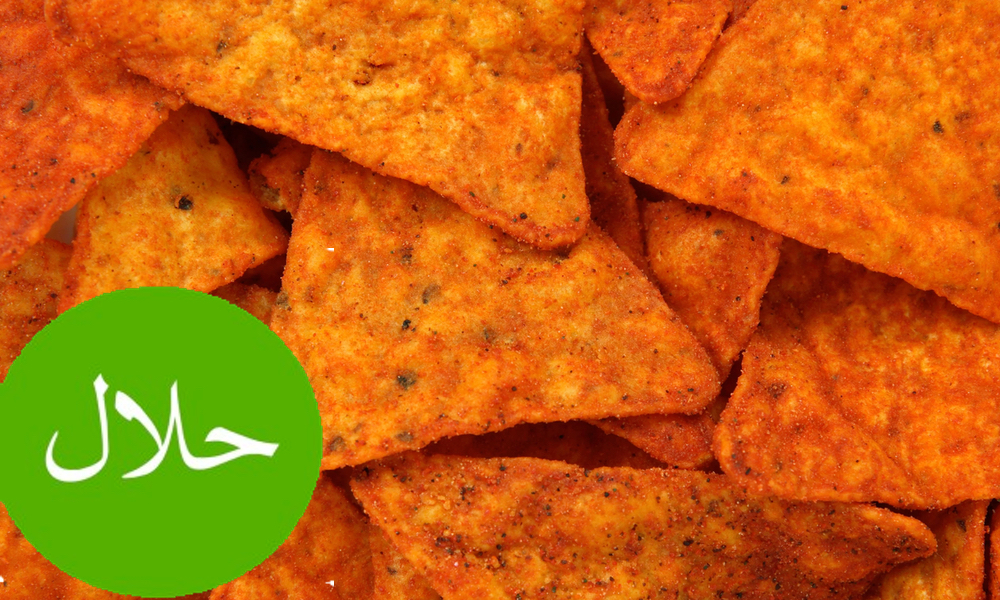
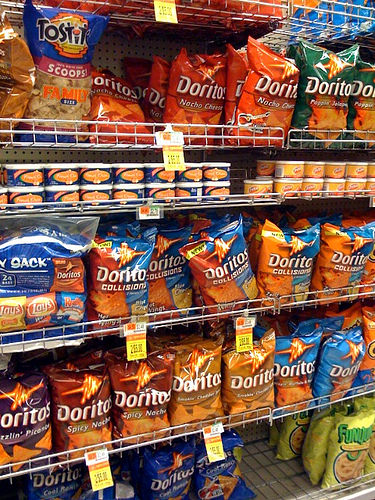
Shaykh Yasir Qadhi explains why he disagrees with the recent claims that Doritos are haram.
I admit: I am cheesed off. Totally, that is.
Keep supporting MuslimMatters for the sake of Allah
Alhamdulillah, we're at over 850 supporters. Help us get to 900 supporters this month. All it takes is a small gift from a reader like you to keep us going, for just $2 / month.
The Prophet (SAW) has taught us the best of deeds are those that done consistently, even if they are small. Click here to support MuslimMatters with a monthly donation of $2 per month. Set it and collect blessings from Allah (swt) for the khayr you're supporting without thinking about it.
Recently, I returned from one of the largest Muslim conferences in North America. While at the convention, I had placed my son Ammaar in the day-long seminars meant for the younger children. When Ammaar got back to the hotel room, the first thing he said as he barged into the room, his eyes wide open in amazement as is his wont, ‘Baba, Baba! Do you know that Doritos and Cheetos are harām?’ I groaned internally, knowing the basic source of this ‘fatwā’, and asked, ‘Why do you say that?’ to which he replied, ‘The auntie in our class said so!’
Sigh………. One more important lesson in fatherhood: make sure you teach your children that much of what they learn in ‘Islamic’ school is not necessarily ‘Islamic’.
As all of us are so (painfully) aware, of recent there has been a flurry of e-mails in Muslim circles regarding popular products, such as Doritos, that use cheese manufactured from porcine rennet. Since these products are sprinkled with such cheese, concerned Muslims have automatically concluded that the aforementioned products must be totally harām, and thus unceremoniously boycotted. Putting aside the nutritional value of such products, such a (cheesy) attitude, although commendable due to its sincere intentions, also betrays a fundamental lack of knowledge regarding halāl and harām foods. Before jumping the gun, it would behoove Muslims to do a little more research and consider the matter from all angles.
In this article, it is my intention to examine the issue in a more academic manner. However, for those who don’t have the time to read it, then to cut a long story short, the strongest opinion appears to be that cheese, in all of its commonly available varieties (except those that actually contain pork as an added flavoring) is absolutely and totally halāl.
In order to prove this point, first we’ll discuss how cheese is actually manufactured. Then, we’ll look at the Islamic perspective on animal rennet and, finally, the ruling on cheese derived from it. As a disclaimer, please note that this is, firstly, a very cursory look at the issue, both from a chemical and an Islamic point of view (although I do feel it is comprehensive despite its brevity), and, secondly, represents only the opinion of its author.
The Manufacture of Cheese
Cheese is a product formed by coagulating milk using a substance called rennet, and an acidification process. Milk from any animal may be used, although of course the most common ingredient is cow’s milk, followed by goat’s milk (some more exotic cheeses are found in cultures that use milk from reindeers, camels, and llamas, to name but a few). Hundreds of different flavors of cheese may be produced, depending on what type of milk is used, whether the milk was pasteurized or not, the butterfat content of the milk, the type of rennet, the addition of specific enzymes and flavoring agents for taste, the acidification process, and the length and environment in which the cheese is aged.
No one knows when man first ‘discovered’ how to make cheese. The origins of cheese pre-date recorded history, and all ancient civilizations, including the Romans, Greeks and Egyptians, are known to have been cheese producers and consumers. One of the folktales regarding the ‘discovery’ of cheese involves an Arab nomad who wished to carry milk across the desert. Finding no container other than an goat’s stomach, he transported the milk in it, only to discover at the end of his journey that the milk had been separated into curd and whey by the rennet from the stomach!
Rennet is, therefore, an essential component of manufacturing cheese. Traditionally, only animal rennet was used in the manufacture of cheese. However, due to the high demand of cheese and the cost and difficulty associated with the production of animal rennet, more and more companies are turning to other sources for rennet. The two primary types of rennet besides animal rennet are: vegetable rennet, and synthetic rennet manufactured in laboratories from various fungi. It is safe to state that in modern times most cheese is manufactured from non-animal rennet, but the percentage of animal rennet is still quite high. (In one of the cheese manufacturing plants that I visited in Holland, a mixture of synthetic and animal rennet was used; another one I visited in Vermont used only vegetable rennet).
It goes without saying that any cheese manufactured with rennet not taken from animal sources does not raise any fiqh controversy, hence the discussion at hand will focus on cheese manufactured with animal rennet.
Animal Rennet
Rennet is a complex natural enzyme that is produced in mammalian stomachs to digest milk. Animal rennet is typically extracted from the inner linings of the stomachs of young animals, usually cows or pigs. It is the younger animals who need this rennet to fully digest their mother’s milk; older animals do not yield as many necessary enzymes, hence if older animals are used, more stomach lining must be used to produce the same quantity of rennet.
In order to extract the rennet from the stomach linings, a chemical process is used in which the linings are dissolved in a mixture of acid and other solvent. This facilitates the transfer of the enzymes from the stomach linings to the solvent. The final stage involves neutralizing the acid. At the completion of this process, the rennet is available in a viscous liquid form. It is this form of rennet that is actually added to the milk for the coagulation process.
Of interest to note is that most of this final viscous liquid is actually solvent (water, salt and acid remnants); typically less than 1% of the liquid used is actual animal enzyme. The amount of rennet solvent needed for the manufacture of cheese is quite insignificant – as an example, in the factory that I visited in Holland, a small beaker of solvent rennet was added to a large vat of prepared milk.
The Islamic Ruling on Animal Rennet
From an Islamic perspective, animal rennet can be divided into three categories:
Firstly, the rennet derived from animals that have been slaughtered in accordance with the Sharīaah. There is no difference of opinion that such rennet is completely pure.
Secondly, the rennet derived from permissible animals (e.g., cows, sheep and goats) that have not been slaughtered according to the Sharīaah – for example, a cow that has been killed by a means other than ritual slaughtering (zabh). With regards to this second category, there is a difference of opinion amongst the classical scholars (manifested in the four madhabs) regarding the permissibility of such rennet – the opinion of Abū Hanīfa, one of the two opinions narrated from Ahmad (and the one chosen by Ibn Qudāmah), and the opinion of Ibn Taymiyyah, was that such rennet was pure, hence the cheese derived from it would also be considered pure. Other scholars, including the relied upon position in the Shafī’ī and Mālikī schools, is that such rennet is impure, and the cheese derived from it also impure. Many later Hanafīs, disagreeing with Abū Hanīfa’s view on this matter, also claimed that such rennet is impure (for some modern fatwas, the reader is referred here).
Thirdly, the rennet derived from impermissible animals, such as pigs. There is no significant difference of opinion that such rennet is impure, as the source of it is impure. Just like the meat, milk and bones of such animals are impure, similarly the rennet derived from their stomachs is also impure. Rennet of the second category would be permissible for Muslims to produce, buy, or sell if they followed the opinion that it is pure (and this is the correct opinion insha Allah). However, since porcine rennet is Harām, it is impermissible for Muslims to manufacture or sell such rennet, based on the Hadīth, “When Allah prohibits a matter, He prohibits its price” [Narrated by Ahmad]. The ‘price’ in this Hadīth means buying and selling the product.
Having said that, this ruling [viz., that porcine rennet is impermissible to sell or consume] should not be confused with another one: buying, selling and (most importantly) eating cheese manufactured with porcine rennet. Most Muslims simply do not understand that the two rulings are not necessarily identical, hence the confusion.Thus, to reiterate, cheese manufactured with animal rennet of the second and third categories is what is at dispute here. This article will not discuss the ruling of the second category of rennet in detail because, as shall be seen, if cheese from the third category is shown to be Halāl, then ipso facto cheese from the second category will also be considered permissible.
The Islamic Ruling on Cheese Derived from Porcine Rennet
There are two issues which need to be considered in order to derive the Islamic ruling on cheese: firstly, does the rennet undergo a chemical transformation when it is extracted from its source, and secondly, the quantity of rennet vis-à-vis the other ingredients. Both of these issues have a direct and immediate effect on the permissibility or impermissibility of such cheese. [Of interest is to note that although this article is specifically about cheese, these two foundational premises may be extrapolated to derive rulings on all substances and food items.] The first issue, that of a complete chemical transformation, is called in Arabic istihāla. Istihāla basically answers the question: If an impure substance undergoes a complete and total chemical transformation into a pure substance, is that sufficient to consider it to be pure? The classic example used by the early scholars is that of vinegar derived from wine: if left in the right circumstances or agitated in a specific manner, any bottle of wine will undergo a chemical transformation and become vinegar. This resultant vinegar is completely harmless and does not intoxicate.
Classical scholars differed over the issue of istihāla – the Hanafīs and Ibn Taymiyyah claimed that it made the final product pure, whereas the other three madhabs generally did not consider the resultant product pure if the process was intentionally done by human intervention. There is no verse or authentic hadīth that explicit supports either side – both groups base their opinion on sound reasoning and various reports from the Companions. (Also refer to this very beneficial article by a contemporary scholar on a closely related issue and a hadīth that plays an indirect role in this matter). Due to the fact that there is nothing explicit in the Divine Texts on this issue, and taking into account that a chemical transformation does indeed completely alter a compound (as anyone with a basic knowledge of chemistry will attest to), I follow the first opinion, which states that istihāla does indeed make the resultant product pure. Most of the modern fiqh academies also adhere to this first opinion.
The relevance of this issue to that of rennet is as follows: if animal rennet undergoes a chemical transformation during the extraction process, then even if its source was porcine, the extracted solvent would be considered permissible and pure by the first category of scholars. (Of course the second group of scholars would not be concerned with this issue, and would consider porcine rennet impure even if a chemical transformation occurred.)
Unfortunately, in my (limited) perusal of this subject, I could not verify whether the extraction process causes a chemical change in the rennet or not; however, from what I did read it would appear that no chemical change occurs and the extraction process is merely concerned with the transfer of the animal enzymes from the lining of the stomach into the liquid solvent. (Any information from specialists in this area would be greatly appreciated). Therefore, if the situation is that no chemical change occurs, then this issue is moot, and we move to the next one.
The next issue is really the crux of the matter. It concerns the quantity and residuum of an impure substance when mixed with a pure one. Now, there is pretty much unanimous agreement amongst the scholars that an extremely minute quantity of an impure substance, when added to a large quantity of a pure one, will not make the final substance impure. For example, if a glass of urine is thrown into an average-size lake, no scholar would consider the entire lake to be impure. Although the overall principle is a matter of agreement, there is no clear consensus on exactly how much impurity would affect a pure substance. So the real issue here is how to define what constitutes a miniscule quantity versus what would constitute a significant quantity. But the basic point is agreed upon: if an extremely minute quantity of an impurity is totally dissolved in a much larger quantity of a pure substance, such that the impurity does not leave any discernable presence (this is called istihlāk), the resultant substance will still be pure.
This fiqh principle is primarily derived from the famous hadīth, “When water reaches two qullas (a specific quantity of water), it will not become impure” [Narrated by Abū Dawūd]. Another evidence is the hadīth of the ‘Well of Budā’ah’.
Shaykh al-Islam Ibn Taymiyyah writes, commenting on the hadīth of the two qullas, “So when it is clear that the water being asked about was of a large quantity – two qullas – and a large quantity is not affected by impurities, but rather is dissolved in it, this shows that the ruling [of whether something is pure or not] is dependant on whether the impurity is carried [by the pure substance], meaning that its presence is obvious, and in this case it will be impure. But if it has been completely diffused in the pure substance, then it does not have any residual effects [and the substance is pure]. So, with regards to these oils, and milks, and sweet and sour drinks, and other substances that are pure, since any impurities [contained in it] have been completely consumed (istihlāk) and altered, then how can the pure that Allah has permitted be considered impermissible?! And who is there who has said that if a quantity of impurity mixes with a pure substance such that it is totally consumed by it (itsihlāk) and altered in it, that the substance will be impermissible? Rather, there is nothing to suggest this from the Quran, or the Sunnah, or unanimous consensus, or analogy. And that is why the Prophet (saw) said, in the hadīth of the Well of Budā’ah, when he was told that menstrual pads and dog carcasses and impurities fall into it, ‘Pure water is not made impure by anything’” [Mukhtasar al-Fatāwa al-Masriyyah, p. 20; also see Majmū’ al-Fatāwa vol. 21, p. 502].
Other scholars also give similar rulings. For example, Ibn Hazm claimed that if an impure substance is dissolved in a larger quantity of purity, to such an extent that the final product does not carry the name of the impure substance (i.e., such that the impure substance will not be a significant part of the final product), then the impermissibility that was initially applied to the impure substance will be removed from the final product, since the final product is not called that impure substance. As an example, he states that if a drop of wine were to fall into water, no effect is demonstrated, and the same applies for all other substances as well [al-Muhallā, vol 7, p. 422].
And this is the opinion of many modern fiqh bodies as well. The European Council for Fatwa issued a fatwa (Number 34, issued in Jumad al-Akhirah 1419 A.H.) stating that any impure substance added to pure food items does not make the food impure if either: (a) the substance underwent a complete chemical change (istihāla), or (b) was totally used up and dissolved in the food item, such that its traces became negligible (istihlāk). Based upon this principle, since the quantity of animal rennet in cheese is very insignificant, it would then follow that even if the rennet used to manufacture it was impure, the final cheese would be completely and totally pure. There would be no difference whether impermissible bovine rennet or porcine rennet was used. Since the quantity is so trivial, it is considered to be completely used up (istihlāk) by the pure elements, such as the milk, which makes up the bulk of the cheese. (See below for a more detailed look at the quantity of rennet involved in the manufacture of cheese).
Statements from the Classical Scholars Regarding this Issue
To the best of my knowledge, there is only one explicit hadīth about cheese. Abu Dawud, in his Sunan, has a chapter on eating cheese, in which he narrates a hadīth in which some cheese was presented to the Prophet after the Battle of Tabuk. He called for a knife [to cut it up], said bismillah, and ate of it (al-Sunan of Abū Dawūd, ‘The Chapter of Foods’, # 3819). This is quite an explicit hadīth on the permissibility of cheese manufactured from impure rennet, since no Muslim would have been present at Tabuk to manufacture the cheese. Hence, this hadīth appears to state that the Prophet ate cheese manufactured by idol-worshippers. The chain, however, is not the strongest of chains, and in fact appears to be weak (compare with the mursal narration found in both the Musannaf of ‘Abd al-Razzāq # 8795 and the Musannaf of Ibn Abī Shaybah # 24417). Also, if anything, this narration could only be used directly to support the permissibility of cheese manufactured from the second type of rennet mentioned above, and not porcine rennet, as the Arabs did not eat pig.
Of the famous Imams, we have the report where Imam Aḥmad was asked about eating cheese, to which he replied, ‘It may be eaten from anyone,” meaning regardless of who made it. And he was explicitly asked about the cheese made by the Zoroastrians, to which he responded, “I do not know; but the most authentic hadīth narrated in this regard is the hadīth of ‘Amr b. Sharahbīl, in which he said that ‘Umar was asked about cheese, and he was told that the rennet from dead animals is used, to which he said, ‘You say the bismillah yourself, and then eat.’ And Imam Ahmad also said, “Isn’t most of the cheese we eat manufactured by the Zoroastrians?” [See: al-Mughni, v. 13, p. 352; also al-Inṣāf, v. 27, p. 264].
Thus it is quite explicit that Imam Ahmad considered cheese to be permissible regardless of its source, as the Zoroastrians are not of those who mention Allah’s name at the time of sacrifice, yet the cheese manufactured by them was considered permissible. (It should be noted that, as is typical with the Hanbalī madhhab, there are other opinions narrated as well – but this is the one that is considered stronger within the madhhab).
Amongst the Companions themselves, we find some references to eating cheese, as Imam Ahmed referred to. Both the Musannafs of ‘Abd al-Razzāq and Ibn Abī Shaybah have entire chapters dedicated to cheese. In them, we find that although some of the classical scholars, such as Sa’īd b. al-Musayyab and Sa’id b. Jubayr, were hesitant to eat cheese if it was known that a dead animal (mayta) was used in its preparation, the majority of such scholars saw no sin in this regard. Ibn ‘Abbās is reported to have held the view that there is no problem with cheese that originates from Jews and Christians (Musannaf of ‘Abd al-Razzāq, # 8789). Both ‘Umar b. al-Khattāb and his son ‘Abdullāh b. ‘Umar allowed the eating of cheese, without regards to their origin. ‘Umar is reported to have said, when asked about it, “Eat, for it is only milk or whey,” (Musannaf of ‘Abd al-Razzāq, 8787), and his son said, “Nothing comes to us from Iraq that is more beloved to me than cheese!” (ibid., # 8790). A son of ‘Alī b. Abī Tālib, Muhammad b. al-Hanafiyyah, said, “Eat cheese regardless of its source” (ibid., # 8793). In my humble opinion, some of these narrations (such as the last one of ‘Umar) show that the Companions hinted at the small percentage of impurities in cheese and that it was not so consequential as to cause the entire product to be impure. Also, as Ibn Taymiyyah points out (see following quote), those who allowed the cheese were more aware of its manufacturing process than those who prohibited it.
And my favorite scholar, Shaykh al-Islām Ibn Taymiyyah, wrote, “As for the milk and rennet of dead animals, then there are two well-known opinions about this issue. The first of them is that it is pure, and this is the opinion of Abū Hanīfa and others, and one of the two opinion of Ahmad. The second opinion is that it is impure, and this is the opinion of Mālik, and Shāfi’ī, and the other opinion from Ahmad. Based on this difference of opinion, they then differed regarding cheese manufactured by the Zoroastrians, for the animals sacrificed by the Zoroastrians are considered impermissible [to eat] by the vast majority of scholars of the past and present, so much so that it is said that the Companions unanimously agreed on this ruling. Hence, if they made cheese – and cheese is made from rennet – then these two opinions will apply. But the stronger opinion is that their cheese is indeed permissible, and that the rennet and milk of dead animals is pure. And the proof for this is that when the Companions conquered Iraq, they ate the cheese of the Zoroastrians, and this was something common and well-known amongst them. As for what has been narrated of the disapproval of some of them in this matter, then there is a problem with it, since it is of the opinion of some of the people of Hijaz [i.e., Arabia]. And the people of Iraq were more knowledgeable of this, as the Zoroastrians were in there land and not in the land of the Hijaz. What makes this matter even clearer is that Salmān al-Farsi, who was the governor of ‘Umar b. al-Khattāb over al-Madā’in (in Iraq) and was active in calling the Zoroastrians to Islam, was asked about fat and cheese, to which he responded, ‘The halāl is what Allah has made permissible in His Book, and the ḥarām is what Allah has prohibited in His Book. And whatever He has remained silent about has been forgiven.’ And Abū Dawūd also reported this as a prophetic hadīth. Of course, it is understood that he was not being asked about the cheese of the Muslims or Ahl al-Kitāb, for that is a clear-cut issue; rather, the question was about the cheese manufactured by Zoroastrians. This shows that Salmān gave a fatwā for its permissibility…” (Majmū’ al-Fatāwā, vol. 21, p. 102-103). Note here that Ibn Taymiyyah is not talking about rennet derived from pigs but rather rennet derived from cows and sheep that have not been slaughtered according to the Sharī’āh (i.e., the second category of rennet in the tripartite division given above). However, his quote can be used here in the general context of the permissibility of cheese, regardless of its source. Also, in other fatāwā (some of which were quoted above), Ibn Taymiyyah clearly shows that he ascribes to the view that istihlāk of a impure substance in a pure material does not make the entire material impure.
Conclusion
Although it is healthy to note that many Muslims are very concerned about the laws of the Sharī’ah, before jumping to any hasty conclusions it is essential that these laws be understood and studied.
The primary issue that needs to be considered when it comes to the permissibility or impermissibility of cheese, in this author’s humble opinion, is the quantity of animal rennet that exists in it. Consider the following: In a crude experiment, 2 square centimeters of a prepared calf’s stomach lining was immersed in 30 grams of water to produce the initial rennet solvent. After the extraction process, the remaining linings were removed via a fine sieve, and then one teaspoon of the solvent rennet (i.e., around one-seventh of the initial solvent) was then mixed with approximately five gallons of prepared milk to produce around five pounds of cheese. Someone with a little more time than myself may easily work out the precise percentages and the final quantity of animal rennet in an average slice of cheese, but from these numbers it is pretty clear than a very insignificant quantity of actual animal enzyme ends up in the final cheese. To quote only one reference, Wikipedia states that 1 kg of manufactured cheese contains about 0.0003 grams of rennet enzymes. Again, that’s one kilogram – imagine how much rennet would be present in one slice, and now imagine how much would be in a corn chip that has only been coated with dried cheese.
Such a miniscule quantity of impurity (i.e., less than 0.00003 %) simply cannot make the entire product impure – a drop of najas blood that falls into a ten-gallon container of water is actually more concentrated than the amount of rennet enzymes in cheese.
Hence, to conclude, it is the humble opinion of this student of knowledge (and of many great ‘ulamā) that cheese, regardless of how it is manufactured or who it is manufactured by, is permissible. [The only exception would be if other impure additives of a sufficient quantity were incorporated in the manufacturing process – such as bacon flavored cheese.]
So go ahead Ammaar – eat away! Oh, and pass the dip…
Note: Please feel free to disseminate this article per: Online — please do not copy and paste the whole article, rather add excerpts with proper reference to the original here. Print, non-profit distribution — the entire article can be printed with proper reference to MM at the top. There are two reasons for this: (a) The comments provide more insight and clarification so we want to encourage people to read them as well, (b) any changes and correction will be made within this article and by keeping one main source, it will avoid uncorrected versions at multiple locations. JazakumAllahkhair– MM
Keep supporting MuslimMatters for the sake of Allah
Alhamdulillah, we're at over 850 supporters. Help us get to 900 supporters this month. All it takes is a small gift from a reader like you to keep us going, for just $2 / month.
The Prophet (SAW) has taught us the best of deeds are those that done consistently, even if they are small. Click here to support MuslimMatters with a monthly donation of $2 per month. Set it and collect blessings from Allah (swt) for the khayr you're supporting without thinking about it.







Far Away [Part 30] – The Rock Splitter And The Parthian Shot

Maryam: The Story Of The Muslim ‘Virgin’ Mary

Is It Ever Too Early To Prepare For Ramadan? Reflections On Rifq, Forgiveness, And Healing The Heart

Lessons From The Battle Of Badr: A Personal Transformation Perspective

Taliban Tale: How Afghan Militants Survived Campaigns In 2006-2016
Far Away [Part 26] – Shaytan Is A Liar

[Podcast] 50k Mahr, Hiding Money, & Who Pays for the Wedding? | AML Finance

Long War Without End: A Quarter-Century Since The War On Terror

[Podcast] Faith, Motherhood, and the Call to Gaza | Dr. Samaiya Mushtaq

What The Makkah Agreement Is Missing

The Best Actions for Eid al-Adha [Imam Dawud Walid]

Coming Full Circle: Who Are You Now? | Night 30 with the Qur’an

Running Away From Who We Are | Night 29 with the Qur’an

Building From the Ground Up: Week 4 Recap | Night 28 with the Qur’an






AnonyMouse
July 9, 2007 at 11:43 PM
The whole mouse-and-cheese thing is making me twitchy… hands off the Doritos, people, they’re MINE!
Moiez
July 10, 2007 at 12:52 AM
I like cheese on my burgers and cheese steaks. Sheikh Yasir Im hoping the cheese pizza you ate at my store is halal right?
Its a mixture of whole cheese, skim cheese, and cheddar cheese.
mootsie tootsies
July 10, 2007 at 2:19 AM
Sheikh Yasir,
My husband and I gained much from your lectures at this recent convention Alhamdulillah. On the long drive home, we listened to your amazing series on du’a.
I do have a question about saying AMIN at the end of making a dua. I believe you mentioned it is something unique to the Muslims? Then why do the Christians say it?
Faiez
July 10, 2007 at 2:34 AM
wow shaykh yasir, never knew you loved doritos that much. ;)
asalaamu alaikum
AbdulRahman
July 10, 2007 at 6:36 AM
Hope to see more from you, Sheikh Yasser.
Jazakum Allaah khair.
Muhammad Alshareef
July 10, 2007 at 9:07 AM
May Allah ta’ala reward you for clarifying what so many people are confused about.
As I read the entire article I kept thinking:
1. How blessed students of knowledge are because they can reassure the laypeople (not Frito Lay) regarding that which is permissible.
2. :P Cheeze Whiz! :)
Barak Allahu feek Sh.Yasir.
– Muhammad Alshareef
AlMaghrib Institute
Mujahideen Ryder
July 10, 2007 at 9:11 AM
Takbir! Allah hu Akbar!
Mahin F Islam
July 10, 2007 at 9:29 AM
Hmm….Sh. Yasir showing he still have remnants of his old school science background. BTW…What’s really interesting is that Altaf Husain (the Yasir Qadhi clone) mentioned how Doritos were haraam at the MSA Central Zone Conference this year and got everyone who was sleeping through his lecture to wake up. So the Original Yasir Qadhi refutes the Cloned Yasir Qadhi on the fiqh of Doritos.
Amad
July 10, 2007 at 9:36 AM
asa… its tough to clone YQ…
If there is one imp. point that hopefully we will all absorb, regardless of our agreement with the content, is that people need to be careful when going out on the limb with regards to halal and haram. That’s just one area that, as laymen, we have no right to step into.
Pingback: Mujahideen Ryder’s Blog - Not the average Muslim blog… » Shaykh Yasir Qadhi: Doritos is Halal!
Mujahideen Ryder
July 10, 2007 at 10:01 AM
Is cheetos also halal!
M sis2
July 17, 2016 at 8:38 PM
I think they are not because you see the cheetah on it that is a animal and animals are sometimes enzymes but there are 2 kinds of enzymes plant enzymes and animal enzymes but scince Cheetos is original bag has an animal on it it is not halal because animals are enzymes and the cheetah is an animal and there are some not halal chemicals in the cheese and the chemicals in it are kinds like cultures and a lot of things come from a lot of places and if you disagree on this eat it and see what will happen you will do everything a bad way so like if you know how to pray you won’t get up and pray for no reason because my mom is a doctor and someone came to her and said because I ate a kind of Cheetos after that I didn’t get up to pray and my dads friend is friend is the boss of the medical urgent care and actions of the medical assistance so that’s how I know all of this information
ibnabeeomar
July 10, 2007 at 10:09 AM
can we lay the dunkin donuts, skittles, and marshmallows to rest also? :)
if not.. i might have to start making new halal products to sell at conventions like halal organic milk, halal ice cream, and zabihah lassi :)
ibnabeeomar
July 10, 2007 at 10:10 AM
forgot to say jazakallahu khayr for the article, it was quite informative
Abdullah
July 10, 2007 at 10:24 AM
while we’re at it why don’t we discuss the whole halal meat issue and what truly is encompassed under it so we can really beat the dead horse no more :)
ZE
July 10, 2007 at 11:44 AM
Alhamdulilah, finally some credible clarity!
Although…if you think about it…..Doritos aren’t exactly whats best for health and welfare so we probably shouldn’t eat them anyways….
*cough Al-Maghrib-Rizq-Management-Bonus-Section-Physical Health*
(waits for backlash)
Amad
July 10, 2007 at 12:31 PM
I should add that Sh. Yasir does not believe in the permissibility of eating meat in America that is not dhabihah (halal or kosher). So, people should not confuse the two issues and conflate them as one. Completely different set of textual evidence and fiqh.
This is also an important point because some people may dismiss the conclusion reached in this post as just another “arab” opinion and that YQ probably believes meat is halal too in America. And that is NOT the case.
P.S. We are not going to turn this thread into a discussion about the meat issue, so please refrain from that topic. That is one dead horse that we have to just live with. FYI, I am not a muqallid of YQ in this one ;)
Amad
July 10, 2007 at 12:39 PM
Sh. YQ, since you are basing your conclusion really ultimately on the quantity aspect, what is the opinion of the madahibs on this? Is there a consensus that a very minute proportion does not make the rest of the substance haraam?
ahmed
July 10, 2007 at 1:07 PM
Great article, jazakum Allahu khairan for this info and giving us an insight into the thought processes that are involved in contemporary issues.
Anon.
July 10, 2007 at 1:14 PM
Wow! It seems the shaykh hit a sensitive spot when he mentioned food.
Altaf Husain
July 10, 2007 at 1:22 PM
May Allah ta’ala reward you for this comprehensive, articulate, and insightful clarification. Alhamdulillah, just reading it has made me hungry :)
Your brother in Islam,
-Altaf Husain
Niqaabis
July 10, 2007 at 1:22 PM
Jazaak Allaahu kharain
Who would have ever thought cheese Doritos would be inspiration for an article
Maa shaa Allaah..
Abdullah
July 10, 2007 at 1:29 PM
Jazakum Allahu Khair for the article. I always held that animal rennet is halal from dhabiha or non-dhabiha permissible animals. I will have to disagree about the pork rennet though. Although, the sheikh makes a good case using the quantity ruling regarding pure and impure substances, this ruling does not apply when impure substances are *intentionally* put into pure substances. Water is a different case because it is flowing and self-purifying by nature.
Those who don’t agree with the impermissibilty of it should at least practice wara’ (caution of falling into haram) in this matter and stay away from pork rennet. Seriously, eat an apple or something.
Wa Allahu ‘alam
Pingback: Of Mice and Men - The Cheese Factor–MontclairMSA.com
...
July 10, 2007 at 1:49 PM
U have no idea about how happy i am hehe (i luvvvvv cheetos and doritos :)
Oh yeah, i volunteered for two hours in kids seminar on Saturday and met your kids, Yusuf is soo adorable and not to mention how he was so over protective of his lil sister :) (i gave her chocolate so she would stop crying but yusuf made me call ‘mom’ to get the permission first -lol)
Mahin F Islam
July 10, 2007 at 2:22 PM
One should be careful not to let one’s love for Doritos just follow Sh. Yasir’s reasoning without thinking about it. That may constitute ‘phatwa shopping’. It’s OK to disagree and I think he would have no issue with us disagreeing w/ him as long as we have our sound basis for disagreement. (correct me if I’m wrong Yasir Bhai)
As for myself..I could care less b/c I never liked Doritos.
Sfaisal
August 29, 2015 at 9:14 AM
I agree its not about liking or disliking , but if we are following strict Zabiha rules n issue is animal rennet which my husb confirmed with Doritos company by calling they admitted using pork n beef products in there manufactures . So I would still stick to it that it’s not okay to eat these. I usually check all products before consuming from muslimsconsumergroup website and it’s pretty authentic with reference and most confirmed resources. JazakAllah
hmm
July 10, 2007 at 2:55 PM
Is this the same reason why some people eat gelatin?
Amad
July 10, 2007 at 3:16 PM
The gelatin issue is more based on the istihala (change of property) than on quantity… wallahualam.
sophister
July 10, 2007 at 4:06 PM
As a hanafi, I already knew this, but to keep in line w/shafi’s/maliki’s i stayed away from it because of its questionability of source. Even alot of hanafi scholars say that the change that gelatin goes through is not enough of a change to amount to a transformation to a pure substance.
AnonyMouse
July 10, 2007 at 6:24 PM
Yes, in my family my dad prefers that we not buy or eat anything with gelatin in it…
PakistaniSpammer
July 10, 2007 at 6:35 PM
jazakallahukhairan
Salafiya
July 10, 2007 at 6:47 PM
Interesting. jazakAllaahu khairan
Salafiya
July 10, 2007 at 7:00 PM
Oh and Ibn Abee Omar, my aunt called the Skittles company and (at least in the US), they do not use pork gelatin in it. It’s some other animal gelatin…
helloworld
June 29, 2012 at 10:58 AM
a lot of skittles now are gelatin free.. look at the ingredient again.. they’ll even write seprately “Gelatin-free” :)
Sadia
July 10, 2007 at 7:21 PM
Thanks for clarifying this issue. On a follow-up note, does this mean that it’s permissible to eat foods cooked with alcohol (such as cooking sherry, etc.) since the alcohol content is low relative to other ingredients AND since the alcohol undergoes a chemical change? Just wondering if the same rule applies? :0)
Niamah
July 10, 2007 at 7:31 PM
Sheikh, Allah swt says in the Quran to eat HALAL AND TAYYIB, i wonder if all the junk food we eat is tayyib??
If you can make comments on what does tayyib imply, ill appreciate it, JazakAllah Khair
Pingback: Chill yo Islam yo » Blog Archive » doritos are halalujah!
Yasir Qadhi
July 10, 2007 at 10:16 PM
– Jazakum Allahu khayran Ustadh Muhammad AlShareef and Ustadh Altaf Hussain for your kind comments.
– Of course people have the right to disagree, and of course if someone does agree it should be due to the evidences presented, and not due to one’s culinary preference :)
– The issue of gelatin typically has to do with the istihala issue. Therefore for me this issue needs to be resolved by scientists, not scholars. I’ve asked many chemists/ biochemists/ pharmacists, and it seems the jury is out on this one – but to be honest most of them have told me that they would not classify the change as chemical. Hence if this is the case porcine gelatin would be najas.
– The issue of alcohol that has been added to cooked food as a flavoring and burned off is a more detailed one, but yes these two principles would still apply in my humble opinion. There is also the added issue of whether alcohol is najas or not (major difference of opinion in our times; not a major one in previous times), if it’s not najas then different rules will apply in cases where its used in food. Again that is a different topic.
– The brothers who wanted to avoid cheese out of wara’ (extreme piety) are indeed commended for such a view, but I must admit that I find this a bit skeptical. Establishing wara’ in relation to cheese is good, and I do not mean to put anyone down, but the way I view it, living in the West one compromises on so many issues of far greater evils. In my humble opinion the evils associated with even opening a checking account in an interest-bank (yes, I have a bank account) are far worse than many of these high-level wara’ matters. While it might be a type of daroorah to have a bank account, really if you think about it there are indeed ways that you could live with a very minimal amount in the current account and the rest safe in cash in safety vaults. But who amongst us will do this? Additionally, I believe that pretty much most companies that we would work for would have more haram in them than the percentage of rennet in cheese, and yet none of us is that picky when it comes to ascertaining where the money of his paycheck comes from (and neither does the Shari’ah require such precision – walhamdulillah!!). The point is that to be selective in where to apply wara’ seems to be missing the point – but that is just my opinion and you are free to disagree, and I pray that Allah rewards you for it. Also please do remember that wara’ in and of itself cannot be used to make anything makruh, much less haram.
– I know that some scholars (without any explicit evidence from the Quran or Sunnah, I must add) differentiate between a najas being intentionally added vs. one that just ‘falls in’, but I find this differentiation to be illogical. In the end of the day, I personally don’t see why that should have an effect on the verdict of the final product – it is either pure or impure! But, yes, for those who stick to a particular madhab and hence cannot go beyond the rulings of its scholars, I do understand that even a percentage as trivial as .00003 simply does not matter in the face of a legal opinion within the madhab.
– Amad generally speaking there is agreement on the principle that an extremely minute quantity of an impurity would not affect a large quantity, but under this principle some madhabs add other conditions, and are more stringent in defining what constitutes ‘trivial’. As some of the comments above illustrate, its not that simple.
– One also notices that even amongst the Companions and early generations, there was some ikhtilaf. A point that I mentioned in passing, but can now be extrapolated to our situation, is that those Companions who were more knowledge of the manufacture of cheese (such as Salman and Ibn Umar) generally allowed it. And I would add that even in our times, those scholars who are more aware of the chemical processes and quantities involved (such as most modern fiqh academies, and also the very scholarly and Western-educated Dr. Nazih Hammad, who specializes in food matters, and the European Academy of Fiqh, etc…) are more lax than ulama who have never really studied these procedures or are aware of how cheese is made. For them, the mere mention of ‘pig’ or ‘alcohol’ makes anything and everything haram – but if this principle were really taken to the extreme and the percentages neglected, then many many food items, including coke and vanilla flavored products, would be considered haram.
– With regards to a product that is not nutritional being haram, really this is an extreme statement. By all means live a healthy lifestyle, and if you wish to avoid foods that are fatty or high in cholesterol or this or that, then do so. But don’t read the word ‘haram’ into these matters. Most people don’t realize the severity of this word!! The Quran itself strongly chastises those who make haram what Allah has made halal. The pure is that which Allah has made halal, and the impure is that which He has made haram, as per the text of the Quran (Surah Maidah).
Hope that clarifies some issues. And once again, I iterate: this is just an opinion. Feel free to follow what others say. But I would advise brothers and sisters to use the intelligence that Allah has blessed us with, and realize that scholars – all of them – are but human, and their own prejudices and contextual backgrounds are bound to affect the fatwas they give, just like my own prejudices and background shape my understanding of the issue.
In the end, truly Allah knows best…
Yasir
jamal
July 10, 2007 at 10:44 PM
this may be one of the signs of qiyamah when, in comparison to who passed before, an unlearned men becomes sheik and starts giving fatwa..
Mujahideen Ryder
July 10, 2007 at 11:23 PM
Jamal – What exactly are you implying?
tr
July 10, 2007 at 11:28 PM
yeah jamal, who are you pointing finger towards ?
Abdullah Syed
July 10, 2007 at 11:53 PM
I am still skeptical :)
That desi in me.
Abdurrahman Kandil
July 11, 2007 at 12:31 AM
Thank you Sh. Qadhi for this insightful article! I have a few questions though:
Impurity: What does this mean in Islam?
– Other than pigs, what other animals are considered impure? Are ANY products derived from pigs impure (Can I play with a football that’s made from pork leather)?
– I’ve heard many people say that alcohol is also impure or ‘najis’. What are the views on that issue? Can I clean my hands with ethanol in the lab? Check out this article about Muslims refusing to use anti-bacterial gels in hospitals because they contain alcohol: ( http://www.thesun.co.uk/article/0,,2-2006600358,00.html).
Sh. Qadhi, you mention two main Islamic principles in his article:
Principle 1: “Istihāla basically answers the question: If an impure substance undergoes a complete and total chemical transformation into a pure substance, is that sufficient to consider it to be pure?…I follow the first opinion, which states that istihāla does indeed make the resultant product pure.”
Principle 2: “If an extremely minute quantity of an impurity is totally dissolved in a much larger quantity of a pure substance, such that the impurity does not leave any discernable presence (this is called istihlāk), the resultant substance will still be pure.”
Using your reasoning in this article, can we assume that gelatin-containing products and foods cooked with wine are halal (since pork-derived gelatin is chemically altered (principle 1) and the amount of alcohol in foods cooked with wine is very small because most of it is burned off in the cooking process (principle 2)?
Thanks,
Abdurrahman
SaqibSaab
July 11, 2007 at 2:48 AM
JazaakAllah khair, Shaykh Yasir.
Just for this post, I’m thinking about holding a BBQ for you when you come to Chicago, insha’Allah; with cheesy cheeseburgers served just for you (and Ammaar, too). Maybe with some cheesecake?
Oh, and we can’t forget the Doritos =P.
Osman
July 11, 2007 at 5:03 AM
assalaamu`alaikum
I have just read Mufti Muhammad Taqi Usmani’s “Ahkaam Adh Dhabaa’ih”, and I strongly believe we have many issues to address regarding the meat we consume, so much so that we have operate abattoirs like how the jews run their slaughterhouses. Forgive me for posting this here, but I would really love to discuss certain matters regarding this with Bro Yasir Qadhi, is there any way I could reach him? jk.
PakistaniSpammer
July 11, 2007 at 5:26 AM
so can we eat mcdonalds?
Fulaan
July 11, 2007 at 7:23 AM
JZK – I have some confusion on category 2 – rennet from unislamically slaughtered animals.
An argument I read for allowing this rennet was that they classified the rennet to be ‘alive’ in and of itself as it is an enzyme – and by it acting to make cheese by itself after it is separated from the animal’s stomach – shows that it is still ‘alive.’
Thus the issue was not with the way the animal was slaughtered, but whether the source of the rennet (the animal) was non-porcine, as the porcine rennet would be najas as of the source – as everything from and about the pig (and dog) is najis; wheras the animal rennet from a calf/lamb/etc would have been fine as the rennet did not ‘die’ when the animal was slaughtered – and their host animal source was tahir – so they were tahir.
That being said, whilst the minuteness of the amount of rennet in proportion to the amount of the cheese is a more flexible argument, the classical opinions seemed to use the fact that the rennet was tahir (as no pigs were eaten by the arabs – nor by it seems the zoroastrians from your article – and the rennet was from halal animals.)
Did the previous scholars draw a distinction between cheese from porcine and non-porcine rennet – i.e. did they approach the issue from a different angle to one of insignificant amount?
Lamia Kadir
July 11, 2007 at 8:11 AM
ASA Sheik,
Jazak’Khair for the science lesson, am ashamed I transiently believed all I heard without critically thinking it out. And to think I spent 4 years in med school…..
Your sis, L. Kadir
Amad
July 11, 2007 at 8:54 AM
salam
Abdurrahman Kandil: Sh. YQ has already alluded to the gelatin issue.
McDonalds, etc., regarding the issue of meat in the West: it is a COMPLETELY different topic, with different ahkaam and different conclusions. As I have already mentioned, YQ does NOT believe that non-zabihah (non-dhabihah) meat is halal in America… so no McDonalds cheesburgers for Sh.Yasir.
Please let’s stick to the topic and not conflate the variety of the issues. One issue at at time inshallah!
Br. Osman, you can email us at info at muslimmatters //dot// org, and we’ll pass your questions to YQ.
JAK
Sheeraz
July 11, 2007 at 9:47 AM
Asalamalekum,
Another issue for which I haven’t received a satisfactory answer as of yet, is the issue of verifying the permissibility of food before consuming it. How far do you have to go? An example will hopefully clarify. Suppose I go into a non halal restaurant and order black bean soup from the menu. The menu does not indicate that it contains any forbidden substance, but say in actuality it contains broth made out of pork. Since I knew it was a non halal restaurant am I obliged to eat only from halal restaurants (plenty of which are nearby), since there is a risk that I may be consuming haraam. Or conversely, do I take the approach, that since the food I am consuming, apparently seems not to contain any haraam ingredient, assume it is halaal. Perhaps the latter approach is recommended (not sure about this), but if I take the former approach, is this blameworthy (meaning is it makrooh or haraam)? An answer to this question will greatly reduce the dilemma that many Muslims in the West (I suspect ) are facing.
JazakAllah
Hassan
July 11, 2007 at 10:24 AM
Brother Sheeraz made excellent question, that I had in my mind as well. How much investigation are we supposed to do, to find if meat was slaughtered properly, to find if water is pure (tahir). I remember someone telling me, that he went to islamic fundraising dinner, and few people did not eat even fish (not talking about crab/lobster etc, normal fish), saying we do not know how it was cooked! I mean it was muslim event, and its fish, but they apparently need to know whole life history of fish, before they can eat it.
ExEx Blogger
July 11, 2007 at 11:03 AM
Maa-Shaa-Allah, as expected from a magnum-cum-laude of Medina university, Shaykh Yasir gave it so hard.
SaqibSaab
July 11, 2007 at 12:11 PM
Regarding food cooked with wine added:
http://www.islam-qa.com/index.php?ref=1814
*Note the intent of this link is not to link readers to a fatwa website. Rather, the link contains research performed by the MAYO Clinic on food cooked with wine.
Mujahideen Ryder
July 11, 2007 at 12:28 PM
Love the note, SaqibSaab.
Danish
July 11, 2007 at 12:53 PM
JazzakumAllahu khayr Shaykh Yasir.
In regards to your comment/question about gelatin, I was able to find the following statement from Kraft Foods:
http://www.kraftfoods.com/main.aspx?s=contact_us&m=contact_us/faqview&faq_question_id=1005&cache=N
Also, if anyone has a subscription to this service (or wants to donate generously for the Ummah ;-) ) then this article is available and might answer a lot of in depth questions:
http://www.blackwell-synergy.com/doi/abs/10.1111/j.1365-2621.2001.tb15209.x?cookieSet=1&journalCode=jfds
Danish
July 11, 2007 at 1:14 PM
This is the correct link from Islam Q&A that SaqibSaab was referring to:
http://www.islam-qa.com/index.php?ref=1814&ln=eng
Also, the North Carolina Physicians Health Program makes reference to the same Mayo Clinic study here:
http://www.ncphp.org/code/inform/articles/fns/alcnfood.doc
Exploratorium makes their own statement about this issue:
http://exploratorium.edu/cooking/icooks/01-05-04.html
Sabih Ahmad
July 11, 2007 at 1:43 PM
Assalamualaikum Brother Yasir Qadi.
First off, I wanted to say how much I enjoyed your speeches at the convention, I gained alot of Islamic Knowledge from listening to them.
About the Doritos topic, after hearing about what you posted, I went straight to the phone and called the Doritos headquarters itself. I asked them, what they have in the Dorito chips, and they told me to name a specific variety. I named the Nacho Cheese, and I was told that it contains the pork enzyme. When my older cousin called, she received the same information, and they told her there was a mix of beef and pork in every variety, dosen ‘t that make it automatically haraam? I haven’t read your whole article yet, but this is the discussion me and my cousin were having. Inshallah I will take the time right now to read the article and fully understand what your saying.
WS.
Amad
July 11, 2007 at 1:48 PM
ASA Sabih, yes, they use the enzyme that could be of bovine origin. That is the whole premise of the article.
Danish
July 11, 2007 at 1:52 PM
Amad,
Did you mean that the whole premise of the article is even if the enzyme is porcine then it is still permissible?
Sheeraz
July 11, 2007 at 1:55 PM
Correction to my previous post:
“Perhaps the latter approach is recommended (not sure about this), but if I take the former approach, is this blameworthy (meaning is it makrooh or haraam)?”
This should be read as:
“Perhaps the former approach is recommended (not sure about this), but if I take the latter approach, is this blameworthy (meaning is it makrooh or haraam)?”
My apologies.
sister
July 11, 2007 at 2:29 PM
Assalaam-u-Alaikum Wa-Rahmatullahi Wa-Rabakatuhu
what about pepsi
they include pork in it ?
Sabreen
January 31, 2013 at 2:14 PM
Pepsi does not contain pork. However Allah swt has told us to eat from the tayyibaat..ie good things..and scientifically also we know it has much harm than benefit. Add to it the controversy of contributing funds to the Israeli armed occupation in Palestine..So I left drinking Pepsi and coke.. And I advise you also..It’s not good for health.WallAhu taala Aalam
Amad
July 11, 2007 at 2:47 PM
pepsi include pork? No.
w/s
Solomon2
July 11, 2007 at 2:56 PM
Excellent, excellent, Yasir Qadhi. The rules are somewhat different, but kosher and halal certifiers often work together on these issues. Anything that lessens the confusion is a boon to manufacturer, retailer, and consumer alike.
As for myself, I buy Utz brand Nachos, Party Mix, and cheese curls because these products are certified kosher by the Orthodox Union AND they taste delicious. (Herr’s “Nachitas” are also kosher, but not to my taste.)
On the gelatin issue, products made with kosher gelatin (derived from fish, I think) are available: certain flavors and brands of Jell-O and marshmallows are made with it. One just has to look for the stuff.
Solomon2
July 11, 2007 at 3:21 PM
In my humble opinion the evils associated with even opening a checking account in an interest-bank (yes, I have a bank account) are far worse than many of these high-level wara’ matters.
You are treating modern currency as if it is real money. Real money, the money discussed in the Torah and the Koran, is gold and silver, isn’t it? Paper dollars and base-metal tokens are just units of credit, and the amount of credit a given quantity of gold and silver buys varies from day to day. So why worry about an interest-bearing account if it is denominated in dollars, rather than gold or silver?
Amad
July 11, 2007 at 3:27 PM
Solomon, timely entry! I have always had a few questions in mind about kosher:
I had an instructor once who was an orthodox Jew, and he used to bring special kosher pizza to share with me… awesome dude… In any case, he told me that as far as gelatin pills, the Torah forbid that it touch your mouth (I am going off memory, so excuse any mistakes), so he would wrap it up in a little piece of tissue to swallow it. Does that ring a bell? What do Jews do about medicine and other pills that you may not have a choice on? Are there similar principles w/regards to change of characteristic?
As far as everyday stuff, if it has a K or a U on it, does that mean that it will for sure not have any bovine products? And will be based of kosher other-than-pig animal meat/bone?
Look forward to hearing more…
ruth nasrullah
July 11, 2007 at 4:19 PM
I know it’s going off base, but I’m curious about kosher food, too. It’s always my second choice if I really really can’t get my hands on halal – for instance, I bought kosher chicken broth when I couldn’t find halal. Is that appropriate?
Solomon2
July 11, 2007 at 4:43 PM
the Torah forbid that it touch your mouth (I am going off memory, so excuse any mistakes), so he would wrap it up in a little piece of tissue to swallow it
Gross. That must really do a number on the esophagus.
What do Jews do about medicine and other pills that you may not have a choice on?
I consider the matter of what to do if prescribed medication with porcine and other non-kosher ingredients is controversial enough to consult with one’s rabbi for guidance. The general principle, I think, is to do what’s necessary to reasonably preserve one’s life and health.
If it has only a “K” on it, that is a symbol added by the manufacturer only, not a certification. It’s all right for some breakfast cereals.
Bovine = cow meat or product, at my level it must be kosher-processed to be acceptable, and must carry the hechsher of a reputable kosher-certifying organization. No food I know of can be certified kosher if there is any pork product in it.
The “change-of-characteristic” rule is something I’ve never heard of before. I don’t think it exists in the laws of kashrut. Even if an egg has a single bloodstain on it, that renders the contents inside non-kosher.
Amad
July 11, 2007 at 4:51 PM
oops i meant pork.. not bovine…
I have heard all Jello is kosher. And what does a K symbolize if not kosher?
khadija
July 11, 2007 at 7:46 PM
Assalamu alaikum wa rahmatullahi wa barakatuhu everyone
Wow…so sheikh Yasir’s kids were in the kids sessions….I’m surprised someone didn’t keep one of them lol! Not funny…on a serious note, it would be interesting to get some insight on how a learned person educates his children….idea: It would be AWESOME if ANY Ustadh og Al Maghrib wrote up a bit about how they raise their children…how they deal with issues, when they teach what..day to day life..reallly awesome…I’m sure others would agree…
i did read the article…really good masha allah la hawla wa la quwata illah bullah!
oldschool
July 11, 2007 at 9:38 PM
lol! Doritos would generate so many responses. subhan Allah :)
Karam Kim
July 11, 2007 at 11:50 PM
Assalaamualaikum warahmatullaahi wabarakaatuhu.
I’ve listened to your lectures.
It’s jewelry to me.
As one of many admirers of yours, I have to confess that I love you Sh.Yasir Qadhi in Allaah.
Thank you for your excellent article.
Your article consists of mainly two parts.
And I want to ask you a question for each part.
1. Helping the one who use pork.
: If they make cheese by porcine enzyme, that means they earn money by using pig.
It’s same thing with Jewish case. Jewish used to make candle by pig fat and they earned money by using pig. According to one Hadeeth, the Prophet(sallalaahu alaihi wasallam) forbade buying the candle made from pig fat.
What I mentioned above is not food matter, but from the Hadeeth it can be concluded that it’s forbidden to make money from pig.
If you say it’s Halaal to buy and eat Dorito made from porcine-added cheese, doesn’t mean that you allow them to make money by pig? In the Quran Allaah forbides us to help Munkar. What can you say if someone says to you that your statement eventually help Munkar(making money by pig) or what’s forbidden by the Prophet(sallalaahu alaihi wasallam)?
2. Matter of quantity
I agree with you regarding quantity matter in general. But let me differ from you in one perspective.
It’s right to say small quantity of najas(A) doesn’t make water(B) impure. B exists without A. In other words, B doesn’t contribut anything to the existence of A. B has nothing to do with A. In this case, in my humble opinion, we can apply quantity rule that you’ve mentioned.
But can we still say that porcine enzyme(A) doen’t make the cheese(B) impure because of its small quantity? In this case, B CAN’T exist without A. Thanks to the B, A can exist. B is essential to the existence of A. That is, this case is not the matter of quantity. It’s matter of ingredient. This case is totally different from small najas and water. Water can exist without najas, but cheese can NOT exist without enzyme. Therefore, I think we can NOT apply quantity rule to this case.
I’m not sure whethere I can get reply from you or not, ut it would be great honor for me to get some words from you. Please know that you’re my role model, and I always want to see you in person. Because I reside in Korea, it’s not easy, but who knows?
May Allaah bless all of us. Ameen.
Karam Kim
July 11, 2007 at 11:57 PM
My mistake:
But can we still say that porcine enzyme(A) doen’t make the cheese(B) impure because of its small quantity? In this case, B CAN’T exist without A. (Thanks to the B, A can exist. B is essential to the existence of A.)
-> Thanks to the A, B can exist. A is essential to the existence of B.
Sheeraz
July 12, 2007 at 9:24 AM
I think Karam raises an interesting question in point 2. Is it correct to make analogy (qiyas) between consuming water mixed with a drop of urine and consuming cheese containing pork enzymes. The two cases though similar are different in some regards (as Karam described above). Another question which comes to my mind is that water is consumed in its liquid form while cheese is solid. Perhaps analogy should be restricted to liquids and not be extended to solids. My point is that a scholar’s conclusion on this issue will differ depending on the what he considers a valid qiyas. And derviving the qiyas involves ijtihaad. Just some thoughts. Allah alone knows best .
Maverick
July 12, 2007 at 10:40 AM
Sheeraz:
EVen if you were to restrict it to liquids, it would include the cheese manufacturing process, as the rennet is added as a liquid, into a larger vat of liquid.
Sheeraz
July 12, 2007 at 10:58 AM
Maverick correct, but what I was referring to was in the end of the day you’re eating a slice of cheese, which is different than drinking water. The point I’m trying to make is “Is it a better approach to be liberal or conservative in one’s qiyas?”. What is the stronger usool? One may argue that the ahadith refer only to water and do not apply to other cases (a very restrictive approach). Therefore all other cases need a different proof.
Maverick
July 12, 2007 at 12:27 PM
Sheeraz, personally I take the opinion that if there are two halal choices in front of me, but one is more easier [liberal] than the other, then I take that one, since Allaah said in the Qur’an that He desires ease for us … so only in situations where there are two halal and legitimate choices, I’ll take the easier one.
Not to be mistaken for picking and choosing between the different madhaa’hib to suit my desires. That, I don’t do.
bdr
July 12, 2007 at 1:46 PM
“…Wikipedia states that 1 kg of manufactured cheese contains about 0.0003 grams of rennet enzymes.
—
Such a miniscule quantity of impurity (i.e., less than 0.00003 %) simply cannot make the entire product impure ”
It’s actually even more minuscule: 0.0000003%
(.0003 grams is .0000003 kg, so .0000003/1)
Yasir Qadhi
July 12, 2007 at 2:07 PM
Salaam Alaikum
– Br. Jamal – this fatwa is not being given by a minor student of knowledge such as myself, but rather is the fatwa of many scholars and Fiqh Academies of our times, amongst them the European Fiqh Council.
– The issue of alcohol being najas is another topic altogether. The majority of scholars claimed that it was, a small minority (and this minority is growing in our times) claimed that it is not.
– Br. Fulaan – yes your comments are on the mark. I tried to allude to this in the article but did not want to go into too much detail. The controversy in most classical fiqh works is whether rennet ‘dies’ and hence is najas, or whether the death of the animal has no ruling on it. Ibn Taymiyyah and others opined that a dead animal’s rennet (and milk) does not take the ruling of its meat. From my readings, I have only noticed later scholars bring up the istihlak issue in specific reference to cheese. The concept of istihlak is clearly discussed in classical works, but I do not know of any works that then use this principle for cheese. However, most modern medical researchers with Shar’i knowledge bring this up as the main point in claiming cheese is permissible. Allah knows best why most classical scholars did not use this principle in their times…
– Br. Sheeraz, again this is a different topic. There are no doubt levels of piety, and there is also extremism in over-verifying! Personally, if a dish ‘appears’ to be vegetarian or seafood, I assume it is. In some fancy restaurants I ask if any wine will be used to prepare the seafood, but otherwise I don’t go into too much detail. If someone were to do that I’m not saying that’s not allowed…
– Solomon2, thanks for your comments. The ruling on paper money takes the same rulings as gold as silver because, in our times, they have taken the place of gold and silver. There is no significant difference of opinion amongst modern scholars that paper money takes the rulings of classical dinars/dirhams.
– Karam, the rulings of Islam would not apply to insignificant quantities. Our buying Doritos does not drive the pig industry! Really no scholar would consider Doritos haram for such an issue.
Your second issue is valid if the Sharee’ah were to take into account the effect of a substance on another. But for the most part it doesn’t. It looks at the quantity, regardless of what effect that quantity has. The final product, as long as it is pure, contains a very insignificant quantity of najas. This is all that the Sharee’ah is concerned with.
– The rennet is added as a liquid to a liquid. The issue of cheese being solid would not affect what I mentioned earlier.
– bdr, well I’ll be! I can’t believe I overlooked that. So you’ve actually increased the potency of my argument by 1000 % (or is it 10,000 %?) :D
Yasir
Ahmad AlFarsi
July 12, 2007 at 4:41 PM
“It’s actually even more minuscule: 0.0000003% (.0003 grams is .0000003 kg, so .0000003/1)”
Assalaamu alaykum,
Actually, what Sh. Yasir originally had (0.00003%) is the correct percentage. True, 0.0003 grams is 0.0000003 kg, and the final ratio is 0.0000003/1… however, since 0.01/1 is 1%, then 0.0000003/1 is 0.00003 %, as was mentioned in the original post.
Just so we have our numbers straight :)
wassalaam
aarij
July 12, 2007 at 6:42 PM
Subhan Allah, I didn’t read the whole thing (but I’m gonna soon, in sha Allah)…but what stood out for me from this entire page is this:
“- Br. Jamal – this fatwa is not being given by a minor student of knowledge such as myself, but rather is the fatwa of many scholars and Fiqh Academies of our times, amongst them the European Fiqh Council.”
May Allah increase you in ilm and in emaan shaikh Yasir, can’t wait to see you again this Saturday, in sha Allah :)
On the article, I’m actually very strong against eating cheese from a non-Muslim store, but now my shunning of cheese will be mostly related to my culinary preferences :)
I think a few of my friends would be vindicated by this, but its all good, walhamdulillah!
Amrooha
July 12, 2007 at 7:23 PM
Wow JKK to Sheikh
mASHAaLLAH from all these responses it would be fair to say Our Ummah really loves cheese, now we have the verdict just watch the waistline huh maybe will stick to low fat cheesE!
Solomon2
July 12, 2007 at 8:48 PM
Just for comparison: in kosher products, it isn’t necessarily the quantity of non-kosher ingredients that matters, but whether or not their presence changes the character of the food. Even a very small amount of rennet suffices to change milk into cheese, so rabbis have decreed that rennet must be added to the cheese culture by an observant Jew, and if animal rennet is used it must originate from a kosher-slaughtered animal.
Nirgaz Abdullah
July 13, 2007 at 12:12 AM
Salam Brother Yasir!
Nashville Sisters give our salams and look forward to our next class if you come back to Memphis.
Great Article, and JazakAllah Khair…I had already put those forwarded articles about the chips in my trash file.
Honestly, if I were to listen to every fowarded article about what is “Haram” or “Halal” I would only be left with water. And who knows that might be next weeks email…”Bottled Water no longer Halal”…lol
Umsalih
Abdullah
July 13, 2007 at 1:34 AM
Subhan Allah…I have been following this issue in real life and on the web for several weeks and their are 2 responses I see:
1. Jazakum Allahu Khair for telling me, I will never eat Doritos again.
2. Are you sure? You want to make everything haram! I’ll have to do some more research (chomping noises heard after eating more Doritos).
Group #1 is very Sahaba-like and I respect you for that. Hearing and obeying and staying away from doubtful matters.
Group #2. Wow, how disappointing. I mean come on — celebrating in the post comments that the shiekh made a fatwa that corresponded with your desires! And still asking about McDonald’s.
Now, this is a real trivial issue to me but it has big implications and that is why I must say something. It is trivial to me because I barely eat chips and, when I do, I eat Kosher-certified Kettle chips that are healthier and taste better. Also, Frito Lay still has non-porcine and even Kosher products to select from: http://www.fritolay.com/fl/flstore/cgi-bin/dietary_choices.htm?
But of course, your favorite bag isn’t on there is it.
The fact that Frito Lay has a section on their website called “Seasoned Products Made Without Porcine Enzymes” makes it significant. It is upsetting that Frito Lay is more concerned about this than some of our Muslim brothers and sisters. Especially when there are alternatives.
The reason I say this has big implications because it really is a sign of the weakness of our faith. I am not talking about the difference of opinion on the matter but more of the reaction.
Really bros and sisters we need to step it up! When will we eat halal over non-dhabiha? When will we start eating kosher over non-kosher enzymes? When will we take the extra effort to free ourselves of any blame as the prophet Muhammad (peace be upon him) said, “He who guards against doubtful things keeps his religion and honor blameless.” [Bukhari and Muslim]
I know, I know you’re saying: the halal meat store is “not clean”, it’s just cheese, or their is a difference of opinion, or this is a fiqh issue.
No this is not a fiqh issue. This attitude is not a fiqh issue. Our hearts are not pure.
Everyone always going back to fiqh. We have completely taken Zuhd (Asceticism) and Wara’ (Leaving doubtful matters) out of our vocabulary. It is something that we read about in stories and no longer possible I guess.
The prophet (peace be upon him) forbade us from drinking out of gold and silver and sitting on silk cushions and said these are not for the believers in this world. We always think about the technical fiqh and never think why. We use analogy for porcine rennet but never for our iPhones and luxuries. Wake up!
Let’s start making sacrifices really. And I’m not talking about cheese I’m talking about dunya. Wassalamu Alaikum.
bilal
July 13, 2007 at 1:38 AM
masha’Allah, this article is awesome
'Abdil Kareem
July 13, 2007 at 3:02 AM
salaamun ‘alayk Abdullah,
You state, “The reason I say this has big implications because it really is a sign of the weakness of our faith.”
I understand why you’re upset; however, you have no reason to be. You seem to be upset and concerned because your impression of debates such as these, debates that deal with “trivial issues” as you label them, are an excuse for Muslims to dig up any excuse they can find to follow a lax opinion that is in accordance to their desires.
I say you have no reason to be upset since these “trivial matters” are, in fact, addressed by the Quran, Sunnah, Sahaabah and the Ulamaa of the past and present. So how can one claim that they are trivial? And if in fact they have been addressed by said sources, and there’s sufficient evidence from them to lead to such detailed conclusions as are available today, then rather than getting upset and calling it a “weakness of faith,” shouldn’t you be appreciative of the vastness and comprehensiveness of our religion; or in the least, be appreciative of those who expend their efforts to reveal the works of the scholars of past and present?
Lastly, your implication that the iPhone and other luxuries fall under forbidden indulgences of this world is severely flawed. Granted, it’s important to “think about” the technical fiqh as well as the “why” behind such rulings; however, many people conclude (based on their own whims) with a “why” that, in reality, opposes the technical, yet manifest teachings of the Quran and Sunnah.
All praise is due to the One who sent us the clearest of Books, the most knowledgeable of Teachers, salallahu ‘alayhi wasallam, and the minds we can (and should) use to comprehend their lessons.
wassalaamu ‘alaykum.
Karam Kim
July 13, 2007 at 3:26 AM
Yaa Sheikh Abdallaah!
Your post made my heart totally comfortable.
Since there’s no clear message from the Quran and the Sunnah about this matter, I’ll stay away from that, doubtful matters.
Reason matters, but faith also matters, even more than that.
May Allaah bless and guide all of us. Ameen.
cheese
July 13, 2007 at 3:28 AM
Assalamalaikum,
To Yasir Qhadi, I came across this in an email about why doritos are haram:
“other Enzymes such as Lipase and finally dairy flavors containing Enzymes, if the rennet is from microbial and above mentioned are not from Halal source then cheese will not be Halal. The culture medias are made with milk, whey and lactose (Haram if made from pork rennet, Haram media, pork enzymes), dried autolyzed brewer’s yeast (by product of beer) and Pancreatin (Haram if from pork).”
source: http://www.muslimconsumergroup.com/Events.do?menu=Events&eventAction=eventdetail&eventId=307
Can you clarify this please? I assume that the same prinicple applies here to these other enzymes and ingredients?
Jazakallah kahyr.
Abdullah
July 13, 2007 at 4:08 AM
Assalamu Alaikum ‘Abdil Kareem. Akhi you missed my point. You are looking at it from a fiqh perspective as I mentioned. I am talking about this attitude that you describe as “an excuse for Muslims to dig up any excuse they can find to follow a lax opinion that is in accordance to their desires.”
You might see it otherwise but I find this to be a real problem with the umma. If people’s conclusions were based on pure fiqh I would have no issue with that. But when you have people posting celebration comments you know yourself that is not the right attitude. My issue isn’t with fiqh as you think, it is with the Muslim attitude.
I didn’t say those luxuries were forbidden. Be fair. But once again you keep going back to the fiqh. This is my exact point. We have no concept of Zuhd in the dunya and Wara’ in our daily lives. These are the treasures that the prophet Muhammad (may Allah send peace and blessings upon him) lived by and the sahaba (may Allah be pleased with them) and all the scholars (may Allah have mercy upon them) that we read about. Everyone is familiar with fiqh but none of us try to emulate these great people in how they lived. I know, I know it’s not obligatory to do so…
May Allah guide us all to what is best. Ameen.
Hassan
July 13, 2007 at 8:10 AM
Mr. Abdullah, I openly and very happily celebrate bounties of Allah for making this religion easy. My zuhd tells me to be happy praying qasr while traveling because I know that what my prophet (PBUH) did and making it longer would not give me any further reward. My zuhd tells me to enjoy what Allah has make halal for me. My zuhd tells me to see the example of sahabi Omar(RA) when he was accompanying a man and water fell on that man from roof, and he started asking people if this water was “tahir” (pure), and Omar forbade people to answer him, as it would make only things difficult for me. My Zuhd tells me not to act like jewish people who asked so many questions about halal and haram that made their religion of just dos and donts and left spirituality out of it.
Verily the best spirituality is that of prophet Muhammad PBUH, who married women, fast some days, break other days, sleep sometime in nights, and wake for tahajjud. He did not go out into jungles for leaving dunya.
Mujahideen Ryder
July 13, 2007 at 12:00 PM
Shaykh Yasir, when you say “an extremely minute quantity of an impure substance, when added to a large quantity of a pure one, will not make the final substance impure.” Doesn’t that only apply to water?
Danish
July 13, 2007 at 12:35 PM
Just a FYI – I called Master Foods USA today (the manufacturers of Skittles, Starburst, Snickers etc) to check on the origin of the gelatin.
Without talking to anyone (and anyone can call and see for themselves at 800-551-0683, option 2 and 2 again) there is a recording about gelatin in their products and it states clearly in one sentence: “Gelatin in our products is derived from beef”. I guess a lot of non-swine eating folks are suddenly calling in so they felt the need to put a recording about it ;-)
I thought I’d post this in case anyone was wondering about it.
Bilal Azam
July 13, 2007 at 3:24 PM
I just spoke to FritoLay and they said ONLY the list given on the following link does not have pork
http://www.fritolay.com/fl/flstore/cgi-bin/ProdDetEv_Cat_351852_NavRoot_361689_ProdID_564690.htm
Amad
July 13, 2007 at 3:32 PM
Bilal, pls read the post… We are well aware of this background.
W/s
Bilal Azam
July 13, 2007 at 3:38 PM
Oh my bad… i thought from the original post that He was referring to the second category and termed the third one haraam…
Personally i wud never eat anything that has pork in it no matter how little the quantity..
Sorry about the misunderstang again
Guidance Seeker
July 13, 2007 at 4:10 PM
Assalamoalaikum Sh Yasir,
Jazakallah Khair for such detailed and informative article. Based on this and what you mentioned about the companions eating cheese from Zoroasters, it would make beef or any non-pork gelatin halal for us to eat?
I am quite sure I know the answer to my own question but out of extreme fear ask for clarification to avoid pitfalls of my own shortcomings.
abdelrahman
July 13, 2007 at 8:14 PM
Wow Yasir that is pritty cool…
I liked your explanation of ketab al tawheed, I was in Medina the last month and half andi found the same format you had. ((Oh and i made dua for you too)).
Abdullah
July 13, 2007 at 8:22 PM
Assalamu alaikum brother “My zuhd tells me” Hassan. Allah making the religion easy and zuhd are 2 completely separate things. I take full advantage of dispensations in the deen without regret. Zuhd is living a humble life. Zahids usually don’t say “my zuhd tells me”. I never said go to the jungle. Qasr is not zuhd. Combining and joining your prayers is easy so of course people are going to do it. Praying tahajud until your ankles swell is not so easy.
Asking questions about the source of things is wara’ anyway and not zuhd. I do agree with you about excessive questioning as mentioned in your story. However, notice that Omar (may Allah be pleased with him) *prevented* him from asking. This is the opposite of the situation today. People are asking and others are answering. Some questions are legitimate others excessive. When it comes to things that are repeated constantly, people should ask. People aren’t asking about water dropping from a random roof they are asking about things that might occur every day. Some people eat Doritos or non-dhabiha meat every day so their is nothing wrong with these type of questions — they are actually commended.
I am going to post some hadith from An-Nawawi’s collection that will clarify what I’m trying to say:
The Messenger of Allah, sallallahu ‘alayhi wasallam, said:
“Truly, what is lawful is evident, and what is unlawful is evident, and in between the two are matters which are doubtful which many people do not know. He who guards against doubtful things keeps his religion and honor blameless, and he who indulges in doubtful things indulges in fact in unlawful things, just as a shepherd who pastures his flock round a preserve will soon pasture them in it. Beware, every king has a preserve, and the things Allah has declared unlawful are His preserves. Beware, in the body there is a flesh; if it is sound, the whole body is sound, and if it is corrupt, the whole body is corrupt, and behold, it is the heart.”
The Messenger of Allah, sallallahu ‘alayhi wasallam, said:
“Leave that about which you are in doubt for that about which you are in no doubt.”
The Messenger of Allah, sallallahu ‘alayhi wasallam, said:
“Verily Allah the Almighty has prescribed the obligatory deeds, so do not neglect them; He has set certain limits, so do not go beyond them; He has forbidden certain things, so do not indulge in them; and He has said nothing about certain things, as an act of mercy to you, not out of forgetfulness, so do not go inquiring into these.”
Wassalamu alaikum.
Hassan
July 13, 2007 at 10:40 PM
Masha’Allah, brother Abdullah you are true “zahid”, I could not have imagined being replied in such humble and decent way, and for husn-az-zan of others, by thinking best of others and understanding the way of speech was meant to make a point rather than talk about my personal level of taqwa. Jazak-Allah.
Abubakr
July 14, 2007 at 11:42 AM
As Salaamu Alaykum brother,
You can choose to argue this point and you can choose to eat cheese made from pig stomachs (albeit a very minute amount of “pig stomach”), but please don’t try to convince others . . . Keep it simple . . . when in doubt . . . . leave it alone.
Thank you,
Abubakr
jinnzaman
July 14, 2007 at 2:20 PM
Assalamu alaikum
While I don’t necessarily appreciate a non-Hanafi scholar telling Hanafis about their school’s jurisprudence, that definitely an awesome and well-researched fatwa. InshaAllah, it will create demand for fatwas based on strong proofs from the sources of legislation and an objective analysis of the legal question proposed.
May Allah (subhana wa ta’ala) reward Shaykh Yaser and others like them who take it upon themselves to elucidate the matters of the deen for the Ummah. Ameen.
masalama
SaqibSaab
July 14, 2007 at 5:40 PM
Nice, jinnzaman. =)
Amad
July 14, 2007 at 6:14 PM
While I appreciate the sentiments for the “Zuhd” line of defense, I do find it a bit odd, besides the fact that Sheikh sahib has already addressed it :) Yaani, why is that so many people’s Zuhd (esp. desis) ends on the halalness of food? Its like that old joke “Me and my girlfriend only heat zabihah”…
In the areas of priorities and the areas of doubts, there are SO many issues that we can start with that are MORE doubtful and MORE important in our daily lives than consuming 0.0000003% pork enzyme, which may or may not be in its original state.
Now, I am sure the countering point will be, “we should do as much as we can”. Sure. But why always start with food, and why with my Doritos?? LOOK around us, is that really something so important to concern ourselves with, esp. when the mountain of evidence from a fiqhi point of view is in its halalness favor? Allah has made this deen easy, so when we have completed all the faraid and stayed away from all the confirmed haraams, then I am sure everyone will be glad to talk about the ‘near harams’, or in this case the ‘remote, unlikely, near-impossibility haram’.
And whoever has kids can agree with me that doritos are an important source of nutrition for them ;)
Wasalam
JZ: good comment! And in this matter, i think the opinion is closer to ‘original-hanafi’ than others…
Hassan
July 14, 2007 at 6:56 PM
Salaam, Amad bhai I agree, I had a friend who would give speeches on how eating doubtful food is like breaching covenant with Allah, while he did not use to pray except Jumuah. And there are people who would do wara in food, yet have no wara in hurting/insulting other muslims.
The Wahhabi Misanthrope
July 14, 2007 at 6:59 PM
I’m no. #100.
Food. Controversial.
Ibrahim
July 14, 2007 at 8:01 PM
To add to what br. Amad said, listen to this shair (couplet) in Urdu (I will transliterate it here):
Tumhari dawat qabool mujh ko, magar yay kheyaal rakhna
Bear [sharab] kisi bhi brand ki ho, magar chicken fried halal rakhna!
SubhanAllah, although I have never encountered such a person, they are out there. May Allah guide them. On a serious note, I agree there are more important things but if someone can’t bring himself to eating chips still, let it be. Don’t belittle him and tell him that he should do others things first. On the flip side, those who still won’t eat it, I say at least don’t condemn those who would eat it based on this article and the evidence provided, and don’t question their intentions or zuhd because if you don’t know thier intentions, then as Muslims you must believe that they have the best intentions.
Ibrahim
July 14, 2007 at 8:13 PM
Sorry, I should be considerate and translate the couplet. Here it goes:
I accept your invitation but bear in mind
Any brand of bear is fine, but keep chicken fried halal!
Maverick
July 14, 2007 at 9:56 PM
Abdullah, you quoted the haadith which states in part:
“Truly, what is lawful is evident, and what is unlawful is evident, and in between the two are matters which are doubtful which many people do not know…”
That matter is referring to doubtful things which one does not know the true nature of. Which is why we were told in the Qur’an to ask those who know, if we do not know ourselves.
Specifically regarding this issue [Doritos] the issue is not doubtful as it was before, because Shk. Yaser clarified it.
So why make things difficult for people?
Amad
July 14, 2007 at 9:57 PM
ASA… just to be clear, I am not belittling anyone. I am sure Br. Abdullah believes sincerely in this matter inshallah and may Allah reward his wara’ in it. But I would say that the lives of many other Muslims revolve around the intricacies of halal and haram food, discussing it in their home bought on mortgage. I think there is a lot more doubt and much more need for wara in matters of bank interest (as again Sh YQ said) than doritos :) Oh, and let’s not start on the mortgage tangent now!
P.S. Ibrahim, love the couplet!
Pingback: Unbranded » Blog Archive » To eat or not to eat …
Abdul Malik
July 14, 2007 at 10:22 PM
Shaykh yasir, what is your stance on processed food which have geletine?
R Carter
July 15, 2007 at 3:02 AM
assalamu alaikum,
Shaikh yasir,
the proof you stated for the amounts, isn’t that to decide whether water was najis or not for the prurpose of wudhu and ghusl.
how are we using that to prove that we can consume a very minute amount of pork, if it has not been chemically altered that is.
thank you
wassalaam
Fayez
July 15, 2007 at 9:59 AM
Salaam3laikum, I disagree but respect your opinion though I feel each individual should learn and make their own conclusions.
1. Posting your opinion in such a short analysis opens a whole new door for ppl to accept halal based on your two arguments, chemical change and negligible traces. Wine to vinegar ie rice wine vinegar changes the composition of the substance, chemical change through fermentation over wood in time, same with the OH with ethanol not being intoxicating. But rennet from pig is an additive, and you cant intentionally add a teaspoon to 19L of water, once its manufactured it might not be significant, but its still necessary for the final product. Why cant u do with an alternative and use bacterial culture. Same applies to cooking with sherry, most might burn away, and its cooking alcohol which is slightly different, but its still has intoxicating effects with similar properties, eventually leading to using beer instead. I cook, i know how it adds to the food, thats why they use it, same reason why they use rennet, but why use it when u have an alternative? Why not avoid what is bad to safeguard yourself? And bringing the issue of living in the west and having haraam all around you is weak, that gives more reason to stay firm. I use to open windows in the winter because my roomates would cook bacon, true im not consuming it and its a little portion of the total air i breathe but its there and i am willing to suffer a little in the cold to avoid what is disliked by the Prophet (peace be upon him). When water reaches two quallas, the impurity of the lake is negligble refers to a logical reasoning, then reason with me. Dont u still prefer taking a shower before and after swimming in a pool? The najis is usually accidental, not imposed as in the case of rennet. It all comes down to taqwa.
Omar AbdulKayyum Garcia
July 15, 2007 at 10:00 AM
From my limited understanding of Fiqh, if it derived from a pure sustance then became impure then later transformed to pure then the final product is pure. as in the case of alcohol which its origin is fruit. However if the original product is impure then transform to impure its later product its impure. as in the case of Pork related products.
Why is pork used in the first place?
its even haram to touch it.
So if we wanted to make halal pork rennet, first we must hire a kafr to slaughter the animal and make the porcine rennet then make it go through the chemical transformation or add a small amount to our halal product, (make sure is an insignificant amount) so that we may consume it. (being that were are not supppost to buy and sell such haram produt, the Kafr who provided us with the insignificant amount of the rennet, in going to have to go unpayed, poor Kafr)
Please escuse the sarcasume, just trying to make a point.
note: this comment is only a personal view, it must not necceraly be taken as a fatwa.
jinnzaman
July 15, 2007 at 11:08 AM
Hey,
The amount of energy people are expending over whether Doritos are halal or not could probably be used to liberate Jerusalem from the Zalimoon many times over.
If you want to follow this fatwa, alhumdulillah, if you don’t want to, alhumdulillah.
The Sahabah (radhi allahu anhum) respected ikhtilaaf on matters, why can’t we?
Everyone just back off and breath and make wudhu and pray two nawafil and ask yourself whether this is that great of an issue to bicker about.
masalama
Abdullah
July 15, 2007 at 4:48 PM
Assalamu Alaikum,
I would like to address a few arguments people make:
1. “Since this issue is so trivial, it’s not worth talking about.”
2. “I know people that eat dhabiha but commit other sins.”
3. “This is not a doubtful matter.”
Responses:
1. Like I said before, this is a trivial issue that has big implications. Because I personally know people that chase lax opinions and become lax Muslims. First it’s Doritos, then non-dhabiha meat, and then music, etc. Plus, even though you might consider what you eat to be something trivial it is something you do EVERYDAY and the Prophet (peace be upon him) said about the dua of someone who eats something haram, “so how can he be answered?” [Muslim]
I am not trying to make things difficult on people as some people suggest. If I was, I would say chips or cheese are forbidden entirely. All I am saying is it is better to stay away from these couple of bags of chips! It is just a couple of bags and you are the one’s making a big deal because it’s your *favorite* one.
2. This is irrelevant because rulings are independent of the actions of people.
3. Allah did not order us to eat cheese but He did order us to avoid pig. According to this fact, it our responsibility to AVOID pig as the prophet Muhammad (peace be upon him) commanded us to. Remember the hadith says about the forbidden things “avoid them” not avoid them as much as you can.
Doubtful matters and fiqh are 2 completely separate issues. Fiqh has 5 categories (obligatory, recommended, halal, disliked, and forbidden). There is no doubtful category. Doubtful matters is related to faith and not fiqh. A sheikh can make a ruling on something and say it is halal and it can still be doubtful.
Remember, the very fact that there is difference on an issue can make it doubtful. When people say “sheikh Yasir proved it” this is incorrect because he states himself that it is his humble opinion. With all due respect to sheikh Yasir, him having an opinion on the issue does not remove it from being doubtful.
So all I am saying in conclusion is what I have been trying to say since the beginning: This is a doubtful matter. Whoever stays away from it will get rewarded and “keep his religion and honor innocent”. You will not get rewarded for eating Doritos.
The Messenger of Allah, sallallahu ‘alayhi wasallam, said:
“Truly, what is lawful is evident, and what is unlawful is evident, and in between the two are matters which are doubtful which many people do not know. He who guards against doubtful things keeps his religion and honor blameless, and he who indulges in doubtful things indulges in fact in unlawful things, just as a shepherd who pastures his flock round a preserve will soon pasture them in it. Beware, every king has a preserve, and the things Allah has declared unlawful are His preserves. Beware, in the body there is a flesh; if it is sound, the whole body is sound, and if it is corrupt, the whole body is corrupt, and behold, it is the heart.”
Wa Allahu ‘alam
Uzma
July 15, 2007 at 4:58 PM
This is a very well written article and clarifies the matter.
Thank you for all your hard work and research
amatulAdl
July 15, 2007 at 8:20 PM
assalaamu alaikum Brothers and Sisters and Shaykh Yaser Qadhi,
Jazakum Allahu Khairan, that was beautiful mashaAllah… and of course, very informative.
fi aman Allah,
amat Al-Adl
Karam Kim
July 15, 2007 at 10:38 PM
Mr. Abdullaah. I don’t know who you are. But I can guess you are very decent, noble Muslim. Really, I respect you. How can I get in touch with you? My email is [email protected]
Anyway, let me share with all of you my personal feeling. This is my first time to visit this kind of website. As a seeker of knowledge, my final conclusion now is that I’m NOT going to visit this website again for the protection of my faith…
I spent too much time reading the article and following responses. It’s more than 3 hours. 3 hour is long. For 3 hours, I could enjoy reading authentic articles written by for example, Sheikh An-Nawawi, Sheikh Ibn Taymiyah, Sheikh Ibn Baaz, etc.(Rahimahumullaah) It’d add up my level of knowledge and Imaan.
But what did I get from reading this article and all the responses? Nothing but a little new knowledge, and bitter feeling that even a popular, respectable seeker of knowledge like Yasir Qadhi can be a source of debate.
Actually after all of this, my Imaan has been decreased because of my unnecessary doubt of the authenticity of the author.
I should stick to studying Islaam and performing acts of worship. To dive into the debate is not very healthy in seeker of knowledge point of view.
And my respectable sheikh, Yasir Qadhi.
Your article, which “represents only the opinion of its author” is not just a opinion anymore. Your opinion is actually FATWAH to most of them. Please take this into consideration before your writing.
In my humble opinion, it’s better if your article focuses on less controversial issue.
May Allaah forgive our sin and make us pure as we were born. Aameen.
Bint Bashir
July 16, 2007 at 9:28 AM
Brothers and Sisters
Both sides of the argument are very clear here and the evidence has been presented for you to make a choice; if you want to eat doritos or not, i dont think this should be made personal amongst us.
Each individual is entitled to their own opinion and will be answerable for such. This article is not about Fatwa shopping, it is an expression of an opinion if you do not agree then simply do not eat the cheesy doritos…. The BBQ ones are just as tasty :)
And if you feel that opinion is fine then cheesy flavour it is.
And Allah knows best
Abu Ahmad
July 16, 2007 at 3:10 PM
As-salamu alikum,
I wanted to know if you can give a small explanation about the permissibillity of using vinegar. I know this kind of ties into the cheese issue as it deals with some istihala. I also wanted to know if it is permissible to use balsamic vinegar. Jazakum Allahu Khiran.
Umar Mirza
July 16, 2007 at 3:12 PM
S/A
I am rather disturbed by what was written in the article. This is the matter of najasat. The inner lining of the animal’s stomach that was extracted for its enzymes! Come on, How do people not see that the animal was not slaughtered according to shariah. Do you all really think that the Frito Lays follows shariah law? The point that was made comparing water was a great one but unfortunately Br. Yasser didn’t understand its premise and decided to use it to reinforce a shaky article. To make the assumption you can eat Doritos after reading this article is wrong. Not only will Br. Yasser have to answer for his actions but so will you all. If you do decide to eat this form of chips then please do it based on what your own opinion is and not because you think br. Yasser has said its ok too. Please do not condemn him. At the time of Qayamt god will ask you why did you eat haram? What will you say? Brother Yassers told us too! Also in the article under “Statements from the Classical Scholars” was unfortunately the worst thing I have ever heard. To think that the leaders of our religion would say such ignorant things as “Both ‘Umar b. al-Khattāb and his son ‘Abdullāh b. ‘Umar allowed the eating of cheese, without regards to their origin. ‘Umar is reported to have said, when asked about it, “Eat, for it is only milk or whey,” (Musannaf of ‘Abd al-Razzāq, 8787), and his son said, “Nothing comes to us from Iraq that is more beloved to me than cheese!” (ibid., # 8790). A son of ‘Alī b. Abī Tālib, Muhammad b. al-Hanafiyyah, said, “Eat cheese regardless of its source” (ibid., # 8793).” Wow what a statement. Eat cheese regardless of its source! The leader at the time of our religion said to eat something regardless of its origin. Are you kidding me! How does the leader of the faithful say such a blasphemes comment. This is why you should follow the teachings of the holly prophet (PBUH) & his family.
The messenger of Allah (PBUH&HF) said: “I am leaving for you two precious and weighty Symbols that if you adhere to BOTH of them you shall not go astray after me. They are, the Book of Allah, and my progeny, that is my Ahlul-Bayt. The Merciful has informed me that These two shall not separate from each other till they come to me by the Pool (of Paradise).”
Reference:
• Sahih al-Tirmidhi, v5, pp 662-663,328, report of 30+ companions, with reference to several chains of transmitters.
• al-Mustadrak, by al-Hakim, Chapter of “Understanding (the virtues) of Companions, v3, pp 109,110,148,533 who wrote this tradition is authentic (Sahih) based on the criteria of the two Shaikhs (al-Bukhari and Muslim).
• Sunan, by Daarami, v2, p432
• Musnad, by Ahmad Ibn Hanbal, v3, pp 14,17,26,59, v4, pp 366,370-372, v5, pp 182,189,350,366,419
• Fadha’il al-Sahaba, by Ahmad Ibn Hanbal, v2, p585, Tradition #990
• al-Khasa’is, by al-Nisa’i, pp 21,30
• al-Sawa’iq al-Muhriqah, by Ibn Hajar Haythami, Ch. 11, section 1, p230
• al-Kabir, by al-Tabarani, v3, pp 62-63,137
• Kanz al-Ummal, by al-Muttaqi al-Hindi, Chapter al-Iti’sam bi Habl Allah, v1, p44.
• Tafsir Ibn Kathir (complete version), v4, p113, under commentary of verse 42:23 of Quran (four traditions)
• al-Tabaqat al-Kubra, by Ibn Sa’d, v2, p194, Pub. by Dar Isadder, Lebanon.
• al-Jami’ al-Saghir, by al-Suyuti, v1, p353, and also in v2
• Majma’ al-Zawa’id, al-Haythami, v9, p163
• al-Fateh al-Kabir, al-Binhani, v1, p451
• Usdul Ghabah fi Ma’rifat al-Sahaba, Ibn al-Athir, v2, p12
• Jami’ al-Usul, Ibn al-Athir, v1, p187
• History of Ibn Asakir, v5, p436
• al-Taj al-Jami’ Lil Usul, v3, p308
• al-Durr al-Manthoor, al-Hafidh al-Suyuti, v2, p60
• Yanabi al-Mawaddah, al-Qundoozi al-Hanafi, pp 38,183
• Abaqat al-Anwar, v1, p16
My brothers and sisters please use common logic it doesn’t take a doctor, scientist specialist to tell you if you should eat something or not. Think about the basic fundamentals of Islam, think about what makes things pure and impure and when you are stuck then look towards the Quran and the teachings of the prophet and the examples of the truest for set by his Ahlul Bayt.
Wa-Salaam
Amad
July 16, 2007 at 3:55 PM
Wow Umar, you are worried about cheese, when you should be really worried about the Shia’s disrespect and hatred of the sahabah!
So, I would rather eat a million doubtful doritos than to be doubtful about the Prophet’s most beloved wife, Aisha (RD) or his most beloved man, Aisha (RD)’s father Abu Bakr. Or the second most beloved man, Umar (RD) or the third most beloved man, Uthman (RD), followed in 4th position by Ali (RD).
The najasat of the Shia thought with regards to the Sahaba far exceeds any najasat that may be present on some chips. Talk about misplaced priorities!
Finally, please don’t quote selective Sunni sources out of context when you otherwise deny their their veracity. That is called dishonesty…
Umar Mirza
July 16, 2007 at 4:23 PM
Brother I think you misunderstood my point. I am not sure what you mean by shia thought nor did I imply that. I am talking about common knowledge. What are you so angry about. This is not a shia sunni sahaba debate. USE UR COMMON SENSE for once and forget what a shia is what a sunni is what a whabi is. Everyone will go before god it will not matter what you are. You will answer to him. My point is that those transaltions can be wrong. How can our leader say oh dont worry just eat it you dont need to know where it came from. Also i didnt quote selective sunni sources these are our books that we look to for transaltions on matters. It wasnt just one book it was many. If you like i can find you more books. The ironic thing is not one of those books were written by shias. We need to stop hating them. They are not the problem. Ignorance is the problem. Hatred for what we dont completly understand is the problem. We are not the only sect in Islam we are taught to learn and understand before we judge. Dont look at the comments of a few ignorant shias that might have said things about companions. Look at the grass roots of what a shia is. No one in this forum has made a comment based on shia perspective so dont make this a battle of sects. If you would like more information on other sects i can provide you with it. I can provide you with proof of shias in the Quran, i can provide you with literature from shias, sunnis, whabis, ismalis, Ahmadis etc. It is wise to learn all in order to understand the truth.
Hassan
July 16, 2007 at 4:38 PM
Muhammad b. al-Hanafiyyah (son of Ali) is Ahlul Bayt as well.
Yasir Qadhi
July 16, 2007 at 10:55 PM
Salaam Alaikum
It is really amazing reading some of these comments – I agree with Br. JinnZaman’s statements. It’s just an opinion (again, I’m only propagating a fatwa from higher authorities that I agree with, I’m not the ‘source’ of this fatwa), if you want to follow it fine, if not that’s fine as well. But to think this will lead you to greater sins is rather ridiculous…
In any case, just to respond to some of the more academic issues:
– No, this ruling (of istihlak) does not just apply to water used for wudhu. Rather it applies to all liquids. Gases are not considered najas, and solids do not diffuse najas, so if any najas falls on a solid it can be removed and wiped/washed away. This ruling only applies to liquids, and not just water. Read the quote of Ibn Taymiyyah again, as just one example.
– I have not researched gelatin from a chemical perspective. However, I follow the Hanafi position on istihlal, hence if it is confirmed that a chemical change occurs I would consider it permissible. As I pointed out earlier from my own limited research I am getting contradictory responses regarding gelatin. Hence, for now I avoid it.
– This opinion does NOT imply that we should abandon trying to change Frito Lay’s policy of using porcine rennet. I am only stating that the product, as is, is permissible to consume. However, if we can pressure them into using bovine or bacterial rennet, no doubt that would be better; my only point is that the produce as it is is permissible to consume.
– This issue might be a ‘doubtful’ matter to some people. For them, if they wish to avoid it, I am hopeful that Allah will reward them. But remember that the hadeeth itself says that ‘…many people do not know it’ (i.e., many people do not know the rulings on each and every ‘doubtful’ matter). This implies some people – the scholars – are indeed aware of the rulings on these matters. Hence, for a scholar to conclude that this item is permissible would then imply that for him (and those who follow him) the matter is not doubtful anymore!
Lastly, I reiterate, this is just an opinion. There’s no need to get so emotional or accuse others of anything – if you agree with it alhamdulillah, and if you don’t alhamdulillah!
And for the record I’m not that big of a fan of Doritos myself – I can’t even remember the last time I bought a packet!
Yasir
Muhammad Farooq
July 17, 2007 at 11:00 AM
As Salaam O Alaikum wrt wbkt,
Dear Respected Br. Qadi,
It looks like you are trying to drive our youth in the direction where they want to go, instead of protecting them from the mashbooh things, correct me if I am wrong that the Hadith about Halal and Haram –there are few things which are halal and few things are haram and few things in-between- so if muslim(s) will back off from those (in-between) things they will protect their Iman.
Jazakallah Khair
Was Salaam
Amad
July 17, 2007 at 12:24 PM
ASA, ok, please read this CAREFULLY before placing any more comments.
If your comment relates to something already discussed or answered, is just an opinion or “I believe” or “I think” OR it relates to “its doubtful so we should stay away from it”, then we have already covered it and it does not add any more value to this topic. So, comments similar to the last comment from Brother Muhammad, with all due respect, would be moderated in the future.
We should also make an effort to learn the etiquettes of questioning a person of knowledge. If we do not agree with an opinion, the last thing we should do is to question the aalim/talib-ul-ilm’s sincerity or intentions.
If we don’t like an opinion, as Br. Jinnzaman said, then we are not being forced to follow it. To say things like “we want to drive youth in the direction they want to go” as if chips is the biggest “haram” for our youth to be worried about, is not only inaccurate but insulting (because it questions the very motive of the author).
So, if you would like to talk FIQH, then bring forth something that is FIQH, AND that is not been already addressed. If you would like to tell us about what you “THINK” or “BELIEVE”, then I am sure you’ll have plenty of people who will listen to you (just not here). And without evidence, our opinions in matters of deen amount to nothing.
Finally, our scholars, students of knowledge are more important than the world’s supply of doritos combined :) So be CAREFUL about what you say!
Iman
July 17, 2007 at 2:15 PM
salaams all,
The point of the post and ensuing discussion was to inform and research the permissibility of certain foods, but judging from the way the discussion deteriorated, it seems that maybe we need some posts and discussion on respect (adab). I say this while being in complete agreement that evidence (Daleel) can and should be either presented or demanded and disagreement (Ikhtilaaf) or a difference of opinion is definitely valid. Nevertheless, respecting and honoring the individuals amongst us who dedicate themselves to the pursuit and propagation of knowledge is a necessary quality and from the teachings of our Deen.
This reminder (naseehah) is first and foremost for myself and then anyone who wishes to heed.
Jazakumullahu khairan.
aarij
July 17, 2007 at 4:47 PM
subhan Allah, i’m amazed and very upset at the lack of adaab shown by some people here. its a fiqhy matter, differences of opinion in fiqh have existed since the times of the sahaba!
to paint a man of knowledge (and his students know his knowledge, wAlhamdulillah) as having some sort of hidden agenda when writing about cheese is blasphemous. may Allah guide us all.
Ardit Kraja
July 18, 2007 at 2:35 AM
salams
Dear bro Yassir
I see you have a lot of knowledge about islam. I had a discussion the other day with some people that say that there no ijma about the autenticity of sahihejn, sahih Bukhari dhe Sahih Muslim. Can you discussed in a detailed manner? I know the opinion of Ibn Hajer but i wanted some detail in the matter.
salam
p/s i read the comments made about this article. Pretty disturbing…one fiqh issue is made a matter of aqidah!!!?
Prayer
July 18, 2007 at 2:59 AM
Assalaamualaikum Shaykh,
JazakAllah khair for this article.
Someone mentioned above that skittles and starburst and what not are made from beef gelatin. Is beef gelatin permissable though?
Does it depend on what opinion you follow in terms of eating the meat of ahle kitaab?
Amira
July 18, 2007 at 10:21 AM
I am glad you took your time out to clarify that issue. I have a question though: Are “Rice Crispy Treats” that contain marshmellows and “gelatin” haram?… I had problems in high school with that issue. Are Marshmallows haram?
Mohammed Ishaq
July 18, 2007 at 10:54 AM
Dear Brothers and Sister in Islam,
As Salaamualaikum wrhamtullahi wabarkatuhu,
I agree with Brother Muhammad, and want to know why other people are so concern about his statement, he quoted a Hadith only.
We know you said if you want to beleive it’s fine other wise it’s okay…but in Islam you have to follow the rules of Prophet (Sallaho-Alihe Wasalaam) and there is noway we can say if you want to follow it’s okay or if you don’t it’s okay too, there is no dual path in Islam. If you please provide the reference, from Quran-O-Sunnah and not from the other Sheikh’s or Madhab’s opinion, with my little understanding (Alhmadulillah) I know what Sheikh Baz rahumullah and Sheikh Al-baany rahumullah said about this Fiqh or thoughts. Please clarify. For all who cares! We all are students here and want to learn about Islam, and there is no one in the world except RASOOL or Prophet who were Masoom or error free. I apologize for being harsh in statement but walahi I respect Sheikh and his thought.
Jazakallah Khair`
Wassalaam
ibnabeeomar
July 18, 2007 at 11:56 PM
br. mohammad ishaq,
[quote]but in Islam you have to follow the rules of Prophet (Sallaho-Alihe Wasalaam) and there is noway we can say if you want to follow it’s okay or if you don’t it’s okay too, there is no dual path in Islam. If you please provide the reference, from Quran-O-Sunnah and not from the other Sheikh’s or Madhab’s opinion, with my little understanding (Alhmadulillah) I know what Sheikh Baz rahumullah and Sheikh Al-baany rahumullah said about this Fiqh or thoughts.[/quote]
shaykh yasir has presented a researched opinion propagated by the scholars based upon evidences from the quran and sunnah.
i don’t think there is a hadith that says “nacho doritos are halal” or “do not go near the nacho cheese doritos” (if you find such a narration please let us know), so with that being the case, scholars – such as shaykh bin baz and al-albaanee (al-baany is not a scholar but rather the capital of the state of new york) must interpret the texts and apply them to current situations.
there may not be a ‘dual path’ but there is room for ijtihaad on issues, and scholarly differing amongst opinions, especially fiqh.
i will give you an example – the hadith of when the prophet (saw) told the sahabah not to pray asr until reaching banu quraydah, some took this literally and prayed asr after its time when they arrived, and some took it to mean that they needed to hurry but still stopped and prayed. while its true one opinion may technically be the correct one and the other wrong, the prophet (saw) rebuked neither of the 2 opinions. he also said that when the scholar gives a ruling he gets 2 rewards, and if wrong he gets 1.
the tone of the comments on this post has saddened me quite a bit, if we can’t differ with adab on an issue of fiqh about cheetos and doritos, how do we expect as an ummah to surmount bigger challenges facing us?
whoever said that this is pushing the youth down the wrong path etc etc .. is that for real?? or some kind of joke??
we need to realize things aren’t black and white, and our opinion is not always right, and maybe down the road our own opinions will change.
abdelrahman
July 19, 2007 at 4:27 PM
ya rab wahid al ummah al islameyyah
subhan allah, we need to come together as muslims. because if we are going to argue and hate people because of a minor opinion then we are not going to get anywhere with the kafirs. brother is right, we are not supposd to be arguing about it, if you like it, take it; if u don’t, don’t. just dont make a big deal of it.
please.
mmeah
July 19, 2007 at 5:58 PM
(al-Sunan of Abū Dawūd, ‘The Chapter of Foods’, # 3819)
According to the searches I did, The ‘9’ should be a ‘0’, simple typo.
Book 27, Number 3810:
Narrated Abdullah ibn Umar:
The Prophet (peace_be_upon_him) was brought a piece of cheese in Tabuk. He called for a knife, mentioned Allah’s name and cut it.
Concerned
July 20, 2007 at 12:24 AM
I don’t understand this. Isn’t there a hadith that says that whatever is prohibited in large amounts in also prohibited in small amount?
Please clarify.
Jazakallah Khair
Amad
July 20, 2007 at 9:26 AM
I believe you are referring to the hadith where the Prophet (S) talked about Khamr (alcohol): “Of that which intoxicates in a large amount, a small amount is haram” (Ahmad, Tirmidhi)
First of all, this is different from the issue at hand, since it is talking about alcohol, not cheese.
Secondly, what you implied is a misunderstanding of the hadith. Below is part of an answer from Ibn Uthaymeen. The crux of the matter is that even if there is a small percent of alcohol in a drink, but you could never get intoxicated even if you drank huge quantities of that drink, then it does not become haram. As I mentioned, apparently coke/pepsi may have trace amounts of alcohol as well. This concentration is so low that the body metabolizes the alcohol faster than it is consumed, meaning that it can have no intoxicating effect. I don’t know that exact percent, perhaps someone can comment on that (I remember a # like 0.1% or something). Also see this answer from Islamtoday. So, again, large dilutions change the conclusion of haram/halal in this issue.
Solomon2
July 20, 2007 at 4:52 PM
if we are going to argue and hate people because of a minor opinion then we are not going to get anywhere with the kafirs.
I will say that I found this argument offensive three different ways:
1) It implies a scholarly argument must involve hatred.
2) In an argument about how to best follow the will of G-d, the comment drops all pretense of holiness and resorts to
3) a naked appeal to religious chauvinism.
The irony of abdelrahman’s comment is that it was the only one in this thread that made me feel revulsion. Yet invoking this argument may have been what saved a National Geographic journalist from being murdered by Osama Bin Laden in 1989.
Is this what Islam is supposed to be about, cynically invoking Allah to gain power and dominion? What else am I supposed to see in abdelrahman’s comment?
Hassan
July 20, 2007 at 5:05 PM
Solomon2, you can see his comments “going to get anywhere with the kafirs” as I saw it, which means to invite them with good manners and etiquettes to religion of Islam, and explain its fundamentals. Unless that itself is offensive, to be called to accept other religion.
Solomon2
July 20, 2007 at 5:24 PM
Hassan, I did not interpret the comment that way, but instead as an appeal to submerge differences and forget about the will of G-d until the “kafirs” had been dealt with. I still think that is the most sensible interpretation. Why would the discussion in this thread prevent “invitations”?
Hassan
July 20, 2007 at 5:41 PM
I could be wrong, but thats how I understood it. and still do so. Hopefully the person who wrote that comment can clarify it.
Amad
July 21, 2007 at 12:26 AM
I have to say that I did not find Abdelrahman’s particular comment pleasant either. It does seem to smack of some of what Solomon alluded to, even if the brother did not intend it that way. We have to be particularly careful about using terminology in an open discussion that may have some offensive “baggage”.
Let’s turn this around for argument’s sake and assume that someone on a right-wing Christian site says this, “if we are going to argue and hate people [among us Christians] because of a minor opinion then we are not going to get anywhere with the Muslim unbelievers”… I don’t think as Muslims, we would particularly appreciate this statement. If so, we should not indulge in the same thing for others.
dizzle
July 22, 2007 at 8:47 PM
i think the differences in opinions in Islam are a blessing.
Therefore, if you are convinced by the article and reasoning, chomp away. Nacho Cheese, Cooler Ranch….pick your poison.
On the other hand, if you are not convinced, or if you still consider it doubtful, slice your own potatoes and fry ’em yourself. Or go to whole foods and buy a bag for $8.50. Or better yet, eat carrots smothered in skippy peanut butter.
I think one of the traditions we have lost, is disagreeing with one another respectfully and without getting emotional. I think every opinion above has merit from the perspective it is given. Again, disagreement in these matters is a MERCY from Allah (SWT) designed to make things easier for all of us.
Pass the chips.
dizzle
July 22, 2007 at 8:51 PM
my bad, ibnabeeomar made my exact point , much more elegantly, which i didn’t read until after my post.
i was craving cooler ranch after all that reading and jumped the gun a bit.
Pingback: Are Dorritos Halal? Yasir Qadhi explains .. - LI Islamic Forum
Amad
July 24, 2007 at 9:19 AM
On Comment Deletions: Please READ BEFORE posting anything on this thread
A few comments have been deleted on this thread for the following reasons:
The comments make it obvious that the commentators have either not read the entire post or have not read the comments.
1) Yes, we KNOW that Frito Lays may use enzymes from a pork source. That is the WHOLE point of the post, otherwise why even study the issue? In fact, I called Frito to confirm the same, so mentioning your call/confirmation is redundant and moot.
2) Repeating the “Leave the doubtful” mantra: Again, this has been ALREADY addressed. No one is forcing you or anyone else to eat the chips. The fiqh addressed in the article is trying to remove the doubt, so if it doesn’t do the job for you, don’t eat it! But, please do not patronize others.
Bottom-line: we will continue to remove the comments along these lines, not because we don’t like you or we think you are not being sincere… but because it does not add anything to the discussion here. If it has been already said, your repeating it won’t change anything.
jazakumAllahkhair. Wasalam.
AF
July 24, 2007 at 10:18 AM
Wow, I didn’t realize there are rules to posting here. yes, I read the article, however, I disagree with it and thought this was a place to voice my opinion in that regard. I thought that an INDIVIDUAL could post HIS/HER OWN opinion as if this were an open forum. I didn’t realize that the opinion had to contain certain favorable or supportive language. I don’t know how someone adding that they crave Cool Ranch Doritos adds anything to the discussion either, but it is clear that you all were looking for people who agreed with you and your position. May Allah forgive you for your rudeness–yes your posting was rude. I guess there is no marketplace of ideas in the Islamic community. I’ll make sure never to post here again and make sure that everyone in the community where I live knows that there is an agenda to your website that is no longer hidden. This site is not for free thinking individuals. I’m sure you’ll be delighted in knowing that I’m taking my opinions elsewhere.
Ahmad AlFarsi
July 24, 2007 at 10:51 AM
Assalaamu alaykum wa rahmatullaah AF,
I don’t think any MuslimMatters member said that anyone HAS to (even in the slightest) agree with the article!
The only thing anyone was asking was for people to display the proper ADAB when posting… of course you can disagree, but you must do so with the proper etiquette.
If you mean to say that this website has a hidden agenda of promoting good manners towards students of knowledge, in particular, and towards our brothers and sisters, in general, well, that agenda is not hidden… we are pretty open about that. Furthermore, it should be perfectly understandable that, in an intellectual discussion, once a point has been made, there is no purpose in simply repeating the point over and over again… in order to contribute to the discussion, before making a point, one should scan over the previous comments to make sure that he is not simply repeating what has already been said.
Moreover, the fact that this post now has 143 comments indeed testifies to the fact that several people have been given an opportunity to voice their own individual opinions regarding this matter.
wassalaam
ibnabeeomar
July 24, 2007 at 11:15 AM
AF you can voice your opinions but with proper manners. there’s no need for unnecessary sarcasm, especially if the point is redundant of other points made, or if your point is something that looks like it was posted without even reading the article.
this is not a hidden agenda, but common etiquettese of discussion of ANY kind ANYWHERE.
also jazakallahu khayr for the free publicity you are giving the site in your community :)
ibnabeeomar
July 24, 2007 at 12:03 PM
btw eat at your own risk
http://www.upi.com/NewsTrack/Quirks/2007/07/23/fried_mouse_found_in_frito_lay_bag/5809/
AF
July 24, 2007 at 12:03 PM
Oh, don’t worry, there’s no sacrasm in that message whatsoever. I meant every word. My post (that were removed) were well thought out and voiced an opinion that, while disagreeing with the opinion held in the article, had a right to be posted along with the other commentators. Perhaps I should have said, YAY DORITOS, PASS ME SOME. It must be nice to pick and choose which opinions get put out into the atmosphere. My posts did not contain any vile, vulgar or cruel language. I simply disagreed with your speaker. But, I guess I’m not allowed to disagree. Yet, it’s the same argument Muslims make about the mainstream media–that our voices are not being heard because our opinions are not necessarily favorable, but critical of the majority. Must be nice for those who are so censored around the world to turn the tables on others and become the censorer. Take care.
P.S. Your comment has been published just to prove the point. Your previous comments were not removed due to sarcasm or vulgarity, rather they were removed because they did not add anything to the topic. When you are at someone’s “house”, it is common courtesy to accept their “house-rules”. I stated the guidelines clearly for future comments. It is not a problem that you disagree, but if you want to add to the discussion, bring forth proofs/evidences, in other words bring forth some fiqh. Otherwise, what you said has already been said enough times. Wasalam, -Amad
AF
July 25, 2007 at 8:18 AM
Oh, how nice of you to publish my comments. By the way, I’ve read plenty of comments in this thread and others that do not contain any Fiqh whatsoever. In fact, most of them do not–they are mere responses to the article. Just as mine was a mere response to the article. So, your sudden requirement that posting contains Fiqh is nothing more than a smoke screen But, if containing Fiqh is a requirement in your “house”, then you may go through and feel free to remove every posting in this thread that does not contain Fiqh. I was not speaking from Qu’ran or Hadith, or saying that “the Prophet (SAW) said this or that about what we should do”, so Fiqh was not required. I was speaking from my own experience and they way that I live my life. There are dietary laws/restrictions in Islam and each Muslim has a way of incorporating those restrictions into their life. Mine will not be the same as the person sitting next to me at Jumuah. Still, I was not trying to impose my own dietary habits upon your readers. But, for some reason my comments aroused something in your moderators, some offense. Nevertheless, if you have “house rules” make them applicable to everyone’s opinion, not just the one’s you like.
sadia
July 25, 2007 at 11:22 AM
It’s been over 2 weeks since the comments started. Since the discussion is now leading to more fitnah than productive discussion, why not close the discussion out? At some point every opinion and point of view will have been discussed and will lead to repetition and counterproductive arguments. I recommend the moderator sees when it’s best to cut his losses and close the blog (if that’s possible) and move on to another topic.
It’s sad to see how ugly this discussion is getting…
...
July 25, 2007 at 11:23 AM
“Let him who believes in Allah and the Last Day either speak good or keep silent, and let him who believes in Allah and the Last Day be generous to his neighbour, and let him who believes in Allah and the Last Day be generous to his guest.”
Bukhari + Muslim
Yasir Qadhi
July 25, 2007 at 12:42 PM
Salaam Alaikum
Seeing how the comments degenerated is quite disheartening. I do believe these comments are symptomatic of a greater problem amongst the Ummah: the lack of proper etiquette in disagreeing with one another. Yes indeed, we do have far bigger problems than Cheese Doritos, and these comments are just one illustration of that!
One last point before we close this post: there were many questions about meat and gelatin.
With regards to the meat issue, insha Allah it is my intention to write a long article or series of articles on this topic. It is amazing that (as far as I know) no one has really produced an academic work on this topic despite its importance. To cut a long story short, based upon my research I consider it impermissible to eat meat that has not been ritually slaughtered (dhabh). And of the conditions of dhabh is to mention the name of Allah. Hence, the commonly available meat here would not be considered permissible (although kosher qualifies).
With regards to gelatin, I have done some preliminary research. From what I have read, it appears that no significant chemical change occurs in the extraction process – and this is also the opinion of a number of experts in biochemistry whom I’ve asked (one of whom wrote a paper on this topic). Additionally, I contacted some companies and it appears that the quantity of gelatin in ‘average’ food items (such as desserts or sweets that use them) is not insignificant – sometimes close to ten percent. Hence, my initial response (barring some more chemical information regarding istihlal of gelatin) would be that food which is manufactured from gelatin that was derived from any animal source would not be permissible (unless we know for certain that the animal has been slaughtered properly).
And Allah knows best.
And with this we’ll close comments for this post.
If you have anything of significance to add, you may e-mail the webmaster and it will be forwarded to me insha Allah.
Jazak Allah to all those who sincerely participated in this discussion…
Yasir Qadhi
Pingback: Carnival of Islam in the West, 12th Edition « Samaha
Pingback: muslimmatters.org » Keeping it Real: Student of Knowledge Superstars
Pingback: Why are you learning this deen? « Elzaharna
Pingback: cheesecake factory desserts = haraam - Page 3 - Forums - Islamica Community
Pingback: LivingHalal » Blog Archive » Cheese of Doritos: Halal or Haram?
Pingback: Doritos & Cheetos: Haram? Think again...
Pingback: Hot Cheetos? - LI Islamic Forum
Pingback: Section 3: Chemical Changes & Gelatin « Umm Ibraheem
Pingback: Frito Lay releases list of products with no Pork Enzymes « The Muslim Voice -Ramadan Mubarak!-
Pingback: KRAFT DINNER: HALAL « The Halal Index
Pingback: Frito-Lay Doritos: MISC ***EDITED*** « The Halal Index
robin
March 3, 2012 at 1:43 PM
i urge you to study all the ingredients that are in Doritos chips. You will think twice before you have Doritos again. These are the foods that are being consumed on a daily basis and killing us in the long term.
Poetreearborist
March 6, 2012 at 3:32 PM
Doritos, like many other things on grocery store shelves, aren’t even food. It’s food-like stuff. Unnatural and devoid of nutrition. Therefore, even if not strictly haram, should definitely should be avoided.
Lynn Muhammad
March 7, 2012 at 4:54 PM
Wow! I love cheese. I found this article was very informative. After reading it I was hungry, I just came from the refigerator and saw a package of cheese. And words like manufactured, chemical solvants, acid remnants, pig linnings (chitterlinks), impurities quickly came back to me. Allah gifted us with wonderful bodies/temples so His pure word could be poored in. I am going to think more about what I mix up with His pure word/truths from the Holy Quaun. Cheese and Dorito, uhm? I think that I will eat an orange.
Ahmed Baseer
March 8, 2012 at 12:43 AM
the companies who manufacture Doritos, Cheetos, Skittles, baby formula Enfamil say they have pork/animal enzymes during the process. i have no idea why a muslim would not avoid them? i mean the company is telling you it uses it. it seems shaikh knows more about the process than the company that manufactures it.
Kirana
June 23, 2012 at 11:34 PM
i think he’s saying even if it does contain porcine rennet, it does not matter on the basis of negligibility of amount. suggest you read the whole article, if you had opted to stop at the conclusion provided in paragraph 5.
Lynn Muhammad
March 8, 2012 at 12:19 PM
As Salaam Alaikum, May peace be unto you! I am begining to say this to myself, more and more. It seems that I have forgotten the purpose of food, which is to nourish my body to keep it healthy. And I would add, in order to serve Allah and to be fit to be at His service. Eating pig/pork or its by products is not allowed for Muslims or anyone who wants to be healthy. Pork, Doritos, Cheetoes, Skittles, ciggaretts and most of all Enfamil are not health producing products. Really, what are we doing to ourselves? Most importantly why are we doing it? It would appear that we are submitting to an unhealthy ways of live? Who do we submit to, Allah the giver of life or the companies that lead us towards death? It is absolutly important that we follow the way of Islam, and all that is written, yet if it happens not to be written, it’s OK to follow common sense.
In the article that Bro.Yasir wrote he talked about how his son was speaking about how Dooritos are HarA m. Out of the mouths’ of babes: I want to thank his son for sharing this. Our children are so precious, so much so that rather there is pork in the junk food or not, or in the Enfamil or not, we should not be feeding it to them because it’s ‘junk’ food. The Holy Quran say ‘Read, in the name of thy Lord’. So it is OK to read the lables on the bags or cans. And if what the lable’s ingredents say, is full of unhealthy stuff, we can choose not to eat it. Satan makes wrong so fair seeming. Just say, ‘No’, to the ‘Drug’ and Food Commissions sanctions of foods that are not good for our children and our selves. And say; As Salaam Alaikum to ourselves in our actions by eating healthy. I think this will help our community.
MUCH LOVE,
PS- I still have not touched the cheese in the refrigrator, still thinking abou it.:) It’s Tillimuk, the package says that it does not contain any animal rennett. Are there any Hala places in Seattle that sale Hala cheese? This is going to be a trail for me. Oh, Please! not the cheese!
Qanwar
March 15, 2012 at 2:29 AM
I could think of it as being haram if it was an animal rights issue.. Animal linings being destroyed and what not..horrific. But lets get serious here. ..God isn’t going to send you to hell for eating Doritos!
God: And that bag of Doritos…yes…Qasim, that is why you are going to hell…Doritos..!
Qasim: Noooooooooooooooooooooooooooooooooooooooooooooooooooooooooooooo! Doritos.
please.
Muslimah
March 15, 2012 at 3:19 PM
So, does that mean all the desserts and food items that contains “alcohol” is halal too just because alcohol cooks out? and I am sorry to say you drink 1 sip of wine or a whole glass it’ll still be haraam and the same way if you eat one bite of NON zabiha halal meat or a whole plate of it, it’ll still be haraam.
Pingback: A Muslim’s Guide to Facebook Arguments (and online ridiculousness in general) - MuslimMatters.org
Pingback: A Muslim’s Guide to Facebook Arguments (and online ridiculousness in general) | Peachy Parenting
Pingback: A Muslim’s Guide to Facebook Arguments (and online ridiculousness in general) « All the small things
Osman
March 19, 2012 at 11:25 AM
This question has been debated by the past 1,400 years of Islamic scholars (who knew way more hadeeth and who understood the deen way more than anyone today) and Alhamdulilah, we don’t need modern scholars “reinterpreting” fiqh according to isolated, extreme-minority opinions.
We don’t even have all of the ahaadeeth available to us today. (We don’t even have 100,000 hadeeth.) It’s impossible to say that the rulings by the mujtahid imaams and their students were wrong. There are some rulings in each of the four madhaahib that we do not (with the current availability of hadeeth) have any evidence to; does this mean the rulings are wrong? No, it just means that the evidences once existed but we don’t have access to them today.
Even the greatest scholars of the Ummah such as Imam Nawawi (RA) followed (did taqleed of) a single maddhab (the Shafi’i maddhab). Hafiz ibn Hajar al-Asqalani (RA), one of the greatest hadeeth scholars amongst the muta’akhkhireen (later generation) followed the Shafi’i maddhab. Ibn Rajab (RA) followed the Hanbali maddhab. Imam Suyuti (RA) followed the Shafi’i maddhab. Mulli Ali Qari (RA) followed the Hanafi maddhab. In short, the greatest scholars of the past 1,400 years followed a single maddhab.
For comprehensive evidence and information about this topic, please refer to a book (available online for free) entitled The Legal Status of Following a Maddhab by Mufti Taqi Uthmaani.
JazakAllahu khairan, and may Allah (SWT) guide us all and accept all of our good efforts, ameen.
Pingback: A Muslim’s Guide to Facebook Arguments (and online ridiculousness in general) « Peace For Humanity
Safia
April 26, 2012 at 10:53 PM
Salamu alaikum, thank you so much brother Yasir for the wonderful expose on cheese and cheese making. I was recently in Norway and brought back with me my favorite
brown cheese (brunost). This wasn’t the first time I ate this cheese but for some reason this time around I tried to check online if the cheese was permissible and to my confusion and worry I found in some writings about the rennet and how it works and about how the cow/goats weren’t slaughtered in halal way, etc. etc.
Concerned I contacted the manufacturers of the cheese asking about what they put in their cheese. A lady returned to me and said animal rennet was indeed used and that the product was not halal certified. That decided for me and I quickly got rid of several bars of cheese that were lying in my fridge. Thought better safe than sorry. The only problem was that I already gifted a friend of mine with the same cheese earlier and I was worried. Should I tell or not? What if she already ate it? What if she still has some left in the fridge? Especially since I realized there was a divided opinion as to the permissibility of the rennet I thought well let her enjoy it. But I was still concerned thinking that perhaps I was sinning hiding a vital information? And was worried sick the last few days until Allah showed me your article this morning….and now I can relax back and not worry about my friend’s cheese consumption.
JazaAkallahu khyran!
Pingback: Frito Lay Releases New List With No Pork Enzymes | The Muslim Voice
Pingback: Is Kosher Meat Ḥalāl? A Comparison of the Halakhic and Sharʿī Requirements for Animal Slaughter - MuslimMatters.org
Kirana
June 23, 2012 at 11:25 PM
very informative, thank you. i have generally considered cheese as permissible, particularly when on business trips overseas where I cannot choose where to stay and halal restaurants are often far away – though would definitely prefer the vegetarian ones over the non-vegetarian ones if i could. this is even after i came to know that cheese is manufactured with rennet, because i figured when there’s no option, a little bit of rennet in cheese is better than non-halal meat, to get protein from. it’s useful to now know how much rennet we’re really talking about here – very very small indeed!
Mohammad
June 29, 2012 at 9:52 AM
salam’alaykum. I apologize that this comment comes only now as I just stumbled upon it. I would like to ask Ustadz Yasir about whey. Since whey is a by-product/waste from the manufacture of cheese, then based on the principles of istihala and istihlak, can it thus be concluded that whey is also halal regardless of whether the rennet used was from non-dzabihah or porcine origin? Jazakumullah khayran.
Mohammad
June 30, 2012 at 11:25 AM
Salam’alaykum. Sorry this comes a little late. This question is posed to Ustadz Yasir. Since whey is a by-product/waste from the manufacture of cheese, could it thus be concluded also, by the principles of istihala and istihlak, that whey is permissible regardless of whether the rennet used was of non-dzabihah or porcine origin? Jazakumullah khayran.
al-suyuufi
August 7, 2012 at 2:44 PM
It sounds to me like the fatawa by Ibn Taymiya and Ibn Hazm regarding the whole “a small amount of impurity doesn’t make a large amount of pure substance impure” thing, were talking about when this happens by itself or maybe without knowing. Does it apply to when manufacturers intentionally add that impure substance systematically, and knowingly? Does that mean I can purposefully add a sip of wine to my 20 gallon (random number) reservoir of water without any consequences?
Khan
August 31, 2012 at 11:13 AM
you have way tooooo much time on your hand to write this long article, i want this info but next time try to make it short, especially for our younger readers- thanks
Aly Balagamwala | DiscoMaulvi
September 1, 2012 at 1:26 AM
DeleteDelete
Yasser Masood
September 21, 2012 at 3:10 AM
Salam, dear brothers, at what percentage would we say it’s haram, for instance we should refer to the Islamic concept of haram seeping through halal and finally overtaking it, e.g. how Prophet Nooh’s followers got misguided, there are other examples, e.g. the hadith on Shirk and the dark-brown ant, though these aren’t related to this food, the concept holds; no one has time to figure out what level of percentage is halal, is 0.03% okay at some point. I would leave this kind of food for the sake of classifying it as mutashabihaat, plus, what are Muslims doing in the West, how difficult is it to launch your own Halal brand of products and market it in such a rich market? InshAllah, and Allah Knows Best.
shazia
July 13, 2013 at 7:34 PM
I don’t agree with this guy. i think common sense is all you need to see through what is halal and what is haram. The example of vine itself proves him wrong. the origin of vine is from a halal food chemically changed into haram alcohol. alcohol is the only haram part including the rotting of fruit which give rise to germs even though they are killed by alcohol later. but the rennet from a pig or a dead animal has haram origin. these animals are infested with germs and worms and all the dirty things you can think of. no matter how you try, a building built on faulty foundation will never be safe.
May Allah guide us all to the right path.
Moneeb
August 19, 2013 at 3:07 PM
What about whey? Because I saw the fatwa from AMJA that says “Whey is one of the constituents of milk, and it is halal to obtain it from animals whose meat it is permissible to eat.” How do we know the whey in Doritos and Cheetos are halal to eat? I saw it in the ingredients twice on both of them
Pingback: Of Mice and Men – The Cheese Factor | Halal Food Enthusiasts
kayvee
December 14, 2013 at 11:16 PM
I asked a question to this Islamic website (www.canadianhalalfoods.com) that issues which foods are halal and which are not. Their site mentioned that cheese doritos are haram. So I sent them this article. Their reply is below:
————————-
AOA
This is very old article may be 3-4 years and was published on some other website. Br. Yasir Qadhi is only Islamic scholar with chemical engineering and in opinion has no propre education in food science and never work in food industry so he does not how cheese and snack are made. I responded to his article bringing the requirements for Halal cheese.
So please do not pay any attention this article.
Why Cheetos and Doritos SNACKS are not Halal in Canada
There is no kosher symbol on the package of Cheetos and Doritos. This makes them Non Halal because they can add any Haram Hidden or Processing aid ingredients without mentioning under the ingredients statement. Cheese used in Cheetos and Doritos are not Kosher certified and not Halal. Sine these products are not under Halal or Kosher certification then Frito Lay can use non kosher certified flavors or colors. There is no restriction for Frito Lay to make Cheetos or Doritos on their own lines or on co-packers line where pork containing products are made. This exposes a great possibility of cross contamination of pork containing ingredients.
All these snacks are very attractive to adults and children but there is a Hadith which says that Allah will not accept your dua for 40 days if a Muslim eats intentionally a bit of Haram food. So MCG recommend Muslims not consume above snacks.
CHEESES AND ITS HALAL STATUS:
The following things have to be Halal in order for a cheese to be considered Halal: 1. Ingredients used to make the Mother Starter Culture growth Media ((if whey used, it has to be made from non animal rennet, Lactose is also from non animal rennet, yeast extract has to be from baker’s yeast). 2. Ingredients used to make the Bulk Starter Culture growth Media ((if whey used, it has to be made from non animal rennet, Lactose is also from non animal rennet, yeast extract has to be from baker’s yeast). 3. Starter Bacterial culture are Halal if they obtained from milk source and not from meat source, usually in practice they obtained from milk. 4. Milk Coagulating Enzyme, such as Microbial rennet used to coagulate milk or Rennet obtained from Zabiha slaughtered calves 5. Fat Hydrolyzing Enzyme, such as Microbial Lipases 6. Dairy ingredients such as Non Fat dry milk solid or cream or dry milk added 7. Artificial color such as artificial blue or green color is added to neutralize natural yellow color in curd for Asiago or Blue cheese 8. Media to grow mold Penicillium roquefortti providing blue color in blue cheese 9. Harmless plant based enzyme is added for curing or flavor development and growth media for biological curing agent used on the surface of Brick cheese 10. Flavoring, hydrolyzed lactose, whey for cold packed cheese food, gelatin(if it is used then it is not Halal) is allowed in cream cheese but most manufacturer use gums instead of gelatin. 11. Cheese must be Kosher certified(if kosher certification meets Halal requirements) or the starter culture bacteria, rennet, media upon which the culture bacteria grows has to be kosher certified or use of microbial rennet or Lipase or whey is made from using culture bacteria obtained from milk source, microbial rennet or milk is used as a media.
Visit us at: http://www.canadianhalalfoods.com if you have any further questions or concerns.
Khadija
August 14, 2015 at 6:49 AM
I have gained from this article. May Allah bless you. I was looking at the Doritos ingredient list and noticed whey in it. Is whey, made using any kind of rennet, halal?
Jaseela
January 22, 2016 at 1:42 PM
Jazakhallahu khairan sheikh. I benefited a lot from this article.
Pingback: Keeping it Real: Student of Knowledge Superstars – Ibn Abee Omar
qilz
August 19, 2016 at 10:37 AM
For those who would like to continue eating their doritos/cheetos, here’s a list of their products that do not contain porcine. It was last updated on July 19, 2016. Hope your favourites are on the list!
http://www.fritolay.com/nutrition/special-dietary-needs/us-products-made-without-pork-(porcine)-enzymes.htm
Aqil Bintory
January 26, 2020 at 3:23 PM
Thanks for enlightening and lightening up weight on our minds.
Live healthy Inside-Out
Rafia khan
April 17, 2022 at 5:53 AM
Who can risk their emaan and Deen for just a bag of chips go ahead I won’t and won’t let my kids do that too …
Second is it’s written on Doritos website that we are NOT 🚫 halal but you are trying toto prove your point !