
#Culture
Far Away [Part 4] – A Safe Place
Gravely wounded and fevered, Darius wakes among strangers who may become the first real family he has ever known.

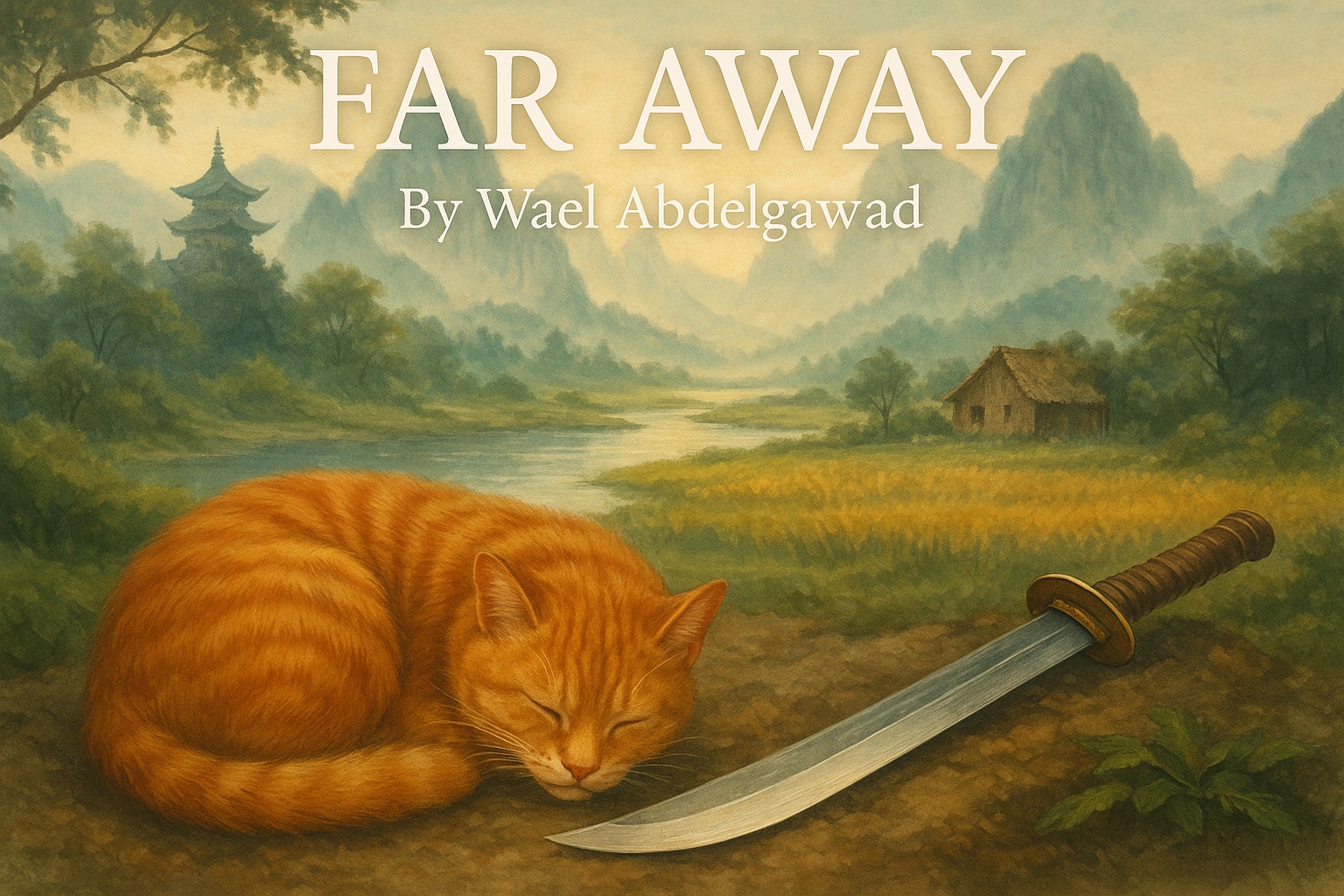
Gravely wounded and fevered, Darius wakes among strangers who may become the first real family he has ever known.
* * *
Safe
Keep supporting MuslimMatters for the sake of Allah
Alhamdulillah, we're at over 850 supporters. Help us get to 900 supporters this month. All it takes is a small gift from a reader like you to keep us going, for just $2 / month.
The Prophet (SAW) has taught us the best of deeds are those that done consistently, even if they are small. Click here to support MuslimMatters with a monthly donation of $2 per month. Set it and collect blessings from Allah (swt) for the khayr you're supporting without thinking about it.
I drifted in and out of a gray place. Sometimes I was in my father’s house and the rats were chewing at my shoulder instead of the crop. Sometimes I was in the temple pool, and the carp had human faces and they were all my father, all of them judging me in silence.
Once I woke up enough to feel something sharp slide into my skin near the wound, and I tried to fight, but a strong hand pressed my good shoulder down and a calm voice said, “Lie still. I am drawing the heat out. Do you want to keep the arm or not?” Then the darkness pulled me under again.
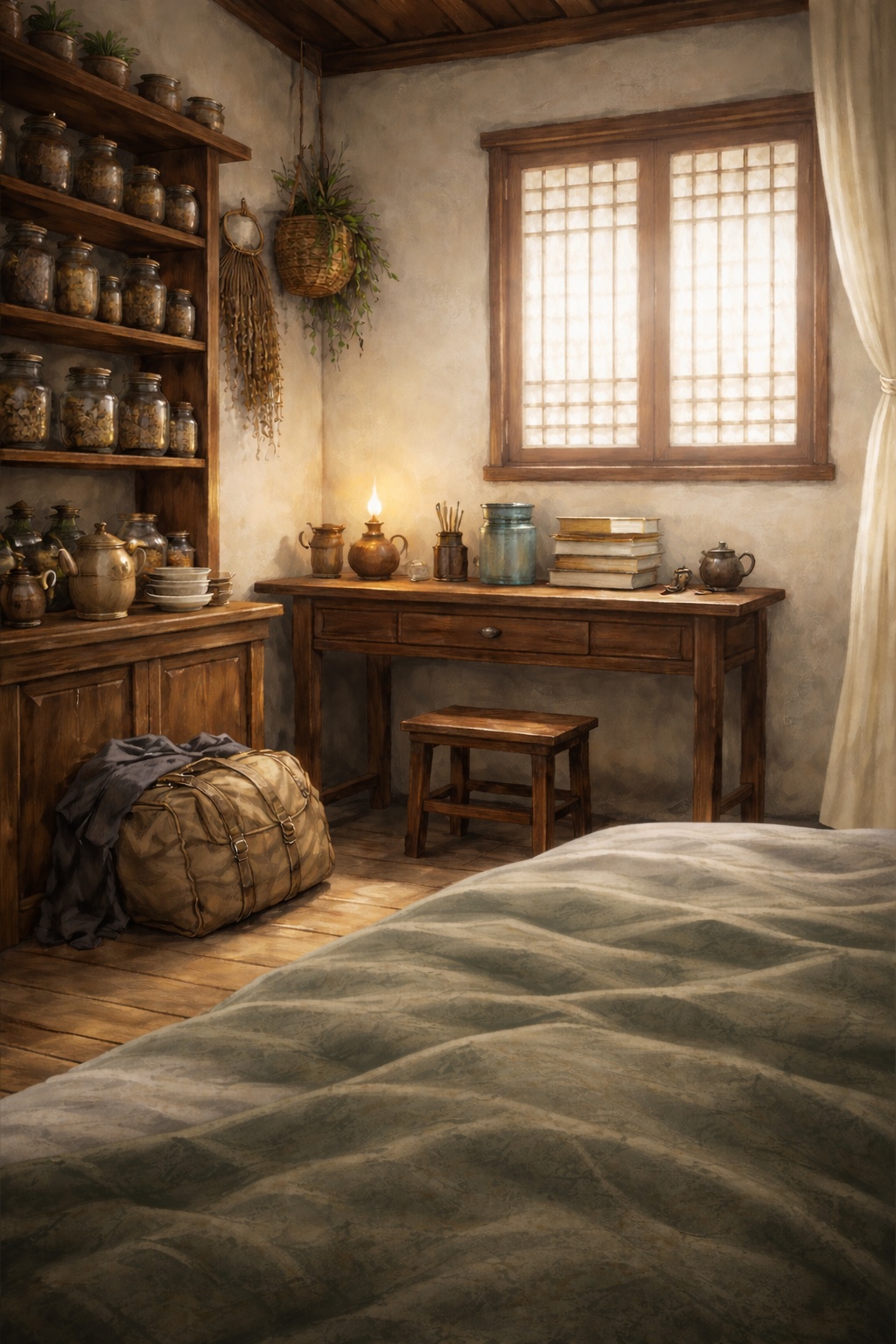
When I finally woke properly, I lay on a narrow pallet in a small, clean room. My shoulder throbbed dully. The air smelled of herbs, smoke, and something bitter I did not recognize. Light filtered in through a paper-covered window, soft and white. Shelves on the walls held clay and glass jars containing herbs, and I knew not what else. A rectangular plaque on the wall displayed words in a flowing script that I could not read, and an ornate wooden desk and chair stood beneath the window, with a stack of books atop the desk.
I had never seen so many books, and thought that this family must be very wealthy. I saw my traveling pack in the corner, but there was no sign of my weapons. My tunic had been washed and repaired.
I suddenly remembered my money kept in a secret pocket inside my tunic. I clutched frantically and felt the purse beneath the shirt, the weight of the money still there. The movement sent a bolt of pain through me so sharp that I gasped.
“Easy.” The word came from my left and just behind me.
I turned my head. A woman sat on a low stool beside the bed. She was short, with strong hands stained faintly with safflower dye. It was the woman who had stood at the doorway, though she no longer seemed as fearsome as she had then. Even if no one had told me, I would have known she was my aunt, as she looked so much like my father she could have been his twin. Maybe she was his twin, for all I knew. She was a beautiful woman, lean and strong, with smooth features and high cheekbones. It occurred to me for the first time that if she was beautiful, perhaps my father was handsome. I had never thought of him that way.
“Your purse is intact,” she said. “We are not thieves. You are safe here.” She held a damp cloth, and now she reached out and wiped my face with it, as if I were a much younger child. Then she helped me sit just enough to sip from a cup. The water was cool and tasted faintly of some bitter root. I grimaced.
“It will help,” she said. “My husband boiled it with herbs for the fever. Now stay here, do not move.” She rose and stepped out of the room, and a moment later, the man I’d encountered at the door earlier stepped into the room. His face was dark and handsome, with a thick black mustache and inquiring black eyes. His hair fell to his shoulders in soft waves. Behind him peered the boy I had seen behind him at the door, his eyes bright and curious.
“Hi,” the boy said. “I’m Haaris.”
Questions
“Hush, do not speak to him,” the father said. He nodded to me. “I am Zihan Ma. I am a healer. How is the shoulder?”
“It hurts,” I said honestly.
“That’s normal.” He stepped forward and laid a hand on my forehead. “The fever has broken, alhamdulillah.” Gently, he pulled the tunic off my shoulder. A strip of cloth was wrapped around my upper arm to hold the bandage in place. With quick, practiced fingers, he loosened the cloth around my arm and lifted the edge of the bandage.
Cool air touched the wound. I hissed.
“Hold still.” He studied it for a moment, then nodded, satisfied. “The flesh is no longer angry. It will leave a scar, but you will keep the arm.”
The boy edged closer. “Can I see?” he whispered.
“Let him breathe.” Zihan Ma glanced down at me. His eyes were measuring, weighing me as my father used to weigh a prospective victim with a single glance. “You can stay another day and night to rest, but then you must leave. This is not a hospital, nor an orphanage. We cannot care for you.”
“But -” I stammered. I felt as if I’d just been struck in the stomach. “Where will I go? I have no one else.”
Jade Lee touched my arm gently. “Where are your parents?”
I breathed deeply, trying to get myself under control. “My mother died when I was seven. My father, Yong Lee, went to fight the invaders. They say he is dead. I came here to find you.”
Jade Lee drew her head back, staring at me. “What is your name?”
“I am Darius Lee, son of Yong Lee, son of Cai Lee.” That was all I knew of my ancestry.
“Eh?” Jade Lee seized me by the shoulders. “Darweesh? Is it really you? Of course it is, look at you! You look just like your mother. I am your aunt!” She seized me and embraced me tightly, and I went completely stiff. No one had ever hugged me except my mother, and my father just that one time. Sensing my discomfort, she pulled away again. “You say Yong is dead?” Her voice softened. “Was it the drinking?”
I shook my head. “He quit drinking in the end. He enlisted in the army and died fighting the invaders. The Mayor would not let me stay on the farm alone, even though I brought in the peanut crop by myself.”
She looked stunned. “He enlisted? But why? He never cared about anything but himself, and certainly never cared about politics or patriotism. He did not even care about his faith.”
“Rats destroyed our crop. I believe… I think he wanted to do something for me. To provide me with a future.” I shrugged. “We never spoke of such things.”
“How did you get the shoulder wound?” Zihan Ma asked. His tone was firm but not accusatory.
“Two robbers attacked me in the town. A constable stopped them.” I did not mention that I had sliced a man’s face open.
“You smelled strongly of wine. Are you a drunk like your father?”
“Husband!” Jade Lee rebuked. “That is no way to speak of the dead.”
“It is the living I am worried about. You know what Yong was like.”
Zihan Ma’s words angered me, but I restrained myself and spoke calmly. “I do not drink. I poured wine over the wound to clean it. And my father was more than what you say.”
“Why do you carry weapons?”
“The dao was a parting gift from my father. The spear, too, was his.” I did not tell him that I had killed two men with the dao. That was definitely not something he needed to know.
A Plea
It was obvious that Zihan Ma was not happy about me being here, and suspected that I brought trouble to his door. Maybe he was right. My whole life had been a struggle. I was like a piece of metal being shaped by a blacksmith. There might be a moment of quiet, but another hammer blow was coming soon enough.
But I sensed that Zihan Ma was a good man. Judging by Haaris’s health and apparent innocence, and Jade Lee’s overall well-being, I knew that I would not be beaten here, I would not be cursed. I would be fed and treated decently, and I needed that so badly, I was desperate for it. I had told myself that I could take to the road and survive on my own, stealing and grifting, but now that I sat in this comfortable home, with hot food on the table, I cringed at the thought of leaving.
“Sir,” I said. “Ma Shushu.” (It was hopeful of me to address him formally as Uncle Ma). “If you’ll let me stay, I won’t be a burden. I brought in two peanut crops on my own, without help. I had a cow. I’m used to hard work. I know what my father was like, everyone does. But I won’t steal from you or make trouble.”
I reached into my coat, took out my purse, and tried to empty it onto the bed. But my hand shook, and the nine gold coins spilled out, some onto the bed and some rolling across the floor. “I’m sorry, I’m sorry.” I was growing increasingly panicked. “This is the money from my father’s enlistment, and the monthly salary he sent, and from my last peanut crop. You see, I have no need to steal. You can take it. You’ll see how hard I work. Please.”
With the last word, my voice broke, and I began to sob. I was deeply ashamed of this, and pulled my tunic over my face. I had not even wept for my father’s death, and here I was crying to be allowed to stay in the home of virtual strangers. My aunt leaned in quickly and pulled me to her.
“You poor boy,” she said. “Of course you can stay. Isn’t that right, husband?”
I pulled out of my aunt’s embrace and wiped my nose and eyes with my coat.
“Please, Daddy,” Haaris said. “Let him stay.”
Zihan Ma gave a slight nod. “All this pleading is unnecessary. You are family, Darweesh. Of course, you may stay; that is a given.” Haaris had already picked up the fallen money, and Zihan Ma returned it to me. “Keep your money, put it away.”
From that moment on, I was part of the family. I always addressed my aunt as “Lee Ayi” – Aunt Lee – and Zihan Ma as Ma Shushu.
Recovery
They let me sleep again after that, and the rest of the day blurred. In the evening, Lee Āyí changed my bandage, then fed me a delicious chicken soup that, by itself, nearly made the entire ordeal worthwhile.
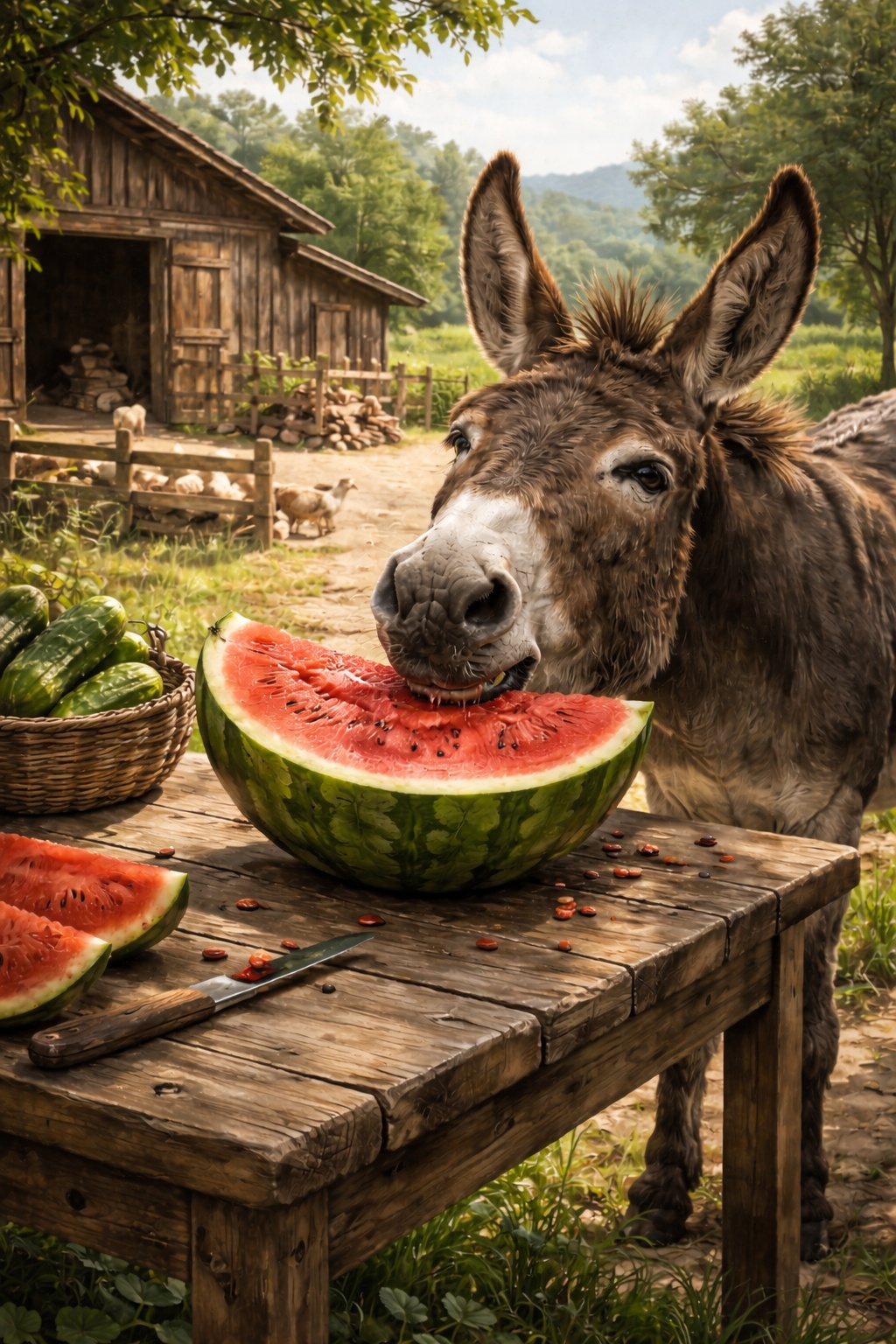
After that, Haaris sat cross-legged on the floor and told me stories of the goats and the donkeys and the cat named Bao, as if he had decided that words alone could keep me alive. The younger donkey, he said, loved to eat watermelon. “He takes huge bites,” he laughed. “Gobbles it right down to the rind.” I tried to imagine this, and found myself smiling. At the same time, I was a bit jealous, as I had never eaten watermelon myself!
The next morning, I woke to feel thin, hot needles pricking the skin around my shoulder; I tensed, but Ma Shushu’s voice came calm and unhurried: “Breathe. In and out. Let the qi move.” I did not know what qi was, but I obeyed. I felt vastly improved. The pain in my shoulder was down to no more than a slight ache. By lunch time, I was out of bed and walking. My head felt clear, and my limbs were my own again.
My aunt helped me sit on a cushion in the main room, then proceeded to set food on the table. It was a low wooden table polished smooth by years of elbows and bowls, and on it were dishes that made my stomach clench with hunger. Steamed greens glistening with sesame oil, soft white rice piled in a clay bowl, slices of beef in a dark, fragrant sauce, pickled radish, braised eggplant, and a tureen of soup filled with mushrooms and tofu. To me, it looked like a feast for a noble.
Home Now
We sat on woven mats. The warmth of the room seeped into my bones, and for a moment I simply breathed in the scents – ginger and garlic, simmered broth, cooked meat. Lee Āyí took her seat beside Haaris, and Ma Shushu settled across from me, his knees cracking softly as he folded his legs.
Before anyone lifted a bowl, he raised his hands slightly and said, “Bismillah ar-Rahman ar-Raheem.” Then he spoke a short prayer in a steady, calm voice, asking Allah to bless the food and the family and the guest who had come into their home.
I stared blankly, unsure if I should bow my head. I desperately wished not to offend these people, but I could not bring myself to worship something that, for all I knew, was yet another statue. My aunt noticed. Something in her eyes softened – not pity exactly, but a recognition of what had been missing in my life all these years.
“Darweesh,” she said gently, “your father taught you nothing of our faith, did he?”
Her tone was neither surprised nor harsh; rather, it held the sadness of someone confirming what they already suspected.
“No, he did not,” I said quietly. “I once heard the name Allah, but I do not know what it means. My father… disliked the worship of statues. If that is what you do, I cannot participate. I do not mean to offend you, truly. Please forgive me.”
Ma Shushu said, “Statues?” and his face reddened. I had indeed offended him. But my aunt put a hand on his arm to still him, and spoke to me: “We do not worship statues. We are Hui people, you, me, and both your parents, and their parents, and so on. Our people have been Muslim for over a thousand years. We worship Allah, the Creator of all. The One who gave us life, provides this food, who has always existed and will always exist, and who knows all things. Unlike the idols, we did not create Him. He created us.”
I mulled this over, trying to conceive of such a being. “But,” I finally said, “if this – Allah – created all things, then who created him?”
“No one. He is Eternal. This world, the sun and moon” – she waved a hand – “and the stars in the sky are like grains of sand in Allah’s Hand. He is a merciful God, full of generosity and forgiveness. He hears our prayers and is closer to us than our own jugular veins.”
I swallowed, not knowing what to say. This sounded like a wonderful fairy tale. On the other hand, I’d had a lifelong fascination with temples, and a yearning to lose myself in the worship of a deity who was actually worthy of my adoration. Wasn’t that a sign of some knowledge inherent in my soul? Some recognition that such a being must exist?
Ma Shushu put up a hand. “It does not matter for now if you believe as we do. You will be required to learn this religion, which is called Islam, but you will not be forced to practice it. Now let us eat while the food is hot.”
“Yes, Darweesh,” my aunt said. “Husband is right. You will learn. You are home now.”
The word home struck me strangely. I did not know what to do with it, so I pretended not to hear.
We began to eat. The cat, Bao, appeared as if by magic, and sat beside Haaris, licking her lips. As we ate, Haaris dropped small pieces of beef fat for Bao, who chewed them so noisily that I almost laughed. I tried to restrain myself and to eat in a civilized way, but after the first few bites, my hunger overcame my manners – what few I had. The food was soft and warm and rich in ways I had forgotten were possible. When I devoured a bowl of rice and tofu too quickly, Haaris grinned and pushed the pot toward me. “We always cook plenty,” he said. “Mama says growing boys eat like wolves.”
Aunt Lee swatted him lightly. “Do not tease Darweesh.”
I cleared my throat. “Actually, Lee Ayi, my name is Darius. That is what my father always called me.”
She smiled. “Very well. Darius. You gave us quite a fright, you know. You arrived at our door stinking of wine and rot, then fell like a sack of millet. We didn’t know what to think. And your wound was already poisoned. One more day and you would have lost the arm. Alhamdulillah that you got here when you did.”
“I… walked,” I said. “I saw Auntie Ming in the town. She gave me directions.”
“And gave you a few sharp words I imagine,” said Ma Shushu. “She never liked your father.”
“Never mind that,” Lee Ayi said. “We’re just glad you didn’t walk yourself into an early grave. Here. Eat.”
Duties
As we ate, Ma Shushu wiped his mouth with a cloth and cleared his throat. “Darius,” he said, “you will have duties here, as every member of this household does. Work must be done properly.”
I nodded, a piece of beef half-chewed in my mouth.
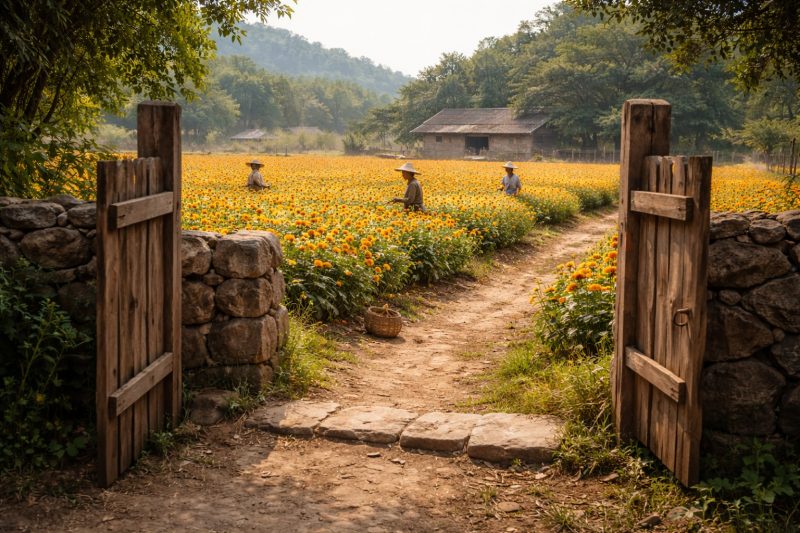 “For now, we will give you light work only. But when you are recovered, you will rise at dawn with Haaris. First task: milk the cows. They must be calm, so move slowly and speak softly. When they are milked, let them and the donkeys out to graze in the west field. After that, shovel the dung from the stalls—take it to the compost heap behind the barn. Then feed the chickens and collect the eggs before the sun grows strong. The goats receive their feed as well, and check that none have wandered into the safflower rows.”
I was nodding along. “Yes, Ma Shushu.”
“Good. When the morning tasks are done, you will return to the house for lessons. Reading, writing, arithmetic, and the basics of our deen.”
I had no idea what he meant by deen, but I remained quiet, and he went on:
“In the afternoon, you are free. The hired hands tend to the fields. You may help them if you wish, but it is not required.”
Nothing he said dismayed me. Compared to fighting off rats with a shovel, killing thieves in my doorway, or tending a field alone from dawn until darkness, these tasks felt almost light. The idea of studies was strange, but not frightening.
“I understand,” I said. “I can do all of it.”
“Certainly you can,” he replied. His voice held no doubt, only calm assurance.
My Lee Ayi refilled my bowl again, and this time I forced myself to eat slowly. Haaris asked questions about my father, my farm, crops, cow, and my dao. I answered what I wished and ignored the rest. The soup warmed my chest; the rice softened the edges of my hunger; the quiet murmur of family around a table – something I had never known – settled over me like a heavy blanket I did not want to shrug off.
For the first time since leaving home, the tightness in my chest eased.
“Your God, Allah,” I asked. “Does He have a temple?”
“We call it a masjid,” Ma Shushu replied. “There are many. There is one in town, you probably walked past it.”
“Does it have a pool with carp?”
Haaris grinned widely. “It does! How did you know? And there’s a cat that sleeps there too. And it has soft carpets and pretty designs on the walls.”
Old Friends
When the meal was finished, Lee Ayi brought out a small plate of sweetened peanuts, roasted and glazed. I stared at them, at the familiar shape and smell. My father had grown peanuts with his bare hands, cursing the heat and the rats and the soil itself. He had tried to build something that would provide. These peanuts were nothing like ours, for they were larger, sweeter, and coated with honey. But they brought my father’s face to my mind in a way that hurt with a sweet kind of pain.
“You are safe here,” my aunt said again, as if answering a question I had not spoken.
I lowered my gaze and nodded. I believed her, though some part of me was sure that something would happen to wreck it. Such comfort, food, and care were not meant for me; they never had been.
That night, the cat, Bao, tried to climb into my small bed. I pushed her away. I was still mourning the loss of Far Away, and was not about to replace him with some old farm cat. Bao hissed, and went to Haaris’s bed instead.
When everyone was asleep, I crawled out of bed and padded silently to the small storage room where my weapons had been placed. I took the dao in its scabbard and strapped it to my back. My aunt said this was a safe place, and I believed her, but I couldn’t truly comprehend that word, safe. How could anyone guarantee that? I had been on my own for a long time, and had killed men in my own home; men who had come to murder me. Safety was in my hands, not anyone else’s. Safety was something I purchased with daily training, sweat, blood, and aching muscles. Sleeping without a weapon felt like sleeping with my hands tied behind my back.
Returning to bed, I pulled the blanket over me. My shoulder still ached, but pain and I were old friends. Pain, hunger, fear, loneliness. These were real things, things I believed in and trusted, because they were honest.
I thought about the – what had Ma Shushu called it – the masjid? The Muslim temple, with its thick carpets and outdoor pool. The concept of childhood was alien to me, but when I imagined it, I thought of sitting beside the pool, trailing my fingers in the water, and watching the fish, without worry or fear. Perhaps I could go to the masjid one day and watch the carp, and listen to the prayers, and be a child for a while. If such a thing was ever meant for me.
My eyelids grew heavy, and I slept.
* * *
Read Part 5 – There Is Only Work
Reader comments and constructive criticism are important to me, so please comment!
See the Story Index for Wael Abdelgawad’s other stories on this website.

Wael Abdelgawad’s novels – including Pieces of a Dream, The Repeaters and Zaid Karim Private Investigator – are available in ebook and print form on his author page at Amazon.com.
Related:
Keep supporting MuslimMatters for the sake of Allah
Alhamdulillah, we're at over 850 supporters. Help us get to 900 supporters this month. All it takes is a small gift from a reader like you to keep us going, for just $2 / month.
The Prophet (SAW) has taught us the best of deeds are those that done consistently, even if they are small. Click here to support MuslimMatters with a monthly donation of $2 per month. Set it and collect blessings from Allah (swt) for the khayr you're supporting without thinking about it.



Good Speech and Sacred Trust: Lessons from Sultan Mehmed II and Shaykh Abu’l-Wafa

Undecided Nation: How A Mosque In Kamagasaki Fills Japan’s Immigration Gap – A Photo Story

Trusting Allah: Lessons from Hudaybiyyah

When Tawakkul Isn’t Enough: Why Financial Silence Hurts Marriages

From The Chaplain’s Desk – Custody Of The Eyes: Lowering The Gaze In A Hyper-Visual World

On Infertility And Not Having A Child: A Letter To Couples Going Through The Silent Struggle

The Woman Who Corrected Umar: Mahr, Tafseer, and Advocacy

So You Want To Become A Lawyer? [Part I] – On Faith, Duty, And The Legal Profession

Far Away [Part 17] – The Caravan

From The MuslimMatters Bookshelf: Your Summer 2026 TBR

The Best Actions for Eid al-Adha [Imam Dawud Walid]

Coming Full Circle: Who Are You Now? | Night 30 with the Qur’an

Running Away From Who We Are | Night 29 with the Qur’an

Building From the Ground Up: Week 4 Recap | Night 28 with the Qur’an

The Muslim You Are Becoming | Night 27 with the Qur’an
-

 #Life3 weeks ago
On Infertility And Not Having A Child: A Letter To Couples Going Through The Silent Struggle
-
#Culture1 month ago
How To Build A (Muslamic) Library
-
#Islam4 weeks ago
The Woman Who Corrected Umar: Mahr, Tafseer, and Advocacy
-
#Life3 weeks ago
So You Want To Become A Lawyer? [Part I] – On Faith, Duty, And The Legal Profession


BintAri
January 12, 2026 at 9:26 AM
I’m so happy for Darius! But, like him, also worried it’s not going to last for long…
Wael Abdelgawad
January 12, 2026 at 2:27 PM
And I’m happy that you are happy for him.
Kathleen
January 12, 2026 at 2:23 PM
Very nice, masha-Allah. With the scenes of the healing and the food it’s like I’m being transported back in time to old China, and it feels authentic. I appreciated how faith enters the story calmly. This is one of the things you do best brother Wael, that you weave religion into a story without hitting us over the head. It will be interesting to see if Darius remains skeptical, or if he evolves as a Muslim. At the end, the moment where he straps on his dao before sleeping broke my heart a little. Poor kid. That’s going to stay with me, because I feel like a lot of us do that in other ways, where we guard ourselves even when it’s not needed, and as a result we keep the world at arm’s length.
Wael Abdelgawad
January 12, 2026 at 2:26 PM
Thanks Kathleen, jazaki Allah khayr. This is the kind of comment authors treasure, because it shows the story is resonating with you beyond the page. It makes you think about your life, it hits home in some kind of way. Keep reading!
BintAri
January 13, 2026 at 12:15 AM
That part resonated with me as well – the “everything seems to be fine, but I don’t trust it, and I think something bad will happen again soon”. A very familiar feeling for those with traumatic childhoods, whether the trauma was physical, psychological or spiritual.
Karim
March 23, 2026 at 11:51 PM
Just like the comment above I feel the same thing: happy that Darius has found this beautiful family environment and peace but also worried it won’t last. Either way I’m in for the adventure. The way he is being introduced to Islam so gradually and peacefully is really wonderful to see.