
#Life
Faith and Algorithms: From an Ethical Framework for Islamic AI to Practical Application


Introduction: Faith Meets Technology
Have you ever found yourself late at night with a question about your faith, scrolling through search results and forum posts, wondering which sources you can actually trust? It’s a modern dilemma in the timeless quest for knowledge.
However, in an age saturated with information, authenticity has become the scarcest commodity. This challenge is particularly acute for Muslims when seeking guidance on matters of belief, practice, and spirituality.
We live in an era where artificial intelligence is reshaping nearly every aspect of human life, from how we work and learn to how we seek meaning. The question isn’t if technology will touch our faith, it’s how. This article explores the intersection of Islamic Ethics and Artificial Intelligence (AI), the current state of innovation in the Muslim world, and finally examines Ansari Chat as a case study in how these ethical principles can be translated into code.
Navigating AI Through the Lens of Islamic Ethics
Keep supporting MuslimMatters for the sake of Allah
Alhamdulillah, we're at over 850 supporters. Help us get to 900 supporters this month. All it takes is a small gift from a reader like you to keep us going, for just $2 / month.
The Prophet (SAW) has taught us the best of deeds are those that done consistently, even if they are small. Click here to support MuslimMatters with a monthly donation of $2 per month. Set it and collect blessings from Allah (swt) for the khayr you're supporting without thinking about it.
AI is growing fast, promising incredible benefits but also raising complex ethical questions. For Muslims, this necessitates a careful evaluation of how AI aligns with faith and values.
Islamic scholars and institutions, including the International Islamic Fiqh Academy (IIFA), Al-Azhar’s Islamic Research Academy, and the Muslim World League, are already actively debating these issues. In the West, the Assembly of Muslim Jurists of America (AMJA) has centered its 2026 Imam’s Conference around this very topic. These institutions draw on centuries of Islamic legal reasoning to ensure AI serves the common good (maslaha) while protecting the higher goals of Islamic law (maqasid al-shari‘ah).
To be clear, the goal is not to reject AI, but to provide frameworks that ensure the technology reflects the values of justice, compassion, and accountability. The real challenge is not whether Muslims should use AI, but how to use it responsibly while avoiding harm (darar).
The Current State of Islamic AI Innovation
Before diving into specific ethical frameworks, it is important to recognize that the “Islamic AI” sector is already bustling with innovation. The landscape is rapidly expanding beyond simple chatbots. We are seeing:
- Quranic Verification: Apps like Tarteel are using voice recognition AI to correct recitation in real-time, aiding in memorization (hifz).
- Islamic FinTech: AI-driven robo-advisors are being trained to screen stocks for Shari’ah compliance, automating complex financial rulings.
- Personalized Learning: Education platforms are utilizing large language models (LLMs) to tailor Islamic curricula to the specific level and school of thought (madhab) of the student.
However, this rapid innovation is not without risk. Without ethical guardrails, these tools can inadvertently amplify bias, commodify sacred knowledge, or present hallucinated information as religious fact. This is why a robust ethical framework is not just theoretical—it is an urgent necessity for developers.
Core Islamic Principles for AI
Islamic ethics is not a fixed rulebook; it is a living system that guides moral choices. When applied to the development and use of AI, four key principles stand out:
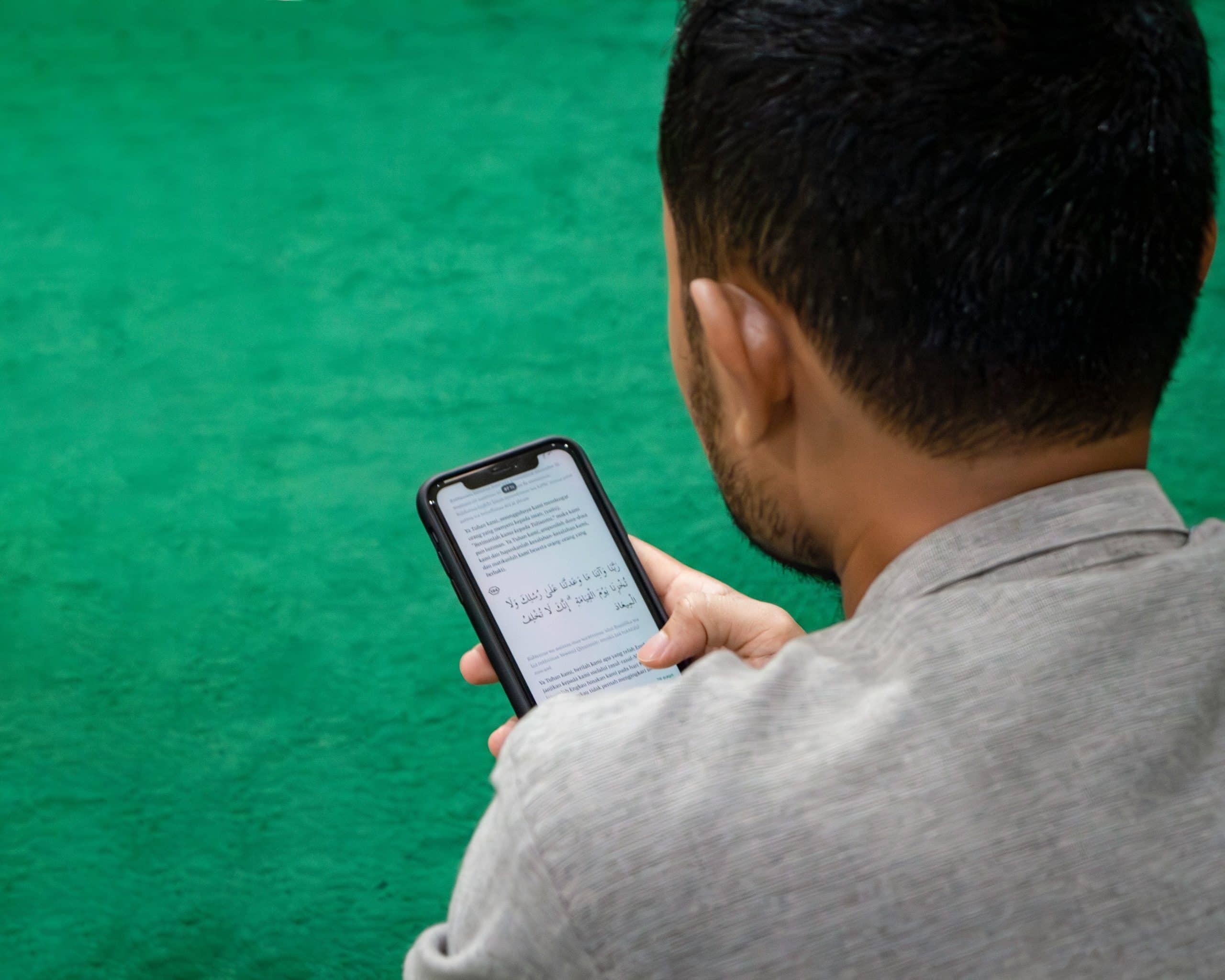
“The real challenge is not whether Muslims should use AI, but how to use it responsibly while avoiding harm (darar)” [PC: Masjid Pogung Dalangan (unsplash)]
- Protecting the Higher Goals of Shari‘ah (Maqasid al-Shari‘ah): These include protecting faith (din), life (nafs), intellect (aql), family (nasl), and property (mal). Every AI system should be judged on its impact here. For example, generative AI that produces deepfakes threatens the intellect and social cohesion, whereas AI used in medical diagnosis actively protects life.
- Justice (‘Adl) and Fairness (Qist): Islam mandates fairness. Training data often reflects historical social inequalities. If an AI used in hiring or credit scoring is trained on biased data, it perpetuates injustice. Technologists have a duty—each according to their capacity—to audit systems and remove these biases.
- Trustworthiness (Amanah) and Responsibility (Mas‘uliyyah): Humans are entrusted (khalifah) with stewardship of the earth, including technology. Developers must build AI that is safe and transparent. Crucially, responsibility cannot be outsourced to a machine; humans remain accountable for the AI’s effects. This also extends to environmental stewardship, considering the massive energy resources required to power data centers.
- Striving for Excellence (Ihsan): Ihsan means doing the best one can, as if in God’s presence. In software development, this means going beyond bare functionality to create technology that is beautiful, efficient, and truly beneficial, rather than predatory or addictive.
AI and Religious Rulings (Fatwas)
A critical distinction must be made regarding religious authority. While AI can search the Qur’an and Hadith faster than any human, the IIFA and Al-Azhar agree: AI cannot replace a human jurist (faqih).
Key reasons AI cannot replace human jurists include:
- Understanding the Spirit of the Law (Fiqh): Legal rulings require nuance and moral insight, not just pattern recognition.
- Understanding Real-Life Context (Waqi‘): A ruling must fit the specific situation, culture, and needs of the person asking.
- Spiritual Insight (Taqwa and Basirah): Fatwas come from a life of faith, study, and devotion. AI has no soul or spiritual consciousness.
AI excels at pattern recognition, but it lacks the soul and consciousness required for moral adjudication. It is a powerful research assistant, not a scholar.
A Simple Ethical Framework for Users
For the everyday Muslim engaging with these tools, the following guide ensures responsible usage:
- Verify and Validate: Treat AI output as a starting point. Always cross-reference with the Qur’an, authenticated Hadith, and qualified scholars.
- Clarify Intention (Niyyah): Use AI for learning and solving problems, never for deception, finding “loopholes,” or generating deepfakes.
- Recognize Limits: AI is a tool, not an authority. It is fallible.
- Promote Good: Use AI to spread beneficial knowledge, while avoiding the spread of unverified information.
Perhaps one simple way to reflect on the use of AI is on the collective good (ummatic welfare). We should ask not only, “What can AI do for me?” but also, “What can AI do for the whole Muslim community?” In his article on Ummatic Soft Power, Ashraf Motiwala emphasizes how the use of AI will influence the future of the ummah: “Ummatic soft power must therefore operate on three fronts: (1) developing substantive Islamic perspectives on AI ethics; (2) influencing global discourse such that these perspectives are seen as viable and attractive; and (3) implementing them in actual technologies, through ummatic research labs, ethical standards, and applied AI platforms.” The consequence of this is that AI should be seen as a means of helping Muslims with the issue of revival, unity, and good governance.
By applying these principles, Muslims can ensure technology becomes a tool for ummatic welfare—helping with revival, unity, and good governance—rather than a source of confusion.
Operationalizing Ethics: The Case of Ansari Chat
How do these high-minded principles look when translated into actual code? One prominent attempt to answer this is Ansari Chat. Led by Dr. M. Waleed Kadous, Ansari serves as a useful case study in how to bridge the gap between Islamic scholarship and Silicon Valley engineering.
The project began in 2023 with a “proactive” philosophy. Rather than waiting for big tech companies to build Islamic tools as an afterthought, the Ansari team asked: What if the community shaped the technology to serve its unique values from the very beginning?
Transparency as Trust (Amanah)
The first ethical decision the project made was regarding trustworthiness (Amanah). In a landscape dominated by proprietary “black box” algorithms, where the decisions made by the developers are hidden, the Ansari team committed to being open source.
This was a strategic ethical choice. For a tool dealing with sacred knowledge, the community needs to know how the answers are derived. Open source acts as a “public recipe,” allowing scholars and developers to inspect the code, verify the sources, and ensure there are no hidden agendas. This transparency builds a relationship of trust that proprietary models cannot easily match.
The Technical Fight Against Hallucination
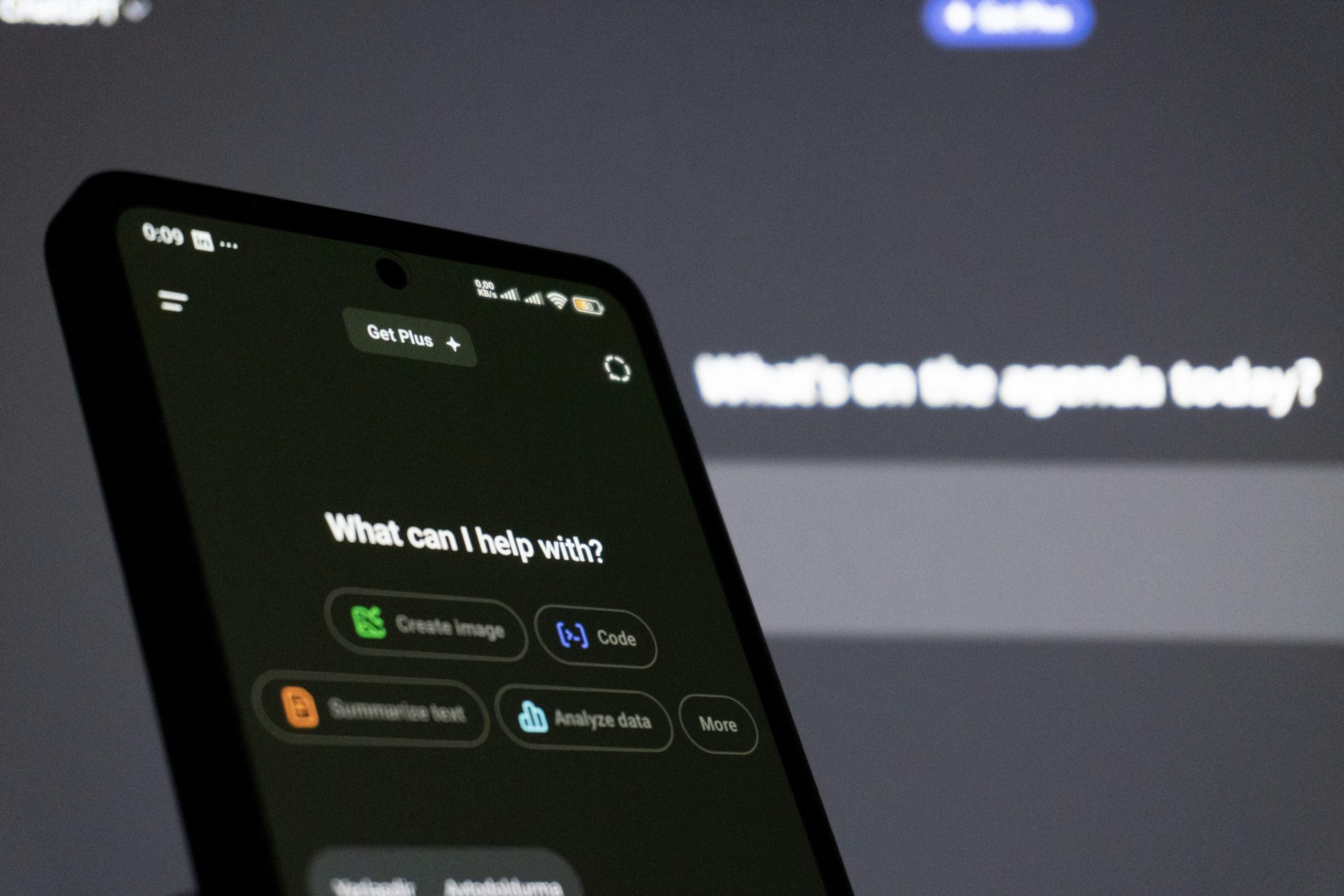
“The community response suggests a hunger for tools that respect religious context.” [PC: Zulfugar Karimov (unsplash)]
Applying the principle of accuracy and verification, the evolution of Ansari highlights the technical challenges of “Islamic AI.” Early versions, like many LLMs, were prone to “hallucinations”—sounding confident while being factually incorrect.
To address this, the team shifted from a simple chatbot model to a Retrieval-Augmented Generation (RAG) system. In simple terms, this gives the AI an “open-book test.” Instead of inventing an answer, the AI must first look up relevant facts from a trusted database—including the Qur’an, Hadith collections, and extensive Fiqh encyclopedias—before formulating a response.
This shift drastically reduced inaccuracies. Furthermore, later iterations introduced citations, ensuring that answers include verse numbers and links to original texts. This feature supports the user’s duty to verify and validate, empowering them to check the primary sources rather than blindly trusting the machine.
Impact and Utilization
The community response suggests a hunger for tools that respect religious context. By mid-2025, data showed that users were not just asking for trivia; they were asking about Fiqh (Islamic law) and Deen/Dunya balance. The tool has been accessed in over 20 languages, highlighting the global demand for accessible knowledge.
However, the project explicitly respects the boundaries of authority. It is designed to provide information and context, but stops short of replacing the scholar in complex, personalized rulings, aligning with the consensus of the IIFA and Al-Azhar mentioned earlier.
Conclusion: An Ecosystem of Ethical Innovation
Ansari Chat, as an example, acts as a proof of concept for a broader vision: an ecosystem of Islamic AI. Whether through integrating with educational curricula, supporting local adaptations like Tanyalah Ustaz in Malaysia, or developing tools for academic research, the goal is to plant a “forest” of innovation.
The story of Ansari demonstrates that technology does not have to distance Muslims from tradition. When built with Ihsan (excellence) and Amanah (trust), AI can function as a bridge, making sacred knowledge more accessible and verifiable. It offers a blueprint for the future: a generation of Muslims who are not just consumers of technology, but architects of it, ensuring the digital age is navigated with faith, responsibility, and moral clarity.
Related:
Keep supporting MuslimMatters for the sake of Allah
Alhamdulillah, we're at over 850 supporters. Help us get to 900 supporters this month. All it takes is a small gift from a reader like you to keep us going, for just $2 / month.
The Prophet (SAW) has taught us the best of deeds are those that done consistently, even if they are small. Click here to support MuslimMatters with a monthly donation of $2 per month. Set it and collect blessings from Allah (swt) for the khayr you're supporting without thinking about it.




Long War without End: A Quarter-Century since the War on Terror

[Podcast] 50k Mahr, Hiding Money, & Who Pays for the Wedding? | AML Finance

What The Makkah Agreement Is Missing

Far Away [Part 26] – Shaytan Is A Liar

From a Syrian Prison to the UN: The Case of Bilal Abdul Kareem
Far Away [Part 26] – Shaytan Is A Liar
Far Away [Part 25] – To Save A Prince
Far Away [Part 24] – The Whipping

When The Bed Walked Away [Part 2] – Primordial Muck
When The Bed Walked Away [Part 1]

The Best Actions for Eid al-Adha [Imam Dawud Walid]

Coming Full Circle: Who Are You Now? | Night 30 with the Qur’an

Running Away From Who We Are | Night 29 with the Qur’an

Building From the Ground Up: Week 4 Recap | Night 28 with the Qur’an


Amer Rizvi
January 1, 2026 at 12:55 PM
Salaam! I tested Ansari AI yesterday. Although it might be a good resource for religious fatwas, I would be wary of integrating this Islamic AI with Western educational curricula. I believe doing so would cause Muslim students in the West to doubt their religion.
I will give you a personal example as an educator and then link the example to the Muslim AI called Ansari.
I worked for a few months in an Islamic (Sunni) school located in the richest county in the USA, going by medium household income. This school employed a highly qualified Shaikh (An Islamic scholar) who came to America from a country in the Middle East. This Shaikh had a PhD in the Islamic sciences and was also the middle and high school science teacher at the school. Apparently, he had a scientific educational background as well. But it seems his education was traditional and not founded upon critical thinking skills.
There is a tradition attributed to the Prophet Muhammad (May Allah bless him and grant him peace) that is normally translated as “Allah created Adam sixty cubits (90 feet) tall, then mankind kept getting shorter until now.” (Narrated by Bukhaari, 3326 and Muslim, 2841).
I asked this Shaikh, like I did Ansari AI yesterday, about this particular hadeeth translation. The replies of both were uncannily similar!
The Shaikh informed me that this hadeeth translation is “not contradictory to any definitive rational or sensory truth.” But students in the US, who are taught biology and physics in public high school, will tell you that this hadeeth, in the way it’s translated, clearly contradicts rational and sensory truth.
I remember when I was a child, I saw the movie ‘Jason and the Argonauts’. In one scene, Jason removed a plug from the giant’s (Talus) foot, and the giant’s blood just gushed out due to the high blood pressure. He then died from the loss of blood. That’s what would have happened to Adam if he were 90 feet tall and got even a simple wound on his foot. A human being the size of the Statue of Liberty walking around the earth is a rational and sensory impossibility, a fairy tale. Even the Western movie makers knew that!
The Shaikh, who was a middle and high school science teacher, would have had to have known this rational truth. But it seems he was refusing to engage his frontal cortex. He could have easily translated the hadeeth in a grammatical way that would have aligned science with religion.
But he deliberately chose not to!
The Shaikh and Science teacher went on to say that this hadith translation itself explains that “human beings gradually decreased in size, and that this hadeeth “aligns with human observation and history.” How could a high school science teacher in the most technologically advanced country believe that the fossil record shows that human beings gradually decreased in size from 90 feet to their present height? Imagine a Muslim graduate of this Islamic school repeating this falsehood in an Anthropology college class!
There is a basic principle in hadeeth: If a narration contradicts rational or sensory certainty, it is either rejected or reinterpreted, even if its chain is authentic. But this Shaikh disagreed with this principle. He said this principle is not unanimously accepted among scholars. “It reflects the views of specific scholars, not a consensus.” He simply could not get it that only the Book of Allah is Perfect, and any other book on earth can be academically challenged.
So, if a narration, classified as authentic, stated that people living during Prophet Adam’s times had wings 100 cubits by 10 cubits which they used to fly around, and those wings gradually decreased in size over time until they became the ears that we use today to hear, we would have to believe this to be a statement of Prophet Muhammad (May Allah bless him and grant him peace)!
Regular ChatGPT will at least admit that there is a possibility that this narration came from the Israeliaat (traditional Israeli fairy tales) and did not come from Prophet Muhammad (May Allah bless him and grant him peace).
The danger of integrating an AI trained on fiqh encyclopedias with modern educational curricula can be illustrated by the following statements from Ansari AI on this specific hadeeth translation:
“This narration is NOT from Israelite sources (Isra’iliyyat). It is 100% authentic from the Prophet.” The “NOT” is capitalized as it appears in the Islamic AI text.
“The hadith is authentic and cannot be rejected by Muslims, as it appears in the most reliable hadith collections with sound chains of narration!”
“The laws of nature as we observe them today may not have applied in the same way to the first human!”
“The early earth may have had different gravitational forces that could support such heights.” Like seriously?
“The hadith explicitly states the people who followed him continued to diminish in size up to this day suggesting a gradual process rather than an immediate change.” Sure!
“The fossil record has significant gaps and limitations.”
The fiqh gymnastics Ansari AI was using to justify this scientifically false statement was the same type that I encountered the Shaikh using at the Islamic school I taught in.
I believe that Muslim AI, while maybe useful for religious matters, could cause some Muslim students to doubt their faith were it to be integrated into Western education curricula.
Wael Abdelgawad
January 1, 2026 at 2:23 PM
My guess would be that Adam’s (as) lofty stature as described in the hadith reflects his nature in Jannah, when he was first created. We know that Jannah is a place of extremes, compared to this earth. There is a tree, for example, so tall that a rider would take 70 years to cross its shadow. Jibreel himself attempted to see all of Jannah and could not do it. The gates to Jannah are massive beyond anything in this world. So it’s not unreasonable to think that Adam’s stature would have been similarly grand. When he was transitioned to this world, however, his body would have been adjusted accordingly. Again, this is not unreasonable. We are told in various ahadith that our own bodies will be different in Jannah. We will not be aged, we will not go to the bathroom, and other things. So perhaps Adam on EARTH was simply a very tall human, within the range of human heights (as we see with Masai tribespeople and some other East Africans) and his descendants gradually lost that trait. This is all speculation on my part, but it makes sense.
Amer Rizvi
January 1, 2026 at 2:52 PM
A very logical explanation, masha Allah! PS Check out the “Jason and the Argonauts” movie clip on YouTube and how Jason kills Talus, the giant! 😂
Abdus-Sami Hoda
January 2, 2026 at 7:51 PM
Good observations everyone
Nasreen Khan
January 7, 2026 at 9:54 PM
Sami Beta, Very interesting facts. Using AI as a tool to dig information is fine. But depending on its non-human analysis is frightening. It can become a source of misguidance and error. Thanks for sharing 🙏🏾🤲