
#Islam
Entering The Last 10 Nights: What Ramadan In Gaza Taught Me About Gratitude

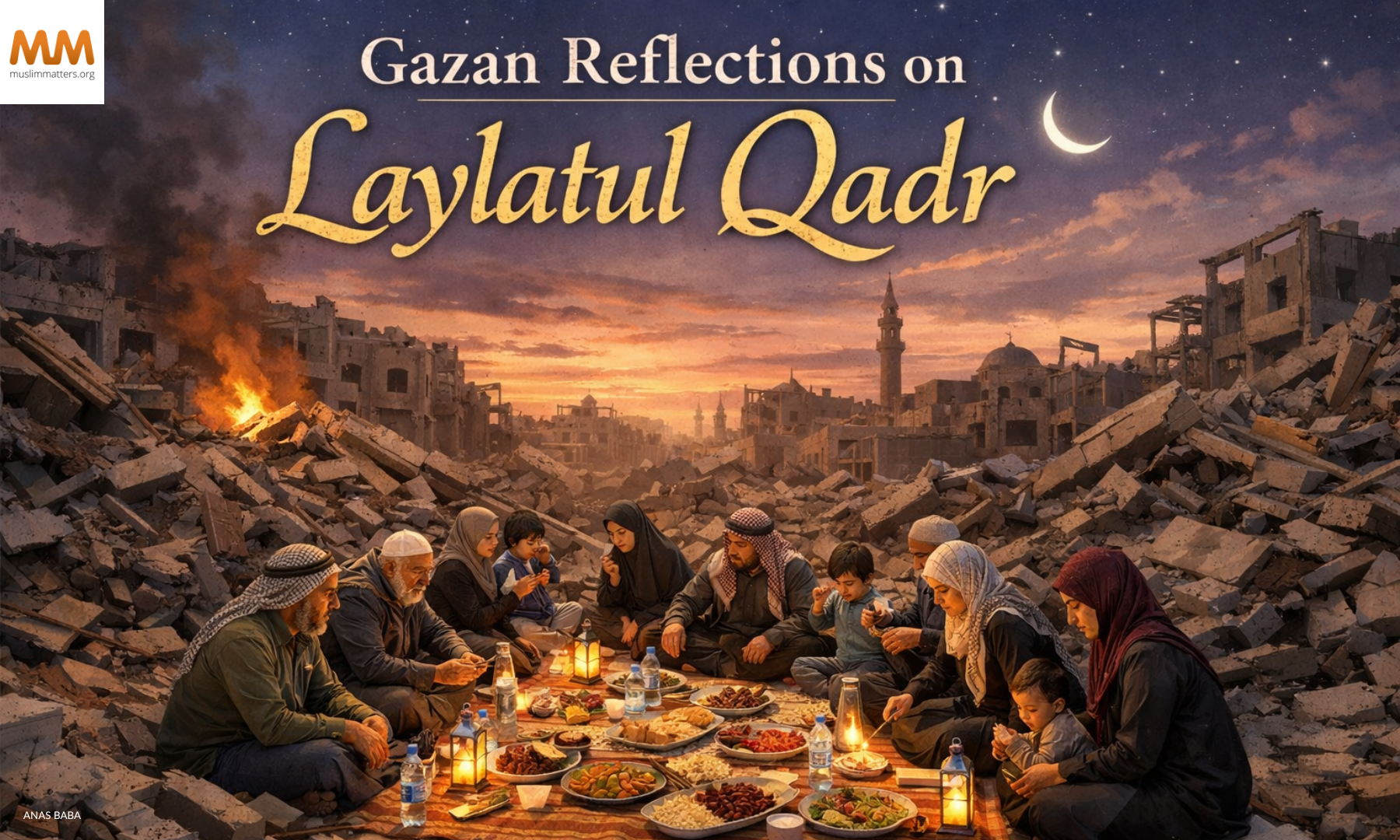
I have always loved Ramadan. Every year I find myself waiting for it long before it begins. When the month finally arrives, it feels as though time slows down in a beautiful way. My heart feels lighter, my mind calmer, and everything around me seems to carry a different kind of peace.
But if I’m honest, the part of Ramadan that moves me the most is the last ten nights.
As the month comes closer to its end, something shifts. The nights feel quieter, more meaningful, almost as if they are inviting us to pause and reflect. There is a sense that these final days hold something special, and that every moment matters more.
Keep supporting MuslimMatters for the sake of Allah
Alhamdulillah, we're at over 850 supporters. Help us get to 900 supporters this month. All it takes is a small gift from a reader like you to keep us going, for just $2 / month.
The Prophet (SAW) has taught us the best of deeds are those that done consistently, even if they are small. Click here to support MuslimMatters with a monthly donation of $2 per month. Set it and collect blessings from Allah (swt) for the khayr you're supporting without thinking about it.
For me, fasting has never been only about staying away from food and drink. It creates space in my life. Space away from the daily routine, the distractions, and the constant rush of responsibilities. During these final nights especially, that space becomes an opportunity to reconnect with Allah  in a deeper way.
Ramadan reminds us that fasting is not just a physical act but a spiritual one. It teaches patience, discipline, and empathy for others. The Qur’an beautifully reminds us:
“O you who have believed, decreed upon you is fasting as it was decreed upon those before you that you may become righteous.” [Surah Al-Baqarah 2:183]
This verse has always resonated with me, especially when I reflect on my time in Gaza. Living through war and uncertainty changes the way you see the world. Food was not always guaranteed, and some nights we went to sleep hungry. Yet even in those difficult moments, faith remained strong.
Fasting in those circumstances was not simply an act of worship—it was a reminder that strength comes from Allah . Hardship did not weaken faith; in many ways, it strengthened it.
Ramadan in Gaza taught me gratitude in ways I had never experienced before. Every meal felt like a blessing. Every prayer felt more meaningful. Even the simplest moments carried a sense of appreciation that is easy to forget in more comfortable times.
As the last ten nights of Ramadan arrive, that sense of reflection becomes even stronger. These nights remind us that Ramadan is not just about completing the fast, but about seeking closeness to Allah and making the most of the time we have left in this blessed month.
And at the heart of these nights is Laylatul Qadr.
Allah tells us:
“The Night of Decree is better than a thousand months.” [Surah Al-Qadr 97:3]
This verse always fills me with hope. It reminds me that even small acts of sincere worship can carry immense value. A single night of prayer, reflection, and heartfelt du’a can hold rewards beyond what we can imagine.
Laylatul Qadr is a reminder that what truly matters is our relationship with Allah . Not the things we own or the achievements we chase, but the sincerity in our hearts when we turn to Him.
The last ten nights are also a beautiful time to guide the next generation. Teaching children about prayer, kindness, and charity during these nights helps nurture their faith and shape their character for years to come.
In the end, fasting is not just about hunger or thirst. It is a journey of the heart.
My experiences have taught me that even in the most difficult circumstances—when life feels uncertain and overwhelming—faith can still grow and flourish. Ramadan reminds us that true blessings are not always what we see or possess, but the connection we build with Allah .
May Allah allow us to witness Laylatul Qadr, accept our fasting and prayers, and help us carry the lessons of Ramadan with us long after the month has passed.
Related:
– The Last Nights Of Ramadan in Gaza: Starvation, Supplication, And Survival
– We Are Not Numbers x MuslimMatters – Ramadan In The Time Of Genocide
Keep supporting MuslimMatters for the sake of Allah
Alhamdulillah, we're at over 850 supporters. Help us get to 900 supporters this month. All it takes is a small gift from a reader like you to keep us going, for just $2 / month.
The Prophet (SAW) has taught us the best of deeds are those that done consistently, even if they are small. Click here to support MuslimMatters with a monthly donation of $2 per month. Set it and collect blessings from Allah (swt) for the khayr you're supporting without thinking about it.


15 Things You Didn’t Know About Makkah and the Ka’bah [Part 2]

Widening Wars Leave the Middle East in Shambles
15 Things You Didn’t Know About Makkah and the Ka’bah [Part 1]

Eid Mubarak from MuslimMatters

Selamat Hari Raya! – Celebrating Eid In Malaysia

She Cried At The Door Of The Masjid: A Case For Children In Mosques

The Trials Playlist: A Chaplain’s Set To Steady Your Heart

[Podcast] Is Your Sadaqah Paying an Influencer Instead of Going to Charity? | Mufti Abdullah Nana & Dr Shafi Lodhi

Every Sin Has a Cure | The Venom and the Serum Series

Accessibility As Mercy: How Laylatul Qadr Guides Towards Disability Justice

Coming Full Circle: Who Are You Now? | Night 30 with the Qur’an

Running Away From Who We Are | Night 29 with the Qur’an

Building From the Ground Up: Week 4 Recap | Night 28 with the Qur’an

The Muslim You Are Becoming | Night 27 with the Qur’an

What Will You Leave Behind? Legacy in Islam | Night 25 with the Qur’an
-

 #Current Affairs1 month ago
[Podcast] Ramadan Is Not For Your Private Spirituality | Dr Farah El-Sharif
-
#Society3 weeks ago
She Cried At The Door Of The Masjid: A Case For Children In Mosques
-
#Islam3 weeks ago
The Trials Playlist: A Chaplain’s Set To Steady Your Heart
-
#Society1 month ago
Ramadan, Disability, And Emergency Preparedness: How The Month Of Mercy Can Prepare Us Before Communal Calamity


