
#Society
She Cried At The Door Of The Masjid: A Case For Children In Mosques
To every masjid board, every imam, every administrator: there is no Islamic precedent for barring children from main prayer spaces in masajid.

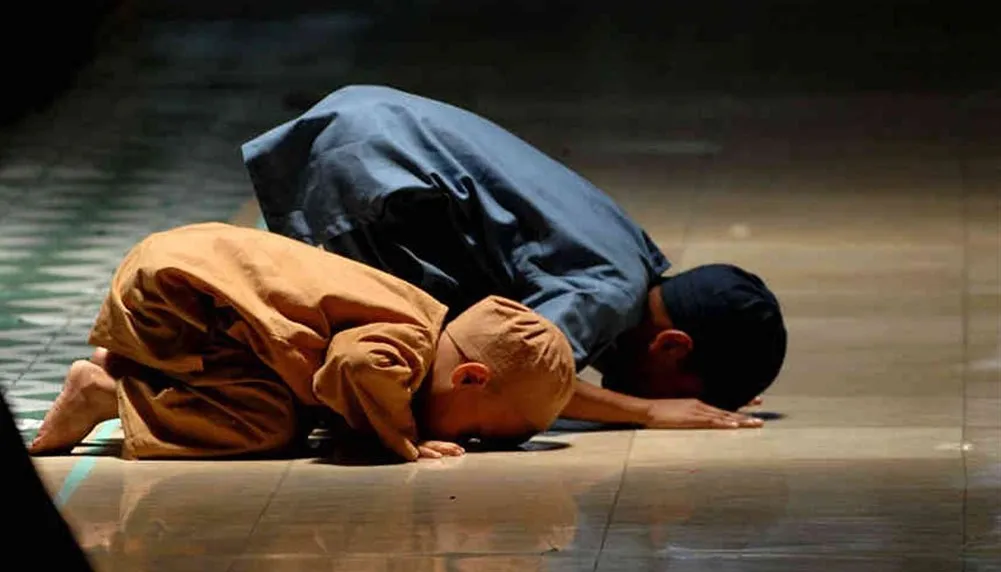
This morning, my daughter woke up before Fajr. She beamed at my groggy face, “Baba, I’m doing my first fast today.”
She’s young enough that she doesn’t have to. But she wanted to fast. Just like she wanted to go to the masjid with me.
She was excited. She practically bounced through the parking lot in the dark.
After salah, we stayed. She sat beside me on the carpet and reviewed her memorization, the last fifteen surahs of the Qur’an, her small voice reciting with care and concentration. It was one of those moments you hold onto as a parent: your child, in the house of Allah ﷻ, willingly, joyfully turning the words of Allah ﷻ over on her tongue.
That afternoon, we went back for Jumu’ah. My wife brought her to the women’s entrance.
Keep supporting MuslimMatters for the sake of Allah
Alhamdulillah, we're at over 850 supporters. Help us get to 900 supporters this month. All it takes is a small gift from a reader like you to keep us going, for just $2 / month.
The Prophet (SAW) has taught us the best of deeds are those that done consistently, even if they are small. Click here to support MuslimMatters with a monthly donation of $2 per month. Set it and collect blessings from Allah (swt) for the khayr you're supporting without thinking about it.
They stopped her at the door.
Kids are not allowed inside. They can go pray across the way, in the other building, where they can run around.
My wife tried to explain. She’s not here to run around. She was here this morning. She was sitting quietly reviewing Qur’an just a few hours ago, in this very building, on this very carpet.
It didn’t matter. They would not let her in.
And then my daughter’s face broke. Not in anger. In confusion, tears rolling down her cheeks. Quietly. The kind of crying that is harder to witness than screaming.
She looked up at me and asked:
“Baba, why won’t they let me inside the masjid?”
I didn’t have an answer for her. There isn’t one.
The imam’s answer when I asked him after jumu’ah — after I told him it was her first fast, that she had prayed Fajr in this very masjid that morning, that she was crying at the door — was a shrug. Children were welcome to play or pray in the neighboring school building’s cafeteria room. They weren’t welcome in the musallah.
A Policy in Search of a Precedent
What happened to my daughter is not unique. Across North America, a troubling trend has taken root in our masajid. More and more communities have adopted blanket policies barring children from entering the main prayer halls, especially in Ramadan and jumu’ah. The justifications are familiar: children are noisy, they distract worshippers, they run through the rows, they disrupt the khutbah.
Some of these concerns are understandable on a surface level. Anyone who has prayed in a masjid has experienced the patter of small feet during a quiet moment of du’a. But the question is not whether some children can sometimes be disruptive. The question is whether barring children from the house of Allah ﷻ is an appropriate action, and whether such a policy has any basis whatsoever in our tradition.
It does not.
The Prophetic Precedent Is Not Ambiguous
There is no authentic hadith in which the Prophet ﷺ barred children from his masjid. There is no report in which he instructed parents to leave their children at home. There is no narration in which he scolded a mother or father for bringing their child to salah. What we have, instead, is the opposite. A consistent, unmistakable pattern of welcome.
Shaykh Muhammad Nasir al-Din al-Albani, one of the most prominent hadith scholars of the twentieth century, addressed this question directly and at length. In a recorded exchange on his program al-Hudā wan-Nūr, a questioner put the matter to him directly: a child under seven wants to go to the masjid. Should the father allow it? The questioner assumed the answer was no. Al-Albānī responded with a better question: what about the father who takes his son to the masjid without the son having asked?
“You know,” he said, “that the early Salaf, at the head of whom was our Prophet ﷺ, used to allow their children to enter his masjid.”
He recounted the well-known narration of a Companion who was praying ‘Asr behind the Prophet ﷺ when the sujood was prolonged far beyond what was customary. The Companion grew concerned. Had something happened to the Messenger of Allah ﷺ? He raised his head and saw al-Hasan or al-Husayn on the Prophet ﷺ ‘s back. The Prophet ﷺ did not cut the prayer short in annoyance. He did not scold the child afterwards. After the salah, he simply said: “My son was riding on my back, and I did not want to disturb him.”
The leader of the Muslim ummah, in the middle of salah, in conversation with his Lord, chose to extend his prostration rather than inconvenience a small child who had climbed on top of him. And our masajid cannot tolerate a girl sitting quietly and respectfully beside her mother?
Al-Albani was characteristically direct: it was not part of the Prophet’s ﷺ guidance to advise those who pray, men or women, not to bring their children to the masjid. Rather, he endorsed their presence. When he heard a child crying behind him in prayer, he would shorten his recitation to free the mother. “I begin the prayer intending to lengthen it,” he ﷺ said, “but then I hear the crying of a child, so I shorten it in order to free his mother for him.” The entire rhythm of communal worship was recalibrated around the reality that children were present and that their presence was good.
He could have done, al-Albani observed, what many of the ignorant imams do today and complain, “Why do you bring your children to the masjid and disturb us?” He did nothing of the sort. The word al-Albani used to describe these imams was jāhilīn. Ignorant. It was a word he deployed intentionally. They do not know his ﷺ guidance.
The Masjid Is the Best of All Places
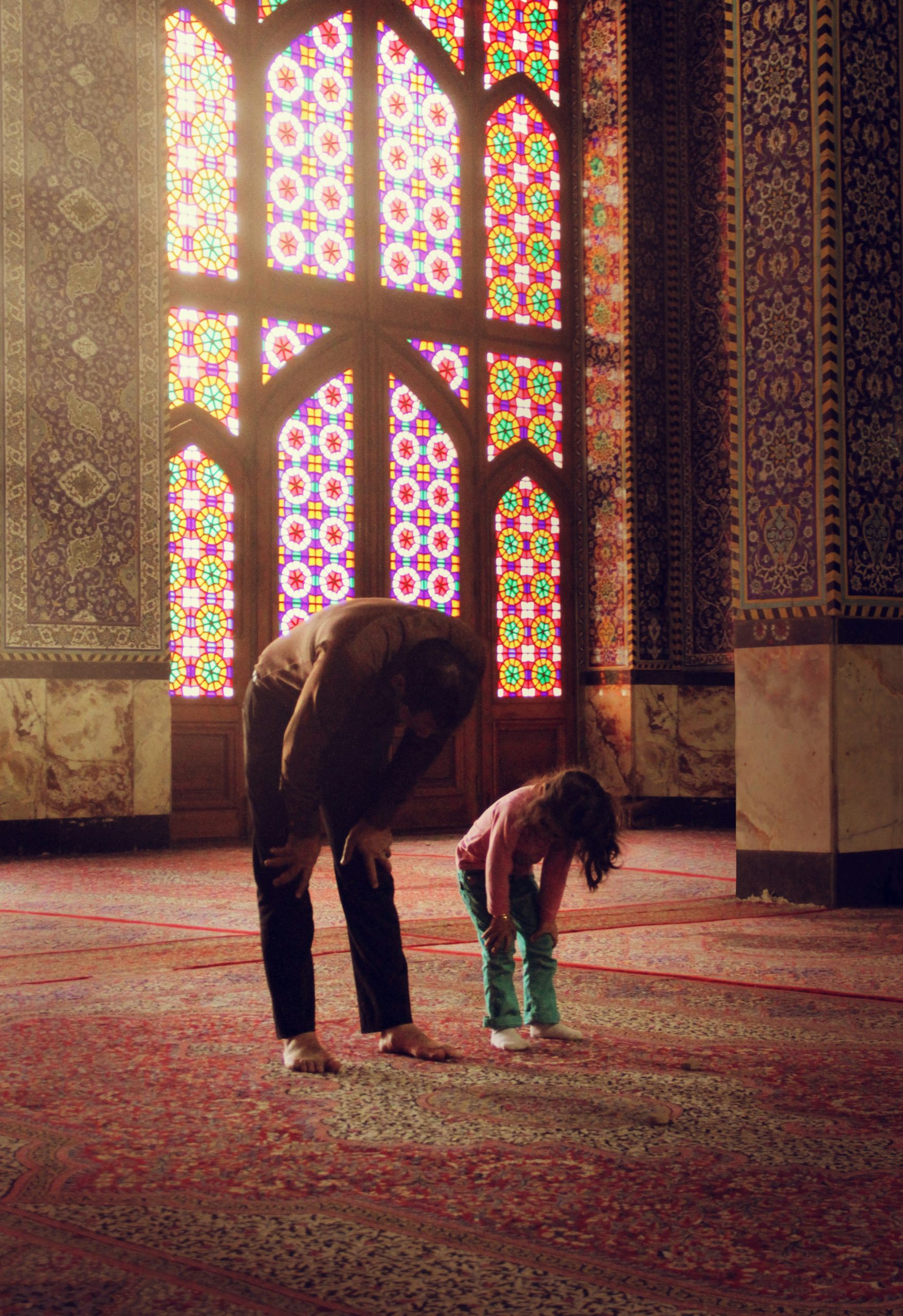
“A child who prefers the house of Allah ﷻ to any other place a child could want to be is cause for joy. And the increasingly common response in our communities is to turn that child away at the door.” [PC: Hasan Almasi]
But al-Albānī did not stop at refuting the no-children position. He argued that if a child, even one too young to understand what prayer is, asks to go to the masjid, the parent should take them.
“Even if it were just to play,” he said. He repeated it. “Even if it were just to play.”
This is the part that people resist most. The suggestion that a child might come to the masjid not to sit in perfect stillness but simply to be there. To associate the house of Allah ﷻ with joy and the presence of family.
Al-Albānī understood this as a matter of tarbiyah, spiritual formation. “If a child was raised like that, and then wants to go to the masjid instead of the streets or alleys, then this is a blessing and glad tidings. So the father, or even the mother, should take advantage of this phenomenon and facilitate the way for the child to go to the masjid.” The word he used for what a child’s desire to attend the mosque represents was bushrā. Glad tidings. The same word the Qur’an uses for divine good news.
A child who wants to be in the masjid is a blessing. A child who prefers the house of Allah ﷻ to any other place a child could want to be is cause for joy. And the increasingly common response in our communities is to turn that child away at the door.
The prophetic ethos regarded the presence of children not as a problem to be managed but as an unambiguous, unreserved good. And when the inevitable happened, when a child did something “not becoming in the masjid,” as al-Albani put it, the prophetic response was not expulsion but accommodation. “And what distraction can you think,” al-Albani asked, with something close to amusement, “that can be greater than the Leader of Mankind ﷺ being taken as something to climb and ride on?”
“If this were to happen today,” al-Albani continued, “there would be shouting from all corners of the masjid: ‘You made the prayer too long for us, O Shaikh … why did you bring the boy?'”
Then his conclusion: “They don’t know the guidance of the Prophet ﷺ, they don’t know his kindness and compassion for his Ummah.”
The Lesson at the Door
Every masjid that bars children from entry is teaching those children a lesson. The lesson is not “learn to behave, and you can come back.” The lesson is “you do not belong here.”
We will wonder, in ten or fifteen years, why our youth are disengaged. We will lament their absence from the spaces that were supposed to raise them. We will have forgotten how many of them we turned away.
Our masajid should be places where a child’s first fast is celebrated, not where her tears are the price of a quiet khutbah.
A Call to Masjid Leaders
Parents have responsibilities. We should teach our children the etiquette of the masjid. We should teach them to lower their voices, to respect the space, to understand that salah is a time for stillness. This is part of tarbiyah.
But tarbiyah happens inside the masjid, not outside it. You cannot teach a child to love and respect a place they are forbidden from entering. You cannot instill in them the etiquette of a space they are barred from experiencing. The masjid is where they are supposed to learn these things, not in a building across the street or in a separate room in a corner or in a basement disconnected from the musallah where they are exiled so adults can pray in undisturbed comfort.
The Prophetic model was not to remove children from the masjid but to accommodate their presence within it. Al-Albani captured this beautifully: if those who complain truly knew the Prophet’s guidance, “they would be gentler with children. They would not criticize someone who brought his child to the masjid. Rather, they would assist him in raising his child to love the masjid, to respect it, and to learn its etiquettes.”
To every masjid board, every imam, every administrator who has implemented or is considering a policy that bars children from the main prayer space: there is no Islamic precedent for what you are doing. The Prophet ﷺ did not do it. His companions did not do it. The scholars who devoted their lives to preserving his Sunnah have said, plainly, that it contradicts his guidance. Managing a masjid is difficult. Not every parent does their part. None of that changes the fact that the precedent that exists in the sunnah condemns the approach you have taken.
I think of my daughter’s face, the confusion in her eyes, the tears she could not hold back. And I think of the words of Allah ﷻ that al-Albani quoted in closing. Words that were, by Allah ﷻ’s decree, recited in tarawih the very night my daughter was told she did not belong in the musallah. The word of Allah ﷻ describing His Messenger ﷺ: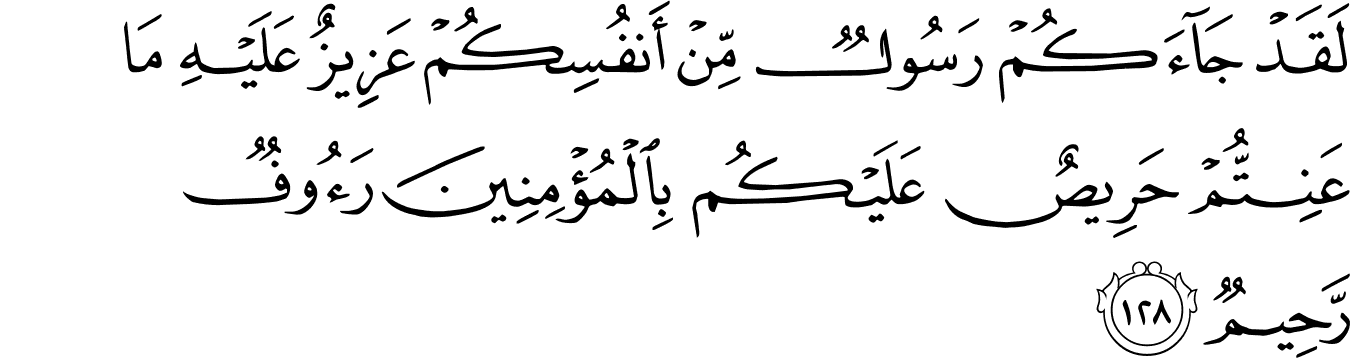
“He is concerned by your suffering, anxious for your well-being, and gracious and merciful to the believers.” [Surah At-Tawbah 9:128]
May our masajid become worthy of the same description.
***
The following post-section engages with the scholarly literature in more detail and is intended for readers, masjid boards, and imams who want to examine the fiqh basis for these policies.
A Note on the Scholarly Record
The most frequently cited paper in English supporting bans on children coming to the masajid is Jamaal Zarabozo’s “Bring Children to the Mosque,” presented at the AMJA 12th Annual Conference in 2015. Zarabozo surveys the relevant hadith literature and compiles fatawa from across the madhahib and from contemporary scholars.
A critical review of the paper reveals two significant problems: one of omission, and one of misapplication.
The Omission
Zarabozo cites Shaykh al-Albani extensively throughout the paper. He relies on al-Albani’s grading of the hadith of Shaddad (the prolonged prostration), al-Albani’s authentication work in Sahih Sunan Abi Dawud, and al-Albani’s judgment in al-Ajwibah al-Nafi’ah that the hadith “Keep your children away from your masajid” is weak. Al-Albani’s technical hadith work appears on nearly every page.
What does not appear anywhere in the paper is al-Albani’s substantive fatwa-level position on the very question under discussion.
In a well-known recorded session from his program al-Huda wan-Nur, al-Albani addressed this question directly. He did not merely authenticate the relevant hadith. He interpreted them, drew juristic conclusions, and rendered a judgment: children should be welcomed in the masjid, even if they come only to play.
This is not an obscure recording. Al-Huda wan-Nur is one of the most widely circulated collections of al-Albani’s scholarly output. For a paper that treats al-Albani as an authoritative voice on hadith authentication to then omit his direct, recorded ruling on the topic the paper surveys is a notable gap. The most expansive scholarly position in favor of children’s access to the masjid, delivered by a scholar the paper otherwise relies upon, is absent from the discussion. That this paper has nonetheless become the default reference for North American masjid boards crafting children’s access policies makes the omission not merely academic but consequential.
The Misapplication
The second problem is more consequential for how the paper is used in practice.
Zarabozo’s survey of scholarly opinions, from Imam Malik to Ibn Taymiyyah, to Ibn Uthaymin, to the Standing Committee of the Leading Scholars of Saudi Arabia, is presented as a range of positions, some more restrictive and some more permissive. But when one reads the positions carefully, a consistent thread emerges that the paper itself acknowledges but that masjid administrators routinely ignore:
Not one of the scholars cited supports a blanket ban on children.
Every restrictive opinion in the paper conditions its restriction on behavior, not on the mere fact of being a child.
Imam Malik stated that if a child does not fidget due to their young age and would stop if told to do so, there is no harm in their presence. He restricted children who play around due to immaturity, not children as a category. Ibn Uthaymin went further in both directions at once: he stated that bringing children who will disturb those praying is impermissible, but then immediately added that children should not be made unwelcome, should not be removed from their places in the rows, and that gathering children together away from adults actually increases disruption. The Standing Committee of the Leading Scholars of Saudi Arabia — Bin Baz, Afifi, and bin Qaood — ruled that children are not to be prevented from attending the masjid with their guardians. Al-Fauzan specified that children under seven may be brought if it is known they will not disturb those praying.
In every case, the operative criterion is the child’s conduct, not a categorical exclusion. The scholars who placed conditions on children’s attendance placed those conditions because some children are disruptive, not because childhood itself is disqualifying.
When a masjid adopts a policy that bars all children from the musallah regardless of their behavior, the child who is running and the child who is sitting with her Qur’an treated identically, it is not implementing any of these scholarly opinions. It is implementing an administrative convenience and draping it in the language of fiqh.
Related:
– Podcast: Spare The Rod, Spoil The Child? Corporal Punishment & Islamic Education
– The Key To Raising Children With The Book Of Allah? Getting Them Started Young
Keep supporting MuslimMatters for the sake of Allah
Alhamdulillah, we're at over 850 supporters. Help us get to 900 supporters this month. All it takes is a small gift from a reader like you to keep us going, for just $2 / month.
The Prophet (SAW) has taught us the best of deeds are those that done consistently, even if they are small. Click here to support MuslimMatters with a monthly donation of $2 per month. Set it and collect blessings from Allah (swt) for the khayr you're supporting without thinking about it.





Muslim Capitalism And The Rise of Tech And VC Culture: Are We Going Down The Technological Lizard Hole?

15 Things You Didn’t Know About Makkah and the Ka’bah [Part 3]

Beyond Ramadan: Connecting to Allah Through His Beautiful and Majestic Names
15 Things You Didn’t Know About Makkah and the Ka’bah [Part 2]

Widening Wars Leave the Middle East in Shambles

The Trials Playlist: A Chaplain’s Set To Steady Your Heart

[Podcast] Is Your Sadaqah Paying an Influencer Instead of Going to Charity? | Mufti Abdullah Nana & Dr Shafi Lodhi

When The Qunoot Becomes Politics: Religious Theater in Saudi Arabia

The Weight Of Fear And The Will To Survive: Fasting In Times Of War

AL-AQSA IS CLOSED

Coming Full Circle: Who Are You Now? | Night 30 with the Qur’an

Running Away From Who We Are | Night 29 with the Qur’an

Building From the Ground Up: Week 4 Recap | Night 28 with the Qur’an

The Muslim You Are Becoming | Night 27 with the Qur’an

What Will You Leave Behind? Legacy in Islam | Night 25 with the Qur’an
MuslimMatters NewsLetter in Your Inbox

Sign up below to get started
-

 #Current Affairs1 month ago
[Podcast] Ramadan Is Not For Your Private Spirituality | Dr Farah El-Sharif
-
#Islam4 weeks ago
The Trials Playlist: A Chaplain’s Set To Steady Your Heart
-
#Culture4 weeks ago
[Podcast] Is Your Sadaqah Paying an Influencer Instead of Going to Charity? | Mufti Abdullah Nana & Dr Shafi Lodhi
-
#Islam1 month ago
Every Sin Has a Cure | The Venom and the Serum Series





Craig
March 15, 2026 at 10:22 PM
“They can go pray across the way, in the other building, where they can run around.”
Was linked this article from the local Muslim WhatsApp group where this happened. The irony is that according to the majority opinion, the salah in that building is not valid because it’s too far from the masjid and there’s no continuity in rows between the masjid and that building. Something that any imam citing fiqh should know about. Like you said, “It is implementing an administrative convenience and draping it in the language of fiqh.”
Wael Abdelgawad
March 16, 2026 at 4:11 PM
Dr. Shafi, it’s on you for capitulating to those policy police. They have no real authority. The house of Allah does not belong to any one person. I would have smiled, said, “She’ll be fine,” and led my daughter right past them into the masjid.
Shafi Lodhi
March 17, 2026 at 4:03 PM
Salaam Br. Wael,
I did :-). Which is why she was with me when I spoke with the imam and not with my wife.
Wael Abdelgawad
March 17, 2026 at 8:49 PM
Ah, well done in that case.